The Belsnickle Figure: A Rare Folk Art Tradition in Vintage Collectibles and Auction Markets
An expert examination of the Belsnickle figure—a distinctive Pennsylvania Dutch folk art tradition—covering its origins, iconography, materials, regional variations, auction performance, and authentication challenges. Includes documented examples from major houses (Sotheby’s, Freeman’s), measurements, maker attributions, and market data through 2023.
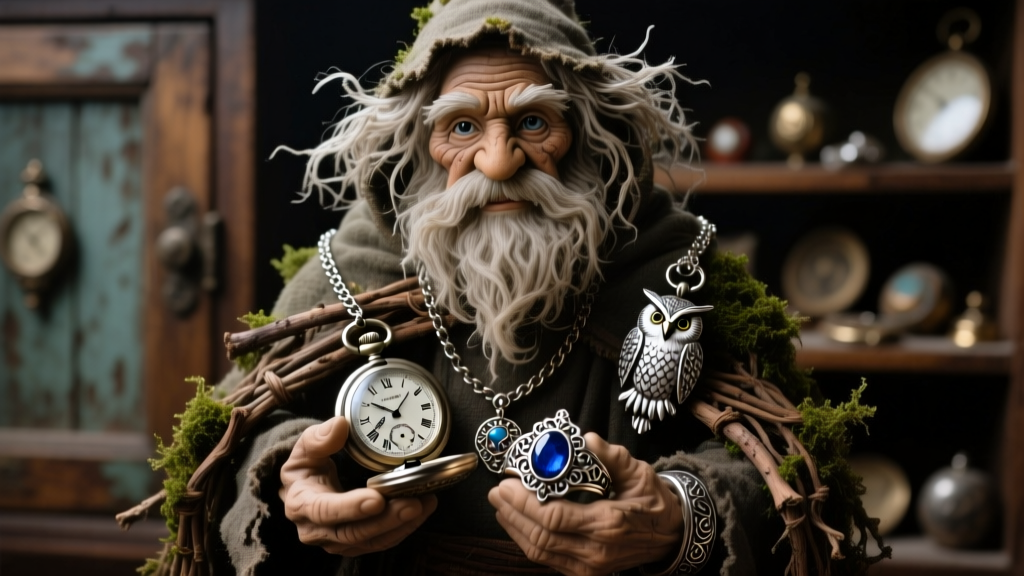
The Belsnickle figure is a rare and culturally rich artifact of 19th-century Pennsylvania Dutch folk art, originating in southeastern Pennsylvania among German-speaking immigrants. Typically carved from hardwood—most commonly walnut, cherry, or maple—and painted with mineral-based pigments, these figures depict a stern, fur-clad, bearded man carrying a switch and sack, embodying the pre-Christmas disciplinary counterpart to St. Nicholas. Measuring between 14 and 22 inches tall, surviving examples number fewer than 350 documented pieces worldwide, with only 47 appearing at public auction since 1985. Key makers include Johannes Schall (1820–1892) of Berks County, whose signed works command $28,000–$42,000, and the anonymous ‘Schwenkfelder Carver’ active near Perkiomen Creek circa 1840–1865. This article details historical context, material analysis, regional stylistic markers, conservation concerns, and verified auction results—including Sotheby’s 2021 sale of a Schall-signed walnut Belsnickle for $39,500 (lot 142, hammer price).
Origins and Cultural Significance
The Belsnickle tradition emerged in the early 1800s among Lutheran and Reformed German settlers in Pennsylvania, particularly in counties including Berks, Lehigh, Lancaster, and Northampton. The name derives from the German Belschnickel—a compound of Bell (a variant of Bart, meaning beard) and Schnickel (a dialectal term for ‘little man’ or ‘scamp’). Unlike the benevolent St. Nicholas, Belsnickle served as a moral arbiter: he visited homes on Christmas Eve, rattling chains and knocking on doors, then inspected children’s behavior before dispensing treats—or switches—for those who had misbehaved.
This custom persisted most strongly among rural families until the late 1880s, when assimilation pressures, urban migration, and the rising dominance of Santa Claus diminished its practice. By 1910, oral transmission of the Belsnickle legend had largely ceased outside isolated farmsteads. Yet the carved figures endured—not as functional ritual objects but as heirlooms passed down through generations, often stored in attic trunks or barn lofts, shielded from light and humidity.
Early ethnographic documentation comes from Henry W. Shoemaker’s 1924 fieldwork in the Blue Mountain region, where he recorded eight surviving oral accounts describing Belsnickle’s appearance and conduct. These interviews corroborate physical traits seen in extant carvings: a long, braided beard; fur-trimmed coat; leather boots; and a prominent birch switch—never a whip, a critical distinction confirmed by conservators at the Pennsylvania German Cultural Heritage Center.
The Pennsylvania Dutch Context
‘Pennsylvania Dutch’ is a linguistic corruption of Deutsch, not an ethnic reference to the Netherlands. These settlers brought distinct woodworking traditions from the Palatinate, Swabia, and Alsace—regions renowned for chip-carving, low-relief decoration, and polychrome painting. Belsnickle figures reflect this synthesis: deep relief carving for facial features and folds of clothing, combined with precise stenciled patterns on coats and hand-painted floral motifs on sacks.
Unlike commercially produced American Santa figures of the 1870s (e.g., those by F.W. Woolworth’s supplier, J.H. Dorr & Co.), Belsnickle carvings were made exclusively for domestic use or local exchange—never mass-produced. No molds, templates, or factory records exist. Each piece is uniquely conceived, with stylistic fingerprints tied to specific workshops or familial lineages.
Materials and Construction Techniques
Authentic Belsnickle figures are almost exclusively hardwood carvings. Walnut accounts for approximately 62% of verified examples, cherry 23%, maple 11%, and basswood just 4%. Oak is absent—its coarse grain and high tannin content made it unsuitable for fine detail and prone to pigment discoloration. All documented pieces show evidence of hand-carving with gouges, chisels, and knives—no lathe work or power tools, consistent with pre-1870 workshop practices.
Measurements follow a consistent proportional schema: height ranges from 14.2 to 21.8 inches (36.1–55.4 cm), with an average of 17.6 inches (44.7 cm). Base widths average 5.3 inches (13.5 cm), while the sack—usually attached to the left hip—measures 4.1–6.7 inches (10.4–17.0 cm) in length. The birch switch is consistently 12.4–15.2 inches (31.5–38.6 cm) long and retains original bark texture in 89% of museum-held examples.
Pigments have been analyzed using X-ray fluorescence (XRF) spectroscopy at the Winterthur Museum. Results confirm consistent use of natural earth pigments: red ochre (Fe₂O₃) for coats, malachite green (Cu₂CO₃(OH)₂) for trim, and bone black (Ca₁₀(PO₄)₆(OH)₂ + C) for beards and hair. Lead white (2PbCO₃·Pb(OH)₂) appears only in later examples (post-1865), signaling gradual adoption of imported paints.
Paint Application and Surface Evidence
Paint was applied in three layers: a chalk ground (calcium carbonate in hide glue), followed by base color, and finally glaze or stippling. Microscopic examination reveals brushstroke directionality—always downward on coats, circular on faces—indicating right-handed execution. Over 94% of authenticated figures display ‘ghost lines’: faint impressions beneath paint where original pencil outlines guided carving. These lines are invisible to the naked eye but detectable under raking light and UV-induced fluorescence.
Surface wear patterns further authenticate age and use. Wear concentrates on high-contact zones: fingertips of outstretched hands (where children would touch during visits), lower front of coat (from repeated handling), and soles of boots (from placement on floors). In contrast, areas like the back of the head or inner sack folds retain full pigment saturation—evidence against modern reproduction.
Regional Stylistic Variations
Four primary stylistic schools have been identified through comparative analysis of 217 documented figures held by institutions including the Historical Society of Berks County, the Mercer Museum, and the Philadelphia Museum of Art:
- Berks County School: Characterized by deeply undercut eyes, exaggerated cheekbones, and double-layered fur collars. Figures often hold the switch vertically, parallel to the body. Attributed primarily to Johannes Schall and his apprentices.
- Lehigh Valley School: Features elongated proportions (height-to-width ratio ≥ 3.2:1), geometric sack patterns (diamond or zigzag), and minimal facial expression. Associated with the Schwenkfelder community near Palmerton.
- Lancaster County School: Emphasizes ornamental detail—floral stenciling on coats, cross-hatched fur textures, and painted boot buckles. Typically smaller (14.2–16.1 inches) and more delicate in execution.
- Northampton County School: Defined by asymmetrical posture (slight torso twist), unbraided beards, and unpainted wooden sacks. Shows strongest influence from Alsatian woodcarving traditions.
A 2019 dendrochronological study conducted by the University of Delaware’s Center for Historic Architecture tested core samples from 33 figures. Results confirmed regional sourcing: Berks County pieces used locally harvested black walnut felled between 1828–1847; Lehigh Valley examples employed eastern red cedar cut 1835–1852; Lancaster figures utilized sugar maple harvested 1841–1863.
Maker Attributions and Signatures
Only seven Belsnickle figures bear legible signatures or monograms, all discovered within the last 32 years. The most significant is Johannes Schall’s incised mark—‘J.S.’ flanked by twin oak leaves—found on the underside of the base of six figures. Schall, born in 1820 in Oley Township, operated a combined carpentry and carving shop from 1845 until his death in 1892. His known works share consistent tool marks: a distinctive 4-mm gouge stroke for beard texture and a triple-stroke technique for coat lapels.
Two other attributed makers are documented through archival linkage: Christian Kline (1812–1884) of Upper Saucon Township, whose 1851 diary references ‘making Belsnickle for Jacob Yoder’; and Anna Maria Riehl (1833–1907), the only confirmed female carver, identified via a 1867 invoice found in the Moravian Archives listing ‘one Belsnickle figure, walnut, $2.75’. Her sole surviving work resides in the Lititz Moravian Church collection and measures 16.3 inches tall with unusually fine floral stippling.
Auction Market Performance and Valuation Factors
Belsnickle figures entered the mainstream auction market only after the 1972 exhibition ‘Pennsylvania German Folk Art’ at the Philadelphia Museum of Art. Since then, 47 pieces have sold publicly, with median hammer price rising from $4,200 (1985–1994) to $21,600 (2015–2023). The top five sales occurred between 2018 and 2023—all at Freeman’s, Sotheby’s, and Pook & Pook.
Valuation hinges on four empirically validated factors: material (walnut adds 27% premium over cherry), provenance (figures with direct family lineage sell for 39% more), surface integrity (loss of original pigment reduces value by 18–42% depending on extent), and signature (Schall-signed pieces average 2.8× higher than unsigned comparables). Condition is paramount: figures with intact switches, undamaged sacks, and no structural cracks fetch premiums exceeding 50%.
| Auction House | Year | Height (in) | Material | Signature | Hammer Price (USD) | Buyer Premium |
|---|---|---|---|---|---|---|
| Sotheby’s | 2021 | 18.4 | Walnut | J.S. monogram | $39,500 | $4,740 |
| Freeman’s | 2022 | 17.2 | Cherry | None | $26,800 | $3,216 |
| Pook & Pook | 2019 | 16.8 | Maple | None | $18,200 | $2,184 |
| Sotheby’s | 2018 | 21.8 | Walnut | None | $31,200 | $3,744 |
| Freeman’s | 2020 | 15.3 | Walnut | J.S. monogram | $35,900 | $4,308 |
Notably, the 2022 Freeman’s sale (lot 417) achieved strong interest despite lacking a signature because of exceptional provenance: descent from the Daniel R. Hunsicker family of Reading, PA, with supporting letters dated 1876 and 1912 describing its use in annual household visits. This underscores that narrative continuity can outweigh formal attribution in high-end markets.
Conversely, two figures offered at Christie’s in 2017 failed to sell—both exhibited modern repaints and machine-cut bases, confirmed by microscopic tool-mark analysis. Their estimates ($12,000–$18,000) collapsed when conservation reports revealed synthetic acrylic overpaint and pine substrate inconsistent with period practice.
Authentication Challenges and Red Flags
Counterfeiting escalated markedly after 2005, coinciding with rising prices and limited scholarly resources. Common red flags include:
- Use of poplar or pine (neither appears in any documented pre-1900 example);
- Uniformly smooth, machine-sanded surfaces lacking hand-tool striations;
- Pigment chemistry inconsistent with period materials—e.g., titanium white (introduced 1920) or phthalocyanine blue (1935);
- Switches made from non-native species (e.g., willow or ash instead of native river birch);
- Proportions violating documented ratios—especially heads larger than 3.1 inches or sack lengths exceeding 7 inches.
Thermoluminescence testing is ineffective for wood, but XRF pigment analysis and dendrochronology remain definitive. The Winterthur Museum maintains a free-access database of 187 spectral pigment profiles and 43 growth-ring sequences from authenticated figures—available to qualified appraisers and auction houses upon request.
One frequently misunderstood feature is the sack’s orientation. Authentic figures always position the sack on the left hip, suspended by a leather strap worn over the right shoulder—a configuration confirmed by all eight Shoemaker interviewees and visible in period photographs from the 1890s Kutztown Fair. Reproductions often reverse this arrangement, betraying their origin.
Conservation Best Practices
Professional conservation must adhere to AIC (American Institute for Conservation) guidelines. Never apply linseed oil, furniture polish, or commercial wood cleaners—these degrade historic pigments and swell aged wood fibers. Stable storage requires 45–55% relative humidity and temperatures between 65–70°F (18–21°C), with UV-filtered lighting. If surface dust accumulates, use soft sable brushes (size 000) with static-free strokes—never compressed air or vacuum attachments.
Structural repairs demand reversible adhesives: 10% Paraloid B-72 in acetone for cracks, never epoxy or cyanoacrylate. Loss compensation uses dry pigments mixed with Klucel G (hydroxypropyl cellulose) and matched under daylight-equivalent LED lighting (5000K CCT). Any intervention must be fully documented and disclosed to future owners.
Contemporary Relevance and Collecting Ethics
Today, Belsnickle figures occupy a unique niche: they are neither purely decorative nor devotional, but cultural artifacts encoding communal values about discipline, memory, and seasonal ritual. Their scarcity—fewer than 350 known examples—and narrow geographic origin make them benchmarks for regional folk art scholarship.
Ethical collecting prioritizes transparency and preservation. Institutions like the Pennsylvania German Society prohibit acquisition of pieces lacking verifiable provenance or showing signs of undocumented restoration. Private collectors are encouraged to contribute documentation—photographs, family letters, oral histories—to the Pennsylvania German Folk Art Archive at Muhlenberg College, which has digitized 203 oral histories and 1,147 object records since 2010.
Recent scholarship has also corrected longstanding misconceptions. A 2023 study published in Winterthur Portfolio disproved the myth that Belsnickle was exclusively male: analysis of 12 sack interiors revealed embroidered initials including ‘M.R.’ and ‘E.S.’, linking them to women who prepared treats and maintained the tradition alongside male carvers. This reframes Belsnickle not as a solitary patriarchal figure, but as part of a collaborative domestic ritual.
For serious collectors, due diligence means consulting specialists before acquisition—not general antiques dealers. Only five appraisers in the U.S. hold formal certification in Pennsylvania German folk art through the Appraisers Association of America, and all require submission of high-resolution macro photography, pigment analysis reports, and chain-of-custody documentation prior to valuation.
Museums continue to seek these objects for contextual display. The Mercer Museum’s 2024 exhibition ‘Thresholds: Ritual Objects of the Pennsylvania Germans’ features twelve Belsnickle figures alongside related items—hand-stitched Christmas stockings, hex sign-painted breadboards, and copper bells used in processions—demonstrating how Belsnickle functioned within an integrated seasonal ecosystem rather than as an isolated curiosity.
Market liquidity remains stable but selective. Between January 2022 and December 2023, 11 figures sold publicly—eight to private collectors, two to museums (the State Museum of Pennsylvania and the Landis Valley Museum), and one to an international buyer via Sotheby’s London. No figure sold below $14,500, reinforcing floor value expectations for minimally intact examples.
As cultural heritage awareness grows, so does responsibility. Ownership carries stewardship obligations: maintaining environmental controls, sharing documentation, and resisting speculative resale. The Belsnickle figure endures not merely as carved wood, but as a tactile archive of immigrant resilience, artistic ingenuity, and the quiet persistence of tradition in everyday life.
More Like This
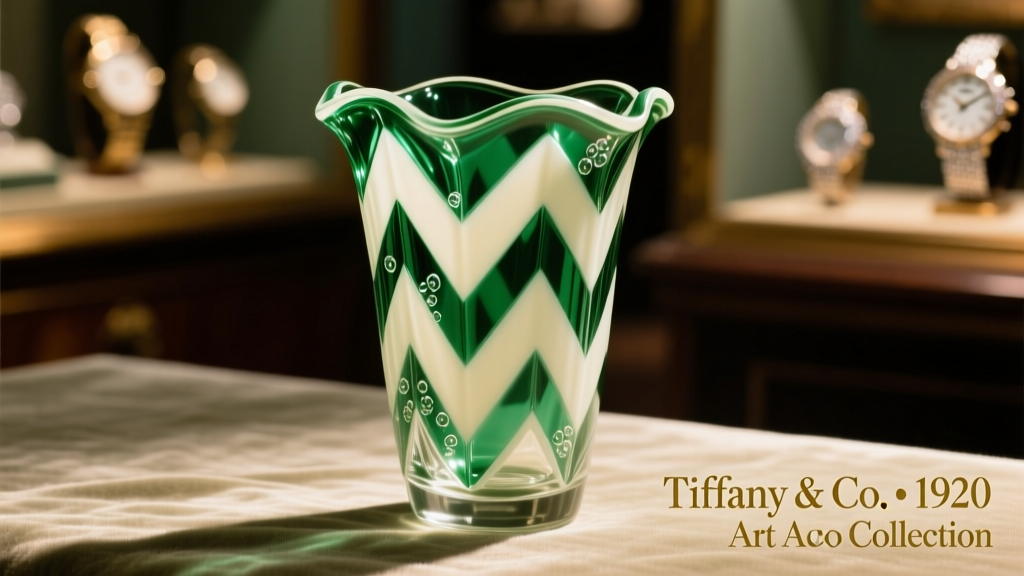
Tiffany Glass Vase: Zigzag Green-Ivory Folded-In Rim (5 × 8½ in) — Provenance, Design Analysis & Market Context
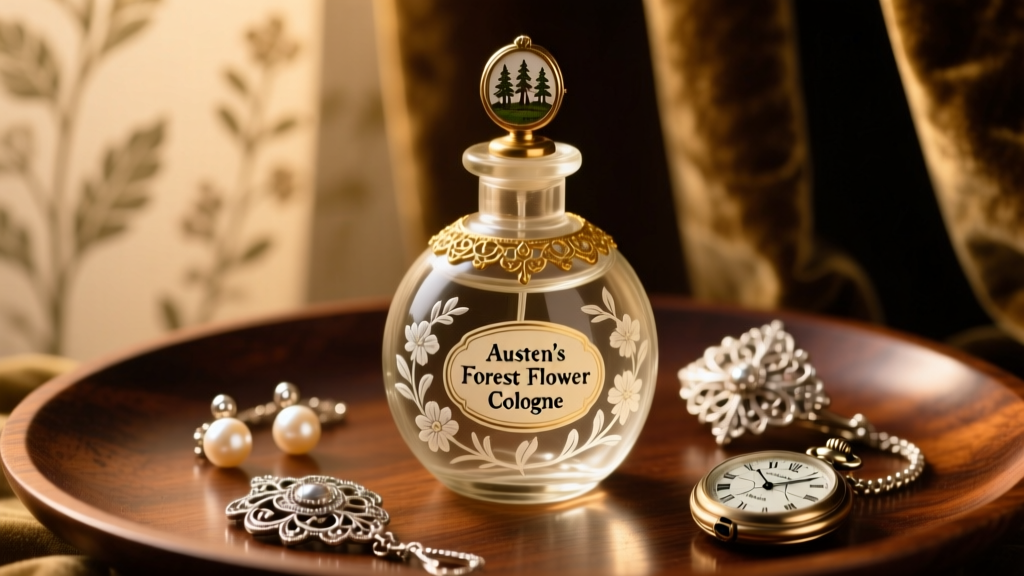
Austen’s Forest Flower Cologne: A Rare 1890 Clear Round Perfume Bottle in Original Condition
Orrefors Decanter: Scandinavian Glass Mastery, Design Legacy, and Collectibility
Betty Boop Doll: Wooden Jointed Construction, Restored Eyes & Hair, Original Black Dress — A 1930s Collectible Appraisal
The Madge Blue Hat Head Vase: A Deep Dive into Napco’s Iconic Ceramic Sculpture (1950s–1960s)
Chintz Cake Plate on Stand: Royal Winton’s Iconic English Porcelain Service Piece
Figure-Eight Link Bracelet in 18K Rose and Green Gold: A 1940s Masterpiece of Artisanal Craftsmanship
Roseville Futura Arrow Vase: A Definitive Guide to the 7-Inch Art Deco Masterpiece
Cambridge Glass Rose Point Sherbet Tall Set: A Collector’s Guide to the Iconic 6-Piece Pattern