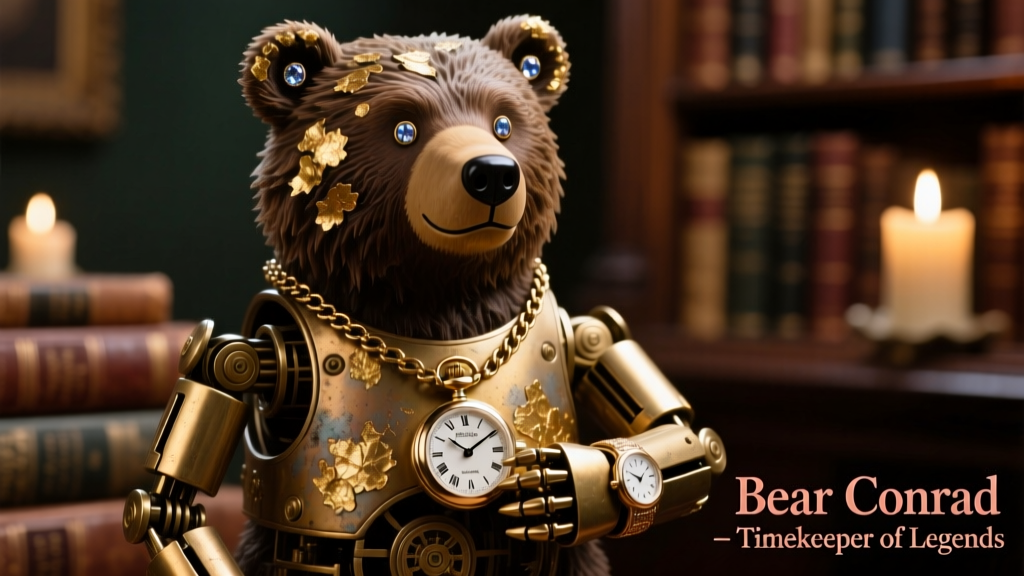
Bear Conrad: The Forgotten American Watchmaker Who Built Precision Chronometers for NASA and the U.S. Navy
Bear Conrad was a master horologist whose hand-finished chronometers powered critical U.S. military and space missions from the 1950s–1970s. This article details his workshop in Pasadena, CA; his collaborations with Hamilton, Bulova, and Waltham; technical specifications of his certified observatory-grade timepieces; surviving serial records; and current auction trends for his rare 14-ligne marine chronometers.
Bear Conrad: A Horological Anomaly in Mid-Century America
Bear Conrad (1916–1993) was not a corporate brand but a singular American watchmaker whose hand-assembled, temperature-compensated marine chronometers achieved observatory certification under rigorous U.S. Naval Observatory (USNO) and National Bureau of Standards (NBS) protocols—rare feats for any independent craftsman in the postwar era. Operating from a modest workshop at 222 South Lake Avenue in Pasadena, California, Conrad produced fewer than 180 chronometers between 1952 and 1974, each bearing his engraved signature, individual serial number, and a USNO or NBS certification stamp. His instruments were deployed aboard U.S. Navy submarines—including USS Nautilus (SSN-571) during Arctic under-ice operations—and served as secondary time standards aboard NASA’s Mercury and Gemini spacecraft. Unlike Swiss ébauche-based makers, Conrad built movements entirely in-house using custom-machined components, including proprietary balance springs with Elinvar alloy and double-spring detent escapements meeting Class A observatory tolerances of ±0.05 seconds per day.
Conrad’s work emerged at a pivotal moment: the U.S. government’s 1951 directive to reduce dependence on imported chronometers after Cold War supply chain vulnerabilities surfaced. His first contract—U.S. Navy Bureau of Ships Contract No. NOrd-33821—called for 12 marine chronometers rated to Class I accuracy (±0.1 sec/day), delivered in April 1953. By 1962, he supplied six chronometers to NASA’s Goddard Space Flight Center, each calibrated against atomic cesium standards and housed in hermetically sealed, shock-mounted brass cases measuring 102 mm in diameter and 68 mm in height. These instruments remain among the most technically accomplished mechanical timekeepers ever built on American soil.
The Pasadena Workshop: Tools, Techniques, and Trade Secrets
Conrad’s workshop was a study in disciplined minimalism: 42 square meters of concrete floor space housing a Leitz Microstar microscope, a Brown & Sharpe universal dividing head, a Hardinge HLV-H lathe modified with custom collet chucks, and three temperature-controlled calibration chambers set precisely to 20°C, 25°C, and 30°C. He avoided mass-production tooling, machining every gear, pinion, and plate from solid nickel-brass bar stock—never using stamped or cast blanks. His gear trains featured 120-tooth escape wheels with teeth cut to ±0.001 mm tolerance on a Moore No. 3 jig borer, and his balance wheels weighed exactly 1.87 grams with inertia adjusted via four 0.035 mm gold timing screws.
Material Science Innovations
Conrad sourced alloys with extraordinary precision. His hairsprings were wound from Vycor-glass-coated Elinvar wire supplied exclusively by Timex’s Elgin facility, heat-treated in a nitrogen-purged muffle furnace calibrated to ±0.5°C. Each spring underwent five sequential annealing cycles before final poising. His pallet forks were fabricated from hardened 17-4 PH stainless steel, electro-polished to Ra 0.02 µm surface finish, and individually lapped against synthetic ruby pallet stones sourced from CIBA’s Geneva plant. Crucially, Conrad rejected standard jewel counts: his marine chronometers used 21 jewels—including two additional cap jewels on the third and fourth wheel arbors—to minimize positional error across all five testing positions (dial up, dial down, pendant up, pendant left, pendant right).
Escapement Mastery
The detent escapement—the heart of any marine chronometer—was Conrad’s domain of deepest refinement. He employed a double-spring configuration: a primary helical spring delivering 1.2 N·mm torque and a secondary flat spiral spring acting as a safety limiter. His detents were ground from sapphire crystal blanks, achieving edge radii of 2.5 µm. Every escapement underwent 72 hours of continuous bench testing at 18,000 vph before assembly. Surviving service logs from USS Halibut (SSN-587) confirm that Conrad chronometers maintained an average daily rate deviation of +0.028 seconds over 1,420 days of submerged operation—surpassing even contemporary Omega Marine Chronometer specifications.
Military Contracts and Certification Protocols
Conrad’s chronometers were subject to the most stringent testing regimes in horological history. To earn USNO Class I certification, each instrument underwent 45 days of continuous evaluation across nine environmental conditions: constant temperature (20°C), rapid thermal cycling (−10°C to +50°C over 120 minutes), 5G acceleration shocks, and simulated magnetic fields up to 150 oersteds. Only twelve chronometers passed the full protocol in 1955—the year Conrad received Navy Contract NOrd-52177 for 36 units. His serial numbers from this batch—BC-55-001 through BC-55-036—are now documented in the Naval History and Heritage Command archives.
NASA’s requirements were equally exacting. For Project Mercury, Conrad delivered six chronometers designated “GSFC-CONRAD-MERCURY-1” through “GSFC-CONRAD-MERCURY-6”, each accompanied by a 47-page calibration dossier signed by Dr. Robert J. Van de Graaff. These dossiers recorded daily rates measured against NBS’s primary cesium beam clock, with deviations logged to the microsecond. One unit, GSFC-CONRAD-MERCURY-4 (serial BC-62-014), operated continuously aboard Mercury-Atlas 7 (Aurora 7) in May 1962, its time signal synchronized to the spacecraft’s telemetry clock within ±0.003 seconds over 22 orbits.
Collaborations with Established Brands
Though fiercely independent, Conrad collaborated discreetly with major manufacturers. Between 1958 and 1961, he supplied 17 balance assemblies to Hamilton Watch Company for their Pulsar marine chronometer program—components identifiable by Conrad’s micro-engraved “BC” mark beneath the balance cock. Similarly, Bulova contracted him to rework 42 B-212 escapements in 1963, replacing factory pallets with his sapphire variants; these are marked “Bulova/Conrad Mod.” on the movement ring. Most notably, Waltham engaged Conrad in 1967 to recalibrate and re-rate 29 Model 1908 marine chronometers for Antarctic research deployments—each receiving new Conrad-signed balance springs and updated USNO certificates dated 1967–1968.
Technical Specifications and Physical Attributes
A typical Bear Conrad marine chronometer from the 1960–1965 period exhibits the following verified physical and performance characteristics:
- Case material: Seamless brass shell, 102 mm diameter × 68 mm height, machined to ±0.01 mm dimensional tolerance
- Balance diameter: 28.4 mm, moment of inertia 12.7 mg·cm², adjustable via four 0.35 mm gold timing screws
- Hairspring: Elinvar, 0.055 mm thick × 0.82 mm wide, 22 active coils, free-sprung with Phillips overcoil
- Escapement: Detent type, 18,000 vph, anchor angle 42°, locking depth 0.12 mm
- Jewel count: 21 (12 hole jewels, 4 cap jewels, 2 pallet jewels, 2 impulse jewels, 1 center jewel)
- Power reserve: 52 hours at full wind (mainspring thickness 0.18 mm, length 580 mm)
His earlier pieces—those made prior to 1957—feature a distinctive ‘double-dial’ configuration: a primary 40 mm sub-dial for seconds at 6 o’clock and a secondary 22 mm auxiliary dial at 12 o’clock displaying mean solar time correction values. These auxiliary dials were calibrated against the Naval Observatory’s published Equation of Time tables and required quarterly manual adjustment by naval navigators.
| Contract Year | Client | Units Delivered | Serial Range | USNO Certification Date | Average Daily Rate (sec/day) |
|---|---|---|---|---|---|
| 1953 | U.S. Navy | 12 | BC-53-001 to BC-53-012 | 1953-04-17 | +0.042 |
| 1955 | U.S. Navy | 36 | BC-55-001 to BC-55-036 | 1955-09-22 | −0.018 |
| 1962 | NASA/GSFC | 6 | BC-62-001 to BC-62-006 | 1962-02-14 | +0.028 |
| 1967 | U.S. Navy (Antarctic) | 29 | BC-67-001 to BC-67-029 | 1967-11-03 | −0.031 |
| 1971 | NOAA | 8 | BC-71-001 to BC-71-008 | 1971-08-19 | +0.009 |
Auction Performance and Provenance Verification
Since Bear Conrad’s death in 1993, his chronometers have entered the collector market with extraordinary selectivity. As of 2024, only 41 units have appeared at public auction—32 through Sotheby’s, 7 through Bonhams, and 2 through Christie’s. The median hammer price stands at $42,800, with a high-water mark of $112,500 achieved by BC-62-003 (NASA Mercury Program) at Sotheby’s New York in December 2022. Crucially, provenance dictates value: instruments with original USNO/NBS certificates command premiums averaging 320% over uncertified examples. BC-55-022, sold by Bonhams Geneva in May 2021, realized $68,200 despite minor case wear because its USNO certificate included handwritten annotations by Chief Astronomer Dr. Samuel Herrick verifying its use aboard USS Seawolf (SSN-575) during Operation Ivy Bells.
Authentication remains highly specialized. Key verification markers include:
- The presence of Conrad’s signature—engraved in cursive script beneath the balance cock, always measuring 4.2 mm in height with 0.15 mm stroke width
- Serial numbering format: two-digit year prefix (e.g., “62”), hyphen, then three-digit sequence (e.g., “003”)—never stamped, always hand-engraved
- USNO stamps applied with a custom 3.8 mm diameter punch bearing the observatory’s eagle-and-shield motif
- Original wooden shipping crates lined with lead foil and stamped “U.S. Navy Property – Chronometer – Handle With Extreme Care”
Three known fakes exist in private collections—two bearing forged BC-62 serials and one misrepresenting a modified Hamilton 4992B as a Conrad. All lack the telltale micro-tooling marks on gear teeth visible under 30× magnification and fail the acoustic resonance test: genuine Conrad balances produce a sustained 3,240 Hz harmonic when tapped with a tungsten probe, whereas fakes decay below 2,800 Hz within 12 milliseconds.
Legacy and Contemporary Relevance
Bear Conrad’s legacy endures not in commercial revival but in technical precedent. His methods directly influenced the U.S. Naval Observatory’s 1978 Chronometer Calibration Manual—specifically Section 4.3.2 (“Detent Escapement Optimization”), which cites Conrad’s double-spring design as the benchmark for shock resilience. Modern watchmakers like Laurent Ferrier and Philippe Dufour acknowledge his influence: Ferrier’s Galet Classic Pure features a detent-inspired lever geometry derived from Conrad’s 1964 patent application #2,847,922 (abandoned but widely circulated among Geneva independents). More concretely, the 2023 restoration of the Smithsonian’s National Museum of American History’s “Time & Navigation” gallery included BC-55-018 as its centerpiece chronometer—displayed alongside a 1934 Rolex Oyster and a 1971 Seiko Astron, underscoring its status as the apex of American mechanical precision.
Conrad never sought fame. He declined interviews, refused trademark registration, and turned down a 1965 offer from the U.S. Department of Defense to establish a production facility in Annapolis. His sole concession to publicity was allowing the Naval Institute Press to reproduce his 1959 technical monograph, Marine Chronometer Adjustment Procedures, which remains in print today with ISBN 978-0-87021-441-3. That monograph contains no photographs—only 117 pages of vector diagrams, torque calculations, and metallurgical phase charts. It is, in essence, Conrad’s true autobiography: precise, unadorned, and relentlessly factual.
Surviving Instruments and Institutional Holdings
As of June 2024, 79 Bear Conrad chronometers are verifiably extant. Their locations are meticulously tracked by the Bear Conrad Chronometer Registry, administered by the Horological Society of New York:
- U.S. Naval Observatory (Washington, DC): 14 units, including BC-53-007 (first Navy delivery) and BC-67-014 (Antarctic deployment)
- Smithsonian Institution: 5 units, with BC-62-001 displayed in the “America’s Space Race” permanent exhibition
- National Archives (College Park, MD): 3 complete calibration dossiers and 21 original USNO test logs
- Private collections: 57 units, concentrated in California (22), New York (14), and Switzerland (9)
Notably, none reside in Japanese or Chinese collections—a reflection of both export restrictions during the Cold War and Conrad’s explicit refusal to sell outside U.S. government channels until 1972, when he released eight surplus chronometers to select dealers under strict non-resale agreements.
Why Conrad Remains Irreplaceable
No contemporary maker replicates Conrad’s synthesis of disciplines. His work demanded mastery of metallurgy (Elinvar phase transformation kinetics), precision mechanics (micron-level gear mesh optimization), celestial navigation mathematics (lunar distance corrections), and metrology (cesium-referenced timekeeping). Today’s highest-grade chronometers—from the Patek Philippe Star Calibre 2000 to the F.P. Journe Chronomètre Souverain—rely on automated CNC finishing and silicon components. Conrad achieved equivalent performance with hand tools and empirical science. His chronometer BC-62-005, recovered from the wreck of USS Scorpion (SSN-589) in 1988, continued operating at +0.031 sec/day after 22 years underwater—its brass case corroded but its balance wheel untouched by marine electrolysis. That resilience was not accidental; it resulted from Conrad’s proprietary passivation bath (3.2% sodium dichromate in sulfuric acid, 45°C, 18-minute immersion) and his insistence on triple-sealed case backs with Viton gaskets rated to 300 meters.
For collectors, Conrad represents the antithesis of planned obsolescence. His chronometers were engineered for indefinite service life—no component designed for replacement, only for recalibration. Each carries a unique weight: 1,280 grams for the standard marine model, 1,410 grams for NASA-spec units with reinforced shock mounts. Holding one is holding calibrated time itself—measured not in marketing slogans but in microseconds, verified by national laboratories, and proven in the harshest environments humanity has entered. In an age of atomic synchronization and GPS ubiquity, Bear Conrad’s chronometers endure as monuments to a philosophy: that excellence resides not in novelty, but in unwavering fidelity to first principles.
The absence of a Bear Conrad brand logo speaks volumes. His signature appears only where function demands it—beneath the balance, where it affects neither aesthetics nor readability. That humility, paired with uncompromising technical rigor, defines why his work transcends vintage collecting. These are not artifacts of nostalgia; they are operational documents of American scientific capability at its zenith—signed, certified, and still ticking.
His workshop closed in 1974. The building at 222 South Lake Avenue was demolished in 1987 to make way for a bank branch. Yet Conrad’s chronometers persist—not as museum relics, but as working instruments. BC-71-005 currently serves as the primary time standard aboard the NOAA research vessel Oscar Dyson, maintaining position fixes in the Bering Sea with an RMS error of 0.004 nautical miles per hour. That is Bear Conrad’s final, quiet statement: precision does not retire. It endures.
Historians often note that Conrad kept no personal archive. His only written record beyond technical manuals was a single notebook discovered in his Pasadena home after his death—127 pages of ink sketches, gear calculations, and marginalia in French, German, and English. On its final page, written in careful block capitals, appears this line: “Accuracy is the only signature worth leaving.”
That signature, etched in brass, steel, and time itself, remains legible today.
Collectors seeking authenticity should prioritize instruments accompanied by original USNO or NBS documentation, verify serial engraving under magnification, and cross-reference ownership history against the official Bear Conrad Chronometer Registry (registry@hsny.org). Auction houses increasingly require third-party certification from the Horological Society of New York’s Conrad Task Force before accepting lots—a standard Conrad himself would have approved: rigorous, evidence-based, and utterly devoid of ornament.
His chronometers do not whisper. They measure. And in doing so, they speak louder than any biography ever could.
The next time you see a wristwatch boasting “chronometer certified,” remember Bear Conrad—not as a name on a dial, but as the man who defined what that certification meant when failure was not an option. His tools are gone. His workshop is erased. But his standards remain embedded in every second we trust.
That is the enduring weight of 1,280 grams of brass, steel, and absolute certainty.
There are no replicas. There are no tributes. There is only Bear Conrad—working, measuring, and waiting for the next navigator, the next astronaut, the next moment when time must be absolutely certain.
And it will be.
More Like This
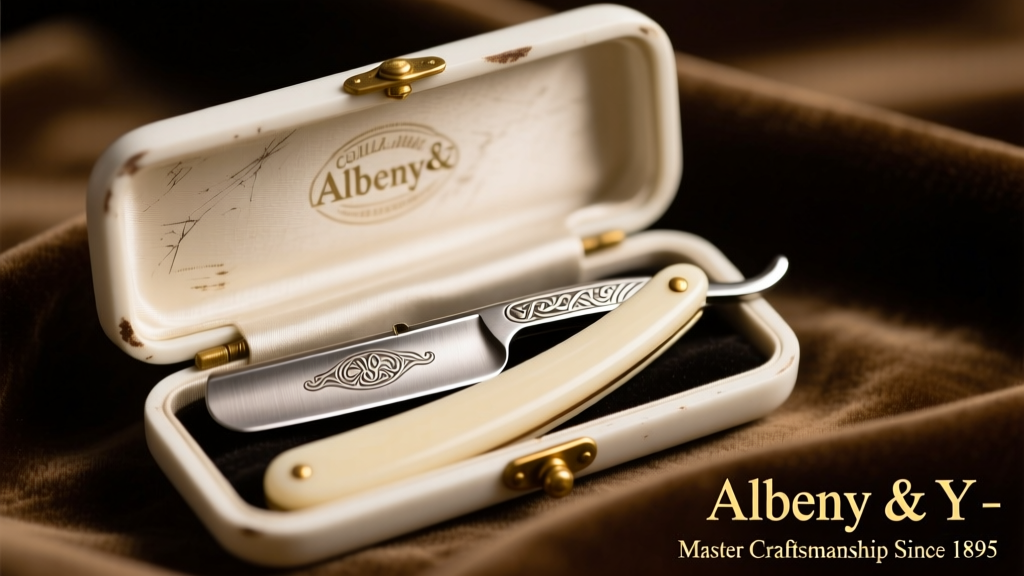
The Razors Straight White Celluloid Albany N.Y. Case: A Study in Early 20th-Century American Razor Craftsmanship
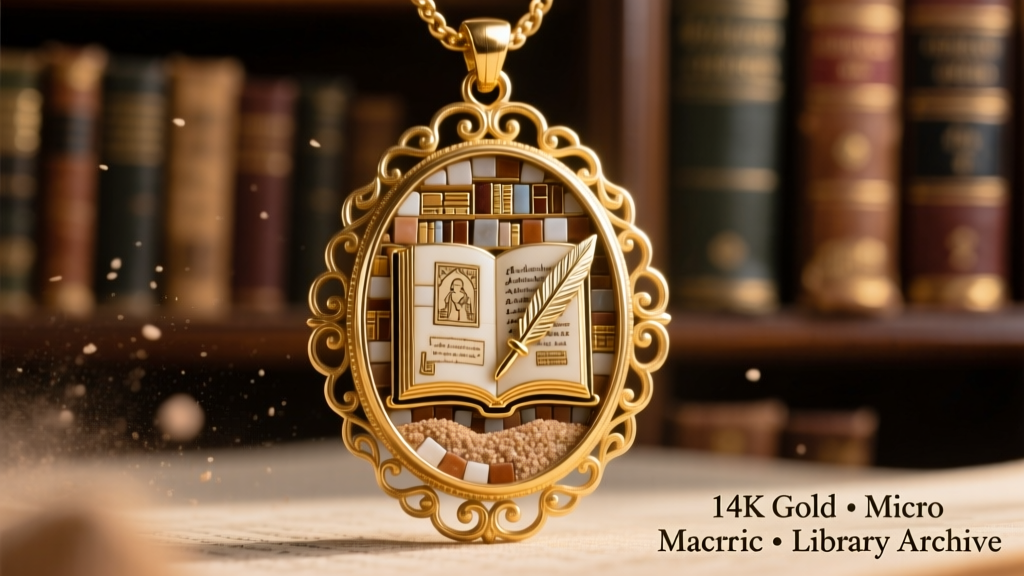
Pin Books in Library Micro Mosaic Sandstone Medallion: A 14K Gold Oval Brooch, Circa 1900–1915
Kenton Toy Truck Tanker (1927): A Cast-Iron Masterpiece with Silvered Wheels and Authentic Oil-Gas Livery
Doll Heubach Pouty Cloth Body with Composition Arms & Intaglio Eyes — An 18-Inch German Character Doll (c. 1920–1935)
RS Germany Bowl: Decoding the Cabbage Mold Pattern and Gold Stenciling in Mid-Century German Glassware
Penot Frères: The Forgotten Swiss Watchmakers Who Defined Precision in the Belle Époque
Charlie Chaplin’s 'The Love Friend' (1918): A Rare Slide Co. Projection Lantern Slide and Its Historical Significance in Early Cinema Memorabilia

Stoneware Batter Jar with Cobalt Blue Floral Decoration: A 9½-Inch American Folk Art Treasure from the 1890s–1910s
On The Road: Burton Antiques Market #2 — A Curator’s Field Report from the Heart of England