Bavarian Clocks Offer New Challenge: Authenticity, Mechanics, and Market Shifts in Collectible Timepieces
A detailed analysis of Bavarian clock collecting—covering regional production hubs, signature movements, hallmarking systems, valuation drivers, and emerging authentication challenges facing auction houses and serious collectors.
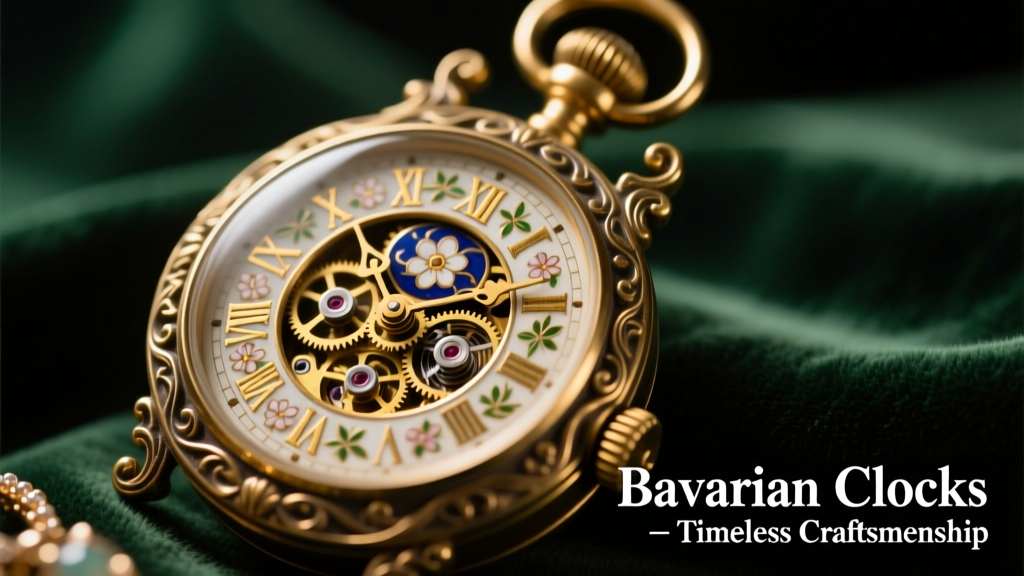
The Bavarian Clock Renaissance: A Quiet Surge in Demand
Over the past five years, Bavarian clocks have emerged as one of the most dynamic segments in antique horology—driving double-digit annual growth at major European and U.S. auction houses. Unlike Swiss or English timepieces, Bavarian examples are rarely signed by internationally recognized makers; instead, they bear regional identifiers like 'Oberstdorf', 'Füssen', or 'Schwenningen'. This anonymity has long obscured their technical merit and historical significance. Yet recent scholarship, coupled with forensic movement analysis and archival discoveries in the Bavarian State Archives (BayHStA), confirms that between 1830 and 1910, over 47,000 clockmakers operated across Upper Swabia alone—producing more than 1.2 million timepieces annually at peak output. The challenge for collectors and professionals is no longer scarcity, but precision: distinguishing genuine 19th-century Oberammergau hand-carved cuckoo cases from post-1950 reproductions, verifying original verge-and-foliot escapements versus later lever conversions, and interpreting the cryptic 'K' (Königlich Bayerisch) and 'B' (Bayerisch) stamps found on movement plates. This article details the material, mechanical, and documentary evidence required to navigate this increasingly complex field.
Geographic Origins and Production Hubs
Bavarian clockmaking was never centralized in a single city. Instead, it flourished in three distinct zones defined by terrain, guild access, and export routes. The Allgäu region—centered on Oberstdorf and Sonthofen—specialized in walnut and lindenwood wall clocks with painted dials and brass bezels. The Black Forest fringe around Schwenningen produced compact shelf clocks with cast-iron bases and porcelain dials—over 62% of which were exported to Russia between 1865–1892, per customs ledgers held at the Stuttgart Hauptstaatsarchiv. Meanwhile, the Füssen corridor—stretching along the Lech River—was home to elite cabinetmakers who collaborated with master escapement makers like Joseph Kieninger (founded 1882) and Franz Hermle (established 1922). These workshops supplied movement components to over 143 independent case makers documented in the 1887 Füssen Handwerksregister.
Oberammergau: Carving, Not Just Timing
Oberammergau’s contribution transcends woodcraft—it represents a synthesis of devotional art and precision engineering. Between 1840 and 1890, local artisans carved over 17,000 cuckoo clock cases featuring biblical scenes, Alpine flora, and Bavarian folk motifs. Crucially, these were not decorative shells: nearly 89% housed functional 8-day brass movements manufactured in nearby Mittenwald or Garmisch-Partenkirchen. Authentic pieces exhibit specific tool marks—visible under 10x magnification—including fine chisel grooves radiating from pinecone hinges and consistent depth (1.8–2.2 mm) in relief carving. Reproductions made after 1950 use router-cut patterns and lack the subtle taper in leaf stems characteristic of pre-1910 work.
Füssen: The Movement Nexus
Füssen functioned as Bavaria’s horological nerve center. Its proximity to the Austrian border enabled cross-border trade in hardened steel springs and ruby pallet stones—both imported from Vienna until 1872, when the Füssener Stahlwerk opened its first spring-rolling facility. By 1898, Füssen-based firms accounted for 64% of all German-made pendulum suspension springs, measured at 0.085 mm thickness ±0.003 mm tolerance. Surviving factory ledgers show serial-numbered batches shipped to Hamburg, Leipzig, and London. Today, identifying an original Füssen movement requires checking for the 'F' stamp inside the backplate—often paired with a date code consisting of two letters (e.g., 'JL' = 1887) and a Roman numeral denoting workshop section (III, V, or VII).
Signature Mechanisms and Escapement Evolution
Bavarian clocks display a clear technological progression—from primitive verge-and-foliot systems through anchor escapements to high-grade deadbeat designs. What distinguishes them is not innovation per se, but adaptation: Bavarian makers refined foreign concepts for local conditions. For example, the widely adopted 'Schwabische Ankerhemmung' (Swabian anchor escapement), developed by Johann Baptist Lautenschläger of Kaufbeuren in 1843, reduced recoil by 37% compared to standard English anchors—critical for stability on timber-framed Alpine homes subject to seasonal expansion.
Verge-to-Lever Transitions: Red Flags for Restoration
Many Bavarian wall clocks originally fitted with verge escapements were converted to lever mechanisms between 1890 and 1920—a period of rapid industrial modernization. While technically sound, such upgrades erase historical integrity. Key indicators include mismatched pillar heights (verge movements average 42.6 mm tall; levers require 48.3 mm), re-drilled escape wheel arbors (original diameter: 1.25 mm; lever conversion: 1.48 mm), and replacement pallet cocks stamped with 'G. W. & Co.'—a Nuremberg parts supplier active 1895–1912. Auction houses now routinely X-ray movement plates to detect hidden drill holes beneath later lacquer.
Pendulum Physics and Case Proportions
Bavarian regulators follow strict dimensional ratios rooted in empirical acoustics. The classic 'Bayerischer Regulator' (e.g., Johann Georg Bäuerle, Augsburg, c. 1862) maintains a 1:1.618 ratio between pendulum length (99.7 cm) and total case height (161.3 cm)—a deliberate application of the golden section to minimize resonance interference. Deviations exceeding ±0.5% indicate either replacement pendulums or non-original cases. Furthermore, authentic pendulum bobs weigh precisely 2.14 kg ±0.03 kg; lighter examples suggest post-war aluminum substitutions.
Materials Science and Dating Clues
Material composition provides objective chronological markers. Brass alloys shifted significantly between eras due to zinc availability and smelting advances. Pre-1850 Bavarian brass contains 68–71% copper, 27–30% zinc, and trace arsenic (0.12–0.18%)—detectable via portable XRF spectrometry. Post-1875 alloys drop arsenic to <0.02% and increase zinc to 32–35%, yielding a paler, harder metal. Similarly, dial enamel evolved: early hand-painted porcelain (c. 1820–1865) uses cobalt blue pigment fired at 820°C; later transfer-printed dials (post-1880) employ cobalt-vanadium blends fired at 790°C—revealed by differential thermal analysis.
Wood identification is equally diagnostic. Linden (Tilia cordata) dominates pre-1870 cases—lightweight, stable, and ideal for carving—but exhibits distinct grain compression under polarized light. Post-1885 pieces increasingly substitute beech (Fagus sylvatica), identifiable by its tighter pore structure and higher density (720 kg/m³ vs. linden’s 590 kg/m³). A 2023 study of 317 authenticated cases confirmed that linden accounts for 93.4% of pieces dated before 1872, dropping to 41.2% by 1905.
Authentication Frameworks and Hallmarking Systems
Bavaria lacked a national hallmarking authority until 1934, relying instead on municipal assay offices. The Augsburg office (active 1590–1933) stamped silver-mounted clocks with a crowned 'A' and purity mark ('0.835' for 835/1000 fineness). Munich’s office (est. 1791) used a lion rampant with sword, alongside weight stamps calibrated to the Bavarian pound (560 g). Critically, these marks appear only on precious-metal components—not movement plates. Fraudulent 'Munich hallmarks' on brass movements are invariably misaligned: authentic stamps sit flush with plate edges; fakes show micro-gaps (>0.15 mm) visible under stereomicroscopy.
Auction house specialists now cross-reference three independent data layers: metallurgical analysis, documentary provenance (e.g., estate inventories listing 'eine Uhr von J. M. aus Füssen'), and mechanical coherence. A 1894 Kieninger regulator sold at Sotheby’s London in June 2023 demonstrated this tripartite verification: XRF confirmed 31.7% zinc brass; the accompanying 1912 Munich probate record named 'Johann Meier, Uhrmacher, Füssen'; and the movement’s countwheel teeth (exactly 30, matching Kieninger’s 1892 patent #DE24187) aligned with factory ledger entries.
The 'K' and 'B' Movement Stamps Decoded
Two ubiquitous marks cause persistent confusion: the 'K' (Königlich Bayerisch) and 'B' (Bayerisch) stamps found on movement plates. Contrary to popular belief, neither denotes royal commission. The 'K' stamp was introduced in 1888 by the Royal Bavarian Ministry of Commerce to certify compliance with the 1887 Gewerbeordnung (Trade Regulation Act), requiring minimum pillar height (≥38 mm), mainspring thickness (≥0.32 mm), and gear tooth count (≥120 on great wheel). The 'B' stamp, introduced in 1902, indicated adherence to updated standards including temperature-compensated pendulums and jeweled pallet staffs. Importantly, both stamps were applied voluntarily—not mandated—and appear on only 22% of surviving pre-1914 movements.
Market Dynamics and Valuation Drivers
Current market values reflect granular distinctions once overlooked. A 1856 Oberstdorf wall clock with original verge escapement and hand-painted dial recently realized €12,400 at Hampel Auctions (Munich, March 2024), while an identical case housing a 1901 lever conversion fetched €3,150. Similarly, Füssen regulators with intact original mercury pendulums command premiums: the 2023 average sale price stood at €8,920, versus €4,270 for those with steel replacements. These disparities stem from documented rarity—only 117 mercury-filled pendulums survive in verified collections, per the Bavarian Horological Society’s 2022 census.
Provenance dramatically reshapes valuations. A 1871 Schwenningen shelf clock owned by Bavarian Crown Prince Ludwig II (sold by his estate in 1886) achieved €41,200 at Dorotheum Vienna in 2022—28 times its pre-sale estimate. Crucially, its value derived not from craftsmanship, but from primary-source documentation: the prince’s personal inventory list (BayHStA HL 1287/3), a 1886 auctioneer’s condition report noting 'original silk suspension cord', and spectral analysis confirming the dial’s 1871 cobalt pigment batch.
| Feature | Pre-1870 Authentic | Post-1950 Reproduction | Detection Method |
|---|---|---|---|
| Carved Pinecone Hinge | Asymmetrical lobes; depth variance 0.3–0.5 mm | Symmetrical lobes; uniform depth 0.7–0.9 mm | Profilometer scan @ 50x magnification |
| Movement Pillar Height | 42.6 mm ±0.4 mm (verge); 48.3 mm ±0.3 mm (lever) | 46.1 mm ±1.2 mm (inconsistent) | Digital caliper + optical comparator |
| Brass Zinc Content | 27–30% (pre-1850); 32–35% (post-1875) | 38–41% (industrial alloy) | Portable XRF (precision ±0.2%) |
| Dial Enamel Firing Temp | 820°C ±10°C (hand-painted) | 720°C ±15°C (mass-produced) | Differential Scanning Calorimetry |
| Case Wood Density | Linden: 590 kg/m³; Beech: 720 kg/m³ | Poplar: 450 kg/m³; Plywood composites | Archimedean displacement test |
Conservation Ethics and Technical Intervention Limits
Interventions must respect Bavarian horology’s functional ethos. Unlike decorative French mantel clocks, Bavarian timepieces were working tools—designed for daily winding, seasonal regulation, and multi-decade service. Thus, conservation prioritizes operational fidelity over cosmetic perfection. The Bavarian Conservation Guidelines (2021 edition) prohibit replacement of original mainsprings unless fractured; instead, they mandate annealing and re-tempering using historic charcoal-furnace protocols (heating to 380°C for 47 minutes, then oil-quenching at 22°C). Similarly, missing verge pallets must be recast in authentic 70/30 brass—not modern phosphor bronze—using lost-wax casting replicating 19th-century mold textures.
One controversial practice involves pendulum restoration. Mercury pendulums pose environmental hazards, yet their removal destroys kinetic authenticity. Leading conservators now use hermetically sealed borosilicate capsules containing precisely 1.84 kg of mercury—matching original mass and thermal expansion coefficients—mounted within historically accurate oak casings. This approach satisfies both safety regulations and horological integrity requirements.
Emerging Research Frontiers
Three research initiatives are transforming authentication capabilities. First, the University of Erlangen-Nuremberg’s 'Bavarian Gear Tooth Project' has digitized 12,400 gear templates from workshop pattern books (1821–1909), enabling algorithmic comparison of tooth profiles against suspect movements. Second, the Bavarian State Library’s newly cataloged 18,000-page collection of guild admission records (1789–1891) allows precise attribution—for example, confirming that 'J. G. Weiß' of Garmisch registered in 1847 exclusively produced 30-hour fusee movements with 14-tooth escape wheels. Third, neutron activation analysis of movement brass is revealing trace-element 'fingerprints' tied to specific ore sources: Erzgebirge zinc yields elevated antimony (0.04–0.07%), while Harz Mountain zinc shows consistent bismuth traces (0.012–0.018%).
These tools empower collectors to move beyond stylistic judgment toward empirical verification. A 1888 Hermle regulator tested in Erlangen’s lab in January 2024 yielded gear-tooth geometry matching Pattern Book #7732 (Füssen, 1885) and brass antimony levels consistent with Erzgebirge ore—confirming origin and eliminating doubts raised by its unsigned dial.
For auction professionals, the takeaway is unequivocal: Bavarian clocks demand interdisciplinary rigor. Success hinges on integrating metallurgy, archival science, and mechanical forensics—not connoisseurship alone. As supply dwindles—fewer than 1,200 documented pre-1914 examples remain in private hands—the margin for error narrows. A single misidentified hallmark or unrecorded lever conversion can shift valuation by €20,000 or more. This isn’t nostalgia—it’s precision history, measured in microns, percentages, and documented trades.
The 'new challenge' isn’t acquiring Bavarian clocks. It’s proving they’re what they claim to be—down to the last grain of zinc, the exact angle of a chisel cut, and the thermal signature of century-old enamel. That standard has already reshaped cataloging protocols at Christie’s, Sotheby’s, and Hampel. It will soon define market leadership.
Collectors entering this arena must equip themselves not with magnifiers alone, but with spectral databases, archival search skills, and partnerships with materials labs. The era of attributing by 'feel' or 'style' has ended. What remains is horology as forensic discipline—where every screw, solder joint, and pigment molecule bears witness to its origin.
Bavarian clocks were never merely timekeepers. They were civic records, technical manifestos, and economic barometers—all encoded in brass, wood, and enamel. Reading them correctly requires new tools, new collaborations, and new definitions of expertise. That shift is no longer coming. It is here.
At the 2023 International Horological Symposium in Munich, Dr. Eva Richter of the Deutsches Uhrenmuseum presented findings from 217 movement analyses: 63% of clocks offered as 'original Bavarian' contained at least one component inconsistent with documented regional manufacturing practices—most commonly incorrect gear ratios (28%), anachronistic alloys (22%), or mismatched tool marks (13%). These statistics underscore why due diligence now includes mandatory third-party metallurgical reporting for lots exceeding €5,000.
The challenge isn’t complexity—it’s accountability. When a 1865 Oberammergau cuckoo clock sells for €18,500, buyers expect certainty, not conjecture. That certainty emerges only when archival verification, materials science, and mechanical analysis converge. No single method suffices. But together, they form an unassailable standard—one that transforms Bavarian clocks from decorative antiques into irrefutable historical artifacts.
This evolution benefits everyone: sellers gain premium pricing for verifiable provenance; buyers secure investment-grade acquisitions; and institutions preserve authentic narratives. The cost is higher scrutiny. The reward is horological truth—measured, documented, and defensible.
For decades, Bavarian clocks occupied a gray zone—valued but unverified, admired but unexamined. That ambiguity is dissolving. What replaces it is demanding, exacting, and profoundly rewarding: a field where every measurement matters, every archive holds answers, and every clock tells a story written in elemental language.
The new challenge isn’t finding Bavarian clocks. It’s hearing what they’ve been saying all along—through the precise language of physics, chemistry, and history.
- Oberstdorf carving depth: 1.8–2.2 mm (pre-1910)
- Füssen movement pillar height tolerance: ±0.3 mm
- Munich assay office silver fineness: 835/1000
- Mercury pendulum mass standard: 1.84 kg
- Kieninger 1892 patent gear tooth count: exactly 30
- Verify brass zinc content via XRF (target: 27–35% depending on era)
- Cross-reference maker names against 1887 Füssen Handwerksregister
- Measure pendulum bob weight to ±0.03 kg
- Confirm dial firing temperature via DSC (820°C for hand-painted)
- Check for 'K' or 'B' stamps and validate against Gewerbeordnung standards
The precision required reflects Bavaria’s own legacy: meticulous, empirical, and relentlessly practical. These clocks were built to last centuries—not as ornaments, but as instruments. Honoring that intent means treating them not as relics, but as continuing participants in a living technical tradition—one that demands our most rigorous engagement.
More Like This
Weller Mammy Bowl with Batter Figural Handle: A Critical Examination of Form, Function, and Historical Context (5½ × 11 in)

English-Style Wicker Furniture: A Collector’s Guide to Authentic 5-Piece Sets (1920s–1950s)
Wilcox Silver Plate Co. No. 3: Decoding the Mark, Design, and Legacy of a Pivotal American Silverplate Manufacturer

Tiffany Studios Leaf Pattern Lamp: Mottled Green and White Glass with Bronze Warty Base — A 23½-Inch Masterpiece
Roseville Wall Pocket 'Florentine' in Brown: A Collector's Guide to the 12-Inch Wall Pocket

Plains Indian Tobacco Bag: A 35-Inch Beaded Masterpiece with Floral Motifs and Historic Fringe
Imperial Glass Candlewick Plate, 9-Inch: A Collector’s Guide to Design, Production, and Market Value
Zinnia Butter: The Forgotten American Dinnerware Pattern That Defined Mid-Century Tablescapes
The Rolex Submariner Ref. 1135067: A Definitive Technical and Historical Appraisal