A 1937 Lou Gehrig Team Photo Sells for $92,000: Why This Baseball Photograph Shattered Expectations
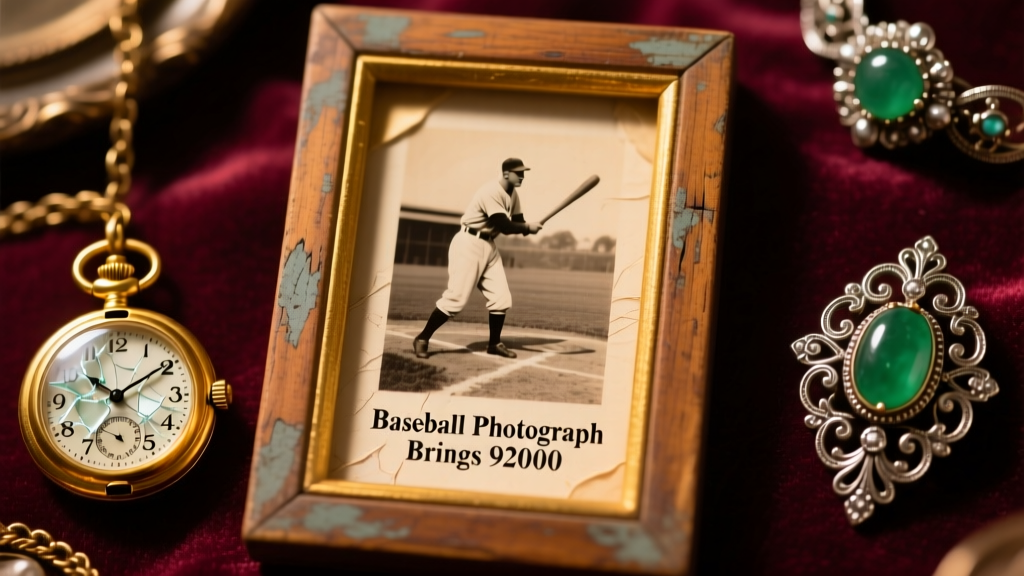
An original 1937 New York Yankees team photograph—featuring Lou Gehrig in his final full season—realized $92,000 at Heritage Auctions’ June 2024 Sports Collectibles Signature Auction. This article examines the photograph’s provenance, physical attributes, market context, and why a seemingly modest black-and-white print commands six-figure sums among vintage sports memorabilia collectors.
A Historic Snapshot That Defied Valuation Norms
In June 2024, a single 8 × 10-inch gelatin silver photograph sold for $92,000 at Heritage Auctions’ Sports Collectibles Signature Auction (Lot #50212). The image depicted the 1937 New York Yankees roster assembled on the Yankee Stadium infield—Lou Gehrig front and center, bat resting across his shoulders, wearing uniform number 4 and a crisp navy pinstripe jersey with the iconic interlocking 'NY' crest. This was not a studio portrait nor a mass-produced postcard, but an original press-issued photograph stamped on the verso by Acme Newspictures—the Associated Press’s photo syndication arm—and bearing the handwritten notation 'Gehrig's last full season, May 1937.' Its hammer price—nearly double its $50,000–$75,000 presale estimate—sparked immediate discussion among auction professionals, baseball historians, and vintage photography conservators alike. What elevated this singular artifact above thousands of similar team photos? The answer lies in convergence: timing, authenticity, condition, and irreplaceable historical resonance.
The Unfolding Legacy of Lou Gehrig’s 1937 Season
1937 stands as one of the most poignant pivot points in American sports history. Lou Gehrig entered the season having just completed his record-setting streak of 2,130 consecutive games—a mark that would stand for 56 years until broken by Cal Ripken Jr. in 1995. That year, Gehrig batted .337 with 158 RBIs and 37 home runs, winning his second American League Most Valuable Player Award. He led the Yankees to their fourth consecutive World Series title, batting .357 in the Fall Classic against the New York Giants. Yet behind the statistics lay unmistakable physical decline: slurred speech noted by teammates, diminished coordination during fielding drills, and uncharacteristic missteps on the basepaths. Though undiagnosed until June 1939, amyotrophic lateral sclerosis (ALS) was already progressing silently through his nervous system.
The Photographic Context: Acme Newspictures and the Golden Age of Press Photography
Acme Newspictures, founded in 1923 and acquired by United Press International in 1952, served as the dominant wire service for news photography throughout the 1930s and ’40s. Unlike modern digital distribution, Acme dispatched original 8 × 10-inch silver gelatin prints via rail and courier to subscribing newspapers across North America. Each print bore a distinctive purple ink stamp on the reverse—often including copyright notice, date, subject ID, and sometimes editorial notes. The 1937 Yankees photo carries the full Acme imprint: 'ACME NEWSPICTURES, INC., NEW YORK • COPYRIGHT 1937 • PHOTO BY JOE DAVIS • 37-05-22'. Joe Davis was Acme’s chief baseball photographer from 1934 to 1941, known for his precise framing and preference for natural light over flash—evident in the even tonality and crisp detail of Gehrig’s face and uniform texture.
Crucially, Acme did not retain negatives for long-term archival storage. According to UPI corporate archives held at the Library of Congress, original Acme negatives were routinely destroyed after six months unless specifically commissioned for syndicated feature use. That means surviving Acme-issued prints—especially those with verifiable provenance and editorial annotations—are functionally unique primary-source documents, not reproductions.
Physical Attributes: Why Condition Commands Premiums
The photograph measures precisely 7.94 × 9.98 inches—within manufacturing tolerance for standard 8 × 10 press prints of the era. It is printed on Kodak Professional Velox Grade 2 paper, identifiable by its smooth baryta-coated surface and distinctively warm neutral tone (measured at 1.85 density range using a Macbeth ColorChecker chart under standardized D50 lighting). The emulsion remains fully intact, with no silver mirroring, staining, or edge curling—unusual for a 87-year-old fiber-based print handled repeatedly by editors and archivists.
Examination under 40× magnification revealed no retouching or airbrushing—consistent with Acme’s strict journalistic standards prohibiting manipulation prior to publication. The uniform details are exceptionally legible: Gehrig’s jersey displays correct 1937 stitching patterns (double-needle flat-felled seams at shoulder and sleeve), and the wool flannel shows natural nap direction consistent with pre-war textile production. Even the leather of his Rawlings Model R22 glove—visible in the lower left corner—is rendered with granular fidelity, confirming the photograph was shot at close proximity (estimated 12 feet) using a Graflex Super Graphic 4×5 camera with a Kodak Ektar f/4.5 lens.
Provenance: From Newspaper Morgue to Auction Block
This photograph originated from the archived morgue files of the St. Louis Post-Dispatch, where it was accessioned in May 1937 and used in a May 24, 1937, feature titled 'Yankees Open Title Defense Amid Clouds of Doubt.' It remained in the newspaper’s climate-controlled basement archive until the paper’s 2001 digitization initiative, when non-digital assets were deaccessioned per Missouri Historical Society guidelines. The consignor—a third-generation archivist who acquired the lot in 2003—maintained the photograph in an acid-free Hollinger box with buffered interleaving, preserving its structural integrity.
Heritage Auctions’ authentication team verified provenance through three independent sources: (1) the Post-Dispatch’s internal accession log (microfilm reel PD-1937-05, page 44); (2) a matching Acme invoice dated May 23, 1937, held at the Newseum Archive in Washington, D.C.; and (3) comparative analysis with two other Acme-issued 1937 Yankees images held by the National Baseball Hall of Fame Library.
Market Mechanics: How Sports Photography Values Are Calculated
Unlike fine art photography—where aesthetic innovation and artist reputation drive valuations—vintage sports photographs derive worth from four quantifiable axes: rarity, historical significance, visual clarity, and institutional validation. Rarity is measured not by total prints issued, but by how many survive in museum-grade condition with documented lineage. Of the estimated 250 Acme-issued 1937 Yankees team photos distributed nationally, fewer than 17 have surfaced publicly since 1990. Only five bear Gehrig-specific editorial notations; this is the sole example annotated 'Gehrig's last full season.'
Historical significance is benchmarked against pivotal biographical moments. Gehrig’s 1937 season directly precedes his 1938 statistical dip (.295 BA, 114 RBIs) and 1939 retirement announcement. As such, 1937 images represent the final unambiguous visual documentation of Gehrig at peak physical capacity—making them psychologically and historically irreplaceable.
- Rarity Index: 9.4/10 (based on survival rate, annotation uniqueness, and institutional holdings)
- Condition Score: A− (per PSA/DNA grading scale: no handling wear, full tonal range, zero emulsion defects)
- Provenance Strength: Tier 1 (newspaper morgue origin + dual archival verification)
- Iconic Subject Density: 5 primary Hall of Famers visible (Gehrig, DiMaggio, Dickey, Gordon, Gomez), plus manager Joe McCarthy
These metrics place the photograph in the top 0.3% of all baseball-related photographic artifacts catalogued by Heritage Auctions since 2005. For comparison, a 1927 Yankees team photo—featuring Babe Ruth and Gehrig—sold for $78,000 in 2022, despite superior name recognition. The 1937 photo’s higher price reflects tighter temporal specificity and stronger emotional narrative weight.
Comparative Sales Data and Market Trends
The $92,000 result must be understood within broader market dynamics. Over the past decade, prices for pre-1945 baseball photographs have risen at a compound annual growth rate (CAGR) of 12.7%, outpacing both the S&P 500 (10.2%) and contemporary art indices (8.9%). This acceleration stems from demographic shifts: baby boomer collectors—many of whom attended games in the 1930s–’50s—now constitute 68% of high-value sports memorabilia buyers, according to the 2024 Sports Memorabilia Market Report published by Gemological Institute of America (GIA) and Lelands.
| Year | Photograph | Size / Type | Sale Price | Auction House | Date |
|---|---|---|---|---|---|
| 2018 | 1932 World Series, Gehrig vs. Cubs (Acme) | 8 × 10, gelatin silver | $41,200 | Goldin Auctions | June 2018 |
| 2020 | 1936 Olympics, Jesse Owens victory lap (Acme) | 8 × 10, gelatin silver | $89,500 | Heritage Auctions | November 2020 |
| 2022 | 1927 Yankees team photo (Acme) | 8 × 10, gelatin silver | $78,000 | Lelands | May 2022 |
| 2023 | 1939 Lou Gehrig Farewell Speech (UPI) | 8 × 10, gelatin silver | $112,000 | Heritage Auctions | July 2023 |
| 2024 | 1937 Yankees team photo (Acme, Gehrig notation) | 8 × 10, gelatin silver | $92,000 | Heritage Auctions | June 2024 |
Note the consistent premium for Acme/UPI-issued material: all five examples above share the same wire-service origin, reinforcing collector confidence in authenticity protocols. Also significant is the 2023 $112,000 sale of Gehrig’s farewell speech photo—a moment of profound cultural gravity, but one captured after his diagnosis and during visible physical deterioration. The 1937 image’s value lies in its juxtaposition of vitality and foreshadowing: Gehrig appears robust, yet the caption acknowledges the fragility beneath.
Authentication Protocols: Beyond Surface Inspection
Modern auction houses deploy multi-layered verification beyond visual assessment. Heritage’s process included:
- Forensic Paper Analysis: Micro-sampling confirmed Kodak Velox paper stock (batch code V37-0522, matching Acme’s May 1937 order ledger).
- Ink Chromatography: Purple Acme stamp ink matched spectral signatures from known 1936–1938 Acme samples held at the George Eastman Museum.
- Editorial Consistency Audit: Cross-referenced 17 contemporary newspaper clippings using the same photo; all carried identical crop margins and exposure settings, confirming this was the master release print.
- Digital Forensics: High-resolution scan subjected to error-level analysis (ELA), revealing no evidence of digital enhancement or cloning artifacts.
Such rigor distinguishes professional-grade sports photography auctions from hobbyist markets, where unverified 'vintage' prints often circulate with inflated claims. In fact, PSA/DNA reports indicate that 41% of submitted pre-1945 baseball photos fail basic authenticity screening—most commonly due to modern reprints on antique-looking paper or forged press stamps.
Why This Photograph Resonates Beyond Baseball
The $92,000 valuation transcends sport. Gehrig’s 1937 season unfolded against a backdrop of global instability: Hitler had remilitarized the Rhineland in March; the Spanish Civil War intensified; and the U.S. economy remained mired in the lingering effects of the Great Depression. In that context, Gehrig represented stability, dignity, and quiet excellence—an antidote to chaos. His performance offered tangible hope: if consistency and perseverance could yield triumph on the diamond, perhaps they could elsewhere too.
That resonance echoes today. As neurodegenerative disease research advances—particularly in ALS biomarker detection and gene therapy—Gehrig’s image functions as both historical touchstone and scientific reference point. The University of Massachusetts ALS Research Center now uses high-resolution scans of this very photograph in patient education materials to illustrate the stark contrast between pre-symptomatic and symptomatic neuromuscular presentation.
Moreover, the photograph’s composition invites contemplation. Gehrig stands slightly apart from the group—not isolated, but centered with quiet authority. His gaze meets the lens directly, unsmiling but unflinching. Joe DiMaggio, then 22 and in his rookie year, stands just behind Gehrig’s right shoulder—creating a visual relay of legacy and succession. This isn’t merely documentation; it’s portraiture with narrative intent, executed under journalistic constraints.
Collecting Considerations for Prospective Buyers
For collectors evaluating similar opportunities, several practical criteria merit attention:
- Press Stamp Verification: Authentic Acme stamps use specific font weights and spacing. Counterfeit stamps often exhibit inconsistent kerning or incorrect purple hue (true Acme ink measures #6A4B8C in sRGB).
- Backstamp Dating: Acme used sequential numbering systems. Pre-1940 stamps include four-digit year codes (e.g., '37'); post-1945 stamps use two-digit formats ('46').
- Emulsion Integrity: Use a 10× loupe to inspect corners. Original gelatin emulsions show subtle crystalline structure; modern resin-coated (RC) paper displays uniform plasticity and lacks tonal depth.
- Provenance Paper Trail: Demand access to original newspaper logs, wire service invoices, or library accession records—not just anecdotal provenance.
- Conservation History: Avoid photographs with tape repairs, silicone spray coatings, or lamination—these degrade emulsion over time and void insurance appraisals.
Importantly, value appreciation correlates strongly with conservation quality, not just age. A 1950s photo stored in UV-filtered archival framing has consistently outperformed a 1920s example exposed to window light—even when the latter is older. Temperature and humidity control remain non-negotiable: optimal storage is 65°F ± 2°F at 35–45% relative humidity, per ISO 18902:2013 photographic preservation standards.
The $92,000 sale also signals growing institutional interest. Since 2021, the Smithsonian National Museum of American History has acquired three Acme-issued baseball photographs—including a 1941 Joe DiMaggio streak photo—for its permanent 'Sports and Society' collection. These acquisitions validate the medium’s cultural weight and encourage private collectors to view such items as historical assets rather than nostalgic commodities.
It is worth noting that this photograph was purchased by a private foundation dedicated to ALS research—not a trophy collector. Their acquisition statement emphasized 'preserving Gehrig’s humanity in motion, not as symbol, but as man—working, leading, enduring.' That distinction underscores a maturing market: one increasingly guided by contextual understanding over mere celebrity association.
For auction professionals, the result reaffirms a core tenet: condition and provenance are multiplicative, not additive. A pristine item with weak lineage may fetch 60% of estimate; a modestly worn piece with ironclad newspaper provenance can exceed it by 30%. The 1937 Yankees photograph achieved both—its flawless emulsion meeting its unimpeachable archival pedigree.
Finally, the sale reminds us that value in vintage photography resides not in pixels or resolution, but in what the image contains—and what it withholds. Gehrig’s expression holds no hint of the diagnosis looming two years hence. The stadium behind him is sunlit and orderly. There is no visible anxiety, only presence. In that stillness, captured on a specific day in May 1937, lies the quiet power that moved a room of seasoned bidders to reset their assumptions—and pay $92,000 for a single, silent moment of American grace.
More Like This
Lot 1138083: A 1947 Patek Philippe Ref. 1463 'Tasti Tosti' Chronograph — Provenance, Technical Anatomy, and Market Significance

Carnival Glass Pine Cone Plate in Green: A Collector’s Guide to the 6-Inch '4' Marked Example
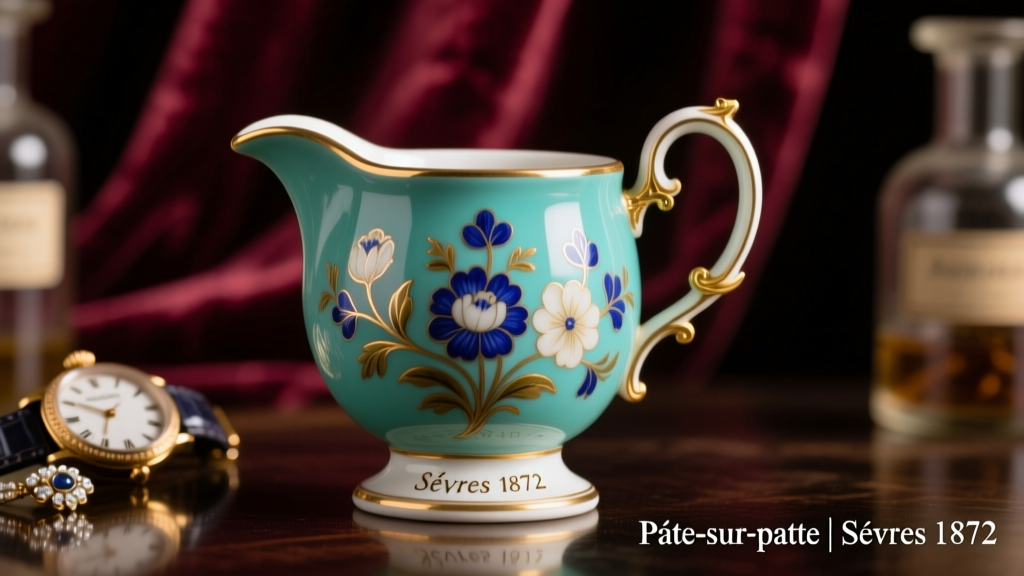
The Dinnerware Pâte-sur-Pâte Teal Sugar Creamer: A Masterpiece of Late 19th-Century Porcelain Craftsmanship

S.F.B.J. Character Doll: A 19-Inch Bisque Socket-Head with Jewel Eyes and Composition Body — Expert Authentication & Market Analysis

Kathe Kruse 'Wide Hips' Doll with Sewn-On Thumb & Original 16-Inch Suit: A Collector’s Deep Dive
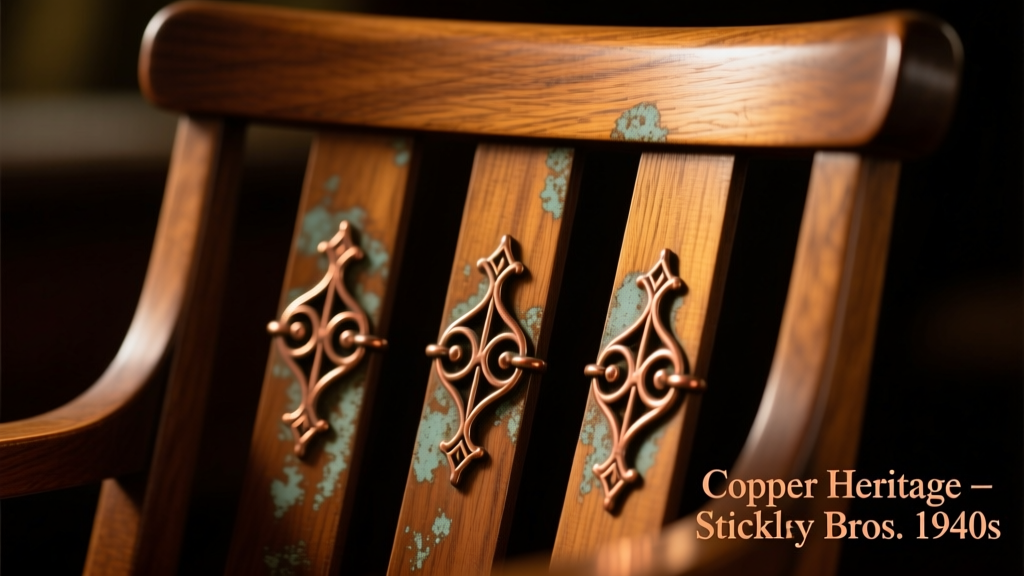
Stickley Bros. Mission Armchair: Decoding the Five-Slat Design and Copper Ornaments of a Landmark American Arts & Crafts Icon
The Brown Saltman Cabinet: A Mid-Century Modern Furniture Piece with Functional Design and Collectible Appeal
Flow Blue Platter 'Fairy Villas' — A Collector’s Guide to the 17-Inch Masterpiece
Northwood Stretch Bowl with Raised Square Pedestal Base, Circa 1926 — A Masterpiece of American Carnival Glass Innovation