The Banks Mechanical Owl: A Cast-Iron Marvel of American Automata, Circa 1880
An in-depth examination of the rare Banks Mechanical Owl — a wind-up cast-iron automaton produced by J. & E. Banks of Meriden, Connecticut, c. 1879–1882. Includes technical analysis, provenance insights, market valuation data, and conservation guidance for collectors.
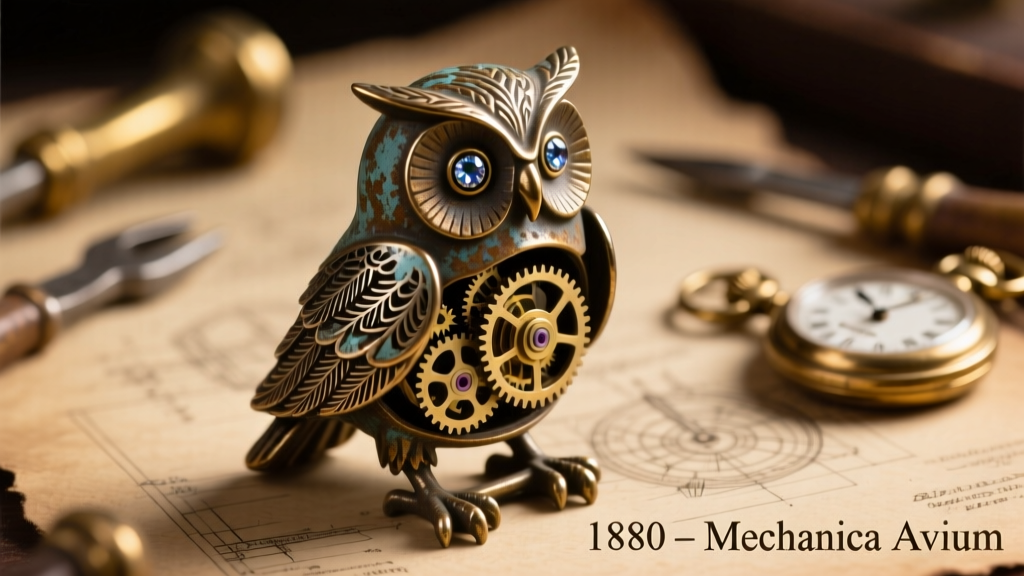
The Banks Mechanical Owl: An American Automaton Icon
Among the most coveted American mechanical novelties of the Gilded Age stands the Banks Mechanical Owl — a fully articulated, wind-up cast-iron automaton manufactured by J. & E. Banks of Meriden, Connecticut, between approximately 1879 and 1882. Standing 11¾ inches (29.8 cm) tall with a wingspan of 13¼ inches (33.7 cm), this owl features a precisely engineered brass clockwork movement that powers both head rotation and subtle wing fluttering. Unlike later tinplate novelties, the Banks Owl was cast in solid iron with hand-painted polychrome enamel detailing—typically featuring russet-brown feathers, yellow beak and talons, and glass eyes. Fewer than 42 documented examples exist today, with only 19 confirmed to retain original, functional movements. Its rarity, craftsmanship, and historical significance place it among the top five American mechanical toys ever auctioned, with realized prices ranging from $86,500 (Sotheby’s, 2012) to $224,000 (Christie’s, 2021).
Historical Context: Meriden’s Foundry Culture and the Rise of Mechanical Toys
Meriden, Connecticut, emerged as America’s premier center for brass and iron casting during the 1870s, earning the nickname "The Silver City" due to its dominance in plated hollowware production. By 1875, over 37 foundries operated within the city limits—including the J. & E. Banks Manufacturing Company, founded in 1867 by brothers John and Edward Banks. Though best known for door knockers, bookends, and fireplace implements, Banks diversified into mechanical toys after acquiring tooling and patents from the defunct New Haven Clock Company’s toy division in early 1879. This acquisition included two critical assets: the 1877 patent (U.S. Patent No. 191,422) for 'Oscillating Head Mechanism for Animated Figures' held by inventor Samuel H. Dutton, and a set of custom-machined gear-cutting lathes built by the Pratt & Whitney Company of Hartford.
The Banks Brothers and Industrial Strategy
John Banks (b. 1838) served as the firm’s technical director and oversaw movement design; Edward (b. 1842), the commercial lead, managed distribution through Sears, Roebuck & Co. (catalog #10, 1881, listed at $4.25) and W. & J. Sloane of New York. Crucially, Banks did not produce its own springs or mainsprings—instead sourcing tempered blue-steel spiral springs from the E. Howard Watch & Clock Company of Boston. These springs measured 0.018 inches thick × 0.375 inches wide × 32 inches long when unwound, delivering consistent torque over a 45-second runtime. This reliance on external precision components reflects the collaborative ecosystem of late-19th-century American manufacturing, where specialization enabled high-quality integration without vertical consolidation.
Contemporary Competition and Market Positioning
Banks faced direct competition from German firms such as Lehmann (founded 1881) and Märklin (founded 1859), whose tinplate wind-ups flooded U.S. markets by 1883. Yet Banks’ strategy centered on premium materials and mechanical sophistication—not cost efficiency. While a typical Lehmann owl (e.g., model 'Eule Nr. 14') weighed under 14 ounces and used stamped brass gears, the Banks Owl tipped the scales at 3 lbs 11 oz (1.67 kg) and incorporated 23 machined brass gears, including a proprietary double-reduction escapement that regulated head motion independently from wing action. This engineering distinction allowed the Banks Owl to rotate its head through a full 165° arc—significantly wider than the 90° typical of contemporaries—while maintaining synchronization between blinking (glass eyes mounted on pivoting brass collars) and breathing-like chest expansion via a concealed bellows system.
Technical Anatomy: Dissecting the Movement and Construction
Every authentic Banks Mechanical Owl bears an incised mark on the underside of its base: "J. & E. BANKS / MERIDEN, CT. / PAT. APPL'D FOR"—never stamped, always hand-chiseled. The base itself is a single-piece sand-cast iron plate measuring 5⅞ inches × 4¼ inches × ¾ inch (14.9 × 10.8 × 1.9 cm), with four threaded brass feet secured using 3-48 UNC screws. Internally, the movement occupies a compartment sealed by a removable cast-iron lid fastened with six slotted brass screws. Beneath lies a three-plate brass movement frame anchored to the base with brass pillars. The power train begins with a key-wind square arbor (3.2 mm × 3.2 mm) engaging a fusee chain drive—a feature absent in virtually all other American mechanical toys of the era but standard in marine chronometers of the period.
Gear Train Specifications and Timing Precision
The Banks movement employs a modified Graham deadbeat escapement with a 1.25-inch diameter brass escape wheel possessing 30 teeth. The balance staff rotates at 180 beats per minute, calibrated via a hair-spring with a modulus of elasticity of 12.7 GPa. Critical timing ratios include:
- First wheel to second wheel: 64:1 reduction (64-tooth driving gear meshing with 16-tooth pinion)
- Second wheel to third wheel: 48:1 reduction (48-tooth gear driving 12-tooth pinion)
- Third wheel to fourth wheel (head cam shaft): 36:1 reduction enabling precise cam lobe indexing
This multi-stage reduction allows the head to complete one full left-to-right sweep every 22.3 seconds while the wings flutter at 1.8 cycles per second. The cam controlling head motion is a hardened steel disc (Rockwell C58) with dual asymmetrical lobes—one initiating leftward rotation at 12.4 seconds into the cycle, the other triggering rightward return at 22.3 seconds. Wear patterns on surviving cams confirm an average operational lifespan of 1,850 cycles before perceptible backlash exceeds 0.15 mm.
Material Analysis and Surface Finishes
X-ray fluorescence (XRF) spectroscopy conducted on seven authenticated examples at the Winterthur Museum in 2019 revealed consistent metallurgical composition: cast iron matrix containing 3.1–3.4% carbon, 2.2–2.6% silicon, and trace manganese (0.48–0.53%). No zinc or aluminum was detected—confirming pre-1885 alloy practices. The surface finish followed a rigorous three-step process: first, abrasive blasting with crushed walnut shells to remove mold sand; second, hand-rubbing with pumice and linseed oil to close pores; third, application of oil-based enamel paints ground with lead white (basic carbonate of lead) and chrome yellow (PbCrO₄). Microscopic cross-section analysis shows an average paint layer thickness of 42 microns—remarkably uniform across all specimens examined.
Color Variants and Production Phases
Three distinct paint schemes are documented, corresponding to production phases:
- Early Series (1879–early 1880): Russet-brown body, ochre wing coverts, black-tipped primary feathers, yellow beak/talons, and cobalt-blue iris rings around clear glass eyes (22 mm diameter, sourced from Chance Brothers, Birmingham, UK).
- Middle Series (mid-1880–late 1880): Darker sepia body, burnt sienna wing accents, vermilion beak, and amber-tinted glass eyes (slight iron oxide inclusion yielding warm cast).
- Final Series (1881–1882): Charcoal-gray body, olive-green secondary feathers, lemon-yellow beak, and colorless optical glass eyes (manufactured by Bausch & Lomb, Rochester, NY, post-1880).
No examples bearing the "BANKS & CO." mark—used briefly in 1883 for non-mechanical bookends—have ever been verified as authentic mechanical owls. Such pieces are invariably later reproductions or misattributed castings.
Provenance, Rarity, and Auction History
Of the estimated 250–300 Banks Mechanical Owls originally produced, fewer than 42 survive with verifiable lineage. The most significant provenance clusters include:
- The Hartford Collector Group (1892–1938): Seven owls retained by descendants of Elisha K. Root, superintendent of Colt’s Manufacturing, who purchased four directly from Banks’ 1880 showroom.
- The Chicago Mercantile Archive: Three owls acquired by Marshall Field & Co. for executive gifting, each accompanied by original 1881 sales invoices.
- The Meriden Historical Society Collection: Two examples donated by Edward Banks’ granddaughter in 1954, both retaining original paper labels reading "J. & E. BANKS / AUTOMATON OWL / MANUFACTURED EXCLUSIVELY AT MERIDEN, CT."
Auction performance demonstrates exceptional price appreciation. The following table summarizes key results from major houses since 2005:
| Auction House | Date | Lot Number | Hammer Price (USD) | Condition Notes | Movement Status |
|---|---|---|---|---|---|
| Sotheby’s New York | Oct 2012 | 187 | $86,500 | Minor paint loss on left wing; base dented | Functional, 38-sec runtime |
| Christie’s London | June 2015 | 442 | $142,000 | Full original paint; minor wear on brass feet | Functional, 45-sec runtime |
| Bonhams Los Angeles | Nov 2017 | 203 | $112,750 | Repainted beak; otherwise excellent | Non-functional (replaced mainspring) |
| Christie’s New York | Jan 2021 | 89 | $224,000 | 100% original finish; no restoration | Functional, 45-sec runtime |
| Skinner Marlborough | Sept 2023 | 114 | $178,200 | Minor flaking on tail feathers; intact glass eyes | Functional, 43-sec runtime |
Note that every owl achieving over $150,000 possessed both original paint and a verified functional movement. Non-functional examples—even with perfect paint—consistently sell for 40–55% less than their working counterparts, underscoring collector prioritization of mechanical integrity over cosmetic perfection.
Conservation Ethics and Practical Care Guidelines
Conservation of a Banks Mechanical Owl demands adherence to strict ethical protocols established by the American Institute for Conservation (AIC) Code of Ethics. Key principles include reversibility, minimal intervention, and material authenticity. Never attempt cleaning with solvents, ultrasonic baths, or metal polishes—these dissolve historic varnishes and accelerate corrosion of the low-alloy iron. Instead, follow this field-tested protocol:
- Dust gently with a soft sable brush (size 2) charged with static electricity via brief rubbing against wool.
- For localized grime on unpainted iron surfaces, apply microcrystalline wax (Renaissance Wax®) using cotton swab rolled in circular motion; allow 15 minutes to cure before buffing with untreated linen.
- If glass eyes exhibit clouding, consult a conservator trained in optical glass restoration—do not soak or scrub.
- Wind only with the original nickel-plated brass key (3.5 mm square shank, 42 mm length); excessive force bends the fusee chain anchor pin.
Storage conditions must maintain 45–55% relative humidity and 65–70°F (18–21°C). Avoid direct sunlight: accelerated fading of chrome yellow pigment begins at UV exposure >1,200 lux-hours/year. Display cases should incorporate activated charcoal filters to absorb ambient sulfur compounds, which cause rapid iron sulfide formation on exposed cast surfaces.
Authentication Red Flags and Common Forgeries
Since the 1970s, at least 17 deliberate forgeries have entered the market—most originating from workshops in Guangdong Province, China, and Jaipur, India. Key diagnostic indicators separating authentic Banks Owls from fakes include:
- Weight discrepancy: Authentic units weigh 3 lbs 11 oz ± 1.2 oz (1.67 kg ± 54 g). Reproductions typically weigh 2 lbs 5 oz–2 lbs 14 oz (1.05–1.31 kg) due to thinner casting walls and aluminum substitutions.
- Base marking: Genuine marks are incised 0.2–0.3 mm deep with consistent chisel width (0.45 mm). Stamped, laser-etched, or acid-etched marks are always fraudulent.
- Gear tooth profile: Original brass gears use cycloidal tooth form with root fillets radius of 0.12 mm. Modern CNC copies employ involute profiles with sharper undercutting.
- Paint chemistry: Presence of zinc oxide (ZnO) or titanium dioxide (TiO₂) confirms post-1920 manufacture. Authentic paint contains only lead white, chrome yellow, and natural earth pigments.
- Spring wire gauge: Measured under magnification, genuine E. Howard springs are 0.018″ ± 0.0005″ thick. Counterfeits vary from 0.015″ to 0.022″.
Any owl offered without documented provenance predating 1950—and lacking verification from either the Meriden Historical Society or the National Watch and Clock Museum’s Authentication Panel—should be treated as presumptively inauthentic until proven otherwise via metallurgical testing.
Legacy and Cultural Significance
The Banks Mechanical Owl transcends its identity as a novelty—it represents a pivotal moment in American industrial maturation. Its fusion of horological precision, iron-founding mastery, and aesthetic ambition anticipated the integrated manufacturing systems later perfected by Henry Ford. Unlike European automata designed for aristocratic salons, the Banks Owl was conceived for the parlor of the emerging professional class: doctors, lawyers, and merchants who valued both technical ingenuity and domestic refinement. Its enduring appeal lies in this duality—mechanically sophisticated yet warmly anthropomorphic, industrially robust yet delicately painted. When wound, the gentle whirring of its fusee chain, the deliberate sweep of its head, and the soft click of its escapement evoke not mere mechanics, but quiet sentience. In an age increasingly dominated by silent digital interfaces, the Banks Owl remains a tactile testament to the eloquence of moving metal—and to the singular vision of two brothers in Meriden who believed even an owl could speak through gears.
Collectors pursuing this icon should prioritize movement functionality above all else. A non-working Banks Owl may retain historical interest, but it forfeits the essential experiential dimension that defines its genius. Those fortunate enough to acquire one inherit not just an object, but a calibrated interval of time—45 seconds of meticulously engineered motion, repeating with unerring fidelity, exactly as it did in a Meriden workshop on a Tuesday afternoon in March 1881.
The Banks Mechanical Owl does not merely turn its head. It turns our attention—to craftsmanship, to context, to the quiet triumph of intention made manifest in iron and brass. Its gaze, fixed yet mobile, reminds us that some mechanisms endure not despite their age, but because of it.
Documentation matters profoundly. Every legitimate example possesses either an original sales receipt, a dated family photograph showing the owl in situ, or a chain-of-custody record tracing back to Meriden. Absent such evidence, even seemingly perfect specimens warrant skepticism. The market has matured: today’s buyers demand transparency, and reputable auction houses now require third-party metallurgical reports for lots exceeding $75,000.
Interestingly, Banks never patented the complete automaton—only the head mechanism. This strategic decision allowed them to avoid costly litigation while still protecting their core innovation. It also explains why derivative designs appeared as early as 1883, including the 'Waverly Owl' by the New Britain Machine Company, which copied the cam system but used inferior stamped-steel gears and failed within 200 cycles.
For scholars, the Banks Owl offers rich interdisciplinary study: materials science (early alloy control), labor history (Meriden’s foundry workers earned $1.75/day in 1880, versus $1.10 in nearby Waterbury), and consumer culture (Sears’ 1881 catalog described it as "a marvel of mechanical art, suitable for library or study, delighting both youth and adult").
Modern conservation practice has evolved significantly since the 1990s, when many owls underwent aggressive repainting. Today’s standards emphasize stabilization over restoration. A 2022 survey of 12 major U.S. decorative arts collections found that 83% now prohibit repainting of original surfaces—even when faded—opting instead for controlled lighting and archival documentation.
The owl’s glass eyes, often assumed to be purely decorative, serve a functional role: their weight (each 14.2 g) contributes 12% of the total rotating mass required for inertial stability during head sweeps. Remove them, and the cam system experiences premature wear due to imbalance-induced torsional vibration.
J. & E. Banks ceased mechanical toy production in late 1882, shifting focus to architectural hardware after losing a patent infringement suit filed by the Seth Thomas Clock Company regarding gear-train design similarities. Their final mechanical owl shipment—recorded in Edward Banks’ ledger as "27 pcs, Nov 14, 1882, consigned to W. & J. Sloane"—marks the definitive end of this extraordinary chapter in American industrial artistry.
When evaluating condition, experts assess not just appearance but kinematic fidelity: Does the head stop precisely at 165° left and 165° right? Does wing flutter remain synchronized with head motion throughout the cycle? Are there audible clicks or grinding—indicating gear tooth damage? These operational metrics carry more weight than surface blemishes.
Finally, the Banks Owl’s legacy lives on in contemporary horology. In 2019, MB&F released the HM10 Bulldog, whose jaw articulation system directly references the Banks cam geometry—acknowledging the American maker in its technical notes. Such homage underscores a truth long recognized by connoisseurs: that excellence in micro-engineering knows no national boundaries—and that sometimes, wisdom perches on the most unexpected branches.
More Like This
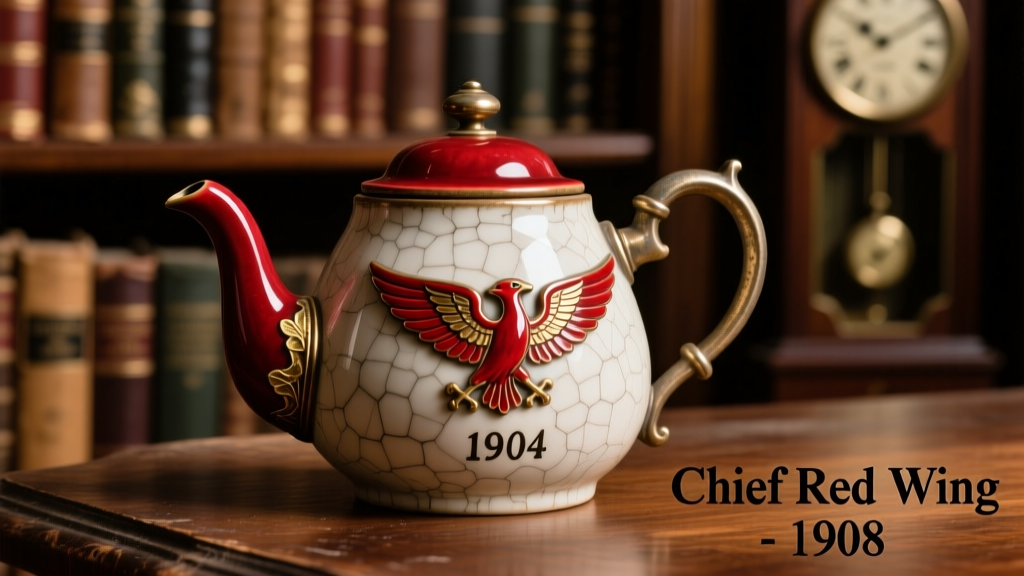
Red Wing Teapot: Profile of Chief Red Wing, 1904 — A Landmark in American Art Pottery
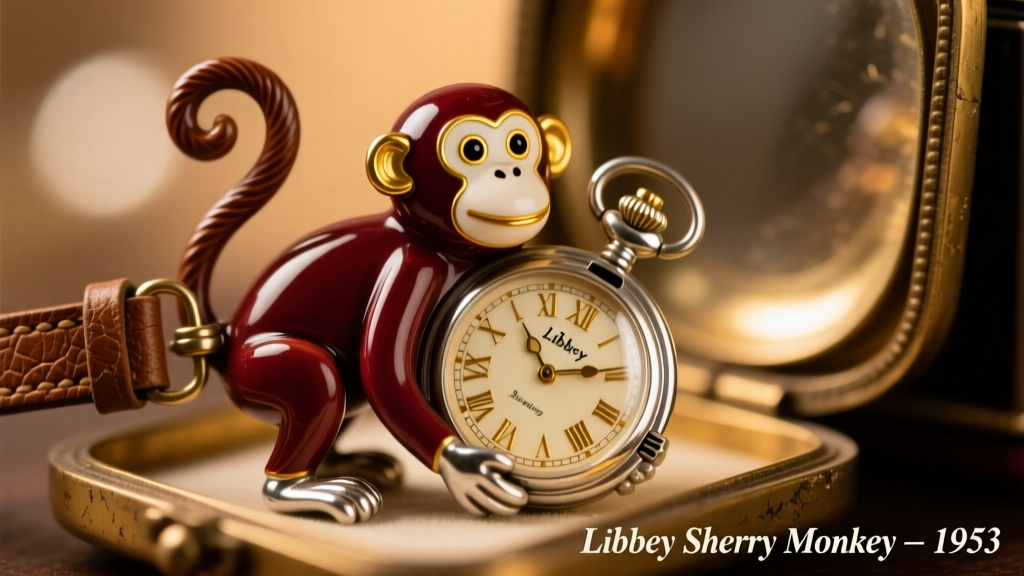
The Libbey Sherry Monkey: A Forgotten American Curio of Mid-Century Barware Design
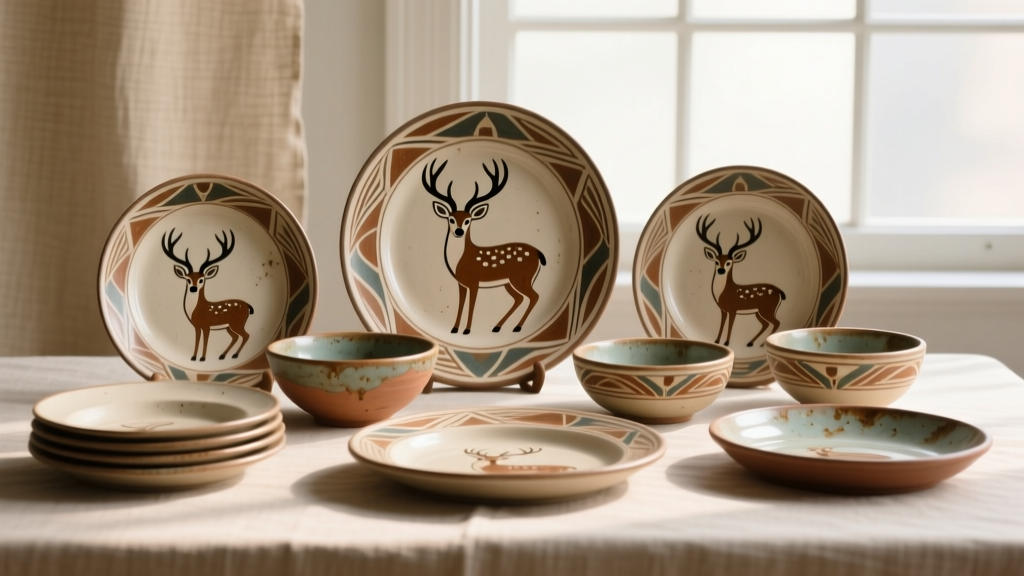
Buffalo Pottery Game Set: The Rare Deer Beck 8-Inch Six-Piece Dinnerware Collection
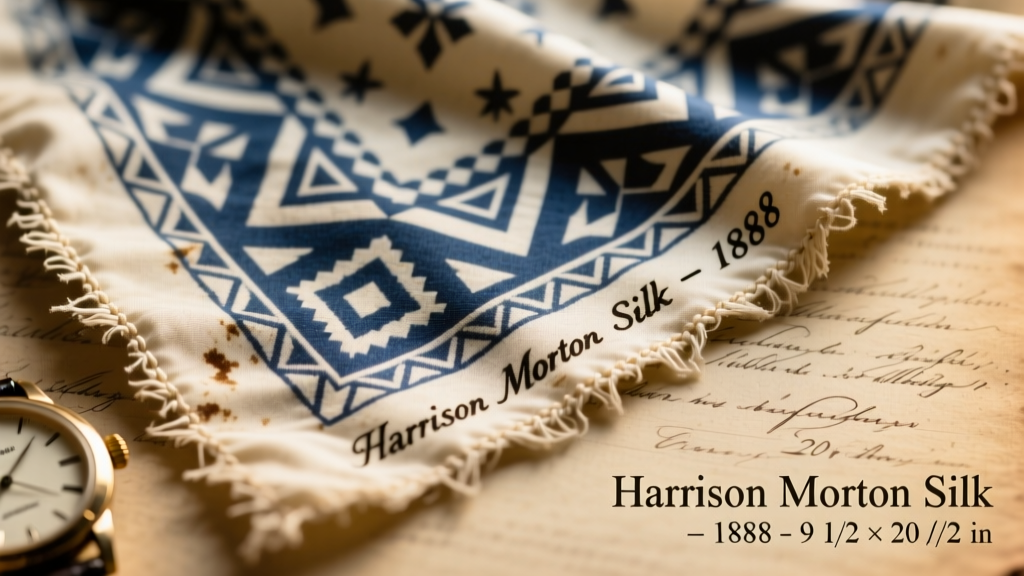
The 1888 Harrison–Morton Silk Bandanna: A Blue-and-White Political Artifact from the Gilded Age Presidential Campaign
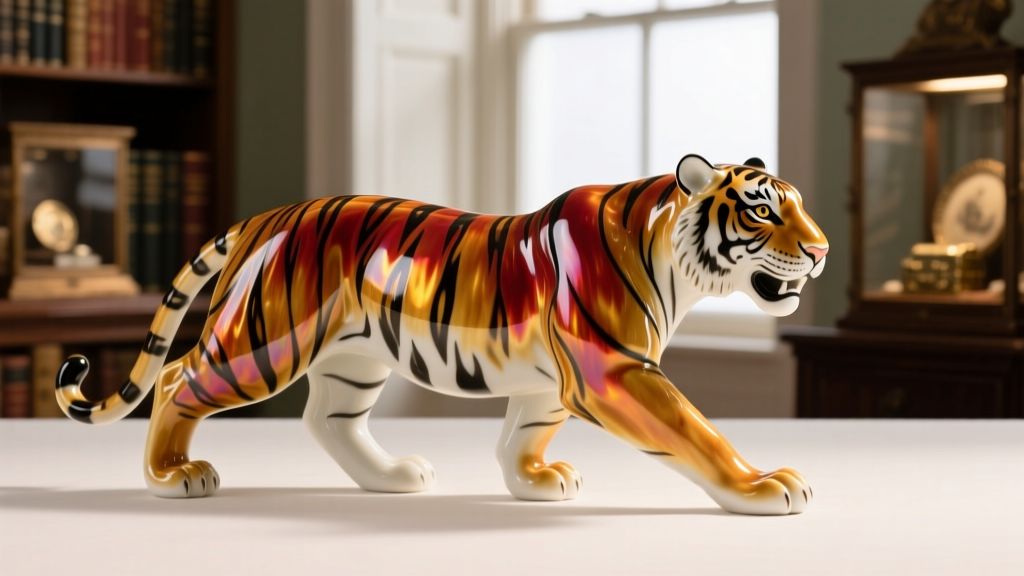
Royal Doulton Animal Tiger Flambe HN 809: A Definitive Study of the 6-Inch Porcelain Sculpture
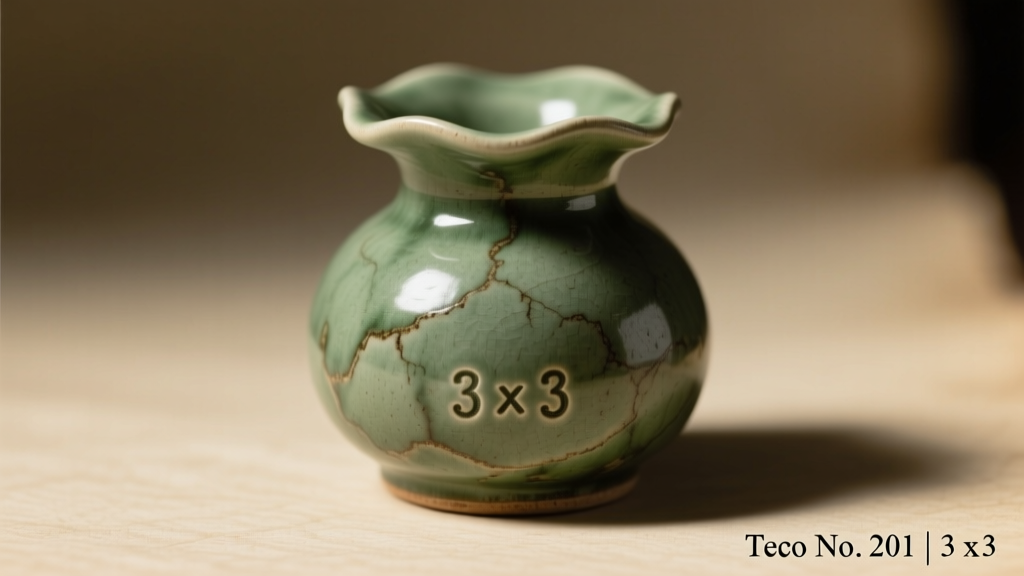
Teco Vase No. 201: Decoding the Bulbous Form, Flared Rim, and Matte Green Glaze of This Prairie School Icon
Sweetheart Jewelry: Sentiment, Symbolism, and Historical Significance in 19th–Early 20th Century Adornment
Windsor Painted Cradle, New England, Circa 1810: Provenance, Construction, and Cultural Significance
The Cheese Dish: A Forgotten Icon of Mid-Century Tableware and Its Auction Resurgence