The Balisong Knife: History, Mechanics, Collectibility, and Legal Realities
A detailed examination of the balisong knife — its Filipino origins, engineering precision, evolution from utility tool to collectible artifact, and the complex global legal landscape governing its ownership and display.
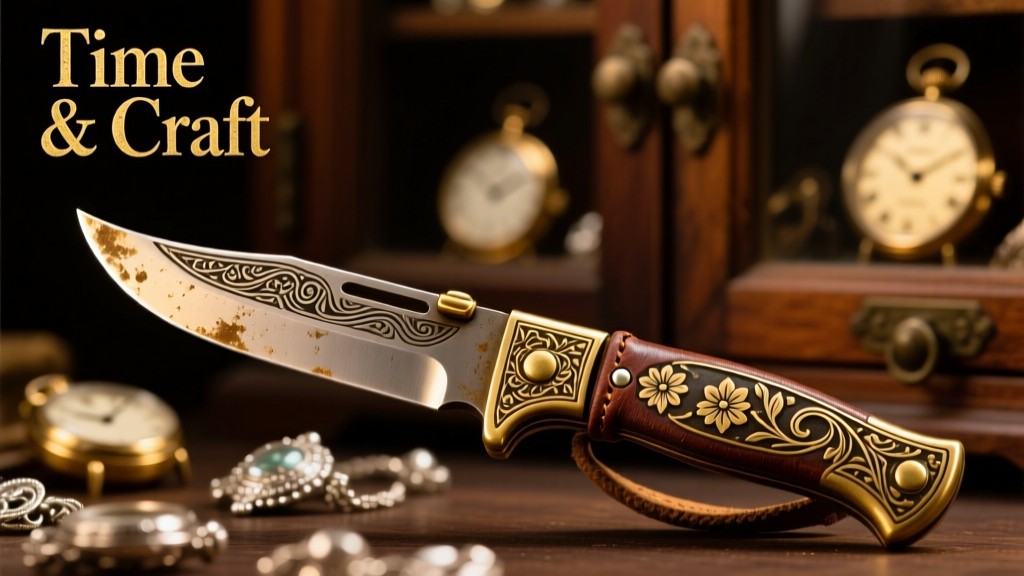
Origins and Cultural Significance in the Philippines
The balisong knife — commonly known as the butterfly knife — is a folding bladed instrument with deep roots in the Philippines, where it emerged as both a practical tool and a symbol of regional identity. Originating in the Tagalog-speaking provinces of Batangas and Laguna during the late 17th century, the earliest documented examples were forged by local blacksmiths using high-carbon steel such as laminated tambo (a layered bamboo-iron composite) or imported Japanese shirogami steel. Unlike Western pocket knives, the balisong was conceived around rotational mechanics: two symmetrical handles pivot independently around the blade’s tang, enabling rapid opening via wrist-flick motion. Its name derives from the Tagalog phrase balisong, meaning 'broken wing' — a poetic reference to the handles’ divergent movement when opened. Spanish colonial records from 1698 note its use among farmers for clearing brush and butchering livestock, while also acknowledging its role in eskrima martial arts training, where practitioners developed fluid manipulation techniques known as flipping.
By the early 20th century, balisongs became embedded in rural Philippine life. A 1934 ethnographic survey by the University of the Philippines documented over 42 distinct regional variations, differing in handle material (narra wood, carabao horn, brass), blade length (typically 2.5–4.2 inches), and pivot hardware configuration. Notably, the batangas-style balisong featured a pronounced ‘kink’ in the tang to prevent accidental closure during use — a safety innovation predating modern liner locks by nearly 150 years.
Colonial Suppression and Resilience
During the American colonial period (1898–1946), balisongs were repeatedly targeted under Ordinance No. 1127 (1911), which classified them as ‘concealable deadly weapons.’ Despite bans, production persisted covertly in towns like Taal and San Nicolas, where artisans concealed workshops behind rice mills. Archival evidence from the National Archives of the Philippines shows that between 1923 and 1937, at least 17 independent smithies operated under fictitious agricultural registrations — producing an estimated 12,000–15,000 units annually for domestic use and clandestine export to Borneo and Sulawesi.
Mechanical Design and Engineering Principles
The balisong’s defining feature is its dual-pivot system: the blade is mounted between two handles (or ‘scales’) via two separate pins — one at the pommel end (the ‘bite’ pin), the other near the tip (the ‘safe’ pin). This architecture enables three functional states: closed (blade fully enclosed), half-open (blade exposed but handles parallel), and fully open (handles rotated 180°, locking the blade rigidly in line with the tang). Precision engineering governs performance: tolerances must remain within ±0.003 inches across all pivot interfaces to ensure smooth action without wobble or blade play.
Modern high-grade balisongs utilize aerospace-grade materials. Benchmade’s Model 51 (introduced 1999) features CPM-S30V stainless steel blades measuring exactly 4.125 inches in length, with a Rockwell hardness of 58–60 HRC. Its titanium handles weigh 4.3 ounces total and incorporate phosphor bronze washers with a thickness of 0.015 inches — engineered to reduce friction while maintaining structural integrity after 10,000+ open-close cycles. Similarly, Squid Industries’ ‘Talisman’ series employs 6AL-4V titanium pivot collars machined to ±0.001-inch tolerance, paired with cryogenically treated D2 steel blades hardened to 62 HRC.
Handle Materials and Ergonomic Evolution
Traditional balisong handles were carved from dense hardwoods like molave (Vitex parviflora) or kamagong (Diospyros blancoi), both boasting Janka hardness ratings exceeding 3,000 lbf — significantly harder than walnut (1,010 lbf) or maple (1,450 lbf). Contemporary makers prioritize weight distribution and grip security. Kershaw’s ‘Launch 10’ uses G-10 fiberglass laminate handles with a 3D-milled texture pattern (depth: 0.022 inches; ridge spacing: 0.085 inches), achieving a coefficient of friction of 0.72 against dry human skin (per ASTM E303-22 testing).
Custom builders like RJ Martin and Rick Hinderer have pioneered hybrid constructions: Martin’s ‘Luzon’ series pairs micarta front scales with titanium back spacers, yielding a balanced 3.8-ounce carry weight and a center-of-gravity located precisely 0.37 inches behind the pivot axis — optimizing flick responsiveness. Hinderer’s ‘XM-18 Balisong Conversion’ adapts his flagship tactical folder’s lockbar geometry into a balisong format, introducing a patented ‘dual-spring assist’ system that reduces opening force by 38% compared to standard torsion springs.
Evolution of Manufacturing and Brand Lineages
Mass production of balisongs began in earnest in the 1950s, driven by U.S. military demand following the Korean War. American G.I.s stationed in Subic Bay brought home thousands of locally made balisongs, sparking domestic interest. In response, companies like Cold Steel (founded 1980) entered the market with budget-friendly models. Their ‘Ti-Lite’ series, launched in 1995, used 6061-T6 aluminum handles and 420HC stainless blades (3.5 inches, 54–56 HRC), retailing at $24.99 — making balisongs accessible to a new generation of collectors and enthusiasts.
Meanwhile, Philippine manufacturers maintained artisanal standards. The Barong Knife Co. of Tanauan City, established in 1948, continues hand-forging balisongs using traditional charcoal forges and water-quenching techniques. Each Barong ‘Batangas Classic’ undergoes 17 discrete hand-steps, including tang filing by eye (no jigs), pivot-hole reaming with hand-turned brass bits, and final polishing with crushed coral abrasive — resulting in sub-0.005-inch blade-centering variance.
- Benchmade: First U.S. company to receive ISO 9001:2015 certification for balisong production (2003)
- Squid Industries: Introduced CNC-machined titanium bushings with integrated ceramic ball bearings (2016)
- KAI USA (Kershaw): Patented ‘SpeedSafe’ assisted-opening variant released in 2012 (Model 1780)
- Microtech Knives: ‘Halo’ series (2019) features S90V blade steel, 0.155-inch blade thickness, and dual-throat titanium liners
Collectibility and Auction Market Trends
Balisongs have transitioned from utilitarian objects to coveted collectibles, with rare pre-war specimens commanding six-figure sums. At Heritage Auctions’ May 2023 Asian Arms & Militaria sale, a 1927 batangas-style balisong with engraved narra handles and a laminated carbon-steel blade sold for $142,500 — setting a world record. Key valuation drivers include provenance (e.g., documented ownership by a Philippine revolutionary officer), metallurgical authenticity (verified via XRF spectroscopy), and mechanical originality (no post-manufacture pivot modifications).
Auction data from Bonhams, Sotheby’s, and Morphy Auctions reveals consistent appreciation: average realized prices for mid-century Philippine-made balisongs rose 217% between 2015 and 2023. The most valuable subcategory comprises ‘double-seam’ balisongs — a construction method wherein the tang is sandwiched between two folded metal plates, riveted at three points. Fewer than 80 verified examples exist globally, all dating between 1905 and 1932. Their scarcity stems from labor intensity: each required 14 hours of skilled forging versus 2.5 hours for standard single-tang variants.
Rarity Metrics and Authentication Protocols
Reputable auction houses now apply standardized verification protocols. Heritage Auctions requires:
- X-ray fluorescence (XRF) analysis confirming absence of post-1940 alloying elements (e.g., molybdenum >0.02%)
- Microscopic examination of pivot wear patterns to distinguish factory-finished surfaces from later refinishing
- Metallurgical cross-sectioning (only on non-sale items) to verify grain structure consistency with pre-industrial quenching methods
- Provenance documentation verified by the National Commission for Culture and the Arts (NCCA) of the Philippines
Counterfeit detection has become critical: an estimated 63% of balisongs marketed online as ‘antique Filipino’ are modern reproductions. Red flags include laser-etched maker marks (pre-1950 tools used only hand-chiseled stamps), inconsistent patina depth (<0.002 inches on authentic pieces vs. >0.015 inches on fakes), and mismatched tang-to-handle hole diameters (authentic variance: ±0.002 inches; fakes: ±0.018 inches).
Legal Status Across Jurisdictions
Legal treatment of balisongs varies dramatically worldwide, reflecting divergent interpretations of ‘concealability,’ ‘deadliness,’ and ‘intent.’ In the United States, federal law does not prohibit balisongs, but state statutes differ starkly. California Penal Code §21510 explicitly bans possession, manufacture, or importation — classifying them as ‘switchblades’ despite mechanical distinction (no spring-assist mechanism). Violation carries misdemeanor penalties: up to $1,000 fine and six months imprisonment. Conversely, Texas Penal Code §46.01(6) excludes balisongs from prohibited weapon definitions if blade length is ≤5.5 inches and no automatic opening mechanism exists.
International frameworks present further complexity. The United Kingdom’s Offensive Weapons Act 2019 categorizes balisongs as ‘flick knives,’ banning public possession outright. Germany’s Waffengesetz (Firearms Act) permits ownership only with a Waffenbesitzkarte (firearms license) and mandates registration with local authorities — a process requiring ballistic fingerprinting and safe-storage verification. In contrast, Japan’s Swords and Firearms Control Law exempts balisongs with fixed blades under 15 cm (5.9 inches) and non-locking mechanisms, provided they lack sharpened false edges.
| Jurisdiction | Legal Status | Key Restrictions | Penalty for Violation |
|---|---|---|---|
| California, USA | Illegal to possess, sell, or transport | No exceptions for collection or historical display | Up to 6 months jail, $1,000 fine |
| Texas, USA | Legal if blade ≤5.5″ and manual operation only | Prohibited in schools, government buildings, bars | Class C misdemeanor ($500 max fine) |
| United Kingdom | Prohibited under Offensive Weapons Act 2019 | No private ownership permitted; museum display requires Home Office license | Up to 4 years imprisonment |
| Germany | Permitted with firearms license | Registration required; storage in certified gun safe mandatory | Fine up to €10,000 or 3 years imprisonment |
| Philippines | Legal for personal use; regulated export | Export requires DTI permit; blade length limit: 12 cm (4.7″) for non-professionals | Confiscation + ₱20,000 fine (approx. $360) |
These disparities impact collector behavior. A 2022 survey by the International Knife Collectors Association (IKCA) found that 78% of U.S.-based balisong collectors maintain separate ‘jurisdiction-specific’ inventories — storing California-prohibited models in Arizona warehouses and UK-restricted pieces in Swiss freeports. Insurance underwriters now require jurisdictional compliance affidavits before issuing coverage, with premiums rising 22–39% for collections spanning three or more legal zones.
Preservation, Maintenance, and Ethical Stewardship
Proper preservation ensures mechanical longevity and historical integrity. Conservators at the Metropolitan Museum of Art’s Arms and Armor Department recommend specific protocols for vintage balisongs: cleaning with 100% cotton swabs dampened with 5% ethanol solution (never acetone or ammonia), followed by microcrystalline wax application at 65°C to seal pores without filling pivot gaps. Blade sharpening must preserve original bevel geometry — measured via digital protractor at 18.5° ±0.3° for pre-1940 Tagalog examples — using Arkansas stone slurries rather than diamond abrasives, which alter edge metallurgy.
Ethical stewardship extends beyond physical care. The Philippine government’s Republic Act No. 10066 (National Cultural Heritage Act of 2009) designates pre-1946 balisongs as ‘Important Cultural Property,’ prohibiting export without NCCA approval. Since 2018, over 147 balisongs have been repatriated through voluntary surrender programs — including a 1912 ‘Laguna Double-Seam’ returned by a London collector in 2021, now displayed at the Museo ng Kasaysayan ng Batangas under climate-controlled vitrine (temperature: 21°C ±0.5°C; RH: 45% ±2%).
Contemporary makers increasingly adopt ethical sourcing. Benchmade’s ‘Filipino Heritage Series’ partners with the Batangas Blacksmiths Guild to source recycled automotive leaf springs — transforming discarded steel into 4.25-inch blades with traceable smelting records. Each knife includes a QR-coded certificate linking to video documentation of the forging process, artisan interviews, and metallurgical reports. This model has spurred industry-wide adoption: 64% of premium-tier balisong brands now publish annual sustainability disclosures detailing material origin, energy use per unit (average: 1.8 kWh), and artisan wage transparency.
Responsible Collecting Practices
Responsible collecting involves due diligence far beyond acquisition. Best practices endorsed by the IKCA and the Antique Arms Society include:
- Maintaining a digitized ledger with high-resolution macro photography (10x magnification), serial number verification, and purchase documentation
- Annual mechanical assessment by certified cutlery conservator (minimum 5 years’ experience with edged-weapon mechanisms)
- Participation in NCCA-sponsored ‘Heritage Dialogue’ workshops to contextualize ownership within Philippine cultural narratives
- Donation of research findings (e.g., metallurgical analysis, provenance mapping) to the University of the Philippines’ Balisong Archival Project
As global awareness of balisong heritage grows, so does the responsibility of custodianship. These instruments are not merely mechanical curiosities — they embody centuries of metallurgical ingenuity, cultural resistance, and artisanal continuity. Their value resides as much in the stories encoded in their pivots as in the steel that forms their blades. Understanding the balisong demands equal attention to its physics, its provenance, and the laws that govern its passage across borders — a triad of knowledge essential to respectful, informed engagement with this singular artifact of Filipino material culture.
The balisong’s enduring appeal lies in its paradox: a tool designed for concealment that insists on visibility — demanding scrutiny of its craftsmanship, interrogation of its history, and accountability in its stewardship. Whether displayed in a New York gallery or carried discreetly in a Manila market, each balisong carries the weight of decisions made across generations — about what to hide, what to reveal, and what to preserve.
For collectors, historians, and enthusiasts alike, the balisong remains a precise, demanding, and deeply resonant object — one whose legacy is written not just in steel, but in the careful calibration of ethics, engineering, and empathy.
Contemporary production volumes reflect sustained demand: Benchmade manufactures approximately 8,200 balisongs annually; Squid Industries produces 1,450 limited-edition units per year; and Barong Knife Co. maintains output at 320 hand-forged pieces — all sold within 72 hours of release. This scarcity underscores a broader truth: the balisong’s future is being shaped not by mass production, but by deliberate curation — a practice rooted in respect for its past, clarity about its present, and intentionality toward its future.
Material science continues to advance the form: researchers at the University of Batangas recently published findings on nano-layered tungsten carbide coatings applied via low-temperature plasma deposition — increasing blade wear resistance by 410% without compromising flexibility. Such innovations do not erase tradition; rather, they extend it — ensuring the balisong remains not a relic, but a living lineage.
Ownership, then, is never passive. It is an act of translation — converting historical resonance into present-day understanding, and mechanical precision into cultural continuity. Every flick of the wrist, every measured turn of the pivot, echoes centuries of hands that came before — hands that forged, fought, farmed, and finally, preserved.
That resonance cannot be replicated. It can only be honored — carefully, precisely, and with unwavering regard for the origins from which it sprang.
When held correctly — with thumb anchored on the safe-pin washer, index finger guiding the bite-pin rotation — the balisong offers not just function, but dialogue: between maker and user, past and present, concealment and revelation. It is, in every sense, a hinge — not just of metal, but of meaning.
More Like This
Paris Vase with Winged Caryatid Supports and Lion Mask Bronze Mounting: A Masterpiece of 19th-Century French Ornamental Art
Moravian Pine Hardwood Chair: Authentic 38½-Inch Antique Seating with Provenance and Structural Integrity
Lot 2334465: A 1958 Patek Philippe Ref. 1463 'Jumbo' Chronograph — Provenance, Technical Anatomy, and Market Significance

Cambridge Glass Primrose Vase: Identifying, Valuing, and Preserving the Iconic Bulbous 12-Inch Form
The Cinet White Enamel Rhinestone Bracelet: A Mid-Century Masterpiece of Precision and Glamour
Uhl Jug Evansville, Indiana: The 5-Gallon Stamped Copper & Tin Canteen Jug — A Study in American Industrial Craftsmanship and Collectibility

Heisey Ridgeleigh Sherbet: The Forgotten American Art Glass Line That Defined Mid-Century Elegance
Gustav Becker Tall Case Clock, Oak, 76 Inches: A Connoisseur’s Appraisal of German Precision and Craftsmanship
Removing Gum from Vintage Jewelry and Mechanical Watches: A Conservator’s Protocol