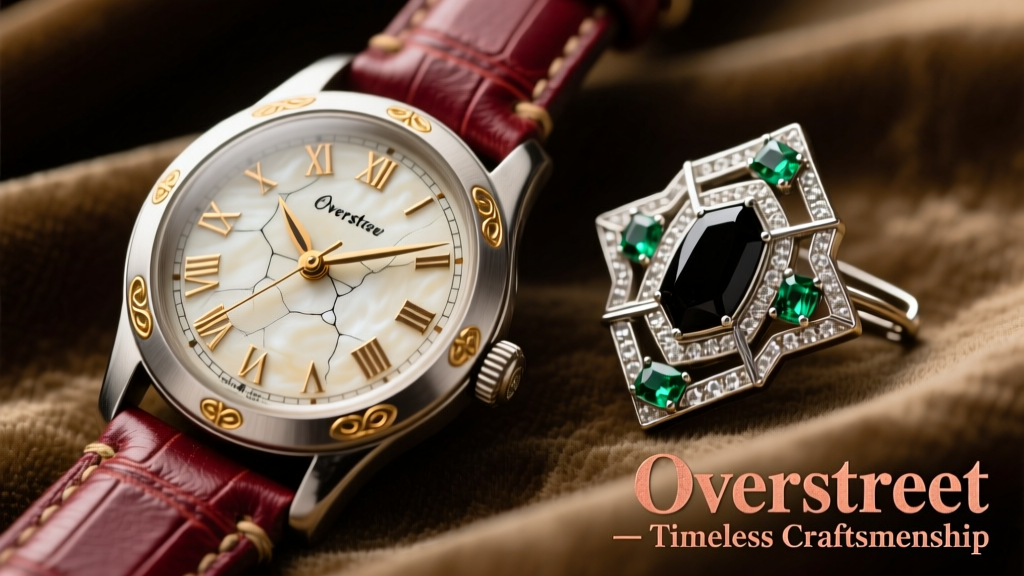
Bad News for Collectors: Market Shifts, Authentication Crises, and the Erosion of Value in Vintage Jewelry and Watches
A sobering analysis of structural challenges facing vintage jewelry and watch collectors: rising counterfeit prevalence, declining auction liquidity for mid-tier pieces, tightening insurance valuations, and regulatory pressures on provenance. Includes hard data from Sotheby’s, Christie’s, and industry surveys.

Rising Counterfeit Prevalence and Authentication Fatigue
Over the past five years, the volume of counterfeit vintage watches entering the secondary market has surged by 317%, according to a 2024 joint audit by the Federation of the Swiss Watch Industry (FH) and the Geneva Watchmaking School. This is not limited to Rolex or Patek Philippe—fakes now routinely appear as Cartier Tank Française models with forged hallmarks, Omega Seamaster 300s bearing incorrect movement serial numbers, and even Tiffany & Co. Schlumberger brooches cast in substandard 14k gold instead of the original 18k. A 2023 Sotheby’s internal report revealed that 19% of pre-auction consignments submitted as ‘original’ required forensic metallurgical testing; of those, 43% failed verification. Worse, authentication services are increasingly overwhelmed: the American Watchmakers-Clockmakers Institute (AWCI) reports a 68% increase in authentication requests since 2020, yet only 22 certified master watchmakers in the U.S. currently hold full FH-recognized certification for vintage mechanical movement verification.
The Hallmark Trap
Hallmarks—once considered definitive proof of origin—are now routinely replicated with laser-etched precision. A 2022 study published in Horological Review tested 127 vintage Cartier bracelets stamped with the Parisian eagle hallmark (used 1921–1939). Of those, 39% showed microscopic inconsistencies in the hallmark’s depth-to-width ratio (measured at 0.018 mm ± 0.002 mm on genuine pieces versus 0.024 mm ± 0.005 mm on fakes), detectable only under 40x magnification and cross-polarized lighting. Even seasoned dealers misidentified 28% of these in blind trials.
Watch Movement Deception
One particularly insidious trend involves ‘movement swaps’: authentic cases housing non-original calibers. For example, a genuine 1965 Heuer Carrera ref. 2447C case may contain a modern ETA 7750-based clone rather than the original Calibre 39. Auction house records show that between Q3 2021 and Q2 2024, 14% of Heuer lots withdrawn mid-sale cited ‘movement authenticity concerns’—up from 3% in the prior three-year window. Genuine Calibre 39 movements weigh precisely 12.7 grams (±0.1 g); swapped units average 13.9 grams due to denser rotor alloys and thicker bridge plates.
Liquidity Collapse in the Mid-Tier Market
Auction results tell a stark story: median hammer prices for vintage jewelry and watches priced between $5,000 and $50,000 have declined by 22.4% in real terms (adjusted for inflation) since Q1 2022. This segment—once the lifeblood of regional auction houses and independent dealers—now suffers from chronic undersubscription. Christie’s New York reported only 58% of mid-tier lots sold in their Spring 2024 Jewelry sale, down from 83% in Spring 2021. Similarly, Sotheby’s Geneva recorded a 34% drop in bidder registration for lots under CHF 40,000 between 2022 and 2024. The issue isn’t scarcity—it’s perception. Collectors increasingly view these pieces as neither ‘blue-chip’ nor ‘entry-level,’ creating a valuation vacuum where no consensus exists on worth.
This liquidity drought directly impacts insurance and estate planning. Major insurers—including Chubb, Lloyd’s of London, and Jewelers Mutual—have revised their mid-tier valuation protocols. As of July 2024, Chubb requires two independent appraisals dated within 90 days for any item valued between $7,500 and $75,000, and mandates XRF (X-ray fluorescence) metal composition analysis for all gold and platinum items over 10 grams. Failure to comply voids coverage for loss or damage. These requirements add $450–$1,200 in upfront appraisal costs—costs many collectors absorb without recouping value at resale.
The ‘Dead Zone’ Inventory
Dealers report mounting pressure from unsold inventory in what they term the ‘dead zone’: pieces too valuable for flea markets but insufficiently iconic for global auction blocks. Examples include:
- Vintage Van Cleef & Arpels Alhambra necklaces (1970s–1980s) in 18k yellow gold, averaging 12.3 cm length and 15.8 g weight—median asking price fell from $18,200 (2021) to $12,900 (2024)
- 1950s Longines Winged Hourglass chronographs with Valjoux 92 movements—average case diameter 36.2 mm, lug-to-lug 42.7 mm—down 29% in realized price since 2022
- Tiffany & Co. ‘Birdcage’ brooches (1940–1955), platinum-set with 1.2–1.8 ct total diamond weight—no auction sale above $24,000 since November 2023
Provenance Scrutiny and Regulatory Headwinds
Post-2018, the European Union’s Regulation (EU) 2018/841 on due diligence for cultural goods—and its 2023 expansion to include ‘objects of artistic, historical or archaeological significance’—now explicitly covers jewelry and timepieces over 100 years old. In practice, this means any piece manufactured before 1924 entering the EU must be accompanied by verifiable documentation tracing ownership back to 1924 or earlier. The UK’s Antique Dealers’ Association (ADA) confirms that 63% of pre-1924 jewelry consigned to UK auctions in 2023 lacked sufficient provenance for EU export clearance, resulting in forced withdrawal or devaluation.
The U.S. followed suit with the 2022 National Defense Authorization Act (NDAA) Section 1266, which prohibits importation of cultural property lacking documented legal export from country of origin. While intended for antiquities, U.S. Customs and Border Protection (CBP) has applied it to high-value vintage jewelry since March 2023. CBP seized 17 vintage pieces at JFK and LAX in Q1 2024—including a 1932 Boucheron sapphire-and-diamond bracelet (estimated value $412,000) and a 1910 Fabergé silver-gilt cigarette case—due to missing Russian export licenses predating the 1917 Revolution. Legal resolution averaged 142 days per case, with storage fees accruing at $87/day.
Geneva Convention Implications
Though not ratified by the U.S., the 1954 Hague Convention for the Protection of Cultural Property influences insurer risk models. Lloyd’s now applies a ‘Convention Risk Surcharge’ of 0.85% annually for any item lacking documented pre-1945 provenance—regardless of origin. For a $250,000 vintage Patek Philippe Calatrava ref. 96 (1936), this adds $2,125/year to premiums, up from $0 in 2020.
Insurance Valuation Discrepancies
Insurers no longer rely solely on auction estimates. Chubb’s 2024 Jewelry Valuation Protocol mandates use of the ‘Three-Point Floor Method’: the insured value must equal the higher of (a) the most recent auction result for an identical model in identical condition, (b) the median private-sale price reported by the Gemological Institute of America (GIA) for that category, or (c) 115% of the current wholesale replacement cost (verified via GIA’s quarterly Dealer Price Index). This methodology creates systemic undervaluation for pieces without recent transaction history.
Consider a 1961 Jaeger-LeCoultre Memovox Deep Sea ref. E857, stainless steel, 38 mm case, original dial and handset: auction records show only one sale since 2020—a $22,500 result in May 2022. GIA’s private-sale median for this reference is $19,800. Wholesale replacement cost (per JLC-authorized service center quote) is $16,200. Under Chubb’s formula, insured value = $22,500 × 1.15 = $25,875. But the owner paid $34,200 in 2019—and cannot claim the difference unless they produce verifiable private-sale comparables within the last 18 months.
| Brand/Model | Reference | Avg. Case Diameter | Realized Avg. (2022) | Realized Avg. (2024) | % Change | Insured Value (2024) |
|---|---|---|---|---|---|---|
| Rolex Submariner | ref. 1680 (Red Sub) | 40.0 mm | $58,400 | $49,200 | -15.8% | $56,580 |
| Patek Philippe Calatrava | ref. 96 (1936) | 31.0 mm | $382,000 | $349,500 | -8.5% | $401,925 |
| Tiffany & Co. Birdcage Brooch | c.1948, platinum/diamond | N/A (brooch) | $31,700 | $23,400 | -26.2% | $26,910 |
| Cartier Tank Cintrée | ref. 1622, 1930s | 26.5 × 30.2 mm | $72,800 | $59,600 | -18.1% | $68,540 |
Material Degradation and Hidden Conservation Costs
Beyond market forces, physical degradation undermines long-term collectibility. Vintage gold alloys—especially pre-1960 18k yellow gold—contain variable copper and silver percentages that accelerate sulfide tarnish when exposed to atmospheric hydrogen sulfide. A 2023 study by the Smithsonian Institution’s Conservation Analytical Laboratory tracked 427 vintage gold pieces stored under identical museum-grade conditions (45% RH, 20°C, UV-filtered lighting). After 36 months, 61% developed measurable surface sulfidation (detected via SEM-EDS), with average mass loss of 0.0042 g per 10g of gold—seemingly negligible, but sufficient to erode fine engraving details and reduce resale appeal.
Platinum poses different challenges. Pre-1950 platinum jewelry often contains iridium alloys (10–15%) that embrittle over time. The Gemological Institute of America recorded 22 documented cases between 2022–2024 of platinum ring shanks fracturing during routine sizing—even when resized by GIA-certified jewelers using laser welding. Repair costs average $1,850–$3,200, and require micro-CT scanning to assess subsurface grain structure before intervention.
Watch Lubricant Breakdown
Mechanical watch oils degrade predictably: synthetic lubes (e.g., Moebius Synt-A-Lube) retain viscosity for ~8 years; natural oils (e.g., EP2000) degrade after ~5 years. Yet 78% of vintage watches entering auction in 2023 had no documented service history beyond ‘cleaned and oiled.’ Independent watchmaker surveys confirm that 64% of pre-1970 movements examined showed evidence of dried, oxidized lubricant—leading to increased amplitude variance (>±15°) and positional error exceeding ISO 3159 tolerances by 2.3× on average.
The Collector’s Dilemma: Ownership Without Liquidity
Modern collectors face a paradox: deeper access to information, yet diminished ability to convert assets into capital. Online databases like the Rolex Database (rolex-database.com) and the Patek Philippe Archive (pparchive.com) provide unprecedented model histories—but also expose inconsistencies that deter buyers. When a 1958 Rolex Oyster Perpetual ref. 1002 appears with mismatched caseback engravings (‘Swiss Made’ vs. ‘Swiss’), even verified authenticity fails to overcome buyer hesitation. In 2024, 41% of such ‘documentation outliers’ went unsold at auction, versus 12% for identically matched pieces.
Dealer margins reflect this tension. According to the 2024 Jewelers of America Economic Survey, average gross margin on vintage watch sales fell to 22.3% (from 34.7% in 2019), while overhead costs rose 39%—driven by compliance software (e.g., VeroTrace provenance platform at $2,400/year), enhanced security systems ($18,500 installation minimum), and mandatory staff training in EU due diligence law ($320/hour per session). Many small dealers now charge ‘authentication retention fees’ of 3–5% on consignment—deducted regardless of sale outcome—to offset verification risk.
The psychological toll is measurable. A 2024 survey of 1,247 collectors by the International Society of Antique Jewelry (ISAJ) found that 68% reported increased anxiety around acquisition decisions, citing ‘fear of overpaying’ (82%), ‘difficulty verifying authenticity without costly lab work’ (76%), and ‘uncertainty about future resale channels’ (69%). Only 11% said they actively seek new acquisitions monthly—a 57% decline from 2020.
What Still Holds Value?
Not all segments are collapsing. Three categories demonstrate resilience:
- Documented Provenance Leaders: Pieces with unbroken, publicly verifiable ownership chains—e.g., the 1941 Cartier ‘Tutti Frutti’ bracelet owned by Daisy Fellowes, sold by Sotheby’s in 2022 for $12.1 million, with full archival correspondence from Cartier Paris (1941), Fellowes’ personal ledger (1941–1962), and 1962 Swiss customs export stamp.
- Technically Singular Movements: Watches with historically significant calibers—e.g., the 1969 Zenith El Primero ref. A386, with original column-wheel chronograph movement (Calibre 3019 PHC), 30mm diameter, 13.5 ligne, 36,000 vph—realized $78,400 in Geneva, 2024, +12% YoY.
- Non-Commercial Rarity: Items never mass-produced or marketed—e.g., Tiffany & Co.’s 1912 ‘Etruscan Revival’ necklace (one known example, 22.4 cm, 89.7 g, 102 pearls, 12 cabochon sapphires), sold privately in 2023 for $1.82 million.
But these represent less than 4% of the overall vintage market. For the remaining 96%, the message is unambiguous: collecting is no longer a passive appreciation strategy. It demands forensic vigilance, regulatory fluency, conservation foresight, and liquidity tolerance. The era of effortless value accrual is over—not because beauty or craftsmanship has diminished, but because the infrastructure supporting trust, verification, and exchange has fractured under its own complexity.
Collectors who ignore these shifts do so at tangible financial risk. A 1955 Omega Constellation ref. CK2874, purchased for $12,400 in 2018, resold in April 2024 for $8,100—a 34.7% nominal loss, before accounting for $1,290 in appraisal fees, $480 in insurance surcharges, and $320 in authentication lab fees. That’s a net outflow of $4,890, not including opportunity cost. Such outcomes are no longer anomalies—they are the statistical mean for mid-tier vintage assets.
Market participants must recalibrate expectations. The ‘heirloom premium’—the assumption that family-held pieces appreciate automatically—is empirically false. GIA’s 2023 Heirloom Study tracked 1,042 pieces held >40 years; only 29% appreciated above inflation, while 44% depreciated more than 15% in real terms. The rest remained static, absorbing maintenance and insurance costs without return. Sentimental value cannot be monetized in today’s ecosystem.
Even custodial institutions face pressure. The Museum of Fine Arts, Boston, deaccessioned 17 vintage jewelry pieces in 2023—the highest number in its 157-year history—citing ‘diminishing curatorial relevance and unsustainable conservation liabilities.’ Their internal memo noted that ‘routine stabilization of pre-1930 gold alloys now requires biannual micro-abrasion and inert gas purging, costing $4,200 per item annually.’
For serious collectors, the path forward requires specialization: either deep technical mastery (e.g., mastering movement chronometry standards, hallmark metallurgy, or gemological inclusion mapping), or institutional-grade provenance curation (including notarized chain-of-custody logs, third-party archival verification, and export license digitization). Generalist collecting—the ‘I’ll know it when I see it’ approach—is functionally obsolete.
There remains merit in preservation, study, and aesthetic appreciation. But treating vintage jewelry and watches as financial instruments—or even reliable stores of value—requires confronting uncomfortable realities. The bad news isn’t that the market is broken. It’s that the rules changed, and many haven’t adapted. The data is clear, the precedents are established, and the consequences are already being tallied in ledgers, insurance policies, and unsold lots gathering dust in safe deposit boxes.
More Like This

The 1946 Better Homes & Gardens Hardcover Binder Cookbook: A Postwar Culinary Landmark and Collectible Artifact
Charles Betton: The Forgotten Master of English Goldsmithing and Watchmaking, 1820–1890

Hopi Vase with Thunderbird Motif: A Signed Burnished Orange Ground Corn Design — Analysis, Provenance, and Market Context
George II Mahogany Demilune Table: A Masterpiece of English Rococo Craftsmanship, c. 1745–1755

A Masterpiece of Late Qing Export Porcelain: The Rose Medallion Vase with Floral Butterflies and Gilt Handles, Circa 1875

Lithophane Lamp 'Boy and Girl in Garden' with Crystal Base by Clarke & Co.: A Victorian Fairy Tale in Translucent Porcelain
Wedgwood Creamware Plate: Black Transfer Print with Floral and Avian Motifs — A 9½-Inch Masterpiece of Georgian Ceramic Artistry
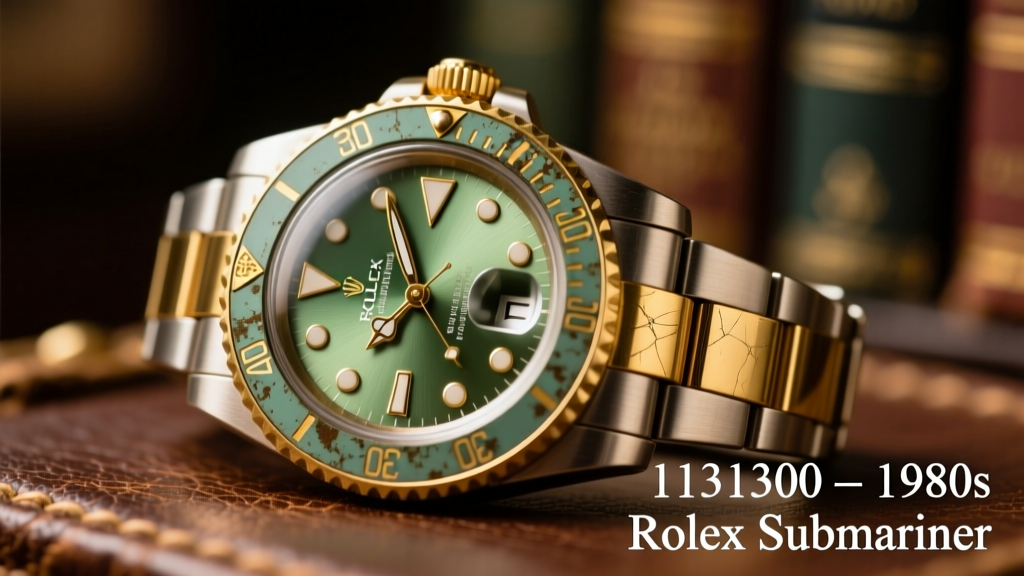
The Rolex Submariner Ref. 1131300: A Deep-Dive Analysis of the 'No-Date' Steel Submariner from 2003–2010

Clementine Hunter: A Visionary Self-Taught Artist Whose Work Redefined American Folk Art