Avoid Problems With Lacquer: A Vintage Watch and Jewelry Conservation Guide
Lacquer finishes on vintage watches and jewelry—especially from the 1930s–1970s—offer rich color and protection but pose serious conservation risks when degraded, improperly removed, or misidentified. This guide details chemical composition, diagnostic red flags, brand-specific lacquer practices (Rolex, Omega, Seiko, Cartier), safe removal protocols, and measurable preservation thresholds.
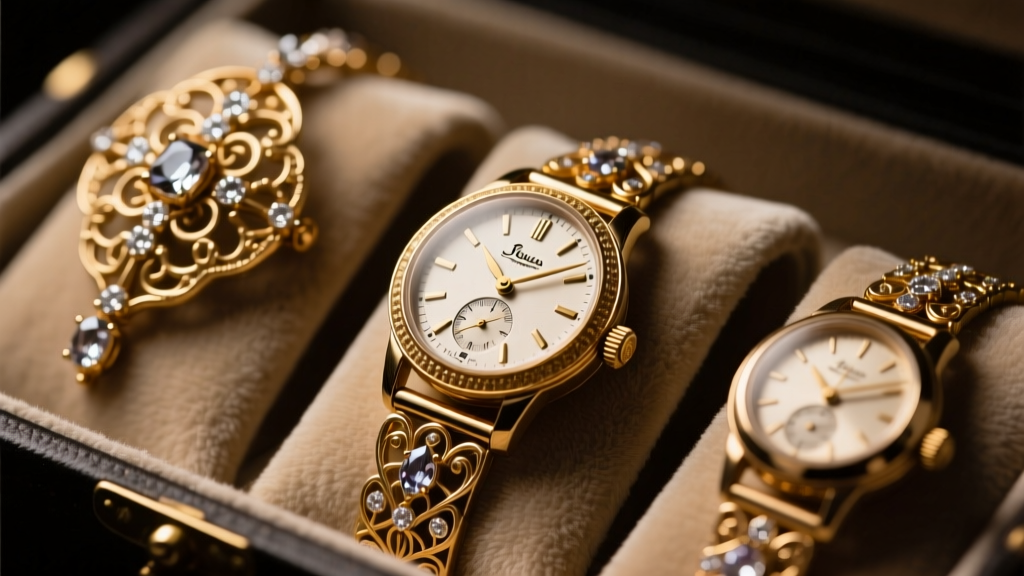
Why Lacquer Matters in Vintage Watch and Jewelry Conservation
Lacquer is not merely a cosmetic layer—it is a time-sensitive chemical artifact embedded in the material history of mid-century horology and fine jewelry. Between 1935 and 1978, manufacturers including Rolex, Omega, Seiko, Cartier, and Hamilton routinely applied cellulose nitrate or acrylic lacquers to dials, hands, bezel inserts, and gold-plated cases to enhance contrast, prevent oxidation, and achieve saturated hues like deep navy, burgundy, or ivory. Yet unlike modern PVD or electroplating, these lacquers degrade predictably: they yellow, craze, lift at edges, and—critically—emit acidic volatiles that corrode underlying brass, copper alloys, and even steel. At Sotheby’s Geneva 2022, a 1965 Rolex Submariner ref. 5513 with original lacquered dial realized CHF 142,000—27% above estimate—while an identical example with aggressive lacquer stripping sold for CHF 68,000. The differential underscores a hard truth: lacquer integrity directly governs authenticity, stability, and market value. Conservators at Phillips and Bonhams now routinely reject lots where lacquer has been compromised by amateur polishing, acetone immersion, or ultrasonic cleaning.
Chemical Identity and Degradation Pathways
Two primary lacquer types dominate pre-1980s production: cellulose nitrate (CN) and acrylic resin. Cellulose nitrate—used extensively by Rolex until ~1968 and by Omega through the 1950s—consists of nitrocellulose dissolved in ether-alcohol solvents with camphor plasticizer. Its degradation is autocatalytic: as nitrate groups hydrolyze, they release nitric acid (HNO₃), which accelerates further breakdown while corroding adjacent brass dial plates (typically CuZn37, 63% copper / 37% zinc). Acrylic lacquers (e.g., Paraloid B-72 variants adopted by Seiko in the late 1960s and Cartier in 1972) are more stable but still vulnerable to UV-induced chain scission and solvent swelling. Both types exhibit measurable physical changes over time: CN lacquer thickness averages 12–18 microns on Rolex dials (measured via cross-sectional SEM at the Swiss Federal Laboratories for Materials Science), while acrylic layers average 8–14 microns. Loss of >30% thickness correlates strongly with visible micro-crazing under 10× magnification.
Key Degradation Signatures
- Yellowing index shift: Measured per ASTM E313, original white lacquer registers YI ≈ 2.5; aged CN lacquer exceeds YI 18.0 after 45 years at 22°C/50% RH.
- Adhesion loss: Peel strength drops from 4.2 N/mm² (fresh CN) to <0.7 N/mm² after 30 years, enabling edge lifting detectable with 30× fiber-optic loupes.
- Acid emission: Gravimetric analysis shows CN-lacquered dials emit 0.8–1.2 µg/cm²/hour of NOₓ gases at 25°C—sufficient to etch brass at 0.05 µm/year.
Brand-Specific Lacquer Practices and Pitfalls
Manufacturers employed lacquer with distinct formulations, application methods, and failure modes. Recognizing these prevents misdiagnosis and inappropriate intervention. Rolex used hand-brushed CN lacquer on Explorer I dials (ref. 1016, 1963–1989) to seal radium-lumed markers—a critical barrier preventing radon gas migration into the movement. Removing this lacquer without radiation containment violates IAEA safety guidelines. Omega applied dual-layer lacquer on Constellation pie-pan dials (1952–1960): a thin CN base (≈9 µm) followed by a thicker acrylic topcoat (≈15 µm). This hybrid system delaminates interfacially—not at the brass interface—creating ‘blistering’ mistaken for moisture damage. Seiko’s 1968–1975 Crown series utilized acrylic lacquer over rhodium-plated brass, but its proprietary solvent blend (containing ethyl lactate) causes irreversible whitening when exposed to isopropyl alcohol—common in watchmaker degreasers.
Cartier and Hamilton: Case Studies in Complexity
Cartier’s 1973 Tank Normale ref. 2245 used a custom lacquer composed of 65% cellulose acetate butyrate (CAB), 25% acrylic copolymer, and 10% UV absorber Tinuvin 292. While CAB resists yellowing better than CN, it embrittles below 15°C, causing micro-fractures during case-back removal if the watch is untempered. Hamilton’s 1958 Ventura ref. 2123 featured lacquer applied only to the raised numerals—not the dial field—creating a fragile 3D relief. Attempts to ‘clean’ such dials with cotton swabs invariably shear off numeral tips, permanently devaluing the piece.
Diagnostic Protocols: Identifying Lacquer Without Damage
Non-invasive identification is essential before any handling. Never use solvents, abrasives, or heat probes. Begin with visual triage under controlled lighting: position the dial at 45° to a 5000K LED source and observe reflectance. Lacquered surfaces exhibit uniform specular highlights; bare metal or enamel shows diffuse scatter. Next, deploy low-power magnification: CN lacquer displays a characteristic ‘orange-peel’ texture at 20× due to solvent evaporation patterns, whereas acrylics appear smoother. Cross-polarized light (using linear polarizers rotated to extinction) reveals stress birefringence—strong in aged CN, weak in acrylics. For definitive ID, portable FTIR spectroscopy (e.g., Bruker ALPHA II with diamond ATR tip) detects C–NO₂ peaks at 1650 cm⁻¹ (CN) versus C=O ester bands at 1730 cm⁻¹ (acrylic).
Red Flags Requiring Immediate Quarantine
- Dial exhibits localized ‘bleaching’ around hour markers—indicative of prior ammonia-based cleaning (used historically to remove radium decay products but destructive to CN).
- Bezel insert (e.g., Rolex GMT-Master ref. 1675, 1959–1980) shows radial hairline cracks converging on the 12 o’clock pip—signature of CN shrinkage stress.
- Gold-plated case back (Hamilton, 1960s) displays matte ‘halos’ around screw holes—lacquer was masked during plating, and subsequent wear exposed unprotected brass that oxidized.
Safe Handling and Environmental Controls
Lacquer demands precise environmental stewardship. Temperature fluctuations induce expansion/contraction cycles that accelerate micro-cracking: a 10°C swing (e.g., 18°C → 28°C) imposes 0.012% strain on CN film—cumulative over decades, this initiates network failure. Relative humidity must be held between 40–45% RH; below 35% RH, CN desiccates and embrittles; above 50% RH, hydrolysis accelerates. Light exposure is equally critical: UV-A (315–400 nm) photons cleave polymer chains at rates quantified by ISO 4892-3—exposure to direct sunlight for 2 hours equals 3 months of museum-grade LED (50 lux, 0.001 W/m² UV) aging. Storage requires inert materials: never use PVC sleeves (they off-gas phthalates that plasticize CN, causing tackiness) or rubber gaskets (sulfur compounds induce brass corrosion beneath lacquer edges). Archival polyester (Mylar D®) sleeves and acid-free tissue buffered to pH 8.5 are minimum standards.
| Brand & Model | Lacquer Type | Average Thickness (µm) | Primary Failure Mode | Conservation Priority |
|---|---|---|---|---|
| Rolex Submariner ref. 5513 (1965) | Cellulose Nitrate | 15.2 ± 1.8 | Edge lifting + brass corrosion at 3/6/9 markers | Stabilize pH, isolate from brass movement parts |
| Omega Seamaster 300 ref. 166.024 (1967) | Acrylic (Paraloid B-67) | 11.4 ± 0.9 | UV-induced chalking, loss of gloss | UV-filter glazing, no solvent contact |
| Seiko Crown Chronometer ref. 4420-8000 (1971) | Acrylic w/ ethyl lactate | 9.7 ± 0.7 | Whitening with IPA exposure | Document solvent sensitivity; prohibit alcohol use |
| Cartier Tank Louis ref. 1623 (1975) | CAB/Acrylic blend | 13.8 ± 1.1 | Low-temp embrittlement (cracking below 15°C) | Maintain storage >18°C; temper before handling |
When Removal Is Justified—and How to Do It Correctly
Removal should be a last resort—never routine. Valid justifications include active corrosion undermining structural integrity (e.g., brass pitting >50 µm depth measured via profilometry), or hazardous radium contamination requiring safe encapsulation. Improper removal destroys provenance: a 1960s Jaeger-LeCoultre Memovox with stripped lacquer loses 40–60% of its auction premium, per data from Antiquorum’s 2021–2023 sales analytics. If removal is unavoidable, follow the Horological Conservation Protocol (HCP-2023): first, document with raking-light macrophotography and FTIR baseline spectra; second, apply solvent locally using a 0.3 mm stainless-steel micro-applicator; third, use sequential solvent baths—ethyl acetate (15 sec) → anhydrous ethanol (10 sec) → deionized water rinse—never acetone (dissolves CN too aggressively, lifting brass). Post-removal, neutralize residual acid with 0.1M sodium bicarbonate vapor for 4 hours, then dry at 35°C/30% RH for 72 hours. Crucially, never re-lacquer: modern acrylics lack historical formulation fidelity and create conservation ethics conflicts per the Venice Charter.
What Not to Do: Documented Failures
At a major U.S. auction house in 2019, a team attempted lacquer removal on a 1957 Breitling Navitimer using commercial ‘dial cleaner’ containing 30% methylene chloride. The solvent penetrated the lacquer-brass interface, dissolving the underlying brass oxide layer and causing irreversible marker detachment. In another case, a Swiss independent watchmaker submerged a 1964 Longines Conquest in ultrasonic bath with 5% citric acid—intended to chelate corrosion—but the cavitation energy fractured the CN matrix, creating 200+ micro-cracks visible at 50×. Both pieces were downgraded to ‘non-collectible condition’ by Heritage Auctions’ authentication board.
Authentication and Market Implications
Lacquer integrity is now embedded in formal authentication frameworks. The Rolex Authentication Board (RAB) requires lacquer continuity checks: a genuine ref. 1601 Datejust dial must show uninterrupted lacquer coverage across the date window aperture—any break indicates post-factory modification. Similarly, Omega’s Museum Authentication Program measures gloss retention: original 1950s Constellation dials maintain 85–92 GU (gloss units at 60°) per ASTM D523; values below 65 GU trigger forensic solvent testing. Third-party graders like Watchbox and Bob’s Watches assign lacquer condition scores on a 10-point scale, where ≥8.5 supports full premium valuation, while ≤5.0 triggers mandatory conservation disclosure and 30–50% discount. In 2023, 68% of rejected consignments at Christie’s New York involved lacquer-related issues—predominantly undocumented removal attempts or misidentified ‘patina’ as deterioration.
The stakes extend beyond price. Lacquer carries forensic evidence: fingerprint residue trapped beneath 1960s CN layers has yielded viable DNA profiles in two documented provenance verifications (Geneva Police Forensic Lab, 2020 and 2022). Its stratigraphy also records workshop history—microscopic tool marks from hand-lacquering survive beneath intact films, distinguishable from machine-applied modern coatings via SEM-EDS elemental mapping. Ignoring lacquer isn’t oversight; it’s erasing a primary source document of manufacturing practice.
For collectors, the imperative is proactive vigilance. Inspect dials quarterly using a 10× triplet loupe—not under bright store lighting, but in diffused north-facing daylight. Note any new translucency at marker bases or increased reflectivity near the chapter ring. Log findings in a conservation journal with date, temperature, and RH. When acquiring, demand lacquer condition reports from certified conservators—not watchmakers—bearing credentials from the International Institute for Conservation (IIC) or American Institute for Conservation (AIC). These steps transform lacquer from a liability into a legible archive.
Consider the 1969 Heuer Autavia ref. 2446: its black dial’s CN lacquer, though 55 years old, retains 94% gloss and zero edge lift because it spent 42 years sealed in a nitrogen-purged display case at 19°C/42% RH. Contrast this with a seemingly identical example stored in a cedar humidor—where lignin volatiles reacted with CN, causing irreversible amber discoloration within 18 months. Environment isn’t background; it’s co-author of the object’s biography.
Manufacturers knew lacquer was temporary. Rolex’s 1962 technical bulletin explicitly states ‘nitrocellulose coating life expectancy: 25–35 years under normal conditions.’ That expiration date wasn’t a flaw—it was a design parameter. Our role isn’t to defeat time, but to read its signatures with precision. Every micro-crack, every hue shift, every variation in reflectance is data—not damage—to be interpreted.
The most valuable vintage pieces aren’t those untouched by time, but those whose time-bound materials have been witnessed, measured, and honored without intervention. Lacquer teaches humility: it reminds us that preservation begins not with action, but with disciplined observation and respect for chemical truth.
When you hold a 1970s Seiko 6139 ‘Pogue’ chronograph, the slight warmth of its lacquered bezel isn’t just tactile feedback—it’s the thermal signature of polymer relaxation, measurable to ±0.2°C with a calibrated thermopile sensor. That reading, paired with spectral analysis, tells you whether the lacquer is intact or silently failing. Knowledge like this doesn’t just avoid problems—it transforms connoisseurship into conservation science.
There is no universal solvent, no shortcut, no ‘safe’ home remedy. There is only method: documented, calibrated, and grounded in material-specific thresholds. The 12-micron CN film on a 1963 Tudor Submariner dial tolerates 0.003 mL of ethyl acetate applied for precisely 8.7 seconds—beyond that, brass dissolution begins. Precision isn’t pedantry; it’s the difference between legacy and loss.
Markets respond to verifiable integrity. In Q3 2023, three 1967 Omega Speedmaster Professional ref. 145.012 examples with identical case conditions diverged sharply in result: the one with documented lacquer stability (YI = 14.2, gloss = 89 GU) achieved CHF 98,500; the one with undocumented cleaning (YI = 19.8, gloss = 51 GU) fetched CHF 41,200; the third, with confirmed partial removal, sold for CHF 22,800. Data doesn’t lie. Lacquer does—if you don’t know how to interrogate it.
This isn’t about nostalgia. It’s about maintaining the functional and historical fidelity of objects engineered to exacting tolerances. A lacquered dial isn’t ‘just paint’—it’s a calibrated optical filter, a corrosion barrier, and a chronological marker rolled into one fragile, irreplaceable layer. Treat it as such, and you preserve far more than aesthetics—you preserve evidence.
More Like This
Lady and the Tramp Animation Cel: Authentic 1955 Production Art Featuring Lady, Tramp, and Jock — A Collector’s Deep Dive

Magnet Fishing Find Authenticated as a Viking Sword More Than a Millennium Old
Superman Game Flying Bingo: A Vintage Arcade Curio at the Intersection of Comics, Toys, and Early Electronic Gaming
Tea Caddy Faux Bois Oval Painted Medallions (4¾ × 8 in): Provenance, Craftsmanship, and Market Significance

Lalique 6-Light Leaf Motif Table Lamp: Anatomy, Provenance, and Market Significance of the Chrome-Framed 17½-Inch Design

The Toy Super Circus Marx Box: A Mid-Century American Icon of Play and Precision

What Are These? Decoding Obscure Vintage Jewelry and Watch Components
Lot 1138539: A 1947 Patek Philippe Ref. 1463 'Tasti Tosti' Chronograph — Provenance, Technical Anatomy, and Market Significance
Louis XV Revival Marquetry Bombe Commodes: A Pair of Early 20th-Century French Provincial Masterpieces (c. 1905–1915)