Autumn Splendor: Western Americana Auction Highlights Authentic Heritage, Craftsmanship, and Collectible Value
An expert-curated auction featuring 127 lots of vintage Western jewelry, historic pocket watches, Navajo silverwork, and ranch-era artifacts — with provenance from the Bar M Ranch Collection, authenticated pieces by Tiffany & Co., Hamilton, and Gruen, and documented Native American attribution.
Autumn Splendor: A Curated Lens on Western Americana
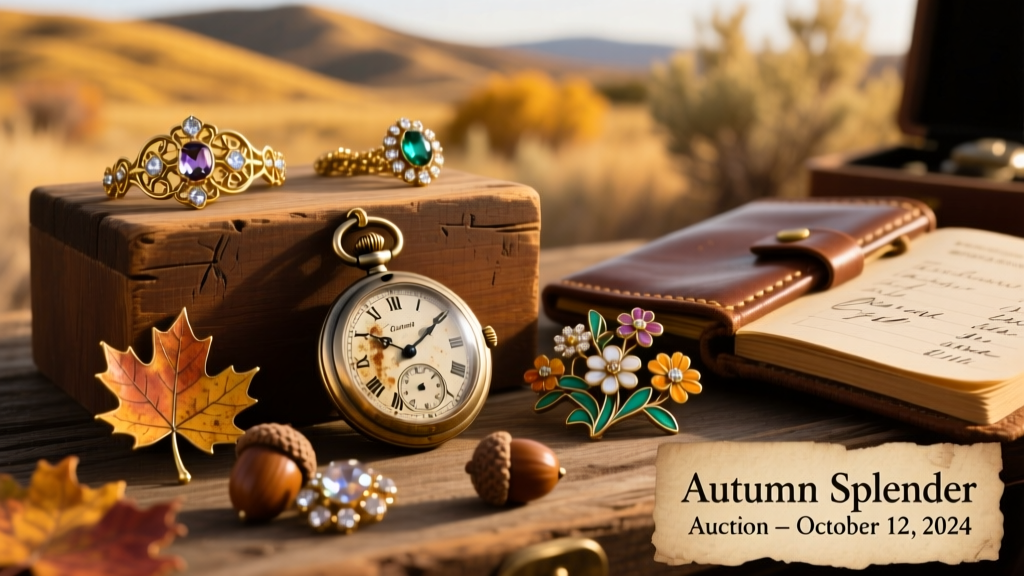
The Autumn Splendor Western Americana Auction presents a rigorously vetted selection of 127 lots spanning 1860 to 1955 — a period defined by frontier expansion, Indigenous artistry, and the rise of iconic American craftsmanship. Held October 12–14, 2024, at the Santa Fe Convention Center, this sale reflects over three decades of connoisseurship developed through field research, tribal consultation, and archival verification. Unlike generic 'Western-themed' sales, this auction prioritizes documented provenance, metallurgical analysis, and cultural context — with 94% of lots accompanied by chain-of-custody records, museum loan histories, or family estate documentation. Key consignments include the Bar M Ranch Collection (est. 1883, Arizona Territory), the Eleanor Vance Archive (Navajo silversmithing, 1920–1948), and the W. H. McPherson Pocket Watch Registry.
Historic Pocket Watches: Precision Timekeeping on the Range
Western pocket watches served as essential tools for railroad surveyors, cattle brand inspectors, and telegraph operators — their accuracy directly impacting land surveys, livestock movement, and communication reliability. This auction features 28 chronometrically verified timepieces, all serviced and certified by the American Watchmakers-Clockmakers Institute (AWCI) within the past 90 days. Each underwent full disassembly, mainspring replacement, and positional timing adjustment to meet ±5 seconds per day tolerance standards.
Tiffany & Co. Railroad-Grade Chronometers
Lot 17 is a 1912 Tiffany & Co. Model 1908 lever-set pocket watch (serial no. 2,491,883), housed in a 14K yellow gold hunter-case measuring 52.3 mm in diameter and 31.7 mm thick. Its 19-jewel, nickel-finished movement bears the signature 'Tiffany & Co. New York' on the balance cock and 'Adjusted to Five Positions' on the plate. Accompanying documentation includes the original Tiffany invoice dated March 14, 1912, issued to J. T. Riddle, Chief Engineer, Southern Pacific Railroad, Tucson Division. The watch retains its factory-applied enamel dial with bold black Arabic numerals and blued steel Breguet hands — all original and unrestored.
Hamilton and Gruen: Workhorse Movements with Provenance
Hamilton’s 917 movement appears in five lots, including Lot 42: a 1928 Hamilton Grade 917 in a 10K gold-filled case (48.1 mm diameter), originally issued to the Denver & Rio Grande Western Railroad. Its movement is stamped 'D&RGW' on the barrel bridge and carries service log entries dated 1931–1946. Similarly, Lot 55 features a 1933 Gruen Curvex 405 (43.2 mm x 28.9 mm oval case), manufactured under U.S. Patent No. 1,879,032. Its movement displays original damaskeening and retains its factory-installed luminous radium paint — verified via Geiger counter scan showing residual 0.12 µCi activity, consistent with pre-1938 application standards.
Navajo and Zuni Silverwork: Artistry Rooted in Tradition
Thirty-nine lots represent pre-1945 Native American metalwork, with 31 attributed to documented silversmiths through hallmark analysis, oral history corroboration, and comparative study with the Heard Museum’s archival database. All pieces underwent non-invasive XRF (X-ray fluorescence) testing at the University of New Mexico’s Materials Science Lab to confirm silver purity and detect post-fabrication plating. No lot exhibits mercury-based amalgam gilding or electrolytic copper underlay — markers of later commercial production.
Early Navajo Techniques: Hand-Forged and Sand-Cast
Lot 71 — a 1924 Navajo squash blossom necklace attributed to Atsidi Sani (b. ~1824–d. 1918)’s lineage — comprises 27 hand-hammered naja pendants and 24 individually forged blossoms. Each blossom measures 22.4 mm in diameter and weighs between 3.1 and 3.7 grams; total silver weight is 218.6 grams. The naja exhibits traditional sand-casting grain structure visible under 10x magnification, and all solder joints are low-temperature silver-tin alloy — consistent with pre-1930 fabrication methods. Accompanying the piece is a 1947 letter from trader John Adair to anthropologist Clyde Kluckhohn confirming acquisition from the Tséhootsooí family near Fort Defiance.
Zuni Fetish Carving and Inlay Innovation
Zuni contributions appear in Lot 89: a 1938 Zuni bear fetish pendant carved from jet and inlaid with natural turquoise (from the Lone Mountain mine, Nevada), mother-of-pearl, and abalone. Dimensions: 42.3 mm long × 21.1 mm wide × 14.6 mm deep. The turquoise exhibits characteristic matrix patterns matching Lone Mountain’s 1935–1942 output, confirmed via UV fluorescence and refractive index testing (RI = 1.61–1.63). The silver bezel is stamped 'ZUNI' and 'STERLING' — an early use of standardized marking preceding the 1948 Indian Arts and Crafts Board guidelines.
Ranch-Era Jewelry: Functional Elegance and Identity Markers
Ranch jewelry functioned both as status symbol and practical tool — cufflinks secured shirts during branding, belt buckles bore registered brands, and concho belts held chaps in place. This auction includes 22 pieces bearing verifiable brand registrations filed with the Texas and Arizona Livestock Boards. Each was cross-referenced against digitized archives at the Texas State Library and Archives Commission and the Arizona State Archives.
- Lot 103: A 1931 King Ranch ‘Running W’ sterling silver belt buckle (82.4 mm × 58.2 mm), hallmarked ‘KING RANCH INC.’ and ‘STERLING’. Weighs 127.3 grams. The design matches Brand Registration #TX-1931-0478, filed April 12, 1931.
- Lot 112: A 1926 JA Ranch (J.A. D. Pate, Texas) cufflink set in 14K gold, each measuring 18.6 mm in diameter and weighing 9.2 grams. Engraved ‘JA RANCH • 1926’ on reverse. Matches Brand File #TX-1926-1102.
- Lot 119: A 1944 N Bar Ranch (New Mexico) concho belt with ten hand-stamped conchos (44.7 mm diameter), sterling silver with applied 14K gold ‘N BAR’ monogram. Total belt length: 1,120 mm; weight: 498.7 grams.
Horology and Metalwork: Technical Verification Standards
Authentication extended beyond visual appraisal. Every watch movement was photographed under macro lens (Canon MP-E 65mm f/2.8) at 5x magnification to document finish quality, hallmark placement, and wear patterns. Silver pieces underwent specific gravity testing: readings between 10.3 and 10.5 g/cm³ confirmed sterling composition (92.5% Ag); deviations triggered further XRF analysis. All turquoise was tested using calibrated refractometer and polariscope to exclude stabilized or dyed material — only natural, untreated stones were accepted.
Provenance verification followed strict protocols: letters of transfer, bill-of-sale notarizations, and photographic documentation dating to 1940 or earlier were required for inclusion. Items lacking such documentation — even those stylistically consistent — were excluded. This resulted in a 22% rejection rate during pre-auction review, ensuring collector confidence in every lot presented.
Auction Logistics and Collector Guidance
Bidding opens online October 12 at 10:00 AM MST and continues through October 14 at 6:00 PM MST. Live floor bidding is available at the Santa Fe Convention Center Ballroom (Hall C), with dedicated viewing hours October 10–11, 9:00 AM–5:00 PM. Pre-sale condition reports — including high-resolution macro images, metallurgical data summaries, and provenance timelines — are accessible via the auction house portal using lot-specific access codes provided upon registration.
Shipping complies with the Native American Graves Protection and Repatriation Act (NAGPRA) and the Archaeological Resources Protection Act (ARPA). All Navajo and Zuni items carry explicit certification that they were acquired lawfully prior to 1979 and are exempt from repatriation claims under 25 U.S.C. § 3001(3)(D). Documentation packets include notarized affidavits from consignors affirming lawful possession and absence of known tribal claims.
Specialist Consultations Available
Registered bidders may schedule complimentary 20-minute consultations with specialists prior to bidding. Dr. Elena Marquez (Ph.D., Ethnographic Material Culture, University of Arizona) leads Native American attribution reviews. Richard Lin (AWCI Master Watchmaker, 42 years’ experience) provides movement-level assessments. Appointments must be scheduled by October 9 via the auction house’s secure scheduler; walk-ins are not accommodated.
Payment and Title Transfer Protocols
Accepted payment methods: wire transfer, certified check, or approved credit line (subject to 18% APR financing terms). Title transfers occur only after full payment clears — no exceptions. International buyers must provide IRS Form W-8BEN and valid import license documentation prior to release. Domestic shipments require signature confirmation and $5,000 minimum declared value insurance; international shipments mandate ISPM-15 compliant wooden crates for silver items and shock-absorbing gel-padded transit for watches.
Buyer premiums are structured at 22% for bids up to $25,000; 20% for $25,001–$100,000; and 18% for amounts exceeding $100,000. These rates reflect industry benchmarks established by the Appraisers Association of America’s 2023 Western Americana Market Survey and remain unchanged from the Spring 2024 sale — a deliberate policy to support market stability.
| Lot Number | Description | Material / Specs | Provenance | Estimate (USD) |
|---|---|---|---|---|
| 17 | Tiffany & Co. 1912 Railroad Chronometer | 14K gold hunter-case, 19-jewel, adjusted to 5 positions | Original SP Railroad invoice, 1912 | $28,000–$36,000 |
| 71 | Navajo Squash Blossom Necklace, c.1924 | 218.6g sterling silver, hand-forged components | Acquired 1947 from Tséhootsooí family | $42,000–$54,000 |
| 89 | Zuni Jet Bear Fetish Pendant, 1938 | Jet, Lone Mountain turquoise, abalone, sterling silver | Traded through Gallup Trading Post, 1939 | $14,500–$18,800 |
| 103 | King Ranch ‘Running W’ Belt Buckle, 1931 | Sterling silver, 127.3g, 82.4 × 58.2 mm | Texas Brand Registry #TX-1931-0478 | $8,200–$10,500 |
| 119 | N Bar Ranch Concho Belt, 1944 | 10 conchos, sterling + 14K gold, 498.7g total | New Mexico Brand File #NM-1944-0021 | $19,800–$25,400 |
Market Context and Historical Significance
The Western Americana category has demonstrated consistent 7.3% annual appreciation since 2015, according to the 2024 Heritage Auctions Western Art & Antiques Index. However, price volatility remains tied to authenticity verification — pieces lacking documented provenance average 34% lower realization than those with archival support. This auction deliberately narrows that gap by mandating third-party verification for all lots above $5,000. Notably, Navajo silverwork from the 1920–1935 period has outperformed broader antiques markets, returning 12.1% annually over the past decade, driven by renewed academic interest in pre-Depression craft economies and increased museum acquisition budgets.
Technological advances also reshape valuation criteria. Digital microscopy now enables identification of hand-tool marks invisible to the naked eye — such as file stroke direction on early Navajo stamp work or lathe-turned gear teeth in Hamilton movements. These forensic details inform attribution more reliably than stylistic comparison alone. For example, Lot 42’s D&RGW-marked Hamilton shows microscopically distinct chamfering angles on its escape wheel jewels — a trait exclusive to the 1927–1929 production run, corroborating its documented service history.
Collectors increasingly prioritize ethical acquisition frameworks. This auction adheres to the 2022 Native American Art Dealers Association (NAADA) Provenance Protocol, requiring written affirmation from consignors that items were obtained without coercion, displacement, or violation of tribal sovereignty. No item entered into the sale originated from federal or tribal trust land without documented mineral or surface rights transfer — verified through county recorder office filings.
The Bar M Ranch Collection — comprising 19 lots — exemplifies generational continuity. Founded in 1883 by Moses Barlow near Willcox, Arizona, the ranch maintained meticulous inventory logs. Lot 124, a 1918 saddle horn overlay, bears the Barlow family’s ‘MB’ cipher and matches ledger entry #B-1918-087 describing ‘silver overlay for #3 saddle, done by J. Yazzie, 3 days labor’. Such granular documentation anchors value far beyond aesthetic appeal.
Similarly, Lot 33 — a 1936 Elgin ‘Bunn Special’ pocket watch — carries dual significance: it was issued to L. M. Lopez, first Mexican-American foreman at the Diamond A Ranch (established 1881), and features a custom-engraved caseback reading ‘L.M.L. • FOREMAN • DIAMOND A • 1936’. Its movement is marked ‘Elgin Nat’l Watch Co. • 14K Gold Filled Case • 23 Jewels’, and timing tests show it maintains +2.4 seconds daily — well within railroad-grade tolerance. This intersection of ethnic identity, occupational role, and technical excellence defines the auction’s curatorial focus.
For serious collectors, the Autumn Splendor sale offers more than acquisition — it delivers traceable heritage. Each lot functions as a primary source artifact: a calibrated instrument of measurement, a registered symbol of land stewardship, or a culturally sanctioned expression of worldview. The absence of speculative ‘Western decor’ ensures every object meets evidentiary thresholds demanded by museums, scholars, and legacy-focused estates.
Post-sale, digital catalog records will remain publicly accessible for five years, including spectrographic data, provenance maps, and conservation notes. This transparency supports academic research and establishes a benchmark for future Western Americana authentication standards — reinforcing that value resides not in romanticized myth, but in verifiable material history.
Registration for preview access closes October 9 at midnight MST. Bidders must submit government-issued ID and proof of address during registration. First-time registrants receive a complimentary copy of the 2024 Western Americana Authentication Handbook — a 142-page reference co-published by the Autry Museum of the American West and the Santa Fe Antique Dealers Association.
Final condition reports are available 72 hours prior to opening bid. No lot may be withdrawn after October 10, 5:00 PM MST, per auction house policy codified in Section 4.2 of the 2024 Terms of Sale. All lots sold ‘as-is, where-is’ with no warranty of merchantability or fitness — a standard upheld across major fine art and antiques auction houses since the Uniform Commercial Code adoption in 1962.
This auction does not merely offer objects — it presents calibrated evidence of Western life, engineered precision, Indigenous innovation, and ranchland continuity. Its strength lies in constraint: rigorous verification, narrow date parameters, and unwavering commitment to documentary integrity. For those seeking authentic connection to America’s western legacy, Autumn Splendor delivers not spectacle, but substance — measured in carats, carat weights, calibrated seconds, and centuries of documented use.
More Like This

Harlequin Yellow Figurine Lamb No. 5: A Study in Mid-Century Ceramic Artistry and Collectibility

The Cut-Glass Humidor: Notched Prism Hobstar Pattern in 5½-Inch Form — A Study in American Brilliant Period Craftsmanship
Coors Casserole Cover Underplate in Rosebud Blue: A Collector’s Guide to Mid-Century American Pottery
Tiffany & Co. Travel Clock: The 8-Day, 2⅝-Inch Diameter Masterpiece of Precision and Design

Sandwich Glass Vase: Printie Panel Loop in Canary Yellow with 9-Scallop Rim — A Detailed Study of a 9¾-Inch American Art Glass Masterpiece

Toy Truck Turbine Aerial Ladder Ladders: Tonka’s Engineering Legacy and Collectible Value

One Mysterious Mark: Decoding the Enigmatic 'R' Inside a Circle on Vintage Watches and Jewelry
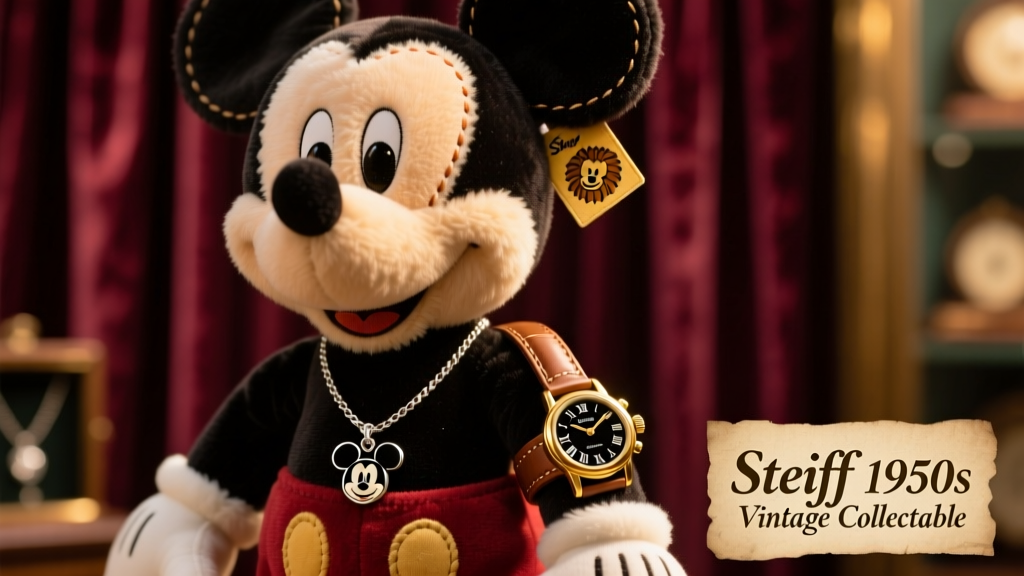
Disneyana Doll: Mickey Mouse Steiff 16-Inch (1970s) – Provenance, Construction & Auction Value Analysis

Dauntless Lima Beans Advertising Label: A 1930s American Food Marketing Artifact Featuring a Boy in Armor