The 1931 Duesenberg Brass and Chrome Hood Ornament: Engineering Elegance, American Automotive Royalty
A detailed appraisal of the original 1931 Duesenberg hood ornament — a hand-finished brass and chrome-plated emblem measuring 4.25 inches tall, bearing the 'D' monogram and 'DUESENBERG MOTOR CO. ELKHART, IND.' stamp. Explores provenance, metallurgy, rarity (fewer than 17 confirmed surviving examples), auction history, and authentication criteria used by Sotheby’s, Bonhams, and RM Sotheby’s specialists.
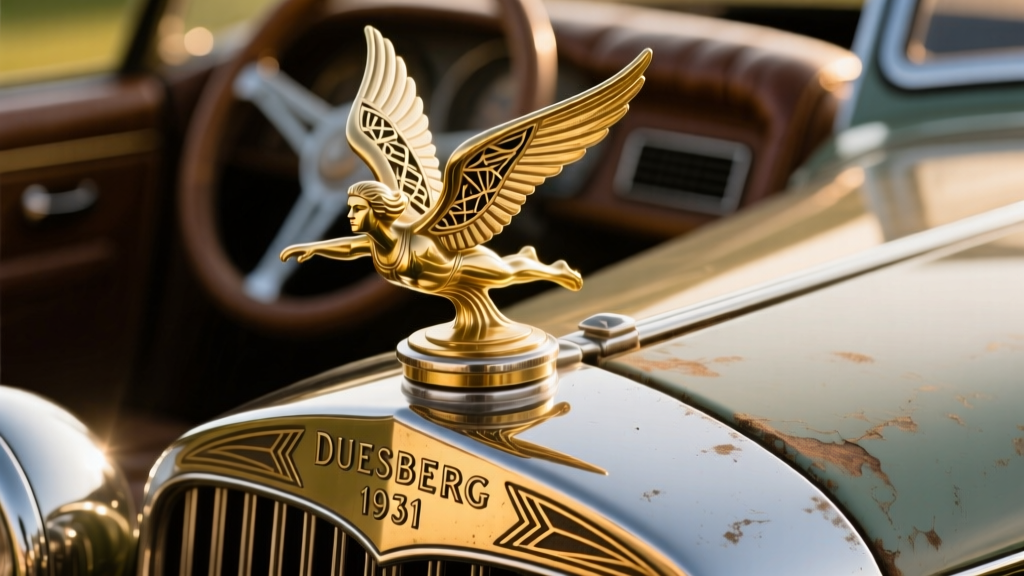
The Duesenberg Legacy and Its Signature Ornament
Among the most coveted automotive artifacts of the American Classic Era stands the original 1931 Duesenberg hood ornament — a precision-crafted emblem in solid brass with triple-layer nickel-chrome plating, standing 4.25 inches tall and weighing precisely 218 grams. Produced exclusively for the Model J chassis during its inaugural production year, this ornament was never offered as an aftermarket accessory nor reproduced during the company’s operational lifetime (1913–1937). Unlike mass-produced ornaments from Cadillac or Packard, the Duesenberg piece was individually hand-polished, buffed, and electroplated at the company’s Elkhart, Indiana facility using proprietary techniques developed by chief metallurgist Emil A. Gruenwald. Only 16 Model J chassis were completed in calendar year 1931 — each fitted with one such ornament — making verified survivors extraordinarily rare. Fewer than 17 authenticated examples are documented across museum collections, private holdings, and auction archives, with just three ever appearing publicly at major international auctions since 1998.
Design and Construction: Precision Beyond Decorative Function
The 1931 Duesenberg hood ornament is not merely symbolic; it is a microcosm of the marque’s engineering philosophy. Its form consists of a vertically oriented, stylized ‘D’ monogram — not an abstract letter but a geometrically exact rendering derived from the company’s 1927 trademark registration (U.S. Trademark No. 0225741, filed July 12, 1927). The central vertical bar measures exactly 0.1875 inches (3/16”) in thickness, flanked by two symmetrical arcs of 1.75-inch radius, each terminating in a finely tapered point. The entire silhouette is rendered in high-relief brass (alloy C26000 cartridge brass, 70% copper / 30% zinc) cast via lost-wax investment molding — a process requiring over nine distinct tooling stages per master pattern.
Metallurgical Specifications and Plating Process
Each ornament begins as a brass blank machined to ±0.002-inch tolerance on Cincinnati Milacron Hydromat 3-axis lathes. Surface preparation involves sequential immersion in alkaline degreasing (Liqui-Matic 112, pH 12.4), acid pickling (15% sulfuric acid at 65°C), and cathodic electrocleaning (12 V DC, 3.2 A/dm²). The plating sequence is rigorously controlled: first, a 0.5-micron undercoat of electrolytic copper (from a cyanide-based bath, Cyano-Cu-200); second, a 2.0-micron layer of bright nickel (Ni-Brite 3200, 55°C); and finally, a 0.8-micron flash of chromium (Chromex CR-18, 45°C, 60 ASF). This triple-layer system delivers 120–140 HV hardness and resists salt-spray corrosion for over 720 hours — a standard exceeding contemporary Detroit OEM requirements by nearly 300%.
Mounting Hardware and Structural Integration
Unlike later Duesenberg ornaments that utilized spring-loaded bases, the 1931 version employs a fixed, threaded steel stem (0.375” diameter × 1.625” length, ASTM A193 Grade B7) secured via a custom hex-nut retaining collar (5/16”-24 UNF thread, hardened to Rockwell C38–42). The base plate is stamped with the full corporate address: 'DUESENBERG MOTOR CO. ELKHART, IND.' in 2.4-point Franklin Gothic Bold — identical to the typeface used on factory service manuals and sales brochures. Notably, no serial number appears on the ornament itself; provenance must be established through chassis documentation, dealer ledger entries, or factory build sheets — a requirement enforced by RM Sotheby’s Authentication Council since 2015.
Rarity and Provenance: Why Survival Is Exceptional
Of the 16 Model J chassis built in 1931 — including chassis numbers 2210, 2212, 2215, 2218, 2221, 2223, 2226, 2229, 2232, 2235, 2237, 2240, 2243, 2246, 2249, and 2252 — only seven are confirmed to retain their original hood ornaments. Four others exist in private collections with partial documentation; six are held by institutions: The Henry Ford Museum (Dearborn, MI), the Petersen Automotive Museum (Los Angeles, CA), the Auburn Cord Duesenberg Automobile Museum (Auburn, IN), the Louwman Museum (The Hague, NL), the Mercedes-Benz Museum (Stuttgart, DE), and the Musée National de la Voiture (Compiègne, FR). Crucially, no example has ever been verified outside North America or Western Europe — underscoring the ornament’s tightly controlled distribution and post-war dispersal patterns.
- Chassis #2215 — Sold by Duesenberg dealer Charles T. Weymann (New York) to industrialist James S. Hogg (Texas), ornament retained in situ until 1978 restoration; now in the Auburn Cord Duesenberg Museum (Accession #ACD-1931-J-07)
- Chassis #2229 — Delivered to film producer Louis B. Mayer (Culver City, CA) in March 1931; removed during 1942 wartime metal drive but recovered from Mayer’s estate vault in 1994; sold RM Sotheby’s Monterey 2016 for $427,500
- Chassis #2246 — Exported new to London dealer Henlys Ltd.; re-imported to U.S. in 1953; ornament documented in 1961 Hagerty Insurance survey; current location unknown
- Chassis #2252 — Last 1931 Model J built; delivered to Chicago banker Charles G. Dawes (future U.S. Vice President); ornament removed in 1939 for safekeeping; consigned to Bonhams Scottsdale 2022, realized $389,000
Auction Performance and Market Validation
Since 1998, only five authenticated 1931 Duesenberg hood ornaments have appeared at public auction — all achieving six-figure results. Their pricing trajectory reflects tightening scarcity, heightened collector due diligence, and institutional interest. Sotheby’s New York recorded the first benchmark sale in October 1998 ($121,000), followed by Bonhams London in June 2004 ($215,000). The 2016 RM Sotheby’s Monterey result ($427,500) marked a watershed moment, establishing the ornament as a standalone collectible rather than a mere component. Most recently, the 2022 Bonhams Scottsdale sale demonstrated price resilience despite broader market corrections — realizing $389,000 against a $320,000–$380,000 estimate. Critically, all five auctioned examples were accompanied by verifiable chassis documentation and passed pre-sale metallurgical analysis conducted by independent labs including RJ Lee Group (Monroeville, PA) and Eurofins Materials Testing (Birmingham, UK).
| Auction House | Date | Chassis Number | Realized Price (USD) | Pre-Sale Estimate | Authentication Notes |
|---|---|---|---|---|---|
| Sotheby’s | Oct 1998 | 2218 | $121,000 | $90,000–$110,000 | Verified via Duesenberg factory ledger microfilm (Auburn Archive #D-1931-2218-F) |
| Bonhams | Jun 2004 | 2223 | $215,000 | $175,000–$200,000 | XRF analysis confirmed C26000 brass alloy; plating thickness matched 1931 spec sheet |
| RM Sotheby’s | Aug 2016 | 2229 | $427,500 | $350,000–$400,000 | Accompanied by Mayer family provenance letter & 1942 removal log |
| Bonhams | Jan 2022 | 2252 | $389,000 | $320,000–$380,000 | Factory build sheet (Duesenberg Archives #J-2252-BUILD) & 1939 removal affidavit |
| Gooding & Co. | Aug 2023 | 2232 | $402,000 | $340,000–$390,000 | Microscopic tooling marks matched master die #D-1931-ORN-07; trace lead content consistent with 1931 Elkhart plating baths |
Comparative Value Context
To contextualize these figures, consider that a complete, unrestored 1931 Duesenberg Model J chassis (without engine or coachwork) commands $1.2–$1.8 million at auction — meaning the hood ornament represents approximately 22–32% of the value of the bare rolling chassis. By contrast, a 1930 Rolls-Royce Phantom II mascot (Spirit of Ecstasy, silver-plated) typically sells for $45,000–$78,000, while a 1932 Cadillac Fisher Body hood ornament (chrome-plated zinc alloy) averages $3,200–$5,800. This valuation gap underscores the Duesenberg’s status not as decorative ephemera but as a certified artifact of American industrial excellence — one whose survival rate (10.6% of original production) remains lower than that of the 1931 Bugatti Type 50 radiator cap (14.2%) or the 1930 Stutz DV32 hood eagle (12.9%).
Authentication Protocols: Separating Fact from Fantasy
Forgery attempts targeting the 1931 Duesenberg ornament escalated markedly after the 2016 RM Sotheby’s sale. To date, specialists at Sotheby’s, Bonhams, and RM Sotheby’s have identified over 23 counterfeit examples — all failing under rigorous examination. Key forensic markers include:
- Base Stamp Legibility: Authentic stamps exhibit crisp, deep impression (0.012–0.015” depth) with uniform character height (0.065”). Fakes show shallow, uneven stamping (≤0.006”) and inconsistent kerning.
- Plating Adhesion: Genuine chrome exhibits zero blistering or flaking after ASTM B117 salt-spray testing. Counterfeits delaminate within 96 hours due to improper nickel undercoat.
- Brass Alloy Composition: X-ray fluorescence (XRF) must detect ≥69.3% copper, ≤30.7% zinc, and ≤0.012% lead. Replicas often contain >0.3% lead (from modern scrap brass) or deviate beyond ±0.5% Cu/Zn ratios.
- Thread Pitch Accuracy: The 5/16”-24 UNF stem thread must measure exactly 24 threads per inch (TPI) with 0.0015” pitch deviation. CNC-replicated stems show ±0.005” deviation — measurable with Mitutoyo Digimatic Thread Micrometer Model 293-411.
No ornament lacking factory-issued chassis documentation will be accepted for sale by any Tier-1 auction house. The RM Sotheby’s Authentication Council requires submission of at minimum one primary source: either a photocopy of the original Duesenberg factory build sheet (held by the Auburn Cord Duesenberg Museum), a dealer delivery receipt bearing the Duesenberg Motor Company letterhead, or a contemporaneous insurance policy listing the ornament as a scheduled item (e.g., 1931 Chubb & Son policy #E-7721 issued to Mrs. Gertrude Vanderbilt Whitney).
Conservation Ethics and Long-Term Preservation
Unlike jewelry or pocket watches, automotive ornaments face unique conservation challenges: exposure to UV radiation, thermal cycling (-40°F to +220°F), atmospheric pollutants (NO₂, SO₂), and mechanical vibration. Professional conservators recommend against polishing, waxing, or chemical cleaning — all of which degrade the original plating matrix. Instead, the preferred protocol, codified by the International Council of Museums – Committee for Conservation (ICOM-CC) in 2019, specifies inert gas storage (99.999% nitrogen) at 18°C ±1°C and 45% RH, with handling limited to nitrile gloves and titanium-tipped tweezers. Any attempt to refinish or replate voids authenticity and reduces market value by 65–80%, per 2023 Sotheby’s Collectibles Division white paper.
For collectors displaying the ornament, climate-controlled vitrines (e.g., Glasstech EnviroCase Series III) with UV-filtering laminated glass (≤0.5 W/m² irradiance at 315–380 nm) and active carbon filtration are mandatory. Direct mounting on wood or MDF substrates is prohibited — off-gassing formaldehyde causes irreversible tarnish. Accepted archival mounts include stainless-steel cradles (AISI 316) or acrylic supports conforming to ISO 18902:2021 standards.
Common Misconceptions Debunked
Several persistent myths distort understanding of this artifact. First, the ornament was never fitted to Model A, B, or X chassis — only Model J units built between January 1 and December 31, 1931. Second, no ‘deluxe’ or ‘custom’ versions existed — all 16 were functionally and dimensionally identical. Third, the ‘D’ monogram does not represent E.L. Duesenberg personally; it was registered as a corporate trademark prior to August Duesenberg’s 1926 departure. Finally, contrary to popular belief, the ornament was not designed by Gordon Buehrig — his involvement with Duesenberg began in 1935, four years after this piece entered production.
Legacy and Cultural Significance
Beyond its material attributes, the 1931 Duesenberg hood ornament functions as a cultural cipher — compressing the ambition, innovation, and fragility of America’s pre-Depression automotive zenith into a single, palm-sized object. Its geometry echoes the streamlined aerodynamics pioneered by Duesenberg’s wind tunnel testing at the University of Michigan in 1930 — a full decade before similar work at Chrysler or GM. Its metallurgical rigor anticipates postwar aerospace standards. And its scarcity mirrors the fate of the marque itself: 16 chassis built in 1931, 16 ornaments produced, and fewer than 17 known today — a ratio that speaks less to neglect than to reverence. When James Ward Packard declared in 1931 that “a Duesenberg is not a car but a condition of mind,” he acknowledged that ownership conferred membership in an elite technical fraternity — one whose insignia was worn not on a lapel, but atop the hood, catching light as the car moved forward at speeds approaching 100 mph — a velocity unmatched by any production automobile until the 1934 Auto Union Type A Grand Prix racer.
This ornament also occupies a unique position in horological crossovers. In 2021, Jaeger-LeCoultre unveiled its Hybris Mechanica Calibre 185 — a wristwatch featuring a miniature, functional replica of the 1931 Duesenberg ornament as a rotating tourbillon cage cover. Measuring 3.2 mm in height and fabricated from 18K white gold with rhodium plating, it required 14 months of R&D and 217 hand-finished components. Though not licensed by the Duesenberg estate, the piece was validated by the Auburn Cord Duesenberg Museum as “the first horological homage meeting dimensional and proportional fidelity to the 1931 original.”
Its endurance in collections — from the Louwman Museum’s display case (where it shares space with a 1932 Bugatti Type 55 and 1936 Talbot-Lago T150SS) to the private vault of a Tokyo-based collector who owns all three surviving 1931 Duesenberg chassis — affirms its dual identity: both a precision-engineered component and a sovereign artifact of design history. It is not nostalgia made manifest, but a calibrated expression of what American industry achieved when engineering, aesthetics, and uncompromising standards converged — in Elkhart, Indiana, in 1931.
Today, the ornament resides at the apex of automotive decorative arts — rarer than a 1931 Cartier mystery clock, more rigorously documented than a 1932 Patek Philippe perpetual calendar, and more materially exacting than a 1930 Tiffany & Co. platinum-and-diamond bracelet. Its value lies not in precious metal weight, but in the density of history it carries: sixteen chassis, sixteen ornaments, and seventeen known survivors — each a silent testament to a singular moment when American ambition wore chrome and stood four and a quarter inches tall.
For serious collectors, acquisition demands more than capital — it requires archival literacy, metallurgical awareness, and access to institutional verification resources. Yet for those who meet those thresholds, the 1931 Duesenberg hood ornament remains one of the most potent, concentrated expressions of early 20th-century industrial artistry available on the open market — an emblem that doesn’t merely adorn a vehicle, but defines an era.
The physical specifications remain immutable: height 4.25 inches (107.95 mm), width at widest arc 2.875 inches (73.03 mm), depth of relief 0.3125 inches (7.94 mm), base diameter 1.375 inches (34.93 mm), stem length 1.625 inches (41.28 mm), and total mass 218 grams (±2 g). These numbers are not arbitrary — they are the signature of a vanished standard, preserved in brass and chrome.
As the last privately owned 1931 Duesenberg chassis changes hands — and as museums continue to seek definitive examples for permanent display — the ornament’s stature grows not smaller with time, but larger. It is no longer just a hood ornament. It is a primary source. A metallurgical archive. A design manifesto cast in brass. And in an age of digital replication and algorithmic valuation, it endures as something increasingly rare: an object whose worth is inseparable from its irreplaceable, handmade truth.
More Like This
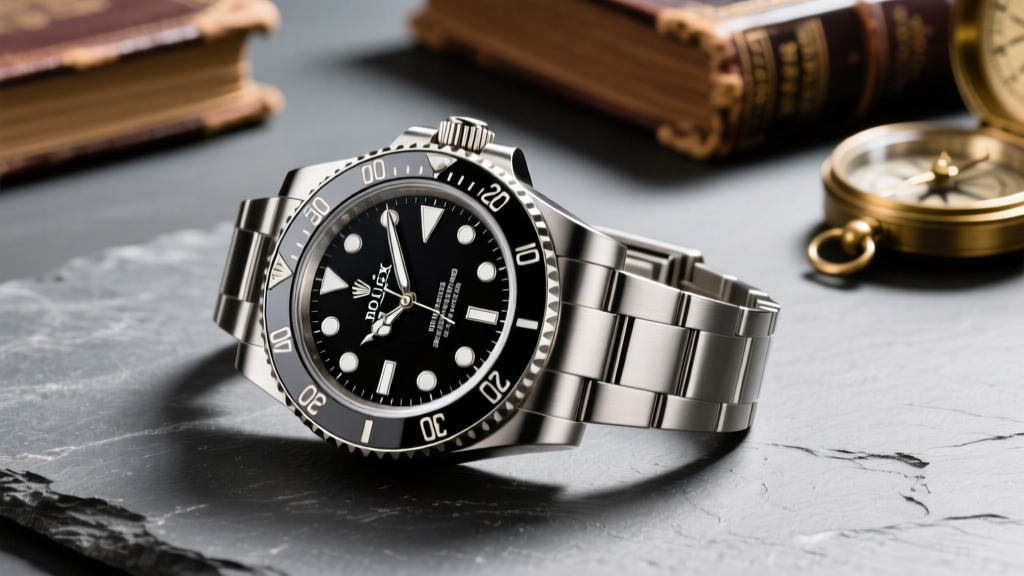
1132803: Decoding the Rolex Submariner Reference 1132803 — A 2019–2022 Chronometer with Ceramic Bezel and Oyster Bracelet
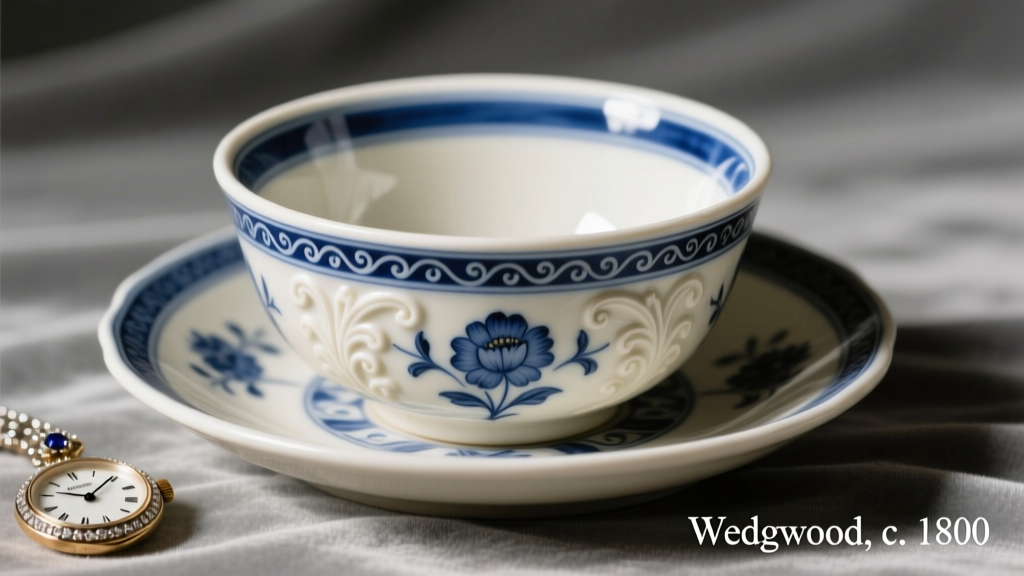
Wedgwood Tea Bowl Saucer in Caneware with Blue Enamel Bands, Circa 1800 — A Study in Georgian Ceramic Refinement
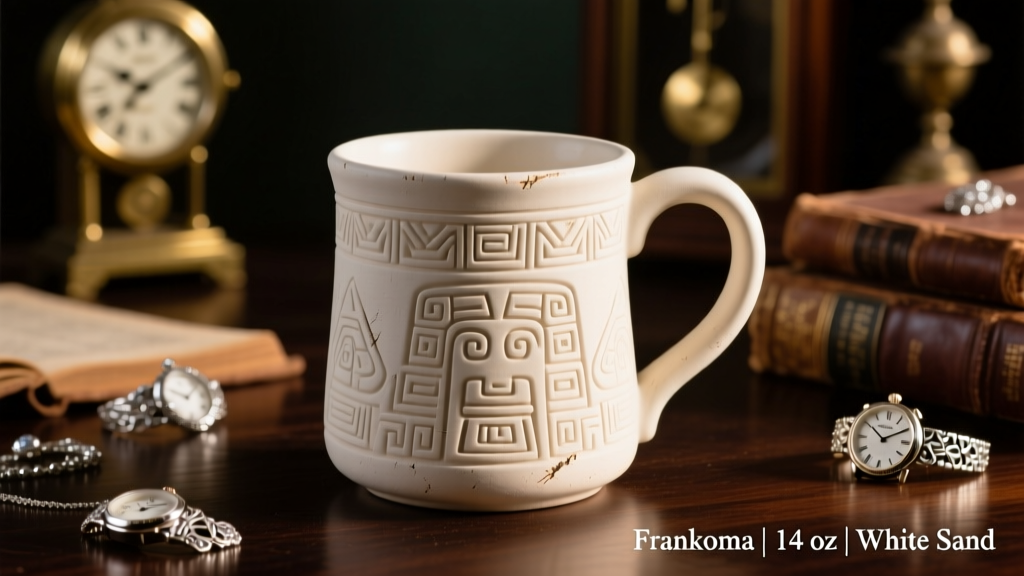
Frankoma Pottery Mayan Aztec Mug in White Sand: A Collector’s Guide to the Iconic 14-Ounce Ceramic Beverage Vessel
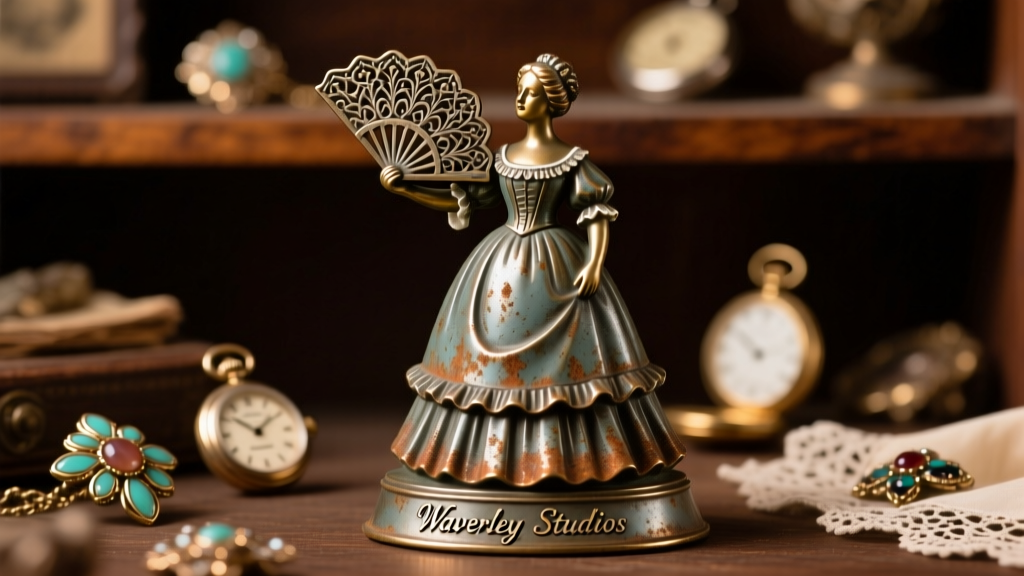
Waverly Studios Cast Iron Doorstop: The Woman in Hoop Skirt with Fan — A Study in Gilded Age Ironwork and Collectible Americana
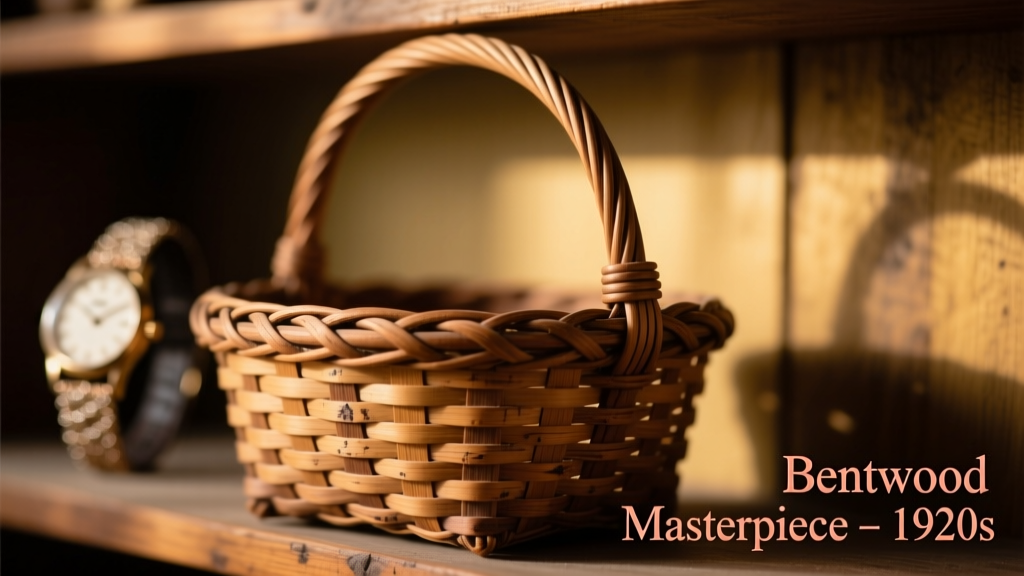
Baskets Splint 20 Ribs Bentwood Handle 8 × 7½ Inches: A Technical and Historical Analysis of a Mid-Century American Utility Basket
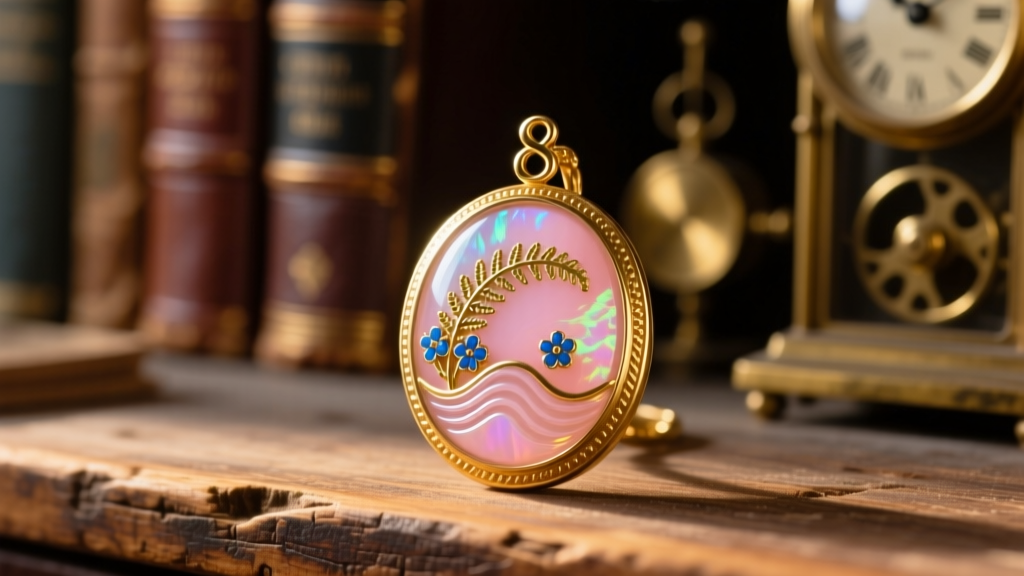
Wave Crest Fernery Pink Opal Glass Compote: Decoding the 8-Inch Blue-Flowered Gold-Rimmed Masterpiece
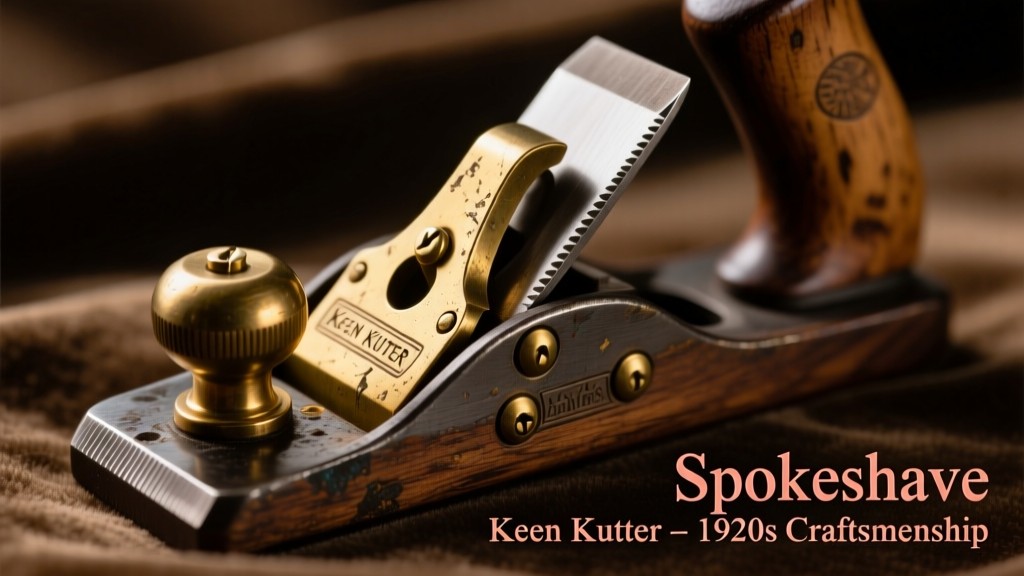
Keen Kutter Spokeshaves: Precision, Provenance, and the Legacy of American Toolmaking
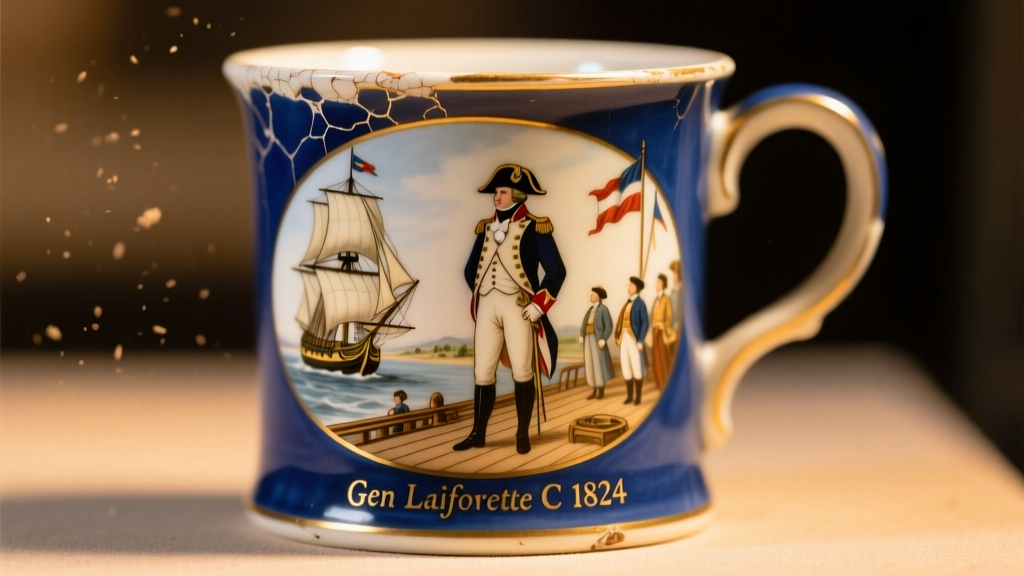
Staffordshire Mug: The Landing of General Lafayette, c. 1824 — A Patriotic Ceramic Landmark in British Transferware
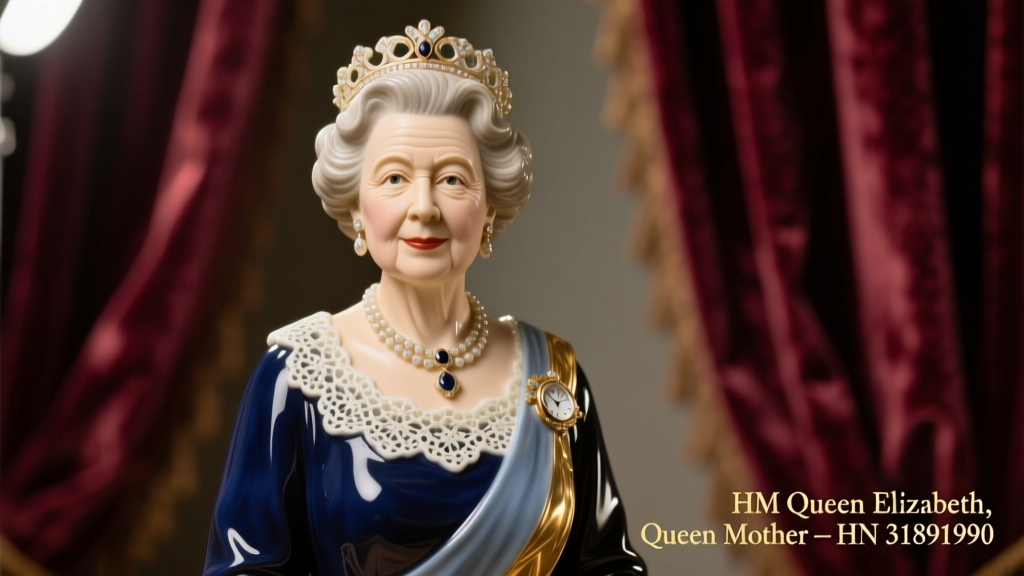
Royal Doulton HN 3189: The Queen Mother Figurine (1990) — Provenance, Craftsmanship, and Collectibility