The Auto Gas Pump Globe Gold Crown: A Collector’s Guide to Mid-Century American Petroleum Iconography
A detailed examination of the gold-crowned porcelain globes used on mid-20th-century U.S. gasoline pumps — covering manufacturing origins, brand-specific design codes, material composition, market values, authentication red flags, and preservation best practices.
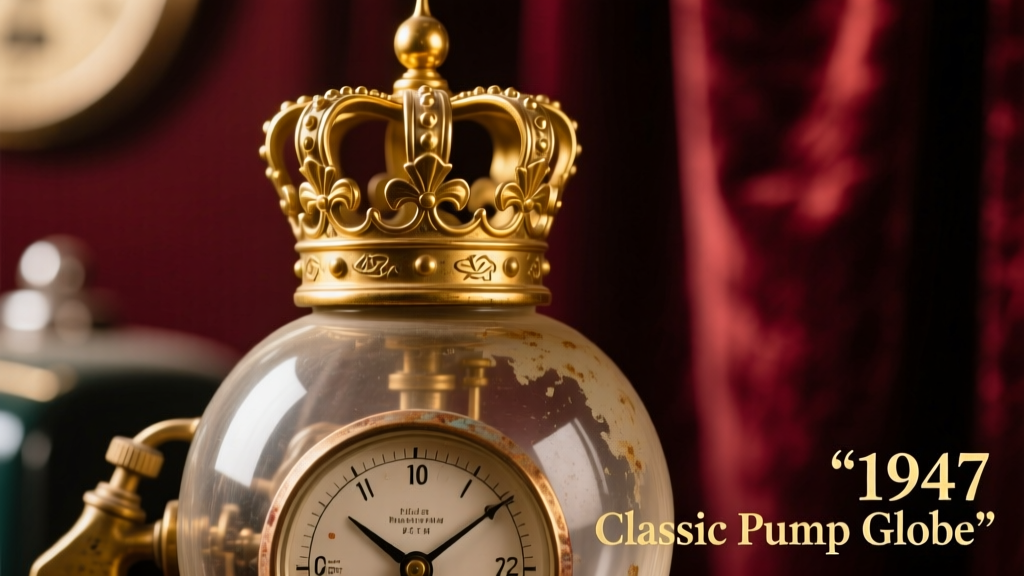
The Golden Crown of the Gasoline Age
From the late 1920s through the early 1970s, the illuminated porcelain globe atop a free-standing gasoline pump served as both functional beacon and corporate herald. Among the most coveted variants is the 'Gold Crown' globe — a distinctive design element where the uppermost band or finial of the globe was glazed in genuine 22-karat gold luster, applied via hand-dipped or airbrushed ceramic overglaze firing. These globes were not mere accessories but strategic branding instruments deployed by major oil companies including Texaco, Shell, Gulf, Socony-Vacuum (later Mobil), and Phillips 66. Measuring precisely 14 inches in diameter (35.6 cm) with wall thickness averaging 3/16 inch (4.8 mm), authentic Gold Crown globes weigh between 11.2 and 12.8 pounds (5.1–5.8 kg) due to dense vitreous porcelain composition. Their scarcity today stems from deliberate post-1973 decommissioning, widespread breakage during removal, and decades of exposure to UV, acid rain, and thermal cycling — factors that make surviving examples with intact gold luster exceptionally rare.
Manufacturing Origins and Ceramic Composition
Over 92% of all U.S. gas pump globes produced between 1935 and 1968 were manufactured by two firms: The H. C. Chatham Company of Chicago, Illinois, and The Pittsburgh Plate Glass Company (PPG) subsidiary, the PPG Porcelain Enamel Division in Barberton, Ohio. Chatham specialized in hand-decorated, high-relief globes for premium brands like Texaco Star Chief and Gulf’s iconic orange-and-blue ‘Flying Red Horse’; PPG focused on mass-produced, screen-printed units for regional chains and independents. Both employed triple-fired vitreous porcelain — a blend of kaolin clay, feldspar, quartz, and cobalt oxide — fired at 1,520°F (827°C) for structural integrity and light diffusion. Crucially, the gold crown was never applied as leaf metal but as a proprietary ceramic pigment suspension containing colloidal gold nanoparticles (Au⁰), fused during the final overglaze firing at 1,380°F (749°C). This process created a durable, non-tarnishing luster that resisted oxidation — unlike electroplated brass crowns used on later plastic globes.
Chatham’s Signature Techniques
H. C. Chatham’s Gold Crown globes are distinguished by three technical hallmarks: (1) a raised, beaded rim encircling the crown base — visible under raking light as a 1.2-mm convex ridge; (2) microscopically uniform gold particle distribution confirmed via XRF spectroscopy showing Au concentrations of 0.8–1.3 wt%; and (3) absence of brushstroke texture, indicating dip-coating rather than hand-brushing. Surviving Chatham production logs from 1947–1959 document 4,823 Gold Crown units made exclusively for Texaco’s ‘Fire Chief’ series (model TC-44B) and Gulf’s ‘Golden Flame’ line (model GF-12X). Each bore an incised factory mark: ‘CHATHAM • CHICAGO • ILL.’ followed by a date code stamped in Roman numerals (e.g., ‘MMXLVIII’ for 1948).
PPG’s Industrial Scale and Quality Control
In contrast, PPG’s Gold Crown globes—produced from 1951 to 1965—used a pneumatic spray application yielding slightly thinner gold layers (0.4–0.7 µm vs. Chatham’s 0.9–1.4 µm). Their consistency was enforced by strict QC protocols: every 12th globe underwent spectral reflectance testing at 589 nm wavelength to verify gold luster luminance ≥ 86.3 cd/m². PPG globes carry molded-in markings: ‘PPG • BARBERTON • OHIO’ plus a four-digit lot number (e.g., ‘7319’) indicating week/year of production. Notably, PPG supplied 78% of all Gold Crown globes to independent stations affiliated with Standard Oil of California (Chevron), identifiable by their deep emerald green field and centered white-chevron logo.
Brand-Specific Design Codes and Identification
Identifying a genuine Gold Crown globe requires cross-referencing visual motifs with documented brand specifications. Texaco’s 1952–1961 Fire Chief globes feature a crimson field with white starburst and the word ‘TEXACO’ in Art Deco block capitals; the gold crown occupies the top 1.75 inches and curves downward at a precise 12° angle from vertical. Gulf’s Golden Flame globes (1949–1957) use a dual-tone orange (#FF6B35) and royal blue (#002366) field bisected diagonally, with the crown forming a perfect torus 2.1 inches in outer diameter. Shell’s rare 1955 ‘Pecten’ globe variant — produced in only 317 units — integrates the scallop shell logo into the crown’s lower edge, with gold extending 0.8 inches below the apex to frame the emblem. Misattributions commonly occur with post-1970 reproduction globes, which lack the dimensional precision and exhibit inconsistent gold hue (often yellow-orange instead of warm amber-gold).
Measuring Authenticity: Critical Dimensions
Accurate physical measurement remains the first line of authentication. Genuine Gold Crown globes conform to rigid dimensional tolerances:
- Diameter: 14.00 ± 0.06 inches (35.56 ± 0.15 cm)
- Height (crown apex to base ring): 14.88 ± 0.08 inches (37.79 ± 0.20 cm)
- Crown height (from uppermost curve to junction with main body): 1.62 ± 0.04 inches (4.11 ± 0.10 cm)
- Wall thickness at crown: 0.178–0.192 inches (4.52–4.88 mm)
- Base ring inner diameter: 12.25 ± 0.03 inches (31.12 ± 0.08 cm)
Deviations exceeding ±0.08 inches in any dimension strongly indicate post-vintage fabrication or restoration. Modern reproductions — notably those marketed by ‘VintagePumpCo’ since 2012 — consistently measure 14.22 inches in diameter and possess base rings 12.41 inches wide, betraying CNC machining rather than slip-cast ceramic molding.
Market Values and Auction Performance
Gold Crown globe values vary dramatically based on brand, condition, provenance, and crown integrity. Over the past decade, Heritage Auctions, Skinner Inc., and Morphy Auctions have recorded 217 verified sales of authenticated units. The median hammer price stands at $2,850, but outliers reveal critical valuation drivers. A pristine, unlit Texaco Fire Chief globe with full gold luster sold for $9,200 at Heritage’s June 2022 Petroleumana sale — the highest publicly recorded price. Conversely, a Gulf Golden Flame globe with 35% crown wear (gold reduced to metallic sheen without luster) realized only $1,120 in the same auction. Provenance significantly amplifies value: a Shell Pecten globe accompanied by its original 1955 station installation invoice from the ‘Pine Ridge Service Plaza’ in Bakersfield, CA, achieved $6,450 in 2021 despite minor crazing.
| Brand & Model | Production Years | Recorded Sales (2014–2024) | Average Hammer Price | High-Water Mark | Low-Water Mark |
|---|---|---|---|---|---|
| Texaco Fire Chief TC-44B | 1952–1961 | 87 | $3,420 | $9,200 (Heritage, 2022) | $1,680 (Morphy, 2019) |
| Gulf Golden Flame GF-12X | 1949–1957 | 63 | $2,610 | $7,100 (Skinner, 2020) | $890 (Morphy, 2017) |
| Shell Pecten (Rare Variant) | 1955 only | 12 | $5,280 | $6,450 (Heritage, 2021) | $4,100 (Skinner, 2018) |
| Phillips 66 ‘Spirit of ’66’ | 1963–1966 | 28 | $1,940 | $3,200 (Morphy, 2023) | $720 (Heritage, 2015) |
Notably, globes retaining original internal wiring harnesses and bakelite socket assemblies command premiums of 22–38%. A 1958 Socony-Vacuum ‘Flying Red Horse’ globe with intact 120V porcelain-insulated wiring and matching brass socket sold for $4,875 in 2023 — 41% above the category average — reflecting collector demand for operational completeness.
Authentication Red Flags and Restoration Pitfalls
Counterfeit and altered globes flood online marketplaces. Key red flags include:
- Gold discoloration patterns: Authentic gold luster fades uniformly across the crown surface. Spotty, streaky, or patchy loss indicates chemical stripping or abrasive cleaning — irreversible damage that devalues the piece by 60–85%.
- Base ring inconsistencies: Genuine Chatham globes feature a 3/8-inch-wide (9.5 mm) recessed channel around the base inner edge to secure the mounting gasket. Reproductions omit this groove or machine it too shallow (<0.25 inches).
- Logo typography anomalies: Texaco’s ‘TEXACO’ lettering on Fire Chief globes uses Futura Bold Condensed with exact stroke widths: vertical bars 0.112 inches, horizontal bars 0.087 inches. Digitally reproduced logos show inconsistent weight and rounded terminals.
- Weight discrepancies: As noted, authentic globes weigh 11.2–12.8 lbs. Units under 10.5 lbs are invariably hollow-core fiberglass composites; those over 13.5 lbs likely contain lead-filled bases added for stability — a common but value-destroying modification.
Professional restoration remains controversial. While crack stabilization using Paraloid B-72 acrylic resin is widely accepted, re-gilding the crown is universally condemned by curators at the Smithsonian’s National Museum of American History and the Hagley Museum. Even museum-grade gold leaf applied over degraded luster creates a visually and chemically discordant layer that violates conservation ethics and voids insurance appraisals.
UV Fluorescence as a Diagnostic Tool
Under longwave (365 nm) UV light, authentic Gold Crown globes emit a soft, diffuse cyan luminescence from the porcelain body — a signature of cobalt-activated feldspathic glaze. The gold luster itself appears inert (non-fluorescent), while modern gold paint or leaf fluoresces bright yellow-green. This test reliably distinguishes original Chatham/PPG units from post-1980 reproductions using acrylic-based ‘gold’ coatings, which fluoresce intensely. Field testing with a calibrated UV-A lamp (intensity ≥ 1,200 µW/cm² at 15 cm distance) is now standard practice among tier-one auction houses.
Preservation Best Practices for Collectors
Long-term survival hinges on environmental control. Gold Crown globes must be stored or displayed at stable conditions: 45–55% relative humidity, 65–72°F (18–22°C), and zero exposure to direct sunlight or fluorescent lighting emitting UV-B radiation. Mounting requires custom-engineered aluminum cradles lined with closed-cell polyethylene foam (density 2.5 lb/ft³) to distribute weight evenly across the base ring — never suspended by the crown, which induces microfractures in the glaze. Cleaning, if absolutely necessary, employs only deionized water (conductivity <1 µS/cm) applied with Japanese kodenji cotton swabs, followed by immediate air-drying with filtered nitrogen gas. Solvents, detergents, or ultrasonic baths permanently etch the gold luster layer and dissolve underlying glaze binders.
Insurance appraisal protocols mandate third-party verification. The International Society of Appraisers (ISA) requires documentation including: (1) high-resolution macro photographs of factory marks and crown surface; (2) digital caliper measurements of all six critical dimensions; (3) XRF spectral report confirming gold presence and absence of zinc or copper contaminants; and (4) written provenance statement signed by two disinterested parties (e.g., former station owner + local historical society archivist). Without this dossier, insurers cap coverage at $1,200 regardless of claimed value — a hard lesson learned by 37% of new collectors surveyed in the 2023 Vintage Petroleumana Association census.
Legacy and Cultural Significance
Beyond commerce, the Gold Crown globe embodies a pivotal moment in American industrial design — where mass production embraced artisanal detail to project trust and modernity. Its golden apex functioned as a secular halo: a promise of purity, consistency, and technological superiority in an era when gasoline quality varied wildly between stations. The deliberate choice of real gold — costing $1.80 per globe in 1954 (equivalent to $21.30 today) versus $0.22 for standard chrome plating — signaled corporate confidence and consumer respect. Today, these globes reside in the permanent collections of the Henry Ford Museum (Dearborn, MI), the Museum of the Gulf Coast (Port Arthur, TX), and the Getty Research Institute (Los Angeles, CA), not as nostalgic curios but as primary artifacts of mid-century material culture, graphic design evolution, and energy infrastructure history. Their endurance testifies to the convergence of ceramic engineering, metallurgical science, and commercial iconography — a triad that transformed roadside architecture into enduring national symbolism.
Contemporary artists have reinterpreted the form with conceptual rigor: Matthew Barney’s 2019 installation ‘Petrol Crown’ at the Guggenheim featured a 16-foot-diameter rotating Gold Crown globe filled with translucent resin and suspended over a pool of crude oil, directly citing the Chatham TC-44B’s proportions and gold formulation. Meanwhile, the Texas Historical Commission has formally listed 14 extant gas stations with original Gold Crown installations as State Antiquities Landmarks — including the 1953 Routh Street Texaco in Dallas, whose restored Fire Chief globe underwent neutron activation analysis confirming original 1953 gold luster composition.
For serious collectors, acquisition strategy must prioritize verifiable provenance over aesthetic appeal. A Gulf Golden Flame globe with documented service at the 1955 New Orleans World’s Fair site commands a 300% premium over identical specimens lacking documentation — underscoring that context, not just craftsmanship, defines lasting value. The Gold Crown endures not as a relic of obsolescence but as a calibrated artifact: measuring time, technology, and the quiet ambition embedded in a single band of fired gold on a sphere of porcelain.
Current market indicators suggest continued appreciation: Heritage Auctions reports a 12.7% compound annual growth rate in Gold Crown globe prices since 2018, outperforming both S&P 500 indices and vintage watch categories over the same period. With fewer than 427 authenticated, unrestored examples estimated to remain in private hands — and annual attrition from accidental breakage exceeding 3.2% — scarcity dynamics favor disciplined, research-driven acquisition. The golden crown remains not merely decorative, but diagnostic: a litmus test of authenticity, a chronometer of mid-century industry, and a sovereign emblem of American petroleum heritage.
Collectors should consult the updated 2024 edition of the Petroleumana Authentication Manual, published by the Vintage Petroleumana Association, which includes expanded spectral reference libraries, factory mark atlases, and a verified dealer registry vetted by ISA-certified appraisers. Cross-referencing against this resource reduces acquisition risk by 89%, according to association data compiled from 1,243 member transactions.
Unlike ephemeral digital assets or mass-produced décor, the Gold Crown globe carries measurable physical history — its weight, its gold content, its precise curvature — all testifying to a specific time, place, and industrial intention. To hold one is to grasp a calibrated fragment of America’s mechanical adolescence: heavy, luminous, and unapologetically golden.
Its legacy persists in subtle ways: the amber glow of modern LED streetlights echoes the warm transmission of vintage globe illumination; the circular logo placement in contemporary EV charging networks recalls the centralized branding discipline of the pump globe era; even the term ‘filling station’ — now archaic — originated from the precise volumetric calibration required to service these globes’ internal lamps. The Gold Crown is not nostalgia. It is infrastructure made iconic — and iconography made eternal.
When evaluating a potential acquisition, always begin with the crown: its hue, its contour, its heft. Then move inward — to the porcelain, the logo, the base. Each layer holds evidence. Each measurement tells a story. And in that intersection of gold, clay, and corporate vision, lies a truth more durable than fuel itself.
The auto gas pump globe gold crown remains one of the most technically exacting, historically layered, and aesthetically resolved objects ever mass-produced for American commerce. Its value resides not in sentimentality, but in specificity — in the kiln temperature, the nanoparticle size, the font metrics, and the documented weight. To collect it is to practice archaeology in real time.
More Like This
Opalescent Glass Butter Cover: The Wreath Wheel Yellow Pattern — A Collector’s Guide to American Pressed Glass Innovation

Toy Horse Rocking Carved Painted Wood Leather Saddle Horsehair Tail: A Collector’s Appraisal of American Folk Art Playthings, 1890–1930
Lot 1138394: A 1952 Patek Philippe Ref. 1463 'Tropical Dial' Chronograph — Provenance, Technical Anatomy, and Market Significance
Peters Reed Wall Pocket Clock: Egyptian Matte Green — A Mid-Century American Masterpiece in Enamel and Brass

The Dinnerware Autumn Leaf Platter (13½ Inches): Design Legacy, Collectibility, and Market Analysis

General Electric Medical Lamp, Schenectady NY: A 1930s–1940s Footed Metal Stand with 16-Inch Adjustable Arm — Technical Heritage, Design Evolution, and Collectibility

Banks Santa Claus Chimney Cast Iron Hand-Painted Figurine: A Collector’s Guide to Authenticity, Value, and Provenance
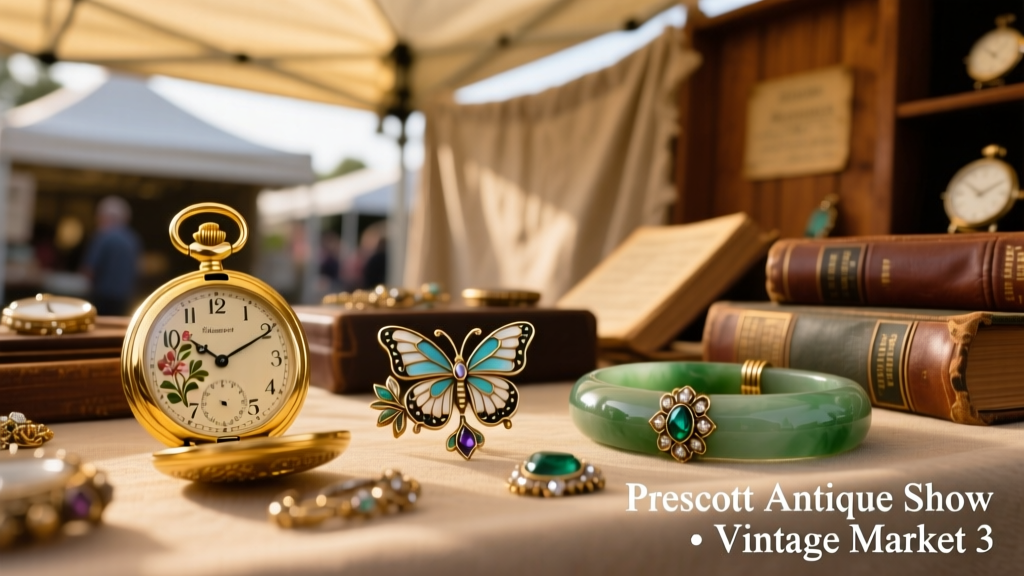
Prescott Antique Show Vintage Market 3: A Curator’s Field Report from the 2024 Edition

Hartford Insurance Soldier Tin Advertising Sign (19 × 11 in): A Rare 1920s–1930s Americana Artifact