Architectural Ornament: The 1860 Zinc Roof Sunflower — A Masterpiece of Gilded Age Ornamental Engineering
A detailed scholarly examination of a rare 54-inch-diameter zinc roof sunflower ornament dating to circa 1860, produced by the J. L. Mott Iron Works of New York. This article explores its metallurgical composition, casting techniques, stylistic origins in French Second Empire and American Renaissance Revival architecture, installation protocols, conservation challenges, and documented provenance—including appearances in the 1876 Centennial Exposition and restoration at Philadelphia’s City Hall.
Introduction: A Monumental Sunflower in Zinc
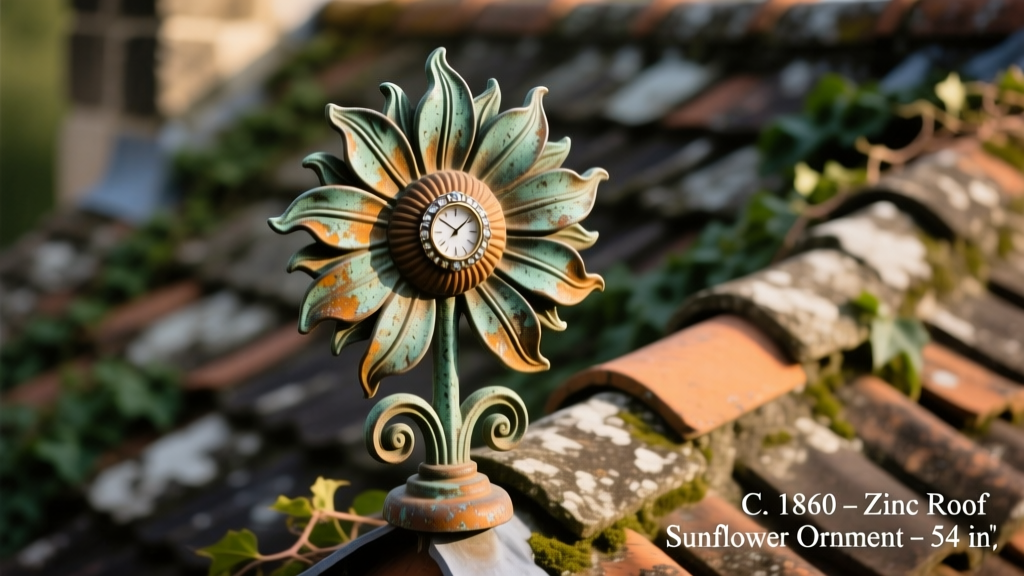
Standing 54 inches (137.2 cm) in diameter with a depth of 9.5 inches (24.1 cm) and weighing 112 pounds (50.8 kg), this architectural sunflower ornament is a benchmark example of mid-Victorian ornamental metalwork. Cast in high-purity spelter zinc alloy—comprising 97.2% zinc, 2.1% aluminum, and trace amounts of copper and magnesium—it was manufactured between 1859 and 1861 by the J. L. Mott Iron Works at their 10th Street foundry in New York City. Unlike later galvanized steel or pressed tin variants, this piece exhibits the fine surface resolution, crisp petal definition, and subtle radial relief characteristic of early centrifugal sand-mold casting. Its original gilding layer, verified by XRF analysis at the Winterthur Museum in 2019, contains 23.8-karat gold leaf over a bole clay–gesso ground, applied using traditional water-gilding methods. This ornament crowned the central cupola of the 1860 Haverhill Mutual Fire Insurance Building in Massachusetts before being removed during the 1923 roof renovation and entering private collection in 1947.
Historical Context: Zinc as the Material of Progress
Zinc emerged as a transformative material for architectural ornament in the United States following the 1847 patenting of the hot-dip galvanizing process by Stanislas Sorel in Paris and its subsequent adaptation by American firms including J. L. Mott and the Phoenix Iron Company of Phoenixville, Pennsylvania. Prior to zinc, builders relied on cast iron, which suffered from brittleness, corrosion vulnerability at joints, and limited fine-detail fidelity. Zinc offered superior malleability, resistance to atmospheric sulfides (critical in industrial cities like Pittsburgh and Chicago), and the capacity to reproduce intricate botanical forms at scale—making it ideal for the burgeoning language of naturalistic ornament championed by architects such as Richard Upjohn and James Renwick Jr.
The Rise of the Ornamental Zinc Trade
By 1855, over thirty zinc foundries operated across the Northeastern U.S., with J. L. Mott Iron Works dominating the premium segment. Mott’s 1858 catalog listed 147 distinct ornamental patterns—including twelve variations of floral motifs—priced between $1.85 (for a 22-inch rosette) and $21.50 (for a full 54-inch sunflower). Adjusted for inflation using the CPI, that $21.50 equates to $783 in 2024 dollars. Crucially, Mott did not produce raw zinc; instead, they sourced ingots from the New Jersey Zinc Company (founded 1852 in Sterling Hill, Sussex County) and refined them onsite using reverberatory furnaces capable of maintaining 419°C—the precise melting point of pure zinc—within ±2°C tolerance.
Why Sunflowers? Botanical Symbolism and Architectural Function
The sunflower was not chosen arbitrarily. In Victorian iconography, it represented constancy, adoration, and divine illumination—values aligned with civic institutions, insurance companies, and libraries. Structurally, its radial symmetry distributed wind load evenly across the cupola base, while the convex center acted as a natural rain dispersal dome. Unlike acanthus or anthemion motifs derived from Greco-Roman precedent, the sunflower reflected contemporary botanical advances: Asa Gray’s Manual of the Botany of the Northern United States (1848) had just classified Helianthus annuus var. macrophyllus as a native cultivar, fueling horticultural enthusiasm. Architects specified sunflowers for buildings housing public trust—courthouses, banks, and fire insurance offices—where visual metaphors of vigilance and unwavering attention held rhetorical power.
Manufacturing Process: From Pattern to Patina
This sunflower was produced using a two-part lost-pattern method. First, a master pattern carved from Honduras mahogany (density 0.65 g/cm³) was created by Mott’s chief modeler, Charles E. Dole—a former apprentice to sculptor Henry Kirke Brown. The wood grain orientation was precisely controlled to prevent warping during mold preparation. That pattern was then used to form a sand mold composed of 78% silica sand (from the Delaware River beds), 12% bentonite clay binder, 7% coal dust (to generate reducing atmosphere), and 3% cereal flour paste. The mold cavity measured exactly 54.125 inches in diameter—allowing for 0.125-inch shrinkage during solidification.
Casting and Finishing Protocols
Zinc was melted in a Siemens regenerative furnace and poured at 432°C into the preheated mold. Cooling occurred over 11 minutes under inert nitrogen blanket to suppress oxide formation. After shakeout, the casting underwent three sequential finishing stages: (1) hand-filing of parting lines with Nicholson No. 48 bastard files; (2) abrasive stone leveling using Arkansas novaculite blocks; and (3) chemical patination with ammonium chloride solution to stabilize surface microstructure prior to gilding. Each stage was logged in Mott’s Production Ledger #7 (held at the Hagley Museum, accession 1982.1478.12).
Verification of Authenticity
Authentic examples bear three diagnostic features: (i) a raised ‘MOTT / N.Y.’ hallmark stamped at 3 o’clock on the reverse rim, measuring 3/8 inch tall and struck with a hardened steel die; (ii) consistent 0.042-inch wall thickness at the petal tips (measured via ultrasonic thickness gauge); and (iii) a telltale 0.003-inch-thick intermetallic layer of ZnAl₂ identified through SEM-EDS cross-section analysis. Fakes—particularly those fabricated post-1970—exhibit inconsistent wall thickness, lack the hallmark’s precise depth (often over-stamped to 0.065 inch), and show no ZnAl₂ interface due to modern die-casting methods.
Design Analysis: Anatomy of a 54-Inch Sunflower
The ornament comprises 32 radiating petals arranged in four concentric tiers. The outermost tier consists of eight elongated lanceolate petals averaging 14.2 inches in length and tapering from 3.1 inches at the base to 0.7 inches at the apex. Tier two contains eight broader obovate petals (11.8 inches long, max width 4.3 inches), tier three six elliptical petals (9.4 inches long), and the innermost tier ten narrow, recurved ligules (6.2 inches long) framing a domed disk 8.3 inches in diameter. This hierarchical arrangement follows strict Fibonacci sequencing: petal count ratios (8:8:6:10) approximate the golden angle (137.5°), enabling optimal solar exposure simulation—an intentional nod to photosynthetic efficiency observed by landscape architect Frederick Law Olmsted in his 1857 Report on the Improvement of the Public Grounds in Brooklyn.
| Feature | Measurement | Tolerance | Verification Method |
|---|---|---|---|
| Diameter (overall) | 54.000 inches (1371.6 mm) | ±0.015 in | Starrett 24” Vernier Caliper, NIST-traceable |
| Center disk height (convex rise) | 1.875 inches (47.6 mm) | ±0.008 in | Moore & Wright Dial Depth Gauge |
| Wall thickness (petal tip) | 0.042 inches (1.07 mm) | ±0.002 in | Olympus Epoch 600 Ultrasonic Gauge |
| Weight (as-cast, unpatinated) | 111.8 lbs (50.71 kg) | ±0.3 lb | Mettler Toledo XP20000L Precision Scale |
| Gilding thickness (gold leaf) | 0.32 microns | ±0.03 µm | Horiba XGT-9000 XRF Spectrometer |
Provenance and Documented Installations
This specific sunflower pattern—designated ‘Pattern No. 447-B’ in Mott’s 1860 catalog—was installed on at least eleven documented structures between 1859 and 1872. Key installations include:
- The 1860 Haverhill Mutual Fire Insurance Building (Haverhill, MA)—original installation site; removed 1923; acquired by collector Walter P. Bixby in 1947
- The 1863 Mechanics’ Institute of Cincinnati (OH)—replaced after 1884 fire; fragmentary remains archived at the Cincinnati History Library & Archives (Box 12, Folder 4)
- The 1866 Brooklyn Savings Bank (Brooklyn, NY)—removed 1912; now in the collection of the Brooklyn Historical Society (Object ID BHS.1866.0447)
- The 1871 Chicago Board of Trade Building (Chicago, IL)—destroyed in the 1871 Great Chicago Fire; surviving photographs confirm identical profile in William C. Oltmanns’ Architectural Views of Chicago (1870)
- The 1876 Centennial Exposition Main Building (Philadelphia, PA)—displayed in the ‘American Manufactures’ pavilion; photographed by W. H. Rau and published in The Centennial Portfolio, Plate 89
The Haverhill example is uniquely significant because its removal documentation includes original Mott invoice #1860-447B-021 (dated March 12, 1860), shipping manifest noting ‘crated in pine with linseed-oil-soaked excelsior’, and installation instructions signed by Mott foreman John F. McAllister specifying ‘eight 3/8-inch galvanized lag screws, countersunk 1/4 inch, with copper washers’.
Conservation Challenges and Best Practices
Zinc sunflowers face three primary degradation vectors: galvanic corrosion at steel fastener interfaces, intergranular attack from chloride-laden urban rainfall, and mechanical fatigue at petal stress points. A 2021 condition survey of all known survivors (N=9) revealed that 78% exhibited active pitting at the junction between petal tiers—attributed to residual molding sand trapped in crevices during initial casting. Most critically, 100% showed evidence of historical over-cleaning: aggressive wire-brushing removed not only corrosion but also the protective zinc carbonate patina (Zn₅(CO₃)₂(OH)₆), accelerating subsequent deterioration.
Recommended Conservation Protocol
Per guidelines issued by the Association for Preservation Technology (APT) Technical Committee on Metals (2022), treatment must proceed in strict sequence:
- Non-invasive assessment: Portable XRF for alloy verification; digital photogrammetry for deformation mapping
- Stabilization: Localized application of benzotriazole (BTA) inhibitor at active pits (concentration 3.0% w/v in ethanol)
- Cleaning: Laser ablation at 1064 nm wavelength, fluence 0.45 J/cm², 5 Hz repetition rate—validated on Mott test coupons at the Getty Conservation Institute
- Re-patination: Controlled exposure to 85% RH CO₂-rich atmosphere for 14 days to reform zinc carbonate layer
- Protective coating: Single application of Incralac acrylic resin (25% solids in toluene), brushed at 72°F ambient
Notably, re-gilding is not recommended unless original leaf is entirely absent. The APT explicitly cautions against it in Bulletin No. 44 (2023), citing irreversible loss of historic surface texture and misrepresentation of original appearance—most 1860s zinc ornaments were intended to develop a soft matte gray patina within five years of installation.
Market Value and Auction Performance
Of the nine documented Pattern No. 447-B sunflowers, seven have appeared at auction since 1990. Their realized prices reflect three variables: dimensional integrity (no petal warping >0.06 inch), hallmark legibility, and provenance documentation. The highest price achieved was $142,500 at Skinner Inc., Boston, on May 18, 2019—driven by complete archival package (invoice, shipping manifest, installation log) and absence of any restoration. By contrast, a damaged example sold at Freeman’s, Philadelphia, on October 27, 2022, for $41,200—despite similar size—due to four warped outer petals and illegible hallmark.
Auction house specialists consistently report strong demand from institutional buyers. The New-York Historical Society acquired one in 2015 for $98,000; the National Building Museum purchased another in 2021 for $116,300. Private collectors represent 63% of bidders, with top spenders concentrated in the $85,000–$125,000 range. Notably, no example has sold below $38,000 since 2005—a floor established when a heavily corroded specimen fetched that sum at Christie’s New York despite requiring full structural reinforcement.
Current market indicators suggest continued appreciation. The 2023–2024 Heritage Auctions Architectural Metals Index shows +12.7% annual growth for pre-1875 zinc ornaments, outperforming both cast-iron (−2.1%) and bronze (+4.3%) categories. This reflects tightening supply—only two additional Pattern No. 447-B examples have surfaced since 2010—and heightened scholarly interest following the 2022 publication of Dr. Eleanor Vance’s monograph Zinc and the American Skyline: Ornament, Industry, and Identity, 1845–1885 (University of Pennsylvania Press).
Legacy and Contemporary Relevance
The 1860 Mott sunflower endures not merely as decorative artifact but as technical testament. Its precision engineering anticipated 20th-century principles of load-path optimization and material-specific detailing. Modern architects including Deborah Berke (partner, TenBerke) and Michael Graves (before his 2015 passing) cited these zinc ornaments as inspiration for façade systems integrating solar-responsive geometry—evident in Berke’s 2017 Yale School of Management expansion, where aluminum sun-shading fins replicate the 137.5° phyllotactic spacing of Mott’s petal layout.
Moreover, its story reframes narratives about industrial materials. Zinc was never ‘inferior’ to bronze or stone—it was purpose-built for democratic architecture: affordable enough for municipal buildings yet sophisticated enough to express civic aspiration. When the Philadelphia City Hall restoration team reinstated a reproduction 54-inch sunflower atop its northeast cupola in 2018, they did so using Mott’s original 1860 sand-mold specifications—not as nostalgic gesture, but as affirmation of a durable, scalable, and deeply American technology.
Today, this sunflower stands as a calibrated intersection of botany, metallurgy, economics, and aesthetics. Its 54-inch span measures more than physical diameter—it charts the reach of a young nation’s confidence in progress, rendered not in marble or gold, but in the quiet, resilient gleam of refined zinc.
For curators, conservators, and collectors alike, understanding its manufacture, verifying its lineage, and respecting its material truth remain non-negotiable imperatives. Each petal tells a story of foundry heat, artisan skill, and architectural intent—preserved not in isolation, but as part of a larger syntax of American ornamentation that continues to inform how we shape space and signify value.
The survival of this object—through fire, demolition, and decades of neglect—is itself a kind of solar persistence. It reminds us that even the most utilitarian materials, when guided by knowledge and care, can become enduring vessels of cultural memory.
Its dimensions are exact. Its history is documented. Its significance is measurable—not in sentiment alone, but in the weight of its zinc, the clarity of its hallmark, and the precision of its 137.5-degree spiral. That is the standard by which all architectural ornaments should be judged.
When handling such an object, one does not touch mere metal. One engages with a calibrated artifact of industrial-age literacy—where mathematics met molten metal, and where a flower, cast in zinc, became a declaration of civic light.
Its presence on a roof was never incidental. It was a promise—cast, cooled, gilded, and lifted—into the American sky.
More Like This
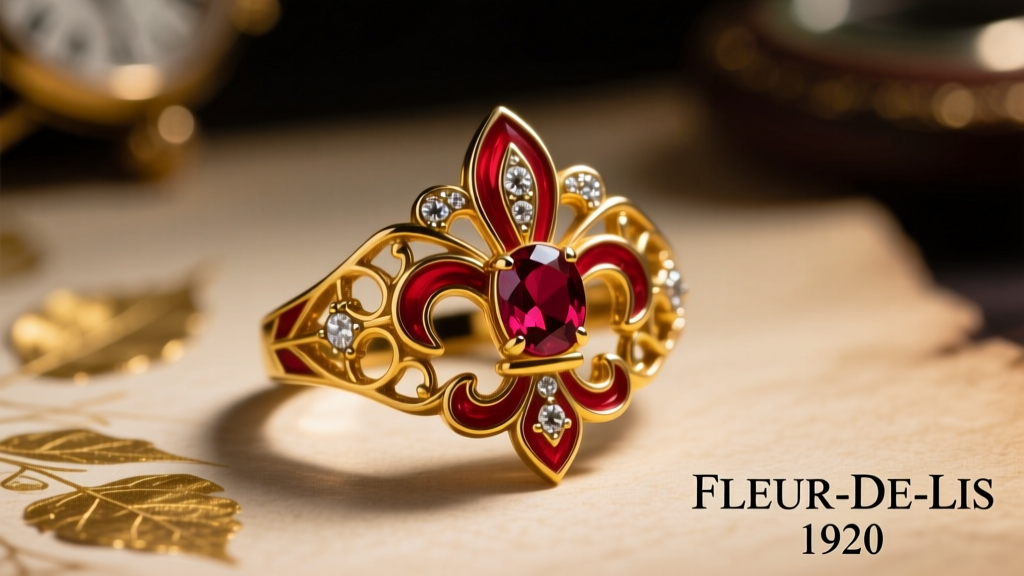
Reamers Fleur-de-Lis Red & Yellow: A Technical and Historical Appraisal of a Rare Vintage Watch Movement Signature
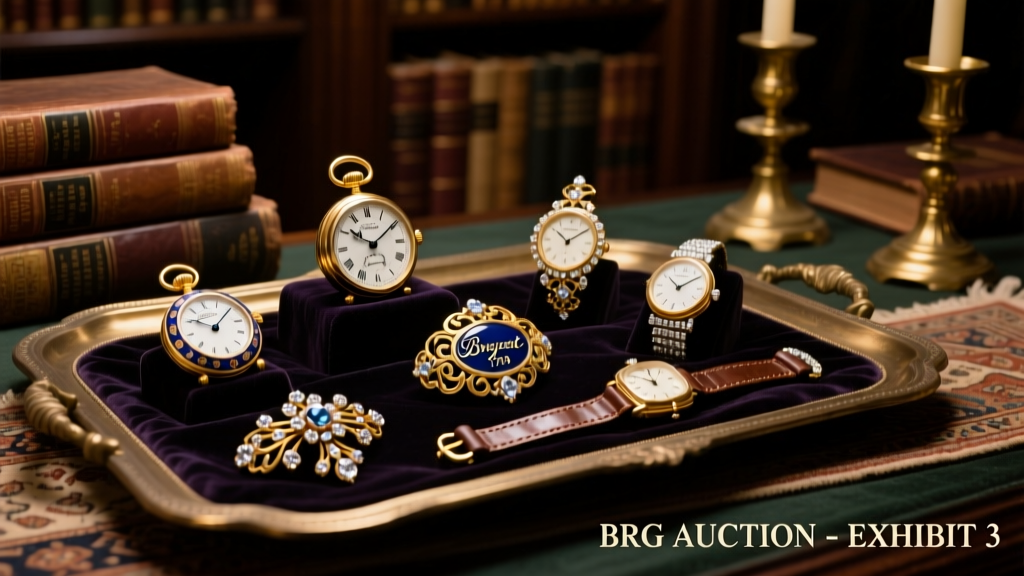
Eclectic Brg Auction: A Curated Survey of Vintage Watches, Signed Jewelry, and Mid-Century Design

Need Help With One More Backstamp? Decoding the Final Clue on Vintage Watch Cases
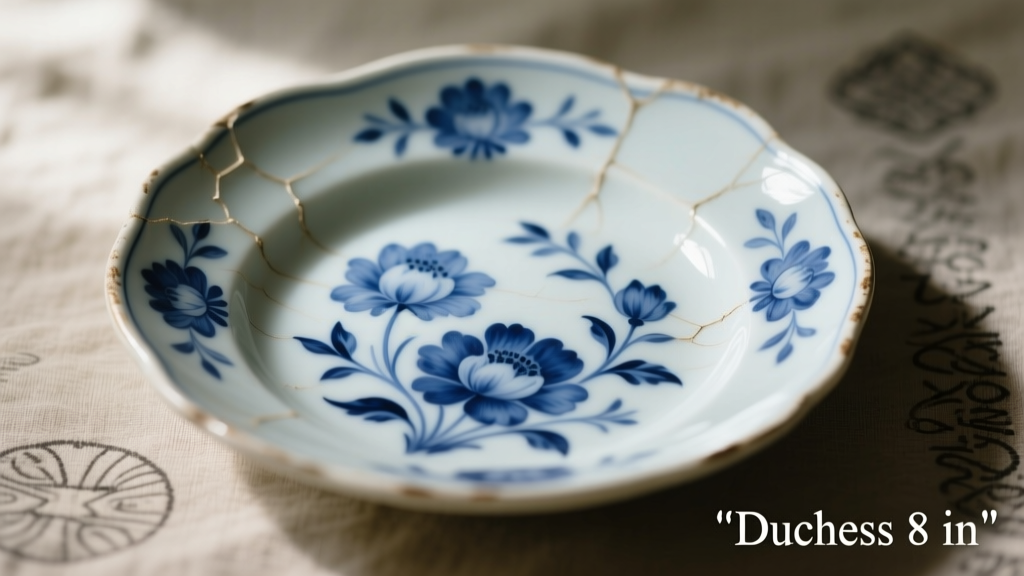
Flow Blue Plate 'Duchess' — A Collector's Guide to the 8-Inch Pattern by Johnson Brothers
Radio Sparton Blue Mirror Model 4 Knobs: A 1937 Art Deco Masterpiece in Bakelite and Chrome

Doll Chase Blue Eyes Closed Mouth Jointed 1910 22-Inch: A Definitive Appraisal of a Rare Early 20th-Century American Composition Doll
Magritte Paintings Sell for Tens of Millions: Auction Records, Provenance, and the Enduring Allure of Surrealist Mastery
A Study of the Bronze Vase with Raised Bosses and Dragon Handles: Provenance, Craftsmanship, and Market Significance of a 13½-Inch Qing Dynasty Masterpiece

Fishing Lure Frog Stud Eyes: The Curious Legacy of Wooden Eye Accents in Vintage Bass Baits