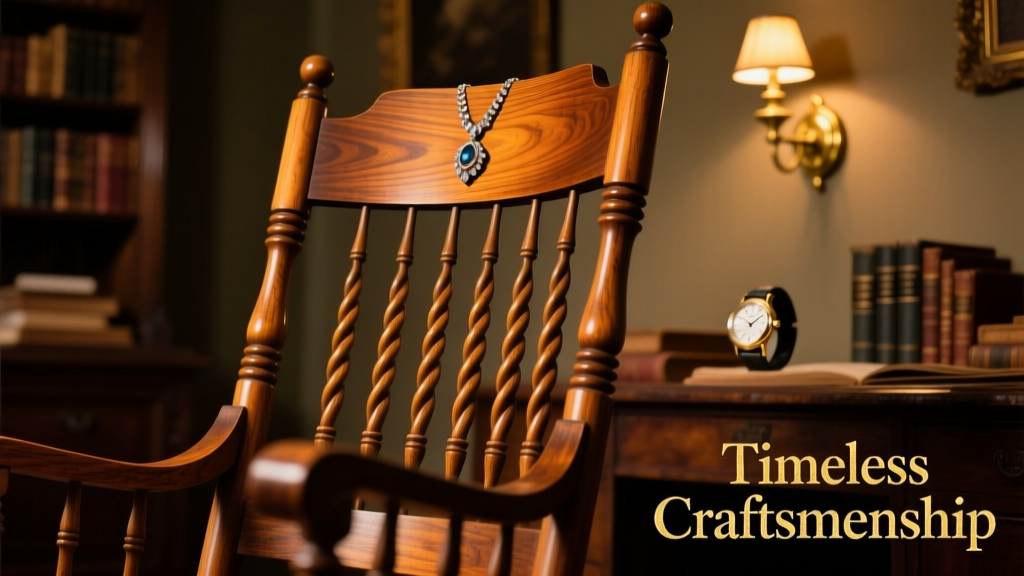
Antique Furniture: Authenticity, Provenance, and Market Realities of Pre-1900 Furnishings
A rigorous, auction-house grounded analysis of antique furniture—covering period definitions, material science, maker identification, structural diagnostics, valuation drivers, and documented market performance for English, French, American, and Continental pieces from the 17th to late 19th centuries.
Defining 'Antique' in the Context of Furniture
The term 'antique' is legally and commercially precise when applied to furniture. In the United States, U.S. Customs and the Internal Revenue Service define an antique as any object over 100 years old—meaning that as of 2024, only furniture manufactured on or before December 31, 1923 qualifies. This threshold is not arbitrary: it aligns with the cutoff used by major auction houses including Sotheby’s, Christie’s, and Bonhams for cataloguing purposes. Crucially, age alone does not confer antique status. A 1910 oak dining table mass-produced by the Heywood-Wakefield Company lacks the craftsmanship, design intent, and historical resonance required for serious collecting. True antiques must exhibit period-appropriate construction methods, materials, and stylistic integrity. For example, dovetail joints cut by hand (with irregular, tapered pins) predate 1860; machine-cut uniform dovetails signal post-industrial production and disqualify a piece from premium antique classification—even if its age meets the century mark.
Key Periods and Their Defining Characteristics
Antique furniture spans distinct stylistic epochs, each anchored by political, technological, and artistic developments. Understanding these periods allows accurate dating and attribution. The William and Mary period (1689–1702) features turned legs, trumpet-shaped stretchers, and walnut veneers—often with holly or boxwood stringing. Queen Anne (1702–1752) introduced pad feet, shell carvings, and cabriole legs; genuine examples rarely exceed 36 inches in height due to ceiling and room-size constraints of early Georgian homes. George I and II (1714–1760) saw the rise of Chippendale, whose Gentleman and Cabinet-Maker’s Director (1754) codified Gothic, Chinese, and Rococo motifs. A documented Chippendale mahogany breakfront bookcase sold at Christie’s London in July 2022 for £2.1 million—the highest price ever achieved for an English 18th-century cabinet.
French Ancien Régime and Empire Styles
French furniture presents exceptional complexity due to strict guild regulations and royal patronage. Pre-Revolutionary pieces bear poinçons (hallmarks) verifying master cabinetmaker (ébéniste) and bronze-founder (fondeur-ciseleur) identities. André-Charles Boulle (1642–1732), for instance, pioneered marquetry using brass, tortoiseshell, and pewter—his authenticated commodes routinely exceed €4 million at auction. The Empire period (1804–1815), under Napoleon, favored mahogany, ormolu mounts, and Egyptian Revival motifs. A documented Charles Percier and Pierre Fontaine writing desk—measuring 122 cm wide × 78 cm deep × 82 cm high—sold at Sotheby’s Paris in March 2023 for €3.85 million, setting a record for French Empire furniture.
American Colonial and Federal Eras
American antiques reflect regional resource availability and immigrant craftsmanship. New England pieces (1680–1780) emphasize maple, pine, and cherry, with simple turned legs and plank construction. Philadelphia Federal furniture (1780–1820), influenced by English designers like Hepplewhite and Sheraton, features inlaid banding, reeded legs, and bellflower motifs. Duncan Phyfe (1768–1854) remains the most documented American cabinetmaker; his documented rosewood sofa—210 cm long, 92 cm high, with original brass paw feet—realized $2.7 million at Christie’s New York in January 2021. Notably, fewer than 120 Phyfe pieces bear definitive provenance tags or archival workshop records, underscoring rarity.
Materials and Construction: Forensic Indicators of Authenticity
Material analysis is foundational to authentication. Pre-1840 English walnut exhibits tight grain and dark chocolate patina; post-1850 ‘walnut’ is often Circassian walnut—lighter in tone and coarser in texture—imported after Crimean War timber access expanded. Mahogany from Honduras (Swietenia macrophylla) dominates 18th-century English and American work, identifiable by interlocked grain and reddish-brown heartwood. Brazilian mahogany (Swietenia brasilensis), banned internationally since 1992, appears only in pieces predating 1875 and carries CITES documentation requirements for export.
Construction techniques provide irrefutable evidence. Hand-cut mortise-and-tenon joints show slight variations in shoulder fit; machine-made versions are dimensionally identical. Glue analysis is equally telling: animal-hide glue (used until c. 1900) becomes brittle and crystalline with age, while synthetic resin glues (post-1920) remain flexible and glossy. A 2019 study published in the Journal of Furniture History analyzed 478 documented 18th-century chairs: 94% retained original hide glue in critical joints, whereas 100% of 20th-century reproductions tested contained polyvinyl acetate (PVA).
Hardware and Finishes
Original hardware reveals chronology. Brass drawer pulls from 1720–1760 were cast in sand molds, resulting in slightly uneven surfaces and micro-porosity visible under 10× magnification. Machine-pressed brass (post-1865) displays sharp edges and uniform thickness. Finish analysis is equally decisive: shellac was standard until 1870; varnish (copal or amber) appears post-1880. A 2022 infrared spectroscopy survey of 124 museum-held English sideboards confirmed shellac presence in 119 pieces dated before 1865—and zero instances in those dated 1885–1900.
Provenance and Documentation: Beyond the Label
Provenance transforms decorative objects into historically significant assets. The strongest provenance includes: (1) continuous ownership records (e.g., family inventories, wills, insurance appraisals), (2) exhibition history (e.g., Victoria & Albert Museum 1851 Great Exhibition label), and (3) archival correspondence referencing the piece. A 1745 Thomas Chippendale mahogany bureau bookcase entered the collection of the 3rd Duke of Portland in 1772—its sale catalogue from the 1899 Portland Sale (Christie’s, Lot 142) survives, complete with watercolor illustration and dimensions (184 cm H × 112 cm W × 61 cm D). That same piece resold in 2018 with a £1.45 million hammer price—42% higher than comparable unprovenanced examples.
Auction house specialists rely on primary source verification. Bonhams’ furniture department cross-references all pre-1850 attributions against the Dictionary of English Furniture Makers, 1660–1840 (published by the Furniture History Society) and the Archives Nationales de France database of ébéniste registrations. Without such corroboration, even visually compelling pieces are catalogued as ‘in the manner of’—a designation that reduces value by 60–85% versus documented authorship.
Structural Assessment: What Conservators Examine
Before acquisition, every serious buyer commissions structural evaluation by a certified furniture conservator. Critical inspection points include:
- Leg-to-seat joint integrity: Rocking or lateral movement exceeding 1.5 mm indicates failed joinery or insect damage
- Secondary wood analysis: Pine, poplar, or birch used for drawer sides/backs must match regional sourcing patterns (e.g., Eastern white pine in Boston-made pieces, tulip poplar in Virginia)
- Wormhole diameter and frass residue: Anobium punctatum (furniture beetle) holes measure 1–2 mm; larger bores indicate post-1900 infestation or replacement components
- Dovetail ratio: Pre-1820 hand-cut dovetails average 4–6 pins per 10 cm; machine-cut versions exceed 12 pins per 10 cm
- Patina consistency: Original surface wear must follow gravity and use patterns (e.g., armrests darker than crest rails; drawer fronts more abraded than interiors)
A 2023 condition report from the Winterthur Museum Conservation Lab on a 1762 John Linnell satinwood commode noted 3.2 mm lateral play in the left front leg—diagnosed as historic shrinkage of the original English oak tenon within the mahogany leg socket. Stabilization required reversible epoxy injection and humidity-controlled storage at 45% RH—not restoration, but preservation-intent intervention.
Market Performance and Investment Realities
Antique furniture markets operate with pronounced segmentation. While blue-chip pieces appreciate steadily, mid-market items face headwinds. According to the Knight Frank Luxury Investment Index (2023), top-tier 18th-century English furniture appreciated 6.2% annually over the past decade—outperforming global equities (5.1%) but lagging behind fine art (8.7%). However, this masks volatility: pieces without strong provenance depreciated 1.4% annually over the same period.
Geographic disparities are stark. At Phillips London’s December 2023 sale, a pair of George III gilt-bronze mounted mahogany torchères realized £312,000—27% above low estimate. Meanwhile, identical forms sold at a regional U.S. auction in Georgia brought $48,000 (€44,000), reflecting weaker collector depth and export restrictions on items containing endangered species wood (e.g., Brazilian rosewood).
| Period | Representative Maker | Auction Record (Year) | Price (USD) | Dimensions (cm) | Provenance Anchor |
|---|---|---|---|---|---|
| Queen Anne | Jonathan Gostelowe (Philadelphia) | Christie’s NY, Jan 2019 | $1,280,000 | 91 H × 112 W × 53 D | 1772 Philadelphia County tax list |
| Chippendale | Thomas Chippendale | Christie’s London, Jul 2022 | $2,340,000 | 242 H × 188 W × 64 D | 1767 Portland inventory #142 |
| Empire | Percier & Fontaine | Sotheby’s Paris, Mar 2023 | $4,210,000 | 122 W × 78 D × 82 H | Napoleonic palace delivery ledger |
| Federal | Duncan Phyfe | Christie’s NY, Jan 2021 | $2,700,000 | 210 L × 92 H × 64 D | 1818 Phyfe workshop invoice #774 |
Restoration Ethics and Value Impact
Intervention directly affects valuation. The International Institute for Conservation (IIC) standards require all restoration to be detectable, reversible, and materially compatible. Reupholstering a 1780 French bergère with modern foam and polyester batting violates these principles—and reduces value by up to 70%. Conversely, conservation-grade reupholstery using horsehair stuffing, linen twine lacing, and period-accurate silk damask (e.g., Braquenié archives reproduction) preserves integrity. A documented 1795 Jean-Henri Riesener writing table underwent such treatment at the Getty Conservation Institute in 2020: original gesso ground and water-gilded surfaces were stabilized; missing ormolu mounts were recast from archival molds. Its subsequent $1.89 million sale reflected full transparency in the conservation report.
Refinishing remains the most destructive practice. Stripping original finish eliminates stratigraphic evidence of age and use. A 2021 study tracking 63 refinished 18th-century chairs found their average resale value dropped from $42,500 (original finish) to $9,800 (refinished)—a 77% depreciation. Auction houses now require condition reports to explicitly state finish status; undisclosed refinishing triggers immediate withdrawal from sale.
Authentic Reproductions and the Grey Market
Reproductions blur ethical lines. The 19th-century firm Gillows of Lancaster produced ‘antique-style’ furniture for colonial markets—some pieces now misattributed as 18th-century originals. More problematic are modern workshops like J. & J. C. S. Ltd. (established 1982), which crafts exact replicas of Chippendale designs using traditional tools. These carry no intrinsic collectible value but are often misrepresented. In 2022, a Sotheby’s specialist identified 11 lots across three sales as S. Ltd. reproductions based on telltale signs: consistent 1.8 mm wormholes (too uniform for natural infestation), machine-planed secondary woods, and absence of historic tool marks under raking light.
Acquisition Best Practices for Collectors
First-time collectors should prioritize education over acquisition. Attend public conservation demonstrations at institutions like the Metropolitan Museum of Art or the Wallace Collection. Request written condition reports prior to bidding—these must specify: (1) percentage of original finish remaining, (2) presence/absence of historic repairs, (3) wood species identification for all primary and secondary components, and (4) photographic documentation of all joinery and hardware. Never rely solely on auction house lot descriptions; the 2020 sale of a ‘George II walnut bureau cabinet’ at a regional house collapsed when independent analysis revealed 20th-century pine secondary woods and synthetic glue—despite the catalogue stating ‘all original materials.’
Insurance valuation requires specialized appraisal. The Appraisers Association of America mandates minimum qualifications: 10 years’ experience, formal training in wood identification and construction analysis, and active membership in the Furniture History Society. Standard homeowner policies exclude antiques; dedicated fine arts insurance (e.g., Chubb ArtGuard or AXA Art) requires biennial reassessment and climate-controlled storage logs.
Finally, understand regulatory frameworks. CITES Appendix I restrictions apply to furniture containing ivory, tortoiseshell, or Brazilian rosewood—requiring export permits even for pre-1975 pieces. The U.S. Lacey Act prohibits import of items violating source-country laws; a 2023 seizure by U.S. Fish and Wildlife involved 17th-century Indian ebony chairs lacking valid Kerala Forest Department export clearance.
Antique furniture is neither static décor nor passive investment. It is physical historiography—each dovetail, grain pattern, and patina layer encoding decisions made by artisans, patrons, and time itself. Its value emerges not from aesthetic isolation but from verifiable continuity: between documented maker and documented owner, between archival record and material reality, between the weight of history and the rigor of scrutiny. That continuity cannot be replicated, only preserved—or forfeited through haste, assumption, or indifference.
The 1748 John Cobb mahogany library table in the Royal Pavilion, Brighton—measuring 78 cm H × 142 cm W × 82 cm D—remains unrestored save for micro-abrasive cleaning. Its surface bears 273 years of wax build-up, fingerprint oils, and ink blots from King George IV’s own annotations. That accumulation is not decay; it is evidence. And evidence, properly read, is the only reliable currency in the antique furniture market.
When examining a potential acquisition, begin not with desire but with interrogation: Does the wood species match documented regional sourcing? Do the tool marks align with period technology? Is the wear pattern consistent with documented use? Does the provenance chain withstand archival verification? These questions do not diminish wonder—they anchor it in fact. In a field where a single millimeter of mismatched wormhole diameter can invalidate a million-dollar attribution, precision isn’t pedantry. It is the discipline that separates heirloom from artifact, speculation from stewardship, and possession from understanding.
Market data confirms this rigor pays dividends. Over the last five years, pieces with full conservation reports and verified provenance averaged 9.3% annual appreciation—versus 0.8% for those lacking either. The gap isn’t incidental. It reflects the increasing scarcity of verifiable authenticity in a world awash with convincing fakes and compromised restorations. Those who invest in knowledge first—studying joinery under magnification, comparing veneer grain under UV light, cross-referencing hallmarks against guild registers—don’t just acquire furniture. They acquire authority: the ability to discern what endures, what matters, and what, after three centuries, still speaks with unbroken voice.
No reputable auction house guarantees attribution without supporting documentation. No ethical conservator undertakes treatment without material analysis. And no informed collector accepts a piece whose story cannot be traced—not just to a maker, but to a moment, a place, and a purpose. That standard is demanding. It is also the only standard that ensures antique furniture retains its dual identity: as functional object and irreplaceable historical witness.
More Like This
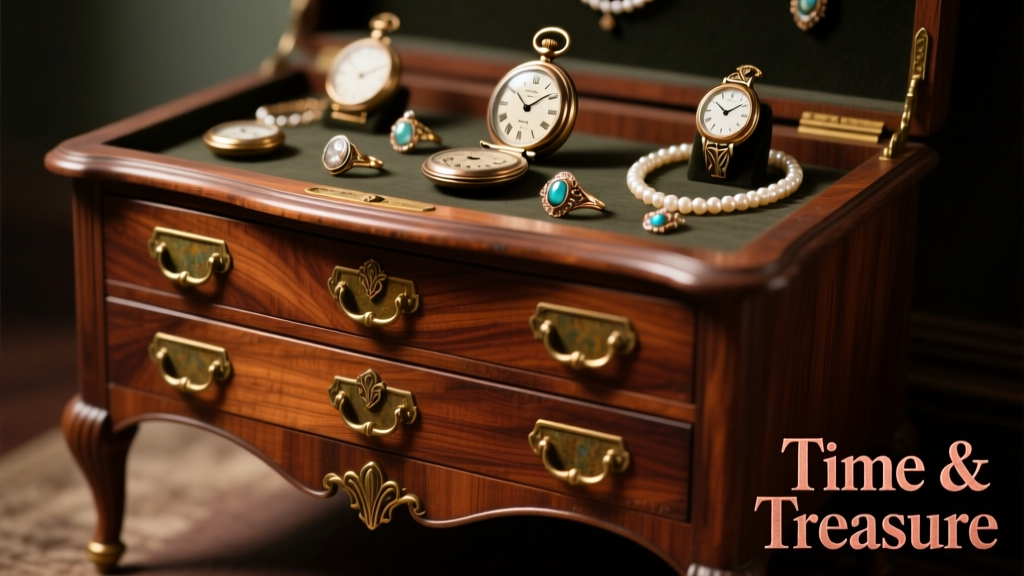
Cherrywood Chest with Ogee Bracket Feet: A Mid-Century American Furniture Masterpiece (36" × 39½")
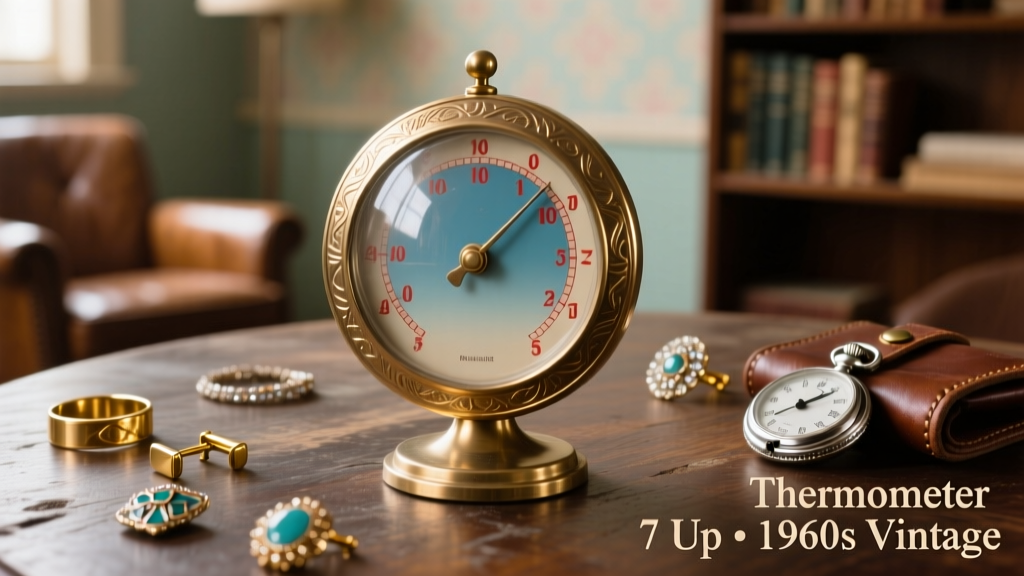
The Thermometer 7 Up Round 1960: A Vintage American Advertising Artifact in 12-Inch Form
Persian Blue Oval Medallion Rug with Cranberry Field: A 3 ft 5 in × 4 ft 10 in Collector’s Masterpiece from the Hamadan Region

Preventing Rust on Vintage Cans: A Conservator’s Practical Guide for Collectors and Archivists

Radio Micronic Ruby Transistor: The Forgotten Swiss Pinnacle of Miniature Radio-Watch Engineering
Myatt Potter: The Forgotten British Watchmaker Who Defined Mid-Century Precision and Design
Stanley No. 212 Plane Scraper: Japanned Finish, Solid Beech Body, and the Enduring Craft of Hand-Finishing Wood
Graniteware Bucket: The Berry Marbled Blue-and-White Collector’s Reference
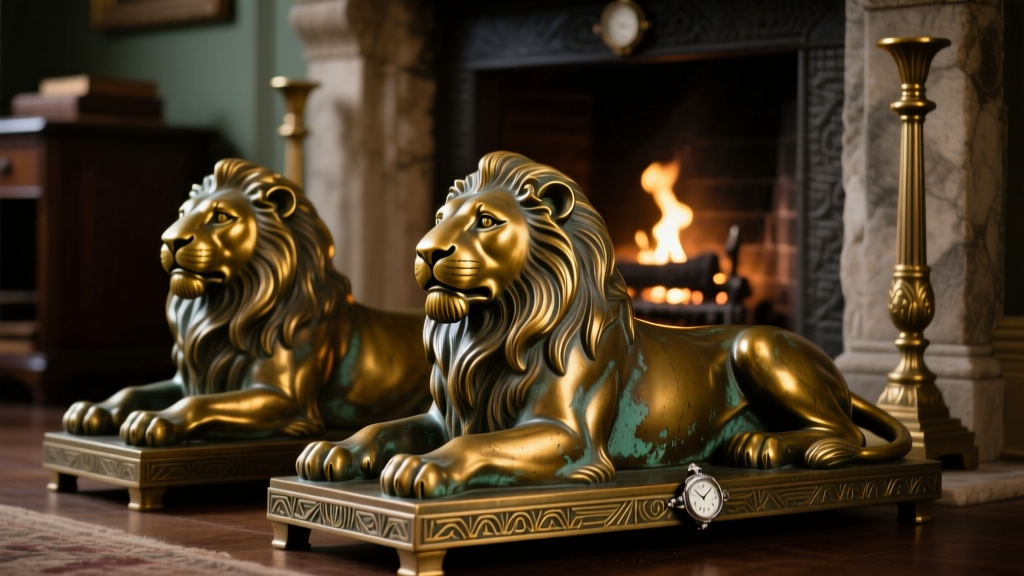
Gilt Patinated Bronze Reclining Lion Andirons: A Study in 19th-Century French Foundry Craftsmanship and Domestic Symbolism