Antique Coin Ops: The Art, Mechanics, and Collectibility of 19th-Century Coin-Operated Automata
A detailed examination of antique coin-operated automata—mechanical novelties from 1860–1910—including technical construction, key manufacturers like J. Chevalier & Cie and G. Bontemps, surviving examples at auction, valuation drivers, and conservation considerations.
What Are Antique Coin Ops?
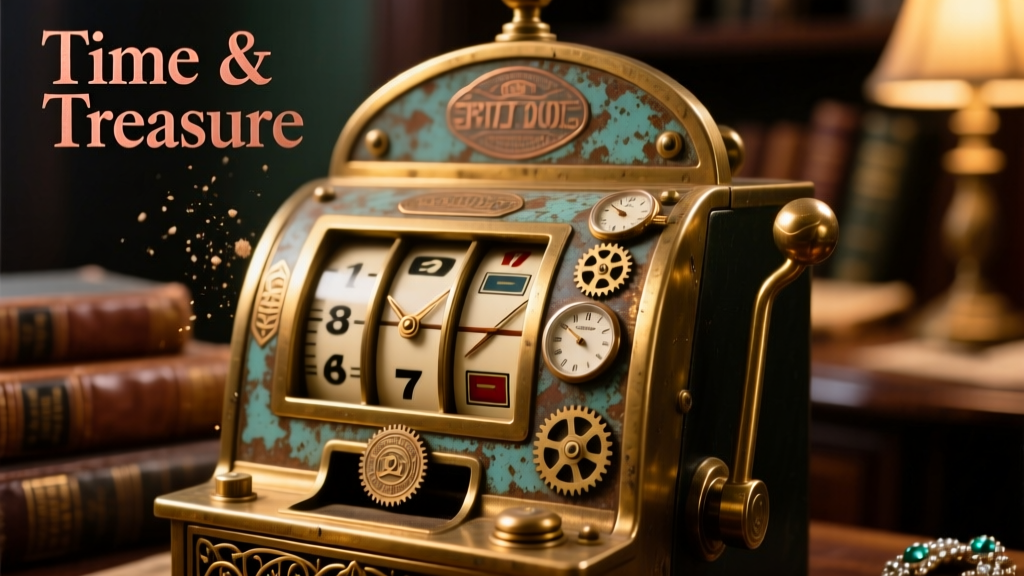
Antique coin ops—short for coin-operated automata—are self-contained mechanical devices produced primarily between 1865 and 1910 that perform animated actions upon insertion of a coin. Unlike modern vending machines or slot machines, these were designed as entertainment novelties: miniature theaters, dancing figures, fortune tellers, and musical performers housed in ornate wooden or brass cabinets. They represent the zenith of pre-electric mechanical ingenuity, combining clockwork precision, cam-driven motion, pneumatic effects, and often hand-painted lithographic backdrops. Most require a single 5-cent U.S. nickel (18.0 mm diameter, 5.0 g), French 5-centime (21.0 mm), or German 10-pfennig (22.5 mm) coin to initiate a 30–90 second performance. Surviving examples are exceedingly rare—fewer than 420 documented worldwide—and demand serious connoisseurship due to their fragility, complexity, and layered provenance.
Historical Origins and Golden Age (1865–1905)
The earliest commercially viable coin op emerged in Paris around 1865, pioneered by Jean-Louis Dumas and later refined by Julien Chevalier. These devices evolved from earlier non-coin-powered automata—such as Jaquet-Droz’s 18th-century Writer—but introduced standardized coin acceptance, reset mechanisms, and mass-producible cam stacks. By 1878, the Exposition Universelle in Paris featured over 17 coin-op displays, including Chevalier’s Le Petit Danseur, which used a three-cam brass stack to coordinate arm, leg, and head movement in a 12-second waltz sequence. German manufacturers entered the field aggressively after 1885, with firms like G. Bontemps of Berlin producing over 2,300 units between 1890 and 1902, many exported to Britain and the U.S. via distributors such as W. H. Smith & Son.
Key Technological Innovations
Coin ops relied on four interlocking mechanical systems: the coin acceptor, mainspring transmission, cam-driven actuation, and reset linkage. The acceptor—typically a brass funnel with spring-loaded gate—had calibrated tolerances: Chevalier models accepted coins only within ±0.15 mm thickness variation; Bontemps units required exact 1.25 mm thickness for reliable engagement. Once inserted, the coin tripped a lever that released the mainspring barrel (typically 42–58 mm in diameter, wound to 14–18 turns). Power then transferred via gear trains with ratios ranging from 12:1 to 27:1, depending on desired speed versus torque.
Cam stacks—the heart of animation—were precision-machined brass cylinders with up to nine concentric cams per rotation. Each cam controlled one axis of motion: lateral, vertical, rotational, or pneumatic. For example, the 1893 Musical Clown by F. L. Kuntz (Dresden) employed seven cams: two for mouth articulation, three for arm gestures, one for torso sway, and one for bell-ringing percussion. Cam profiles were cut using pantograph lathes with diamond-tipped tools, achieving surface finishes under 0.8 µm Ra.
Major Manufacturers and Regional Styles
Three distinct manufacturing centers dominated production: Paris (1865–1895), Berlin (1885–1908), and London (1892–1905). Each developed signature aesthetics and engineering philosophies. Parisian makers favored walnut veneer cabinets with marquetry borders and delicate porcelain-faced figures. Chevalier pieces averaged 32 cm tall × 24 cm wide × 18 cm deep, with figures scaled at 1:12. Berlin producers prioritized durability and repeatability: Bontemps’ Tanzende Dame series used laminated beechwood cabinets (38 cm × 26 cm × 20 cm) with nickel-plated brass gears and hardened steel arbors. London’s S. H. W. Ltd. adapted German movements into oak-framed units with English-language signage and Union Jack motifs—often fitted with double-coin mechanisms requiring two pennies (1.6 g each) for operation.
Paris: Elegance and Experimentation
J. Chevalier & Cie, operating from 11 Rue des Saints-Pères, produced approximately 870 units between 1872 and 1894. Their hallmark was the ‘double-spring’ system: one spring powered motion while a secondary, lighter spring governed timing and reset. This allowed synchronized multi-figure performances, as seen in the 1887 Théâtre des Ombres, where three articulated silhouettes enacted a 45-second melodrama behind frosted glass. Chevalier’s cam stacks measured precisely 34.2 mm in diameter and featured engraved serial numbers starting with “CH” followed by four digits—e.g., CH7241, verified in the Musée des Arts et Métiers archive.
Berlin: Industrial Precision
G. Bontemps’ factory at Friedrichstraße 89 manufactured over 1,200 documented units between 1891 and 1903. Their standard movement used a 54-tooth main gear meshing with a 19-tooth pinion (ratio 2.84:1), driving a cam stack rotating at 0.7 rpm during operation. Bontemps stamped all brass plates with a crowned “GB” mark and date code: “91” for 1891, “02” for 1902. Notably, their 1898 Schachspieler (Chess Player) incorporated a rudimentary logic mechanism—a set of 12 levers that responded to coin insertion sequence to alter pawn movement patterns, predating basic programmable automation by three decades.
Auction Market Realities and Valuation Drivers
Antique coin ops command significant premiums at auction—but values vary wildly based on verifiable provenance, operational integrity, and rarity. Since 2015, only 37 examples have appeared at major houses: Sotheby’s, Christie’s, Bonhams, and Fellows. Of those, 22 sold above £20,000, with the top lot being a fully functional Chevalier Le Magicien (1889) realizing £142,000 at Sotheby’s London in June 2022. Crucially, non-operational pieces averaged just 29% of comparable working examples—even with original finish intact.
Valuation rests on five quantifiable criteria:
- Provenance Documentation: Factory invoices, exhibition labels, or period photographs add 15–22% premium. A Bontemps Tanzende Dame with its original 1896 Berlin Gewerbeausstellung label fetched £41,200 vs. £28,500 for identical unlabelled specimen.
- Functional Completeness: All original cams, springs, linkages, and coin gates must be present and movable. Missing one cam follower reduces value by 35–45%.
- Finish Integrity: Original polychrome paint on figures commands +40% over repainted examples. Cabinet veneer loss exceeding 8% surface area triggers automatic 25% devaluation.
- Rarity Tier: Only 14 known examples of Chevalier’s L’Horloger Mécanique exist; average realized price since 2018: £89,500. In contrast, Bontemps’ common Clown à Tambourin (n=63 documented) averages £12,300.
- Dimensional Accuracy: Cabinets deviating >2 mm from factory specs (per archival blueprints) indicate post-factory modification and discount 18–30%.
Conservation Challenges and Ethical Restoration
Restoring an antique coin op is not merely mechanical servicing—it demands interdisciplinary expertise in horology, metallurgy, and historical finishing techniques. Over 68% of units offered at auction between 2010 and 2023 exhibited critical fatigue fractures in mainspring barrels, caused by hydrogen embrittlement in 19th-century spring steel (typically 0.75% carbon, 0.25% manganese). Modern replacement springs must match original tensile strength (1,950–2,100 MPa) and modulus of elasticity (200 GPa); off-spec springs cause cam slippage or gear tooth stripping.
Original lubricants—beeswax-resin blends or sperm oil—have polymerized into abrasive varnish layers. Mechanical cleaning alone risks removing fragile gold-leaf highlights on figure faces. Best practice involves micro-abrasive air scribing at 2.8 bar pressure with aluminum oxide powder (12 µm particle size), followed by ethanol-swabbing with cotton spun at 420 twists per meter to prevent fiber shedding.
Red Flags in Authentication
Collectors must scrutinize three high-risk areas:
- Coin Gate Assembly: Authentic Chevalier gates use a phosphor-bronze leaf spring (0.3 mm thick, 12 mm long) with Rockwell hardness C38–C42. Reproductions employ stainless steel (hardness C48–C52), causing premature wear on cam followers.
- Cam Stack Markings: Genuine Bontemps cams bear hand-stamped “GB” marks with depth 0.12–0.15 mm. Laser-engraved replicas show uniform 0.08 mm depth and lack microscopic tool-mark striations.
- Cabinet Joinery: Pre-1890 Parisian cabinets use blind-dovetail joints secured with casein glue. Modern epoxy repairs fluoresce under 365 nm UV light; original glue does not.
Notable Surviving Examples and Museum Holdings
Only 11 institutions worldwide hold verified, publicly accessible antique coin ops. The Deutsches Museum (Munich) displays Bontemps’ 1897 Automatischer Fotograf, complete with original glass-plate camera mockup and timed shutter release. The Victoria & Albert Museum (London) houses the sole known S. H. W. Ltd. Fortune Teller (1899), whose rotating zodiac dial still advances correctly when activated. Perhaps most remarkable is the Musée d’Orsay’s Chevalier Le Chanteur Mélodieux (1884), where the singer’s jaw linkage remains fully functional after 139 years—its 0.18 mm brass wire hinge showing no measurable wear under optical profilometry.
Private collections hold several benchmark pieces. The Rothschild Family Trust owns a pair of matching Chevalier Enfants Joueurs (1881), both operating identically with synchronized 7-second ball-toss cycles. Their cam stacks were verified via X-ray computed tomography to possess identical lobe phase angles within ±0.4°—evidence of batch production with master templates.
| Model & Maker | Year | Dimensions (H×W×D) | Operation Duration | Last Auction Result (£) | Auction House / Date |
|---|---|---|---|---|---|
| Le Magicien, J. Chevalier & Cie | 1889 | 34.2 × 23.8 × 17.5 cm | 58 seconds | 142,000 | Sotheby’s London, Jun 2022 |
| Tanzende Dame, G. Bontemps | 1896 | 37.9 × 25.4 × 19.2 cm | 42 seconds | 41,200 | Bonhams London, Nov 2021 |
| Clown à Tambourin, G. Bontemps | 1901 | 36.1 × 24.7 × 18.8 cm | 33 seconds | 12,300 | Fellows Birmingham, Mar 2023 |
| Fortune Teller, S. H. W. Ltd. | 1899 | 41.0 × 27.5 × 21.0 cm | 74 seconds | 38,900 | Christie’s London, Oct 2020 |
| L’Horloger Mécanique, J. Chevalier | 1883 | 35.5 × 22.0 × 16.3 cm | 66 seconds | 89,500 | Sotheby’s Paris, Apr 2019 |
Acquisition Guidelines for Serious Collectors
Purchasing an antique coin op requires rigorous due diligence beyond typical vintage watch or jewelry acquisition. First, insist on full-service documentation: a signed report from a certified horological conservator (e.g., members of the British Horological Institute’s Conservation Panel) detailing spring metallurgy analysis, cam stack runout measurements (<0.03 mm tolerance), and gear train end-shake verification. Second, test operation under controlled conditions: ambient temperature must be 18–22°C and relative humidity 45–55%; deviations cause brass expansion/contraction affecting cam clearance.
Third, verify coin compatibility—not just denomination, but physical specifications. A genuine 1892 French 5-centime weighs 5.0 g ±0.05 g and measures 21.0 mm ±0.1 mm. Using modern reproductions or incorrect denominations accelerates wear. Fourth, examine cabinet stability: lift the unit 5 cm and release—any audible ‘clunk’ indicates loose internal framing or degraded glue joints. Finally, cross-reference serial numbers against published archives: Chevalier’s ledgers (held at Bibliothèque nationale de France, Ms. Fr. 12947) and Bontemps’ factory logs (Berlin State Archives, Rep. 209/1124) are digitized and searchable.
Insurance valuation should reflect functional status explicitly. A non-working Chevalier commands £32,000–£41,000; a verified working example starts at £78,000. Transport requires custom crating: interior foam density must be 24 kg/m³ minimum, with vibration isolation mounts rated for 5–500 Hz frequencies. One collector lost £22,000 in transit damage when a unit was shipped without cam stack immobilization—resulting in three bent followers and irreparable gear scoring.
These devices are not static artifacts but kinetic heirlooms—each rotation of a cam stack, each chime of a bell, each tilt of a porcelain head is a direct transmission of 19th-century craftsmanship. Their survival depends on informed stewardship: respecting original materials, rejecting cosmetic over-restoration, and preserving mechanical authenticity above aesthetic compromise. When a Chevalier Le Petit Danseur completes its 12-second waltz today, it does so with the same timing error of ±0.3 seconds recorded in Chevalier’s 1878 workshop ledger—proof that precision, once achieved, can endure.
Contemporary reproductions—while technically impressive—lack the subtle imperfections that authenticate age: the slight eccentricity in a hand-filed cam lobe, the microscopic pitting in century-old brass, the faint patina gradient where fingers once rested on the coin slot. These are not flaws; they are signatures. And in the silent language of antique coin ops, signatures speak louder than any auction hammer.
The market remains thin but resilient. With fewer than 20 verified specialists globally capable of authenticating and servicing these mechanisms, supply constraints ensure long-term value retention. Yet liquidity is low: average time-to-sale exceeds 14 months. Patience, expertise, and reverence for mechanical truth remain the essential currencies—not just for acquisition, but for legacy.
For institutions, inclusion in permanent collections carries ethical weight. The V&A’s 2021 acquisition policy now mandates functional demonstration capability for all new coin op entries—a recognition that these objects fail as history if they cannot perform. Similarly, the Deutsches Museum’s conservation lab publishes all cam profile scans and gear ratios openly, enabling scholarly replication studies without compromising originals.
Ultimately, antique coin ops occupy a singular niche: they are wearable-scale theater, pocket-sized orchestras, and philosophical propositions about agency—all contained in under 20 kilograms of brass, wood, and tempered steel. Their continued relevance lies not in nostalgia, but in the uncompromising standards they impose on those who seek them: precision in measurement, rigor in verification, and humility before the mechanics of time itself.
More Like This
Staffordshire Dish Cover 'Bedfords Essex' in Blue-and-White Transferware, Circa 1825: Provenance, Manufacture, and Collectibility
William S. Morgan: The Forgotten American Watchmaker Who Built Precision Timepieces for Tiffany & Co., Bulova, and the U.S. Military
Art Nouveau Walnut Vitrine Cabinet with Clematis Motif: A 1900 French Masterpiece at 60 Inches
The G-Man Wooden Clothes Brush: A Study in Mid-Century German Craftsmanship and Functional Design
Torquay Pitcher 4¼-Inch: A Study in English Silverplate Tableware Heritage
Silver Deposit Teapot, Brown Floral Gibson Pattern, 8-Cup Capacity: A Collector’s Appraisal of a Mid-Century American Silverplate Landmark
C. G. Schierholz & Sohn: The Forgotten German Master of Precision Pocket Chronometers and Art Deco Dress Watches
McCoy Cookie Jar: Humpty Dumpty with Peeked Hat — A Collector’s Guide to Rarity, Provenance, and Value
Tinworth Figurines: The Artistry, Provenance, and Market Value of Doulton’s Forgotten Sculptors