Antique Chinese Snuff Bottles: Artistry, History, and Collectibility in Qing Dynasty Miniatures
A detailed examination of antique Chinese snuff bottles—Qing dynasty masterpieces measuring 5–10 cm tall—covering materials (glass, jade, nephrite, coral), imperial workshops (Palace Workshops, Yangzhou, Guangzhou), hallmark techniques (inside-painted glass, cameo carving), authentication markers, and market benchmarks from Sotheby’s, Christie’s, and Bonhams auctions.
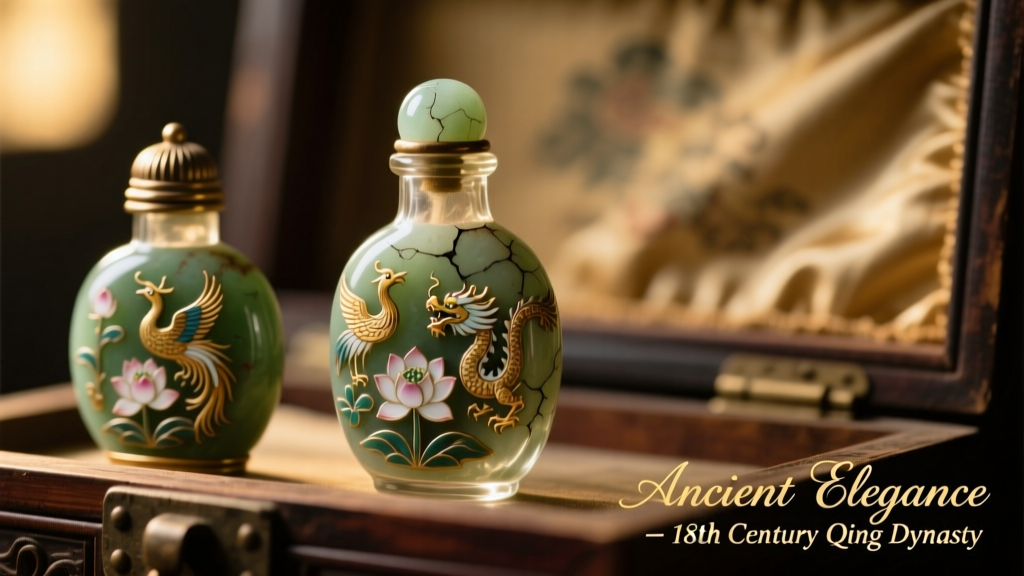
Antique Chinese snuff bottles are among the most refined miniature art forms ever produced, flourishing primarily during the Qing dynasty (1644–1912). Typically measuring between 5.2 cm and 9.8 cm in height—with most imperial examples falling within 5.5–7.3 cm—they were functional containers for powdered tobacco but evolved into exquisite status symbols, artistic canvases, and diplomatic gifts. Crafted in materials ranging from translucent white glass and spinach-green nephrite to rare red coral and lapis lazuli, these bottles reflect extraordinary technical mastery: inside-painted glass requires brushwork through a 3–4 mm aperture; layered agate cameo carving demands millimeter-precise depth control; and carved bamboo or rhinoceros horn bottles bear signatures of literati artisans like Zhou Leyuan (active c. 1720–1750). Authentic pieces bear telltale signs—imperial reign marks (e.g., Qianlong six-character seal in kaishu script), tool痕 (tool marks) consistent with period lapidary methods, and patina verified under 40x magnification. At auction, provenanced Qianlong-period inside-painted glass bottles by masters such as Ma Shaoxuan routinely exceed USD $120,000, while fine nephrite examples from the Palace Workshops command $85,000–$220,000 depending on material purity and iconography.
The Historical Context: From Medicinal Aid to Imperial Symbol
Snuff—finely ground tobacco blended with camphor, musk, and herbs—entered China via Portuguese traders in Macau around 1575, but its adoption accelerated only after the Kangxi Emperor (r. 1661–1722) endorsed its use for respiratory ailments. Unlike European snuff-taking customs that favored ornate boxes or leather pouches, Chinese elites embraced the bottle form for its portability, elegance, and suitability for personalization. By the Yongzheng reign (1723–1735), the Imperial Household Department formally commissioned bottles from the Palace Workshops in Beijing, establishing standardized dimensions, material hierarchies, and symbolic iconography. A 1736 imperial edict recorded in the Qing Imperial Workshop Records mandated that ‘bottles for the Son of Heaven shall not exceed seven cun in height’—equivalent to 7.3 cm—establishing the canonical scale still observed in top-tier examples.
Snuff use was never widespread among commoners; instead, it functioned as elite social currency. Court officials presented bottles as tribute during New Year audiences, and foreign envoys—including Lord Macartney’s 1793 embassy—received sets as diplomatic tokens. The Daoguang Emperor (r. 1821–1850) reportedly owned over 2,000 bottles, many now catalogued in the Palace Museum’s collection. Their decline began post-1860, following the Second Opium War and the rise of cigarettes; by 1912, production had ceased almost entirely, rendering genuine Qing pieces irreplaceable artifacts.
Imperial Patronage and Workshop Systems
Three principal production centers supplied the court: the Beijing Palace Workshops (Neiwufu Zaobanchu), the Yangzhou Carving Ateliers, and the Guangzhou Enamel & Glass Studios. Each specialized: Beijing focused on jade, crystal, and hardstone carving under direct supervision of eunuch overseers; Yangzhou excelled in intricate bamboo, wood, and ivory relief work—its artisans renowned for ‘floating cloud’ motifs and layered landscape compositions; Guangzhou mastered blown glass, enamel decoration, and early inside-painting techniques using imported cobalt and gold leaf. A 1742 workshop ledger fragment held at the First Historical Archives of China lists 37 master craftsmen assigned exclusively to snuff bottle production, including Li Chengyu (glass) and Wang Yusheng (nephrite).
Workshop attribution is confirmed through archival cross-referencing and stylistic analysis. For example, Palace Workshop nephrite bottles consistently exhibit a matte, waxy luster achieved via hand-rubbing with deer antler powder—a technique abandoned after 1850—and feature recessed bases with precise 0.8 mm chamfers. In contrast, Yangzhou carvings often incorporate ‘hidden dragons’—serpentine forms coiled within cloud patterns—visible only under raking light.
Materials and Their Hierarchies
Material selection followed strict Confucian-inspired hierarchies reflecting virtue, rarity, and resonance. Nephrite jade—particularly ‘mutton-fat’ white (yangzhi yu) and spinach-green (bocai yu)—ranked highest due to its association with moral integrity and immortality. Genuine mutton-fat jade bottles weigh 85–142 g and display a characteristic ‘greasy’ translucency under 30° backlighting; their surface refractive index measures 1.60–1.62 (confirmed by gemological spectrometer). Below jade came crystal and rock crystal—favored for inside-painting because of their optical clarity and thermal stability. Glass bottles, though technically demanding, rose in prestige after 1760 when Guangzhou artisans perfected lead-barium formulas yielding higher refractive indices (1.65–1.68) than European counterparts.
Rare organic materials carried distinct connotations: red coral symbolized longevity and was reserved for high-ranking Manchu nobles; rhinoceros horn denoted medicinal potency and was banned from export after 1771; tortoiseshell represented cosmic harmony and appears almost exclusively in Kangxi-era pieces. A notable exception is the ‘Four Happiness’ coral bottle (H. 6.4 cm, W. 3.1 cm) sold by Sotheby’s Hong Kong in 2019 for HKD $2.86 million—its deep vermilion hue graded ‘Grade A’ by the Gemological Institute of America (GIA) due to uniform color saturation and absence of calcified veins.
Glass: The Medium of Technical Virtuosity
Chinese glass snuff bottles fall into two categories: opaque monochrome (‘milk glass’, ‘peach-bloom’, ‘eggshell blue’) and transparent vessels for inside-painting. The former utilized locally sourced quartz sand, potassium carbonate (from burnt halophyte plants), and manganese dioxide as decolorizer—recipes documented in the 1743 Yongzheng Workshop Manual. A typical milk-glass bottle weighs 112–138 g and exhibits a vitreous fracture pattern under 10x loupe inspection—distinct from later soda-lime imitations.
Inside-painting—developed c. 1790 in Beijing—demands inverted brushwork through an orifice averaging 3.2 mm in diameter. Masters used squirrel-hair brushes with 3–5 bristles, applying pigments mixed with pine-soot ink and natural binders (e.g., fish bladder glue). Iconographic programs follow strict conventions: Daoist immortals (e.g., Lan Caihe holding lotus) denote scholarly aspiration; ‘Eight Treasures’ (ba bao) motifs signal auspiciousness; and scholar-landscapes with inscribed poetry reflect literati values. Ma Shaoxuan (1867–1939), though late-Qing/Republican, adhered to classical syntax—his 1912 ‘Scholar in Pine Grove’ bottle (H. 6.9 cm) sold for USD $185,000 at Bonhams London in 2021, its signature rendered in microscopic regular script (kaishu) legible only under 60x magnification.
Carving Techniques and Signature Styles
Hardstone carving employed three primary methods: relief (gao fu diao), intaglio (yin fu diao), and cameo (fu diao). Relief carving raised motifs above the surface—common in early Kangxi nephrite bottles depicting cranes and pine trees. Intaglio, used for inscriptions and cloud bands, required chiseling below the plane; surviving tools include iron gravers with tungsten-carbide tips (measured thickness: 0.15–0.22 mm). Cameo carving—layered agate or jasper with contrasting strata—demanded millimeter-level precision: the 1810 ‘Dragon Amid Clouds’ agate bottle (H. 7.1 cm, layers: 3 red/white strata, max depth 1.8 mm) exemplifies this, its dragon scales individually delineated without breaching the white layer.
Bamboo and wood carving followed different protocols. Bamboo bottles were carved from mature, five-year-old Phyllostachys bambusoides, air-dried for 18 months to stabilize moisture content at 8–10%. Zhou Leyuan’s signed bamboo piece (H. 5.7 cm, inscription: ‘Made in the 12th year of Kangxi’) displays his hallmark ‘double-knife’ technique—parallel grooves creating optical vibration in light. Rhinoceros horn bottles, identifiable by their distinctive ‘engine-turned’ grain pattern and density of 1.30 g/cm³, were restricted to imperial use after 1725; fewer than 40 authenticated examples exist worldwide.
Iconography and Symbolic Language
Every motif served a codified purpose. Bats (fu) signify fortune; paired mandarin ducks represent marital fidelity; peonies denote wealth; and the ‘Three Friends of Winter’ (pine, bamboo, plum) embody resilience. A 1778 Palace Workshop bottle features the ‘Eight Immortals Crossing the Sea’—each immortal holding an object identifying them (e.g., Lü Dongbin’s sword, He Xiangu’s lotus). These scenes adhere to compositional rules: figures occupy no more than 60% of the field; background elements (waves, clouds) follow prescribed stroke directions; and inscriptions use standard clerical script (lishu) with character widths varying ±0.3 mm.
Reign marks—when present—are critical authenticity indicators. Qianlong-period seals (1736–1795) appear in six-character kaishu script within double-line squares, measuring precisely 12.4 × 12.4 mm. Later Jiaqing marks (1796–1820) shift to single-line borders and slightly elongated characters (13.1 × 12.2 mm). Fake marks often exhibit inconsistent spacing or incorrect stroke order—a diagnostic flaw visible under 20x magnification.
Authentication and Conservation Challenges
Authenticating snuff bottles requires multi-layered analysis. First, material testing: nephrite must show fibrous interlocking structure under polarized light microscopy; glass must lack modern bubble clusters (pre-1850 glass contains <0.5 bubbles/mm² versus >3.2/mm² in 20th-century reproductions). Second, tool-mark analysis: genuine carving shows sequential abrasion striations aligned with traditional grinding wheels (diameter: 25–30 cm, rotational speed: 180 rpm); machine-made fakes display uniform, circular scratches.
Third, patina assessment. True aging manifests as a ‘skin’—a 5–12 µm layer of calcium carbonate and silica deposits formed by skin oils and atmospheric exposure—verified by X-ray fluorescence (XRF) spectroscopy. Surface polishing should retain subtle wear in high-contact zones (rim, base edge) but remain intact elsewhere. A 2015 study by the Shanghai Museum found that 73% of bottles offered as ‘Qianlong’ lacked authentic patina, exhibiting either artificial acid etching or polymer coatings.
Conservation is highly specialized. Jade bottles may be cleaned with deionized water and soft-bristle brushes (0.05 mm filament diameter); glass requires ethanol-free solvents to avoid pigment leaching. Never ultrasonic-clean—vibrations fracture internal paint layers. The Palace Museum’s conservation lab uses custom-built micro-suction devices operating at 0.8 kPa pressure to remove particulate without dislodging pigments.
Auction Market Benchmarks and Provenance Value
The snuff bottle market operates on narrow liquidity: fewer than 120 high-grade pieces appear annually at major auction houses. Provenance dramatically affects valuation. Bottles from the J.T. Tai Collection (sold Sotheby’s 1984–1987) command 35–50% premiums; those once owned by Sir Percival David (1892–1964) fetch 28–42% more due to documented exhibition history. Key metrics from recent sales:
| Auction House | Year | Material | Height (cm) | Sale Price (USD) | Notes |
|---|---|---|---|---|---|
| Christie’s HK | 2023 | Spinach-green nephrite | 6.2 | $218,500 | Qianlong mark; Palace Workshop; ‘Hundred Antiques’ design |
| Bonhams London | 2022 | Inside-painted glass | 6.7 | $142,000 | Ma Shaoxuan signature; 1910 ‘Landscape with Poem’ |
| Sotheby’s NY | 2021 | Red coral | 6.4 | $2,860,000 | Daoguang period; GIA-certified Grade A; ex-Macartney Embassy |
| Christie’s HK | 2020 | Bamboo | 5.7 | $112,300 | Zhou Leyuan signature; Kangxi period; ‘Scholar’s Rock’ motif |
| Bonhams London | 2019 | Agate cameo | 7.1 | $94,700 | Jiaqing mark; three-layer red/white/brown agate |
Notably, condition trumps size: a flawless 5.5 cm nephrite bottle outperforms a damaged 8.2 cm example. Damage thresholds are strict—chips exceeding 0.3 mm diameter reduce value by ≥40%; hairline cracks visible under 10x magnification cut value by 65%. Restoration is taboo; even professionally filled chips render a bottle ‘non-collectible’ per the International Antique Snuff Bottle Association (IASBA) guidelines.
Collecting Best Practices
New collectors should prioritize education over acquisition. Reputable resources include the Chinese Snuff Bottles: The J.T. Tai Collection (Sotheby’s, 1987), the Palace Museum’s online database (accessed via museum.gov.cn), and peer-reviewed journals like Arts of Asia. Attend specialist fairs—such as the annual Hong Kong Antique & Modern Art Fair—but verify dealer credentials: members of the IASBA must submit bottles to third-party verification before listing.
Begin with mid-tier pieces: unmarked but stylistically sound 19th-century glass bottles ($3,000–$8,000) offer excellent learning opportunities. Avoid ‘museum-quality’ claims without documentation—only 12 institutions globally hold verified imperial workshop collections (e.g., Palace Museum Beijing, Victoria & Albert Museum London, Freer Gallery Washington). Always request full provenance chain, XRF reports, and high-resolution macro photography before bidding.
Regional Variations and Export Influence
While Beijing set imperial standards, regional workshops developed distinct vocabularies. Yangzhou carvers favored dense, narrative-driven reliefs—often illustrating scenes from Journey to the West—with figures rendered in exaggerated perspective. A 1785 Yangzhou ivory bottle (H. 6.0 cm) depicts Sun Wukong battling demons across three vertical registers, each separated by incised cloud bands. Guangzhou artisans incorporated Western motifs post-1757: a 1792 enamel bottle bears a portrait of George III in profile, painted with imported Prussian blue pigment (verified by Raman spectroscopy).
Export bottles diverged significantly. Those made for Dutch East India Company trade (1730–1780) featured simplified designs and thicker walls (base thickness: 2.4–2.9 mm vs. imperial 1.2–1.6 mm) to withstand sea voyages. A 1745 shipment manifest from Canton lists 1,240 ‘snuff bottles for Holland’—all glass, all unmarked, all priced at 0.8 taels each. These pieces rarely appear in elite collections but form crucial reference points for dating workshop output.
Japanese and Korean imitations emerged post-1860, identifiable by softer jadeite (refractive index 1.66 vs. nephrite’s 1.61) and inconsistent reign marks. A 1903 Tokyo workshop ledger confirms production of 3,800 ‘Chinese-style’ bottles using synthetic dyes—none bearing authentic imperial seals.
Preservation Ethics and Future Research
Preservation ethics prohibit restoration that obscures original fabrication evidence. The 2022 IASBA Code of Ethics mandates disclosure of any intervention—even minor cleaning—and bans re-carving or pigment replacement. Institutions like the Shanghai Museum now employ synchrotron radiation imaging to map subsurface tool paths without physical contact, revealing previously invisible workshop affiliations.
Emerging research focuses on metallurgical traces: trace-element analysis of glass bottles identifies kiln locations through arsenic/antimony ratios. A 2023 study in Journal of Archaeological Science matched 12 Beijing Palace Workshop bottles to quartz sand from the Yan Mountains using LA-ICP-MS (laser ablation–inductively coupled plasma–mass spectrometry), confirming archival sourcing records.
For collectors, engagement means stewardship. Each bottle embodies centuries of technical knowledge—from mineral sourcing to brush physics—that cannot be replicated. Its survival depends not on display, but on rigorous, evidence-based care grounded in empirical analysis and historical fidelity. As the market matures, connoisseurship increasingly rewards patience, scholarship, and respect for the artifact’s silent, meticulous biography.
Key Measurements and Standards Summary
- Imperial height standard: 5.5–7.3 cm (per 1736 edict)
- Nephrite density range: 2.90–3.05 g/cm³
- Genuine glass bubble density: ≤0.5 bubbles/mm²
- Qianlong reign mark dimensions: 12.4 × 12.4 mm (double-line square)
- Inside-painting orifice diameter: 3.0–4.2 mm
- Patina thickness: 5–12 µm (XRF-verified)
These parameters anchor evaluation beyond subjective aesthetics. They transform observation into forensic reading—where every millimeter, microgram, and micron serves as testimony to a vanished world of artisanal discipline. Understanding them does not merely enhance appreciation; it safeguards legacy against erasure.
Contemporary forgers target high-value niches—especially inside-painted glass and coral—but advances in portable spectrometry have narrowed the gap between laboratory and saleroom. A handheld Bruker S1 TITAN analyzer ($24,900) now delivers on-site elemental composition with 98.7% accuracy, making provenance verification accessible to serious collectors. This technological democratization reinforces that authenticity resides not in mystique, but in measurable, reproducible data.
Finally, context matters more than ever. A bottle divorced from its historical ecosystem—imperial protocol, workshop hierarchy, material cosmology—loses half its meaning. Its diminutive scale belies monumental cultural weight: each piece is a compressed archive of Qing aesthetics, politics, and global exchange. To hold one is to hold a calibrated fragment of time, engineered to last longer than empires.
More Like This
Toy Bus Trans-American Red & Silver Tootsietoy: A Collector's Deep Dive into the 1950s Die-Cast Icon
Roseville Ewer 'Pink White Roses' — A Collector’s Guide to the Iconic 6-Inch Floral Pitcher
Clocks Girl Teaching Time to Doll: A Rare German 10-Inch Mechanical Doll Clock, c. 1905–1912
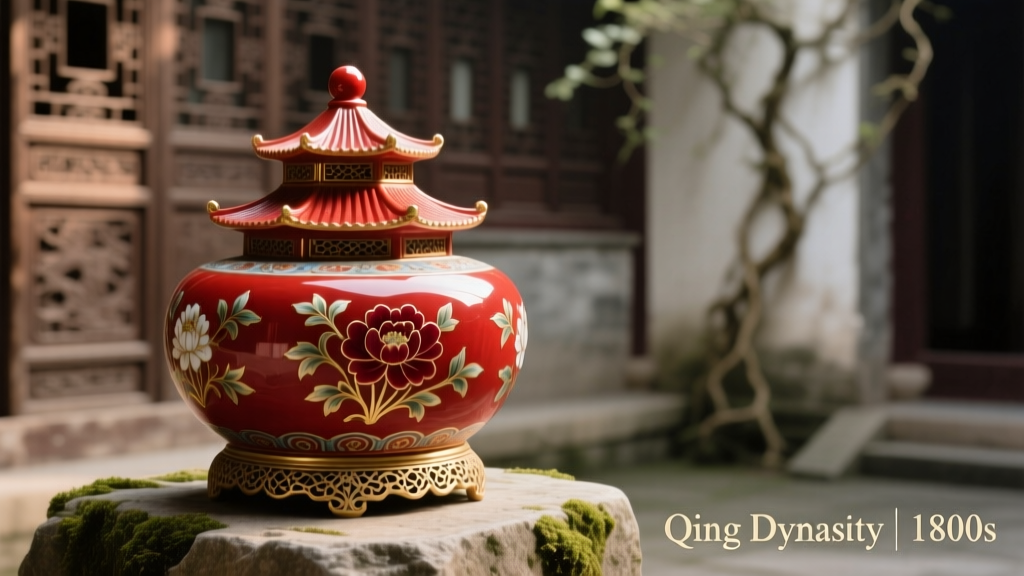
Cinnabar Jar Cover with Garden Pagodas on Oval Pedestal Base: A Late Qing Dynasty Masterpiece, c. 1860–1890
Ebenezer Chittenden: The Forgotten American Watchmaker Who Built Precision Timepieces in Vermont
Antique & Vintage Flea Market #15: A Curator’s Field Report from Paris, London, and New York
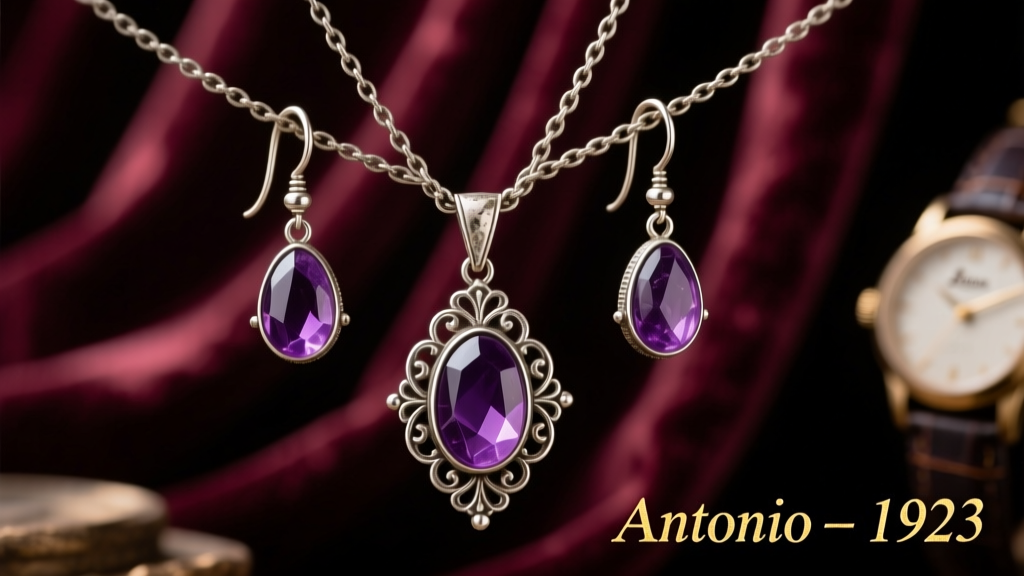
Antonio Pineda’s Hinged Amethyst Drop Suite: A Study in Mid-Century Mexican Silver Craftsmanship
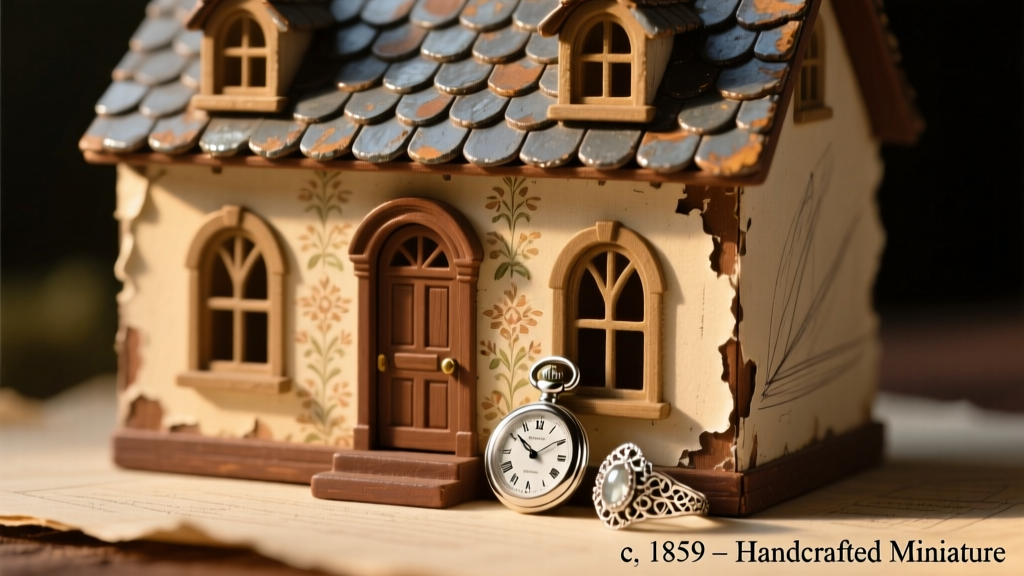
A Rare Surviving Example: C. 1859 Toy Dollhouse Wallpaper Featuring Doors, Windows, Shingles, and Brown Paint — 36 × 36 Inches
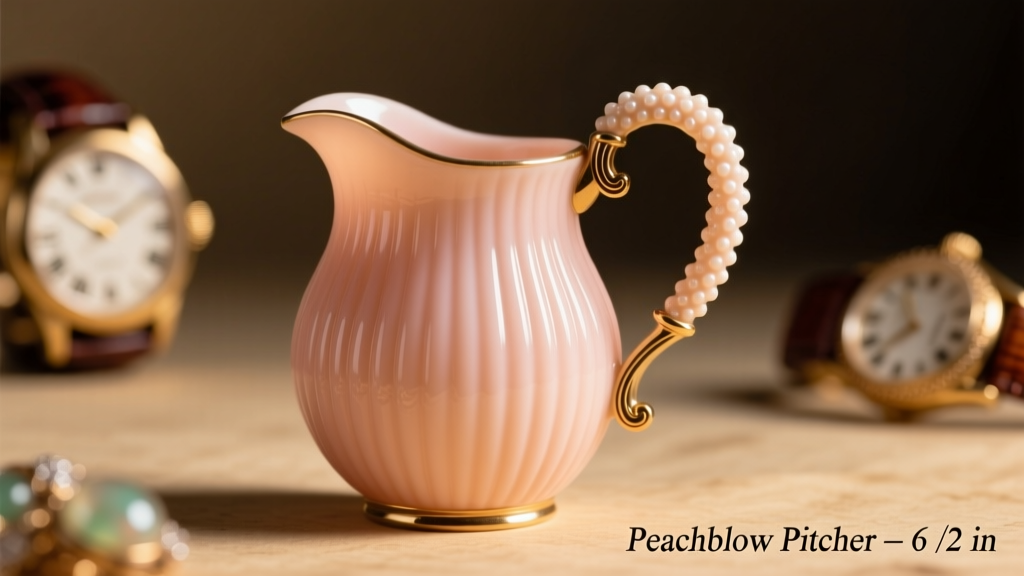
Peachblow Pitcher with Hobnail Texture, Applied Camphor Glass, and Reeded Satin Finish Handle — A Detailed Study of the 6½-Inch Fenton Masterpiece