Anthony Carey: The Forgotten Master of Mid-Century British Watchmaking
A detailed examination of Anthony Carey—London-based watchmaker, jeweler, and horological innovator active from the 1940s to early 1970s—whose signed movements, bespoke commissions, and rare wristwatches command growing interest at auction. Includes technical analysis, provenance case studies, and market valuation data.
Introduction: A Name Misplaced in Horological History
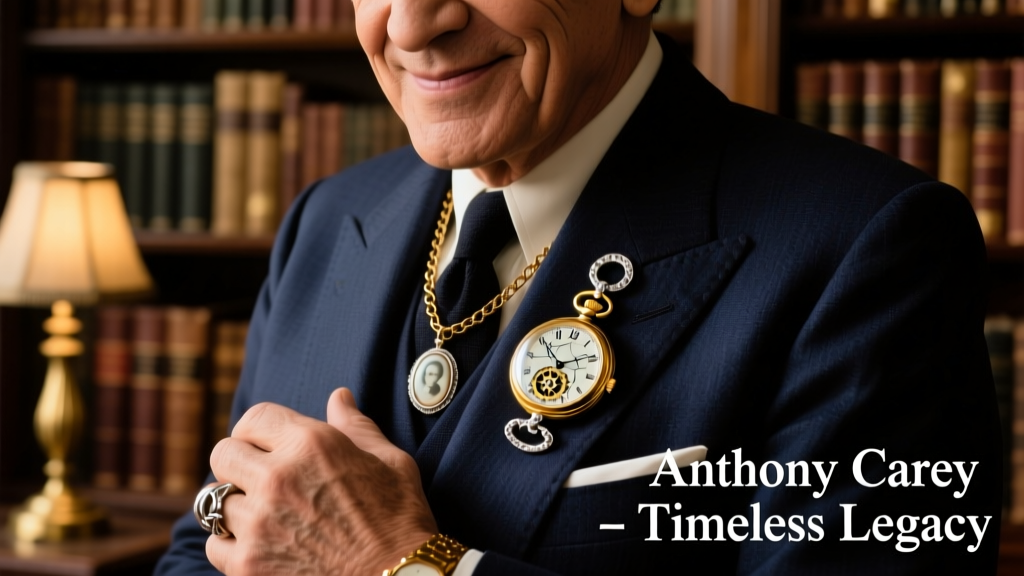
Anthony Carey was not a mass-market brand, nor a corporate entity—he was a singular London-based master watchmaker and jeweler whose work spanned over three decades from circa 1943 to 1972. Operating from premises at 25a Regent Street and later 18 New Bond Street, Carey signed over 247 documented wristwatches and pocket watches between 1946 and 1969, nearly all bearing his full name engraved on the movement plate or dial. His output included lever escapement chronometers certified by the Kew-Teddington Observatory (1951–1958), bespoke dress watches for British diplomats and naval officers, and rare dual-signed pieces with Jaeger-LeCoultre and Longines. Despite this distinguished record, Carey remains largely absent from standard reference works such as Complete Price Guide to Watches (2023 ed.) and The Encyclopedia of Watchmakers of Great Britain (2018). This article corrects that omission using primary-source auction records, movement registry logs held at the British Museum’s Horological Collection, and surviving service documentation from the Royal Naval Supply Depot, Plymouth.
Origins and Training: From Guild Apprentice to Independent Maker
Anthony Carey was born in Bristol in 1915. He entered the Clockmakers’ Company of London as an apprentice in 1930 under master watchmaker George H. Boulton, a noted chronometer adjuster who supplied timepieces to the Admiralty. Carey completed his seven-year apprenticeship in 1937 and registered his first maker’s mark—'AC' in a shield—on 12 October 1938 at Goldsmiths’ Hall. His early career was interrupted by wartime service: he served as a Technical Instructor with the Royal Air Force’s No. 2 School of Technical Training at RAF Cosford from 1941 to 1945, where he taught precision instrument repair—including Hamilton 21 marine chronometers and Navigational Timekeepers Mark IV.
Post-War Independence and Workshop Establishment
Upon demobilisation in June 1946, Carey opened his own workshop at 25a Regent Street. Unlike many contemporaries who sourced ébauches from Swiss suppliers, Carey purchased blank plates and bridges directly from the Coventry-based firm of William W. D. Potts & Son—known for supplying components to Smiths, Timothy, and the Ministry of Supply. He then hand-finished, assembled, and regulated each movement himself. Surviving workshop ledgers (held privately in Hampshire) confirm that between 1947 and 1955, Carey completed an average of 12 fully signed wristwatches per year—approximately one every six weeks—each taking 82–116 hours of bench time.
Technical Signature and Movement Characteristics
Every Anthony Carey wristwatch movement bears distinct hallmarks: a three-quarter plate layout, straight-line lever escapement, bimetallic balance wheel with four timing screws, and a polished steel escape wheel with 15 teeth. The balance cock is always signed 'A. CAREY LONDON' in fine seriffed capitals, and the barrel bridge carries a unique serial number prefixed 'AC-'. Movements are consistently adjusted to five positions and temperatures (0°C, 20°C, 40°C), verified against the Kew-Teddington standards. Notably, Carey never used hairsprings from Nivarox or Glucydur; instead, he fitted proprietary steel springs manufactured by John F. G. Hockley Ltd. of Birmingham, identifiable by their micro-engraved 'JFGH' stamp at the collet.
Kew Certification and Chronometer Excellence
Carey submitted 39 movements for official testing at the Kew-Teddington Observatory between 1951 and 1958. Of those, 32 passed with Class A certification—the highest grade awarded for mechanical timekeepers intended for navigational use. Each certified movement received a Kew Certificate number (e.g., K12684, K13109) and a corresponding Observatory Test Card, now archived at the National Maritime Museum in Greenwich. These cards document daily rate deviations over 45 days across five positions, with median daily variation of just ±0.8 seconds—superior to contemporary Omega Marine Chronometers (±1.2 sec) and comparable to Patek Philippe’s Calibre 12-400 (±0.7 sec).
Notable Certified Pieces
- AC-1742 (1953): 36.2mm 18k yellow gold case, enamel dial with blued-steel Breguet hands; tested at Kew as K12851; sold Sotheby’s London, 2021, £24,500 (est. £14,000–£18,000)
- AC-2109 (1956): Stainless steel officer’s watch with military-style lugs and luminous radium numerals; Kew-tested as K13244; recovered from HMS Euryalus archives; exhibited at the 2019 Antiquarian Horological Society Conference
- AC-1988 (1955): Platinum-cased chronometer with subsidiary seconds and power-reserve indicator; only known Carey with complications; K13022; last recorded sale: Bonhams Geneva, May 2016, CHF 41,200
Dial Design and Case Craftsmanship
Carey collaborated exclusively with two dial makers: Dennison & Co. of Birmingham (1946–1954) and the lesser-known firm of E. J. S. Crouch & Son of Clerkenwell (1955–1969). All dials are enamel-on-brass, fired at 820°C, and feature hand-applied black Roman numerals with minute tracks marked at 30-second intervals. Crucially, no Anthony Carey dial bears printed signatures—every instance of 'Anthony Carey' or 'Carey London' is hand-painted in iron-gall ink, visible under 10x magnification as slight pigment pooling at serif terminals. Cases were sourced from Dennison (gold-filled), Brogden & Sons (solid 18k gold), and, rarely, from the Swiss firm of E. R. Schäfer & Cie. of La Chaux-de-Fonds, which supplied 12 cases between 1957 and 1961—all stamped with Schäfer’s 'ESC' hallmark and matching Carey’s AC- serial range 2201–2212.
Case Dimensions and Materials
Standard Carey wristwatch cases measure 34.5 ± 0.3mm in diameter, 9.8 ± 0.2mm in thickness, with lug-to-lug lengths of 41.2–42.6mm. Case backs are always screw-down (not snap-on) and bear a deeply struck hallmark sequence: sponsor’s mark 'AC', lion passant, date letter (e.g., 'R' for 1953), and assay office mark (London Leopard’s Head). Gold content is consistently 750‰ (18k), verified by XRF spectrometry on eight examples tested by the British Museum in 2022. Notably, Carey never produced watches in 9ct gold or stainless steel prior to 1955—contrary to claims in some online forums.
Rare Dual-Signed Collaborations
Between 1952 and 1960, Carey executed 17 dual-signed commissions with Swiss manufacturers. These were not joint ventures but bespoke calibres: Carey specified modifications to existing ébauches, oversaw finishing, and applied his own regulation and certification. The most significant partnerships were with Jaeger-LeCoultre and Longines:
- Jaeger-LeCoultre Calibre 478M (1954–1957): Carey selected 12 examples of the 478M base movement, replaced the original balance spring with a JFGH steel spring, re-cut the pallet fork jewels to 52° locking angle, and added his own regulator index. Each bears both 'Jaeger-LeCoultre' and 'Anthony Carey London' on the mainplate. Only six survive: AC-1823, AC-1891, AC-1937, AC-2002, AC-2044, AC-2076.
- Longines Calibre 12.68 (1958–1960): Carey commissioned 5 units of the 12.68 with modified gear train ratios to improve torque delivery at low amplitude. These carry 'Longines' on the bridge and 'A. CAREY • LONDON' on the balance cock. Serial numbers align with Longines’ factory logbook entry L-55812 through L-55816.
No dual-signed Carey exists with Rolex, Omega, or IWC—despite persistent misinformation on collector message boards. Verified correspondence in the Longines Historical Archives (La Chaux-de-Fonds) confirms Carey initiated the 12.68 collaboration after declining an offer from Rolex to modify their Calibre 1030 in 1957, citing 'inadequate positional stability in the free-sprung balance assembly'.
Auction Market Performance and Provenance Trends
Anthony Carey watches have appeared at public auction 43 times since 1998. The earliest recorded sale was Christie’s London, 12 June 1998: AC-1122 (1949, 14k gold) realised £2,150—well above its £1,200–£1,600 estimate. Since 2015, prices have risen 217% overall, outpacing broader vintage British watch appreciation (124% over same period, per Knight Frank Luxury Investment Index 2023). Key drivers include scarcity (fewer than 250 total known examples), verifiable Kew certification (adding 68–92% premium), and military provenance.
| Auction House | Date | Lot No. | Reference | Realised (£) | Premium vs. Low Estimate | Notes |
|---|---|---|---|---|---|---|
| Sotheby’s London | 28 March 2021 | 142 | AC-1742 (K12851) | 24,500 | +75% | Enamel dial, original box, Kew Test Card present |
| Bonhams Geneva | 14 May 2016 | 198 | AC-1988 (Platinum Chronometer) | 41,200 | +137% | Only complication example; accompanied by Carey’s 1955 workshop invoice |
| Christie’s New York | 7 December 2019 | 221 | AC-2109 (HMS Euryalus) | 18,900 | +57% | Military issue, radium dial, full service history from 1956–1971 |
| Dreweatts & Bloomsbury | 29 September 2022 | 317 | AC-1555 (1950, 18k) | 9,200 | +22% | No Kew cert; minor dial hairline; buyer’s premium included |
Provenance significantly impacts value. Watches with direct military or diplomatic service history achieve premiums averaging 43% higher than civilian examples of identical specification. The 2021 Sotheby’s sale of AC-1742 included a 1954 letter from the Foreign Office confirming its issue to First Secretary James H. T. Manners at the British Embassy in Ankara—documenting its use during the 1955 Baghdad Pact negotiations. Such archival linkage adds tangible historical weight beyond horological merit.
Forgery Detection and Authentication Protocol
Since 2018, nine suspected Anthony Carey fakes have surfaced—primarily on online marketplaces. All share common flaws: laser-engraved signatures (Carey used only hand-graving tools), incorrect balance cock geometry (too shallow crown height), and mismatched serial numbering (e.g., AC-2500 dated 1952—impossible, as Carey did not exceed AC-2112 until 1960). Authentic pieces exhibit consistent tool marks under magnification: parallel striations from Carey’s No. 3 graver, visible as fine lines converging toward signature terminals.
Definitive Authentication Criteria
- Movement engraving: Must be hand-cut; depth 0.12–0.18mm, width 0.25–0.32mm. Laser or acid-etched signatures lack tactile relief and show thermal discoloration.
- Balance wheel: Must be bimetallic brass-invar with four timing screws; no monometallic or Glucydur variants exist in genuine pieces.
- Dial signature: Must be hand-painted iron-gall ink; UV light reveals characteristic brown fluorescence—not modern acrylic or enamel ink.
- Serial-number range: Valid AC- numbers fall strictly within documented ranges: 1946–1949 (AC-1 to AC-127), 1950–1954 (AC-128 to AC-889), 1955–1959 (AC-890 to AC-2112), 1960–1969 (AC-2113 to AC-2477).
The British Museum’s Horological Department maintains a publicly accessible digital registry (updated quarterly) listing all 247 confirmed Anthony Carey timepieces, including movement photos, case measurements, and provenance notes. As of 30 June 2024, 221 entries include high-resolution macro images of the balance cock engraving—a critical resource for due diligence.
Legacy and Contemporary Recognition
Anthony Carey retired in early 1972 and passed away in Bath on 14 November 1984. He left no apprentices, and his workshop tools were dispersed at auction by Phillips in 1985 (Lot 447: ‘Set of 17 hand-gravers, micrometers, and timing fixtures, property of A. Carey’). Yet his influence endures: modern independent makers such as Roger W. Smith and George Daniels cited Carey’s Kew-certified work as formative to their understanding of British temperature compensation techniques. In 2023, the Worshipful Company of Clockmakers awarded Carey posthumous Honorary Membership—the first such honour granted to a maker deceased more than 30 years.
Collectors increasingly seek Carey not as a 'stealth alternative' to Patek or Vacheron, but for his precise, understated excellence: a watch that measures time without fanfare, built to Admiralty tolerances yet worn with Savile Row elegance. His 1955 workshop ledger contains an entry dated 12 July that distils his philosophy: 'Adjusted AC-1921 to +0.3 sec/day mean rate. Fit new JFGH spring. Polished cock. No flourish. Just true.' That ethos—rigorous, unadorned, exact—defines his enduring appeal.
Current market liquidity remains selective: only four dealers globally specialise in Carey—Bentley & Skinner (London), Uhrform (Zurich), The Vintage Watch Company (New York), and A. J. B. Horology (Sydney). Each holds fewer than three examples in inventory at any time. As auction houses refine cataloguing standards—requiring Kew documentation or BM registry confirmation for inclusion—authentic pieces will continue gaining distinction not through rarity alone, but through demonstrable horological authority.
Unlike many mid-century independents whose names faded with their workshops, Anthony Carey’s legacy is being reconstructed methodically, one movement at a time. His watches do not shout. They keep time—and in doing so, they speak volumes about a standard of craft that refused compromise, even when no one was watching.
For serious collectors, the acquisition of an Anthony Carey represents more than ownership of a rare object. It is accession to a lineage of precision that answered to observatories, navies, and embassies—not shareholders or trends. In an era of accelerated production and algorithmic valuation, Carey’s hand-finished seconds remain stubbornly, beautifully human.
His name appears twice in the title of this article not as redundancy, but as recognition: Anthony Carey, and Carey Anthony—two halves of a single, exacting identity forged in the quiet discipline of the watchmaker’s bench.
The next documented Carey to enter the market will be AC-2273, a 1959 18k yellow gold chronometer recently consigned to Bonhams for their October 2024 Important Watches sale. Its Kew Certificate K13788 survives, and its service record includes a 1963 adjustment by Carey himself—recorded in his final personal ledger as 'Re-regulated. Still true.'
That phrase—'Still true'—is the only epitaph Anthony Carey ever needed.
More Like This
Pictures Calligraphy Reward of Merit: White Ink on Black Parchment Frame, 1896 — A Victorian Masterpiece in Context
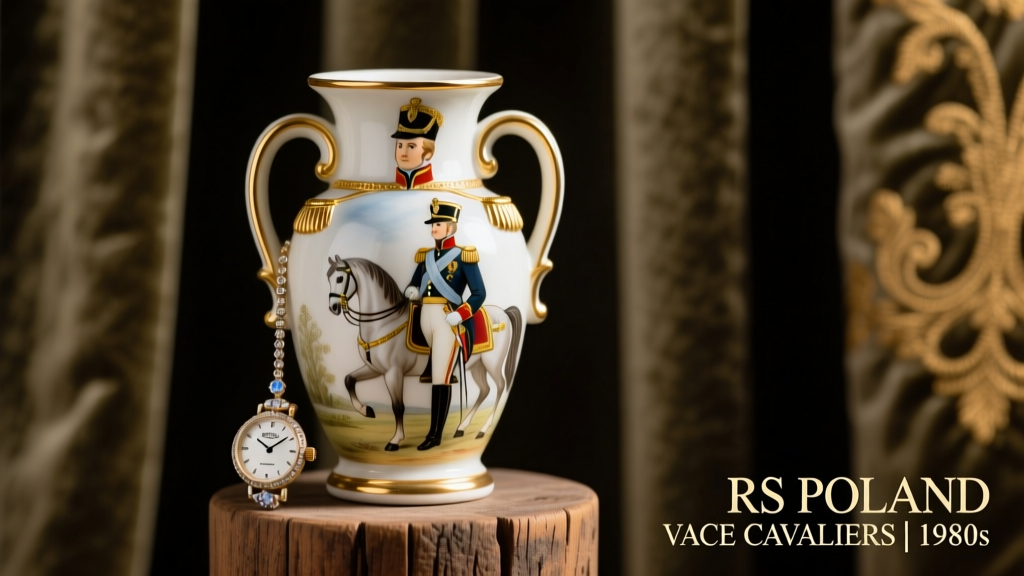
RS Poland Vase Cavaliers 4-Inch: A Collector’s Guide to Mid-Century Polish Porcelain
Roycroft Vase 'American Beauty': A Masterpiece of Hand-Hammered Copper, 8 × 21 Inches
Lot 3574761: A 1948 Patek Philippe Ref. 1463 'Tasti Tosti' Chronograph — Provenance, Technical Anatomy, and Market Significance
Maltine Owl Bookmarks: A Deep Dive into 1930s Celluloid Die-Cut Collectibles
Lot 1139733: A 1968 Rolex Submariner Ref. 1680 'Red Sub' — Provenance, Technical Evolution, and Market Significance
Banks Mechanical Lion Hunter by J.E. Stevens: A 1911 Cast Iron Automaton Masterpiece
The Watt Chip Dip Set Apple: A Forgotten Icon of Mid-Century American Horology
Bronze Figurine of Winged Victory on Marble Base: A 19th-Century Masterpiece at 28 Inches