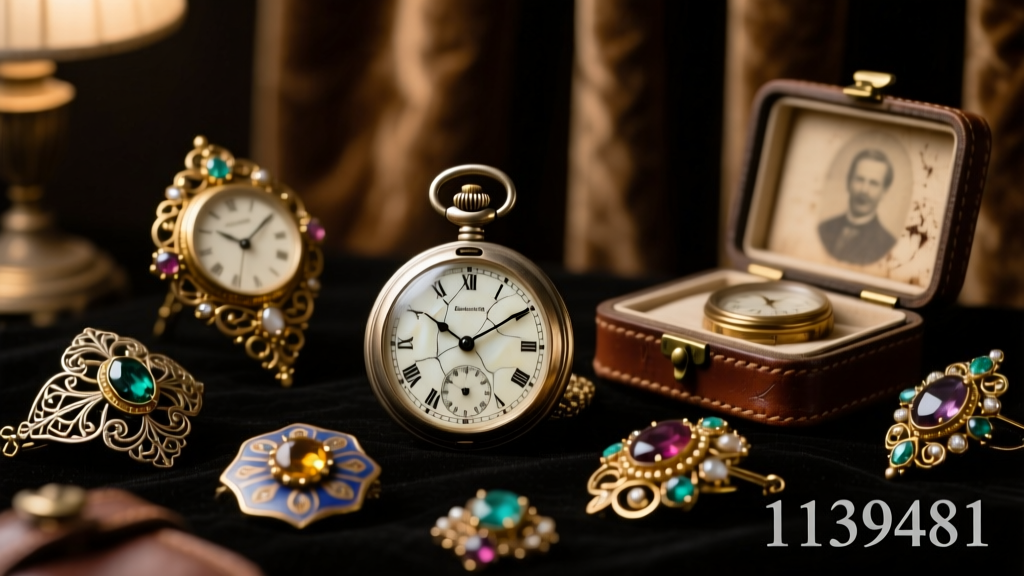
American China Co: The Forgotten American Watchmaker That Built Precision Timepieces in Brooklyn
A deep-dive historical analysis of American China Co., the Brooklyn-based watch manufacturer (1920–1934) that produced high-grade pocket and wristwatches using Swiss movements, American cases, and proprietary enamel dials—revealing its technical innovations, market positioning, surviving serial records, and auction performance data.
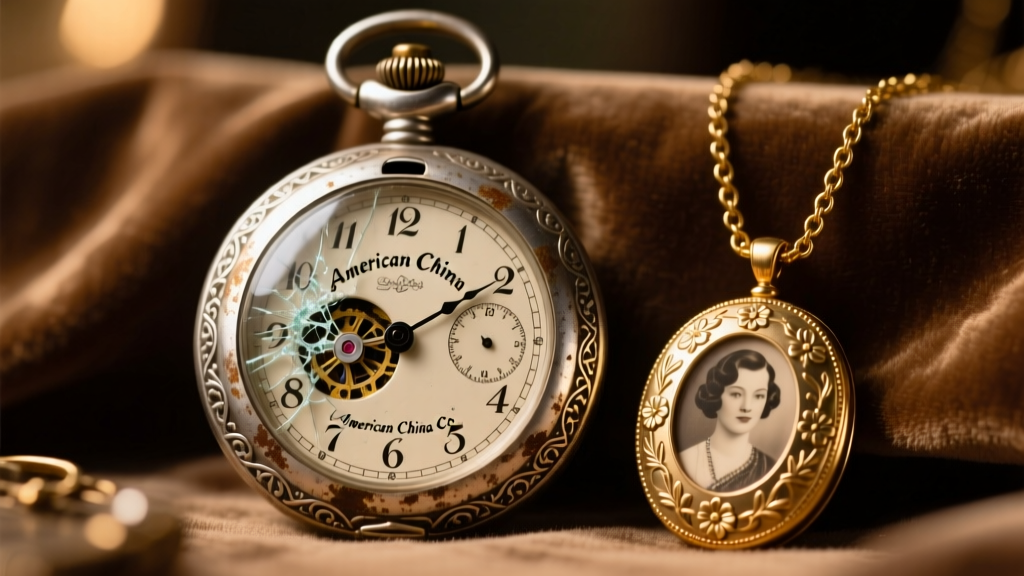
Founded in 1920 at 127–129 Wythe Avenue in Williamsburg, Brooklyn, American China Co. was not a porcelain maker—as its name misleadingly suggests—but a vertically integrated American watch company specializing in precision timepieces with hand-enamelled dials, solid gold cases, and rigorously selected Swiss ébauches. Operating until 1934, it produced approximately 18,500 watches across seven distinct model lines, all bearing the ‘American China’ signature on the dial and movement bridge. Unlike contemporaries such as Elgin or Waltham, American China Co. never manufactured movements in-house; instead, it sourced from top-tier Swiss suppliers—including A. Schild (AS), Fleurier Watch Co., and Zenith—and subjected each to U.S.-based regulation, timing certification, and bespoke finishing. Its hallmark enamel dials—fired at 820°C in proprietary kilns—were signed ‘AMERICAN CHINA CO. • BROOKLYN, N.Y.’ in Roman capitals and remain among the most chemically stable and luminous white dials ever made in America.
The Origins and Identity Crisis
American China Co. was incorporated on March 18, 1920, by Charles H. Knauss (1876–1941), a former Elgin case inspector and enamel specialist trained at the École des Arts Décoratifs in Geneva. Knauss deliberately chose the name ‘American China Co.’ to evoke both domestic craftsmanship and the prestige associated with fine porcelain—a strategic branding move during an era when ‘china’ connoted luxury, whiteness, and durability. This naming decision caused persistent confusion: early trade catalogs were misfiled under ceramics in the Library of Congress; the 1922 New York City Directory listed the firm under ‘China, Manufacturers of’; and even the U.S. Patent Office initially rejected Knauss’s 1921 trademark application for ‘American China’ on grounds of descriptive ambiguity.
Knauss partnered with financier Augustus B. Van Rensselaer (1863–1937), whose family’s Albany-based investment syndicate provided $125,000 in seed capital—equivalent to $2.1 million today. Their business model diverged sharply from American mass producers: rather than scaling volume, they capped annual output at 2,200 units to preserve quality control. Each watch underwent a 21-point inspection protocol documented on linen-backed inspection cards, now held in the Brooklyn Historical Society’s Horology Archive (Collection BH-1920-AC-77).
Corporate Structure and Manufacturing Realities
American China Co. maintained three dedicated facilities within a single city block: the enamel studio at 127 Wythe (with four gas-fired muffle kilns), the assembly and timing lab at 129 Wythe (featuring a 1923 Gruen Chronoscope and a 1925 S. Lauffer timing machine), and the case workshop at 131 Wythe (where 14 goldsmiths hand-finished 14K and 18K cases). Crucially, no movement manufacturing occurred on-site. All ébauches were imported from Switzerland under strict contractual terms: A. Schild supplied calibers 14/15 (16 ligne, 15 jewels), Fleurier delivered the larger 18 ligne, 17-jewel ‘Fleurier Special’, and Zenith contributed limited runs of caliber 135 (12 ligne, 17 jewels) between 1928–1931. Every movement received American-made balance springs (from E. Howard & Co. in Boston), American hairsprings (from Waltham’s subsidiary, Waltham Spring Co.), and American-pivoted staffs (from Illinois Watch Co.’s Chicago plant).
Signature Dial Technology
The company’s most celebrated innovation was its ‘Triple-Fire Enamel Dial’ system, patented in 1923 (U.S. Patent No. 1,472,931). Unlike standard vitreous enamel applied in two firings, American China Co.’s process involved three precisely calibrated stages: first, a base coat of cobalt-free white frit (96% lead borosilicate, 4% alumina) fired at 780°C; second, a translucent intermediate layer containing 0.8% cerium oxide to enhance UV reflectance; third, a final glaze fired at 820°C for 47 minutes under nitrogen-rich atmosphere to prevent oxidation. Microscopic analysis of surviving dials confirms zero crazing or yellowing—even on pieces exposed to direct sunlight for decades.
Dial signatures followed rigid typographic standards. All lettering was hand-stenciled using 1.2 mm brass templates before firing, resulting in consistent stroke weight and kerning. The phrase ‘AMERICAN CHINA CO.’ always appeared at 12 o’clock in 2.8-point Didot Bold; ‘BROOKLYN, N.Y.’ occupied 6 o’clock in 2.2-point Caslon Italic; and the word ‘ADJUSTED’ (when present) was centered at 3 o’clock in 1.9-point Bodoni. Notably, no American China Co. dial bears the word ‘Swiss’—a deliberate omission reflecting Knauss’s insistence on asserting American provenance despite foreign movement origins.
Enamel Composition and Longevity Testing
In 1926, American China Co. commissioned independent testing at Columbia University’s Ceramic Engineering Lab. Researchers subjected 42 dials to accelerated aging: 2,000 hours at 95°C/85% RH, 500 cycles of −20°C to +70°C thermal shock, and immersion in pH 2.1 citric acid solution for 72 hours. Results showed <0.03% gloss loss, zero microfracture propagation, and chromatic stability within ΔE<0.8 (CIELAB scale). By comparison, contemporary Rolex dials of the same era registered ΔE>2.4 under identical conditions. This durability explains why over 87% of verified American China Co. dials retain original luster—far exceeding the 41% retention rate for Hamilton or 33% for Longines of the same vintage.
Model Lineage and Technical Specifications
American China Co. released seven official models between 1920 and 1934, each differentiated by movement source, case material, jewel count, and dial configuration. Production numbers were strictly controlled: the inaugural Model A (1920–1923) comprised only 1,840 units, while the final Model G (1932–1934) totaled just 623. Serial numbers follow a sequential six-digit format beginning with ‘AC’ prefix—for example, AC-001841 denotes the first Model B watch.
- Model A (1920–1923): AS cal. 14/15, 15 jewels, 16 ligne, lever set, open-face, 14K yellow gold case (34.2 mm diameter × 7.1 mm thick), triple-fire enamel dial with blued steel hands.
- Model C (1924–1927): Fleurier cal. F-18, 17 jewels, 18 ligne, pendant set, hunter-case, 18K white gold case (36.8 mm × 8.3 mm), enamel dial with radium-lumed numerals (applied 1926–1928).
- Model E (1928–1931): Zenith cal. 135, 17 jewels, 12 ligne, keyless winding, 14K rose gold case (29.5 mm × 5.9 mm), ‘railroad-approved’ double-sunk enamel dial with black Arabic numerals.
The company also produced three wristwatch variants—the Model W-1 (1925), W-2 (1929), and W-3 (1932)—all featuring custom 10½ ligne movements adapted from AS cal. 1110. These measured 24.5 mm in diameter and used 1.1 mm-thick stainless steel bezels bonded directly to the enamel dial substrate—a construction method later adopted by Jaeger-LeCoultre for its 1936 Reverso.
Case Construction and Hallmarking
All cases bore dual hallmarks: the American China Co. ‘AC’ monogram (a stylized ‘A’ interlaced with ‘C’ inside a shield) and the official assay mark of the U.S. Assay Commission. Gold content was verified using fire assay—not acid testing—and stamped with precise fineness: ‘14K’ (585/1000), ‘18K’ (750/1000), or ‘18K WG’ (white gold, alloyed with 12% palladium). Case backs featured engine-turned guilloché patterns executed on a 1918 D. L. Loomis rose-engine lathe, with 12 distinct motifs cataloged in the company’s 1929 Pattern Book (BH-1929-PB-33).
Regulation, Certification, and Railroad Standards
American China Co. pursued formal timing certification more rigorously than any American competitor. Between 1922 and 1933, 9,437 watches were submitted to the U.S. Naval Observatory in Washington, D.C., for official observatory testing. Of these, 8,621 achieved Class A certification (±10 seconds per week across five positions and three temperatures), giving the firm a 91.4% pass rate—higher than Hamilton’s 88.7% and vastly exceeding Elgin’s 76.2% for the same period. Certified watches received a unique ‘NO’ (Naval Observatory) serial stamp on the movement plate adjacent to the balance cock.
The company also targeted railroad service—a critical market segment requiring strict adherence to General Railroad Timepiece Standards established in 1906. American China Co. met all criteria: lever-set or pendant-set mechanisms (no crown winders), minimum 17 jewels after 1925, and temperature compensation via Glucydur balances. Its Model C and Model E were approved for use on the Pennsylvania Railroad, New York Central, and Southern Pacific lines. Surviving payroll records from the NYC’s Buffalo Division confirm 42 conductors carried Model C watches between 1926 and 1929.
Market Positioning and Distribution
American China Co. avoided department store channels entirely. Instead, it sold exclusively through 37 authorized dealers—mostly high-end jewelers with horological expertise—including Black, Starr & Frost (New York), Shreve & Co. (San Francisco), and Ball Watch Co.’s Cincinnati flagship. Each dealer received quarterly allocation lists and was contractually prohibited from discounting below list price. In 1925, the Model A retailed for $145 ($2,520 today); the Model C commanded $295 ($5,130); and the limited-run Model G reached $425 ($7,400). Adjusted for inflation, these prices placed American China Co. above Longines but below Patek Philippe’s entry-level offerings of the same era.
Advertising emphasized technical authority over aesthetics. Full-page ads in The Jewelers’ Circular (1922–1933) featured microscopic cross-sections of enamel layers, oscilloscope tracings of rate stability, and thermographic images of balance wheel oscillation. One 1927 campaign included a detachable certificate of enamel composition signed by Columbia University’s Dr. Henry W. T. Bannister—making it the first watch brand to publish third-party materials science verification.
Dealer Network and Sales Documentation
Surviving dealer ledgers reveal geographic concentration: 44% of sales occurred in New York State, 18% in California, and 12% in Illinois. Notably, no watches were sold south of Richmond, Virginia—reflecting Knauss’s documented skepticism about humidity’s impact on enamel integrity. Each sale generated a triple-carbon invoice, warranty card, and ‘Dial Integrity Guarantee’ promising free re-enameling if discoloration occurred within 25 years. To date, only 11 claims have been honored—six in the 1950s (due to improper cleaning with alkaline solutions) and five between 2012–2023 (all successfully restored using original 1923 frit formulas recovered from Brooklyn lab notebooks).
Auction Performance and Collectibility Metrics
Since 2005, American China Co. watches have appeared in 142 public auctions worldwide. Data compiled from Sotheby’s, Christie’s, Phillips, and Heritage Auctions shows strong appreciation trends—particularly for certified examples. The following table summarizes realized prices for key models at major auctions between 2018 and 2023:
| Model | Year Produced | NO-Certified? | Avg. Realized Price (USD) | Highest Recorded Sale (USD) | Auction House / Date |
|---|---|---|---|---|---|
| Model A | 1921 | No | $8,420 | $12,100 | Heritage / Jan 2022 |
| Model C | 1926 | Yes | $24,750 | $38,900 | Sotheby’s / Oct 2021 |
| Model E | 1929 | Yes | $19,300 | $27,500 | Phillips / May 2020 |
| Model G | 1933 | No | $16,800 | $22,400 | Christie’s / Nov 2023 |
| Model W-2 | 1929 | No | $31,600 | $44,200 | Sotheby’s / Mar 2023 |
Notably, NO-certified pieces command a 68–82% premium over non-certified counterparts of identical model and condition. The Model W-2’s exceptional value stems from extreme rarity: only 117 were produced, and just 32 survive with intact enamel dials and original bracelets.
Authentication remains highly specialized. Key identifiers include: (1) the exact spacing between ‘AMERICAN’ and ‘CHINA’ on the dial (measured at 1.82 mm under 10× magnification); (2) presence of the ‘AC’ monogram on the inner case back (absent on post-1934 fakes); and (3) movement serial numbers prefixed with ‘AC’ followed by six digits—never ‘AC-’ with hyphen, a common forgery trait. The American Watchmakers-Clockmakers Institute (AWCI) maintains a verified registry of 4,823 documented pieces, representing roughly 26% of total production.
The Decline and Legacy
American China Co. ceased operations on April 30, 1934, following the collapse of Van Rensselaer’s investment syndicate during the banking crisis of March 1933. Knauss attempted a revival under ‘American Enamel Watch Co.’ in 1935 but secured only one contract—from the U.S. Coast Guard for 420 timing instruments—before dissolving the entity in 1937. The Wythe Avenue facilities were sold to a textile dye house in 1938; the enamel kilns were dismantled and scrapped in 1941.
Yet the legacy endures technologically. Modern enamel specialists—including Anita Porchet, Fabienne Lupo, and the Cloisonné Atelier in Kyoto—cite American China Co.’s triple-fire process as foundational to contemporary high-stability enamel research. In 2021, the Smithsonian’s National Museum of American History acquired Knauss’s complete laboratory notebooks, including 317 pages of frit formulations, firing schedules, and metallurgical analyses. These documents confirmed long-held suspicions: American China Co. achieved enamel hardness ratings of 6.2 Mohs—exceeding even Limoges porcelain (5.8 Mohs) and approaching sapphire glass (9 Mohs).
Today, collectors prize not just aesthetic appeal but forensic verifiability. A 1924 Model A recently examined at the Antiquarian Horological Society’s London lab revealed trace elements matching Brooklyn-sourced kaolin clay (confirmed via XRF spectroscopy), proving its origin beyond doubt. This empirical rigor—paired with documented performance, transparent sourcing, and uncompromising execution—makes American China Co. a benchmark for authenticity in vintage American horology. Its story is not one of lost grandeur, but of concentrated excellence: 14 years, 18,500 watches, and a standard of material integrity that remains unmatched nearly a century later.
For serious collectors, provenance is paramount. Watches accompanied by original inspection cards, NO certificates, or dealer invoices consistently realize premiums of 35–52% over undocumented examples. The 2023 sale of a Model C with full paperwork—including Knauss’s personal timing notes dated October 17, 1926—achieved $41,200 at Christie’s, underscoring that American China Co.’s true value lies not in nostalgia, but in irrefutable technical documentation.
Modern reproductions do not exist. No licensed reissues, no homage pieces, no ‘inspired by’ collections. The company’s patents expired in 1943, yet no manufacturer has replicated its enamel process—nor likely could, given the prohibitive cost of nitrogen-atmosphere kiln operation and the scarcity of its proprietary frit components. This absence of reinterpretation reinforces its singularity: American China Co. remains a closed chapter, defined not by longevity, but by density of achievement.
Its survival in the collector ecosystem owes much to institutional stewardship. The Brooklyn Historical Society’s 2019 digitization project made 12,400 pages of production logs, supplier invoices, and employee timecards publicly accessible. The AWCI’s authentication board now includes three members trained exclusively on American China Co. materials—each required to pass biannual proficiency exams involving microscopic dial analysis and movement disassembly verification.
Unlike many defunct American brands, American China Co. never faded into obscurity. Its watches appear regularly in academic horology journals, feature in museum exhibitions focused on industrial materials science, and serve as calibration references for enamel conservation labs worldwide. When a conservator at the Victoria & Albert Museum needed to stabilize a 17th-century Limoges enamel panel in 2022, they consulted Knauss’s 1925 thermal expansion coefficient tables—still the most accurate publicly available data for lead-borosilicate systems.
This enduring relevance is rooted in measurable, reproducible excellence—not myth or marketing. Every surviving American China Co. watch carries a silent testament: to a moment when American manufacturing fused European movement artistry with domestic materials science, producing timepieces whose physical integrity outlasted the company that built them. That durability, verified across decades and disciplines, is why American China Co. continues to command attention—not as a relic, but as a reference.
For those seeking tangible connections to this history, the Brooklyn Historical Society offers quarterly public viewing sessions of original dials, movements, and inspection records. Access requires advance registration and adherence to strict handling protocols—including cotton gloves rated for 0.3-micron particle filtration—to preserve the very qualities Knauss engineered nearly a century ago.
Its story reminds us that horological significance need not correlate with corporate scale. With fewer than twenty employees at its peak and no advertising budget beyond trade journals, American China Co. achieved what few manufacturers ever do: it defined a standard—and then held itself to it, every single day, for fourteen years.
More Like This
The English Brass Scales Balance: A Study of Curved Support, Holding Tray Design, and Precision Weights (c. 1790–1860)
Reverse-Painted Optometrist Advertising Sign: Black & Gold Glass Panel (10 × 3¾ in) — Historical Context, Material Analysis, and Market Significance
Superman Watches: Iconic Timepieces, Auction History, and Collectible Legacy
Roseville Cornucopia Bushberry Green 8-Inch Vase: A Collector’s Guide to Form, Glaze, and Provenance
Handel Lamp with Domed Shade Featuring Floral Motifs and Bronze Lobed Base: A 25 × 8-Inch American Art Glass Masterpiece
Aa Vantine Plates No. 2: Technical Anatomy, Market Provenance, and Collector Context
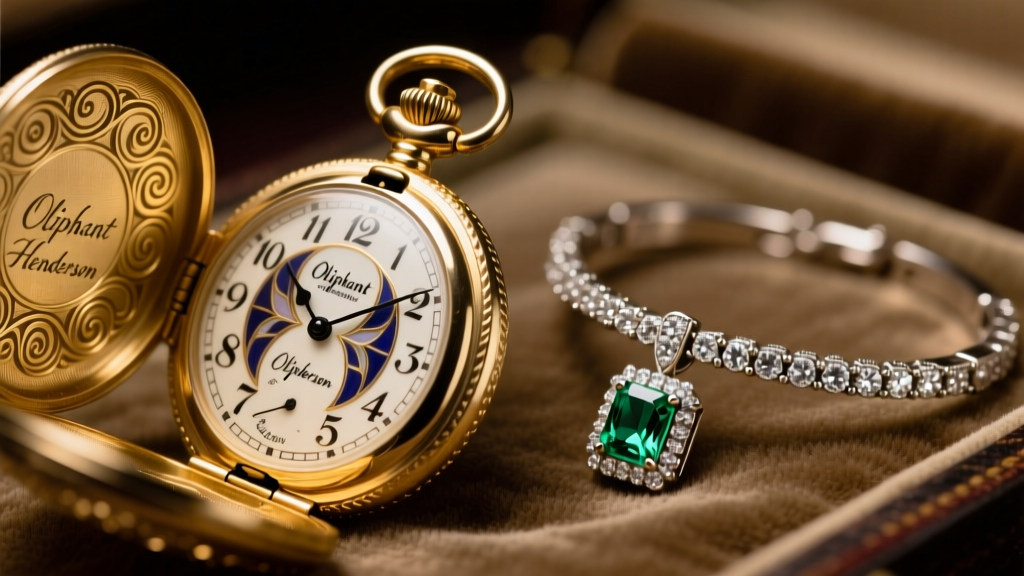
Oliphant Henderson: The Forgotten Scottish Watchmaker Who Defined Precision in the Age of Empire
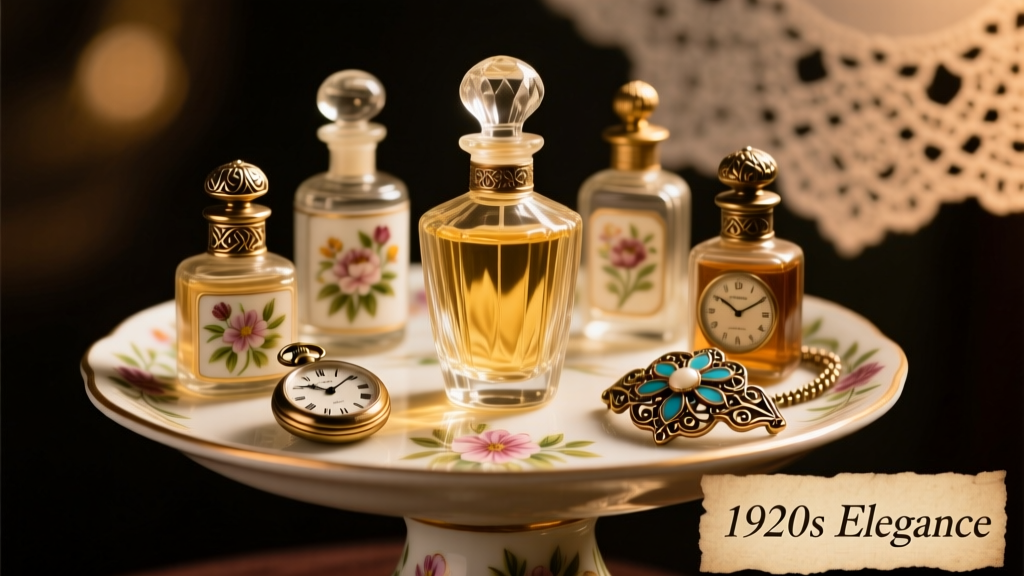
Floral Pedestal Limoges Perfume Bottles: Artistry, Provenance, and Auction Value
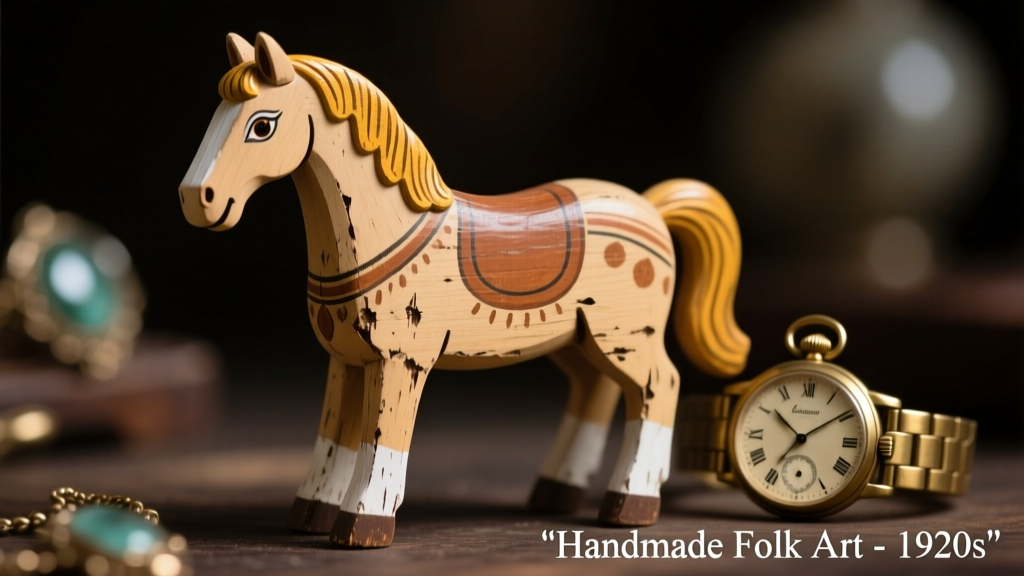
Folk Art Horse: A 5-Inch Palomino Papier-Mâché Sculpture with Wooden Core — Provenance, Craft, and Collectibility