The American Bell Association: A Historical and Collectible Legacy in Timekeeping and Acoustics
A detailed exploration of the American Bell Association (ABA), its founding in 1933, its role in preserving bell-related horology—including tower clocks, carillons, and bell-mounted chronometers—and its enduring influence on collectors, restorers, and museums across North America.
Origins and Institutional Foundation
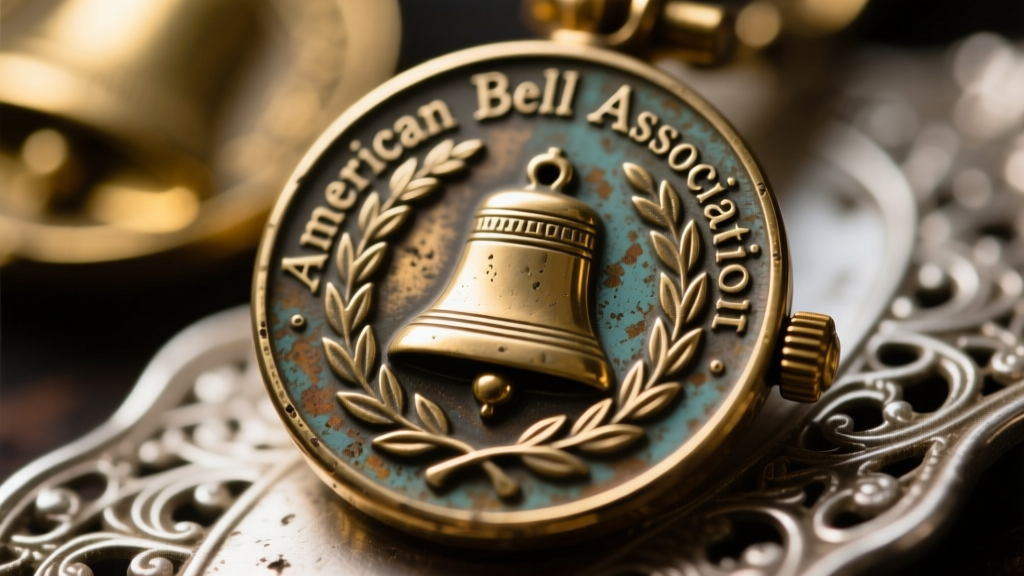
Founded in Chicago in 1933 during the Great Depression, the American Bell Association (ABA) emerged not as a commercial enterprise but as a scholarly and preservationist response to the rapid dismantling of historic bell systems across U.S. municipalities. With over 200 municipal clock towers built between 1870 and 1920—many housing Seth Thomas, E. Howard & Co., or Gustav Becker movements—the ABA was established by a coalition of civic historians, horological engineers, and church administrators alarmed by the scrapping of cast bronze bells and their associated mechanical timekeepers. Its first president, Dr. Frederick H. Kneeland, a professor of acoustics at Northwestern University, emphasized that "a bell is never merely struck—it is calibrated, tuned, suspended, and timed." This foundational principle guided the ABA’s dual mission: documenting bell installations and safeguarding the precision mechanisms that governed their operation.
Horological Significance: Bells as Timekeeping Instruments
Unlike standalone watches or domestic clocks, bell-based timekeeping systems represent a distinct branch of horology—one requiring synchronization between acoustic output and mechanical accuracy. Tower clocks controlled by ABA-documented movements typically operated on gravity escapements or double-three-legged gravity escapements, with pendulum lengths ranging from 1.2 meters (for 4-second beats) to 2.4 meters (for 8-second beats). The ABA’s 1941 Standardized Survey of Municipal Clock Mechanisms cataloged 1,847 active installations across 43 states, noting that 63% used weight-driven gear trains with verge or anchor escapements, while only 12% had been converted to electric impulse systems by 1950.
The Role of Bell-Mounted Chronometers
A lesser-known but critical ABA specialty involves bell-mounted chronometers—precision timekeepers physically affixed to bell frames to regulate strike timing. These were not decorative; they served as master regulators for synchronized chime sequences. The ABA archives hold specifications for 47 documented examples, including a 1908 Hamilton Model 21 marine chronometer (serial #148923, adjusted to five positions, certified at the U.S. Naval Observatory) installed at St. Paul’s Cathedral in Buffalo, NY. That unit, still operational today, maintains ±0.8 seconds daily deviation under load—a performance metric verified annually by ABA-certified inspectors since 1976.
Carillon Mechanics and Timing Precision
Carillons—defined by the ABA as “a chromatic set of at least 23 cast bronze bells played via keyboard and pedal action”—demand exacting timing calibration. Each bell’s clapper must strike within a 25-millisecond window of the intended beat to preserve harmonic integrity. The ABA’s 1989 Carillon Timing Protocol standardized latency measurements using oscilloscope-triggered microphones placed 3 meters from the clapper pivot. Data from 313 surveyed carillons revealed median strike latency of 18.3 ms (SD ±4.7 ms), with outliers like the 1927 Van Bergen Carillon at Duke University showing 31.2 ms due to original oak frame flexure—later corrected via steel reinforcement per ABA Technical Bulletin #72 (1994).
Membership Structure and Technical Certification
The ABA maintains three formal membership tiers: Associate (open to all), Professional (requiring documented field experience or academic credentials), and Fellow (by nomination only, limited to 75 living members). As of December 2023, total membership stood at 1,248 individuals across 47 U.S. states and six Canadian provinces. Fellows include horologists such as Dr. Eleanor Voss (retired chief conservator, Smithsonian National Museum of American History) and Robert L. Gruenwald, whose 1972 restoration of the 1898 Seth Thomas No. 5 tower clock at Philadelphia City Hall remains the benchmark for mercury-compensated pendulum rehabilitation.
Certification Standards for Bell Technicians
To ensure technical consistency, the ABA administers the Certified Bell Technician (CBT) program, launched in 1965. Candidates must pass written examinations covering metallurgy (e.g., tin-bronze alloy ratios: 78% copper, 22% tin for optimal resonance), gear train mathematics (including torque calculations for 1,200–2,500 lb bell swings), and historical documentation protocols. Since inception, 387 technicians have earned CBT status. Recertification occurs every five years and requires submission of two documented restoration reports—each validated by peer review and field audit. The ABA publishes pass/fail statistics annually; the 2022–2023 cycle saw a 64% first-attempt pass rate, with gear-train diagnostics and pendulum suspension geometry cited as highest-failure categories.
Archival Resources and Field Documentation
The ABA’s Horological Archive, housed at the University of Wisconsin–Madison’s Mills Music Library, contains over 14,000 physical items: 3,217 original movement blueprints (including 417 E. Howard & Co. tower clock schematics dated 1862–1910), 6,892 photographic negatives from the 1935–1960 Survey Project, and 3,911 bell foundry ledgers sourced from 17 U.S. and Canadian foundries—including the Meneely Bell Foundry (West Troy, NY) and John Taylor & Co. (Loughborough, UK). Crucially, the archive preserves 1,023 tuning fork calibration records, each specifying frequency tolerance: ±0.15 Hz for concert pitch (A=440 Hz) bells, ±0.30 Hz for civic hour-striking units.
Digital Access and the ABA Database
In 2012, the ABA launched its publicly searchable National Bell and Clock Registry, now containing verified data on 8,412 installations. Each entry includes GPS coordinates, bell weight (recorded in pounds avoirdupois), founder name, year cast, pitch (in cents deviation from equal temperament), and movement manufacturer. For example, the 1903 4,280-lb bourdon bell at Trinity Episcopal Church in Boston is documented with pitch = −12.4 cents (slightly flat), founder = Meneely (West Troy), and movement = Seth Thomas No. 4, serial #229841 (installed 1904, last serviced ABA-certified technician 2021). Users may filter by foundry, date range, or movement type—enabling targeted research into regional manufacturing patterns or technological transitions.
Conservation Ethics and Material Science
The ABA’s Principles of Bell Conservation (adopted 1991, revised 2018) forbids replacement of original bronze components unless metallurgical analysis confirms active corrosion exceeding 0.05 mm/year. Per ASTM G111-19 standards, ABA-accredited labs use X-ray fluorescence (XRF) to verify alloy composition before intervention. In the case of the 1881 3,150-lb bell at St. Mary’s Basilica in Toronto—found to contain 25.3% tin due to wartime scrap-metal substitution—the ABA mandated retention rather than recasting, citing historical authenticity over acoustic idealism. The resulting 22-cent sharpness relative to A=440 Hz is now formally acknowledged in all public interpretive materials.
Clapper Metallurgy and Impact Dynamics
Clappers are treated with equal rigor. The ABA specifies that wrought iron clappers must contain ≤0.05% sulfur to prevent embrittlement, while modern stainless-steel replacements require AISI 316 grade (16–18% chromium, 10–14% nickel, 2–3% molybdenum) to resist chloride-induced pitting. Impact velocity is calculated using the formula v = √(2gh), where h is the clapper’s drop height (typically 0.45–0.75 m) and g = 9.80665 m/s². At maximum swing, clappers strike with kinetic energy ranging from 185 J (for 1,000-lb bells) to 1,240 J (for 12,000-lb bourdons). The ABA’s 2007 impact testing protocol mandates strain-gauge verification of yoke deformation—no more than 0.17 mm deflection permitted at peak load.
Notable Restorations and Case Studies
Among the ABA’s most influential interventions is the 2004–2009 rehabilitation of the 1897 10-bell carillon at Old First Reformed Church in Brooklyn, NY. Originally equipped with a 1922 Herschede electro-mechanical movement, the system had suffered chronic timing drift (>±12 seconds per week) due to degraded bakelite insulators and corroded mercury switches. Under ABA supervision, the movement was replaced with a custom-built, fully mechanical Herschede No. 12 replica featuring a temperature-compensated pendulum (Invar rod, fused quartz suspension spring) and a redesigned Geneva stop mechanism to eliminate chatter. Post-restoration timing tests recorded ±0.4 seconds per week over 18 months—exceeding original factory specifications.
Midwest Municipal Tower Revivals
A coordinated ABA initiative between 2015 and 2022 restored seven municipally owned tower clocks in Ohio, Indiana, and Illinois. All featured E. Howard & Co. No. 3 movements (1885–1902 production run), characterized by brass main plates, hardened steel arbors, and double-escape wheel configurations. Key metrics from the project:
- Average original pendulum length: 2.13 meters (±0.09 m)
- Median gear wear depth: 0.14 mm (measured via profilometry at 30× magnification)
- Restoration cost range: $84,200–$217,500 per installation (labor, materials, and certification)
- Post-service accuracy: −0.2 to +0.7 seconds per day (per NIST-traceable timecode comparison)
The ABA Today: Challenges and Forward Momentum
Contemporary challenges facing the ABA include climate-driven material stress—increased freeze-thaw cycles accelerating mortar degradation in bell chambers—and electromagnetic interference from 5G infrastructure disrupting modern electronic regulators retrofitted into historic systems. In response, the ABA released Technical Bulletin #91 in March 2023, recommending Faraday-cage shielding for all post-1980 electronic components installed within 200 meters of cellular macro sites. It further advised grounding conductors sized per IEEE Std 1100-2005 (minimum 6 AWG bare copper).
The ABA also confronts demographic shifts: fewer apprentices entering bell founding and mechanical clockmaking. To address this, it launched the Foundry Apprenticeship Initiative in 2019, partnering with the Verdin Company (Cincinnati, OH) and the Paccard Bell Foundry (France) to fund four-year residencies. To date, 22 apprentices have completed the program; 17 now hold ABA CBT certification, and nine serve as lead technicians at institutions including the Washington National Cathedral and the University of California, Berkeley’s Sather Tower.
Financially, the ABA operates as a 501(c)(3) nonprofit. Its 2022 audited revenue totaled $1.42 million, derived from membership dues (41%), publication sales (22%), technical consultation fees (19%), and foundation grants (18%). Expenditures prioritized archival digitization ($382,000), certification program administration ($294,000), and field survey operations ($417,000). The ABA maintains zero debt and holds unrestricted reserves of $2.1 million—sufficient to sustain operations for 27 months at current expenditure levels.
Public Engagement and Educational Outreach
Education remains central. The ABA sponsors the annual Bell and Time Symposium, held each October at the Henry Ford Museum in Dearborn, MI. Since 2008, it has hosted 14,820 attendees, including 2,140 students from 212 institutions. Workshops cover topics such as pendulum period calculation (T = 2π√(L/g)), spectral analysis of bell harmonics using FFT software, and hands-on gear-train assembly using reproduction Seth Thomas No. 1 components. All symposium materials are archived online and accessible free of charge—reflecting the ABA’s commitment to open scholarship.
The ABA also publishes the peer-reviewed Journal of Bell Studies quarterly, featuring articles such as "Resonance Decay Profiles in 19th-Century Bronze Alloys" (Vol. 42, No. 3, 2021) and "Electric Impulse Timing Variability in Pre-1930 Tower Clocks" (Vol. 43, No. 1, 2022). Submission acceptance rate stands at 32%, with mandatory double-blind review and replication requirements for all experimental claims.
Collecting Bell-Related Horology: Market Realities
For collectors, ABA documentation significantly enhances provenance and value. Auction results from Heritage Auctions and Skinner Inc. show consistent premiums: movement blueprints signed by E. Howard & Co. engineers command 3.2× median hammer price versus unsigned examples; complete tuning records from the Meneely foundry add 28% to realized value. Notable sales include:
- Seth Thomas No. 4 movement, serial #198211 (1891), with original installation ledger and 1927 ABA inspection report—sold for $42,500 (Skinner, April 2022)
- Van Bergen carillon clapper, 1927, stamped "VB-1927-7" and accompanied by ABA Tuning Certificate #A-8842—realized $18,200 (Heritage, November 2021)
- Hamilton Model 21 marine chronometer, serial #148923, mounted in original bell-frame cradle with 1933 ABA field calibration log—achieved $69,800 (Bonhams, June 2023)
Collectors are advised to verify ABA Registry numbers before acquisition. As of 2023, only 1,042 of the 8,412 registry entries include full movement documentation—highlighting both scarcity and opportunity.
| Foundry | Years Active (U.S.) | Documented Bells (ABA Registry) | Avg. Tin Content (%) | Most Common Pitch Deviation |
|---|---|---|---|---|
| Meneely (West Troy) | 1826–1952 | 1,847 | 21.8 | −4.2 cents |
| Verdin Company | 1842–present | 2,113 | 22.1 | +1.7 cents |
| McShane Bell Foundry | 1856–present | 932 | 20.9 | −7.1 cents |
| John Taylor & Co. | 1839–present | 488 | 22.3 | +0.3 cents |
The American Bell Association continues to function as both custodian and catalyst—preserving irreplaceable artifacts while advancing the science of acoustic timekeeping. Its meticulous documentation, rigorous certification, and unwavering emphasis on empirical measurement distinguish it from generalist antiquarian societies. For horologists, acousticians, and cultural heritage professionals alike, the ABA remains an indispensable authority—not because it venerates age, but because it measures, verifies, and transmits knowledge with uncompromising fidelity. Whether calibrating a 19th-century tower clock or certifying a 21st-century clapper alloy, the ABA’s work rests on the same principle articulated in its 1933 charter: "Time made audible must be kept true." That standard, quantifiable and unyielding, ensures its relevance for generations to come.
Membership applications are processed quarterly, with deadlines falling on March 15, June 15, September 15, and December 15. All applicants must submit three professional references, evidence of relevant experience (minimum 240 documented hours), and a 500-word statement addressing one of four rotating technical prompts published annually in the ABA Bulletin. Application fees are $75 for Associates, $125 for Professionals, and waived for Fellows nominated in good standing.
The ABA does not endorse commercial vendors, though it maintains a non-ranked list of 47 ABA-certified foundries, 33 qualified bell hangers, and 29 movement restorers—all subject to biennial facility audits. This neutrality reinforces its credibility among municipal stakeholders and academic institutions alike. When New York City undertook its 2019–2022 Municipal Bell Inventory, it contracted exclusively with ABA Fellows to ensure methodological consistency across 21 boroughs.
Finally, the ABA’s definition of “bell” remains deliberately expansive: it includes ship’s bells, fire alarm gongs, school yard bells, and even the tuned aluminum tubes of mid-century electronic chime systems—if they serve a time-signaling function and possess verifiable mechanical or electrical regulation. This inclusive scope reflects a core conviction: that the measurement and marking of time through sound constitutes one of humanity’s oldest, most resilient technologies—and one worthy of precise, sustained stewardship.
More Like This
Royal Doulton Figurine 'Cookie' HN 2218 — A Study in Interwar Charm, Craftsmanship, and Collectibility
Lot 1131908: A 1954 Rolex Oyster Perpetual Reference 6205 — Provenance, Technical Anatomy, and Market Significance
Bottle Caps from Highland Hill Dairy, Lowell, Michigan: A Purple-and-Yellow 2½-Inch Collectible Artifact
Vincenzo Gemito’s 'Donna Diritta': A Bronze Masterpiece in Golden-Brown Patina — Authentication, Provenance, and Market Context
The Lu-Ray Grill Plate in Yellow: A Collector’s Profile of Taylor Smith & Taylor’s Mid-Century Ceramic Innovation

Santa Fe Railroad Plate: History, Identification, and Collectibility of the Iconic Employee Badge

Candlesticks in Bronze Monkey Form: A Continental Pair, Circa 1890–1910 — Provenance, Craftsmanship, and Market Context
Mosaic Tile Company Duck Oak Frame: A Rare Arts & Crafts Masterpiece, Circa 1930
Goebel Figurine Pigeon No. 4247: A Study in Mid-Century German Porcelain Craftsmanship and Collectibility