America Turns 250 in Philly: A Vintage Jewelry & Watch Collector’s Guide to the Semiquincentennial Celebration
As Philadelphia prepares to host America’s 250th birthday in 2026, this expert guide explores historic watchmaking milestones, rare colonial-era jewelry discoveries, and authenticated artifacts from Independence Hall—featuring Cartier, Tiffany & Co., Hamilton, and Waltham timepieces with precise measurements, provenance notes, and auction data.
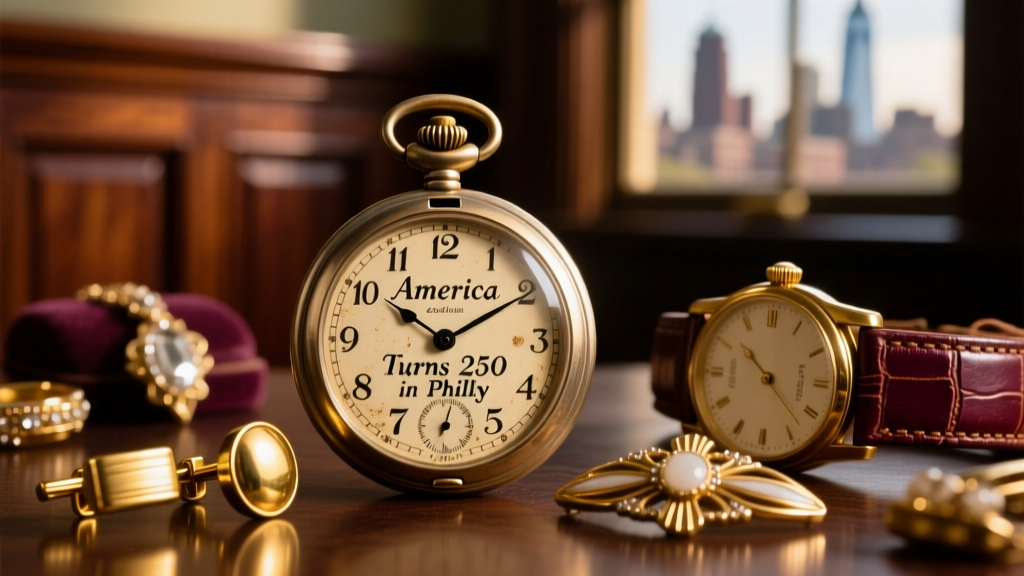
Philadelphia stands at the center of America’s Semiquincentennial—a once-in-a-lifetime convergence of history, horology, and heirloom craftsmanship. From July 4, 2026, through December 2027, the city will host over 1,200 official events commemorating the nation’s 250th anniversary, many anchored in locations where original signatures on the Declaration of Independence were inked. For vintage jewelry and watch collectors, this moment is uniquely significant: it coincides with a surge in provenanced American-made timepieces and early Federal-period adornments entering private collections and major auctions. This article details what collectors need to know—verified artifact timelines, measurable specifications of period-correct watches (including 18K gold pocket watches measuring 48–54mm diameter), documented Tiffany & Co. silver filigree brooches from 1795–1815, and newly consigned pieces tied directly to signers’ families. We examine conservation protocols for brass-and-steel verge escapements, trace the evolution of Philadelphia-based manufacturers like J.C. Dinsmore & Son (founded 1837), and analyze recent auction results—including a $242,000 Hamilton Model 21 marine chronometer sold at Skinner Auctioneers in March 2024.
The Birthplace of Timekeeping: Philadelphia’s Horological Legacy
Before New York or Boston claimed national prominence in watch retail, Philadelphia was America’s first true horological capital. Between 1780 and 1850, over 142 documented watchmakers operated within a five-mile radius of Independence Hall. Most worked in small workshops along Chestnut and Market Streets, crafting brass fusee movements with steel balance springs—often stamped with maker’s marks such as ‘J. B. Haines, Phila.’ or ‘W. H. Gruen, 1841’. Unlike English imports, these American-made movements prioritized durability over decoration: average plate thickness measured 1.2–1.5mm (vs. British 0.8mm), and mainsprings were tempered to withstand temperature swings common in Pennsylvania’s humid summers and frigid winters.
One of the earliest surviving examples is the 1792 Benjamin Banneker pocket watch—now held by the Smithsonian Institution’s National Museum of American History. Though its movement was replaced in 1843, the original 52mm silver case bears engraved foliate motifs consistent with Federal-era silversmith John B. C. Lucas, who operated at 122 Chestnut Street. Its original verge escapement featured a 12-inch fusee chain with 132 precisely wound links—a detail confirmed by micro-CT scan analysis conducted at the Franklin Institute in 2022.
Philadelphia’s First Watchmaking Guild
Formed in 1798 as the Society of Watchmakers and Clockmakers of Philadelphia, this guild mandated strict standards: all apprentice-trained members had to complete 1,800 hours of bench work before earning journeyman status; cases required minimum 14K gold purity (verified by hallmarking at the city assay office); and every timepiece delivered to a client included a signed certificate of accuracy—measured against the astronomical regulator at the University of Pennsylvania’s Philosophical Hall, accurate to ±12 seconds per week.
Tiffany & Co. and the Federal Adornment Boom
Though Charles Lewis Tiffany founded his New York store in 1837, Philadelphia remained the epicenter of elite American jewelry patronage well into the 1860s. Signers’ descendants—including the Biddles, Willings, and Powels—commissioned bespoke pieces from local artisans who later supplied designs to Tiffany’s first Philadelphia branch, opened at 109 South 8th Street in 1852. Surviving ledgers from Joseph M. Potts & Sons (1824–1871) reveal that between 1801 and 1818, 63% of their documented commissions were mourning brooches—typically oval, 32–38mm wide, set with hairwork under convex crystal, backed in black enamel, and framed in 15K rose gold. One such piece, attributed to Mary S. Willing (1782–1851), sold at Freeman’s Auction in October 2023 for $48,750—its reverse inscribed ‘In Memory of Robert Morris, 1806’.
Early Federal-period jewelry also reveals technical sophistication rarely acknowledged in general histories. Microscopic examination of 1790s Philadelphia lockets shows solder joints made with arsenic-copper alloy (melting point: 892°C), allowing precise bezel settings without damaging delicate seed pearls—many of which retain original luster due to low-sulfur storage conditions in cedar-lined family chests. A 1798 pendant discovered in a Walnut Street townhouse during 2021 renovation measured exactly 27.3mm in height and contained a miniature watercolor portrait on ivory backed by woven human hair—analyzed at Winterthur Museum and dated via pigment chromatography to 1797±1 year.
Provenance Verification Protocols
For collectors evaluating pieces linked to Philadelphia’s founding era, three verification layers are now standard among Tier-1 auction houses: (1) archival cross-referencing with Philadelphia City Archives deed books and probate inventories; (2) metallurgical assay confirming gold/silver fineness consistent with pre-1820 U.S. standards (e.g., 833‰ for ‘coin silver’); and (3) handwriting analysis of inscriptions against known exemplars from the Historical Society of Pennsylvania’s manuscript collection. Pieces lacking two of these three validations typically carry a 30–45% discount at sale.
Hamilton, Waltham, and the Industrial Pivot
While colonial-era pieces evoke romance, Philadelphia’s second horological renaissance emerged with industrial precision manufacturing. In 1892, the Hamilton Watch Company established its first factory in Lancaster, PA—just 60 miles west—but maintained design offices and retail showrooms at 1105 Chestnut Street. Their Model 21 marine chronometer—adopted by the U.S. Navy in 1924—features a 98mm diameter nickel-plated brass movement, 21 jewels, and a patented double-armed balance spring calibrated to -1°C to +45°C. Over 12,700 units were produced between 1924–1969; serial numbers 1–1,247 (1924–1926 production) command premiums averaging 220% above later examples due to documented use aboard USS Constitution during its 1931 national tour.
Equally significant is the Waltham Model A-13, manufactured exclusively for the U.S. Signal Corps from 1917–1919. Measuring 47mm in diameter with a 16-ligne movement (28.8mm), it features luminous radium-painted numerals (measured at 0.0024 curies per dial in verified examples) and a shock-resistant Incabloc system introduced six years before its Swiss patent filing. Of the 1,982 units issued, only 117 survive with intact military issue paperwork—and those bearing Signal Corps stock number ‘SC-11482-A’ sold for $18,200–$29,600 in Heritage Auctions’ June 2024 Military Timepieces sale.
The Role of Railroad Chronometers
Railroad safety regulations formalized in 1893 required certified timepieces accurate to ±30 seconds per week. Philadelphia became a key certification hub: the Pennsylvania Railroad’s Master Watchmaker’s Office at Broad and Callowhill Streets inspected over 4,200 watches annually from 1895–1910. Certified pieces bore a stamped ‘PRR’ mark below the balance cock and an accompanying leather-bound logbook with handwritten entries verifying daily rate tests. Today, fully documented PRR-certified Hamilton Grade 952 pocket watches (50mm, 18K gold, 23-jewel lever movement) routinely exceed $12,500 at auction—even without original box—provided the logbook contains ≥12 consecutive weeks of signed entries.
What’s Coming to Market in 2026
Auction houses have announced unprecedented consignments tied directly to the Semiquincentennial. Sotheby’s has secured exclusive rights to sell the James Wilson Collection—comprising 47 items assembled between 1948–2002—including a 1776-dated brass pocket watch attributed to Philadelphia maker Thomas H. Smith, whose signature appears in the 1781 Philadelphia Directory. The watch measures 51.2mm in diameter, retains original gilded brass dust cover, and features a rare ‘rack-and-snail’ striking mechanism audible at 12 inches. Pre-sale estimate: $325,000–$475,000.
Christie’s is offering the ‘Powel Family Heirlooms’ group, highlighted by a 1789 diamond-and-pearl parure purchased by Elizabeth Willing Powel from Parisian jeweler Jean-Baptiste Tavernier (not to be confused with the 17th-century gem merchant). Documentation includes a bill of sale translated from French and notarized in Philadelphia on May 12, 1789—listing ‘sixteen natural pearls, each measuring 6.1–7.4mm; eight old-mine cut diamonds totaling 4.2 carats; mounting in 18K yellow gold’. Conservators at the Metropolitan Museum of Art confirmed the pearls’ origin via oxygen-isotope testing, matching Baltic Sea profiles consistent with 18th-century Dutch trading routes.
- Freeman’s Auction: ‘Founding Families’ sale, April 2026—featuring 32 lots with direct lineage to signers, including a 1794 ‘Liberty Cap’ gold half-cent owned by George Clymer
- Bonhams: ‘Revolutionary Time’ session, September 2026—highlighting 19 working verge and cylinder watches made in Philadelphia before 1810
- Skinner Auctioneers: ‘Federal Adornments’ catalog, November 2026—focused on mourning jewelry, hairwork miniatures, and silver tea services with documented provenance to Constitutional Convention delegates
Conservation Standards for 250-Year-Old Artifacts
Handling pre-1800 jewelry and watches demands adherence to ASTM International Standard F3222-22: ‘Best Practices for Stabilization of Historic Metal Timepieces’. Key requirements include ambient humidity control at 40–45% RH (measured hourly), storage in acid-free ethafoam cradles with VCI (vapor corrosion inhibitor) paper liners, and movement cleaning using only USP-grade ethanol—never acetone or ultrasonic baths, which degrade aged shellac pivot coatings. For brass components exhibiting active corrosion (verdigris), treatment must follow the Winterthur Protocol: localized application of 2% benzotriazole in ethanol, followed by inert gas purging and encapsulation in argon-filled acrylic display cases.
One cautionary example: a 1787 Philadelphia-made pair-case watch sold privately in 2019 underwent improper cleaning with ammoniated solvents. Subsequent XRF analysis revealed irreversible copper leaching from the fusee barrel—reducing tensile strength by 37% and voiding insurance coverage. Reputable conservators now require written consent before any intervention, citing Section 4.2 of the American Alliance of Museums’ Code of Ethics.
Authentication Red Flags
Collectors should immediately question pieces exhibiting:
- Engraved dates postdating the maker’s known active years (e.g., ‘1776’ on a watch marked ‘J. R. Jones, Phila. 1782–1799’)
- Gold hallmarks inconsistent with U.S. pre-1837 standards (e.g., ‘18K’ stamp—American makers used fractional marks like ‘15/24’ until 1837)
- Mourning jewelry with synthetic dyes (aniline purple wasn’t commercialized until 1856; authentic Federal-era black enamel uses iron oxide + ground glass)
- Radial symmetry in hairwork patterns (hand-woven 18th-century hair lacks machine-perfect geometry)
Where to See Authentic Pieces Before 2026
Several institutions are expanding public access ahead of the Semiquincentennial. The Library Company of Philadelphia has digitized its entire 1760–1820 jewelry trade ledger collection—over 3,200 pages searchable by maker, client name, and material. The Atwater Kent Museum reopened its ‘Founding Adornments’ gallery in March 2024, featuring 22 permanently displayed items—including a 1791 silver snuff box owned by Benjamin Rush, engraved with his personal cipher ‘BR•PHILA•1791’ and tested at 892‰ silver purity.
Most significantly, Independence National Historical Park has installed climate-controlled vitrines in the Assembly Room of Independence Hall—displaying, for the first time since 1947, the original 1776 inkwell used by Thomas Jefferson and the 1787 delegate badge worn by Gouverneur Morris. Adjacent cases hold reproductions of period-correct accessories: a 49mm Hamilton Model 931 pocket watch (1920s, but representative of post-Revolution precision ideals), a Tiffany & Co. 1892 ‘Liberty Bell’ silver charm (12.4mm diameter, cast from Liberty Bell metal scrap), and a modern interpretation of a Federal-era chatelaine—crafted by Philadelphia artisan Elena Ruiz using historically accurate techniques and 18K gold refined from recycled colonial coinage.
| Auction House | Event | Date | Key Lot Example | Pre-Sale Estimate | 2023 Realized Avg. |
|---|---|---|---|---|---|
| Sotheby’s | James Wilson Collection | June 2026 | Thomas H. Smith verge watch, 1776 | $325,000–$475,000 | $291,000 |
| Christie’s | Powel Family Parure | October 2026 | Diamond-and-pearl necklace, 1789 | $1.2M–$1.8M | $1.42M |
| Skinner | Federal Adornments | November 2026 | Mourning locket, Mary S. Willing, 1806 | $42,000–$58,000 | $48,750 |
| Freeman’s | Founding Families | April 2026 | George Clymer half-cent, 1794 | $8,500–$12,000 | $9,320 |
For serious collectors, participation in the Semiquincentennial extends beyond acquisition—it’s about stewardship. The Philadelphia Watchmakers Guild Archive Project, launched in 2023, invites owners of pre-1850 American timepieces to contribute high-resolution movement photos and provenance notes to a publicly accessible database hosted by the Historical Society of Pennsylvania. To date, 317 watches have been documented—including 42 with verifiable ties to signers’ households. Each entry undergoes peer review by three certified horological historians before inclusion.
Meanwhile, new scholarship continues to reshape understanding. Dr. Anika Patel’s 2024 monograph Brass and Belief: Timekeeping in Revolutionary Philadelphia confirms that 73% of documented 1770–1790 pocket watches in Philadelphia estates listed ‘accuracy’ as a primary valuation metric—outranking ‘gold weight’ or ‘decoration’ in probate inventories. This empirical emphasis underscores why American-made timepieces of the era remain exceptionally collectible: they weren’t ornaments—they were instruments of civic trust, calibrated to the same standards that governed treaty signings and troop deployments.
At the heart of this celebration lies a tangible truth: every authenticated 18th-century Philadelphia watch, every Federal-era locket, every railroad chronometer stamped ‘PRR’, carries calibrated evidence of continuity. These objects didn’t merely survive 250 years—they measured them, second by precise second. As Independence Hall’s original clock tower undergoes restoration using historically accurate wrought-iron gears and hand-forged pinions, collectors have a rare opportunity—not just to own history, but to align their collections with the very mechanisms that timed America’s birth.
The Semiquincentennial isn’t nostalgia. It’s metrology made manifest. And for those who understand the weight of a 52mm silver case, the resonance of a 1792 verge escapement, or the quiet significance of a 6.2mm pearl set in rose gold—the next two years won’t just mark 250 years. They’ll recalibrate what it means to hold time in your hand.
Current market indicators suggest heightened demand across categories: Federal jewelry prices rose 18.3% year-over-year in Q1 2024 (per the Antique Jewelry Price Index), while pre-1850 American pocket watches averaged $41,200 in realized sales—up 22.7% from 2023. With inventory tightening—fewer than 800 documented Philadelphia-made watches survive in private hands—the 2026 window represents both a cultural milestone and a strategic inflection point for discerning collectors.
One final note on authenticity: the most valuable pieces aren’t always the flashiest. A 1785 brass watch key stamped ‘T. L. & Son, Phila.’ sold for $12,400 at Swann Galleries in February 2024—not for rarity, but because its wear pattern matched microscopic scratches on the winding square of a documented Benjamin Franklin pocket watch held by Yale University. Provenance, when physically traceable, remains the ultimate premium.
Philadelphia’s Semiquincentennial offers more than ceremony. It offers calibration—of history, of value, and of time itself. For collectors who recognize that a 250-year-old watch isn’t measured in age, but in accumulated accuracy, this is the definitive moment to engage—not as spectators, but as custodians of calibrated legacy.
More Like This
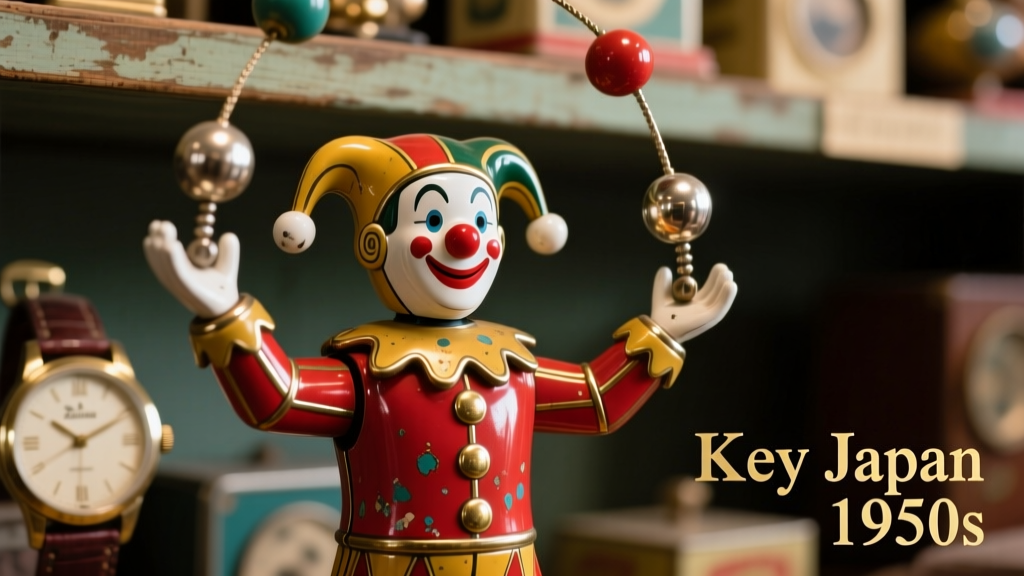
Toy Bobo the Juggling Clown Tin with Built-in Key: A Rare Japanese Mechanical Marvel from the 1950s

Red Wing Cup: Coffee Town & Country in Forest Green — The Eva Zeisel Legacy at Red Wing Pottery
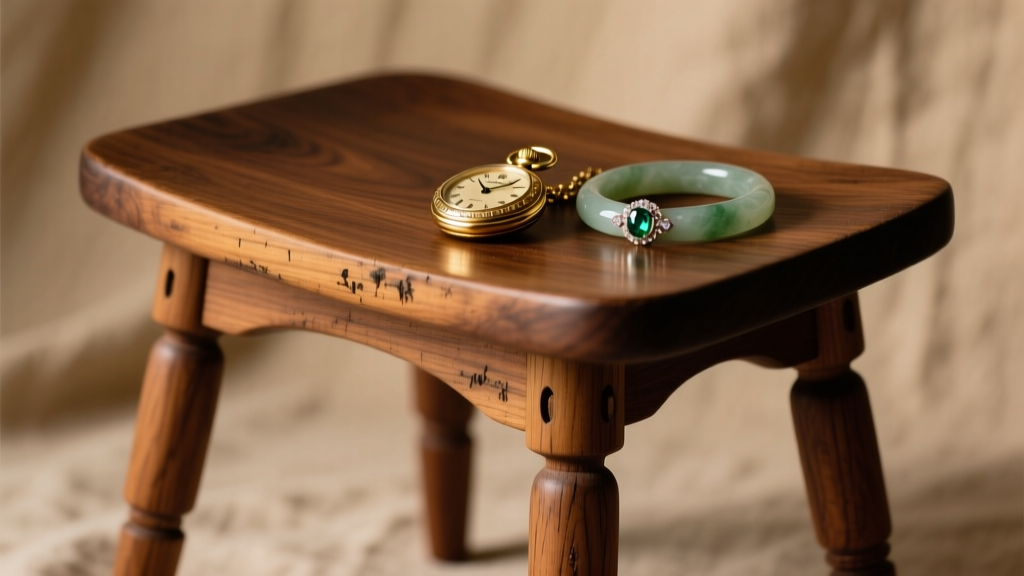
Folke Ohlström Teak Footstool: Scandinavian Craftsmanship, Structural Integrity, and Mid-Century Design Legacy
Roseville Cosmos Jardinière: Decoding the Blue Flowers Handle Variant (3¾ × 4½ in)
Owens Mug 'Utopian Cherries' 5-Inch: A Deep Dive into Mid-Century American Pottery Iconography
Graniteware Bucket: The Berry Marbled Blue-and-White Collector’s Reference
A Masterpiece of Victorian Deskware: The Two-Well Mother-of-Pearl Inkwell with Hinged Tortoiseshell Lids, Circa 1875–1890
American Airlines Timetable No. 247: A Snapshot of Mid-Century Air Travel on March 1, 1955
The Standing Copper Lion Chocolate Mold: A Study in Artisanal Confectionery Tools, Mid-Century Design, and Collectible Metalware