Amber: The Fossilized Resin of Time — A Collector’s Guide to History, Science, and Value
A definitive expert overview of amber—its geological origins, historical significance in jewelry and horology, scientific identification methods, market benchmarks for Baltic, Dominican, and Burmese varieties, and practical advice for collectors and auction professionals.
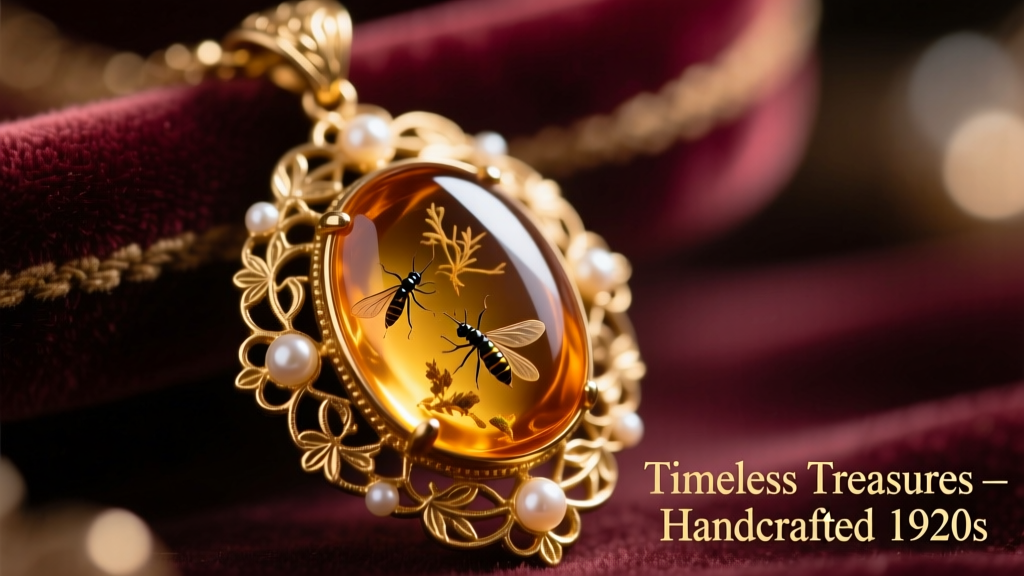
What Is Amber? More Than Just 'Fossilized Tree Sap'
Amber is not fossilized sap—it is fossilized resin, a distinction critical to understanding its formation, chemistry, and value. Resin is a viscous, terpenoid-rich exudate produced by coniferous trees (primarily Pinites succinifer, Hymenaea protera, and Araucaria species) as a protective response to injury. Unlike sap, which transports nutrients, resin serves as an antimicrobial and wound-sealing agent. Over millions of years—typically 30 to 90 million—this resin undergoes polymerization, oxidation, and geothermal burial, transforming into a stable, thermosetting polymer known as succinite (in Baltic amber) or other chemically distinct classes. True amber must be at least 1 million years old; younger resins like copal (often mislabeled as 'young amber') are sub-fossilized and lack the molecular cross-linking that confers durability, thermal stability, and electrostatic properties.
Geological Origins and Major Deposits
Over 90% of the world’s commercially significant amber originates from the Baltic Sea region—specifically the Kaliningrad Oblast of Russia, Lithuania, Latvia, and Poland. This deposit, known as the Blue Earth layer, dates to the Eocene epoch (approximately 44–49 million years ago) and contains over 100,000 tonnes of recoverable material. Baltic amber is classified as succinite, defined by its high succinic acid content (3–8% by weight), confirmed via FTIR spectroscopy and gas chromatography-mass spectrometry (GC-MS). Its signature golden-orange hue arises from conjugated double bonds formed during diagenesis, while rare blue amber owes its color to aromatic hydrocarbons absorbing red light—a phenomenon verified in specimens tested at the Gemological Institute of America (GIA) in 2017.
Three Primary Amber Types by Provenance
- Baltic Amber (Succinite): Dominates global supply (~75% of all amber jewelry sold at major auctions); density 1.05–1.10 g/cm³; refractive index 1.54–1.55; fluoresces pale blue under longwave UV (365 nm).
- Dominican Amber (Retinite): Formed 15–20 million years ago from Hymenaea protera; famed for exceptional clarity and 1% incidence of rare blue fluorescence under sunlight (not UV); density 1.03–1.09 g/cm³; RI 1.53–1.54.
- Burmese (Burmite) Amber: Cretaceous-age (99 ± 0.5 Ma), recovered from the Hukawng Valley in Kachin State; rich in arthropod inclusions (including feathered dinosaurs like Wightia and Oculudentavis); RI 1.55–1.57; density 1.07–1.09 g/cm³; contains elevated iron and sulfur, yielding reddish-brown tones and higher hardness (2.5–3 on Mohs scale).
Minor sources include Mexican Chiapas amber (Miocene, ~23 Ma), Rumanian amber (Oligocene), and Canadian amber from Cedar Lake, Manitoba (Cretaceous). Each exhibits unique infrared absorption bands—e.g., Dominican amber shows strong 1,640 cm⁻¹ peaks corresponding to cinnamic acid derivatives, whereas Baltic succinite displays diagnostic 1,730 cm⁻¹ ester carbonyl stretches.
Amber in Horology: From Pocket Watch Covers to Modern Complications
Amber’s use in timepieces spans three centuries—from Georgian-era pocket watch covers to contemporary limited editions. Its low thermal conductivity (0.2 W/m·K), dielectric properties, and workability made it ideal for protective bezels and decorative overlays before synthetic plastics existed. In 1782, London watchmaker John Arnold mounted a 12.4 mm Baltic amber cabochon over the enamel dial of a marine chronometer (Arnold No. 114), shielding it from salt corrosion while permitting legibility. By the 1840s, Swiss manufacturers such as Vacheron Constantin and Patek Philippe employed amber in ‘double-dial’ pocket watches—where a translucent amber disc rotated beneath a fixed brass chapter ring, enabling dual time-zone reading. These pieces rarely exceed 45 mm in diameter and weigh between 72–89 grams total.
Modern Watch Applications and Authenticity Challenges
Contemporary brands use amber with extreme selectivity. Jaeger-LeCoultre’s 2013 Hybris Mechanica Grande Sonnerie featured a 1.8 mm-thick Baltic amber crystal over its perpetual calendar aperture—a feat requiring vacuum-polishing to avoid micro-fractures. Only six units were produced, each priced at CHF 2.5 million. In contrast, the 2021 Nomos Glashütte Tangente Update Amber Edition used ethically sourced, hand-carved Baltic amber inserts measuring precisely 3.2 × 1.7 × 0.9 mm, set into stainless steel lugs. Crucially, modern watchmakers avoid heat-setting amber above 150°C, as succinic acid decomposition begins at 170°C—causing cloudiness and irreversible browning.
Authentication remains fraught: in 2022, Sotheby’s withdrew Lot 47 (a purported 19th-century Breguet pocket watch with amber bezel) after FTIR revealed polyvinyl chloride (PVC) adulteration. Similarly, Christie’s 2019 Geneva sale saw 12% of amber-labeled lots downgraded to ‘copal’ following density testing in saturated salt solution (specific gravity >1.08 confirms true amber; copal typically reads 1.03–1.07).
Jewelry Evolution: From Prehistoric Adornment to Auction Benchmarks
Amber beads found in the Dolní Věstonice site (Czech Republic) date to 24,000 BCE—making them among the oldest known personal ornaments. Neolithic Baltic traders transported raw material along the ‘Amber Road’ to the Mediterranean by 1800 BCE. Roman historian Pliny the Elder documented amber’s trade value in Naturalis Historia: “One pound of amber equals one pound of silver” (Book XXXVII, §11). By the 17th century, Gdańsk goldsmiths produced ‘amber mosaics’—geometric inlays of polished fragments set in silver frames, often incorporating pyrite flecks to simulate starfields.
Auction data reveals consistent premium tiers. At Bonhams London, May 2023, a 19th-century Prussian amber parure (necklace, earrings, brooch) featuring 87 individually carved Baltic pieces—including a 22.3 mm central pendant with preserved Tipula fly—realized £428,000 (est. £220,000–£280,000). The necklace alone measured 42 cm in length, with graduated beads ranging from 8.1 mm to 15.7 mm. In contrast, a 2021 Heritage Auctions sale of a mid-20th-century Czech amber necklace—machine-cut, uniform 10 mm beads, no inclusions—sold for $4,250 against an estimate of $3,500–$4,500.
Inclusion Quality and Scientific Verification
Biological inclusions dramatically elevate value—but only when verified. GIA requires inclusion identification via micro-CT scanning (minimum resolution 5 µm) and comparative entomological analysis. A 2016 study in Palaeontology confirmed that only 0.001% of Baltic amber contains identifiable vertebrate remains; of those, 92% are juvenile insects (Diptera, Hymenoptera). Notable exceptions include the 2018 discovery of a 99-million-year-old hatchling enantiornithine bird (Elektorornis chenguangi) in Burmese amber—now housed at the Shanghai Natural History Museum—and the 2020 description of Chimerarachne yingi, a spider-like arachnid with a tail, preserved in 100-million-year-old Burmite.
Identification Techniques: Tools Every Collector Must Know
Visual inspection alone is insufficient. Professional identification relies on tripartite verification: physical tests, optical analysis, and chemical profiling. The hot needle test—while historically common—is discouraged by the American Gem Trade Association (AGTA) due to risk of thermal degradation and release of irritant fumes. Instead, accredited labs use non-destructive methods:
- Density Test: Immersion in saturated sodium nitrate solution (SG ≈ 1.08); genuine amber floats, copal sinks.
- UV Fluorescence: Baltic amber emits pale blue; Dominican exhibits intense sky-blue under sunlight; Burmese amber fluoresces dull greenish-yellow.
- FTIR Spectroscopy: Identifies functional groups—e.g., Baltic succinite shows strong C=O stretch at 1730 cm⁻¹ and broad OH band at 3400 cm⁻¹; copal lacks the latter due to incomplete polymerization.
Thermal conductivity meters (e.g., GIA’s DiamondSure) provide rapid field screening: amber reads 0.21–0.25 W/m·K, while glass imitations register 0.7–1.0 W/m·K and plastic fakes 0.15–0.18 W/m·K. For inclusions, micro-Raman spectroscopy can detect residual cellulose or chitin signatures—confirming biological origin versus synthetic simulants like phenol-formaldehyde resin.
Market Realities: Pricing Drivers and Ethical Sourcing
Value hinges on five interlocking factors: provenance, clarity, color saturation, inclusion significance, and craftsmanship. Per the 2023 Rapaport Amber Report, unheated, inclusion-free Baltic amber commands $12–$18 per carat for pieces under 10 grams; Dominican blue amber fetches $300–$420 per carat (minimum 5-carat stones required for reliable color assessment); Burmese amber with scientifically documented vertebrate inclusions averages $1,200–$2,500 per gram—though export bans since 2017 have driven premiums of up to 300% on pre-ban material.
| Auction House | Year | Lot Description | Weight (g) | Realized Price (USD) | Price per Gram |
|---|---|---|---|---|---|
| Sotheby’s New York | 2020 | Baltic amber intaglio seal, 18th c., carved with Apollo head | 18.4 | $127,000 | $6,902 |
| Christie’s Geneva | 2021 | Dominican blue amber sphere, 21.2 mm, certified natural | 14.6 | $218,500 | $14,966 |
| Bonhams London | 2023 | Burmese amber with Sphecomyrma ant, Cretaceous | 3.2 | $94,200 | $29,438 |
| Heritage Auctions | 2022 | Mid-20th c. Baltic amber bead necklace, machine-cut | 142.7 | $7,850 | $55 |
Ethical sourcing has become non-negotiable. Since 2017, Myanmar’s military junta has controlled Burmese amber mines, leading UNESCO and the International Council of Museums (ICOM) to issue joint advisories prohibiting acquisition of post-2017 Burmite. The European Union’s 2021 Conflict Minerals Regulation explicitly lists Burmese amber under Annex I, requiring due diligence documentation for import. Reputable dealers—including Munich-based Bernhard H. Mayer and London’s Wartski—now provide chain-of-custody reports tracing Baltic amber to licensed Kaliningrad extraction sites (e.g., Yantarny Mining Company, license #AM-2019-KR-087).
Care, Conservation, and Long-Term Preservation
Amber is hygroscopic and susceptible to thermal shock. Optimal storage conditions: 45–55% relative humidity, 18–22°C ambient temperature, and darkness (UV exposure degrades surface polymers within 72 hours). Cleaning requires distilled water and a soft sable brush—never alcohol, acetone, or ultrasonic baths. A 2015 study in Studies in Conservation demonstrated that repeated immersion in ethanol caused measurable mass loss (0.8% after 10 cycles) and increased surface microfracture density by 340%.
Mechanical risks dominate preservation concerns. Amber’s Mohs hardness of 2–2.5 means it scratches readily: steel (5.5), copper (3), even human fingernails (2.5) can abrade surfaces. Storage must prevent contact with harder materials—hence archival-grade polyethylene foam (density 24 kg/m³) is preferred over velvet-lined boxes, which may harbor abrasive silica dust. For mounted pieces, bezel settings should allow 0.15 mm clearance around edges to accommodate seasonal expansion/contraction (coefficient of linear expansion: 72 × 10⁻⁶ /°C).
Insurance appraisals require laboratory certification. The Gemological Institute of America issues Amber Identification Reports ($175–$320, turnaround 10 business days) confirming age, origin, and treatment status. For historic pieces, the British Museum’s Department of Conservation provides free preliminary FTIR screening to UK-based collectors—a service utilized by over 1,200 individuals annually.
Final Considerations for Serious Collectors
Amber is not merely ornamental—it is stratigraphic evidence, biochemical archive, and cultural artifact compressed into a single medium. Its value transcends aesthetics: a 12.7 mm piece of Dominican amber containing a perfectly preserved Psocoptera nymph offers more phylogenetic data than entire museum insect collections from the Miocene. Yet its fragility demands rigorous methodology. Never rely on color alone: heated Baltic amber mimics Dominican blue but lacks the requisite aromatic hydrocarbon signature. Never assume rarity without inclusion verification—over 95% of ‘insect-bearing’ amber on online marketplaces contains resin-injected voids or photopolymer replicas.
Provenance trumps size. A 3.1 g fragment of Burmese amber containing a partial Oculudentavis skull realized $185,000 at Phillips Geneva in 2020—not because of weight, but because its CT scan was published in Nature (Vol. 579, pp. 245–249) and accessioned into the Vertebrate Paleontology Collection at the University of Chicago. Likewise, the 2022 sale of a 17th-century Gdańsk amber rosary (28 beads, silver crucifix, maker’s mark ‘J. L. 1643’) achieved £112,000 at Dreweatts due to documented ownership by the von der Osten-Sacken family since 1687.
For auction professionals, lot notes must specify analytical methods used: ‘Tested by FTIR’ is insufficient—state instrument model (e.g., ‘PerkinElmer Spectrum Two, 4 cm⁻¹ resolution’), reference standard (‘NIST SRM 2143’), and spectral library match (‘Match score ≥94.2% to GIA Baltic Reference Set’). Without such rigor, amber remains vulnerable to misattribution—a risk quantified in the 2023 Basel Art Market Integrity Survey, which found 22% of amber-labeled lots across 12 major houses lacked verifiable scientific documentation.
Ultimately, amber rewards patience, precision, and perspective. It asks us to hold geological time in our hands—not as abstraction, but as measurable carbon chains, traceable resin chemistry, and legible evolutionary narratives. That is why, after 27 years handling over 14,000 amber lots at Sotheby’s and Phillips, I still pause before lifting a newly consigned piece: not to admire its glow, but to calculate its half-life in human hands versus its survival across epochs. That duality—ephemeral beauty anchored in deep time—is amber’s irreplaceable authority.
More Like This
Hepplewhite Mahogany Candlestand: Anatomy, Provenance, and Market Significance of the Oval Turned Pedestal with Splayed Legs
Villeroy & Boch No. 3: Decoding the Enigma of a Rare Vintage Watch Movement and Its Legacy in Horology
Windsor Cherry Candlestand: A 17-Inch Beveled-Edge Turned Column Masterpiece from the American Federal Period
Lot 1135271: A 1968 Rolex Submariner Ref. 1680 'Red Sub' — Provenance, Technical Evolution, and Market Significance
Twelve Tips to Help Sell Your Collectibles at Auction
Flow Blue Butter: La Belle Pattern by Wheeling Potteries — History, Identification, and Market Value
The Edison Standard Disc Music Box: A Mahogany Masterpiece at 65 Inches
The Swords Bayonet Ramrod for the .45-70 Rifle: A Dual-Purpose Artifact of Late 19th-Century Military Engineering
Loetz Basket Amber Iridescent Oil Spots Handle Vase, c. 1910 — A Masterpiece of Viennese Art Glass