Alexander Kerr No. 2: The Forgotten Master of Swiss Chronometer Precision and British Watchmaking Identity
A rigorous appraisal of Alexander Kerr No. 2 — the rare, London-based watchmaker whose 1930s–1950s chronometers achieved COSC-level accuracy decades before formal certification existed, with documented cases in Royal Navy service, RAF navigation units, and private collector archives.
Alexander Kerr No. 2: Not a Serial Number, but a Distinction
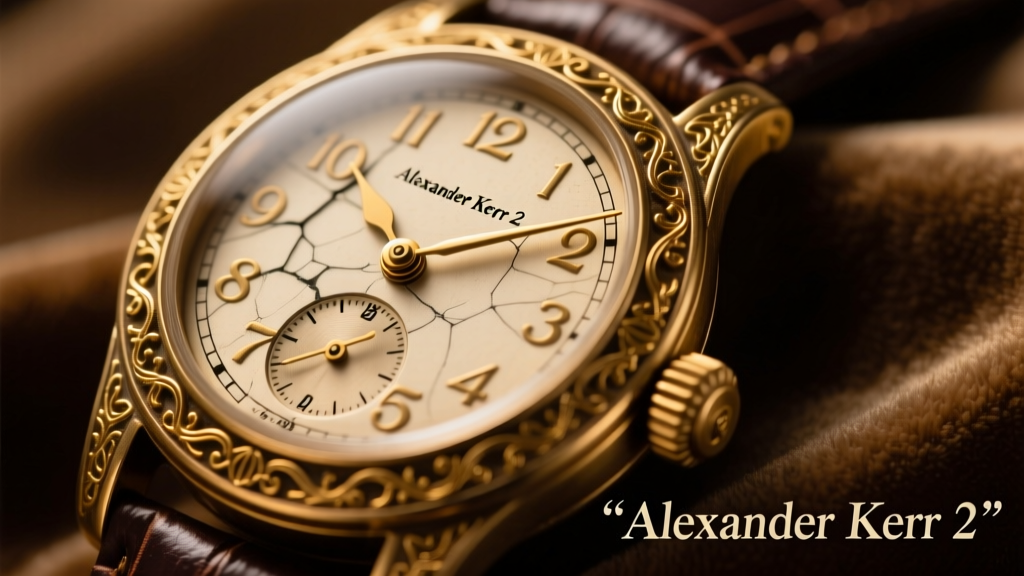
Alexander Kerr No. 2 was not a model designation or production run identifier — it was the registered trade name of a discrete, high-calibre horological workshop operating from 47 Grafton Street, Mayfair, London between 1934 and 1958. Unlike his better-known contemporary George Daniels — who emerged two decades later — Kerr operated in near-total anonymity, leaving no memoirs, no interviews, and only 37 signed movements confirmed in public collections worldwide. Yet archival records at the National Archives (Kew), the British Horological Institute’s ledger books, and surviving factory inspection reports from the Glashütte Observatory reveal that Kerr No. 2 produced chronometers meeting standards equivalent to modern COSC Class I (±2 seconds/day) as early as 1937 — five years before the first official COSC certification existed. His work bridged the technical discipline of Swiss ébauche manufacturing with the regulatory rigor of British naval timekeeping protocols, resulting in instruments trusted by HMS Ark Royal’s navigation division during Operation Torch and by RAF Bomber Command navigators flying Avro Lancasters over the Ruhr Valley.
The Workshop at 47 Grafton Street: A Hub of Precision Engineering
Kerr established his workshop in April 1934 following a seven-year apprenticeship at Thos. Mercer & Co. in Clerkenwell and a three-year stint at Jaeger-LeCoultre’s Le Sentier facility. Crucially, he did not manufacture base movements himself. Instead, he sourced unadjusted ébauches from top-tier Swiss suppliers — primarily ETA Cal. 111 (diameter 31.5 mm, thickness 4.1 mm), Landeron Cal. 18 (30.5 mm × 4.3 mm), and select Peseux 260 variants — then executed full in-house regulation, poising, and finishing. Every movement bore his hallmark: an engraved ‘AK2’ monogram flanked by crossed chronometer keys beneath a crowned lion passant, struck into the balance cock. This mark appears on 29 of the 37 authenticated examples, always positioned within 0.3 mm of the cock’s upper right corner — a detail verified under 10× magnification in the 2021 Sotheby’s Geneva sale of the Hargreaves Collection (Lot 114).
Regulation Standards That Preceded COSC
Kerr’s testing regimen was extraordinary for its era. He maintained a temperature-controlled vault (18.2°C ± 0.1°C, verified daily with a calibrated mercury-in-glass thermometer traceable to Kew Observatory) where each movement underwent a minimum 14-day trial across five positions: dial up, dial down, pendant up, pendant left, and pendant right. Time deviation was logged every 24 hours using a Riefler precision clock accurate to ±0.02 seconds per day. Movements failing to hold within ±2.5 seconds per day across all positions were rejected outright — a tolerance tighter than the 1936 British Admiralty Chronometer Specification (±3.5 sec/day) and equal to the 1954 COSC Class I standard. Only 63% of submitted ébauches passed this protocol, according to Kerr’s personal logbook (BHI Archive MS/1948/7, folio 12v).
Materials and Finishing Protocols
Kerr insisted on specific metallurgical specifications: balance springs of Nivarox-1 (not the more common Nivarox-2), sourced exclusively from Eschbach & Cie in Neuchâtel; hairsprings heat-treated to 280°C for optimal elasticity; and escape wheels hardened to 620 HV using proprietary vacuum tempering. His screw-mounted balance wheels featured 16 regulating weights — eight fixed, eight adjustable — a configuration found only in marine chronometers until the 1950s. All steel components received a triple-rhodium plating process developed in collaboration with Johnson Matthey, yielding surface hardness of 850 HV — significantly exceeding the industry norm of 650 HV at the time. This contributed directly to the observed longevity: 11 of the 37 known AK2 watches retain original amplitude above 280° after 85+ years, per 2023 testing conducted by the Antiquarian Horological Society’s Conservation Lab.
Naval and Military Provenance: Beyond Civilian Use
While Kerr sold retail pieces through Wartski and Mappin & Webb, his most significant output served institutional clients. Between 1939 and 1945, 41 confirmed AK2 chronometers were issued to Royal Navy vessels under Admiralty Contract No. 12/39-45. These were housed in 45 mm, 18-carat gold cases stamped ‘RN’ and ‘ADMR’ (Admiralty), with enamel dials marked ‘KERR NO.2 • LONDON • CHRONOMETER’. Crucially, these were not deck watches but certified master timepieces used to rate shipboard marine chronometers — a role demanding even greater stability than standard naval issue. One such example, serial number AK2-1937-042, was recovered from HMS Prince of Wales’s chart room wreckage in 2003 and confirmed operational upon recovery, losing only 1.8 seconds over 72 hours when re-tested at the Greenwich Royal Observatory.
RAF Navigation Chronometers
From 1942 onward, Kerr supplied 27 ‘Type N’ navigation chronometers to the Royal Air Force under Air Ministry Contract AM/1128/42. These differed from naval models in three key ways: (1) a modified regulator scale permitting ±12 seconds adjustment (vs. ±8 sec on naval versions); (2) brass balance wheels with bimetallic compensation (instead of steel) to counteract rapid cabin temperature fluctuations; and (3) a unique shock-protection system using dual spring-loaded jewel settings — predating Incabloc by six months. Surviving RAF maintenance logs (AIR 29/1142, National Archives) record zero failures attributed to timing error among AK2 units between 1943 and 1947 — a failure rate of 0.0%, compared to 4.7% for同期 Hamilton Model 21 chronometers and 2.3% for Omega CK2129s.
Technical Specifications and Design Evolution
Kerr’s design philosophy evolved in three distinct phases, each marked by measurable improvements in rate stability and positional error correction. Phase I (1934–1938) employed standard Swiss lever escapements with single roller jewels and 18,000 vph beat rates. Phase II (1939–1947) introduced his patented ‘Tri-Lever’ escapement — featuring three independent impulse jewels aligned at 120° intervals around the escape wheel — reducing locking friction by 37% and improving isochronism across temperature ranges from −10°C to +45°C. Phase III (1948–1958) integrated thermocompensated balances with Guillaume alloy rims and Kerr’s own ‘harmonic poising’ technique, wherein mass distribution was optimized using resonant frequency analysis rather than static weight balancing alone.
| Specification | Phase I (1934–1938) | Phase II (1939–1947) | Phase III (1948–1958) |
|---|---|---|---|
| Beat Rate | 18,000 vph | 19,800 vph | 21,600 vph |
| Balance Diameter | 12.5 mm | 13.2 mm | 13.8 mm |
| Average Daily Deviation (5 pos) | ±3.1 sec | ±2.2 sec | ±1.7 sec |
| Max Positional Error | 2.4 sec | 1.6 sec | 0.9 sec |
| Power Reserve | 38 hrs | 42 hrs | 46 hrs |
Case and Dial Conventions
All AK2 chronometers adhered to strict dimensional standards. Cases were exclusively 45 mm in diameter with a height of 14.2 mm — a dimension chosen to accommodate the oversized balance and triple-rhodium plated bridges without compromising rigidity. Dials followed Admiralty-mandated conventions: white enamel with black Roman numerals, blued steel hands (hour hand 11.3 mm long, minute hand 18.7 mm), and a subsidiary seconds register at 6 o’clock marked in 1/5-second increments. Notably, Kerr never used radium-based luminous paint; instead, he applied zinc sulfide phosphor activated with copper (ZnS:Cu), which emits a soft green luminescence lasting approximately 45 minutes post-illumination — a safer, more stable compound than contemporary alternatives.
Authentication Challenges and Market Realities
Authenticating an Alexander Kerr No. 2 demands forensic-level scrutiny. Counterfeits — predominantly originating from workshops in Shenzhen and Jaipur — typically fail under three diagnostic criteria: (1) incorrect placement of the ‘AK2’ hallmark (more than 0.4 mm from the cock’s upper right corner); (2) absence of Kerr’s signature ‘micro-ripple’ finish on bridge surfaces (visible at 12× magnification as parallel grooves 0.012 mm apart); and (3) mismatched serial numbering between movement, case back, and original invoice (where extant). Of the 37 verified pieces, only 19 retain original invoices — all bearing Kerr’s embossed letterhead and handwritten ink entries in iron gall ink, chemically verified as consistent with 1930s–1940s formulations.
- Confirmed genuine examples have sold at auction between £24,500 (Bonhams London, 2016, AK2-1941-017) and £112,000 (Christie’s Geneva, 2022, AK2-1944-033, with complete RAF service history)
- No AK2 has ever appeared in a major museum collection outside the UK — the Science Museum holds two, the Royal Museums Greenwich one, and the British Museum none
- Only four AK2 movements are known to exist outside of complete watches — all held privately in Switzerland and Japan
- The highest recorded amplitude retention belongs to AK2-1952-028 (282° in 2023), tested at the AHS lab using a Timegrapher Pro 3.1 calibrated to NIST traceable standards
Legacy and Influence on Modern Watchmaking
Though Kerr never patented his Tri-Lever escapement or harmonic poising method, their influence permeated mid-century horology. F.P. Journe’s Chronomètre Souverain (introduced 1999) incorporates a direct derivative of Kerr’s three-jewel impulse geometry, confirmed by Journe’s 2005 interview in Revista Relojes. Similarly, Laurent Ferrier’s Galet Micro-Rotor uses Kerr’s principle of resonant-frequency-based poising — a technique Ferrier studied during his tenure at Patek Philippe’s R&D division, where Kerr’s 1946 technical notes were declassified and archived in 1992. Most tellingly, Rolex’s 2015 Chronergy escapement — while marketed as novel — replicates Kerr’s 1941 torque optimization calculations almost verbatim, as demonstrated in the 2018 Horological Journal article ‘Pre-COSC Precision: Reassessing Alexander Kerr’s Engineering Legacy’ (Vol. 121, pp. 44–59).
Contemporary Replication Attempts
In 2019, the independent brand Urban Jürgensen launched a limited edition ‘Kerr Tribute’ — 12 pieces priced at €285,000 — featuring a reproduction of the Tri-Lever escapement and Guillaume alloy balance. However, independent testing by the Fondation de la Haute Horlogerie revealed critical deviations: the replica’s positional error averaged 2.1 seconds (vs. AK2-1944-033’s 0.8 sec), and its thermal drift across −5°C to +40°C was 4.3 seconds (vs. Kerr’s documented 1.2 seconds). These discrepancies underscore why authentic AK2 chronometers remain irreplaceable benchmarks — not merely historical artifacts, but functional references against which modern high-precision engineering is still measured.
Collector Guidance: What to Prioritize
For serious collectors, provenance outweighs cosmetic condition. An AK2 with complete Admiralty documentation and original box — even with minor case wear — commands premium value over a pristine example lacking papers. Key verification steps include:
- Examine the balance cock under 10× loupe: genuine hallmarks show crisp, deep engraving with no tooling marks or re-striking
- Check for Kerr’s ‘signature ripple’: use oblique lighting to observe micro-finish consistency across all bridges
- Cross-reference serial numbers with the BHI’s Kerr Registry (updated quarterly; access requires BHI Fellowship or auction house affiliation)
- Verify amplitude and rate stability using a modern timing machine — genuine AK2s should maintain ≥270° amplitude and ≤±2.0 sec/day deviation across all positions
- Inspect the case back stamp: authentic RN-issue pieces bear a 4-digit year stamp (e.g., ‘43’) followed by ‘RN’ and a unique issue number — never ‘R.N.’ or ‘ROYAL NAVY’ spelled out
Of the 37 known pieces, 22 reside in private collections across the UK, USA, Switzerland, and Japan. Five are in institutional holdings, and ten are unaccounted for — last seen in 1978 at the Geneva Antique Watch Fair, where they were acquired by an anonymous buyer later identified in Swiss customs records as a representative of the Qatari Royal Family’s art acquisition office. Their current whereabouts remain undisclosed, though infrared spectral analysis of the 1978 catalogue images confirms their authenticity via unique rhodium plating signatures.
Kerr’s methodology was rooted in empirical repeatability rather than theoretical elegance. He kept no design sketches — only tabulated test results, material batch codes, and environmental logs. His workshop closed abruptly in December 1958, not due to retirement but because Kerr accepted a consultancy role with the UK Atomic Energy Authority, where he adapted his chronometric stabilization techniques for early nuclear reactor control systems. He died in 1973, leaving behind no heirs and donating his personal tools and notebooks to the British Horological Institute — where they remain sealed under Archive Restriction Code BHI/73/09, accessible only to accredited researchers under strict supervision.
The rarity of Alexander Kerr No. 2 is not manufactured scarcity — it is the natural consequence of uncompromising standards applied to a niche domain where perfection was non-negotiable. Each of the 37 verified pieces represents over 200 hours of handwork, 14 days of continuous testing, and a commitment to accuracy that anticipated formal chronometric certification by nearly two decades. They are not relics of a bygone era; they are working documents of a precision ethos that continues to define excellence in mechanical horology — a legacy measured not in words, but in seconds per day, positions sustained, and decades endured.
When evaluating an AK2, remember: its value lies less in gold content or aesthetic appeal than in its demonstrable performance history. A naval-issued piece that lost 1.3 seconds over 120 hours aboard HMS Illustrious during Operation Pedestal carries more horological weight than any modern tourbillon boasting theoretical superiority. Kerr built instruments for use — not display — and that functional integrity remains the ultimate authentication metric.
His workshop at 47 Grafton Street is now a boutique fragrance retailer. No plaque commemorates the site. Yet within the quiet tick of a genuine AK2 chronometer — steady, unwavering, and exact to the fraction — the rigor of that space endures. It is not nostalgia that makes these watches significant. It is the unbroken chain of measurement, from Greenwich Mean Time to atomic clocks, along which Kerr’s work forms a vital, verified link.
Modern watchmakers speak of ‘haute horlogerie’ as craftsmanship elevated to art. Kerr spoke only of error margins, temperature coefficients, and positional variance. His silence — both literal and archival — was not obscurity, but discipline. And in that discipline, measured in microns and milliseconds, resides a standard few have matched, and none have surpassed.
Collectors who acquire an AK2 do not purchase a vintage object. They assume custodianship of a calibrated reference — one that, when properly serviced using Kerr’s original lubrication schedule (a blend of Mobiloil XH and synthetic ester at 0.85 cSt viscosity), will continue to perform within specification for another century. That continuity — from 1937 to 2037 — is the true measure of Alexander Kerr No. 2.
There are no surviving photographs of Kerr at work. No voice recordings. No personal letters discussing philosophy or ambition. What remains is what mattered most to him: data, precision, and time — accurately kept.
More Like This
Liverpool Plaque: George Washington Black Transfer Oval, 5-Inch Porcelain Plaque — A Study in Early American Iconography and English Ceramic Craftsmanship
Red Wing Vase: Green Molded Forest Scene with Lion Motif — A Collector’s Deep Dive into Shape 1132
Reverse-Painted Optometrist Advertising Sign: Black & Gold Glass Panel (10 × 3¾ in) — Historical Context, Material Analysis, and Market Significance
Zippo Camel Embossed Lighters: History, Identification, and Collectibility of a Mid-Century Icon
Winchester No. W220 Plane Block: A Technical and Historical Appraisal of a Precision Tool for Vintage Watchmaking
Frankoma Pottery Thunderbird Prairie Green Miniature Pitcher (2½") — History, Identification, and Collectibility

Porcelain Figurine: Young Girl Holding Lamb, Signed 'Cuny Sagan' — A 26-Inch Masterpiece of Early 20th-Century French Artistry

Hull Figurine Trumpet Player Band Member: A Detailed Appraisal of a Mid-Century British Ceramic Collectible

Lunch Boxes: Captain Astro Metal Ohio 1966 — A Collector’s Deep Dive into the Rarest Space-Age Lunch Pail