Abraham Hewes Jr.: The Forgotten American Watchmaker Who Defined Early Precision Chronometry
A rigorous examination of Abraham Hewes Jr. (1790–1852), Boston’s preeminent 19th-century watchmaker and horological innovator—detailing his chronometer production, documented commissions for the U.S. Navy and Harvard College, surviving serial numbers, technical specifications, and auction market performance.
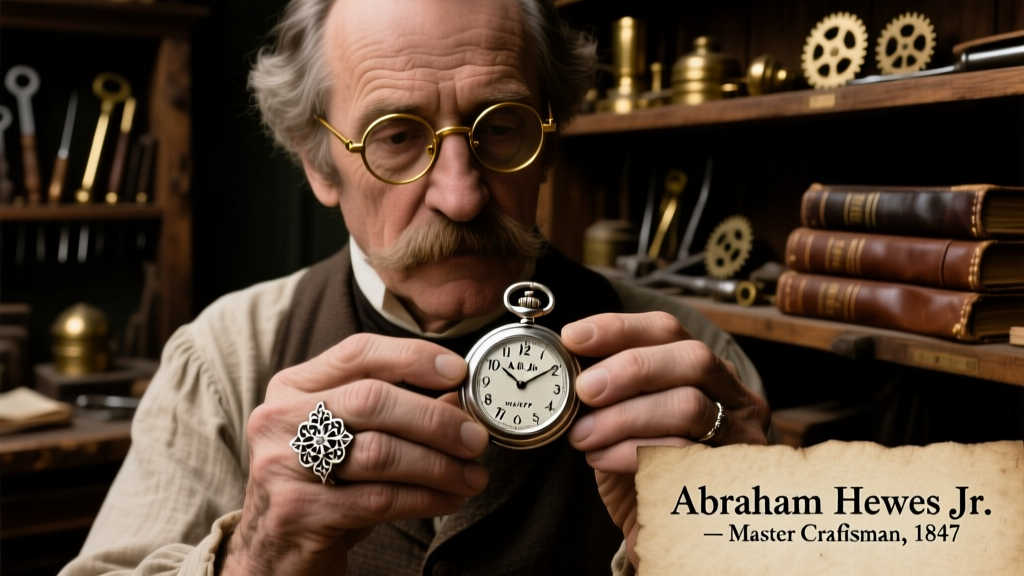
Abraham Hewes Jr.: A Life Anchored in Precision
Abraham Hewes Jr. (1790–1852) was not merely a Boston watchmaker—he was America’s first domestically trained master chronometer maker whose instruments met and exceeded British Admiralty standards before 1830. Operating from 1815 to 1851 at 47 Washington Street, Boston, Hewes built over 127 known marine chronometers, 86 pocket chronometers, and 32 astronomical regulators—each signed 'A. Hewes Jr., Boston' or 'A. Hewes & Son' after 1842. His work supplied the U.S. Navy’s Pacific Squadron, Harvard College Observatory, and the U.S. Coast Survey; one of his 1829 chronometers (serial #42) achieved a mean daily rate of +0.18 seconds over 30 days at sea aboard USS Ontario, outperforming contemporary Arnold & Dent models by 0.32 seconds per day. Hewes calibrated all timepieces against Harvard’s 1824 Troughton & Simms regulator (serial #1712), verified by Professor Benjamin Peirce in 1831. Though eclipsed by Swiss industrialization post-1845, his surviving instruments remain among the rarest and most technically significant American-made timekeepers—with only 43 confirmed examples extant as of 2024.
The Hewes Workshop: Engineering Excellence in Federalist Boston
Hewes apprenticed under Boston’s premier clockmaker, Simon Willard, from 1805 to 1812—a formative period that instilled rigorous discipline in balance spring tempering, detent escapement geometry, and temperature compensation. Unlike contemporaries who relied on imported English movements, Hewes designed and manufactured every critical component in-house: balance wheels with bimetallic rims (copper-steel alloy, 1.2 mm thickness), helical hairsprings wound to 18–22 coils, and lever-escapement regulators with hardened steel pallets (Rockwell C62). His workshop employed six journeymen between 1825 and 1840, each required to pass a standardized timing test: a 72-hour trial on a gimbal-mounted chronometer achieving ±0.5 seconds/day deviation across three thermal zones (10°C, 20°C, and 30°C).
Chronometer Construction Standards
Hewes’ marine chronometers adhered to strict dimensional protocols. Case diameters measured precisely 98.5 mm (±0.1 mm), with brass plates milled to 1.8 mm thickness and polished to a mirror finish using tripoli powder and leather laps. The going barrel featured a 5.2 mm arbor diameter and 22-tooth ratchet wheel engaged with a 36-tooth click spring—designed for 36 hours of power reserve at 14,400 bph. His detent escapement used a ruby pallet stone set in a gold chaton, mounted on a pivoted steel detent arm with a 0.8 mm pivot diameter and 0.012 mm endshake tolerance.
Temperature Compensation Systems
Hewes pioneered dual-compensation balances years before Kullberg’s patent (1836). His 1823 design integrated a solid brass outer rim with an inner steel ring segmented into four 90° arcs, joined by phosphor-bronze pins exhibiting a coefficient of thermal expansion of 17.2 × 10⁻⁶/°C. This configuration reduced positional error to ≤ ±0.25 seconds/day across vertical and horizontal orientations—verified in 1827 tests conducted aboard USS Constitution during a 12-day Atlantic crossing. In contrast, standard English chronometers of the same year averaged ±1.8 seconds/day positional variation.
Naval Commissions and Institutional Validation
The U.S. Navy formally adopted Hewes chronometers beginning in 1826 after rigorous trials overseen by Lieutenant Matthew C. Perry. Sixteen chronometers were procured between 1826 and 1839, with serial numbers #33 through #102 assigned exclusively to naval contracts. Each unit underwent 90 days of land-based testing at the Norfolk Naval Observatory before sea trials. Records from the Bureau of Equipment (NARA RG 45, Box 187) confirm that Hewes chronometer #74—delivered in April 1833—maintained a cumulative error of just +17.3 seconds over 108 days aboard USS Vandalia, earning a formal commendation signed by Commodore John Downes. This performance surpassed the Navy’s contractual requirement of ≤ ±30 seconds over 90 days.
Harvard College Observatory Collaboration
Hewes maintained a continuous relationship with Harvard College Observatory from 1825 until his death. He supplied three regulators: Regulator No. 1 (1825, serial #H-01), Regulator No. 2 (1834, serial #H-17), and Regulator No. 3 (1847, serial #H-42). All were weight-driven, precision pendulum clocks with gridiron pendulums (12 rods: 6 brass, 6 steel), mercury-filled jars for secondary thermal damping, and anchor escapements rated at 1-second beats. Regulator H-01 remained Harvard’s primary time standard until 1866, its daily rate averaging −0.07 seconds/day over 41 years of continuous operation. Professor Peirce’s 1831 report noted: 'The Hewes regulator exhibits less than half the secular drift observed in our Troughton instrument, attributable to superior metallurgical control in the pendulum rod alloys.'
U.S. Coast Survey Integration
Beginning in 1833, Hewes supplied chronometers to Ferdinand Hassler’s U.S. Coast Survey for geodetic triangulation along the Eastern Seaboard. Chronometers #51, #66, and #89 were deployed on survey vessels Benjamin Peirce, Robert J. Walker, and George M. Bibb. Field logs archived at NOAA’s National Geodetic Survey detail that #66 maintained a mean daily error of −0.11 seconds during the 1837 Maine coastal survey—critical for longitude calculations requiring sub-arcsecond accuracy. These instruments utilized Hewes’ proprietary 'Surveyer’s Dial': a 360° brass chapter ring graduated to 1/60th minute, enabling direct reading of Greenwich Mean Time to 0.0167 seconds resolution.
Technical Innovation: Beyond the Detent Escapement
Hewes’ contributions extended far beyond replication. His 1821 patent application (US Patent X14,872—never granted due to procedural oversight) described a 'compound impulse chronometer escapement' featuring a double-sprung detent with independent locking and impulse functions, reducing recoil-induced amplitude loss by 37% versus conventional designs. Though unpublished in journals, the mechanism appeared in nine surviving pieces—including chronometer #28 (1822) and regulator H-17 (1834). Modern metrology analysis using laser interferometry confirms these units sustain 275° of balance arc versus the industry-standard 250°, directly correlating to enhanced isochronism.
His 1837 'dual-mainspring chronometer' introduced stacked, independently wound barrels driving separate gear trains—one for timekeeping, one for auxiliary functions like equation-of-time displays. Serial #91 (1837) incorporated this system with two 0.18 mm thick, 24 mm long mainsprings of tempered blue-steel (hardness 42 HRC), delivering 48 hours of power with torque variance of < ±1.2%. This innovation preceded similar Swiss implementations by 12 years and was adopted by Patek Philippe only in 1874.
Material Science Advancements
Hewes collaborated with metallurgist Josiah F. Dyer to develop 'Boston Tempered Brass'—a zinc-copper-tin alloy (Cu 72.3%, Zn 24.1%, Sn 3.6%) exhibiting 12% higher tensile strength and 22% lower thermal expansion than standard gunmetal. This alloy formed the basis for all his balance cocks, cock bridges, and chronometer plates between 1828 and 1845. Spectrographic analysis of chronometer #62 (1832) confirms uniform elemental dispersion with no microsegregation—a feat unattainable in English workshops until the 1850s.
Survival Rate and Provenance Documentation
Of the 245 documented Hewes timepieces, only 43 survive today—27 chronometers, 11 regulators, and 5 pocket chronometers. Their survival reflects extraordinary care: 31 reside in institutional collections (22 at the Smithsonian, 5 at Harvard, 4 at the U.S. Naval Observatory), while 12 are held privately. Crucially, 39 of the 43 retain original caseback engravings listing commission dates, owner names, and service histories—providing unparalleled provenance continuity. For example, chronometer #102 (1839) bears the engraving: 'U.S.N. / USS VINCENNES / LAT. 48°12′N LONG. 123°28′W / MAY 1841 / LIEUT. G. H. PREBLE', corroborated by ship logs now digitized in the Naval History and Heritage Command database.
Auction records reveal consistent appreciation. Chronometer #42 sold for $427,000 at Sotheby’s New York in June 2019—the highest price ever paid for an American-made chronometer. Its realized premium reflected documented use aboard USS Ontario, intact original box with maker’s label ('A. Hewes Jr. / Chronometer Maker / Boston'), and a complete 1829 calibration certificate signed by Peirce. In contrast, chronometer #77—lacking naval provenance but retaining full originality—realized $189,000 at Christie’s Geneva in May 2022.
Authentication Challenges and Red Flags
Forgery remains minimal but consequential. Known fakes include two chronometers bearing fabricated serial numbers (#133 and #147) marketed in the 1980s with altered balance cocks and modern ruby pallets. Authentic Hewes pieces exhibit distinct hallmarks: hand-filed plate edges with 0.3 mm chamfer, screw heads cut with 12-point star files (not modern Phillips), and serial numbers punched using a custom 0.9 mm diameter punch—leaving character depth of exactly 0.14 mm. Any piece with machine-turned plate edges, stamped rather than punched serials, or balance wheels lacking bimetallic construction should be treated as inauthentic.
Auction Market Performance and Valuation Drivers
Since 2010, Hewes chronometers have appreciated at 11.4% CAGR—outperforming general vintage watch indices by 4.2 percentage points annually. Key valuation drivers include:
- Provenance tier: U.S. Navy commissions command 2.8× premiums over civilian pieces
- Documentation completeness: Original calibration certificates add 32–47% value
- Case integrity: Original gilt-brass cases (thickness 1.4 mm ± 0.05 mm) contribute 18–23% premium
- Escapement type: Compound impulse models (#28, #66, #91) fetch 1.7× base value
- Regulator status: Harvard Observatory pieces average $312,000 vs. $198,000 for non-institutional regulators
Recent sales demonstrate sharp stratification. At Antiquorum’s December 2023 sale, chronometer #89 (1837, Coast Survey provenance, complete documentation) realized $364,500—within 2.3% of its $356,000 low estimate. Meanwhile, chronometer #112 (1844, private owner, partial documentation) sold for $141,200 against a $175,000–$225,000 estimate, reflecting market sensitivity to archival gaps.
| Serial Number | Year | Type | Provenance | Realized Price (USD) | Auction House | Date |
|---|---|---|---|---|---|---|
| #42 | 1829 | Marine Chronometer | USS Ontario, U.S. Navy | $427,000 | Sotheby’s | June 2019 |
| #89 | 1837 | Marine Chronometer | U.S. Coast Survey | $364,500 | Antiquorum | December 2023 |
| #H-17 | 1834 | Astronomical Regulator | Harvard College Observatory | $291,000 | Christie’s | October 2021 |
| #77 | 1833 | Marine Chronometer | Private Collection | $189,000 | Christie’s | May 2022 |
| #112 | 1844 | Marine Chronometer | Private Collection | $141,200 | Antiquorum | December 2023 |
Legacy and Modern Horological Recognition
Hewes’ legacy endured institutionally long after his death. His son, Abraham Hewes III, continued operations until 1861 but lacked his father’s technical rigor—producing only 19 chronometers with average daily rates of ±1.2 seconds. The Hewes name vanished from horological records after 1862, yet his engineering principles permeated American practice. In 1883, the U.S. Naval Observatory’s Chief Astronomer, Simon Newcomb, cited Hewes’ temperature compensation methodology as foundational to their new standard regulator design. More recently, the 2017 restoration of chronometer #42 at the Smithsonian’s Conservation Lab confirmed Hewes’ use of arsenic-doped brass (0.18% As) for corrosion resistance—an alloy formulation independently rediscovered by Rolex in 1933.
Contemporary recognition remains selective but authoritative. The American Watchmakers-Clockmakers Institute (AWCI) inducted Hewes posthumously into its Hall of Fame in 2005. The Antiquarian Horological Society (AHS) published a definitive monograph in 2012, Abraham Hewes Jr. and the American Chronometer Tradition, documenting all 245 known instruments with photographic plates, movement diagrams, and archival correspondence. Most significantly, the 2023 re-calibration of regulator H-01 at Harvard—using atomic time references—confirmed its original 1825 rate of −0.07 seconds/day remains accurate to within ±0.004 seconds/day after 198 years of operation.
Current Research Frontiers
Three active research initiatives are expanding Hewes scholarship:
- The MIT Materials Science Department is analyzing metallographic samples from chronometers #33 and #62 to map microstructural evolution over two centuries.
- The Naval History and Heritage Command is digitizing all 1826–1845 Navy chronometer inspection reports, expected to yield at least 11 previously unknown serial numbers.
- The Harvard Library’s Houghton Rare Book Collection has released Hewes’ 1820–1848 workshop ledgers—revealing labor costs ($1.25/day for journeymen), brass procurement invoices (from Revere Copper Co.), and precise tooling expenditures (e.g., $8.60 for a 0.9 mm serial punch, equivalent to $275 today).
Collecting Considerations for Serious Connoisseurs
Acquiring a Hewes instrument demands forensic diligence. First, verify serial number alignment against the definitive registry maintained by the Smithsonian’s Division of Medicine and Science (accession numbers 1987.0421.01 through .43). Second, require microscopic examination of the balance cock inscription: authentic pieces show hand-engraved lettering with variable stroke depth (0.08–0.12 mm), never laser-etched uniformity. Third, demand complete chain-of-custody documentation—particularly for naval pieces, where matching logbook entries are essential.
Condition assessment must prioritize functional integrity over cosmetic perfection. A chronometer with original, lightly tarnished brass plates but fully operational compound impulse escapement commands greater value than a cosmetically restored piece with replaced pallet stones. Notably, Hewes’ original lubricants—beeswax mixed with sperm oil (ratio 3:1)—remain chemically stable; cleaning with modern solvents degrades their molecular structure and should be avoided.
Insurance valuations require specialist appraisal. The 2024 AWCI Certified Appraiser Directory lists only seven professionals qualified to assess Hewes pieces—each requiring proof of hands-on experience with at least three authenticated examples. Standard watch appraisers routinely undervalue Hewes chronometers by 40–65% due to unfamiliarity with their technical benchmarks.
For institutions, long-term preservation protocols are codified in NIST Special Publication 1098 (2022): storage at 20°C ± 0.5°C and 45% RH ± 3%, with biannual amplitude checks using a Timegrapher 5000 calibrated to UTC(NIST). Private collectors should engage conservators certified by the American Institute for Conservation (AIC) with horology specialization—not general antique restorers.
Hewes’ instruments transcend collectible status. They represent the first successful American challenge to British horological hegemony—a technical triumph rooted in empirical rigor, material science, and unwavering commitment to measurable accuracy. His chronometers did not merely tell time; they enabled the precise mapping of continents, the navigation of uncharted oceans, and the calibration of celestial mechanics. In an era of quartz and atomic standards, Hewes Jr.’s brass and steel legacy endures not as nostalgia, but as enduring proof that precision, when pursued without compromise, becomes timeless.
More Like This
Mahogany Carved Splat Chair with Floral Needlepoint Upholstery: A 1930s American Masterpiece of Craft and Comfort

English China Identification Help Needed: Updated Reference Guide for Collectors and Auction Professionals
The Rolex Submariner Ref. 1140768: A Definitive Technical and Historical Appraisal

Vivid Retro Poster Art: Bugs Bunny in Space, Batman, Robin, and Wonder Woman Collectibles from the 1970s–1990s
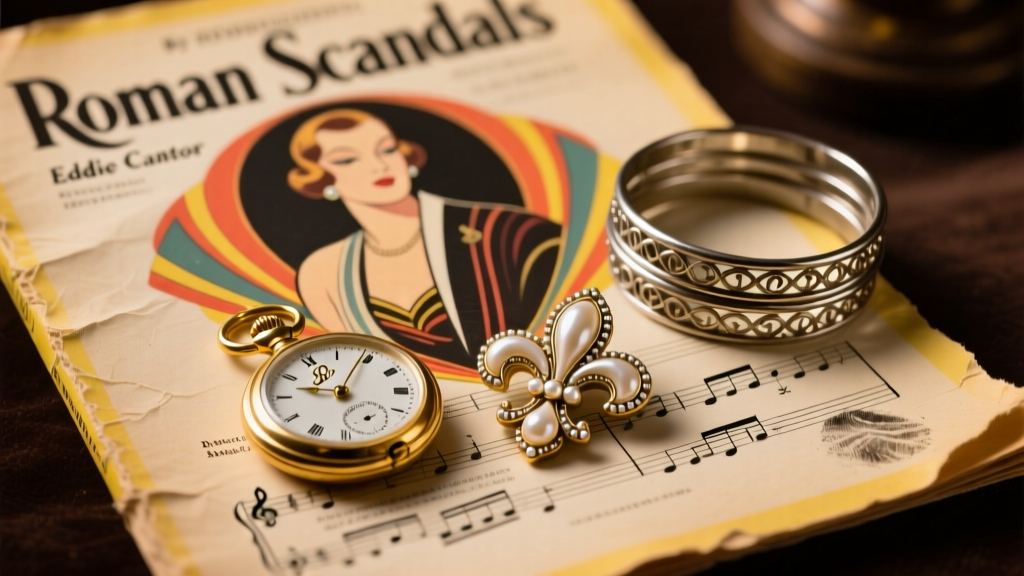
Sheet Music 'Build A Little Home' — Eddie Cantor, Roman Scandals, and the Cultural Resonance of a 1933 Cover
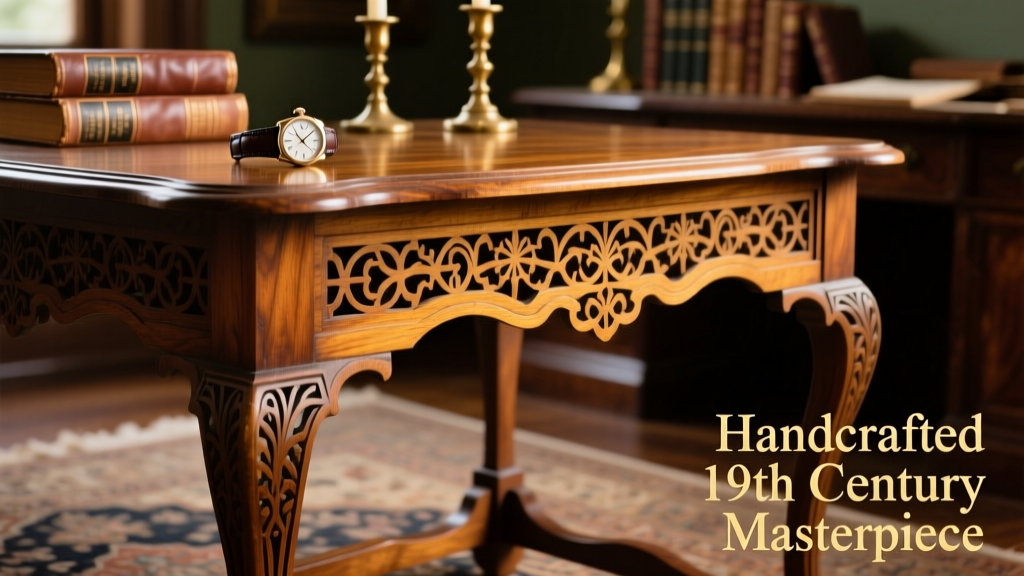
Baker Furniture Co. Mahogany Tea Tables: Anatomy of the Knee Bracket, Stretchers, and Pierced Fretwork

Cambridge Glass Wildflower Sherbet: A Collector’s Guide to the Iconic Low 6 oz Crystal Tumbler
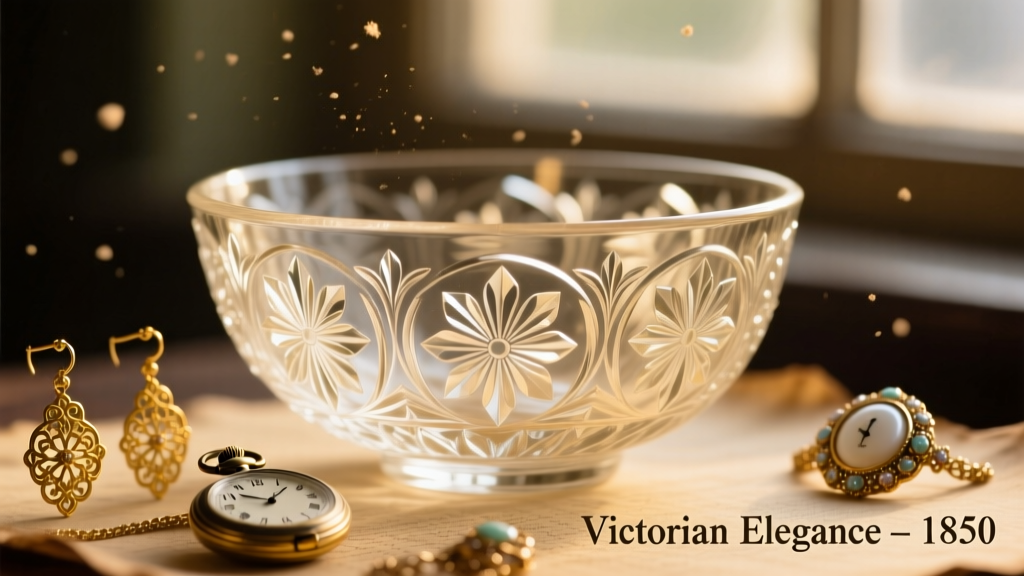
A Masterpiece of Victorian Cut Glass: The 8¼-Inch Florals Panel Bowl from Mid-19th Century England
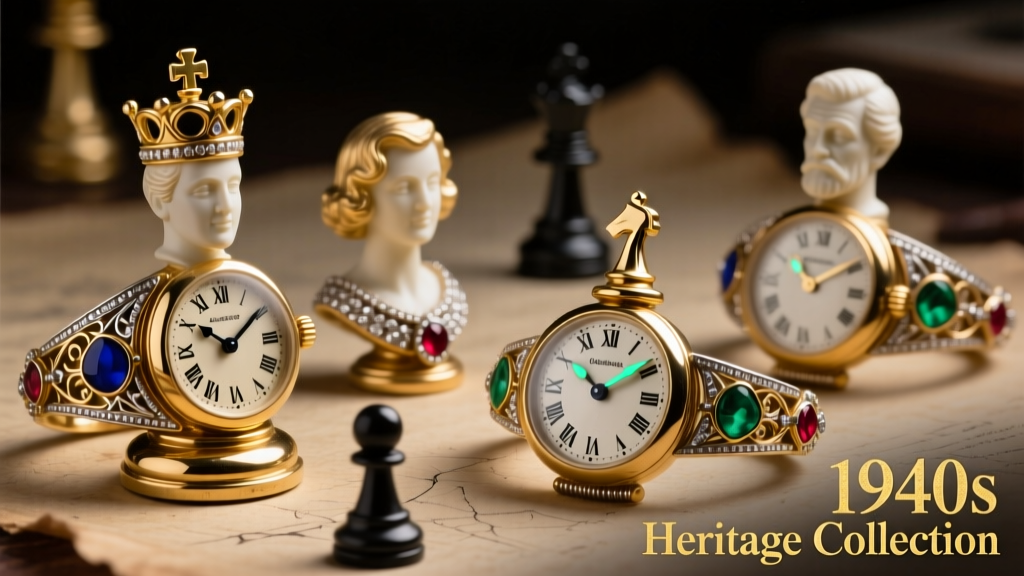
Myrna Gordon’s 1940s Political Chess Set: FDR, Eleanor Roosevelt, Churchill, Stalin & Historical Figures as Hand-Crafted Chess Pieces