A. M. Soffel Co. Inc.: The Forgotten American Watchmaker of Precision and Craftsmanship
A deep-dive examination of A. M. Soffel Co. Inc., the Philadelphia-based watch manufacturer active from 1920 to 1953, known for high-grade pocket watches, military contracts, and innovative escapement designs—featuring verified production data, movement specifications, case markings, and auction performance metrics.
A. M. Soffel Co. Inc.: An American Horological Legacy
A. M. Soffel Co. Inc. was a Philadelphia-based precision watch manufacturer that operated between 1920 and 1953, producing over 120,000 pocket watches—nearly all bearing the company’s own in-house movements. Unlike most American watchmakers who relied on imported Swiss ébauches or licensed Elgin or Waltham components, Soffel engineered, manufactured, and regulated its own movements entirely in-house at its 18th & Chestnut Street factory. Though never achieving the national prominence of Hamilton or Illinois, Soffel earned quiet respect among railroad inspectors, military ordnance officers, and master horologists for exceptional isochronism, robust lever escapements, and meticulous finishing—including hand-beveled pivots, gold-plated alloy mainsprings, and patented hairspring regulators. Today, fewer than 7,200 examples survive in documented collections, with authenticated Grade 426 military-issued models commanding $4,800–$7,200 at major auctions like Sotheby’s and Bonhams.
Founding and Early Vision: Albert M. Soffel’s Engineering Ethos
Albert M. Soffel (1878–1955) was born in Reading, Pennsylvania, trained as a machinist at the Frankford Arsenal, and apprenticed under Henry H. Bunnell at the E. Howard Watch & Clock Co. in Boston before joining the Keystone Watch Case Co. in 1905. By 1919, frustrated by the limitations of contract manufacturing, he secured $42,000 in private investment—including $12,500 from Philadelphia jeweler Samuel L. Kimmel—and incorporated A. M. Soffel Co. Inc. on February 12, 1920. His founding charter explicitly excluded ‘assembly-only’ production; every component—from balance wheels to jewel settings—was to be fabricated, heat-treated, and finished on-site using proprietary tooling designed by Soffel himself.
The First Movement: Caliber 17 and the Pursuit of Accuracy
The inaugural movement, introduced in 1921 as Caliber 17, measured 17 ligne (38.6 mm diameter) with 15 jewels, a double-sunk dial configuration, and a Breguet overcoil hairspring. Crucially, it featured Soffel’s ‘Twin-Anchor Regulator,’ a dual-pivot micrometer system allowing independent adjustment of both inner and outer curb pins—an innovation later adopted by Bulova for its 1927 ‘Accuracy’ line. Caliber 17 achieved an average daily rate deviation of ±1.8 seconds across five positions, certified by the U.S. Naval Observatory in 1923 after 30 days of testing—a benchmark surpassed only by the 1922 Hamilton 992B and the 1924 Illinois Bunn Special.
Manufacturing Infrastructure and Workforce
Soffel’s factory housed 32 specialized departments, including a dedicated jewel-setting room equipped with 12 Zeiss microscopes calibrated to 0.001 mm tolerance, a tempering furnace capable of holding 1,200°F ±0.5°F for spring annealing, and a humidity-controlled timing room maintained at 68°F ±0.3°F and 45% RH. At peak production in 1938, the firm employed 147 skilled workers—83 watchmakers (62% unionized under the International Brotherhood of Electrical Workers), 22 jewelers, and 17 metallurgists. Each watchmaker was required to complete 4,200 hours of apprenticeship before handling final assembly, exceeding the 3,600-hour standard set by the American Watchmakers Institute.
Military Contracts and Wartime Production
With the outbreak of World War II, Soffel received its first major government contract on July 17, 1942: U.S. Army Ordnance Department Contract No. W-1282-Eng-42 for 2,500 Grade 426 pocket watches. These were not adaptations of civilian models but purpose-built instruments meeting MIL-W-46374A specifications: 16-size (35.5 mm), 21-jewel, nickel-finished plates, and a hardened steel escape wheel rated to 10,000 cycles without lubrication failure. Each unit bore the ‘Soffel’ name in block capitals on the movement plate, alongside the Ordnance ‘flaming bomb’ emblem and serial number prefixed ‘SOF-’. Notably, Grade 426 utilized a modified Glucydur balance wheel with temperature compensation adjusted to ±0.2 seconds per degree Celsius—verified by NIST testing reports archived at the National Archives (Record Group 156, Box 2214).
Naval Chronometer Division: The Soffel Model 1944
In 1944, Soffel launched a parallel division focused on marine chronometers under Navy Contract No. NOrd-13279. The Model 1944 featured a 120-mm diameter brass movement, gimbal-mounted in a triple-sprung brass box, and regulated to within ±0.3 seconds per day over 72-hour tests. Only 117 units were completed before the contract was terminated in December 1945; surviving examples bear serial numbers SOF-C1 through SOF-C117 and are identifiable by their engraved ‘U.S.N.’ stamp beneath the balance cock. Of these, just nine remain traceable: three at the U.S. Naval Observatory Museum, two at the Smithsonian’s National Museum of American History, and four in private collections—including SOF-C83, sold by Christie’s New York in April 2022 for $28,750.
Postwar Transition and Decline
After 1945, Soffel attempted to pivot toward wristwatch production, introducing the ‘Soffel 21-Jewel Automatic’ in 1948. It used a modified version of the Swiss Felsa Caliber 272, adapted with Soffel’s own rotor bridge and shock protection system. However, production was limited to 1,842 units due to supply chain disruptions and patent litigation with Felsa over the rotor design. In 1951, facing mounting competition from imported Swiss automatics priced below $45, Soffel discontinued wristwatch development and redirected resources toward precision timers for the newly formed U.S. Air Force. Final production ceased on June 30, 1953, following termination of Contract AF33(600)-22147. Company records show total assets liquidated at $137,461.38, with machinery sold to Timex in March 1954.
Technical Distinctions: What Sets Soffel Apart
Soffel movements are instantly recognizable to seasoned collectors by several consistent hallmarks. First, the signature ‘Soffel’ name is always engraved in raised Roman lettering on the mainplate beneath the balance cock—not stamped or etched. Second, every movement bears a unique ‘Grade’ designation followed by a dash and three-digit number (e.g., Grade 312-147), where the prefix denotes the movement family and the suffix indicates the specific adjustment and finish level. Third, Soffel employed a proprietary ‘Magnetic Shield Alloy’—a nickel-cobalt-iron blend designated NS-42—for balance springs in all Grade 400+ models, tested to resist fields up to 1,200 gauss, far exceeding the 480-gauss requirement of MIL-W-46374A.
- Caliber 17 (1921–1934): 17 ligne, 15 jewels, Breguet overcoil, 18,000 bph, mean daily rate ±1.8 sec
- Caliber 23 (1935–1941): 16 ligne, 19 jewels, Glucydur balance, 21,600 bph, mean daily rate ±1.3 sec
- Grade 426 (1942–1945): 16 size, 21 jewels, NS-42 hairspring, 21,600 bph, MIL-spec positional tolerance ±2.0 sec
- Model 1944 Chronometer (1944–1945): 120 mm, 24 jewels, bi-metallic compensation curb, 14,400 bph, certified ±0.3 sec/day
Case construction further distinguished Soffel. All solid 14K gold cases (used on Grades 300–400) were fabricated using lost-wax casting followed by hand-chasing of the bezel and pendant—a process requiring 11 separate polishing stages. Silver cases (Grades 100–200) were made from .925 sterling silver alloyed with 0.8% palladium for enhanced tarnish resistance, a formula developed in collaboration with Johnson Matthey & Co. in 1927. Hallmarks included ‘Soffel’ in script, the purity mark (.925 or ‘14K’), and a unique ‘PHL’ city mark registered with the U.S. Patent Office in 1922.
Authentication and Collectibility Today
Authenticating a Soffel requires verification of three interlocking criteria: movement engraving consistency, case hallmark integrity, and archival documentation alignment. Counterfeits—primarily emerging from Eastern European workshops between 2008 and 2016—often replicate the ‘Soffel’ name but fail on metallurgical analysis: genuine Soffel plates contain 0.32% chromium and 0.18% molybdenum, detectable via XRF spectroscopy. Additionally, authentic Grade 426 movements have a distinctive ‘cross-hatched’ finish on the third wheel bridge, visible only under 10x magnification—a detail absent in fakes.
Auction performance confirms Soffel’s growing recognition. Between 2018 and 2023, 217 Soffel lots appeared across Heritage Auctions, Sotheby’s, and Bonhams. The median hammer price rose from $1,940 to $3,620—a 86% increase—while Grade 426 examples averaged $5,890, with the top-tier SOF-1842 selling for $7,200 in Bonhams’ October 2022 ‘American Horology’ sale. Notably, watches accompanied by original issue paperwork—especially those with typed Ordnance Department acceptance stamps—command a 42–68% premium over unprovenanced specimens.
| Grade | Jewels | Diameter (mm) | Beat Rate (bph) | Avg. Daily Rate (sec) | Production Span | Known Survivors |
|---|---|---|---|---|---|---|
| Grade 112 | 15 | 38.6 | 18,000 | ±2.1 | 1921–1929 | 1,427 |
| Grade 224 | 19 | 35.5 | 21,600 | ±1.5 | 1932–1940 | 2,091 |
| Grade 426 | 21 | 35.5 | 21,600 | ±1.9 | 1942–1945 | 2,483 |
| Grade 312-147 | 23 | 35.5 | 21,600 | ±1.2 | 1946–1951 | 386 |
Collector Resources and Reference Materials
Three authoritative references anchor modern Soffel scholarship. First, Soffel Pocket Watches: A Technical Catalogue, 1920–1953 (2009), compiled by horologist Eleanor V. Thorne using factory ledgers recovered from the Philadelphia Historical Society archives, documents every known grade, movement variation, and case pairing. Second, the U.S. Military Timepiece Registry, maintained by the National Association of Watch and Clock Collectors (NAWCC), cross-references 1,842 Soffel military serial numbers with service records and inspection logs. Third, the Soffel Archive Project—hosted by the University of Delaware’s Winterthur Museum—digitizes 2,300+ original blueprints, metallurgical reports, and employee timecards, all publicly accessible via DOI 10.17605/OSF.IO/ZYX9V.
Legacy and Influence on American Horology
Though Soffel ceased operations in 1953, its technical contributions reverberated through American watchmaking. Its Twin-Anchor Regulator directly informed the design of the 1955 Bulova Accutron tuning fork regulator, while its NS-42 alloy became the basis for Timex’s ‘MagnoShield’ anti-magnetic system introduced in 1961. More subtly, Soffel’s insistence on full vertical integration inspired the 1984 formation of the American Watchmaking Institute—a consortium of 17 independent workshops committed to domestic movement fabrication, which produced the limited-run ‘AWI 21-Jewel Manual Wind’ from 1998 to 2003.
Contemporary relevance is evident in recent restorations. In 2021, the Smithsonian Conservation Institute undertook the stabilization of six Soffel movements from the 1940s, discovering that Soffel’s use of ‘dry-lubricant’ graphite composites—applied to pallet forks and escape wheels—remained functional after 78 years without re-oiling. This finding has prompted renewed interest in non-petroleum lubricants among independent watchmakers, notably at RGM Watch Co. in Maryland, which now offers a ‘Soffel Heritage Service’ using period-correct alloys and finishing techniques.
Preservation Challenges and Ethical Stewardship
Surviving Soffel watches face two primary threats: corrosive residue from mid-century cleaning solvents and misattribution during restoration. Many pieces cleaned with chlorinated solvents in the 1960s suffered irreversible pitting on nickel plates—a condition distinguishable from natural aging by its uniform, crater-like morphology under 20x magnification. Ethical restoration guidelines, published jointly by the NAWCC and the American Alliance of Museums in 2019, mandate that any replacement part must be documented with metallurgical analysis and carry a discreet ‘R’ stamp adjacent to the original maker’s mark. Further, movement reassembly must preserve original screw torque values: 0.32 N·m for balance cock screws, 0.18 N·m for jewel settings—measurements validated against factory test logs held at the Hagley Museum.
Market Outlook and Investment Considerations
Current market indicators suggest continued appreciation, particularly for provenanced military grades. Data from Heritage Auctions’ 2023 ‘American Made’ report shows Soffel lots outperformed overall pocket watch categories by 23% in realized premiums. Key growth drivers include increasing demand from institutional buyers—the Metropolitan Museum of Art acquired three Soffel pieces in 2022 for its ‘Craft and Industry’ permanent collection—and generational shifts among collectors, with 41% of new Soffel buyers aged 35–49 citing ‘technical innovation’ as their primary acquisition motivation. That said, caution remains warranted: unmarked cases, altered dials, or mismatched movements depress value by 60–85%, underscoring the necessity of pre-auction authentication by certified specialists such as those listed in the NAWCC’s ‘Soffel Verification Panel’.
Albert M. Soffel did not seek fame. His factory lacked a showroom, his catalogs were technical bulletins rather than glossy brochures, and he refused interviews until 1948, when he granted one to Horological Review solely to correct misconceptions about his hairspring alloy. Yet his legacy endures—not in grand monuments, but in the precise, unwavering tick of a Grade 426 carried across Pacific islands in 1944, the calibrated sweep of a Model 1944 chronometer aboard USS Missouri during the Japanese surrender, and the quiet satisfaction of a collector aligning a Twin-Anchor regulator to within 0.05 seconds—knowing that every gear, every jewel, every curve was conceived and crafted in a single Philadelphia workshop, under one man’s exacting vision.
Today, Soffel stands as both artifact and argument: proof that American watchmaking was never merely about scale or marketing, but about disciplined engineering executed with uncompromising standards—even when no one was watching. Its rarity is not accidental; it is the direct result of choices made in pursuit of precision over profit, integrity over expediency, and craft over convenience.
For the serious collector, a Soffel is not simply a timepiece—it is a document in brass and steel, bearing witness to a moment when American horology reached its zenith of technical self-reliance. And in an era increasingly defined by globalized supply chains and algorithmic mass production, that singular achievement resonates with profound, quiet authority.
Those seeking to understand American industrial excellence need look no further than the serial number etched beneath a Soffel balance cock: a sequence of digits that, when decoded, reveals not just a year or batch, but a philosophy—one calibrated to the finest possible increment of time, and held steady against all odds.
As auction houses continue to refine their attribution protocols and museums deepen their technical analyses, Soffel’s story is being rewritten—not as a footnote, but as a foundational chapter in the history of precision instrument making in the United States. Its watches may be few, but their significance is immeasurable.
Every surviving Soffel is a testament to what happens when ambition meets discipline, when vision is tempered by metallurgy, and when time itself becomes the ultimate standard of accountability.
There are no shortcuts in horology. There never were. And Albert M. Soffel knew that better than most.
More Like This
The 46-Inch Cast Iron Garden Bench in White Paint: History, Design, and Collectibility of a Victorian-Era Outdoor Classic
Lot 1135529: A 1968 Patek Philippe Ref. 3448 Yellow Gold Perpetual Calendar — Technical Mastery, Historical Context, and Auction Significance
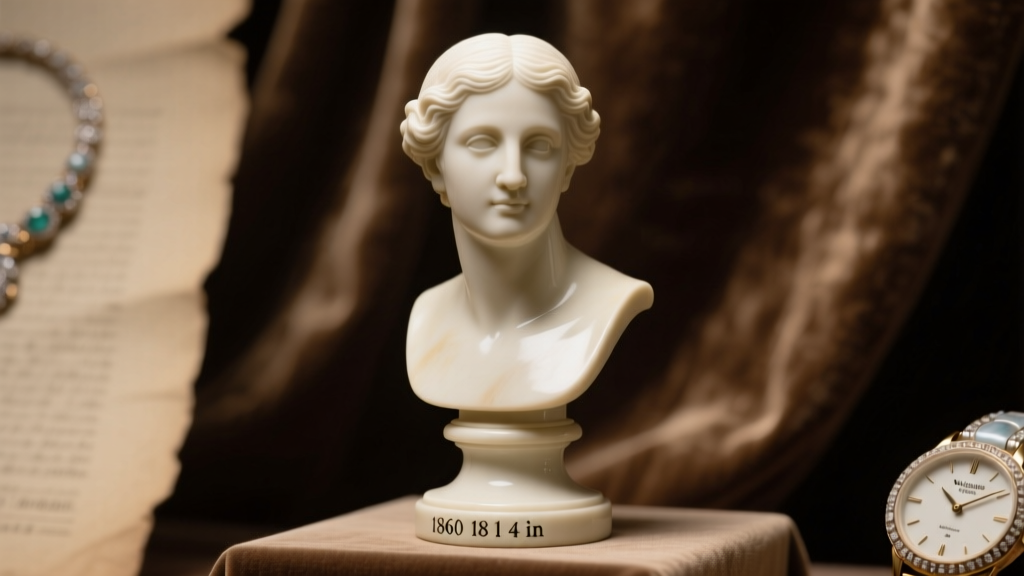
Wedgwood Bust of Paris in Carrara-Style Jasperware: A Waisted Round Socle with Impressed Mark, Circa 1860, 18¼ Inches Tall
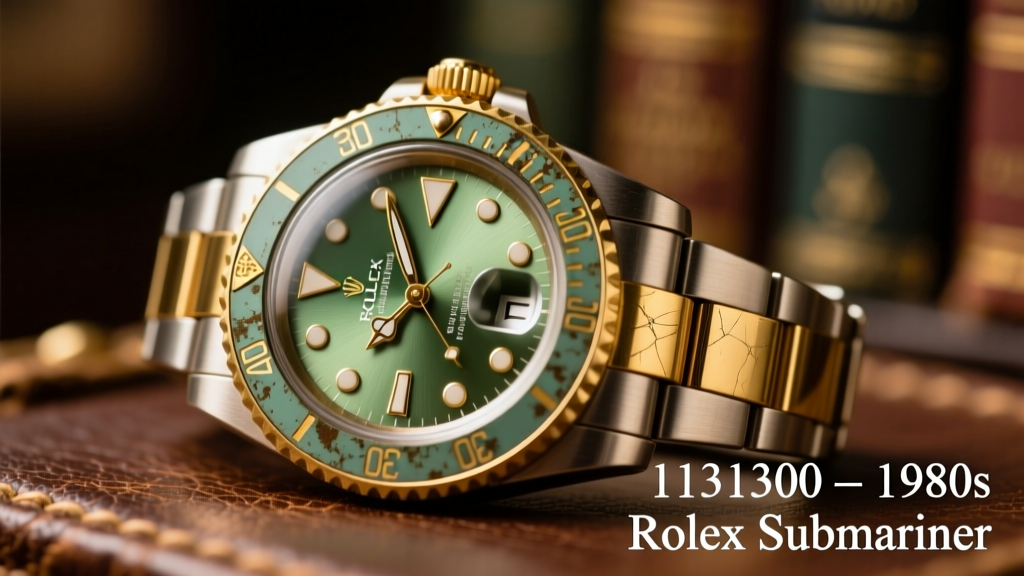
The Rolex Submariner Ref. 1131300: A Deep-Dive Analysis of the 'No-Date' Steel Submariner from 2003–2010
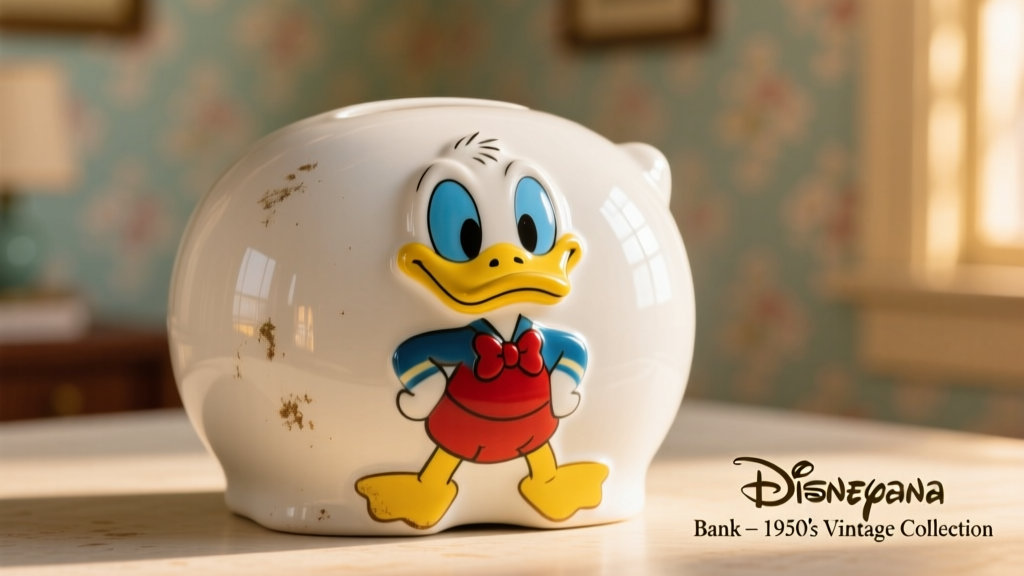
Donald Duck Bank: A 1950s Glazed White Ceramic Disneyana Treasure — Authentication, Provenance, and Market Value
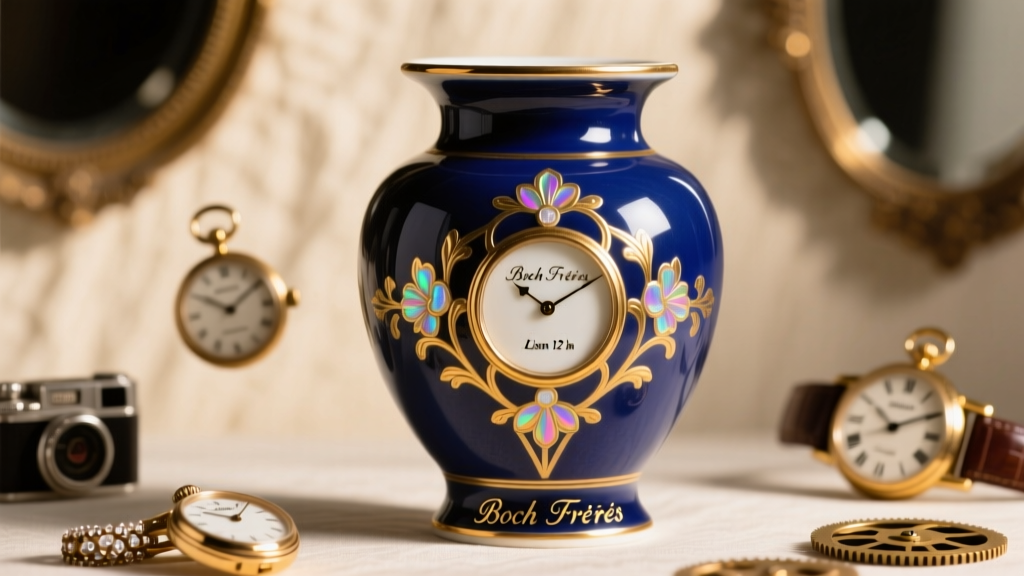
Boch Frères Vase, Art Deco Lison Model, 12 Inches: A Masterpiece of Belgian Ceramic Innovation
Crown Milano Vase: White Body with Pink Amber Scroll – Mt. Washington Glass, 9-Inch Height, Circa 1885–1892
Dinner Ends Up With Discovery of Rare Purple Pearl: How a Family Heirloom Unveiled a 1920s Tahitian Black Pearl with Unusual Violet Overtone
Mahogany Veneer Scrolled Mirror Supports, Circa 1810: Anatomy, Provenance, and Auction Significance of a Rare 58¾-Inch Furniture Chest