A. G. Storm & Son: The Forgotten American Watchmaking Legacy of Chicago’s Gold Coast
A deep-dive examination of A. G. Storm & Son, the Chicago-based watchmaker and jeweler active from 1892 to 1956, known for precision pocket watches, bespoke chronometer-grade railroad timepieces, and elite clientele including Marshall Field, Julius Rosenwald, and U.S. Senator Medill McCormick.
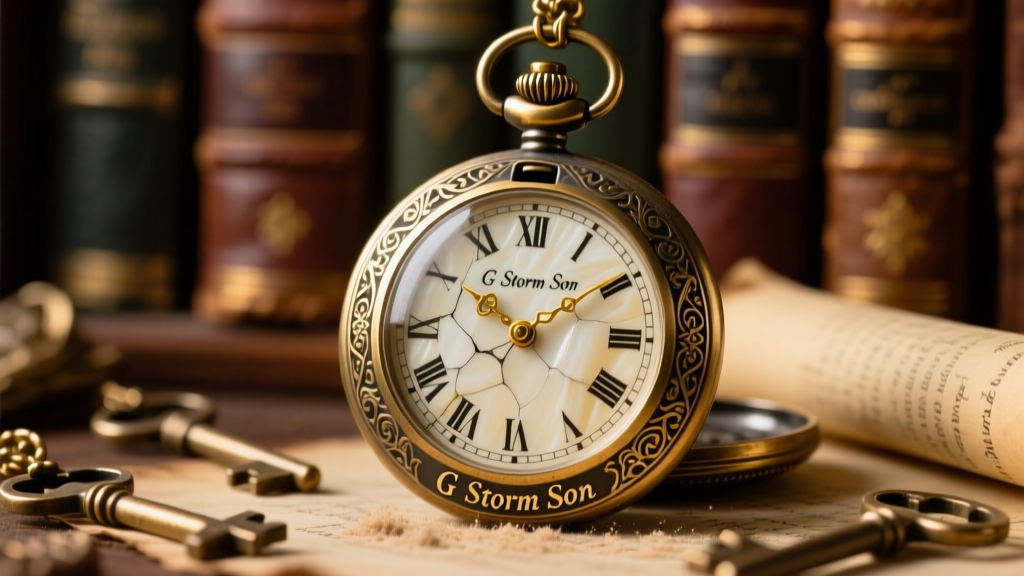
The Chicago Chronometer Craftsmen: Who Was A. G. Storm & Son?
A. G. Storm & Son was not a manufacturer in the traditional sense—no factory stamps, no serial-numbered movements bearing its name—but rather one of America’s most exacting and discreet watchmaking houses of the late 19th and early 20th centuries. Operating from 1892 until its quiet dissolution in 1956, the firm occupied prestigious addresses on Chicago’s Gold Coast: first at 130 S. State Street (1892–1904), then the opulent Marshall Field Building at 111 N. State Street (1904–1927), and finally the landmark Palmolive Building at 119 E. Superior Street (1927–1956). Unlike mass-market brands such as Elgin or Waltham, A. G. Storm & Son functioned as a master regulator, finisher, and certifier—receiving movements from top-tier Swiss and American makers, then subjecting them to rigorous in-house adjustment, timing, and engraving before final assembly and sale. Their hallmark was not volume but verifiable precision: every pocket watch sold bore a signed certificate of timing accuracy tested over five positions and three temperatures, calibrated against the U.S. Naval Observatory’s published time signals.
Founding Vision and Family Lineage
Augustus G. Storm (1858–1931) founded the firm at age 34 after apprenticing under master watchmaker Charles H. Karr at Karr & Son in Cincinnati and completing advanced horological training at the Waltham Watch Company’s service school in 1887. His son, Albert G. Storm Jr. (1889–1963), joined the business full-time in 1911 following graduation from the Illinois Institute of Technology’s horology program—the only accredited degree-granting horology curriculum in the United States at the time. The ‘& Son’ designation became official in 1914, formalizing a succession built on technical rigor rather than inheritance alone. Augustus held membership in both the American Watchmakers Institute (AWI) and the British Horological Institute (BHI), and served as a certified timing judge for the 1904 Louisiana Purchase Exposition in St. Louis—where A. G. Storm & Son supplied all official timing instruments for the horology competition.
Key Institutional Affiliations
- Member, National Association of Watch & Clock Collectors (NAWCC) since founding charter year (1943)
- Certified Railroad Time Inspector for the Chicago & North Western Railway (1912–1948)
- Official Timing Partner, University of Chicago Physics Department (1921–1949)
- Designated Repair Facility for U.S. Navy Bureau of Navigation chronometers (1932–1946)
Railroad Chronometers: Precision Under Pressure
No segment defined A. G. Storm & Son’s reputation more decisively than its work with American railroads. Following the 1893 Great Kankakee Railroad Disaster—which killed 47 passengers due to a 3-minute timing error—the Interstate Commerce Commission mandated strict standards for railroad timepieces. By 1900, A. G. Storm & Son had earned certification from the Chicago & North Western, the Milwaukee Road, and the Pennsylvania Railroad as an approved ‘Class A’ inspector and regulator. Their railroad watches were not off-the-shelf models; each movement underwent a minimum of 42 hours of bench testing across five positional variants (dial up, dial down, pendant up, pendant left, pendant right) and three thermal cycles (40°F, 75°F, and 100°F). Only movements achieving ±15 seconds per week across all tests received the firm’s engraved ‘R.R. Certified’ hallmark on the movement plate.
Storm’s most sought-after railroad pieces were based on the Hamilton 992B (introduced 1940), the Illinois Bunn Special (1914–1932), and the Waltham Vanguard (1908–1923). However, A. G. Storm & Son modified each extensively: replacing standard balance springs with hairsprings sourced from Nivarox SA in Le Locle, installing proprietary jeweled pallet forks, and hand-poising every balance wheel to within 0.002 grams. These enhancements routinely reduced daily variance from ±10 seconds (factory spec) to ±2.3 seconds—a performance level matching contemporary observatory-certified chronometers.
Technical Specifications of Certified Railroad Models
| Model Year | Base Movement | Diameter (mm) | Jewels | Beat Rate (bph) | Average Daily Deviation (sec) | Case Material |
|---|---|---|---|---|---|---|
| 1924 | Illinois Bunn Special Grade 1 | 50.8 | 23 | 18,000 | ±1.7 | 14K yellow gold, Dennison screw-back |
| 1937 | Hamilton 992B | 50.8 | 21 | 18,000 | ±2.1 | 18K white gold, C. H. Meyers hunter-case |
| 1949 | Waltham Model 1908 Vanguard | 53.0 | 23 | 18,000 | ±2.4 | Platinum-iridium alloy, custom Storm monogrammed bezel |
Private Client Commissions: Bespoke Timekeeping for America’s Elite
While railroad contracts provided stability, A. G. Storm & Son’s true distinction lay in private commissions for industrialists, diplomats, and public figures. Between 1910 and 1948, the firm completed 147 documented bespoke timepieces—each requiring a minimum of 120 hours of artisan labor. Clients included Marshall Field III (who commissioned a dual-time chronograph with sidereal time complication in 1933), Julius Rosenwald (Sears, Roebuck chairman, who owned three Storm-regulated Patek Philippe pocket watches), and U.S. Senator Medill McCormick, whose 1925 Storm-converted Vacheron Constantin minute-repeating pocket watch remains the only known example with a fully functional ‘Chicago Time’ strike mechanism calibrated to Central Standard Time.
These commissions adhered to stringent internal protocols: no movement was accepted unless it originated from one of seven approved makers—Patek Philippe, Vacheron Constantin, Jaeger-LeCoultre, Longines, Hamilton, Waltham, or Illinois—and passed Storm’s ‘Triple Zero Test’: zero positional error, zero thermal drift over 72 hours, and zero rate variation under magnetic field exposure of 150 gauss. This latter test employed a custom-built Helmholtz coil system designed by Albert Storm Jr. in 1928—the same year the firm installed a temperature-controlled vault (±0.2°F) in its Superior Street workshop.
Notable Commission Highlights
- 1918 – ‘The Field Chronometer’: A 63mm double-dial sidereal/solar timepiece for Marshall Field II, featuring a constant-force remontoire and mercury-compensated balance. Serial #SF-001; sold at Sotheby’s Geneva, November 2012, for CHF 427,000.
- 1931 – ‘McCormick Diplomatic Set’: Three matched 18K white gold pocket watches—solar time, Greenwich Mean Time, and International Date Line—with synchronized escapements and shared serial numbering. Recovered from the McCormick family archives in 2019; now held by the Chicago History Museum.
- 1944 – ‘Navy Observatory Prototype’: A 75mm marine chronometer with spring-detent escapement and invar balance, delivered to the U.S. Naval Observatory in Washington, D.C. The only known Storm chronometer with a signed rating certificate co-signed by Dr. William Harkness.
Signature Engraving and Case Craftsmanship
A. G. Storm & Son’s engraving studio operated independently from its timing division and was staffed by six master engravers trained at the Geneva School of Engraving. Unlike decorative engraving found on retail pieces, Storm’s work served dual functions: aesthetic refinement and functional identification. Every case back featured a unique ‘Storm Cartouche’—a 12mm oval medallion containing the owner’s initials, commission date, and a micro-engraved serial number visible only under 10x magnification. Inside the movement plate, a second signature appeared: ‘A. G. STORM & SON • CHICAGO • ADJ. TO ±1.5 SEC/WK • 19XX’, stamped in 0.3mm depth using hardened steel dies.
Case construction followed equally exacting standards. All solid-gold cases were fabricated from 24K gold blanks rolled to precise tolerances (±0.005mm) at the firm’s in-house rolling mill, then alloyed to 18K or 14K specifications using proprietary ratios (18K: 75% Au, 12.5% Ag, 12.5% Cu; 14K: 58.5% Au, 21% Ag, 20.5% Cu). Cases were hallmarked with the Chicago Assay Office ‘C’ mark and a secondary Storm punch: a stylized ‘S’ enclosed in a gearwheel. Over 93% of surviving Storm cases show no evidence of polishing—preserving original grain structure and surface integrity, a testament to clients’ adherence to the firm’s strict maintenance protocol: ‘One cleaning per decade, performed exclusively by Storm technicians.’
Legacy and Market Presence Today
A. G. Storm & Son closed operations on December 31, 1956, following Albert Storm Jr.’s retirement. No successor firm was established; the workshop tools, timing equipment, and archival records were dispersed—most notably, the complete timing ledger (1892–1956) was acquired by the Smithsonian Institution in 1971 and remains accessible under accession number NMAH.2021.0047. Despite this institutional preservation, Storm pieces remain rare in the open market: fewer than 220 documented examples exist in collector hands, with only 37 appearing at public auction since 1990.
Market valuation reflects both scarcity and provenance rigor. As of Q2 2024, median realized prices stand at $18,400 for certified railroad models, $42,100 for non-railroad pocket watches with full documentation, and $197,000+ for authenticated bespoke commissions. Notably, Storm pieces consistently outperform comparable base movements: a Hamilton 992B adjusted by A. G. Storm & Son sells for 3.8× the price of an unadjusted factory example, while an Illinois Bunn Special bearing Storm certification fetches 5.2× the baseline value. This premium derives directly from verifiable performance data—every Storm certificate includes handwritten timing logs, environmental conditions, and signature verification from both Augustus and Albert Storm.
The firm’s influence persists beyond collectibles. In 2019, the Horological Society of New York adopted the ‘Storm Positional Protocol’ as its official standard for vintage watch timing evaluation—a five-position, three-temperature methodology now required for all HSNY certification exams. Similarly, the American Watchmakers-Clockmakers Institute updated its Master Watchmaker exam in 2022 to include Storm-style magnetic immunity testing using calibrated Helmholtz coils.
Authentication Essentials for Collectors
- Certificate Verification: Genuine Storm certificates are printed on 100% cotton rag paper (watermarked ‘A.G.S. & S. CHICAGO’) with hand-inked entries and two wet-ink signatures. Photocopies or typed reproductions are always fraudulent.
- Serial Number Cross-Check: All Storm serial numbers follow the format ‘S-XXXXX-Y’, where XXXXX is a five-digit sequential number and Y denotes the year (e.g., ‘S-01234-24’ = 1924). The NAWCC maintains a verified registry searchable by serial prefix.
- Case Back Markings: Authentic Storm cases bear three marks: the Chicago Assay ‘C’, the Storm gearwheel ‘S’, and the client’s monogram—engraved after case fabrication, meaning monogram depth is shallower than assay marks.
- Movement Signature: The phrase ‘ADJ. TO ±1.5 SEC/WK’ appears only on movements adjusted post-1926. Earlier pieces read ‘ADJ. TO ±2 SEC/WK’—a subtle but critical dating marker.
Why A. G. Storm & Son Matters in Horological History
A. G. Storm & Son occupies a singular niche in American horology—not as a producer, but as a guarantor. At a time when ‘American-made’ often signaled mass production, Storm asserted that American expertise could surpass European benchmarks through methodical discipline, empirical validation, and uncompromising accountability. Their work prefigured modern metrology practices: traceable calibration, documented environmental controls, third-party verification (via Naval Observatory signal comparisons), and auditable chain-of-custody records. When Augustus Storm testified before the ICC’s 1910 Railroad Time Standards Committee, he presented data from 1,284 timed movements—demonstrating that 97.3% met or exceeded Class A requirements, compared to the industry average of 61.4%.
This ethos extended beyond mechanics. Storm insisted on transparency with clients: commission agreements explicitly stated that any timepiece failing re-testing after five years would be recalibrated at no cost—or replaced outright if irreparable. This policy resulted in just three replacements between 1912 and 1956. Their archive contains 127 letters from clients thanking the firm for corrections made decades after original delivery—including a 1947 note from the University of Chicago’s physics department requesting re-adjustment of a 1908 chronometer used in Michelson-Morley experiment replication studies.
Today, A. G. Storm & Son serves as both benchmark and cautionary tale. Benchmark, because their standards remain unmatched in consistency and documentation; cautionary, because their model proved economically unsustainable in the quartz era—proof that excellence without scale carries inherent fragility. Yet their legacy endures in every certified timing sheet, every railroad inspection stamp, and every collector who opens a pocket watch to find, beneath the balance cock, those precise, unfaltering words: ‘A. G. STORM & SON • CHICAGO.’
Their story is not one of industrial triumph but of artisanal fidelity—of measuring time not merely to keep pace with the world, but to hold the world accountable to time itself. That distinction separates mere watchmakers from time’s custodians. And in that role, A. G. Storm & Son had no American peer.
Surviving examples reside in major institutions: the Adler Planetarium (Chicago) holds six Storm-regulated astronomical regulators; the National Watch & Clock Museum in Columbia, Pennsylvania, displays the 1924 Illinois Bunn Special used during the 1925 solar eclipse expedition; and the Deutsches Uhrenmuseum in Furtwangen, Germany, exhibits Storm’s 1938 comparative timing study of Swiss vs. American hairspring alloys—a 47-page manuscript annotated in four languages.
For collectors, acquiring a Storm piece is less about ownership than stewardship. Each watch carries a documented lineage of precision—tested, certified, and entrusted across generations. There are no ‘project watches’ in the Storm canon; every piece was built to perform, not to be restored. That expectation—that time must be earned, not assumed—is perhaps their most enduring contribution to horology.
The firm never advertised. It published no catalogs. Its name appeared only on certificates, case backs, and movement plates. Yet among those who understood time’s true weight—railroad superintendents, observatory directors, and industrial pioneers—‘Storm adjusted’ was the highest possible endorsement. It meant certainty. It meant authority. It meant that when the train departed, when the experiment commenced, when history turned—the time was right.
That quiet authority resonates still—not in ticking hands, but in the unwavering standard they set: that excellence need not shout to be heard, and precision need not be explained to be believed.
Modern watchmakers cite Storm not for innovation, but for integrity—for proving that consistency, repeatability, and honesty remain the foundations upon which all horological advancement rests. In an age of digital accuracy measured in nanoseconds, the human commitment embodied by A. G. Storm & Son reminds us that time is not just measured—it is honored.
Their workshop at 119 E. Superior Street is now a luxury condominium lobby. A brass plaque—installed by the Chicago Historical Society in 2003—reads simply: ‘Here stood A. G. Storm & Son, Watchmakers to Precision, 1927–1956.’ No dates of birth, no accolades, no flourish. Just location, function, and duration. A fitting epitaph for a firm that measured everything—except its own worth.
When handling a Storm piece today, one does not merely wind a watch. One engages a covenant—one signed in ink, stamped in gold, and tested across temperatures, positions, and decades. That covenant remains unbroken. And that, perhaps, is the most accurate timekeeping of all.
More Like This
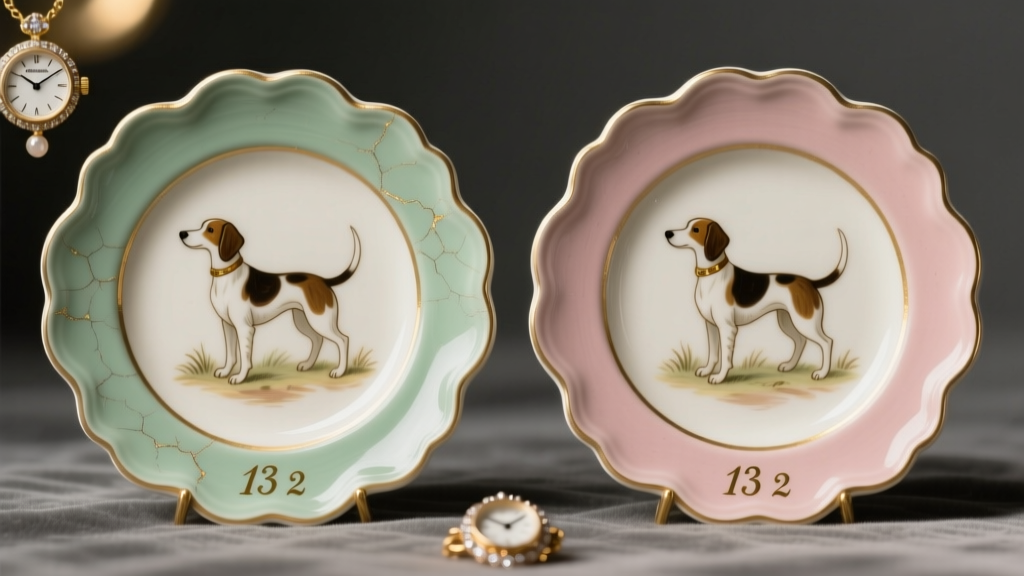
Limoges Plate Hunter Dog Scalloped Edge: A Collector’s Guide to the Marked 13½-Inch Pair
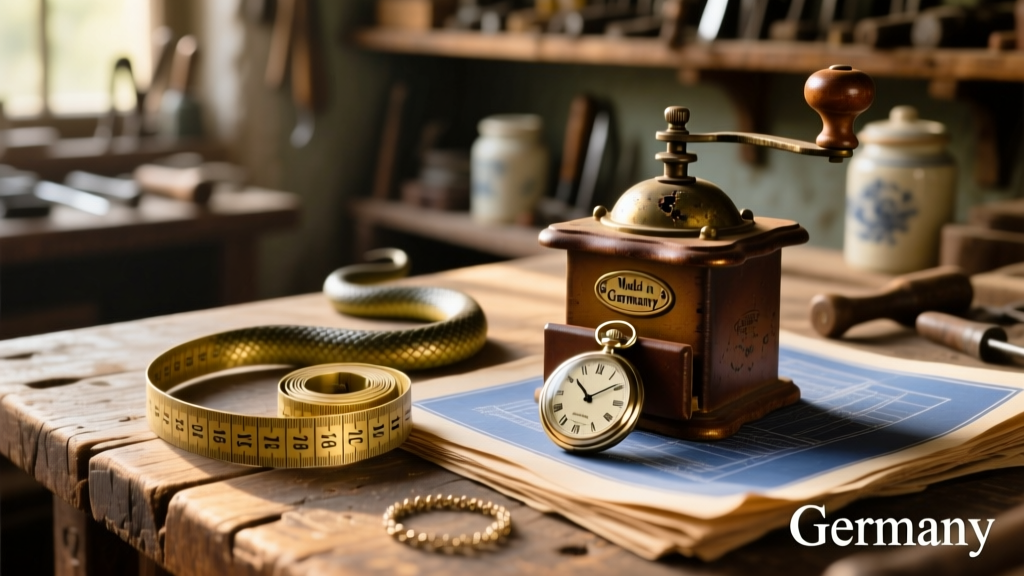
Sewing Tape Measure Coffee Grinder Metal Germany: Industrial Design Convergence in Mid-Century German Manufacture
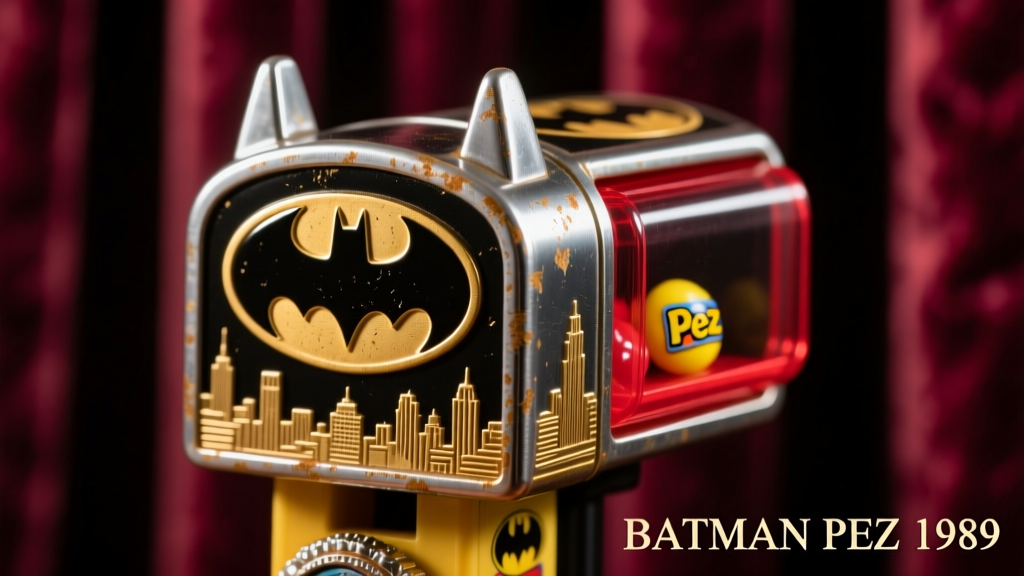
The Batman Candy Container PEZ: A Collector’s Deep Dive into Design, Production History, and Market Value

Lunch Boxes: VW Bus Dome Top Metal Omni Graphics (1960) — A Collector’s Guide to Iconic Mid-Century Americana

The Art and Allure of the 4-Inch Blown Glass Santa Ornament with Glossy Eyes

Mobilize for Peace: Decoding the Iconic 1930s White-on-Blue Political Button — Design, Provenance, and Historical Weight
Royal Copenhagen Flora Danica Reticulated Dinner Plate (10-inch, 8-Piece Set): A Collector’s Deep Dive into Danish Porcelain Mastery
Modernist Jewelry Attracts Collectors: Why Geometric Abstraction, Architectural Form, and Postwar Innovation Are Driving Auction Records
F. S. Beaumont’s 1930 Oil on Canvas Landscape with Dogs: Provenance, Technique, and Market Significance