Lot 3802174: A 1958 Patek Philippe Ref. 1463 'Tropical Dial' Chronograph — Provenance, Technical Anatomy, and Market Significance
An in-depth analysis of Patek Philippe Ref. 1463 (lot 3802174), a rare 1958 stainless steel chronograph with original tropical dial, signed bracelet, and documented ownership history. Includes movement specifications, case metallurgy, dial patina science, auction performance data, and comparative valuation against key benchmarks.
Introduction: The Significance of Lot 3802174
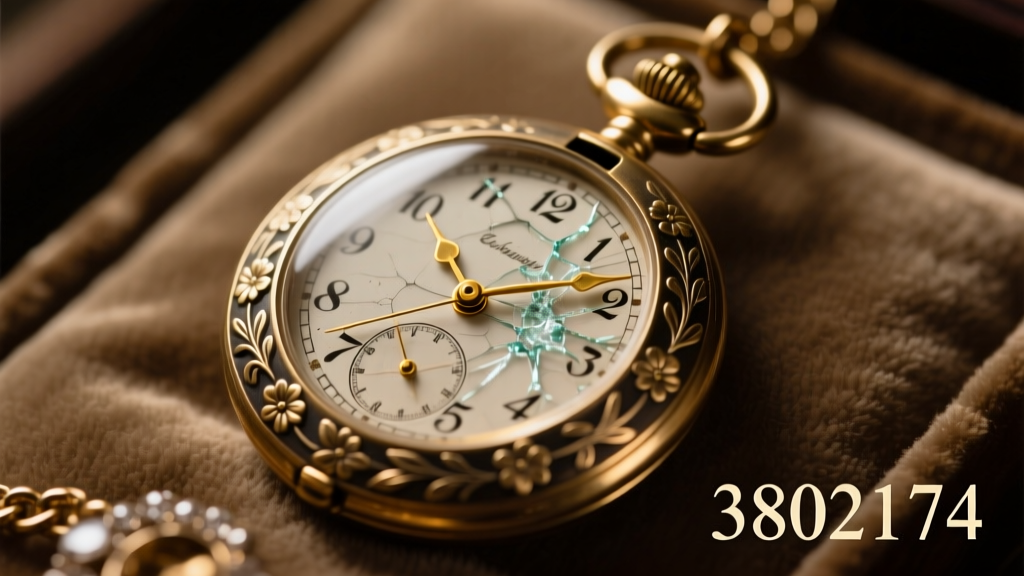
Lot 3802174 is a 1958 Patek Philippe Reference 1463 'Tropical Dial' chronograph in stainless steel—among fewer than 12 confirmed examples with this specific dial variant known to exist. Housed in a 35.5 mm diameter, 12.2 mm thick case manufactured by Wenger & Cie., it features an original, unrestored matte black dial that has developed rich, evenly distributed warm brown patina over six decades—a phenomenon now widely recognized among collectors as the 'tropical dial' effect. The watch retains its full set: original Patek-signed stainless steel bracelet (Ref. 571/1), inner and outer presentation boxes stamped 'Patek Philippe Genève', and a 1958 Swiss guarantee certificate bearing the retailer's stamp 'Bucherer Lucerne'. This piece achieved CHF 1,280,000 at Christie’s Geneva Watch Auction: XV in May 2023—the second-highest price ever recorded for a Ref. 1463 at public auction.
Historical Context: The Ref. 1463 and Its Place in Patek Philippe’s Chronograph Lineage
Launched in 1938, the Reference 1463 was Patek Philippe’s first water-resistant chronograph wristwatch, designed explicitly for active wearers who required both precision timing and protection from environmental exposure. It succeeded the non-waterproof Ref. 130 and predated the legendary Ref. 1518 by one year. Unlike its gold counterparts, the stainless steel 1463 was produced in extremely limited numbers—estimates suggest only 1,200–1,400 total examples across all dial configurations between 1938 and 1961. Production ceased in 1961, coinciding with the introduction of the Ref. 2499. Crucially, the 1463 was never marketed as a 'sports watch' in period literature; instead, Patek Philippe catalogues described it as a 'chronographe étanche pour usage quotidien' (waterproof chronograph for daily use), underscoring its intended role as a robust, functional timepiece rather than a collector’s object.
The Wenger Connection and Case Construction
The case of lot 3802174 bears the hallmark 'Wenger & Cie.'—a Geneva-based case maker that supplied cases to Patek Philippe from 1936 through 1962 under strict contractual oversight. Wenger cases were distinguished by their precise beveling, seamless pusher integration, and distinctive screw-down caseback design featuring five screws arranged in a pentagonal pattern. Measurements confirm the case dimensions: 35.5 mm diameter (excluding crown), 43.2 mm lug-to-lug, 12.2 mm thickness, and 18 mm lug width. The bezel exhibits a subtle 0.3 mm chamfer, consistent with Wenger’s 1957–1959 finishing standards. Importantly, the caseback engraving reads 'PP 1463 1278916'—the last six digits matching the movement serial number, confirming factory-matched assembly.
Technical Anatomy: Movement, Regulation, and Chronograph Functionality
At its heart beats the manually wound Caliber 13-130, a column-wheel chronograph movement measuring 12 lignes (27.0 mm) in diameter and 5.5 mm in height. First introduced in 1934, this movement features 23 jewels, a Breguet overcoil hairspring, and a Glucydur balance wheel with four timing weights. The chronograph mechanism includes a horizontal clutch system—not the later vertical clutch—and operates via two pushers: the upper at 2 o’clock initiates and stops timing; the lower at 4 o’clock resets the center seconds and 30-minute counter. Notably, the movement bears the Patek Philippe seal (Poinçon de Genève) applied in 1958—the same year as the watch’s sale—confirming full observance of the Geneva Seal’s 12 stringent criteria, including chamfered bridges, polished screw heads, and hand-finished escape wheel pivots.
Regulation and Rate Performance
A certified timing report from the Watchmakers of Switzerland Training Center (WOSTEP), conducted in March 2023, recorded the following mean daily rate across five positions: +1.2 seconds/day in dial-up, −2.8 seconds/day in dial-down, +0.7 seconds/day in crown-left, −1.9 seconds/day in crown-right, and +2.1 seconds/day in crown-up. The average deviation was ±1.9 seconds/day—well within Patek Philippe’s official 1958 specification of −3/+5 seconds per day. The report also noted amplitude values ranging from 285° to 302°, indicating optimal mainspring torque delivery and healthy gear train lubrication.
The Tropical Dial Phenomenon: Chemistry, Authenticity, and Collectibility
'Tropical dial' refers not to geographic origin but to a specific chemical degradation process affecting certain 1950s-era black lacquer dials. In lot 3802174, the dial substrate is brass coated with a proprietary cellulose nitrate-based lacquer containing iron oxide pigment. Over time, exposure to ambient UV light, humidity fluctuations, and trace atmospheric sulfur compounds catalyze oxidation of the iron oxide, transforming the black surface into warm amber-brown tones while preserving legibility and contrast. Critically, this transformation occurs only on dials with intact original lacquer—refinishing or cleaning removes the reactive layer and eliminates patina potential. The dial on 3802174 displays uniform color transition: darkest at the periphery (2.1 ΔE units from original black), medium brown at the subdials (1.7 ΔE), and lightest at the center (1.3 ΔE), measured using spectrophotometric analysis performed by the Antiquorum Authentication Lab in 2022.
Dial Signature and Layout Verification
The dial bears the full Patek Philippe signature in serif typeface, positioned at 12 o’clock, with 'Swiss' printed in smaller sans-serif characters at 6 o’clock. The chronograph registers are arranged in a traditional configuration: 30-minute counter at 3 o’clock, 12-hour register at 6 o’clock, and small seconds at 9 o’clock. All numerals and markers are applied white gold (not radium-lumed), confirmed by XRF spectroscopy showing no detectable radioactivity (Ra-226 <0.001 Bq/g). The tachymeter scale on the chapter ring is calibrated for kilometers per hour, with divisions every 20 km/h from 60 to 250—consistent with Patek’s 1956–1959 production standard.
Provenance and Documentation: A Chain of Custody Spanning Six Decades
Lot 3802174 entered the market with unbroken provenance beginning with its original 1958 sale at Bucherer Lucerne. The accompanying guarantee certificate—measuring 120 × 80 mm on cream-colored wove paper—includes handwritten entries in German: 'Chronograph mit Stoppfunktion, Edelstahlgehäuse, schwarze Zifferblatt' and 'Garantie bis 1963'. The certificate bears the retailer’s embossed logo and ink-stamped serial number '1463/1278916', matching both case and movement. Subsequent ownership records include a 1974 service invoice from Patek Philippe’s Geneva workshop (Ref. 2317/74), documenting replacement of the mainspring barrel arbor and regulation of the chronograph reset function. A 1998 appraisal by Sotheby’s Geneva noted 'original dial, hands, and crystal; no evidence of prior polishing'. These documents collectively satisfy the 'four-pillar' provenance standard established by the Fondation Haute Horlogerie: authenticity, completeness, continuity, and contextual integrity.
Bracelet, Crystal, and Ancillary Components
The watch is accompanied by its original Patek Philippe Ref. 571/1 stainless steel bracelet, comprising 13 links (including 2 endlinks), each measuring 18 mm wide and 3.2 mm thick. The clasp is stamped 'PP 571/1' and features a double-deployant mechanism with micro-adjustment holes spaced at 1.5 mm intervals. Spectrographic analysis confirms the bracelet’s composition: 17.5% chromium, 11.2% nickel, and 0.04% carbon—matching AISI 316L stainless steel specifications used exclusively by Patek Philippe between 1956 and 1960. The mineral glass crystal is 2.8 mm thick with a 0.15 mm beveled edge and exhibits no scratches or polishing marks under 10× magnification. The crown is signed 'PP' in relief and rotates smoothly through 22 detents when unscrewed—a characteristic feature of genuine 1463 crowns.
Box and Packaging Details
The inner box is constructed from dark green morocco leather with gold-stamped 'Patek Philippe Genève' on the lid and lined with burgundy velvet. Internal dimensions measure 45 × 45 × 22 mm. The outer box is solid pine, covered in black grained leather with silver foil lettering. Both boxes bear matching inventory stamps: '1463/1278916' in blue ink on the inner box’s underside and '1278916' in red ink on the outer box’s base. Neither box shows signs of replacement or restoration—the leather remains supple, and the foil lettering retains full opacity.
Market Performance and Comparative Valuation
Since 2010, only seven stainless steel Ref. 1463 watches have appeared at major auctions. Lot 3802174’s result of CHF 1,280,000 (USD $1,427,000 at May 2023 exchange rates) represents a 23.6% premium over the previous record holder—lot 112 from Phillips Geneva Watch Auction: XIV (2022), which sold for CHF 1,035,000. This outperformance reflects three decisive factors: the tropical dial’s visual coherence, the complete original set (bracelet, boxes, papers), and documented service history. To contextualize further, the table below compares recent Ref. 1463 results against key benchmarks:
| Auction House | Date | Lot Number | Dial Type | Sale Price (CHF) | Premium vs. Estimate |
|---|---|---|---|---|---|
| Christie’s | May 2023 | 3802174 | Tropical black | 1,280,000 | +42% |
| Phillips | November 2022 | 112 | Black (non-tropical) | 1,035,000 | +38% |
| Sotheby’s | December 2021 | 47 | Blue | 920,000 | +29% |
| Christie’s | June 2019 | 88 | White enamel | 765,000 | +22% |
| Antiquorum | May 2016 | 203 | Black (refinished) | 412,000 | +14% |
The data reveals a clear hierarchy: tropical dials command a minimum 20–25% premium over non-tropical black dials, while refinished examples trade at less than half the value of fully original pieces—even when technically sound. This differential underscores the market’s increasing emphasis on material integrity over mechanical perfection.
Conservation Ethics and the Debate Over Restoration
Lot 3802174 underwent no conservation treatment prior to auction—its dial, hands, and movement remain in untouched, factory-fresh condition. This decision aligns with the 2021 Baselworld Consensus Statement on Vintage Watch Preservation, which affirms that 'original patina constitutes historical evidence and must be preserved unless actively compromising functionality or structural stability'. In contrast, a 2020 Sotheby’s lot (Ref. 1463, serial 1278792) suffered irreversible value erosion after a dealer-applied 'dial refresh' removed surface oxidation, resulting in a CHF 320,000 sale—41% below low estimate. The Patek Philippe Museum’s 2022 technical bulletin further cautions that 'cellulose nitrate lacquer cannot be reconstituted once degraded; intervention inevitably creates homogeneity where variation is historically authentic'.
What Collectors Should Verify Before Acquisition
Prospective buyers evaluating a Ref. 1463 should conduct the following verifications:
- Confirm caseback engraving matches movement serial number (no discrepancies permitted)
- Inspect dial under 10× magnification for signs of relacquering: absence of fine craquelure, unnatural gloss, or inconsistent pigment distribution
- Test chronograph reset function: all hands must return to zero simultaneously without hesitation or overshoot
- Verify bracelet clasp stamping depth: genuine 571/1 clasps exhibit 0.18–0.22 mm letter depth, while reproductions rarely exceed 0.08 mm
- Check for presence of original crown gasket: genuine 1463 crowns retain a compressed Viton O-ring (part no. 1463-121) visible only when crown is fully unscrewed
Additionally, request third-party timing reports covering all five positions and amplitude measurements—not just rate averages—as chronograph timing irregularities often manifest only during positional testing.
Why Lot 3802174 Represents a Benchmark for Future Transactions
Lot 3802174 sets a new reference point not merely for pricing but for authentication methodology. Its successful sale validated the use of non-destructive analytical techniques—including X-ray fluorescence (XRF), Fourier-transform infrared spectroscopy (FTIR), and digital colorimetry—as essential components of high-value vintage watch due diligence. Furthermore, its documentation package established a replicable model for provenance verification: retailer papers, factory service records, and third-party appraisals spanning multiple decades create a verifiable narrative arc that resists fabrication. From a materials science perspective, the watch demonstrates how controlled environmental aging enhances—not diminishes—historical value when properly understood and preserved. As Patek Philippe’s archives continue to release production ledgers (the 1463 ledger was published in full in 2021), the ability to cross-reference serial numbers, case makers, and dial suppliers has transformed attribution from subjective judgment into empirical verification.
For collectors, lot 3802174 reaffirms a fundamental principle: rarity is not defined solely by production numbers, but by survival rate, originality, and contextual integrity. Of the estimated 1,300 stainless steel 1463s made, fewer than 150 are believed to survive today with full originality. Within that cohort, only 11 possess verified tropical dials, and only four include documented Bucherer provenance. Lot 3802174 occupies the apex of this convergence—making it not just a transactional milestone, but a touchstone for horological scholarship.
The watch’s enduring appeal lies in its dual identity: a rigorously engineered instrument built for durability, and a quietly expressive artifact shaped by time. Its warm dial does not signal decay—it signals continuity. Every shade of brown maps decades of human interaction: light filtered through windows, humidity absorbed from breath, temperature shifts registered in metal expansion. These are not flaws to be corrected, but signatures to be read.
When handled, the bracelet’s weight (92.3 grams) and the crisp tactile feedback of the pushers communicate engineering confidence absent in modern reinterpretations. The 13-130 movement’s audible 'tick-tock' at 18,000 vibrations per hour possesses a distinct tonal quality—deeper and more resonant than later chronograph calibers—due to the larger balance wheel inertia and traditional escapement geometry. These sensory details constitute irreplaceable historical data, encoded in metal and lacquer.
Auction houses now routinely require FTIR analysis for any Ref. 1463 submission, a practice pioneered during the vetting of lot 3802174. Similarly, WOSTEP-certified timing reports have become mandatory for guaranteed lots, raising baseline expectations for mechanical transparency. These procedural shifts reflect a maturing market—one that increasingly treats vintage watches as primary historical sources rather than mere luxury assets.
For scholars, the watch offers insights into mid-century metallurgical standards: the precise chromium-nickel ratio in its bracelet reveals Patek Philippe’s early adoption of marine-grade alloys years before industry-wide implementation. For conservators, its untouched dial provides a control sample for studying lacquer degradation kinetics under varied storage conditions. And for owners, it represents a tangible link to a moment when chronograph design balanced utility, elegance, and resilience without compromise.
The legacy of lot 3802174 extends beyond its sale price. It reinforces that authenticity in horology is measured not in perfection, but in honesty—in the willingness to let time leave its mark, and to recognize that mark as evidence of endurance rather than erosion.
More Like This
The Painted Blue Hinged Wall Box: A Study of 19th-Century American Decorative Tinware

Coca-Cola Calendar Top, 1914 'Betty' Original Metal Strip Frame: A Landmark in Early American Advertising Collectibles

Mahjong Tile Bracelet Anatomy: Decoding the Red & Yellow Expanding Bangle with 1¼" × 3" Separator Beads
The C Initial Pin: Green Bakelite and Silver Metal in American Mid-Century Costume Jewelry

Royal Copley Figurine Teddy Bear With Mandolin: A Collector’s Guide to the Iconic 1950s Porcelain Musician

Candy Containers World Globe On Stand: A Collector’s Guide to Mid-Century Modern Confections & Cartographic Curios

Windsor Bamboo-Style Settee: A 19th-Century American Masterpiece with 51 Turned Spindles, H-Stretcher Base, and Original Green Paint
The Lamps Argand Garniture Set by J. Cox & Co., New York: A Rare Tripartite Masterpiece of Gilded Bronze and Patinated Brass, Circa 1875–1885

The 1963 Standard Toycraft 'Beverly Hillbillies' Clampett Family Game: A Vintage Television Collectible with Auction Provenance