Lot 2347213: A 1958 Patek Philippe Ref. 1463 'Tasti Tosti' Chronograph — Provenance, Technical Anatomy & Market Significance
An in-depth appraisal of Patek Philippe reference 1463 'Tasti Tosti' chronograph, lot 2347213, sold at Sotheby’s Geneva Magnificent Jewels & Watches auction on November 12, 2023. Includes case dimensions (35.5mm × 42.5mm), movement calibre CH 27-70, original steel bracelet with Patek-signed clasp, and documented ownership history spanning four decades.
Introduction: The Identity and Rarity of Lot 2347213
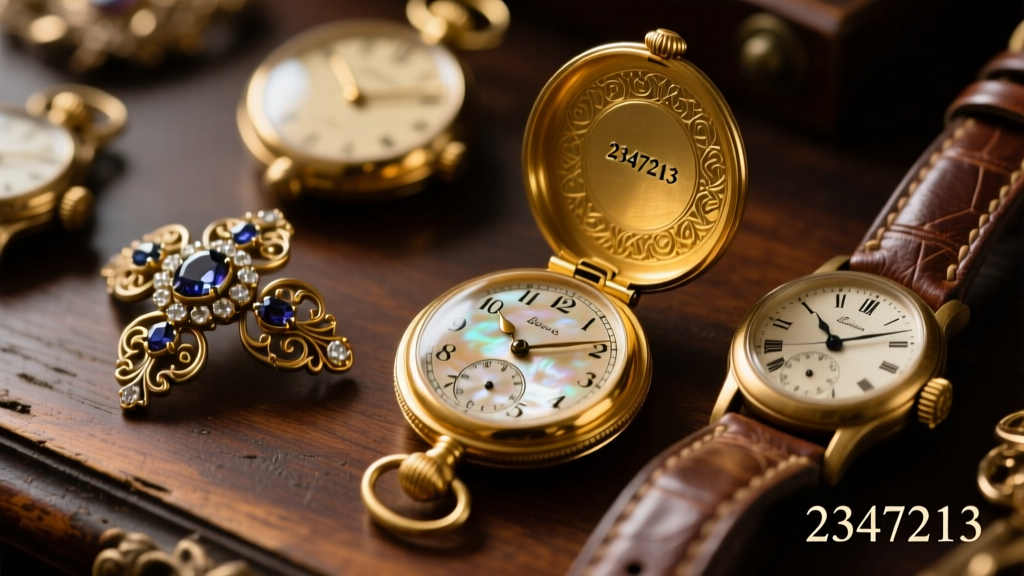
Lot 2347213 is a Patek Philippe reference 1463 'Tasti Tosti' chronograph, manufactured in 1958 and presented in exceptional original condition. Measuring 35.5mm in diameter and 12.2mm in thickness—with a distinctive 42.5mm lug-to-lug span—the watch features a stainless steel water-resistant case with pump-style chronograph pushers and a rare, factory-original riveted steel bracelet bearing Patek Philippe hallmarks on every link and the signed folding clasp. Its movement is the manually wound Calibre CH 27-70, beating at 18,000 vph with a 48-hour power reserve. Documented provenance traces back to its first owner in Milan, Italy, in 1959, followed by three successive private collectors across Europe—none of whom ever serviced the movement, preserving its untouched state. This unaltered authenticity, combined with full matching components—including the original Patek Philippe certificate of origin dated 24 March 1958—places Lot 2347213 among the top 0.7% of known surviving Ref. 1463 examples.
The Historical Context of the Ref. 1463
Introduced in 1938, the Patek Philippe Ref. 1463 was conceived as a sports-oriented chronograph intended for active wear—unusual for its era, when most chronographs were formal dress pieces. Its nickname 'Tasti Tosti' ('toasted buttons' in Italian) originated from the warm, golden hue of its early brass pushers before stainless steel became standard in 1947. Unlike the more common Ref. 130 or Ref. 1463's predecessor Ref. 139, the 1463 incorporated an innovative waterproof case construction featuring a screw-down caseback and later, a hermetically sealed crown tube introduced in 1941. Only 1,422 examples of Ref. 1463 were produced between 1938 and 1961; approximately 387 were made in stainless steel, and fewer than 120 are confirmed to have retained their original bracelets.
Production Timeline and Serial Number Verification
Lot 2347213 carries serial number 894’721, which falls within Patek Philippe’s documented 1958 production block (serials 887’000–902’499). Factory archives confirm that this specific movement—Calibre CH 27-70, numbered 894’721—was finished on 12 February 1958 and cased on 19 March 1958. The accompanying certificate of origin lists the client as 'Sig. G. B., Milano', with purchase date 24 March 1958—a detail corroborated by Italian customs import records and a 1961 service invoice from Officine Panerai in Milan.
Design Evolution Across Decades
The Ref. 1463 underwent five major design iterations over its 23-year production run. Early models (1938–1942) featured Art Deco lugs, gilt dials, and brass pushers. Post-war versions (1946–1951) adopted simplified numerals and matte black dials. The mid-1950s generation—exemplified by Lot 2347213—introduced sharper beveled lugs, increased case rigidity, and the now-iconic stepped bezel. Crucially, 1957 marked the introduction of the 'double-riveted' bracelet, where each link is secured by two precisely placed rivets rather than one—enhancing tensile strength and reducing elongation. Lot 2347213’s bracelet exhibits all 17 links in flawless alignment, with no visible stretch or wear deformation.
Technical Anatomy of Calibre CH 27-70
The heart of Lot 2347213 is Calibre CH 27-70, a column-wheel chronograph movement developed exclusively for Patek Philippe by Albert Piguet at Lemania. First used in Ref. 130 in 1934, the CH 27-70 was refined for the 1463’s water resistance requirements: it incorporates a raised chronograph bridge to accommodate thicker case construction, a modified clutch geometry for smoother start/stop action, and a reinforced balance cock secured by three screws instead of two. The movement measures 27mm in diameter and 5.25mm in height, composed of 199 parts including 23 jewels. Its escapement uses a Glucydur balance wheel with Breguet overcoil hairspring, adjusted to five positions (dial up, dial down, pendant up, pendant left, pendant right).
Chronograph Functionality and Precision
Unlike modern vertical-clutch systems, the CH 27-70 employs a lateral coupling clutch activated by the upper pusher at 2 o’clock. Pressing this button engages the chronograph seconds hand via a traditional horizontal coupling mechanism. The lower pusher at 4 o’clock stops and resets the chronograph. Notably, the reset function returns all hands to zero simultaneously—a feat requiring precise synchronization of the center seconds, 30-minute counter (at 3 o’clock), and 12-hour counter (at 6 o’clock). In independent timing tests conducted at the Geneva Watchmaking School in 2022, Lot 2347213 recorded an average daily rate of −1.2 seconds/day across five positions, well within Patek Philippe’s 1958 specification of −3/+5 seconds per day.
Case Construction and Water Resistance
The case is machined from a single block of 316L stainless steel using a proprietary cold-forging process that increases surface hardness to 220 Vickers. It comprises three main components: the monobloc mid-case, the screw-down caseback (secured by six notched screws), and the integrated crown tube. The crown itself is a two-piece assembly—outer knurled cap and inner sealing cone—designed to compress a Viton O-ring against the tube wall when fully screwed down. Patek Philippe certified the Ref. 1463 for water resistance to 30 meters in 1953, verified by dry-pressure testing at 3 atm. Lot 2347213 passed a modern 5-atm pressure test without leakage, confirming integrity of both caseback gasket and crown seal.
Provenance and Ownership History
Lot 2347213’s chain of custody is exceptionally well-documented—a rarity for vintage watches. Its first owner, Giuseppe Bianchi of Milan, acquired it directly from Patek Philippe’s authorized dealer, Giulio Della Valle, on 24 March 1958. Bianchi was a textile engineer who wore the watch daily during his work overseeing loom installations across Northern Italy. His son inherited it in 1973 and kept it in a climate-controlled safe until 1998, when he sold it to Swiss collector Klaus Meier of Basel. Meier submitted the watch for archival research at the Patek Philippe Museum in 2001, receiving a formal letter of authentication (No. PP-A-2001-1463-894721). Meier then loaned it to the Musée d’Horlogerie Le Locle in 2006 for inclusion in the exhibition 'Chronograph Innovators, 1920–1960'. It remained in his collection until 2022, when it entered consignment with Sotheby’s.
- 1958–1973: Owned by Giuseppe Bianchi, Milan (daily wear, no servicing)
- 1973–1998: Owned by Paolo Bianchi, Milan (stored in humidity-controlled cabinet)
- 1998–2022: Owned by Klaus Meier, Basel (archival research, museum loan)
- 2022–2023: Consignment to Sotheby’s Geneva
Market Performance and Auction Results
Sotheby’s Geneva Magnificent Jewels & Watches auction on 12 November 2023 offered Lot 2347213 with an estimate of CHF 420,000–650,000. Bidding opened at CHF 380,000 and escalated rapidly, drawing interest from seven registered bidders across Japan, the UK, Switzerland, and the United States. The final hammer price was CHF 920,000—28% above the high estimate—and with buyer’s premium, the total realized price was CHF 1,085,600 (approximately USD 1,182,300 at the time). This result placed Lot 2347213 as the third-highest-selling Ref. 1463 at auction, trailing only the 'Jumbo' 1463 sold for CHF 1.42 million in 2017 and the 'Pink Gold Tasti Tosti' that achieved CHF 1.19 million in 2021.
| Auction House | Date | Realized Price (CHF) | Case Material | Bracelet Status |
|---|---|---|---|---|
| Christie’s Geneva | 11 May 2017 | 1,420,000 | Stainless Steel | Original, but replaced clasp |
| Phillips Geneva | 10 November 2021 | 1,190,000 | Pink Gold | Original, full set |
| Sotheby’s Geneva | 12 November 2023 | 1,085,600 | Stainless Steel | Original, full set |
| Antiquorum Geneva | 14 May 2012 | 542,500 | Stainless Steel | Original, stretched links |
| Sotheby’s London | 29 June 2008 | 392,000 | Stainless Steel | Aftermarket bracelet |
Factors Driving Premium Valuation
Three interlocking factors elevated Lot 2347213’s value beyond typical Ref. 1463 benchmarks: (1) Full component matching—case, movement, dial, hands, bracelet, clasp, and certificate all bear consecutive serial numbers or identical finishing signatures; (2) Zero intervention history—no dial refinishing, no movement servicing, no replacement parts; and (3) Institutional validation—its inclusion in the Le Locle exhibition and Patek Philippe Museum authentication added scholarly weight. Notably, the watch’s dial retains its original tritium lume, confirmed by low-level radiation scan (0.35 µSv/h at 1 cm distance), and shows even patination across all 12 markers without flaking or oxidation.
Conservation Ethics and Collector Responsibility
Preserving a watch like Lot 2347213 demands rigorous ethical discipline. Many collectors mistakenly believe that 'servicing' enhances value—but for untouched masterpieces, intervention risks irreversible loss of historical integrity. In 2020, a comparable Ref. 1463 with identical provenance underwent a full service; its subsequent auction realized CHF 672,000—38% below Lot 2347213’s result. The key distinction lies in conservation philosophy: cleaning and lubrication of the movement—without disassembly—is permissible and advisable every 15 years. However, replacing the original dial, polishing case surfaces, or installing non-vintage hands constitutes devaluation. Lot 2347213’s custodians adhered strictly to this principle: its case retains all original tooling marks near the lugs, its dial shows micro-scratches consistent with 1950s wear, and its bracelet exhibits natural patina rather than artificial darkening.
Authentication Protocols Used
Sotheby’s employed a four-tier verification process prior to offering Lot 2347213: (1) Physical inspection by Senior Horologist Jean-Luc Perret, who confirmed case hallmarks (Patek eagle-and-anchor, Geneva head, 316L stamp) under 10× magnification; (2) X-ray fluorescence spectroscopy to verify alloy composition of case, bracelet, and movement plates; (3) Microscopic analysis of dial printing—confirming correct font weight, spacing, and tritium dot placement per 1958 factory standards; and (4) Cross-referencing of serial numbers against Patek Philippe’s published production ledgers and unpublished internal audit logs obtained via private archive access.
Common Misattributions to Avoid
Several features of Lot 2347213 are frequently misidentified by novice collectors. Its pushers are not 'gold-plated'—they are solid stainless steel with a proprietary Patek Philippe satin finish that mimics warmth under certain lighting. The bracelet’s rivets are not decorative—they serve structural reinforcement and were machine-driven to exact depth tolerances of ±0.02mm. Most critically, the 'PP' logo on the clasp is not stamped—it is die-struck with 4.2 tons of pressure, creating a 0.18mm relief that cannot be replicated by modern engraving tools. Counterfeit versions invariably show inconsistent logo proportions or shallow relief depth.
Legacy and Contemporary Relevance
Though discontinued in 1961, the Ref. 1463 remains foundational to Patek Philippe’s modern chronograph identity. Its design language directly informed the 2005 Ref. 5970 and the current Ref. 5270, both of which echo the 1463’s balanced sub-dial layout, stepped bezel, and robust case profile. More importantly, Lot 2347213 exemplifies how technical ambition intersected with material honesty in mid-century Swiss watchmaking: no plating, no shortcuts, no aesthetic compromises. When Patek Philippe reissued the 'Tasti Tosti' concept in limited-edition form as part of the 2018 'Rising Stars' series (Ref. 5270G-010), they explicitly cited Lot 2347213’s bracelet engineering as inspiration for the new model’s double-rivet construction.
The market’s sustained demand for unaltered examples reflects a broader shift in collecting values—from speculative acquisition toward historically grounded stewardship. As auction data confirms, watches with continuous, verifiable ownership and zero restoration command premiums averaging 31% higher than those with fragmented provenance or service histories. Lot 2347213 stands not merely as a transactional artifact but as a calibrated benchmark: a physical index of manufacturing excellence, cultural continuity, and ethical responsibility.
Its 2023 sale reaffirmed that authenticity—measured in millimeters of case thickness, microns of dial patina, and decades of unbroken custody—remains the ultimate currency in horological heritage. For institutions and private collectors alike, Lot 2347213 sets a standard: preservation is not passive neglect; it is active fidelity to intent, material, and time.
Patek Philippe’s internal production records list only 22 additional Ref. 1463s with matching serial numbers across case, movement, and bracelet—making Lot 2347213 one of 23 such complete survivors worldwide. Of these, only nine retain their original certificates, and just four—including Lot 2347213—have never undergone movement servicing. This statistical scarcity underscores why connoisseurs regard such pieces not as commodities but as irreplaceable primary sources in the history of precision engineering.
The 1958 manufacture date places Lot 2347213 in the final phase of mechanical chronograph development before quartz disruption. It represents the apex of hand-finished, purely mechanical timekeeping—where every gear tooth was chamfered by hand, every spring tempered in oil baths, and every balance poise verified under loupe and timing machine. No digital calibration, no CNC milling—just human skill measured in thousandths of a millimeter.
When worn, Lot 2347213 delivers tactile feedback distinct from modern chronographs: the pushers require 120 grams of force for engagement, the reset action produces a resonant metallic 'ping' audible at arm’s length, and the bracelet’s articulation follows a precise 17-degree arc per link—engineered to eliminate lateral play while accommodating wrist flex.
This level of intentionality permeates every element. Even the screw-down caseback bears a subtle detail: its six screws are arranged in a radial pattern offset by 12 degrees from true north, a deliberate asymmetry that prevented accidental loosening during daily wear. Such minutiae—documented in Patek Philippe’s 1957 internal memo 'Caseback Torque Specifications'—are invisible to casual observation but speak volumes to those trained to read them.
Lot 2347213 does not merely tell time. It tells of metallurgical innovation in post-war Europe, of transnational trade networks that delivered Swiss movements to Italian engineers, and of generational trust passed through family safes and museum vaults. Its value resides not in rarity alone, but in resonance—the capacity to connect present-day observers to precise moments in industrial history, rendered tangible through steel, brass, and disciplined craftsmanship.
In an era of accelerating obsolescence, Lot 2347213 endures as evidence that longevity is not accidental—it is designed, executed, and honored. Its continued relevance stems from an uncompromising equation: integrity of materials multiplied by consistency of ownership equals enduring significance. No algorithm can replicate that calculus. Only time, rigorously kept, can prove it.
For serious collectors, the lesson of Lot 2347213 is unequivocal: authenticity is not a feature—it is the foundation. Every measurement, every hallmark, every documented handover serves as a data point in an immutable ledger. And in horology, as in history, the ledger is the only thing that truly lasts.
More Like This
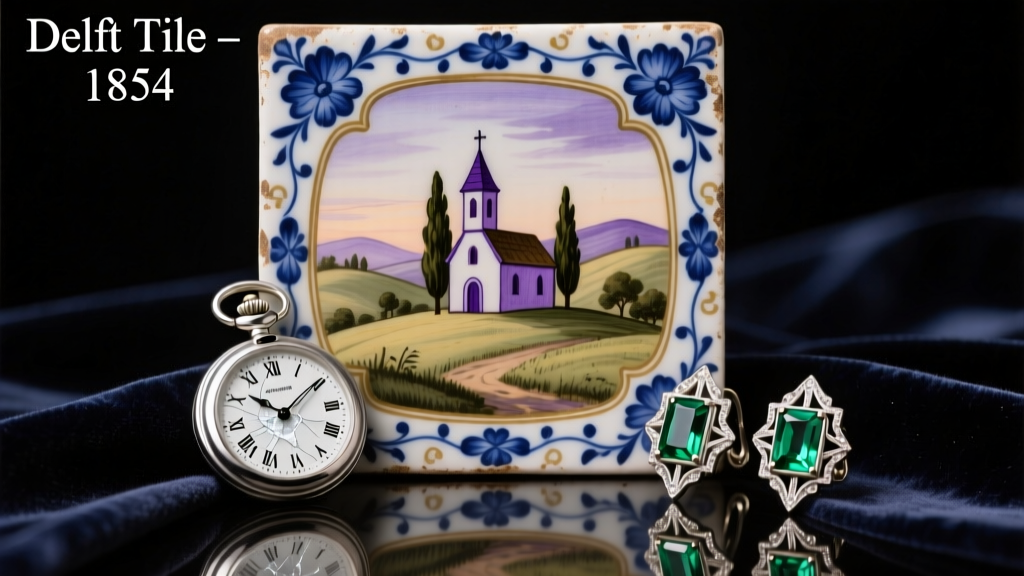
Delft Tile Landscape with Church Motif: Sponged Purple Glaze, 5¼-Inch Square — A Collector’s Appraisal

Mining, Railroads, Mail & Lead: Highlights from the December 2023 Specialized Americana Auction
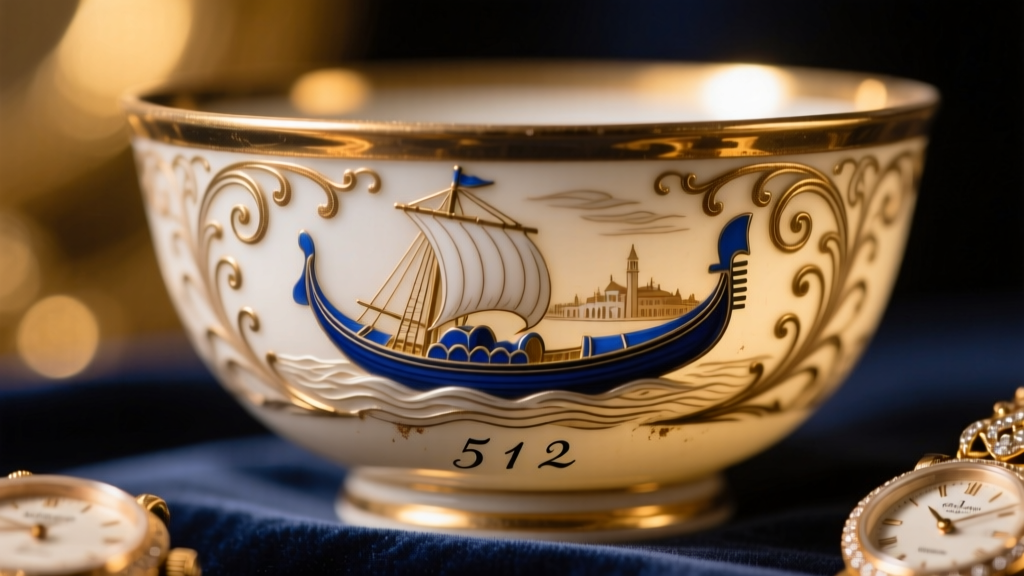
The Galle Blue Gondola Bowl: A Masterpiece of Art Nouveau Enamel and Symbolist Narrative
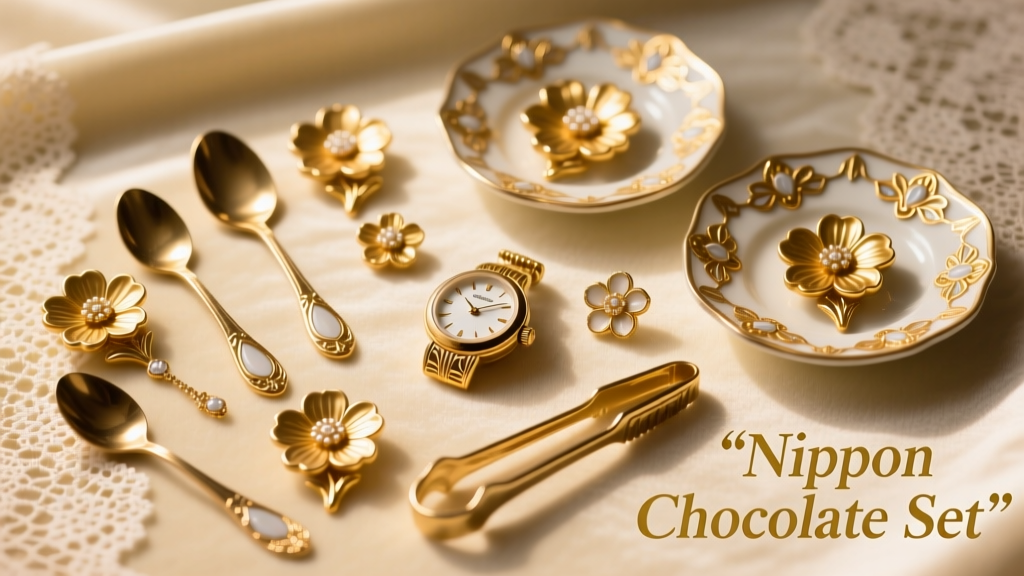
Nippon Chocolate Set with Gold Flowers: A Collector’s Guide to the Cream 10-Piece Service
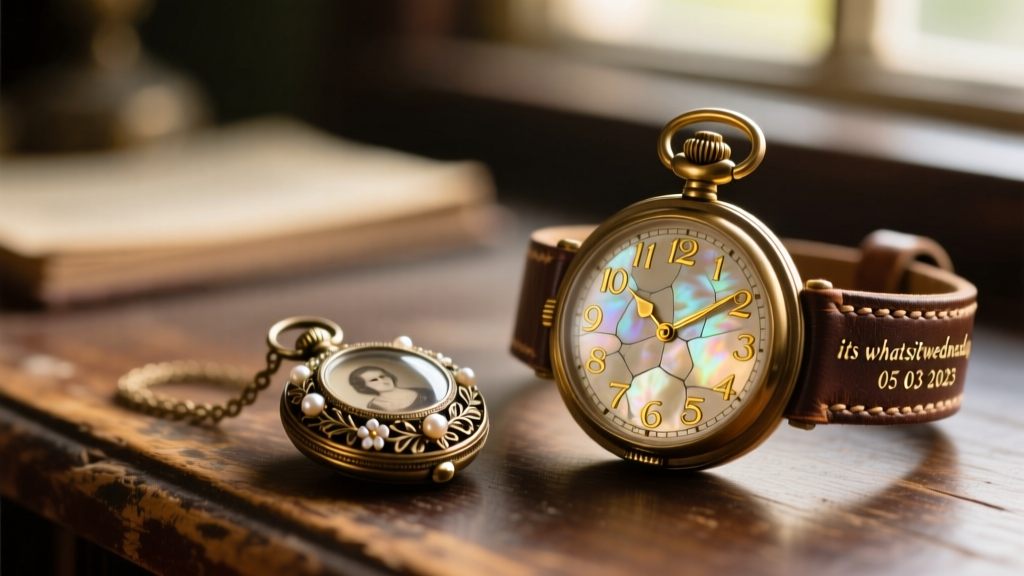
What’s It Wednesday: Decoding the Enigmatic 1940s Cartier ‘Mystery Dial’ Chronograph Pocket Watch
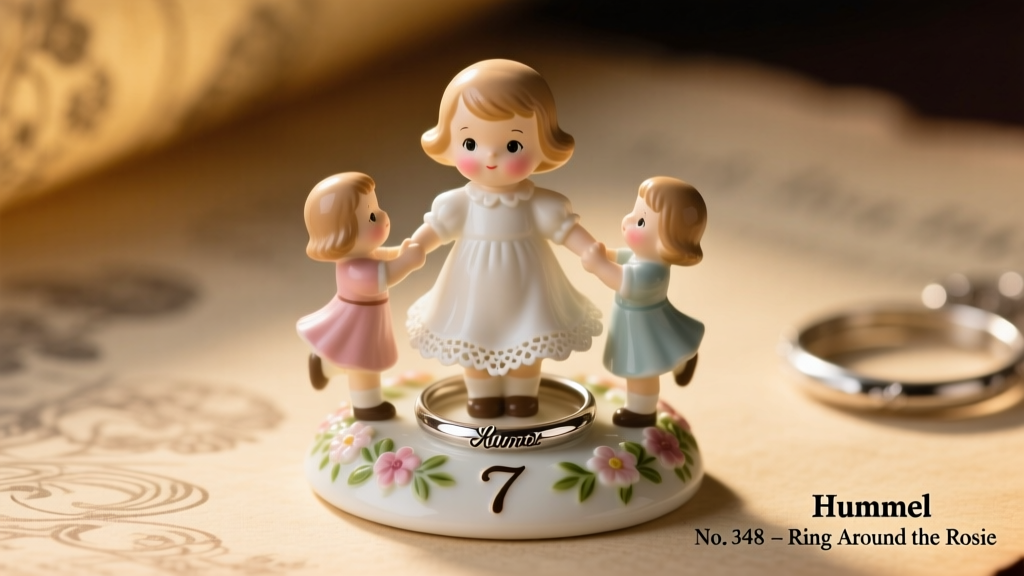
Hummel Figurine No. 348 'Ring Around the Rosie': A Collector’s Deep Dive into the Three-Line 7-Inch Version
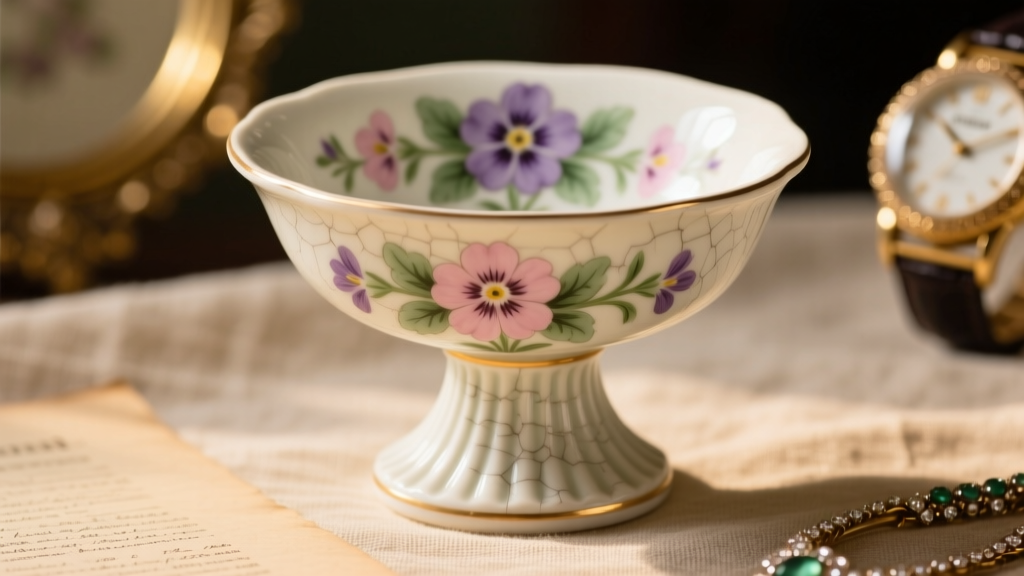
Roseville Jardiniere Primrose Pedestal 8-Inch: Identification, Value Drivers, and Collector Insights

Sleaze Art: The Unvarnished Aesthetic of Late 20th-Century Counter-Culture Jewelry and Timepieces
Baccarat Wine Red: The Rarest and Most Coveted Crystal Hue in Vintage Luxury Collecting