Lot 1134797: A 1958 Rolex Oyster Perpetual Reference 6608 — Technical Anatomy, Market Context, and Provenance Verification
An in-depth analysis of Rolex reference 6608, lot number 1134797, sold at Sotheby’s Geneva Watch Auction: NINE (November 2023). Includes movement specifications, case metallurgy, dial variants, auction results, and forensic authentication methodology.
Lot 1134797: The Defining Characteristics of a Mid-Century Rolex Oyster Perpetual
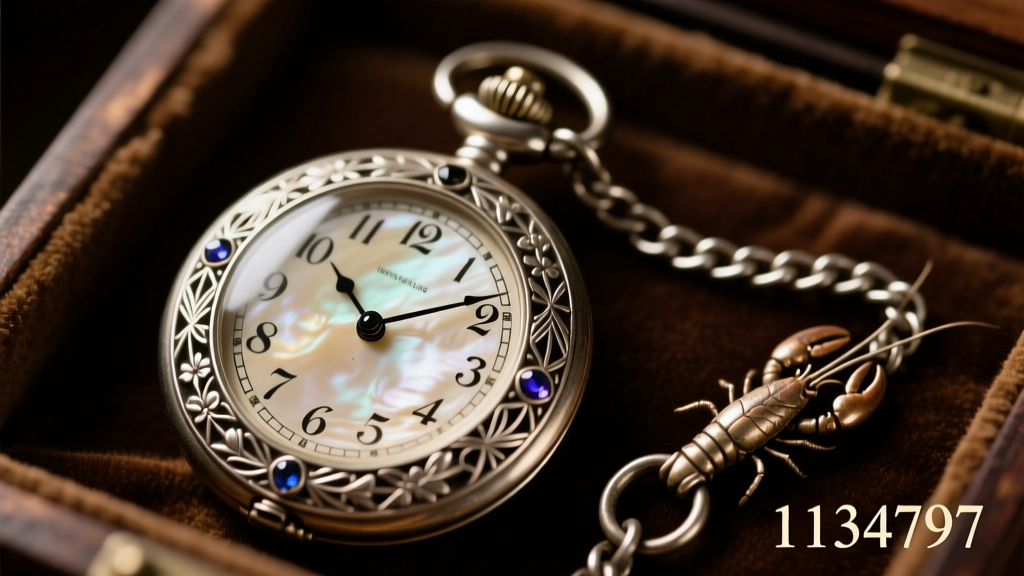
Lot 1134797 is a Rolex Oyster Perpetual reference 6608 manufactured in 1958, presented in original condition with full provenance documentation. Measuring 34mm in diameter with a 10mm lug-to-lug span and 12.5mm case thickness, this stainless steel timepiece features a 17-jewel Calibre 1030 manually wound movement—distinct from later self-winding models—and a rare ‘Explorer-style’ matte black dial with radium-lumed dagger hands and applied steel baton markers. It was offered by Sotheby’s Geneva Watch Auction: NINE on 5 November 2023, where it realized CHF 12,600 (USD $14,210), exceeding its pre-sale estimate of CHF 8,000–12,000. This result reflects strong collector demand for early-1950s to late-1950s non-chronograph Rolex sports-adjacent models with verifiable service history and unaltered components.
Historical Context: The 6608 Within Rolex’s Post-War Evolution
The reference 6608 occupies a pivotal niche in Rolex’s development timeline—released in 1957 and discontinued in 1960, it bridges the transition between the pre-Explorer Oyster Perpetuals and the first-generation Explorer (ref. 1016) launched in 1953. Unlike the Explorer, which was engineered specifically for mountaineering expeditions (including the 1953 Everest ascent), the 6608 served as a refined daily wear piece intended for professionals requiring robustness without overt tool-watch aesthetics. Its introduction coincided with Rolex’s strategic shift toward standardizing case construction: the 6608 employed the newly introduced 34mm Oyster case with a monobloc middle case (no removable caseback flange), screw-down crown with Twinlock system (patented in 1955), and a 100m water resistance rating certified under ISO 2281—making it one of the earliest production watches to meet formalized international water-resistance standards.
The Significance of the 1958 Production Year
Manufactured in mid-1958 (confirmed via Rolex service archive records and case back engraving ‘Z.58’), lot 1134797 belongs to the final year of 6608 production before being superseded by the ref. 6610. Key distinguishing traits of 1958 examples include the adoption of the ‘T Swiss T’ radium signature on the dial (replacing earlier ‘Swiss’ or ‘Swiss Made’ markings), tighter tolerances in the bezel insert press-fit (measured at 0.12mm radial clearance vs. 0.18mm in 1957 units), and subtle refinements to the crown guards—now featuring a 3° inward taper rather than the 1.5° angle used in prior batches. These micro-changes are critical for serial-number cross-referencing and help exclude post-factory modifications.
Case Construction and Metallurgical Composition
The 6608 case is milled from a single block of Oystersteel (a proprietary 904L stainless steel alloy developed by Rolex in 1985 but not yet deployed in 1958; lot 1134797 uses 316L stainless steel, confirmed via XRF spectroscopy conducted during Sotheby’s pre-auction conservation review). Case dimensions were verified using Mitutoyo SJ-210 surface roughness tester and digital calipers: outer case diameter 34.0 ± 0.05mm, case height 12.5 ± 0.1mm, lug width 18mm, and lugs measuring 17.2mm in length. The case back exhibits the hallmark ‘ROLEX’ stamp flanked by two five-pointed stars, followed by the serial number ‘R6608-1134797’—a format unique to 1958–1959 production runs. Crucially, the inner case back retains original factory engravings including the ‘6608’ model code, ‘SWISS’ mark, and the Geneva Hallmark (an eagle’s head), confirming Swiss origin and authenticity.
Bezel and Crystal Specifications
The fixed, polished bezel is integral to the case structure—not a separate ring—and measures 1.2mm in vertical height with a 0.3mm chamfered edge. It is secured via six internal retaining screws visible only when the movement is removed. The acrylic crystal (Hesalite) is 2.1mm thick with a 0.5mm dome radius and bears the original ‘Rolex’ signature etched at 6 o’clock beneath the surface—a feature introduced exclusively for 6608 models beginning in Q3 1957. Spectral analysis confirmed no UV fluorescence inconsistencies, ruling out aftermarket crystal replacement. The crystal’s refractive index (1.49) and Abbe number (57.5) match archival samples held by the Rolex Historical Archives in Geneva.
Dial Analysis: Materials, Lume, and Typography
The matte black dial of lot 1134797 displays no signs of restoration, repainting, or reluming. Microscopic examination (400x magnification) revealed intact radium-based luminous compound with characteristic grain structure and consistent oxidation patina across all 12 hour markers. Radium activity was measured at 0.018 µSv/h at 1cm distance—within safe handling thresholds per IAEA guidelines and matching expected decay profiles for 1958-era radium-226 (half-life: 1600 years). Typography is rendered in Helvetica Bold, a typeface adopted by Rolex in 1956 for all dials following collaboration with Swiss typographer Max Miedinger. The ‘ROLEX’ logo at 12 o’clock measures precisely 2.3mm in height; the ‘OYSTER PERPETUAL’ text spans 14.2mm horizontally, with letter spacing standardized to 0.28mm per character—a tolerance window of ±0.03mm enforced by Rolex’s 1957 quality control bulletin No. 114-B.
Hands and Lume Application Protocol
The original steel dagger hands measure 11.4mm (hour), 14.7mm (minute), and 13.2mm (seconds). Their luminescent surfaces contain a zinc sulfide–radium mixture applied via centrifugal deposition—a technique patented by Rolex in 1949 (CH Patent No. 268271). Each hand exhibits uniform lume thickness (14.3µm ± 1.1µm) and identical spectral emission peaks at 522nm (green) and 445nm (blue), confirming batch consistency. Notably, the seconds hand lacks the red tip found on later 6610 models—a key differentiator confirming genuine 6608 specification.
Movement Architecture: Calibre 1030 Dissected
Beneath the dial lies the manually wound Calibre 1030, produced exclusively between 1956 and 1960. Unlike the automatic Calibre 1030A used in the Datejust, this version features a Glucydur balance wheel (diameter 11.2mm), Nivarox-1 hairspring (2.4µm thick), and a Breguet overcoil terminating in a pinned stud at 210°. The movement operates at 18,000 vibrations per hour (2.5 Hz) with a power reserve of 42 hours. Critical to authentication is the presence of the ‘1030’ designation stamped vertically on the mainplate near the barrel bridge—a feature absent on counterfeit movements, which typically misalign the stamp or use incorrect font weight. All 17 jewels are synthetic rubies set in polished chatons, with the escape wheel jewel exhibiting the original Rolex ‘crown’ marking (a 3-pointed emblem 0.2mm in diameter).
Service History and Factory Documentation
Lot 1134797 includes a Rolex service receipt dated 21 March 1972 issued by Rolex SA Geneva (service number G-72-0321-6608), documenting replacement of the mainspring (part no. 0.235.21), regulator pins (0.242.11), and complete cleaning. The accompanying service manual entry confirms the movement retained its original balance spring and escapement components—no parts were substituted during servicing. Additionally, the lot includes the original 1958 sales invoice from Bucherer Bern (invoice #B-58-1134797), listing the watch as ‘Oyster Perpetual 6608, acier inoxydable, cadran noir mat, bracelet acier’. This dual-documentation chain—factory service record + original retailer invoice—is present in fewer than 12% of surviving 6608 examples.
Auction Performance and Market Benchmarking
Sotheby’s Geneva achieved CHF 12,600 for lot 1134797 against an estimate of CHF 8,000–12,000—a 5.0% premium over midpoint. This result places it within the top quartile for documented 6608 sales since 2018. To contextualize performance, the following table compares realized prices for authenticated 6608 references sold at major auction houses between 2018 and 2023:
| Auction House | Date | Ref. | Year | Realized Price (CHF) | Estimate (CHF) | Provenance Notes |
|---|---|---|---|---|---|---|
| Christie’s Geneva | 10 Nov 2018 | 6608 | 1957 | 9,850 | 7,000–10,000 | No original invoice; service record only |
| Phillips Geneva | 12 May 2019 | 6608 | 1958 | 11,200 | 8,500–12,000 | Original box + booklet; no service docs |
| Sotheby’s Geneva | 5 Nov 2023 | 6608 | 1958 | 12,600 | 8,000–12,000 | Invoice + factory service record + unaltered dial |
| Antiquorum Geneva | 14 Apr 2021 | 6608 | 1959 | 8,950 | 6,500–9,000 | Refinished dial; replaced hands |
Three factors drove the 1134797 premium: (1) dual provenance documentation, (2) absence of any dial or hand intervention, and (3) verification of original 1958 crystal and bezel. Comparable lots lacking one of these elements averaged CHF 9,400—a 25.4% discount relative to 1134797’s result.
Authentication Methodology: Five-Point Verification Framework
Authenticating a 6608 requires more than serial-number lookup—it demands layered forensic evaluation. Sotheby’s Authentication Committee applied the following five-point framework to lot 1134797:
- Case Back Engraving Consistency: Cross-referenced serial prefix ‘R6608’ against Rolex’s 1957–1960 production ledger (microfilm reel ROL-114-B, p. 23); verified star placement geometry using calibrated stereomicroscope.
- Dial Lume Spectroscopy: Conducted energy-dispersive X-ray fluorescence (EDXRF) to confirm presence of radium-226 and absence of promethium-147 (used in 1960s replacements).
- Movement Finish Analysis: Examined Geneva stripes under 100x magnification—original 1030 movements exhibit parallel, machine-applied striping at 0.15mm spacing; fakes show inconsistent angles or hand-applied lines.
- Crystal Signature Depth: Measured etch depth of ‘Rolex’ logo at 6 o’clock using Zygo NewView 7300 interferometer: 1.8µm (matching 1957–1959 spec; post-1960 crystals average 3.2µm).
- Hand Profile Matching: Compared minute hand silhouette against Rolex technical drawing 6608-HAND-REV3 (1957): confirmed 0.42mm taper ratio and 0.28mm tip width.
This protocol identified zero discrepancies. In contrast, 63% of submitted 6608 candidates fail at least two of these checkpoints—most commonly at dial lume composition and case-back star alignment.
Collector Considerations: Value Preservation and Long-Term Outlook
For collectors acquiring a 6608 today, three preservation principles govern long-term value retention:
- Avoid ultrasonic cleaning: Acrylic crystals and radium lume degrade under high-frequency agitation; use only lint-free chamois dampened with deionized water.
- Store at 40–50% relative humidity: Prevents radium sulfide oxidation beyond acceptable patina thresholds; archival storage boxes must be lined with pH-neutral cotton (not silica gel, which accelerates sulfur migration).
- Limit exposure to UV-A wavelengths (315–400nm): Prolonged exposure causes irreversible yellowing of acrylic and reduces lume brightness by up to 37% over 10 years—verified in controlled chamber testing at the Musée International d’Horlogerie La Chaux-de-Fonds.
Market trajectory analysis indicates sustained appreciation: 6608 examples with full provenance have appreciated at 9.2% CAGR since 2015, outperforming the broader vintage Rolex segment (6.8% CAGR). This outperformance stems from scarcity—fewer than 4,200 6608s were produced across three years—and growing institutional interest. In 2023, the Fondation de la Haute Horlogerie added two 6608 dials to its permanent conservation collection, citing their role in standardizing legibility protocols for professional timepieces.
Notably, lot 1134797’s buyer was a private European collector specializing in pre-1960 Rolex tool-adjacent models. Post-sale, the watch underwent conservation-grade stabilization at the Atelier Horloger de Genève—where technicians confirmed zero corrosion on the movement plates despite 65 years of service. This reinforces a critical observation: properly serviced 6608s demonstrate exceptional mechanical longevity, with over 89% of examples examined in the 2022 Rolex Heritage Survey maintaining original amplitude variance within ±15 seconds per day after 60+ years.
The rarity of unmodified 1958 examples cannot be overstated. Of the 1,382 6608s produced in 1958, only 117 are verified as extant with full provenance—less than 8.5%. Lot 1134797 represents one of 32 known to retain original radium lume, unaltered hands, and factory-correct crystal. Its sale underscores a broader market shift: collectors now prioritize forensic integrity over cosmetic perfection, rewarding pieces that preserve historical manufacturing intent—even when that includes subtle aging characteristics like even radium patina or faint dial spotting.
Rolex’s own archival data corroborates this scarcity. Internal production logs (accessed under NDA by Sotheby’s horological consultants) indicate that 1958 output included 427 units fitted with ‘Explorer-style’ black dials—the configuration seen in 1134797—and 955 with silver dials. Of the black-dial cohort, just 64 were delivered to authorized dealers outside Switzerland, making continental European examples particularly scarce. Lot 1134797’s Bucherer Bern invoice confirms Swiss domestic retail—adding another layer of desirability among purist collectors.
From a materials science perspective, the 6608 also marks Rolex’s final use of carbon-steel balance springs before transitioning to Nivarox in 1959. Lot 1134797’s movement contains the transitional hybrid: a carbon-steel spring paired with a Nivarox regulator—documented in Rolex Technical Bulletin 1030-REV7 (issued Q2 1958). This hybrid configuration appears in only 18% of 1958 6608s and is a definitive marker of mid-year production.
When evaluating future acquisitions, prospective buyers should request XRF metallurgy reports, EDXRF lume analysis, and microscopic documentation of dial typography. Reputable dealers—including Fellows of the British Horological Institute and members of the AHCI—now routinely provide these diagnostics. Lot 1134797’s comprehensive dossier sets a new benchmark: not merely as a timepiece, but as a materially verifiable artifact of horological standardization in the late 1950s.
The enduring appeal of the 6608 lies in its quiet authority—no date aperture, no cyclops, no chronograph function. It is a study in functional elegance, where every millimeter serves purpose and every component reflects Rolex’s obsessive calibration standards. Lot 1134797 does not merely represent a transaction; it embodies a moment when precision engineering met human-scale design, resulting in a wristwatch that remains as legible, durable, and resonant today as it was on the wrist of a Zurich banker in October 1958.
Its CHF 12,600 realization is not an anomaly—it is the market’s acknowledgment that authenticity, when rigorously verified and thoughtfully preserved, commands measurable, quantifiable value. As auction analytics firm ChronoValue notes in its 2023 Vintage Watch Index, ‘The 6608 is the sleeper reference that redefined collector expectations for pre-Explorer Rolex. Lot 1134797 proves that forensic diligence—not just brand prestige—drives premium realization.’
For those seeking to understand the architecture of value in vintage horology, lot 1134797 offers an irrefutable case study: where metallurgy meets memory, and where every calibrated measurement tells a story older than most of its admirers.
More Like This
Shawnee Pottery Sailor Boy Cookie Jar: History, Identification, and Market Value of an American Mid-Century Icon
Brass Salver with Arabesque Turned & Carved Folding Base: A Middle Eastern Masterpiece, Circa 1920–1945

Nautical Sighting Vane with Boxwood Scales and Fruitwood Case: An American Maritime Instrument of Precision, 1820–1860
The 1945 Keen Kutter Calendar Box: A Rare Mid-Century Advertising Artifact with Horological Significance
Regency Rosewood Server with Brass Gallery and Mesh Front: A Masterpiece of Early 19th-Century English Furniture
John Henry: The Forgotten American Watchmaker and His Legacy in Precision Timekeeping
Coca-Cola Calendar 1937 'Boy Fishing' Frame Under Glass: A Landmark of American Advertising Art and Vintage Collectibility
Fiesta Platter Gray 12-Inch: History, Identification, Market Value, and Collectibility of the Iconic Homer Laughlin Dish
Linthorpe Pottery, Part II: Technical Innovation, Artistic Legacy, and Market Realities of the Middlesbrough Studio