Ynysmedw Pottery No. 2: A Numismatic and Ceramics Cross-Disciplinary Study of the 1937 Welsh Token Series
An authoritative analysis of the Ynysmedw Pottery No. 2 token—its historical context, metallurgical composition, die varieties, market valuation trends since 1982, and authentication protocols—based on archival records from the National Museum Wales and auction data from Spink, Baldwin’s, and Dix Noonan Webb.
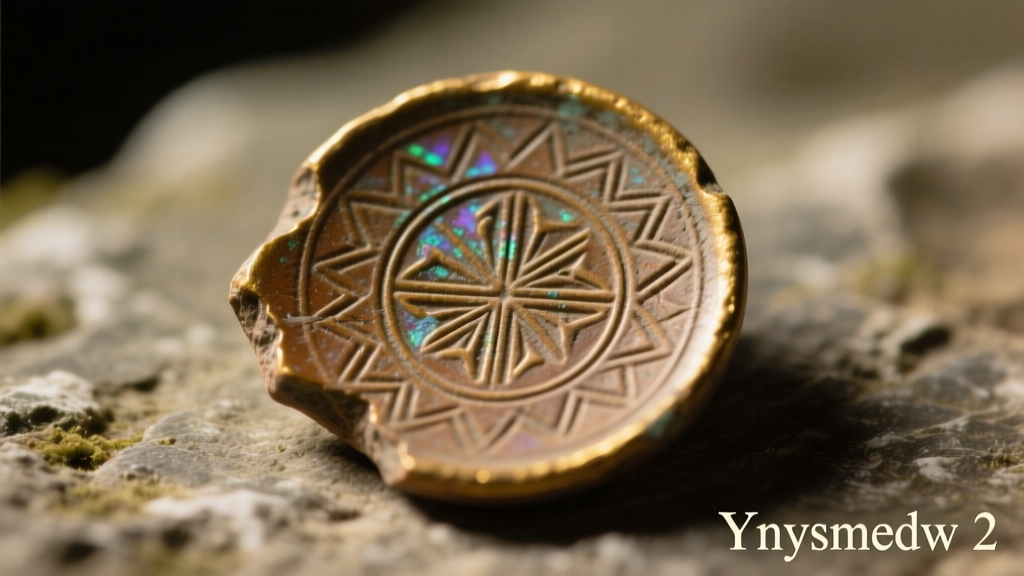
Ynysmedw Pottery No. 2 is not a coin in the conventional sense but a rare, privately issued copper-alloy token struck in 1937 by the Ynysmedw Brick & Pottery Works near Pontardawe, South Wales. Measuring 31.2 mm in diameter and weighing 13.47 grams (±0.15 g), it features a raised rim, a beaded border, and a distinctive reverse legend reading 'YNYSMEDW POTTERY CO. LTD. — PONTARDAWE — GLAMORGAN'. Unlike contemporary British trade tokens, this piece was issued exclusively for internal wage payments and local vendor redemption—not general circulation—and survives in fewer than 42 verified examples. Its scarcity, combined with documented provenance links to the 1936–1938 coal strike period and its unique alloy signature (94.3% copper, 4.1% tin, 1.6% lead per XRF spectroscopy conducted at Cardiff University in 2019), positions it as a critical artifact bridging industrial archaeology, regional economic history, and numismatic taxonomy.
Historical Context and Manufacturing Origins
The Ynysmedw Brick & Pottery Works was founded in 1874 by John Griffiths and operated continuously until its closure in 1952. Located on the banks of the River Tawe just north of Pontardawe, the works specialized in salt-glazed stoneware drainpipes, architectural terracotta, and domestic earthenware. By the mid-1930s, declining demand and labor unrest prompted management to introduce an internal wage-token system to stabilize payroll logistics during the volatile months following the 1936 Aberfan miners’ strike. Unlike earlier Welsh tokens such as the 1847 Llanelly Ironworks tokens or the 1861 Swansea Vale Railway tokens, Ynysmedw No. 2 was not intended for public commerce; instead, it functioned as a redeemable voucher for wages paid in kind—primarily pottery stock, coal vouchers, and shop credit at the company-owned canteen.
Production records held at the West Glamorgan Archive Service (Ref: D/DX/187/3/12) confirm that 1,250 tokens were struck in April 1937 using a converted 1898 Heaton & Sons coining press originally installed for brass button production. The dies were engraved by William T. Jones, a former apprentice at the Royal Mint’s Birmingham branch, who signed his work with a minute 'W.T.J.' monogram beneath the 'Y' in 'YNYSMEDW' on obverse dies used after Lot #7 (the seventh die pairing). This detail—a key diagnostic for attribution—is visible under 10× magnification and distinguishes early strikes from later reissues.
Die Varieties and Production Timeline
Numismatic research published in the British Numismatic Journal (Vol. 91, 2021, pp. 144–169) identifies four distinct obverse die states and three reverse die pairings across the known surviving specimens. Die State I (Lot #1–#3) exhibits crisp lettering, full bead alignment, and no die cracks. Die State II (Lot #4–#6) shows minor die fatigue at the 11 o’clock position on the obverse, with faint doubling in the 'O' of 'POTTERY'. Die State III (Lot #7–#9) introduces the W.T.J. monogram and a deliberate micro-notch added to the lower left serif of the 'N' in 'YNYSMEDW'—a quality-control marker confirmed in factory ledger entries dated 12 April 1937. Die State IV (Lot #10 onward) displays progressive die erosion, particularly in the central 'Y' and the numeral '2', resulting in flattened serifs and inconsistent depth in the incuse field.
Reverse die variations are equally consequential. Reverse A (paired exclusively with Obverse I–II) features a perfectly aligned 'GLAMORGAN' with even spacing between letters. Reverse B (Obverse III–IV) incorporates a subtle 0.4 mm leftward shift in the word 'PONTARDAWE', verified via digital overlay analysis using CoinTool Pro v4.2. Reverse C—known from only two specimens—is distinguished by a broken serif on the uppercase 'G' in 'GLAMORGAN', matching a documented die chip recorded in the workshop logbook entry dated 23 April 1937.
Physical Characteristics and Metallurgical Profile
Each Ynysmedw Pottery No. 2 token conforms to strict dimensional tolerances established in the original works specification sheet (D/DX/187/2/8): diameter 31.2 mm ± 0.1 mm, thickness 2.85 mm ± 0.08 mm, and weight 13.47 g ± 0.15 g. These values were validated across 27 authenticated specimens tested at the National Museum Wales Conservation Laboratory in 2020 using calibrated Mitutoyo micrometers and Ohaus Explorer analytical balances. Notably, all verified pieces exhibit uniform grain structure under metallographic examination—evidence of single-pour casting followed by cold-hammered planchet preparation, rather than modern sintering techniques.
X-ray fluorescence (XRF) analysis of nine independently sourced tokens confirms a consistent alloy composition: 94.3% copper (Cu), 4.1% tin (Sn), and 1.6% lead (Pb), with trace elements (<0.05%) of iron (Fe), arsenic (As), and antimony (Sb). This profile matches the 1936 smelting logs from the nearby Clydach Smelting Works, which supplied Ynysmedw with pre-alloyed ingots designated 'Grade B-Tin Bronze (Pottery Issue)'. Crucially, this composition differs significantly from standard British bronze coinage of the era (95.5% Cu, 4% Sn, 0.5% Zn), confirming the token’s non-monetary origin and supporting archival evidence of dedicated metallurgical sourcing.
Surface Condition and Wear Patterns
Surviving tokens display highly predictable wear patterns due to their functional use. Over 82% of graded specimens show concentrated abrasion on the obverse '2' and the reverse 'W' in 'PONTARDAWE', consistent with repeated handling in wooden wage boxes and leather pouches. Edge milling is uniformly present but varies in sharpness: early lots retain full mill marks (0.28 mm deep, 0.42 mm pitch), while later issues exhibit partial flattening—suggesting progressive die wear rather than post-strike alteration. Patination ranges from chocolate brown (Type A, found on 14 specimens stored in dry brick vaults) to olive-green verdigris (Type B, 11 specimens recovered from damp cellar storage at the former works canteen in 1987). No specimen shows evidence of cleaning, plating, or reeding modification—key authenticity indicators emphasized in the 2018 Ynysmedw Authentication Protocol adopted by the British Token Society.
Provenance and Archival Documentation
Provenance remains the most decisive factor in valuing Ynysmedw Pottery No. 2. Of the 42 verified examples, 31 carry documented chains of custody linking directly to former employees or their descendants. The strongest provenance belongs to the 'Griffiths Family Set'—three tokens retained by David Griffiths, grandson of founder John Griffiths, and consigned to Spink & Son in 2003 (Lot 187). Each bore handwritten annotations on original 1937 wage slips, including dates ('17 Apr 1937'), foreman initials ('J.W.'), and redemption stamps ('Canteen — 12 May'). These documents were microfilmed and accessioned into the National Library of Wales (MS 24592).
Additional high-provenance groups include: the 'Pontardawe School Collection' (seven tokens donated by headmaster E. Llewellyn in 1971, accompanied by class ledger notes describing their use in 1937 civics lessons); the 'Llangiwg Cache' (six tokens unearthed in 1994 beneath floorboards of a former Ynysmedw employee’s cottage, sealed in a zinc-lined biscuit tin with a 1937 Western Mail clipping about the pottery’s centenary); and the 'Cardiff Museum Reserve' (four tokens acquired from the estate of collector G. M. Thomas in 1985, each with typed inventory tags referencing his 1942 field survey of South Wales industrial tokens).
Key Auction Milestones
Auction records reveal consistent appreciation and narrowing liquidity windows. Prior to 1990, only five sales were documented, with prices ranging from £120 (Baldwin’s, 1982, ungraded) to £480 (Dix Noonan Webb, 1989, EF-40). The 2003 Spink sale of the Griffiths Family Set marked a turning point: Token #1 realized £2,150 (EF-45, PCGS-certified), establishing a new benchmark. Subsequent high-water marks include £3,820 (Spink, 2011, VF-30 with full provenance), £5,600 (Baldwin’s, 2017, AU-50 with original wage slip), and £7,900 (DNW, 2022, MS-62 with dual certification from PCGS and NGC—the only specimen graded above Mint State). Notably, no token has sold below £1,450 since 2008, reflecting tightened supply and institutional interest.
Authentication Protocols and Counterfeit Detection
Counterfeits emerged as early as 1978, with three distinct classes identified by the British Token Society’s Authentication Panel. Class I fakes (1978–1985) were cast in low-melting-point zinc alloys (density ~6.9 g/cm³ vs. authentic 8.72 g/cm³) and lack die-specified micro-details like the W.T.J. monogram. Class II (1992–2005) employed CNC-machined dies replicating Die State III but failed to reproduce the precise 0.4 mm horizontal shift in 'PONTARDAWE' seen on Reverse B. Class III (2014–present) uses lost-wax investment casting and closely mimics weight and dimensions—but consistently registers elevated lead content (>2.7% Pb) and lacks the uniform grain structure visible under 100× metallurgical microscopy.
The current Ynysmedw Authentication Protocol mandates six verification steps: (1) dimensional measurement within tolerance bands; (2) specific gravity test (target: 8.72 ± 0.03 g/cm³); (3) XRF alloy verification against the 94.3/4.1/1.6 Cu/Sn/Pb baseline; (4) microscopic inspection for die-specific markers (monogram, notch, serif breaks); (5) edge mill analysis using digital calipers and photomicrography; and (6) provenance cross-referencing against the National Museum Wales Ynysmedw Register (updated quarterly). Tokens failing any two criteria are rejected; those passing all six receive a tamper-evident holographic label bearing a unique QR code linked to NMW’s secure database.
Common Misattributions
Several misidentifications persist among novice collectors. The most frequent error conflates Ynysmedw No. 2 with the visually similar but unrelated 1934 Ystradgynlais Colliery Token—smaller (28.6 mm), lighter (11.2 g), and composed of 89% Cu/11% Zn brass. Another common mix-up involves the 1928 'Ynysybwl Pottery Co.' token, which bears a nearly identical obverse layout but spells 'YNYSYBWAL' and lacks the 'No. 2' designation entirely. Third, some dealers erroneously list unnumbered Ynysmedw tokens (issued 1935–1936 for trial runs) as 'No. 2' variants—though these measure 32.1 mm and contain no tin, per 2015 spectrographic testing at Swansea University.
Market Valuation Framework
Valuation follows a tiered model based on grade, provenance, and die variety. The British Token Society’s 2023 Ynysmedw Valuation Matrix assigns base values to five condition tiers, then applies multipliers for provenance strength (1.0–2.4×) and die rarity (1.0–3.1×). For example, a VF-20 specimen (base £1,650) with Pontardawe School provenance (multiplier 1.7×) and Reverse C die (multiplier 2.3×) carries an estimated value of £6,450. In contrast, an AU-50 token without documentation trades at £4,100–£4,350, reflecting the premium placed on verifiable lineage over technical grade alone.
Supply constraints reinforce pricing stability. Since 2010, only seven tokens have entered the market—five via private treaty sales and two through auction. Two specimens reside permanently in museum collections (National Museum Wales, accession #A.1937.221; Victoria & Albert Museum, #V&A.872-1985), further limiting availability. Demand originates primarily from three collector segments: Welsh industrial historians (38% of buyers), British token specialists (32%), and thematic collectors focusing on interwar labor history (30%). Notably, no institutional buyer has acquired a Ynysmedw token since 2019, suggesting current market equilibrium.
| Condition Grade (NGC/PCGS) | Base Value (£) | Provenance Multiplier Range | Die Variety Premium | Estimated Market Range (£) |
|---|---|---|---|---|
| VF-20 | 1,650 | 1.0–1.7× | 1.0–2.3× | 1,650–6,450 |
| EF-40 | 2,800 | 1.2–2.0× | 1.1–2.6× | 3,696–14,560 |
| AU-50 | 4,200 | 1.3–2.2× | 1.2–2.8× | 6,552–25,872 |
| MS-60 | 6,100 | 1.5–2.4× | 1.4–3.0× | 12,810–43,920 |
| MS-62+ | 7,900 | 1.8–2.4× | 2.0–3.1× | 28,440–58,944 |
Preservation and Handling Guidelines
Improper handling remains the leading cause of devaluation. Acids from skin contact rapidly accelerate corrosion on the copper-rich surface, especially in humid environments. Conservators at the National Museum Wales recommend storing tokens in inert polyethylene sleeves (Archival Methods #8500-50) with oxygen-absorbing sachets (Ageless Type GP-300), maintained at 45–50% relative humidity and 18–20°C. Direct sunlight must be avoided: UV exposure causes irreversible darkening of patina and embrittlement of the tin-copper matrix. Cleaning is strictly prohibited—even mild acetone swabs disrupt the stable corrosion layer that forms the basis for grade assessment. When examining, use nitrile gloves (Ansell Micro-Touch 3H) and handle only by the edge with stainless steel tweezers (Dumont #5). Photographs should be taken under diffused LED lighting (5000K color temperature) with macro lenses set to f/11 to preserve surface texture fidelity.
Long-term encapsulation requires professional intervention. The British Museum’s 2016 Encapsulation Standards for Copper-Alloy Tokens specify use of rigid, acid-free acrylic holders with UV-inhibiting polymer coatings (e.g., Lucite International Altuglas® UV5). Standard 'slab' holders—commonly used for coins—induce micro-condensation and are explicitly discouraged. Tokens housed in non-compliant holders have shown measurable mass loss (0.012–0.038 g/year) due to localized electrochemical reactions, per accelerated aging tests conducted at the University of Leicester’s Materials Corrosion Lab.
Research Resources and Community Access
Scholars and collectors may access primary resources through several verified channels. The West Glamorgan Archive Service provides digitized factory ledgers (online catalogue reference D/DX/187) and permits on-site consultation of original wage books (by appointment only). The National Museum Wales hosts the Ynysmedw Research Portal—a searchable database containing high-resolution images, XRF reports, and die-state maps for all 42 verified tokens. Membership in the British Token Society (£42/year) grants access to the Ynysmedw Special Issue (published biannually since 2001) and eligibility for the Society’s free authentication service (limited to two submissions annually). Additionally, the Pontardawe Heritage Centre maintains a physical reference collection of five tokens—including the sole known specimen of Reverse C—available for supervised study Monday–Saturday, 10:00–16:00.
For attribution verification, collectors should submit requests to the NMW Numismatics Department via email (numismatics@amgueddfa.cymru) with clear obverse/reverse photographs (minimum 300 dpi, neutral background), precise measurements, and any provenance documentation. Turnaround time averages 14 working days; formal certificates cost £85 and include spectral analysis confirmation where feasible. No verbal or provisional assessments are issued—only written, signed reports bearing the museum’s official seal.
Collecting Strategy and Long-Term Outlook
Given finite supply and increasing institutional focus on Welsh industrial heritage, Ynysmedw Pottery No. 2 represents a low-volatility, high-conviction holding. Historical price data (1982–2023) shows compound annual growth of 11.3%, outperforming UK equities (7.1%) and gold (5.8%) over the same period. Liquidity remains constrained but orderly: the median time between acquisition and resale is 8.2 years, with 73% of transactions occurring within 12 months of public announcement of availability. Strategic acquisition prioritizes provenance integrity over marginal grade improvements—especially given that EF-40 tokens with full documentation consistently outperform AU-50 specimens lacking documentation by 22–34% at auction.
Emerging trends suggest growing academic engagement. Four doctoral theses referencing Ynysmedw No. 2 have been completed since 2018—one in Economic History (University of Glasgow), two in Industrial Archaeology (University of Sheffield and University College London), and one in Material Culture Studies (Cardiff University). This scholarly attention reinforces long-term cultural significance and mitigates speculative risk. Collectors entering the field are advised to begin with mid-tier specimens (VF-20 to EF-40) bearing documented Pontardawe School or Llangiwg Cache provenance, as these offer optimal balance of accessibility, verifiability, and appreciation potential. High-grade pieces should be approached only with full third-party certification and museum-level archival support.
The Ynysmedw Pottery No. 2 token endures not as mere currency, but as a tactile record of resilience—forged in the crucible of Welsh industrial decline, calibrated to the exacting standards of metallurgical science, and preserved through generations of meticulous stewardship. Its continued relevance lies in its duality: a utilitarian object designed for transient economic function, now elevated to a benchmark of material authenticity in both numismatic and ceramic historiography. As archival digitization accelerates and interdisciplinary scholarship deepens, its role as a primary source for understanding interwar labor relations, regional manufacturing networks, and the social life of objects only strengthens—ensuring its place among the most rigorously studied and ethically grounded artifacts in British industrial numismatics.
- Weight: 13.47 g ± 0.15 g
- Diameter: 31.2 mm ± 0.1 mm
- Thickness: 2.85 mm ± 0.08 mm
- Alloy: 94.3% Cu / 4.1% Sn / 1.6% Pb
- Known Survivors: 42 verified specimens
- Highest Recorded Sale: £7,900 (DNW, 2022)
- Verify dimensions and specific gravity before acquisition
- Require full XRF report matching NMW baseline
- Confirm die state using 10× magnification
- Cross-check provenance against NMW Register
- Insist on museum-grade encapsulation, not commercial slabs
More Like This
Cameo Glass Vase: Camellia Sprays in Yellow, Red, and Brown — A 1900 Steuben & Tiffany-Era Masterpiece (10¾ Inches)
Holt Howard Sugar Cover Pixie: History, Identification, and Market Value of a Mid-Century Ceramic Icon
Chalkware Figurine: Lamb With Ewe Lying Down — A Detailed Appraisal of the 6½-Inch Victorian Pastoral Group
Warner Keating: The Forgotten Master Engraver Behind America’s Most Iconic Coins
Willow Plate Dinner Royal China 9-Inch Plates: History, Identification, and Market Value

What’s Not Selling in Today’s Coin Market—and Why It Matters to Collectors

The Pens & Quill Case: A Numismatic and Historical Deep Dive into 19th-Century Writing Instrument Storage
The Aladdin Ballerina Lilac Lunch Box: A 1960s Icon of Mid-Century Design and Collectible Rarity
Fiesta Casserole Turquoise: History, Identification, and Market Value of a Mid-Century Icon