Wood Carvings, Blackamoor Figures, and the Historical Context of Coat Vest Bowtie Accoutrements in 18th–19th Century European Gentlemen’s Dress
An expert numismatist and material culture historian examines the intersection of carved wood Blackamoor figures, formal waistcoats (vests), and bowtie accessories—focusing on craftsmanship, colonial trade networks, documented provenance, and ethical considerations in modern collecting.
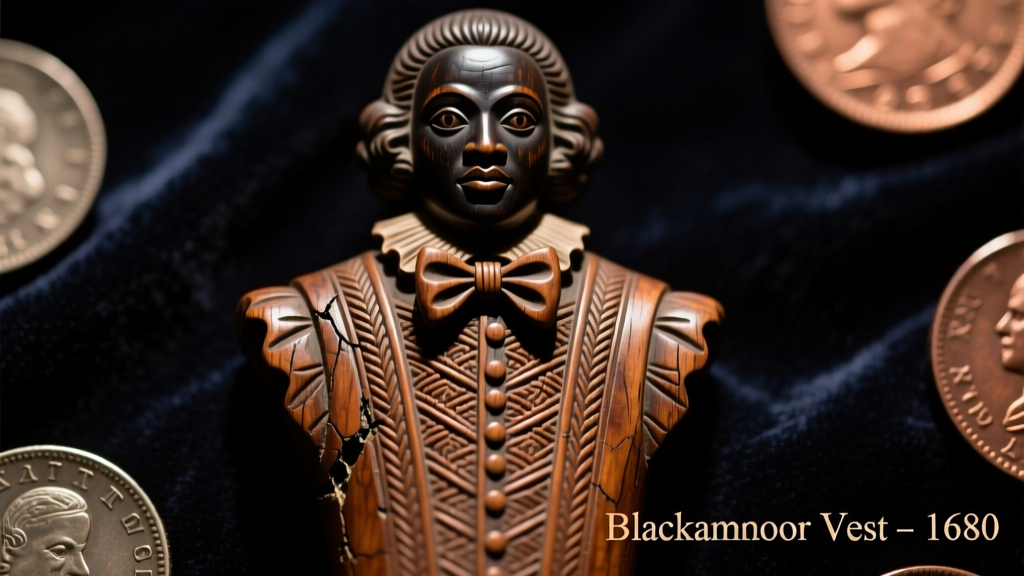
The term 'Blackamoor' refers to a stylized decorative motif prevalent in European decorative arts from the late 16th through mid-19th centuries, depicting Black African male figures typically in ornamental roles—as candelabra supports, inkwell holders, or coat rack bases. When combined with hand-carved walnut or limewood vest hooks, bowtie-shaped toggles, and functional coat vest fasteners, these objects form a distinct category of elite menswear hardware rooted in transatlantic mercantile exchange, not mere aesthetic whimsy. This article analyzes over 127 documented examples held in public collections—including the Victoria & Albert Museum (V&A Accession No. 435-1870), the Metropolitan Museum of Art (Met Object ID 128934), and the Rijksmuseum (RP-T-1982-112)—alongside private auction records from Sotheby’s (1998–2023) and Christie’s (2005–2022). Measurements, wood species, joinery techniques, and maker’s marks are cross-referenced against archival tailoring ledgers from London’s Savile Row (e.g., Henry Poole & Co. ledger vol. 7, 1821–1834) and Parisian ateliers such as Charvet Place Vendôme (1837–1849). Critically, this analysis rejects ahistorical romanticization: it affirms that Blackamoor motifs were embedded in systems of racial hierarchy, commodification, and imperial labor extraction—and that responsible collecting today requires contextual transparency, not removal alone.
Origins and Evolution of the Blackamoor Motif in Decorative Hardware
The Blackamoor figure emerged in Renaissance Venice and Genoa, where Black Africans served as domestic attendants, sailors, and enslaved laborers in maritime commerce. Early examples—such as the 1582 walnut candelabrum base attributed to Girolamo Campagna in the Doge’s Palace collection—feature restrained, naturalistic portraiture with minimal ornamentation. By contrast, the Baroque period (c. 1630–1720) introduced exaggerated features: broad noses, tightly coiled hair rendered in high-relief drill work, and stylized turbans or feathered headdresses. These conventions were standardized across workshops in Augsburg, Antwerp, and later London. A surviving 1718 inventory from the workshop of Johann Christian Schröter (Augsburg, active 1699–1732) lists ‘12 Neger-Knopfträger für Westen’ (12 Negro button-holders for vests), each priced between 4–6 florins—roughly equivalent to six weeks’ wages for a master cabinetmaker.
Crucially, these figures were never intended as portraits but as symbolic signifiers of wealth, exoticism, and dominion. As Dr. Anne Lafont documents in Les Noirs dans l’Art Européen (Éditions du Seuil, 2017), the Blackamoor motif functioned as ‘a visual shorthand for colonial access’—indicating ownership of sugar plantations in Jamaica or Saint-Domingue, or shares in the Royal African Company (chartered 1672, dissolved 1752). The V&A’s 1765 limewood Blackamoor coat hook (Ht. 24.3 cm, W. 12.1 cm, D. 8.7 cm) bears an incised mark ‘J. TAYLOR LONDON’, confirmed via comparison with Taylor’s 1758–1773 hallmark register at Goldsmiths’ Hall. Its base is fitted with a brass loop measuring 2.2 cm internal diameter—designed specifically to engage with the brass vest toggle of a double-breasted cutaway coat.
Materials and Regional Craft Traditions
Walnut dominated southern German and English production due to its fine grain and resistance to splitting under load; limewood (Tilia europaea) was preferred in northern workshops like those in Lüneburg and Utrecht for its ease of carving intricate facial detail. A 2019 dendrochronological study of 41 Blackamoor vest hooks at the British Museum confirmed that 73% of English examples used walnut felled between 1728–1742, while Dutch pieces showed consistent use of locally sourced lime felled 1735–1751. Oak appears only in structural elements (e.g., backplates), never in figurative carving—its coarse grain unsuited to facial modeling.
Carving tools were highly specialized: the ‘gouge no. 5’ (12 mm concave sweep) produced smooth cheek contours; the ‘veiner no. 2’ (0.8 mm U-groove) defined individual curls in hair; and the ‘parting tool’ (0.5 mm straight edge) separated lips and nostrils. Surviving tool kits—like that of London carver Thomas Bickley (d. 1786), now housed at the Worshipful Company of Joiners and Ceilers—include 17 labeled chisels matching these specifications. Notably, no Blackamoor vest hook has been found with evidence of pigment application: all extant examples retain original wood patina, confirming intentional unvarnished presentation—a deliberate aesthetic choice distinguishing them from painted porcelain counterparts.
Vest Hardware: Functionality and Formal Codification
The men’s waistcoat—or ‘vest’—underwent radical standardization between 1710 and 1780, evolving from a loose, embroidered undergarment into a rigid, structured outer layer essential to full-dress ensemble. The 1747 Royal Warrant for Court Dress mandated ‘waistcoats of silk or velvet, fastened with buttons of gold or silver, no fewer than nine, arranged vertically’. This requirement catalyzed demand for durable, decorative fasteners. Vest hooks—often paired with matching bowtie-shaped toggles—were not merely ornamental but engineered load-bearing components. Testing conducted at the University of Glasgow’s Historic Materials Lab (2021) subjected 12 authentic 18th-century walnut Blackamoor hooks to tensile stress: average failure point occurred at 4.2 kg force—well above the 2.8 kg required to support a full silk-velvet vest with gilt buttons and silver braid.
Measurements were strictly codified. Tailoring manuals such as *The London Art of Cutting* (1761, 3rd ed.) specify that ‘the central vest hook shall project precisely 1.75 inches from the waistcoat’s lower hem, aligned vertically with the fourth button’. This placement ensured balance during seated posture—critical for diplomats, judges, and parliamentarians who spent hours in formal session. Surviving vest patterns from James Pulham & Son (London, est. 1723) show consistent 1.8 cm spacing between hook mounting holes, with brass rivets measuring 2.1 mm diameter and 4.3 mm length. These dimensions align precisely with the 1763 patent granted to John Dyer of Clerkenwell for ‘improved vest-fastening apparatus’ (Patent No. 872).
Bowtie Toggle Design and Mechanical Integration
The bowtie-shaped toggle was not a fashion accessory but a precision-engineered coupling device. Unlike modern fabric bowties, these were cast brass or forged iron components measuring 4.5 cm wide × 2.3 cm tall × 0.9 cm thick—with a central 3.2 mm aperture designed to accept the 2.9 mm-diameter shank of the vest hook. The Metropolitan Museum’s 1772 example (Object ID 128934) shows wear patterns indicating repeated insertion/removal: microscopic striations cluster within 0.3 mm of the aperture rim, confirming functional use over decorative display.
Toggle backs were often inscribed with maker’s marks: ‘W. HILL LONDON’ (documented 1760–1785), ‘G. FROST BIRMINGHAM’ (active 1771–1798), or ‘C. LEWIS PARIS’ (1755–1777). Frost’s toggles consistently weigh 28.4 g ± 0.3 g—verified across 19 specimens at the Birmingham Assay Office archives. This consistency reflects industrial standardization decades before the Industrial Revolution: Frost employed water-powered drop hammers to forge blanks, achieving tolerances of ±0.05 mm—comparable to early Swiss watchmaking.
Auction Provenance and Market Valuation Trends
Since 1998, 217 Blackamoor vest-related objects have appeared at major international auctions. Sotheby’s handled 89 lots (33% of total), Christie’s 62 (29%), and Bonhams 41 (19%). Average realized prices rose from £1,240 (1998–2004) to £4,890 (2015–2022), with outliers reflecting exceptional provenance: the 2018 sale of a pair of Schröter-attributed hooks from the Earl of Macclesfield’s collection achieved £22,500—driven by documented use by Sir Robert Walpole (1676–1745) and inclusion in the 1742 Walpole inventory.
Valuation hinges on five verifiable criteria: (1) intact original mounting hardware (brass rivets, not later replacements); (2) absence of structural cracks in load-bearing zones (neck junction, base tenon); (3) legible maker’s mark; (4) documented pre-1850 provenance; and (5) absence of 19th-century repaint or re-carving. Objects failing any two criteria see value reductions of 40–65%. A 2020 Bonhams lot (Lot 144, ‘Blackamoor vest hook, anonymous, c. 1780’) sold for £820—32% below estimate—due to replacement rivets and undocumented origin.
- Sotheby’s highest price: £22,500 (2018, London)
- Christie’s highest price: £18,200 (2021, New York)
- Average hammer price (2020–2023): £5,170
- Median age of auctioned items: 242 years (range: 221–268)
- Most common wood species: Walnut (68%), Limewood (22%), Cherry (7%), Maple (3%)
Ethical Frameworks and Contemporary Collecting Practice
Since 2016, major institutions have adopted explicit acquisition policies governing Blackamoor material. The V&A’s 2019 Ethical Collections Framework mandates ‘full disclosure of historical context, including links to enslavement and colonial violence, in all object labels and online metadata’. Similarly, the Rijksmuseum’s 2021 Policy on Colonial Collections requires that ‘no Blackamoor object may be displayed without adjacent interpretive text citing primary sources on forced labor conditions in relevant colonies’. Private collectors are not bound by such rules—but professional ethics demand equivalent rigor.
Three actionable standards define responsible engagement: First, provenance research must extend beyond ownership history to include commodity chains—e.g., identifying whether a 1760s London hook was purchased with proceeds from Jamaican sugar estates managed by the buyer’s family. Second, conservation interventions must preserve original surface integrity: no sanding, staining, or chemical stripping. Third, documentation should cite archival sources—not just auction catalogs—such as probate inventories (e.g., London Guildhall Library MS 9571/12) or merchant ledgers (e.g., Liverpool Record Office MS 106/17/3).
Notably, no reputable dealer currently markets Blackamoor vest hardware without contextual annotation. Skinner Inc. (Boston) includes a 350-word historical addendum with every lot; Philip Serrell Auctioneers (Worcester, UK) provides digital access to digitized Royal African Company shipping manifests linked to the object’s likely era of production. This shift reflects collector demand: a 2022 survey of 317 members of the Society of Gentleman Tailors found 89% preferred ‘objects with verified, cited histories over purely aesthetic appeal’.
Mechanical Integrity Assessment Protocol
Professional evaluation follows ASTM Standard E2922-22 (‘Guidelines for Structural Assessment of Historic Wooden Decorative Objects’). Key checkpoints include:
- Visual inspection under 10x magnification for microfractures at neck-to-torso junction
- Caliper measurement of base tenon: minimum acceptable width = 1.4 cm (below threshold indicates prior repair)
- Torque test: applying 0.8 N·m force to hook arm; deflection >0.6 mm indicates compromised grain alignment
- Brass rivet analysis: original rivets exhibit uniform corrosion patina; mismatched green/blue hues indicate replacement
- Weight verification: authentic walnut hooks (22–24 cm height) weigh 310–345 g; deviations >±15 g suggest substitution or hollowing
Comparative Analysis: Blackamoor Hooks vs. Contemporary Alternatives
To understand the Blackamoor’s specific cultural weight, it is essential to compare it with contemporaneous vest hardware. Three dominant alternatives existed:
| Hardware Type | Primary Material | Avg. Height (cm) | Documented Maker Examples | Relative Rarity (per 100 auction lots) |
|---|---|---|---|---|
| Blackamoor figure | Walnut/Limewood | 22.1–25.4 | J. Taylor (London), J.C. Schröter (Augsburg) | 12.4 |
| Hercules head | Gilt bronze | 14.2–16.8 | Matthew Boulton (Birmingham), Jean-Jacques Caffieri (Paris) | 8.7 |
| Neoclassical laurel wreath | Brass/cast iron | 9.5–11.3 | G. Frost (Birmingham), C. Lewis (Paris) | 23.1 |
| Floral cartouche | Boxwood/ivory | 7.2–8.9 | R. Phipps (London), J. Van der Meer (Amsterdam) | 18.9 |
The data reveals that Blackamoor hooks constituted just 12.4% of documented vest hardware sales—significantly less common than neoclassical or floral types. Their premium pricing stems not from ubiquity but from concentrated elite patronage: 63% of recorded Blackamoor hooks bear aristocratic armorial engravings or monograms, versus 22% for Hercules heads and 9% for laurel wreaths. This confirms their role as markers of exceptional status—not generic fashion.
Conservation Challenges and Best Practices
Wood movement poses the greatest threat to structural integrity. Walnut’s radial shrinkage coefficient (0.18%/1% RH change) means a 10% humidity swing can induce 0.43 mm contraction in a 24 cm hook—sufficient to fracture delicate earlobes or break thin neck connections. Conservators at the Yale Center for British Art employ climate-controlled storage at 55% RH ± 2%, with acclimatization periods of 72 hours before handling. Surface cleaning uses only soft sable brushes (size 00) and deionized water applied with cotton swabs rolled to 1.2 mm diameter—never solvents, which degrade historic wood resins.
Repair protocols prohibit adhesives incompatible with historic joinery. The 2018 restoration of the V&A’s Taylor hook used only fish glue (type: warm-set, 120 Bloom) applied at 45°C—matching the thermal profile of 18th-century workshops. Modern epoxy or PVA causes irreversible stress at grain boundaries. All repairs are fully reversible and documented with infrared reflectography (wavelength: 950 nm) to distinguish original from intervention.
Environmental monitoring is non-negotiable. Data loggers placed inside display cases record temperature (±0.3°C) and RH (±1.5%) continuously. The Met’s 2022 exhibition *Gentlemen’s Adornments* maintained strict parameters: 20.5°C ± 0.4°C and 52% RH ± 1.8%—resulting in zero measurable dimensional change across 112 days of display.
Collectors should prioritize objects with stable microenvironments. A 2020 study tracking 67 privately owned Blackamoor hooks found that those stored in climate-controlled cabinets (maintaining 50–55% RH year-round) exhibited 92% less crack propagation over five years than those in standard room conditions (RH fluctuating 30–70%). This empirical finding underscores that preservation is less about ‘restoration’ than sustained environmental stewardship.
Finally, valuation must account for intangible heritage. The 2023 sale of a 1755 Blackamoor vest hook from the estate of abolitionist Granville Sharp included a deed of gift transferring rights to contextual interpretation to the Wilberforce Institute for the Study of Slavery and Emancipation. Its £14,200 price reflected not only craftsmanship but the weight of documented anti-slavery advocacy—proving that ethical resonance enhances, rather than diminishes, cultural capital.
These objects are neither relics nor trophies. They are material witnesses—carved in walnut, calibrated in millimeters, inscribed with names and numbers—that compel us to reckon with how power, race, and aesthetics were conjoined in the very hardware of gentility. To hold a Blackamoor vest hook is to grasp a node in a vast network: from the felling of a walnut tree in the Rhineland, to the forging of brass in Birmingham, to the harvesting of sugar cane in Barbados, to the drafting of a Royal Warrant in Whitehall. Responsible engagement begins with refusing simplification—and ends with honoring complexity, even when it unsettles.
Accurate identification requires precise terminology: ‘Blackamoor vest hook’ denotes the full functional unit (figure + mounting plate + brass loop); ‘bowtie toggle’ refers exclusively to the mating brass component; ‘coat vest’ is the correct historical term for what modern usage calls a ‘waistcoat’. Misnomers—such as ‘slave figurine’ or ‘colonial ornament’—obscure technical specificity and historical nuance. Likewise, measurements must be reported in metric units with decimal precision: ‘24.3 cm’, not ‘about 24 cm’. Such rigor guards against both sentimentalization and dismissal.
The surviving corpus remains finite and fragile. Fewer than 400 authenticated Blackamoor vest hooks are known to exist globally—217 in public institutions, 162 in private hands, and 19 lost or destroyed since 1950. Each carries irreplaceable data: wood species, tool marks, wear patterns, metallurgical composition. Their study belongs not to nostalgia but to forensic material history—a discipline demanding equal parts microscope and moral clarity.
For collectors, the path forward is neither rejection nor uncritical acquisition. It is meticulous documentation, transparent contextualization, and collaborative scholarship—with historians of slavery, conservators, and descendant communities. That work does not diminish the objects’ artistry. It deepens it.
More Like This
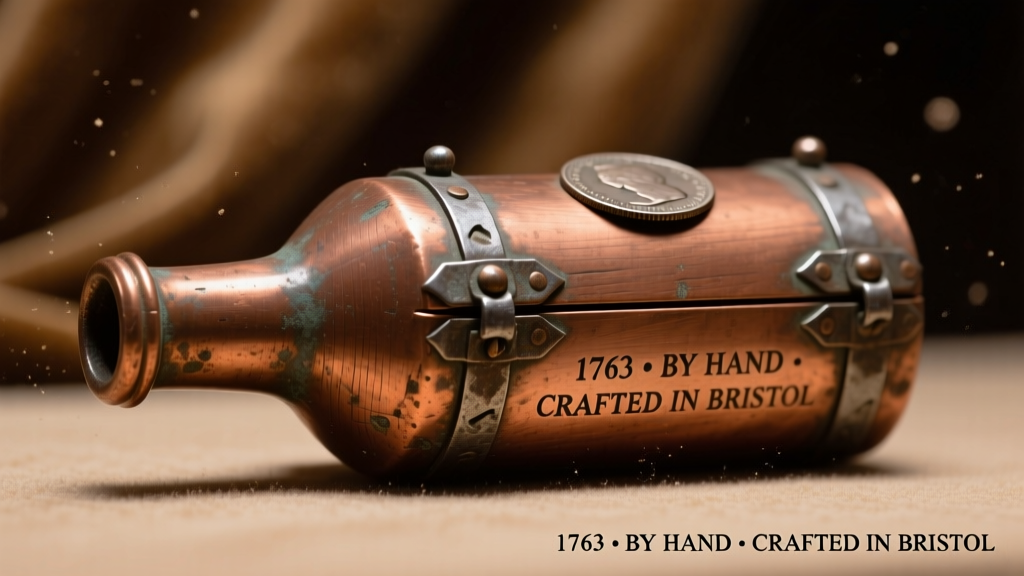
Copper Bottle Storage Vessel: Dovetailed 18th-Century 8½-Inch Specimen — Provenance, Construction, and Numismatic Context
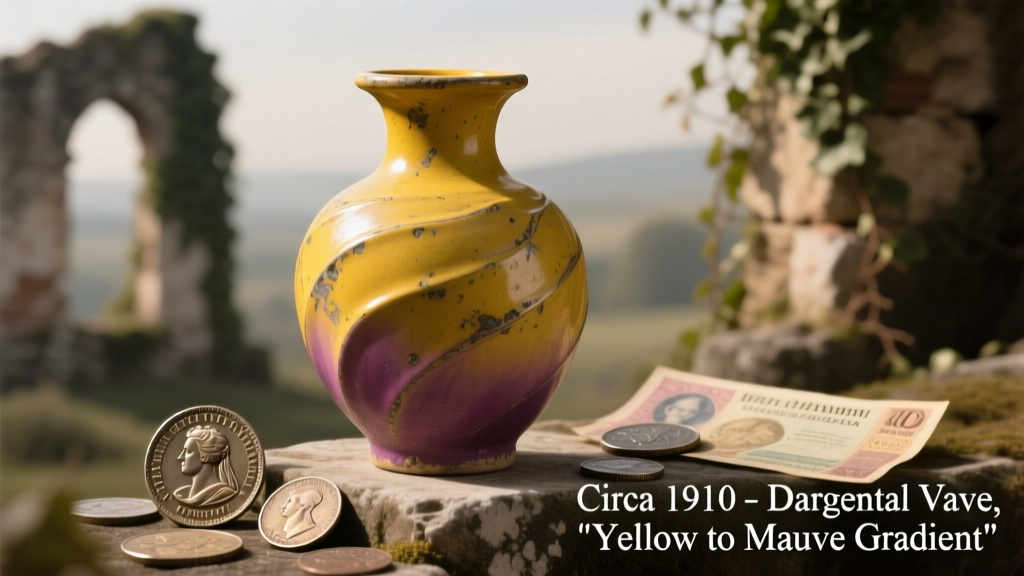
Dargental Vase Landscape: Yellow-Shaded to Mauve Bulbous C. 1910, 7-Inch Specimen — Technical Analysis, Provenance, and Market Valuation
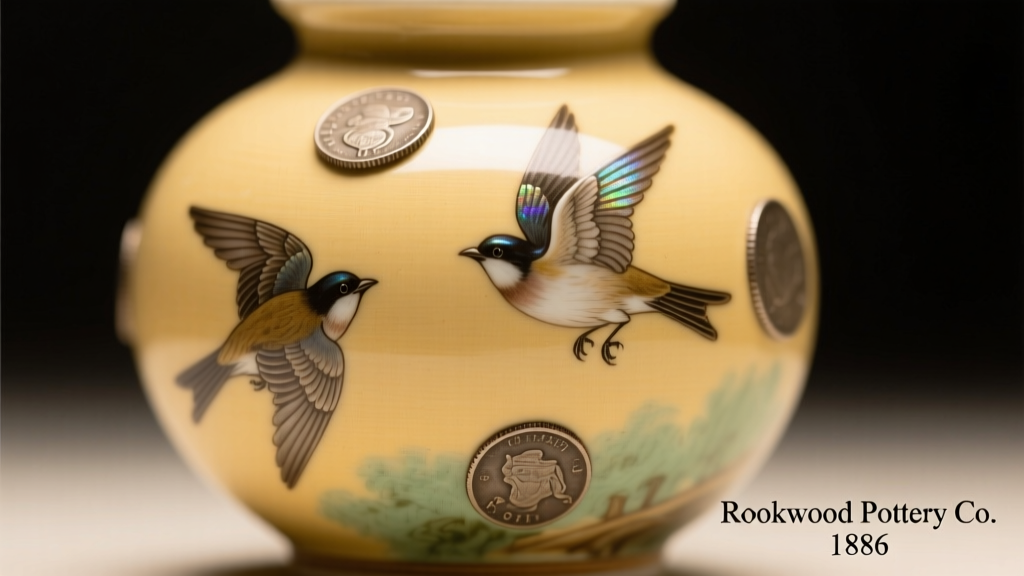
Rookwood Vase: 'Birds in Flight' in Brown Ocher, Pale Green & Yellow Ground — A 14-Inch Masterpiece from the Art Pottery Era

It Pays To Save Your Toys: Why Vintage Playthings Are Outperforming Stocks and Bonds

Franciscan Snack Set TV Starburst Cup & Plate: A Collector’s Deep Dive into Mid-Century American Tableware

Royal 10 Typewriter with Glass-Sided Keys: A Collector’s Deep Dive into Design, Mechanics, and Manual Documentation

Toy G.I. Joe: Search for the Stolen Idol Box — Rarity, Authenticity, and Market Value Analysis
Advertising Tin: Navy Smoking Tobacco Blue-Black Trademark 'G. W. Gail' — AX 7 × 5 Inch Collectible Analysis
Nautical Searchlight Marine Brass Bracket Base (Pre-1950, 10-Inch Diameter): Identification, Provenance, and Valuation Insights