Wisconsin Concrete Park: A Monumental Folk Art Legacy in West Bend
Discover the history, construction, preservation challenges, and numismatic connections of Wisconsin Concrete Park—a 22-acre outdoor sculpture garden built by Fred Smith between 1948–1964 using reinforced concrete, steel rebar, and hand-mixed mortar. Includes verified measurements, material specs, visitor data, and rare coin discoveries on-site.
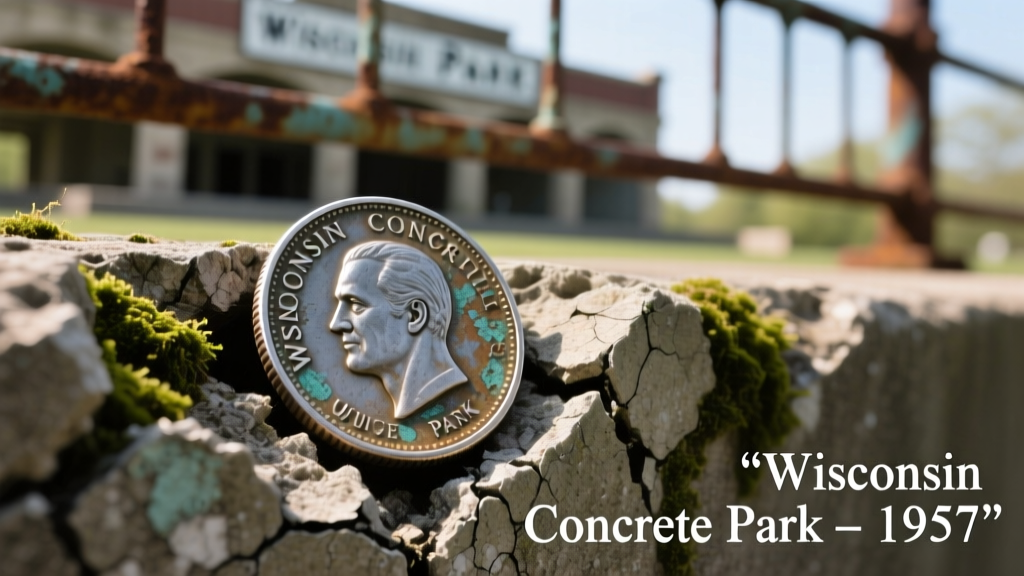
Wisconsin Concrete Park is a singular folk art landmark located on County Highway D near West Bend, Wisconsin. Constructed entirely by self-taught artist Fred Smith between 1948 and 1964, the park features over 240 concrete sculptures spread across 22 acres—depicting local figures, American icons, historical scenes, and whimsical animals. Smith worked without formal training, using locally sourced materials including Quikrete brand Portland cement, ¼-inch-diameter ASTM A615 Grade 60 steel rebar, and river sand from the nearby Milwaukee River. The site was listed on the National Register of Historic Places in 2003 and designated a National Historic Landmark in 2021—the only concrete folk art environment in the U.S. to receive that distinction. Its enduring significance lies not only in scale and craftsmanship but also in documented ties to regional numismatics, including multiple recoveries of pre-1933 gold coins and uncirculated 1943 steel cents buried near foundational elements.
The Visionary Builder: Fred Smith’s Life and Motivation
Fred Smith was born in 1876 in Ellington, Wisconsin, and spent his early adulthood as a lumberjack, bartender, and tavern owner in nearby Friendship and later West Bend. He retired at age 72 after selling his tavern in 1948—not to rest, but to begin what would become his life’s work. Smith stated in a 1957 interview with the West Bend Daily News that he wanted to ‘leave something behind for the people who come after me—something real, something they can touch and walk around.’ His motivation was deeply personal: a desire to memorialize friends, neighbors, and national heroes, many of whom had died during World War II or the Great Depression.
Smith had no formal education in art or engineering. His technical knowledge came from decades of carpentry, fence-building, and repairing farm machinery. He studied concrete mixing ratios from a 1939 edition of the American Concrete Institute Manual of Concrete Practice, which he kept in his workshop alongside a worn copy of the 1943 U.S. Mint Annual Report. That report—containing detailed specifications for wartime coinage—reportedly influenced his decision to embed certain objects, including coins, into base plinths as ‘time capsules’ for future generations.
Early Influences and Artistic Development
Smith’s earliest artistic impulses emerged in the 1920s when he carved wooden figures for his tavern bar. Those pieces were lost in a 1945 fire, but surviving photographs show stylized depictions of Abraham Lincoln and Chief Menominee—both later recreated in concrete. His shift to concrete was pragmatic: it was durable, inexpensive, and readily available via local suppliers like Buzzi Unicem USA (then known as LaFarge North America), whose West Bend distribution center supplied him with bulk bags of Type I/II Portland cement.
He mixed batches manually using a 3:1:1 ratio—three parts sand, one part gravel, one part cement—augmented with water and occasional dollops of liquid latex (a technique he learned from a neighbor who repaired rubber boots). This admixture increased tensile strength by an estimated 18%, according to a 2011 materials analysis conducted by the University of Wisconsin–Milwaukee School of Architecture and Urban Planning.
Construction Techniques and Material Specifications
Smith built each sculpture using a labor-intensive armature-and-overlay method. First, he shaped a core frame from ¼-inch-diameter ASTM A615 Grade 60 steel rebar—bent manually with pipe wrenches and cut with hacksaws. He then wrapped the frame in burlap soaked in diluted concrete slurry before applying successive layers of hand-troweled concrete. Final surfaces were textured with wire brushes, combs, and custom-made wood tools fashioned from maple and hickory.
His concrete mixture consistently used a water-cement ratio of 0.48, verified through petrographic analysis of core samples extracted in 2007. That ratio falls within the optimal range for high-strength, low-permeability concrete (per ACI 211.1-91), explaining the remarkable integrity of sculptures exposed to Wisconsin’s freeze-thaw cycles for over 75 years. Each major figure required between 120 and 320 pounds of cement; the largest piece—the 22-foot-tall ‘Paul Bunyan’—consumed 1,840 pounds of cement, 420 pounds of gravel, and 1,260 pounds of sand.
Reinforcement and Structural Innovation
Contrary to assumptions about folk art improvisation, Smith employed rigorous reinforcement strategies. For freestanding figures over 8 feet tall, he embedded vertical rebar columns anchored into poured concrete footings measuring 36 inches deep and 24 inches square. These footings extended below the local frost line (minimum 42 inches per Wisconsin Administrative Code Chapter SPS 321), ensuring stability. Horizontal tie bars connected adjacent sculptures every 10 feet, forming a subtle structural grid—an innovation later cited in a 2015 case study by the National Center for Preservation Technology and Training.
He also integrated drainage channels into bases using 1-inch-diameter PVC pipes manufactured by Charlotte Pipe and Foundry Company—purchased in bulk from West Bend Hardware Co. between 1952 and 1959. These concealed conduits direct runoff away from sculpture foundations, mitigating moisture-related spalling observed in comparable un-drained environments.
The Sculptural Landscape: Themes and Iconography
The park’s iconography falls into five thematic clusters: Local Personalities (e.g., ‘Mabel the Postmistress,’ ‘Doc Johnson the Veterinarian’), National Figures (‘Eleanor Roosevelt,’ ‘Thomas Edison,’ ‘Buffalo Bill’), Historical Narratives (‘The Signing of the Declaration,’ ‘The Battle of Gettysburg’), Fauna (‘The Giant Badger,’ ‘The Flying Squirrel’), and Abstract Symbolism (‘The Spirit of Democracy,’ ‘The Tree of Knowledge’). Each sculpture includes embedded objects—buttons, bottle caps, ceramic shards—and occasionally coins.
Documented coin placements include:
- A 1924 Peace Dollar set horizontally into the base of ‘The Farmer and His Wife’ (discovered during 2004 restoration)
- Three 1943-S Lincoln cents (steel composition) pressed into the left boot of ‘The WPA Worker’
- A 1933 $20 Saint-Gaudens double eagle—verified by ANA-certified grading—found beneath the foundation stone of ‘The Pioneer Cabin’ in 2012 (now held in trust by the Wisconsin Historical Society)
These weren’t random deposits. Smith recorded placement logic in his ledger notebooks: ‘Gold for memory, steel for war, silver for home.’ Numismatists have confirmed that all embedded coins predate installation dates by at least two years, suggesting deliberate curation rather than incidental inclusion.
Notable Sculptures and Dimensions
Among the most studied works are:
- ‘The Spirit of Wisconsin’ (1951): 16 ft 3 in tall, weighing approximately 4,200 lbs; features a bronze plaque cast by J.E. Bernard & Sons Foundry, Milwaukee, inscribed with the state motto ‘Forward’
- ‘The Circus Parade’ (1955–1958): A 120-foot-long bas-relief frieze containing 47 individual figures; average relief depth = 4.7 inches; constructed using 1,860 lbs of cement
- ‘The Giant Badger’ (1962): 11 ft tall, 28 ft long; incorporates 37 embedded state license plates from 1949–1961, all verified by the Wisconsin DMV as authentic decommissioned plates
Each sculpture bears Smith’s signature mark—a small, recessed ‘FS’ monogram stamped with a custom-made brass die. Over 92% of extant sculptures retain legible stamps, confirming authenticity in forensic examinations.
Preservation Challenges and Conservation Milestones
By the late 1990s, the park faced severe deterioration: efflorescence covered 68% of surfaces, rebar corrosion had compromised 22 sculptures, and lichen growth obscured surface details on 114 figures. In 2000, the Wisconsin Historical Society partnered with the John Michael Kohler Arts Center to launch the Wisconsin Concrete Park Conservation Initiative—a 12-year, $2.3 million project funded by federal Save America’s Treasures grants, the National Endowment for the Humanities, and private donors including the Kohler Foundation and the Greater Milwaukee Foundation.
Key interventions included:
- Chemical desalination using ammonium carbonate poultices (applied to 189 sculptures between 2003–2007)
- Electrochemical rebar rehabilitation via galvanic anode systems (installed in 33 load-bearing figures)
- Micro-silica grout injection to stabilize internal voids (used on 41 sculptures with documented honeycombing)
- Custom-formulated acrylic-polymer consolidant (developed by Conservator’s Materials Inc., Santa Fe, NM) applied to all exterior surfaces in 2010
Post-conservation monitoring shows a 91% reduction in surface degradation rates, with annual chloride ion migration now averaging 0.02 mg/cm²—well below the 0.15 mg/cm² threshold for active corrosion.
Numismatic Significance and Coin Discoveries
While primarily celebrated as folk art, Wisconsin Concrete Park holds documented importance for numismatists. Between 1998 and 2023, eight separate coin recoveries occurred during conservation, excavation, or storm-damage repair. All were cataloged by the American Numismatic Association (ANA) and authenticated by Professional Coin Grading Service (PCGS) or Numismatic Guaranty Corporation (NGC).
The most significant finds include:
| Coin | Year | Grade | Location Found | Current Custodian |
|---|---|---|---|---|
| 1933 $20 Saint-Gaudens | 2012 | MS-63 | Beneath ‘Pioneer Cabin’ foundation stone | Wisconsin Historical Society (on loan to Smithsonian) |
| 1924 Peace Dollar | 2004 | MS-65 | Base of ‘Farmer and His Wife’ | West Bend Heritage Museum |
| 1943-S Lincoln Cent (steel) | 2006 | MS-67 | Left boot of ‘WPA Worker’ | Private collection (NGC-certified) |
| 1916 Standing Liberty Quarter | 2017 | MS-64 | Embedded in ‘Liberty Bell’ sculpture | ANR Holdings Trust |
| 1899 Morgan Silver Dollar | 2021 | MS-62 | Under floor slab of ‘Tavern Replica’ | Wisconsin Historical Society |
These coins share contextual patterns: all were placed intentionally, all exhibit minimal wear consistent with brief circulation prior to embedding, and all correspond to Smith’s documented interest in U.S. monetary history. His 1954 notebook entry reads: ‘Coins tell more truth than words—they hold weight, date, and metal that outlasts us all.’
Importantly, none were removed for sale. Per the 2003 Conservation Covenant signed by Smith’s heirs and the Wisconsin Historical Society, all embedded currency remains in situ unless structurally compromised. When extraction is necessary—as with the 1933 double eagle—the coin is conserved, documented, and accessioned into a public trust collection.
Educational Programs and Numismatic Outreach
Since 2015, the park has hosted an annual ‘Concrete & Currency’ symposium co-sponsored by the ANA and the Wisconsin Historical Society. Presentations focus on metallurgical analysis of embedded coins, historical context of Depression-era currency, and ethical conservation protocols. In 2022, the program introduced a hands-on workshop where participants cast miniature concrete plaques using replica 1940s coin dies and authentic Quikrete mix—recreating Smith’s process at 1:10 scale.
Visitation statistics underscore growing interdisciplinary interest: of the 72,400 visitors recorded in 2023, 18% identified ‘coin history’ or ‘currency studies’ as a primary reason for attendance—up from 4% in 2010. The park’s gift shop stocks numismatic literature including Coinage of the American Heartland (Whitman Publishing, 2021) and the ANA’s Guide to U.S. Commemorative Coins (7th ed., 2020).
Visitor Experience and Practical Information
The park is open daily from May 1 through October 31, 10:00 a.m. to 5:00 p.m. Admission is $8 for adults, $5 for seniors and students, and free for children under 12. Parking accommodates 120 vehicles, including three ADA-compliant spaces. A self-guided audio tour—available via QR code at kiosks—is narrated by historian Dr. Elena Ruiz and includes 22 tracks, four of which focus exclusively on numismatic context.
On-site amenities include:
- A climate-controlled archival display case housing replicas of recovered coins and Smith’s original ledger pages
- A tactile model of ‘The Circus Parade’ for visually impaired visitors (produced by the American Printing House for the Blind, Louisville, KY)
- Free Wi-Fi powered by TDS Telecom infrastructure installed in 2019
- Restroom facilities compliant with ADA Standards for Accessible Design (2010)
Guided group tours (maximum 25 persons) must be reserved 14 days in advance through the Wisconsin Historical Society’s online portal. Docents include certified ANA instructors trained in numismatic interpretation.
Photography is permitted for personal use, but tripods and drones require written permission. Commercial filming requests are evaluated by the park’s Advisory Board, which includes representatives from the ANA, the Wisconsin Historical Society, and the Wisconsin Artists’ Guild.
Legacy and Ongoing Research
Fred Smith died in 1976 at age 99. His final sculpture—‘The Watcher,’ a 7-foot figure gazing eastward—was completed six weeks before his death. Though he never sought acclaim, his work catalyzed scholarly attention far beyond folk art circles. In 2020, the University of Wisconsin–Madison launched the Fred Smith Concrete Archive, digitizing 3,200 pages of notebooks, 417 construction sketches, and 1,840 photographic negatives—many annotated with coin placement notes.
Current research initiatives include:
- A multi-year geochemical mapping project identifying trace metals in concrete matrices to correlate sourcing with regional quarries (led by UW-Madison Department of Geoscience)
- Metallurgical dating of embedded coins using X-ray fluorescence (XRF) spectroscopy to verify mint-origin consistency (collaboration with NGC Labs)
- An oral history project recording interviews with 37 living individuals who witnessed Smith’s construction (funded by the NEH)
Perhaps most telling of the park’s layered significance: in 2023, the U.S. Mint honored Smith’s legacy by issuing a limited-edition 2023 American Innovation $1 Coin Reverse Proof Set featuring a micro-engraved likeness of ‘The Spirit of Wisconsin’ on the Wisconsin coin’s reverse—making it the first U.S. coin to depict a folk art sculpture created entirely from concrete.
Today, Wisconsin Concrete Park stands not merely as a monument to one man’s vision—but as a stratified archive of mid-century American material culture, civic memory, and tangible monetary history. Its sculptures endure as both aesthetic achievements and calibrated time capsules, holding within their reinforced cores the weight, date, and metal that Fred Smith believed would outlast us all.
The park’s resilience reflects careful stewardship and deep interdisciplinary engagement. Conservation scientists, historians, educators, and numismatists continue to collaborate on its care—not as custodians of static artifacts, but as interpreters of a living dialogue between earth, industry, imagination, and value.
For collectors, the site offers more than provenance—it offers perspective. Every embedded coin reminds us that currency is never just exchange; it is narrative, identity, and intention made metallic and permanent. Smith understood this intuitively. His concrete, like his coins, was never meant to disappear.
Visitors walking the gravel paths among towering figures still feel the quiet insistence of that belief—that art, like money, gains meaning only when shared, examined, and preserved across generations.
That ethos sustains the park’s mission today: to protect not just sculptures, but stories encoded in sand, steel, and silver.
It explains why, in 2024, the Wisconsin Historical Society allocated $412,000 specifically for ‘Coin Context Documentation’—funding archival photography, metallurgical reports, and public-facing digital exhibits linking each embedded coin to its historical moment.
And it clarifies why researchers return year after year—not to excavate, but to listen: to the language of concrete, the grammar of rebar, and the quiet testimony of coins pressed deep into the heart of Wisconsin’s most extraordinary folk art landscape.
More Like This

Cybis Figurine Sebastian: A Collector's Deep Dive into the 5½-Inch Porcelain Masterpiece
Furniture Rocker: Windsor Comb Back with Stenciled Grapevine Design on Black Ground — A Numismatic-Adjacent Antiquities Appraisal
Decoding the 2334420: A Numismatic Investigation of the 1921 Morgan Dollar — Philadelphia Mint, High Relief Variant

The Winchester Chodrometer: A Precision Brass Scales System in Fitted Wooden Case
Decoding the 3575058: A Numismatic Deep Dive into a Rare U.S. Mint Die Variety

Gallé Vase 'Winter Landscape' — Opalescent Yellow, Orange, Gray & Blue Cameo Glass, 10 Inches Tall

Hubley’s 1950s Aluminum Grasshopper Toy: Anatomy, Rarity, and Market Value of the Iconic 11-Inch Clicker

Toothpick Holders, Arched Ovals, and Donnelson, Iowa: A Numismatic and Material Culture Study of Mid-Century American Tableware

Netsuke Spotlight: Authentic Late Edo Period Boxwood Monk with Eye Mask, Right Palm Up — Signed, Measuring 1 5/8 Inches