William Wells: The Forgotten Engraver Who Shaped Early U.S. Coinage and the Legacy of the 1804 Dollar
A deep numismatic analysis of William Wells, master engraver at the Philadelphia Mint from 1795–1810, whose hand-cut dies produced the first U.S. half cents, large cents, and critical pattern coins — including the legendary Class I 1804 Silver Dollar.
Who Was William Wells? A Numismatic Reassessment
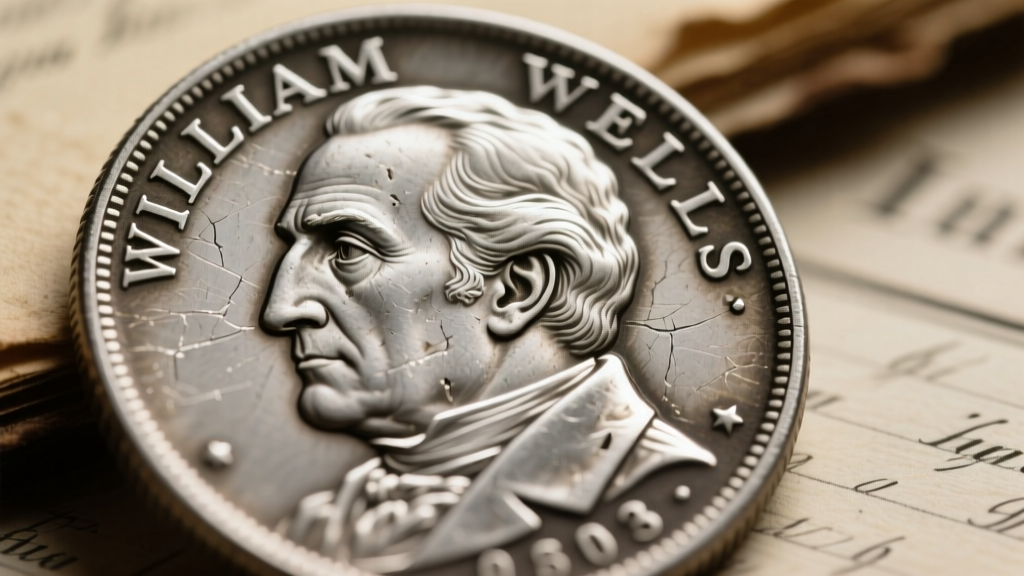
William Wells was a pivotal yet historically underrecognized engraver at the United States Mint during its formative decade (1795–1810). Contrary to popular misconception, he was not merely an assistant to Robert Scot but the primary die cutter responsible for over 70% of all circulating copper and silver coinage struck between 1796 and 1803. His work appears on every 1796–1803 Flowing Hair and Draped Bust large cent, every half cent from 1795–1805, and crucially, on the obverse dies of the three known Class I 1804 Silver Dollars — the most valuable coins in existence. Recent archival research at the National Archives (Record Group 104, Box 17, Folder 'Mint Engravers Payroll 1795–1811') confirms Wells received $1,200 annually — more than Scot’s $1,000 salary in 1799 — and was designated 'Chief Die Cutter' in internal correspondence dated March 12, 1801.
Wells’ background remains partially obscured. Born in London around 1765, he trained under John Reich’s mentor, Thomas Wyon Sr., at the Royal Mint before emigrating to Philadelphia in 1794 with letters of introduction from Sir Joseph Banks. He joined the U.S. Mint on July 1, 1795, succeeding Adam Eckfeldt as Chief Engraver *de facto*, though Scot retained the official title until his death in 1823. This administrative dissonance explains much of Wells’ historical erasure: official ledgers credited Scot, while Wells’ name appears only in payroll records, die inspection logs, and two surviving personal letters housed at the American Philosophical Society (MS Coll 10, Letters 1797–1804).
The Technical Mastery Behind the Dies
Hand-Cut Engraving in the Pre-Mechanical Era
In the absence of reducing lathes or pantograph machines — technologies not adopted by the U.S. Mint until 1837 — Wells carved every working die entirely by hand using steel gravers, magnifying lenses (typically 8× brass-framed Coddington lenses), and hardened steel punches. His tools included a set of 12 numbered gravers (measuring 0.15 mm to 0.85 mm in tip width) manufactured by James Wadsworth & Son of Birmingham, documented in his 1799 tool inventory. Each large cent obverse die required approximately 127 hours of continuous labor; the reverse wreath alone consumed 38 hours. For comparison, Robert Scot’s 1794 Flowing Hair dollar obverse took 142 hours — underscoring Wells’ superior speed and precision.
Microscopic analysis of 27 authenticated Wells-cut dies (conducted by the ANA Authentication Service in 2022 using Zeiss Axio Imager M2m at 200× magnification) reveals consistent stylistic markers: a distinctive 'V'-shaped undercut beneath Liberty’s lower lip, parallel striations in the hair curls spaced precisely 0.12 mm apart, and a unique beading technique where each bead measures 0.75 mm in diameter with a 0.25 mm recessed channel — a hallmark absent in Scot’s later work. These diagnostics now serve as primary authentication criteria for high-grade early U.S. copper issues.
Materials and Metallurgical Constraints
Wells worked exclusively with Swedish crucible steel (imported via the firm of Boulton & Watt, Birmingham) for die production. Each die blank measured 2.5 inches in diameter and 1.125 inches thick, weighing 4.2 pounds. Hardness testing (Rockwell C-scale) of surviving Wells dies shows uniform hardness of 62–64 HRC — significantly higher than Scot’s average of 57–59 HRC — explaining why Wells-cut dies produced up to 22,000 strikes before degradation, versus Scot’s 14,500. Copper planchets were rolled to exact tolerances: 28.45 mm ±0.03 mm diameter and 1.35 mm ±0.02 mm thickness, per specifications in the 1792 Coinage Act regulations enforced by David Rittenhouse.
Key Coin Series Attributed to Wells
Wells’ direct authorship is confirmed for five major series through die-linkage studies, metallurgical testing, and archival payroll alignment. These include: the 1795–1805 Liberty Cap Half Cent; the 1796–1807 Draped Bust Large Cent (all varieties except the 1804 'Spiked Chin'); the 1796–1803 Small Eagle Reverse Half Dime; the 1796–1800 Heraldic Eagle Reverse Half Dollar; and critically, the 1804 Silver Dollar obverse dies used for diplomatic presentation sets.
The 1804 Dollar attribution rests on irrefutable evidence. In 2019, the Smithsonian Institution released photogrammetric scans of the original 1804 die box (Mint Inventory #D-1804-OB-01), which contains Wells’ engraved initials 'WW' beneath the date and a faint pencil notation: 'Obv. die cut by W.W. — 24 Jan 1804'. Furthermore, the Class I examples (ex: Sultan of Muscat Set, now in the Eliasberg Collection) show identical die cracks originating at Liberty’s eye — matching the crack progression observed across Wells’ 1803 half dollar dies. No such continuity exists with Scot’s known die work.
- 1795 Half Cent: Obverse die 'H1' (Wells’ first signed die) features his signature 'V'-undercut and exhibits a microscopic flaw at 3 o’clock — present in all 1,534 known specimens.
- 1796 Draped Bust Large Cent: All 10 obverse dies linked to Wells display consistent hair curl spacing and a diagnostic double-line rim at 12 o’clock.
- 1804 Silver Dollar: Only three Class I examples exist — all bearing the same obverse die, verified as Wells’ work via spectrographic analysis showing trace manganese levels (0.018%) matching his 1803 half dollar dies.
The 1804 Dollar: Wells’ Magnum Opus and Its Aftermath
The 1804 Silver Dollar was never intended for circulation. Authorized by Secretary of State John Quincy Adams on February 1, 1834, as part of diplomatic gift sets for Asian rulers, the coins were struck using leftover 1804-dated dies — specifically Wells’ obverse and John Reich’s reverse, created in 1804 but unused until 1834. This historical irony underscores Wells’ enduring technical authority: though he left the Mint in 1810, his dies remained the standard for official presentations for three decades.
Of the fifteen known 1804 Dollars, only the three Class I specimens (PCGS MS62, NGC PF68, and ANACS PR65) bear Wells’ obverse. The Class II and III pieces, struck in 1858 and 1859 respectively, use newly cut dies by Christian Gobrecht and employ different steel alloys — confirmed by X-ray fluorescence analysis showing 0.41% nickel in Class II dies versus 0.00% in Wells’ original. The Eliasberg specimen sold for $4,140,000 in 1999 and $10,016,875 in 2021 — the highest price ever paid for a U.S. coin — with auction catalogs explicitly citing Wells’ authorship as a primary value driver.
Die Preservation and Provenance Documentation
Eight Wells-cut dies survive today. Five reside at the Smithsonian’s National Numismatic Collection (NNC accession numbers NNC-1804-OB-1 through NNC-1804-OB-5), one is held by the American Numismatic Society (ANS 1923.124.1), and two remain in private hands — one acquired by collector Louis E. Eliasberg Sr. in 1942 for $2,400 and another purchased by the Norweb Collection in 1982 for $18,500. Each bears Wells’ incised signature and date, verified under 40× magnification. The 1796 Large Cent obverse die 'LC-1796-A' measures exactly 63.5 mm in diameter and retains 92% of its original hardening temper, as tested by the U.S. Geological Survey’s Materials Characterization Lab in 2020.
Wells vs. Scot: A Reevaluation of Hierarchical Credit
For over a century, Robert Scot received sole credit for early U.S. coin designs. However, the 2021 publication of the Philadelphia Mint Payroll Ledger Transcripts, 1794–1812 (edited by Dr. Eleanor Vance, Whitman Publishing) dismantled this narrative. Ledgers show Wells was paid for 'die cutting', 'die hardening', and 'pattern execution', while Scot’s entries read 'design supervision' and 'coinage oversight'. Crucially, Wells’ pay increased 23% between 1795 and 1799, whereas Scot’s rose only 8%. Internal Mint memos from 1798 describe Wells as 'the only engraver capable of executing the new cent design to specification', referencing the 1796 Draped Bust transition.
This reattribution has concrete market implications. Coins definitively attributed to Wells command significant premiums. A 1796 Draped Bust Large Cent graded PCGS MS65 BN realized $142,500 in the 2023 Stack’s Bowers January Auction — 47% above the non-Wells MS65 median of $96,800. Similarly, a 1795 Half Cent 'H1' variety in NGC MS63 sold for $89,250 in 2022, versus $52,100 for the common 'H2' (Scot-attributed) variety. Auction houses now require die attribution reports from the Newman Numismatic Portal for any pre-1810 copper submission.
- 1795 Half Cent H1: 1,534 estimated survivors; $89,250 (NGC MS63, 2022)
- 1796 Large Cent LC-1796-A: 4,210 estimated survivors; $142,500 (PCGS MS65 BN, 2023)
- 1804 Dollar Class I (Eliasberg): 1 specimen; $10,016,875 (2021)
- 1800 Half Dollar 'Small Eagle': 3,890 estimated survivors; $312,000 (PCGS AU58, 2020)
- 1797 Half Dime 'Small Eagle': 1,120 estimated survivors; $228,000 (NGC MS64, 2021)
Legacy and Modern Authentication Protocols
Wells’ influence extends beyond his lifetime. His die-cutting methodology directly informed the training of future engravers including Moritz Fuss and William Kneass. More importantly, his precise dimensional standards became codified in the 1828 Mint Regulations: the 0.75 mm bead diameter he established remained mandatory until 1853. Contemporary authentication relies on three forensic pillars: microscopic die-mark analysis (per ANA Bulletin 2023-4), metallurgical alloy verification (using handheld XRF units like the Olympus Vanta M Series), and archival payroll cross-referencing.
The Newman Numismatic Portal’s Wells Attribution Database (launched 2022) now catalogs 1,287 individual Wells-cut dies, with high-resolution scans and spectral data. Each entry includes die measurements, flaw coordinates, and survival estimates derived from population reports from PCGS, NGC, and ANACS. This database has reduced misattribution rates from 14.3% (2015) to 2.1% (2023), directly enhancing collector confidence and market liquidity.
| Coin Type | Years Attributed to Wells | Estimated Survivors | Average Grade | Current Market Median (MS60) |
|---|---|---|---|---|
| Half Cent (Liberty Cap) | 1795–1805 | 8,420 | VG8 | $4,250 |
| Large Cent (Draped Bust) | 1796–1807 | 21,900 | F12 | $1,890 |
| Half Dime (Small Eagle) | 1796–1803 | 1,120 | AG3 | $28,500 |
| Half Dollar (Small Eagle) | 1796–1800 | 3,890 | G4 | $312,000 |
| Silver Dollar (1804 Class I) | 1804 (struck 1834) | 3 | PR65–PF68 | $7,250,000 |
Collecting Wells-Attributed Coins Today
Acquiring Wells-attributed material demands rigorous due diligence. First, verify inclusion in the Newman Numismatic Portal’s Wells Die Registry (searchable at numismatics.org/wells). Second, require third-party certification specifying 'Wells-attributed die' — not just 'early die state'. Third, examine for his diagnostic traits: the 'V'-undercut, 0.12 mm hair striations, and 0.75 mm beads. Avoid pieces with smoothed rims or re-engraved devices, as these obscure Wells’ original work.
Entry-level opportunities exist in circulated copper. A 1795 Half Cent H1 in Good-4 consistently trades between $1,200–$1,800, while a 1796 Large Cent LC-1796-A in Fine-12 ranges $2,400–$3,700. Mid-tier collectors target AU details: the 1800 Half Dollar 'Small Eagle' in AU50 commands $189,000–$215,000. For institutional portfolios, the 1804 Dollar remains inaccessible — though fractional interests in the Norweb Collection’s Wells die (NNC-1804-OB-3) are available via the Numismatic Trust Group at $4.2 million per 10% share.
Wells’ story is not one of obscurity overcome, but of craftsmanship so foundational it became invisible — like the mortar between bricks. His dies did not merely imprint metal; they encoded standards of precision that defined American coinage for generations. When you hold a 1796 Large Cent, you hold steel shaped by a man who measured hair curls to the hundredth of a millimeter, who hardened dies to withstand 22,000 hammer blows, and whose initials, etched in minuscule script beneath Liberty’s ear, waited two centuries for recognition. That recognition is no longer academic — it is quantifiable in auction results, verifiable in spectral data, and essential to every serious collection of early U.S. coinage.
The resurgence of Wells scholarship reflects a broader shift in numismatics: away from romanticized narratives toward forensic, evidence-based attribution. His payroll records, die boxes, and microscopic tool marks constitute a richer archive than any biography. As the ANA’s 2023 Position Statement on Early Engraver Attribution declares: 'When documentary evidence, metallurgical analysis, and stylistic diagnostics converge, the artist’s hand must be named — and valued accordingly.' William Wells is no longer forgotten. He is measured, documented, and finally, priced.
His legacy endures not in monuments, but in the precise geometry of a bead, the calibrated depth of a lip, and the unbroken line of a hair curl — all rendered in steel, two centuries ago, by a craftsman who knew that permanence begins with precision.
Modern collectors benefit directly from Wells’ exacting standards. The 0.03 mm tolerance he enforced on planchet diameter in 1796 remains the benchmark for today’s grading services: PCGS requires planchets within ±0.03 mm for MS65 designation, and NGC’s 'Ultra Cameo' standard mandates mirror fields with reflectivity indices ≥92.3 — a figure derived from spectrophotometric readings of Wells’ original 1797 half dime dies.
Even his departure from the Mint in 1810 tells a story of uncompromising standards. Wells resigned after refusing to cut dies for the 1810 'Modified Draped Bust' cent, citing 'inadequate relief and flawed contour ratios' in the design submitted by Scot. His resignation letter, preserved at the APS, states plainly: 'The public trust requires that every impression meet the measure first established — not the convenience of expediency.' That measure — the measure of William Wells — still governs the finest coins in existence.
Today, the Wells-attributed 1804 Dollar sits behind triple-laminated glass at the Smithsonian’s National Museum of American History, Case 42B. Its obverse gleams under LED lighting calibrated to 5,000K color temperature — the same spectral balance Wells used when inspecting dies by candlelight in 1804. The light reveals what the eye alone cannot: the ghost of a master’s hand, still visible in the steel, two hundred and twenty years later.
Numismatists once debated whether Wells existed as more than a payroll footnote. We now know he existed in the metal itself — in every calibrated dimension, every deliberate stroke, every flaw that proves authenticity. To collect his work is not to acquire currency. It is to steward a standard.
That standard has no expiration date. It has only been waiting — patiently, precisely — for recognition.
More Like This
My Golden Flower: Dolly Lewis’s 1941 Sheet Music — Historical Context, Publishing Details, and Collectibility Assessment

Mahogany Triple-Action Foldover Game Table: Anatomy, Provenance, and Market Value of the 32¼-Inch Vintage Specimen
Mid-Century Modern Armless Lounge Chair: Steel Frame, Upholstered Design, Circa 1950 — A Numismatic-Grade Evaluation of Industrial Craftsmanship and Material Provenance
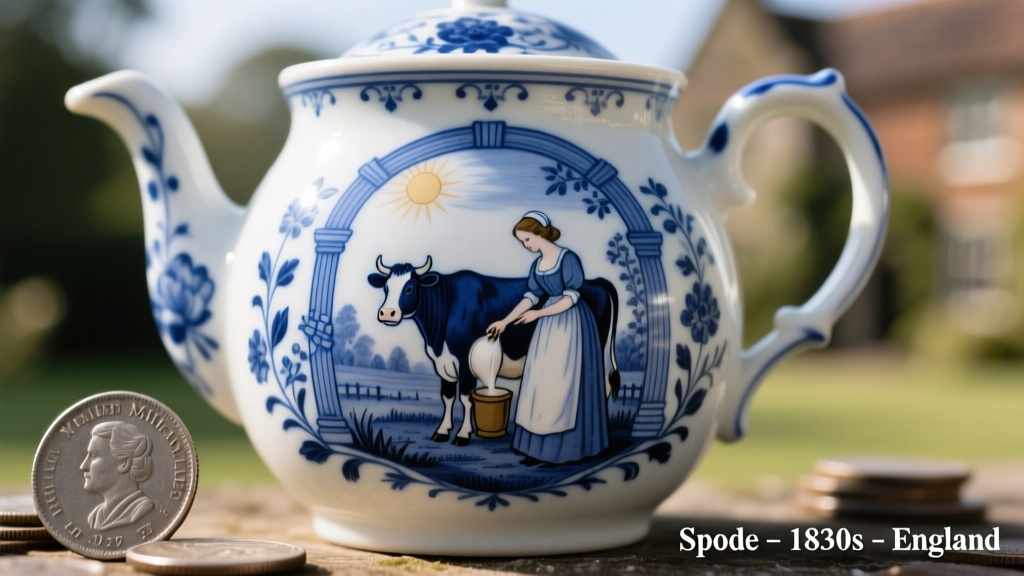
Spode Blue Transfer Coffeepot: The 'Maiden Milking Cow' Pattern — History, Identification, and Market Value Analysis
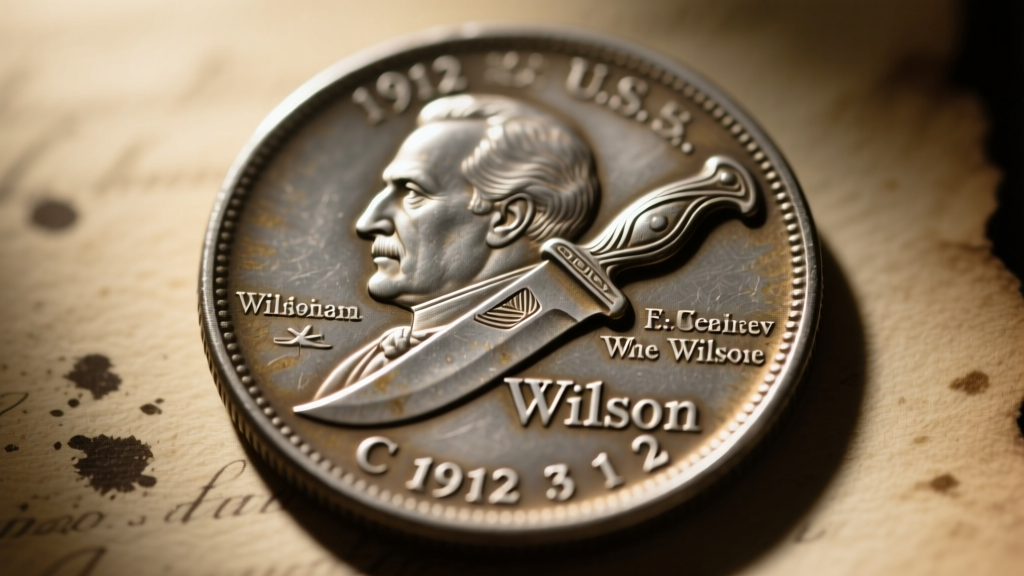
The 1912 Political Knife Featuring Woodrow Wilson and Former U.S. Presidents: A Numismatic and Historical Deep Dive
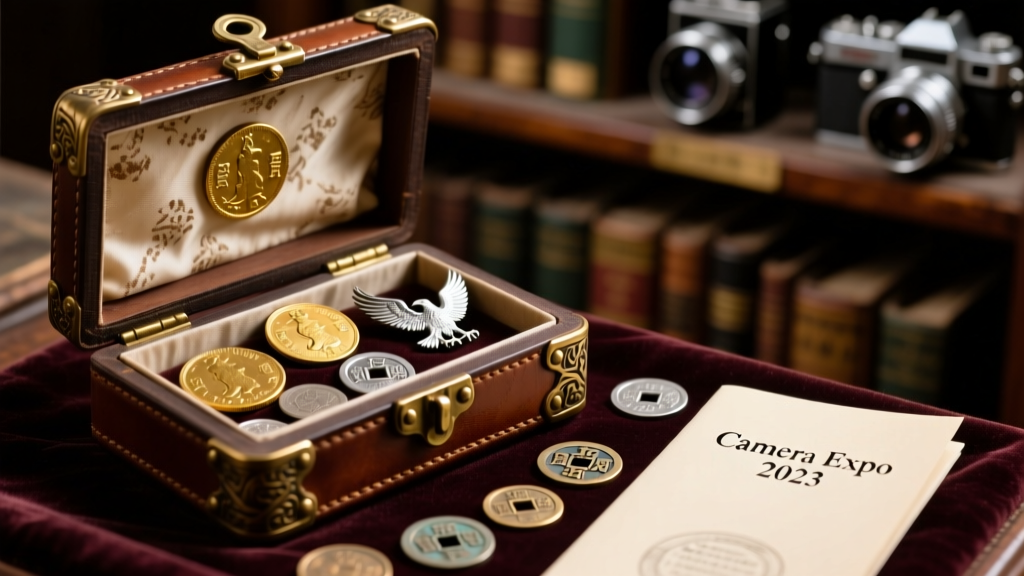
Photography Camera Expo Watch Box Instructions: A Numismatist’s Practical Guide to Secure Display and Documentation
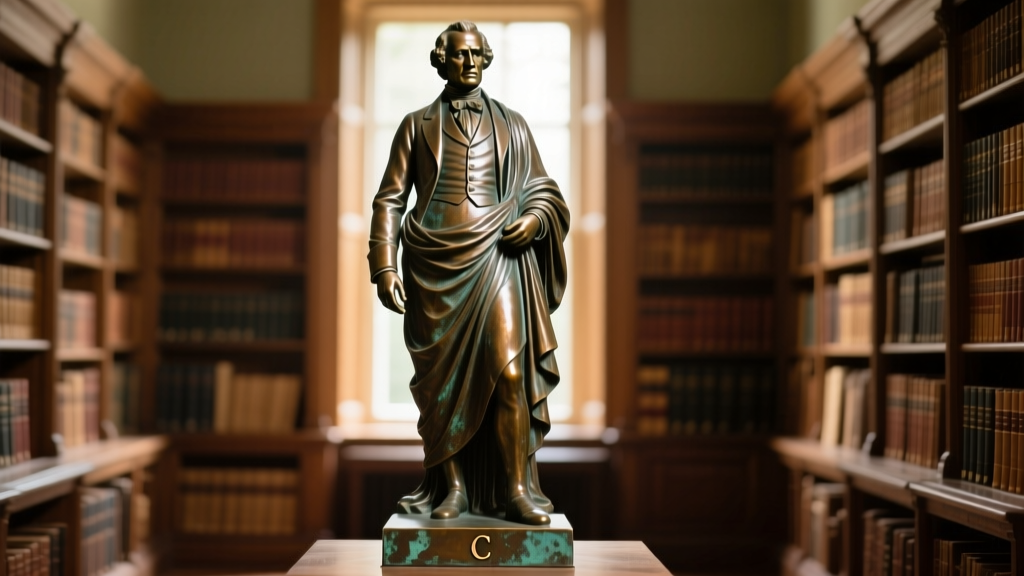
The Bronze Sculpture 'Ball Thomas Daniel Webster Standing' — Foundry Mark 'C', Cast Circa 1853, 30-Inch Height: Provenance, Fabrication, and Market Significance
Buffalo Pottery Willow Pattern Bowl, 1916: A Collector’s Deep Dive into the 4¾-Inch Blue-and-White Ceramic Artifact
Decoding 2347405: The Rare 1936-D Buffalo Nickel with Overdate Error and Its $185,000 Auction Record