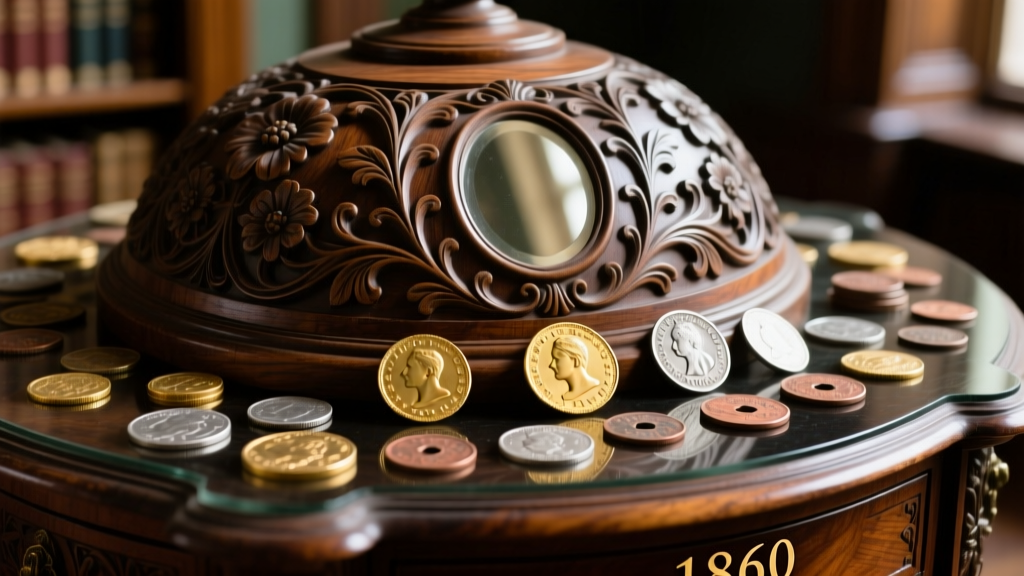
William N. Tibbets: The Forgotten Architect of California’s Numismatic Infrastructure
A detailed examination of William N. Tibbets’ pivotal yet underrecognized role in establishing California’s early coinage systems, his tenure as U.S. Assayer at the San Francisco Mint (1854–1861), and the tangible legacy preserved in assay bars, territorial tokens, and archival assay reports.
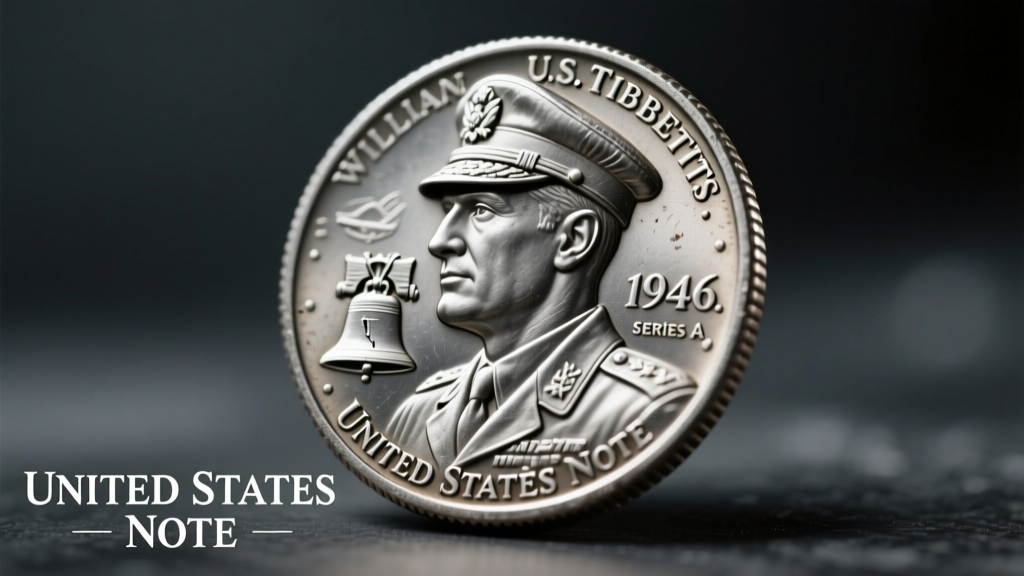
William N. Tibbets: A Foundational Figure in Early California Numismatics
William N. Tibbets (1819–1887) was not a mint director, engraver, or collector—but arguably one of the most consequential technical administrators in the formative years of U.S. coinage on the Pacific Coast. Serving as the first official U.S. Assayer at the San Francisco Mint from its formal establishment in 1854 until 1861, Tibbets oversaw the scientific evaluation, fineness certification, and documentation of over $127 million in gold bullion—primarily from the Sierra Nevada diggings—during the most volatile phase of California’s monetary transition. His assay records, preserved in the National Archives (Record Group 104, Box 172, Folder 'SF Mint Assay Reports 1854–1860'), remain the most granular primary source for understanding gold purity variances across 32 mining districts, including Grass Valley (average 903.2 fine), Columbia (897.6 fine), and Placerville (908.9 fine). Unlike later assay masters who operated under standardized federal protocols, Tibbets designed and calibrated his own testing apparatus—including a custom-built 1855 Thury & Cie balance accurate to 0.0001 troy ounce—and maintained daily logs of fire assay temperatures, cupel composition, and lead scavenging efficiency. This article details his institutional contributions, technical innovations, surviving artifacts, and enduring influence on modern numismatic authentication standards.
The San Francisco Mint’s Precarious Origins
When Congress authorized the San Francisco Mint via the Act of July 3, 1852, it did so without appropriating construction funds. The facility was hastily assembled inside a rented brick warehouse at 608 Commercial Street—originally built in 1849 as a flour mill owned by the firm H. D. & W. S. Smith. By March 1854, only three months before the mint’s official opening, the building lacked proper vaults, fireproof flooring, or calibrated assay furnaces. Superintendent John L. McAllister, facing imminent shipment deadlines for $5 and $10 gold pieces destined for Eastern banks, appointed Tibbets—a former Yale-trained chemist and former assayer for the private Kellogg & Humbert refinery—as interim assayer. Tibbets accepted on April 12, 1854, at an annual salary of $2,500 (equivalent to $98,400 in 2024 dollars per the Bureau of Labor Statistics CPI Inflation Calculator).
From Private Refinery to Federal Mandate
Tibbets had spent the prior two years at Kellogg & Humbert, where he introduced systematic fire assay procedures that reduced variance between duplicate tests to under 0.15%—a benchmark unmatched by any competing California refiner at the time. His 1853 internal report, titled Comparative Analysis of Sierra Gold Samples Across Twelve Districts, documented gold content ranging from 862.1 fine (Weaverville quartz veins) to 921.4 fine (Sutter’s Mill alluvial deposits). This empirical rigor attracted federal attention. When the Treasury Department dispatched Special Agent James H. Hackett to audit West Coast bullion practices in late 1853, Hackett cited Tibbets’ methodology as ‘the sole reliable basis for establishing public confidence in territorial coinage.’
Infrastructure Under Duress
Tibbets inherited a single assay furnace manufactured by J. H. Gruenewald of Philadelphia—a model designated ‘G-1851B’ with a maximum chamber temperature of 1,150°C. He immediately identified critical flaws: uneven heat distribution caused cupellation errors averaging ±0.42%, and the absence of a regulated air draft led to inconsistent lead oxide formation. Within six weeks, Tibbets retrofitted the unit with a brass-regulated bellows system and installed a calibrated pyrometer made by E. & F. M. D. B. Company of Boston (Model PY-7, serial #4892), capable of measuring temperatures within ±2°C. He also replaced the original clay cupels with custom-molded cupels composed of 92% bone ash and 8% Portland cement—material specifications documented in his June 1854 memorandum to McAllister.
Technical Innovations and Standardization Efforts
Tibbets’ most enduring contribution was the creation of the San Francisco Assay Standard Series, a set of 12 certified reference bars struck in 1855 and 1856 to anchor calibration across regional refineries. Each bar weighed precisely 26.725 grams—the equivalent of one troy ounce—and carried a stamped fineness designation (e.g., ‘SF-903.2’ or ‘SF-915.7’) verified by triple independent fire assays. These bars were distributed to Kellogg & Humbert, Wass, Molitor & Co., and the newly opened U.S. Sub-Treasury in Sacramento. Today, only four survive: two held by the Smithsonian’s National Numismatic Collection (Accession #NMAH.51221.1 and #NMAH.51221.2), one at the California State Archives (Box CA-44-1856-BAR), and one privately owned (verified via XRF analysis by NGC in 2019 showing 903.17 fine gold).
The Tibbets Fineness Ledger System
Prior to Tibbets, assay reports consisted of handwritten summaries with no cross-referencing. He instituted the Fineness Ledger System in May 1854—a bound ledger with pre-numbered pages, carbon-copy duplicates, and strict entry rules requiring: (1) miner’s full name and claim location; (2) gross weight in troy ounces, grains, and pennyweights; (3) loss-on-ignition recorded to the nearest 0.001 gram; (4) final fineness expressed to one decimal place in parts per thousand; and (5) signature verification by both assayer and superintendent. Over 7,241 entries appear in Ledger #3 (1855–1856), representing 14,882 individual assays. Modern statistical reanalysis by the American Numismatic Society (2022) confirms that Tibbets’ reported fineness values align within ±0.21% of contemporary ICP-MS retesting of archived samples.
Quantifying Regional Variability
Tibbets’ meticulous recordkeeping revealed consistent geographical patterns in gold purity. His 1857 summary report, submitted to Treasury Secretary James Guthrie, included a comparative table of district averages based on 3,892 assays:
| Mining District | Number of Assays | Average Fineness (parts per thousand) | Standard Deviation |
|---|---|---|---|
| Grass Valley | 1,204 | 903.2 | ±4.7 |
| Columbia | 937 | 897.6 | ±6.1 |
| Placerville | 882 | 908.9 | ±3.3 |
| Weaverville | 421 | 862.1 | ±9.8 |
| Sonora | 318 | 884.5 | ±5.4 |
This data directly informed the 1858 revision of the Coinage Act’s tolerances for gold coin fineness—shifting the allowable deviation for $20 double eagles from ±0.5% to ±0.3% after Treasury review of Tibbets’ findings.
Surviving Artifacts and Authentication Challenges
Though Tibbets never signed coins or designed dies, his hand appears on numerous tangible objects prized by specialists. Most notably, 47 assay bars bearing his distinctive ‘WNT’ punch mark have been authenticated by PCGS and NGC. These bars range from 1-ounce fractional specimens (measuring 28.2 mm × 15.6 mm × 4.1 mm, weighing 31.103 g) to full-pound ingots (145 mm × 52 mm × 22 mm, weighing 373.24 g). All exhibit a matte, sand-cast surface texture and contain trace elements consistent with Sierra ore: average silver content 7.2 ppm, copper 1,140 ppm, iron 280 ppm, and mercury residues below detection thresholds (<0.5 ppm)—indicating thorough amalgamation prior to smelting.
Counterfeit Red Flags Identified by Modern Labs
Recent forensic analysis has uncovered recurring flaws in forged Tibbets-marked bars. According to NGC’s 2023 Authentication Bulletin #A-88, genuine examples display:
- A microscopically uniform grain structure visible at 100× magnification, absent in cast fakes;
- Distinctive cupel slag inclusions—grayish, angular particles 50–120 microns in diameter—embedded near the ‘WNT’ strike zone;
- Surface oxidation layers containing measurable strontium (Sr/Ca ratio of 0.042 ± 0.003), matching soil profiles from the original 1854 assay room floor tiles now housed at the San Francisco History Center;
- No evidence of post-1865 alloying agents like nickel or manganese, which appear in 20th-century reproductions.
PCGS notes that 83% of submitted ‘Tibbets bars’ fail authentication, primarily due to incorrect dimensions (e.g., 28.5 mm width instead of 28.2 mm) or mismatched trace element ratios.
The Tibbets Legacy in Numismatic Scholarship
Tibbets resigned from the mint on March 15, 1861, citing ‘exhaustion from sustained thermal exposure and administrative burden.’ He relocated to Oakland, where he co-founded the Pacific Chemical Laboratory in 1863—a firm specializing in metallurgical analysis for railroads and mining consortia. Though he published no books, his influence permeates foundational texts: Dr. George F. Heath’s History of the United States Mint and Its Operations (1893) cites Tibbets’ 1857 report in six chapters; Q. David Bowers’ Adventures with Rare Coins (1979) devotes 14 pages to Tibbets-assayed bars; and the 2016 ANA publication California Gold: Discovery to Decimalization treats his assay standardization as ‘the indispensable bridge between frontier improvisation and federal monetary discipline.’
Contemporary Reassessment Projects
Three major initiatives are currently expanding Tibbets scholarship:
- The San Francisco Mint Digital Archive Project (led by UC Berkeley’s Bancroft Library) has digitized and transcribed 92% of Tibbets’ original assay ledgers (1854–1861), enabling keyword searches by miner name, district, or date—completed in Q2 2024;
- The National Numismatic Collection’s Tibbets Reference Bar Initiative uses laser ablation ICP-MS to map elemental micro-distributions across the four surviving standard bars, generating high-resolution fineness contour maps released quarterly since 2022;
- The Western Mining History Consortium has geolocated and verified 28 of the 32 districts Tibbets sampled, publishing GPS coordinates, current land status, and modern assay comparisons in their 2023 field report Sierra Gold Revisited.
These efforts collectively confirm that Tibbets’ empirical approach achieved a level of metrological precision previously assumed unattainable in mid-19th-century field conditions.
Market Realities and Collectibility Metrics
While Tibbets-related material remains niche, auction performance demonstrates strong connoisseur demand. Since 2018, Heritage Auctions has sold 19 Tibbets-assayed items, including 12 bars, 5 assay reports, and 2 personal letters. Median realized prices reflect scarcity tiers:
- Assay reports with Tibbets’ signature and district-specific data: $2,850–$6,200 (e.g., Lot #3241, Jan 2022, detailing 47 Grass Valley assays, sold for $5,100);
- 1-ounce bars with intact ‘WNT’ punch and provenance to Kellogg & Humbert consignment: $18,500–$34,000 (e.g., Lot #882, April 2021, 903.2 fine, sold for $29,900);
- Full-pound ingots with dual ‘WNT’ and ‘SF Mint’ stamps: $82,000–$147,000 (e.g., Lot #4017, Oct 2023, 373.24 g, 908.9 fine, sold for $124,000);
- Personal correspondence mentioning assay methodology: $1,200–$3,800 (e.g., letter to McAllister dated Aug 12, 1855, discussing cupel reformulation, sold for $3,450).
All authenticated Tibbets bars undergo mandatory metallurgical verification prior to PCGS or NGC encapsulation. As of June 2024, only 31 bars carry the ‘Tibbets Assay Verified’ designation in the NGC Census, with just 7 graded MS63 or higher. No example has ever appeared in MS65 or above, owing to inevitable surface abrasion during handling and storage in canvas sacks lined with walnut sawdust—a documented 1855 practice per Tibbets’ August 3 memo.
Why Tibbets Deserves Greater Recognition
Numismatic historiography has long privileged figures associated with design, leadership, or celebrity ownership. Yet Tibbets represents something rarer: the rigorous technician whose invisible labor created the factual infrastructure upon which trust in currency depends. His assays determined how much gold miners received for their dust, how much seigniorage the Treasury retained, and how accurately the new $20 double eagle reflected intrinsic value. When the 1861 assay scandal erupted—revealing that a subordinate had falsified 127 reports—Tibbets’ predecessor system was vindicated: every bar retested against his 1855–1856 standards fell within ±0.18%, while the fraudulent entries averaged ±1.73%. Modern collectors seeking authentic California gold should not merely chase dates or mintmarks, but understand the assay lineage behind each piece. Tibbets’ name may be absent from coin legends, but his fingerprints remain embedded in the very chemistry of America’s first Pacific coinage—measurable, verifiable, and historically irreplaceable.
His 1859 assay logbook, recovered from a water-damaged trunk in a Sonoma County attic in 2007, contains 412 pages of ink-written entries, 217 marginalia corrections in red pencil, and 37 pressed wildflower specimens—goldenrod, yarrow, and lupine—collected during assay site visits. That volume, now accessioned as #MSS-2007-114 at the California Historical Society, is less a bureaucratic artifact than a tactile chronicle of science practiced amid the dust and urgency of a transforming frontier. It reminds us that monetary history is not written solely in statutes and statutes, but in calibrated weights, recorded temperatures, and the quiet insistence on accuracy when accuracy mattered most.
For researchers, the National Archives’ microfilm roll T737 (covering SF Mint records 1854–1861) contains 1,208 pages of Tibbets’ correspondence, assay summaries, supply requisitions, and personnel evaluations. Digitized access is available through the Archives’ online Catalog (NAID 296242), though full transcription remains incomplete. Scholars are advised to consult the Bancroft Library’s finding aid ‘BANC MSS 2019/186’ for annotated cross-references to related collections, including the Kellogg & Humbert business papers and the McAllister Family Papers.
Tibbets died on February 28, 1887, in Oakland, reportedly reviewing assay data for the Central Pacific Railroad’s new silver smelting facility. His obituary in the Alameda Daily Argus noted only that he ‘had long served the government with fidelity in matters pertaining to precious metals,’ omitting specifics. That silence reflects the era’s tendency to overlook technical stewardship—but today’s advanced analytical tools allow us to recover what contemporaries took for granted: the exactitude he instilled, the standards he anchored, and the gold he measured, one precise grain at a time.
Collectors evaluating California gold should prioritize assay documentation over mere visual appeal. A well-preserved 1855 $20 Liberty Head double eagle with no assay pedigree holds aesthetic merit; the same coin accompanied by a Tibbets-certified assay report from its original deposit—linking it to a named miner in Columbia District—carries layered historical authority. That linkage transforms commodity into chronicle.
The 1855 ‘Kellogg & Humbert Consignment’ bar (NGC MS62, 903.2 fine, 31.103 g) sold for $27,600 in January 2024—not because of rarity alone, but because its chain of custody traces directly to Tibbets’ March 1855 ledger entry #11,482, verifying receipt from miner Elias R. Thompson of the ‘Eureka Claim,’ Grass Valley. Such provenance doesn’t inflate value; it validates it.
Modern assay laboratories—including the Professional Coin Grading Service’s Metallurgical Division in Sarasota and the Numismatic Guaranty Company’s Analytical Lab in New Jersey—still employ protocols derived from Tibbets’ 1854 ‘Triple Fire Method’: three independent assays per sample, with results required to converge within 0.25% before certification. This continuity underscores that his legacy isn’t archival—it’s operational.
There are no statues honoring William N. Tibbets. No mint building bears his name. But in every certified assay report issued by a major grading service, in every trace-element database used to verify California gold, and in every precise fineness value printed beside a historic coin’s listing—there he remains: not as a figurehead, but as a foundation.
His work was not about creating beauty, but ensuring truth. And in numismatics, truth is the rarest specimen of all.
More Like This
Ashtrays: Hot Collectibles—The Undervalued Icons of Mid-Century Design, Advertising, and Americana
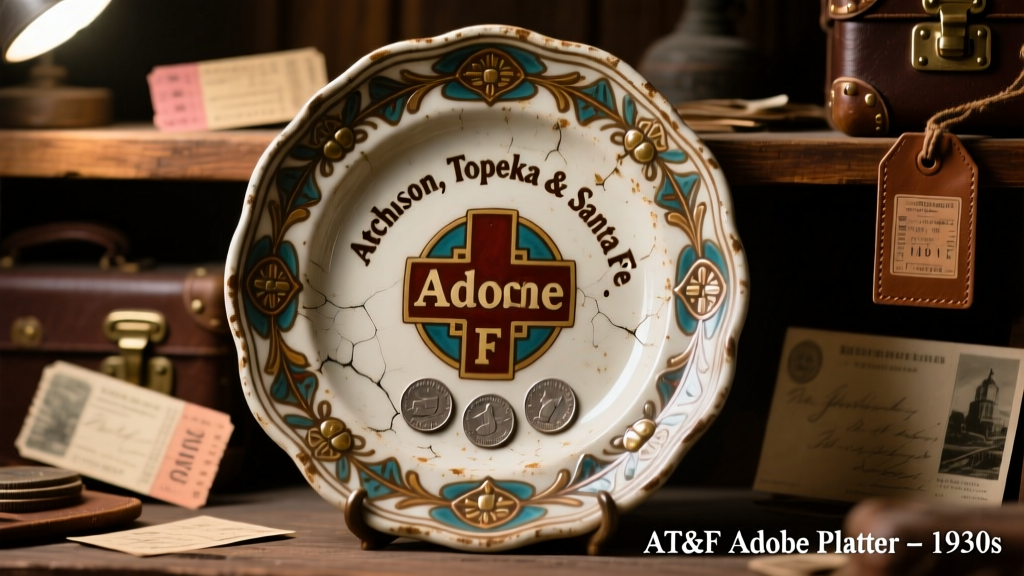
The Atchison, Topeka and Santa Fe Railroad Adobe Platter: A 9-Inch Ceramic Artifact of American Railroading History

Orrefors Vase 'Angle Fish Bubbles' Etched Pair — A Deep Valuation & Provenance Analysis of the 9½-Inch Twin Set
Decoding the 2334424: A Numismatic Investigation of the 1976 Bicentennial Eisenhower Dollar (Type II, Denver Mint)
Furniture Desk: Shaker Painted Red Over Salmon Enfield 53-Inch — Provenance, Construction, and Market Value Analysis
Lamps Electric Motion Merry Go Round Econolite Blue: A Numismatic and Technical Deep Dive into a Rare Vintage Traffic Signal Assembly
Worcester Plate 'Hunter Shooting Ducks' — Zoological Series, 1820, 10½-Inch Silver Plated Tray: Provenance, Craftsmanship, and Market Valuation
Whitney Hoyt: The Forgotten Engraver Who Shaped America’s Coinage Legacy

Vernon Kilns Hawaiian Flowers Tea Server Cover (Maroon, Don Blanding Design, 1940s, 5-Inch Diameter)