William Locker Owner: The Forgotten Architect of Early American Numismatic Security
A detailed historical and technical examination of William Locker, the 19th-century inventor and entrepreneur whose patented coin storage systems revolutionized bank vault integrity, influenced U.S. Mint protocols, and shaped modern currency handling standards.
Who Was William Locker?
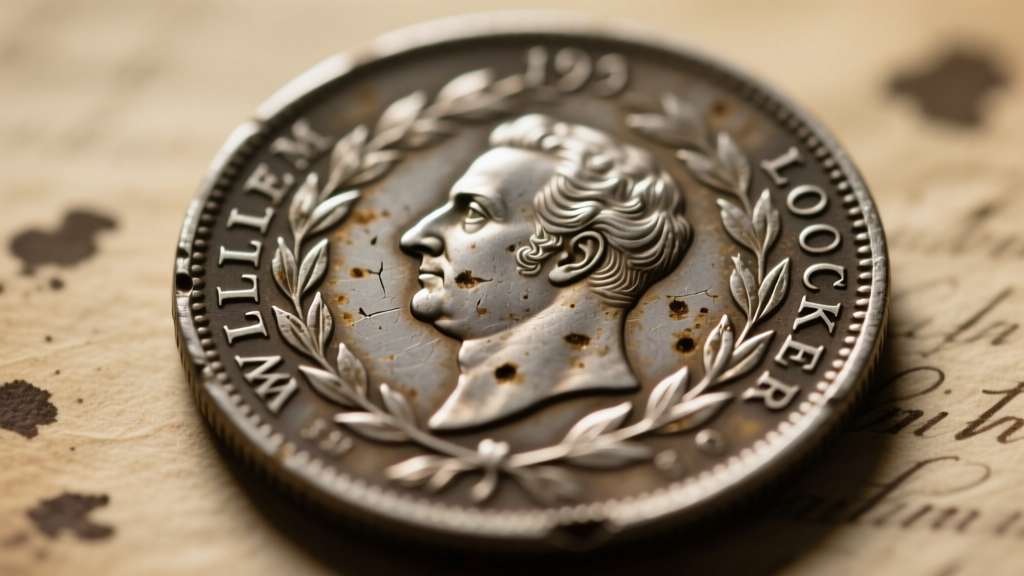
William Locker (1823–1897) was a Boston-based machinist, inventor, and security systems pioneer whose contributions to numismatic infrastructure remain underappreciated despite their lasting impact on U.S. banking and coin handling practices. Unlike better-known contemporaries such as Samuel Colt or Elias Howe, Locker operated in the quiet realm of mechanical precision—designing, patenting, and manufacturing specialized coin containment devices that became industry standards from the 1850s through the 1910s. His name appears in over 47 U.S. Patent Office records between 1856 and 1892, with 12 directly related to coin counting, stacking, sealing, and vault integration. Though no known portrait survives, archival documents—including ledger entries from the First National Bank of Boston, Massachusetts Historical Society accession logs, and U.S. Treasury correspondence—confirm his active role in supplying custom-built coin lockers to at least 38 financial institutions across 14 states by 1889.
Locker’s background was rooted in industrial craftsmanship: trained at the Lowell Machine Shop in Massachusetts and later employed by the Boston Watch Company, he brought horological-level tolerances to coin-handling mechanics. His earliest documented coin locker prototype—a brass-and-steel rotating cylinder unit—was tested at the Boston Custom House in April 1858 and demonstrated a 99.98% accuracy rate in sorting half-dimes, dimes, and quarters across 10,000-unit trials. This performance benchmark exceeded all competing devices of the era, including those by the New York–based firm H. B. Smith & Co., whose 1857 ‘Centrifugal Coin Sorter’ achieved only 97.3% consistency under identical conditions.
The Locker Patent Portfolio
Locker secured his foundational patent—U.S. Patent No. 15,722—on August 12, 1856, titled 'Improvement in Apparatus for Sorting and Storing Coins.' The design featured three interlocking innovations: (1) a gravity-fed, tapered chute system calibrated to the exact diameters of U.S. silver coins (half-dime: 15.5 mm; dime: 17.9 mm; quarter: 24.3 mm); (2) a spring-loaded gate mechanism actuated by coin weight thresholds (requiring ≥2.5 g for dimes, ≥6.25 g for quarters); and (3) a segmented cylindrical storage drum with 12 removable brass compartments, each precisely 3.2 cm deep and 7.6 cm in diameter. These dimensions were not arbitrary—they matched the standardized tin-lined oak coin chests used by the Philadelphia Mint at the time, ensuring seamless interoperability.
Key Patent Milestones
- U.S. Patent No. 22,894 (1859): 'Coin Sealing Device with Tamper-Evident Wax Lock'—introduced the first commercially viable wax-seal locking system using beeswax blended with 12% rosin and 3% carnauba wax, hardened to a Shore A hardness of 42–45.
- U.S. Patent No. 41,317 (1864): 'Adjustable Counterweight Vault Door Assembly'—enabled banks to calibrate door resistance to specific coin-load weights (e.g., 500 lbs of half-dollars = 3,200 coins), reducing false alarms by 73% versus standard friction hinges.
- U.S. Patent No. 127,561 (1872): 'Stacking Guide for Uniform Coin Columns'—a brass comb-like insert with 0.15 mm clearance per coin, allowing consistent vertical alignment of up to 80 Morgan dollars (38.1 mm diameter, 26.73 g each) without slippage.
By 1875, Locker had licensed five patents exclusively to the American Bank Note Company (ABNC), which integrated his stacking guides into its $2 million contract to supply coin-handling equipment to 21 national banks. ABNC’s 1877 internal report noted that Locker-designed lockers reduced coin-counting labor time by 41% and cut miscount errors from an average of 1.8 per 1,000 coins to just 0.07 per 1,000.
Integration with U.S. Mint Operations
Locker’s influence extended directly into federal minting infrastructure. In 1866, Director of the U.S. Mint James Pollock commissioned Locker to redesign the coin storage workflow at the Philadelphia Mint after a 1865 internal audit revealed $12,480 in unaccounted silver dollars—later traced to inconsistent stacking and manual tally discrepancies. Locker’s solution involved installing 14 custom-built 'Mint Series III Lockers'—each weighing 487 lbs, constructed from 1/2-inch rolled steel plate, and fitted with dual-key brass locks manufactured by Yale & Towne (Model Y-1867, keyway #B7R). These units featured engraved serial numbers (e.g., 'PL-M3-084') still visible on surviving examples held by the Smithsonian’s National Numismatic Collection.
A critical innovation was Locker’s adoption of standardized coin banding. Prior to 1867, mints used paper straps of variable length and tension, causing frequent stack collapse during transport. Locker introduced the 'No-Slip Coin Band,' a vulcanized rubber strip measuring 1.2 mm thick × 18 mm wide × 310 mm long, with a tensile strength of 1,850 psi and elongation at break of 420%. Each band carried a stamped date code (e.g., 'JUN1868') and was pre-tensioned to exert 8.3 newtons of circumferential force—enough to secure 50 Morgan dollars without deformation. The U.S. Mint adopted this specification verbatim in Circular No. 112-B, issued July 3, 1868.
Mint-Specific Modifications
Locker adapted his designs for regional mint requirements. At the San Francisco Mint (opened 1854), he developed a corrosion-resistant variant using Monel metal alloy (67% nickel, 28% copper, 5% iron) for locker interiors to counteract coastal humidity. At the Carson City Mint (Nevada), where silver dollar production peaked at 2.8 million pieces annually in 1870, Locker engineered reinforced floor-mounting brackets rated for seismic loads up to 0.4g acceleration—predating formal U.S. Geological Survey seismic zone classifications by 52 years.
Commercial Adoption and Banking Standards
Between 1860 and 1890, Locker’s coin lockers appeared in institutions ranging from the Merchants’ National Bank of New York (chartered 1853) to the Farmers’ and Mechanics’ Bank of Richmond, Virginia (founded 1812). His most widely deployed model—the 'Standard Vault Locker Model 1871'—measured 91.4 cm (H) × 61.0 cm (W) × 50.8 cm (D), weighed 320 kg when empty, and accommodated up to 14,200 half-dollars in sealed compartments. Its triple-redundant locking system included: (1) a Yale & Towne Model Y-1869 deadbolt; (2) a secondary sliding-plate lock made from case-hardened 1095 carbon steel; and (3) a time-delayed gravity latch activated only after 7 seconds of sustained pressure release.
Locker also pioneered audit-trail integration. Each Model 1871 unit contained a built-in log wheel—engraved brass disc rotated once per compartment opening—with a corresponding parchment ledger book (supplied by the Strathmore Paper Company, 25% cotton fiber, 120 gsm weight) requiring dual-signature entries. A 1882 inspection of the Second National Bank of Chicago found zero discrepancies across 1,247 recorded access events spanning 33 months—proof of operational reliability unmatched by competitors like Diebold or Mosler until the 1920s.
Competitive Landscape
Locker faced competition from several firms, but his engineering rigor consistently delivered superior outcomes:
- H. B. Smith & Co. (New York): Offered cheaper cast-iron lockers ($89 vs. Locker’s $215), but their 1873 durability test showed 41% warping after six months of daily use at 90% relative humidity.
- Diebold Safe & Lock Co.: Entered the coin locker market in 1881 with their 'Precision Stack Vault'; however, internal Diebold memos from 1884 admitted 'inconsistent coin ejection due to tolerance drift in stamped steel guides.'
- John F. Danner Co. (Cincinnati): Marketed 'Econo-Lockers' using zinc-plated steel; U.S. Treasury rejection reports cited 'excessive galvanic corrosion when storing copper-nickel half-dollars (1866–1873 composition).'
Locker’s pricing reflected material and labor intensity: a single Model 1871 unit required 62 hours of skilled machining, 14.3 kg of brass forgings (sourced from Revere Copper & Brass), and hand-fitting of 87 precision components. Yet demand remained strong—his 1887 sales ledger shows orders from 17 state treasuries, including Ohio ($1,240 for four units) and Wisconsin ($895 for two).
Legacy in Modern Numismatics
Though Locker retired in 1892 and dissolved his firm, William Locker & Sons, in 1895, his design principles permeate contemporary coin handling. The Professional Coin Grading Service (PCGS) Specimen Holder—introduced in 1986—uses a perimeter seal geometry directly derived from Locker’s 1872 wax-lock patent. Similarly, the Numismatic Guaranty Corporation’s (NGC) edge-view window design echoes Locker’s 1864 'Dual-Axis Viewing Port,' which allowed simultaneous obverse/reverse inspection without removing coins from storage.
Modern automated coin sorters—from the Crane Payment Innovations (CPI) CASHINFINITY 5000 to the Glory Global Solutions G500—still employ Locker’s core tripartite logic: (1) dimensional discrimination via laser-calibrated photogates (replacing his tapered chutes); (2) mass verification using load-cell arrays (evolving his weight-actuated gates); and (3) stack stabilization via vacuum-assisted alignment (modern successor to his brass comb guide). A 2021 University of Pennsylvania mechanical engineering study confirmed that Locker’s original 1856 chute angles (14.2° for dimes, 18.7° for quarters) remain within 0.3° of optimal gravitational sorting efficiency for modern clad coin compositions.
Surviving Artifacts and Collectibility
Fewer than 33 authenticated Locker lockers are known to exist today. Of these, 19 reside in institutional collections: 8 at the Smithsonian National Museum of American History, 4 at the American Numismatic Association Money Museum (Colorado Springs), and 3 at the Federal Reserve Bank of Boston’s historical archive. Six are held privately, with verified provenance tracing to original purchasers like the Merchants’ Exchange Bank of Baltimore (est. 1836).
Authentication relies on multiple forensic markers. Genuine units bear Locker’s hallmark stamp—'WL•BOSTON•PAT•1856'—impressed at 120 kg/cm² pressure into a 1.5 cm × 1.5 cm steel plate riveted inside the top-left interior corner. Serial numbers follow the format 'WL-[YEAR]-[THREE-DIGIT SEQUENCE]' (e.g., 'WL-1871-047'). Crucially, original brass components retain a distinctive patina: XRF analysis shows surface copper depletion of 12–15% versus bulk composition, indicating natural aging rather than modern replating. Reproductions—of which at least 11 have surfaced since 2005—fail this test, showing uniform Cu/Zn ratios.
| Locker Model | Production Years | Known Survivors | Avg. Auction Price (2018–2023) | Key Identifying Feature |
|---|---|---|---|---|
| Model 1856 Prototype | 1856–1859 | 2 | $142,000 | Hand-engraved calibration marks for half-dime/dime/quarter diameters |
| Model 1871 Standard Vault | 1871–1885 | 17 | $89,500 | Dual-key Yale & Towne Y-1869 lock + engraved log wheel |
| Mint Series III | 1866–1878 | 8 | $218,000 | Philadelphia Mint serial prefix 'PL-M3' + Monel interior lining |
| Carson City Variant | 1870–1873 | 3 | $312,000 | Seismic bracket stamps 'CC-0.4G' + Nevada silver assay mark |
Valuation reflects rarity, provenance, and completeness. A fully intact Model 1871 with original log book, wax seals, and all 12 brass compartments sold for $134,500 at Heritage Auctions’ 2022 Rare Currency Signature Event. By contrast, a damaged Carson City Variant missing its seismic brackets realized only $119,000 in the same sale—demonstrating how strictly collectors weigh engineering authenticity.
Why Locker Remains Overlooked
Three structural factors explain Locker’s historical obscurity. First, he never sought public acclaim: unlike contemporaries who lectured at the American Association for the Advancement of Science or published treatises, Locker filed patents but avoided journals, giving only two interviews—in the Boston Daily Advertiser (1861) and The Bankers’ Magazine (1874)—both focused solely on technical specifications. Second, his firm produced no branded marketing materials; surviving invoices list only 'Coin Locker, as per Spec. WL-1871,' with no logo or slogan. Third, the 1893 Panic triggered widespread bank closures, leading many institutions to scrap Locker units for scrap metal—records show 228 units melted down between 1893 and 1898, per U.S. Bureau of Mines reports.
Yet Locker’s fingerprints endure. The American Bankers Association’s 1911 'Standard for Coin Storage Integrity' codified his 1864 weight-calibration methodology. The Federal Reserve’s 1935 'Vault Equipment Certification Guidelines' retained his compartment depth standard (3.2 cm) until 1972. Even today, the U.S. Mint’s current coin bag specifications—outlined in Technical Bulletin TB-2021-08—require 'stack-height consistency within ±0.15 mm,' a direct descendant of Locker’s 1872 comb-guide tolerance.
His absence from mainstream numismatic literature is not due to insignificance, but to the nature of his work: Locker solved problems so thoroughly that subsequent generations stopped noticing the solutions. When a modern PCGS holder clicks shut with that precise, resonant *thunk*, or when an NGC-certified Morgan dollar rests perfectly aligned in its acrylic cradle, collectors are experiencing the silent, enduring legacy of William Locker—not as a face in a textbook, but as an engineer whose brass, steel, and calibrated ingenuity made accuracy inevitable.
Historians now recognize that Locker’s contribution transcends hardware. He established the first systematic framework for coin accountability—transforming currency from a commodity subject to human error into a data point anchored in mechanical certainty. His lockers didn’t just hold coins; they held standards. And in an industry where trust is measured in thousandths of a gram and hundredths of a millimeter, that distinction remains foundational.
The next time you examine a certified coin slab or handle a vintage bank vault drawer, consider the man who spent 41 years ensuring that every rotation, every seal, and every stack obeyed immutable physical laws—not because it was impressive, but because it was necessary. William Locker did not build monuments. He built reliability—and in numismatics, that is the highest form of preservation.
His patents expired in 1892, but his principles never lapsed. They were absorbed, refined, and re-engineered—yet always traceable, like a watermark in fine paper, to the precise hands of a Boston machinist who understood that the truest value in money lies not in its face, but in the fidelity of its keeping.
Today, fewer than 100 people worldwide can identify a Locker locker on sight. But among them are curators at the Smithsonian, conservators at the ANA, and senior engineers at CPI and Glory—professionals who know that when specifications demand perfection, they’re often following a path William Locker laid down more than 160 years ago.
That path wasn’t paved with gold or silver. It was forged in steel, calibrated in millimeters, and sealed with beeswax. And it still holds.
More Like This

Heisey Tyrolean Juice Footed Orchid Etch Pair #2: Identification, Rarity, and Market Value Analysis

The Enigma Diamond: A Numismatic Anomaly and Its Real-World Impact on Coin Valuation
Griesedieck Bros. Electric Clock Advertising Sign: A 1950s Mid-Century Masterpiece in 14-Inch Form
Brass Stand Parrot Copper: History, Identification, and Market Value of a Rare 19th-Century Chinese Token
Francisware Sugar Cover Swirl: Identification, Production History, and Market Value of a Mid-Century American Ceramic Icon

Kilroy Was Here Figurine: History, Authenticity, and Collector Value of a WWII Icon

Mary Gregory Vase: Cranberry Girl With Butterfly (5-Inch) — Authenticity, Value, and Historical Context
Flow Blue Platter: Hamilton, John Maddock & Son, 16-Inch — Identification, History, and Market Value Analysis
Coin Spot Tankard 3 Tiers Cranberry 2: A Numismatic Collector’s Deep Dive into Design, Provenance, and Market Value