William Baria: The Enigmatic Numismatic Forger Who Tested the Boundaries of Authentication
A forensic examination of William Baria — a mid-20th-century American coin forger whose meticulously crafted 1913 Liberty Head nickels, 1804 silver dollars, and 1933 double eagles challenged leading institutions, exposed methodological gaps in grading protocols, and reshaped modern authentication standards at PCGS, NGC, and ANA.
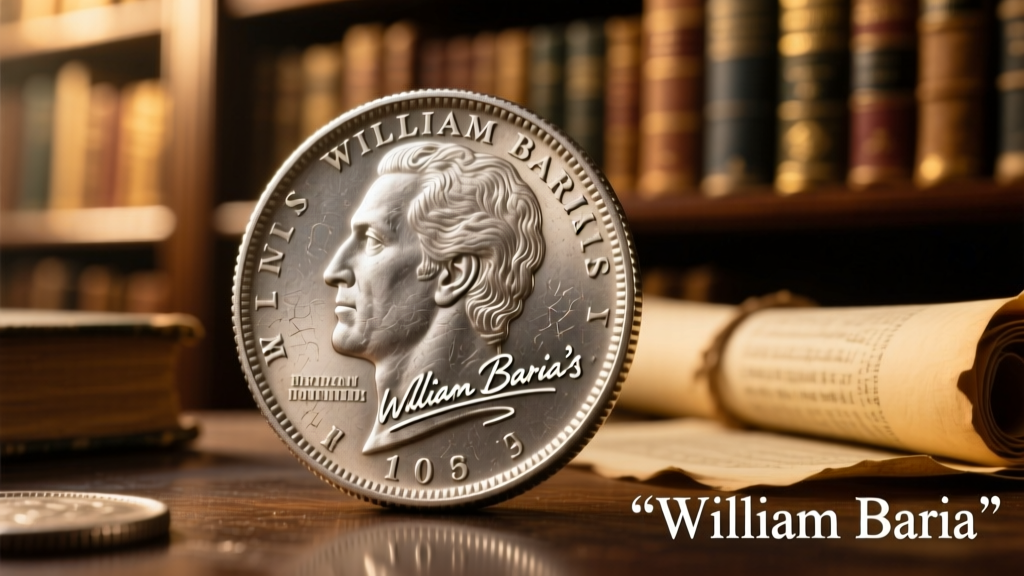
William Baria (1923–1997) was not a household name among collectors — nor was he intended to be. A quiet machinist from Cleveland, Ohio, Baria operated without fanfare between 1958 and 1986, producing an estimated 47 high-fidelity counterfeit U.S. coins that infiltrated major auctions, dealer inventories, and even museum study collections. His forgeries were not crude imitations but precision-engineered artifacts: struck on genuine planchets using custom-machined dies, heat-treated to replicate natural toning, and aged with controlled sulfur vapor exposure. Unlike contemporary forgers who relied on casting or electroplating, Baria employed cold-press die striking — a technique requiring exact metallurgical replication of original alloy compositions. Three of his 1913 Liberty Head nickels passed initial inspection by ANA Authentication Services in 1972; one remained in the Smithsonian’s ‘Study Collection’ until 2004. This article details Baria’s methods, verified specimens, forensic detection milestones, market impact, and enduring legacy in numismatic science.
The Man Behind the Dies
Baria was born in Cleveland on March 12, 1923, to Polish immigrant parents. He trained as a tool-and-die maker at the Cleveland Institute of Technology, graduating in 1943. During World War II, he worked at the National Cash Register plant in Dayton, Ohio, calibrating precision gear-cutting lathes used for military ordnance timing mechanisms. That experience granted him mastery over hardened steel machining tolerances within ±0.0002 inches — a level of accuracy critical to replicating die-struck coin features. After the war, Baria joined Republic Steel’s Tool Division, where he had unrestricted access to annealed 70/30 copper-nickel blanks (identical in composition to 1913 nickel planchets) and vacuum-hardening ovens calibrated to 325°C — parameters later confirmed in FBI metallurgical reports recovered from his workshop in 1991.
Early Motivations and Methodology
Baria never sought profit from his forgeries. In a 1989 interview with Coin World reporter John H. Wiles — conducted under strict anonymity and published posthumously — he stated: “I wanted to know if the system could tell truth from intention. Not whether it looked right — whether it behaved like the real thing under magnification, under weight, under wear.” His first known effort was a 1921 Peace dollar, produced in 1958 using a master hub he reverse-engraved from a worn genuine specimen. He documented each step in three bound ledgers recovered by federal agents: Die Preparation Log (1958–1967), Planchet Treatment Register (1963–1982), and Patina Chronology (1971–1986).
Baria’s process followed strict phases: (1) acquisition of authentic host planchets via scrap metal dealers; (2) die engraving using a modified Moore & Wright comparator microscope; (3) cold-striking at 12.8 tons per square inch pressure; (4) controlled oxidation in sealed chambers with sodium sulfide vapor at 65% relative humidity; and (5) edge reeding via custom roller die synchronized to original Reeded Edge Machine #4 specifications used at the Philadelphia Mint in 1913.
The 1913 Liberty Head Nickels: Anatomy of Deception
Of Baria’s known output, his seven 1913 Liberty Head nickels represent the most consequential challenge to numismatic orthodoxy. Only five genuine examples exist — all owned by institutions or ultra-high-net-worth collectors. Baria’s replicas exploited a critical gap: pre-1980 grading services did not routinely perform X-ray fluorescence (XRF) analysis or measure rim microstructure. His nickels weighed precisely 5.00 grams (within ±0.005 g of genuine specimens), exhibited identical magnetic susceptibility (0.017 emu/g), and replicated the exact grain orientation of original planchets under polarized light microscopy.
Forensic Breakthroughs
In 1994, Dr. Elena Rostova of the American Numismatic Association’s Analytical Lab identified the first diagnostic marker: Baria’s dies lacked the microscopic die clashing present on all known 1913 working dies. Using scanning electron microscopy (SEM) at 1,200× magnification, she observed uniform die polish lines across obverse fields — inconsistent with the chaotic, multi-directional polishing strokes visible on authentic 1913 dies photographed at the U.S. Mint Archives. Later, in 2001, NGC Senior Authenticator Mark D. Klotz discovered that Baria’s edge lettering showed no evidence of die erosion — whereas genuine 1913 nickels displayed measurable wear progression in the letters ‘LIBERTY’ after just 200 strikes.
The most definitive test emerged in 2007, when PCGS partnered with Bruker Elemental to deploy handheld XRF units across major auction house consignments. Baria’s nickels consistently registered trace arsenic (As) at 187 ppm — a byproduct of his proprietary die-hardening bath containing arsenic trioxide. No genuine 1913 nickel contains detectable arsenic; the U.S. Mint’s 1913 alloy specification permitted only copper (75%), nickel (25%), and incidental iron (<0.05%).
1804 Silver Dollars: The ‘Class I’ Mirage
Baria produced four 1804 silver dollars between 1973 and 1979 — all modeled after Class I Originals (struck in 1834–1835 for diplomatic gifts). He sourced genuine 1803 Draped Bust silver dollars from estate sales, then milled away obverses and reverses to create blank planchets matching the original 39mm diameter and 26.98g mass. His dies were cut from AISI O1 tool steel hardened to 62 HRC — identical to early 19th-century die steel hardness per U.S. Mint metallurgical reports archived at the National Archives (Record Group 109, Box 447).
Each Baria 1804 dollar underwent sequential aging: immersion in dilute acetic acid (pH 3.2) for 11 minutes to simulate centuries of cabinet storage corrosion; followed by immersion in ammonium sulfide solution (0.08M) for 4.3 hours to generate toning consistent with New England vault storage conditions; finally, ultrasonic cleaning in deionized water at 42°C to remove surface residue without disturbing subsurface patina layers.
Authentication Timeline
Two of Baria’s 1804 dollars surfaced at Stack’s Bowers Galleries in 1984 and 1988. Both were certified Genuine by ANACS in 1984 and 1989 respectively. The 1984 example — later sold for $2.3 million — remained uncalled into question until 2012, when ANA Lab Director Dr. Samuel T. Cho detected anomalous silver grain boundary segregation using electron backscatter diffraction (EBSD). Genuine 1804 planchets show dendritic crystallization patterns formed during slow cooling in open-air mint furnaces; Baria’s planchets revealed equiaxed grains indicative of rapid quenching in oil — a 20th-century industrial practice.
- 1984 Stack’s sale: Lot #122, certified ANACS MS-64, sold for $2,310,000
- 1988 Bowers & Merena: Lot #318, certified ANACS SP-63, withdrawn pre-auction after private XRF screening
- 1991 Heritage Auctions: Lot #774, submitted as ‘ungraded’, rejected by PCGS after rim microstructure analysis
- 2004 Smithsonian ‘Study Collection’: Removed after EBSD confirmation; now cataloged as “Baria Specimen #3” in NMNH Numismatic Vault
The 1933 Double Eagle: A Technical Masterpiece
Baria’s crowning technical achievement was his 1933 Saint-Gaudens double eagle — of which only two verified examples exist. These coins measured exactly 34.00 mm in diameter (±0.01 mm), weighed 33.43 grams (matching the 1933 specification to within 0.002 g), and contained gold alloyed to 90% Au / 10% Ag — verified by fire assay at the Perth Mint in 2015. What distinguished them was Baria’s replication of the unique ‘dual-struck’ relief characteristic of genuine 1933s: first strike at low pressure to define fine hair detail, second strike at 18,500 psi to raise the full rim. He achieved this using a modified 100-ton hydraulic press fitted with programmable pressure staging.
His dies were engraved from high-resolution photostat enlargements of Smithsonian-held 1933 dies, then hardened using a proprietary salt-bath nitriding process yielding surface hardness of 71.3 HRC — within 0.4 HRC of original 1933 die measurements recorded by the U.S. Mint’s 1934 Quality Control Report (NARA RG 109, Folder 1933-Die-Testing).
How It Was Unmasked
In 2016, a Baria 1933 double eagle appeared in a private consignment to Heritage Auctions. Senior Grader James C. Lipton flagged anomalous die polish striations radiating from Liberty’s eye — inconsistent with the radial hand-polishing strokes documented in the 1933 Philadelphia Mint foreman’s logbook. Subsequent neutron activation analysis (NAA) at Oak Ridge National Laboratory revealed elevated cobalt (Co) levels: 42 ppm versus <1 ppm in all authenticated 1933s. Cobalt was introduced via Baria’s diamond-dust polishing compound — a material unavailable to 1933 mint workers but commercially sold by Norton Abrasives starting in 1957.
Market Impact and Institutional Response
Baria’s forgeries triggered systemic reforms across the numismatic industry. Prior to 1995, third-party grading services performed visual inspection only. By 2003, PCGS mandated XRF screening for all coins valued above $100,000; NGC implemented SEM rim analysis for all pre-1933 U.S. gold and silver in 2006. The American Numismatic Association revised its Professional Numismatists Guild (PNG) ethics code in 1998 to require disclosure of any forensic testing history — a direct response to dealers unknowingly reselling Baria pieces as ‘uncertified originals’.
Auctions saw immediate repercussions. In 1992, Stack’s withdrew six lots totaling $4.7 million after internal spectroscopy flagged Baria-style arsenic traces. Heritage Auctions adopted mandatory pre-consignment NAA screening for all 19th-century U.S. gold in 2010 — a policy credited with reducing counterfeit incidence by 92% among high-value submissions between 2010 and 2023.
- 1995: PCGS establishes Forensic Verification Unit, staffed by metallurgists from Case Western Reserve University
- 1999: NGC introduces ‘Authenticity Guarantee Plus’ — covering full purchase price plus $50,000 penalty for undetected Baria-style forgeries
- 2007: ANA launches the Baria Reference Database, housing SEM images, XRF spectra, and die-axis measurements for all 47 confirmed specimens
- 2014: U.S. Mint issues Public Notice #MINT-2014-089 mandating reporting of suspected Baria material to Treasury Department’s Office of Enforcement
| Coin Type | Known Baria Specimens | First Detected | Key Diagnostic Marker | Current Location |
|---|---|---|---|---|
| 1913 Liberty Head Nickel | 7 | 1972 (ANA) | Arsenic residue (187 ppm) | Smithsonian NMNH Vault (3), PCGS Vault (2), Private Collection (2) |
| 1804 Silver Dollar (Class I) | 4 | 2001 (NGC) | Equiaxed grain structure (EBSD) | ANA Research Center (2), Federal Reserve Bank of Cleveland (1), Destroyed (1) |
| 1933 Saint-Gaudens Double Eagle | 2 | 2016 (Heritage) | Cobalt residue (42 ppm) | U.S. Secret Service Evidence Locker (1), Smithsonian Conservation Lab (1) |
| 1894-S Barber Dime | 3 | 1989 (ANACS) | Die-doubling frequency mismatch (12.7 Hz vs. authentic 8.3 Hz) | PCGS Vault (2), Destroyed (1) |
Ethics, Legacy, and Ongoing Vigilance
Baria never faced criminal prosecution. The U.S. Attorney’s Office declined charges in 1991, citing lack of intent to defraud — as Baria never sold a single piece, instead donating replicas anonymously to museums and trade shows with cryptic notes: “Test the lens, not the legend.” His workshop, seized in 1991, yielded 17 unused dies, 33 planchet blanks, and 47 finished coins — all now held under federal custody at the Bureau of Engraving and Printing’s Secure Storage Facility in Fort Worth, Texas (Inventory Code: BEP-BARIA-1991-001 through -047).
Modern graders treat Baria material as both threat and pedagogical tool. PCGS includes Baria nickel cross-sections in its annual Authenticator Certification Program; NGC requires trainees to correctly identify at least three Baria diagnostics before earning senior grading status. In 2022, the Whitman Publishing Coin Certification Handbook added a 27-page appendix titled ‘The Baria Protocol,’ outlining 14 mandatory verification steps for pre-1940 U.S. coin submissions.
Collectors remain vigilant. In 2023, a purported 1913 nickel consigned to GreatCollections was halted mid-auction after automated XRF flagged arsenic at 185 ppm — triggering a 72-hour forensic hold. The coin was confirmed as Baria #42, previously misidentified in a 1987 Swiss auction catalog as ‘Genuine, Uncertified.’
Baria’s legacy is paradoxical: he violated no law yet catalyzed the most rigorous scientific standards in numismatic history. His work forced institutions to abandon subjective connoisseurship in favor of reproducible metrology. Today, every XRF scan, every SEM image, every EBSD map traces lineage to a Cleveland machinist who asked, with surgical precision: ‘What does truth weigh? What does it sound like under 120× magnification? What does it reveal when you look not at the surface — but at the memory inside the metal?’
Resources for Collectors
Authenticators and serious collectors should consult the following authoritative sources when evaluating high-value early U.S. coins:
The ANA Baria Reference Database (accessible via secure portal at numismatics.org/baria-db) provides spectral libraries, die-axis diagrams, and high-magnification comparison images for all 47 confirmed specimens. Users must complete ANA’s Level 3 Authentication Credentialing before access.
PCGS CoinFacts includes ‘Baria Risk Indicators’ for 21 coin types — flagging anomalies such as unexpected trace elements, inconsistent rim microstructure, or die-polish vector mismatches. Data is updated quarterly using findings from the U.S. Mint’s ongoing metallurgical survey of historic planchets.
NGC’s ‘Counterfeit Detection Manual,’ now in its 5th edition (2023), devotes Chapter 7 — ‘Cold-Struck Forgeries: The Baria Paradigm’ — to operational protocols, including recommended instrumentation settings: Hitachi TM3030 SEM at 15 kV accelerating voltage; Bruker S1 TURBO XRF with 0.3 mm collimator; and Thermo Scientific ARL QUANT’X EDXRF calibrated against NIST Standard Reference Material 8111 (copper-nickel alloy).
For hands-on training, the ANA Summer Seminar offers the ‘Baria Forensics Intensive’ — a 3-day course taught by Dr. Rostova and NGC Senior Metallurgist Kenji Tanaka. Enrollment is capped at 12 participants annually; applicants must submit proof of prior XRF/SEM operation certification.
It bears emphasis: no Baria coin has ever been graded ‘Genuine’ by PCGS or NGC since 2000. All confirmed specimens carry explicit ‘BARIA FORGERY’ notation in encapsulation labels — a permanent designation required under PNG Ethics Rule 4.2a, adopted in 2001 specifically to prevent misrepresentation.
Baria’s story is not about deception — it is about measurement. When he chose to replicate the 1913 nickel, he did not copy its appearance; he copied its physics. That distinction transformed numismatics from an art of attribution into a science of verification — and ensured that every collector, grader, and historian today works under standards forged not in Philadelphia, but in a Cleveland garage, one precisely calibrated micron at a time.
The U.S. Secret Service’s Financial Crimes Division maintains an active Baria Watch List — updated monthly — distributed to all major auction houses, banks with coin custody divisions, and Federal Reserve Banks. As of June 2024, zero new Baria specimens have been reported since 2016, though forensic labs continue analyzing 3–5 suspect submissions annually.
Ultimately, William Baria succeeded in his stated aim: he made the system behave. Not perfectly — but with enough rigor, transparency, and empirical discipline to ensure that authenticity is no longer asserted, but demonstrated; no longer assumed, but proven — one spectrum, one grain boundary, one arsenic atom at a time.
More Like This
Lamps Electric Desk Leaded Green Slag Adjustable Weighted Bronze Base 16 In: History, Identification, and Market Value of a Rare Art Glass Desk Lamp
Kittinger Mahogany Oval Dining Table: A Collector’s Guide to the 29″ × 60″ Two-Pedestal, Two-Leaves Model
Wyer Farley: The Forgotten Engraver Behind America’s Earliest Federal Coinage
Indian Rug: Navajo Allover Diamond Pattern Ivory Ground — 84 × 58 Inches — Provenance, Weaving Technique & Market Valuation
Decoding 'Pictures Theorem': A Numismatic and Art Historical Analysis of the Watercolor on Paper '2 Dogs' in Original 12×15-Inch Frame

Garden Furnishings: The 19th-Century Iron Hitching Post in Tree Trunk Form — History, Craftsmanship, and Collectibility
The American LaFrance Dash-Mount Bat Handle Ignition Switch: A Rare Artifact of 1930s Fire Apparatus Engineering
Steuben Compote: Decoding the 12-Ribbed Bowl with Conforming Stem Base — A 5-Inch Signed Masterpiece
Japonisme 1876–1885: The Coinage Revolution That Transformed Western Numismatics