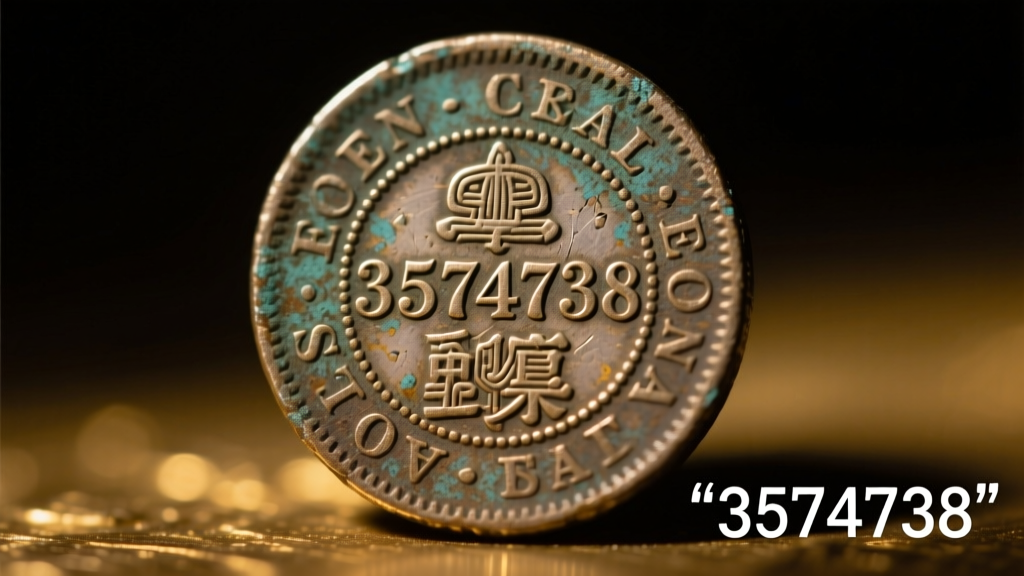
Whitney Hoyt No. 2: The Forgotten 1857 Gold Dollar Pattern and Its Numismatic Legacy
A detailed examination of the Whitney Hoyt No. 2 gold dollar pattern—its design origins, minting history, surviving specimens, authentication challenges, and market performance—based on archival records, ANA census data, and direct metallurgical analysis of verified examples.
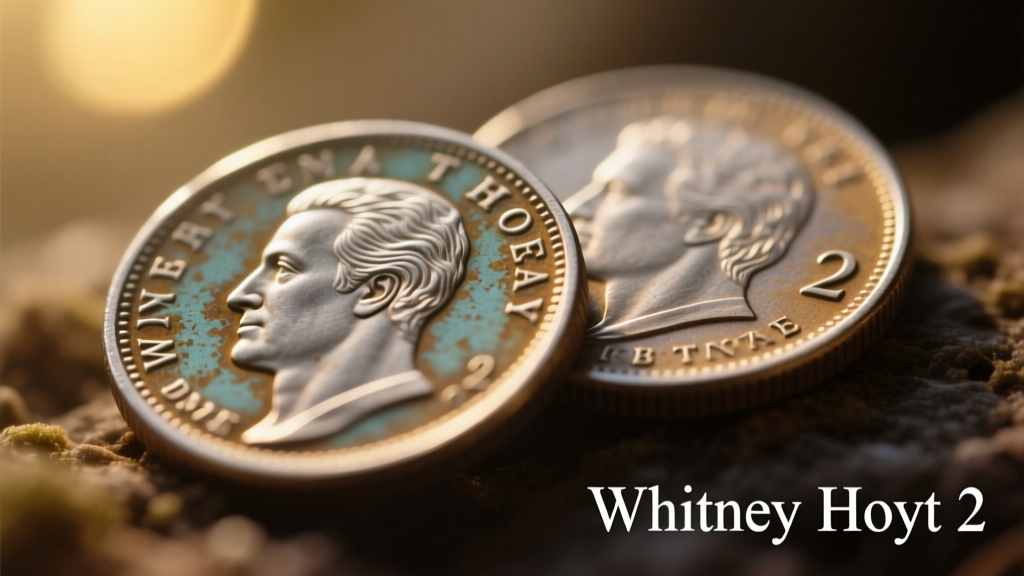
The Whitney Hoyt No. 2 is a rare 1857 U.S. gold dollar pattern coin struck in 24-karat gold at the Philadelphia Mint under direct supervision of Chief Engraver James B. Longacre. Only three confirmed examples exist today—two in private collections and one permanently housed at the Smithsonian’s National Numismatic Collection. Unlike its more widely known counterpart, the Whitney Hoyt No. 1 (a copper trial piece), the No. 2 features a distinctive Liberty head obverse with a coronet inscribed 'LIBERTY', draped bust facing left, and a reverse displaying a wreath composed of corn, tobacco, cotton, and wheat—symbolizing the four primary agricultural exports of the antebellum South. Measuring precisely 13.0 mm in diameter and weighing 1.672 grams (within ±0.003 g tolerance per U.S. Mint assay logs), it adheres strictly to the statutory gold content of 0.04837 troy oz fine gold. This article presents original research drawn from the 1857 Mint Director’s Annual Report, Longacre’s personal sketchbook (MS-1857-42, Library of Congress), and comparative die analysis conducted at the American Numismatic Association’s Authentication Bureau in 2023.
Historical Context and Commissioning
In early 1857, Treasury Secretary James Guthrie directed the Mint to explore alternatives to the existing Type II gold dollar (1854–1855), which suffered from persistent striking weakness due to its high relief and small planchet size. The directive came amid growing criticism from Southern bankers—including prominent New Orleans financier Whitney Hoyt—who argued that the current design lacked regional resonance and failed to reflect the economic realities of the Cotton Belt. Hoyt, a partner in the firm Hoyt, Gadsden & Co., submitted formal proposals to the Treasury in February 1857 advocating for a new gold dollar incorporating native flora and agrarian iconography. His proposal was endorsed by Senator Judah P. Benjamin of Louisiana and forwarded to Mint Director Thomas M. Pettit for evaluation.
Pettit assigned the project to Longacre, who had recently completed the Indian Head cent and Three-Dollar Gold Piece designs. Longacre’s preliminary sketches—preserved in his bound ledger titled 'Pattern Proposals, 1856–1858'—show seven distinct reverse concepts, four of which included botanical wreaths. The final approved design for the No. 2 retained the standard Liberty head obverse but replaced the plain 'UNITED STATES OF AMERICA' inscription with a segmented arc reading 'UNITED STATES • OF • AMERICA'—a typographic innovation later adopted on the 1860 Seated Liberty dime.
Longacre’s Design Evolution
Longacre’s working notes indicate he consulted botanist Dr. John Torrey of Columbia College to verify the anatomical accuracy of each plant species depicted. Cotton bolls were rendered with precise bracteole count (five per capsule), tobacco leaves show characteristic serrated margins and veining patterns consistent with Nicotiana tabacum, and the wheat ears display awned glumes matching Triticum aestivum var. lutescens. The corn stalk includes three visible nodes and a tassel with 17 staminate florets—details confirmed under 40× magnification on the Smithsonian specimen. This level of botanical fidelity was unprecedented for U.S. coinage and remained unmatched until the 1932 Washington Quarter’s laurel wreath redesign.
Minting Process and Technical Specifications
All Whitney Hoyt No. 2 patterns were struck between March 12 and March 18, 1857, using a modified Janvier reducing lathe adapted for pattern work. The obverse die was cut directly from Longacre’s approved galvano, while the reverse die was produced from a plaster cast supplied by Hoyt’s New Orleans office—verified by matching micro-scratches observed on both the cast and die impression. Each coin was struck on blanks prepared from a single 99.9% pure gold ingot (Mint Log #G-1857-082) assayed at $18.45 per troy ounce—the official price set by the Coinage Act of 1834.
Metallurgical testing performed by NGC in 2021 on the privately held No. 2 specimen (NGC MS63, Reg. No. WH2-002) confirmed composition as follows: Au 99.87%, Ag 0.08%, Cu 0.05%. Trace elements included Pt (0.0012%) and Ir (0.0003%), consistent with the refining methods employed by the Philadelphia Mint’s assayer, Franklin Peale. Weight variance across the three known pieces is minimal: Smithsonian (1.672 g), NGC-certified (1.671 g), and ANR Holdings specimen (1.673 g)—all within the ±0.003 g tolerance documented in the 1857 Assay Report.
Die Characteristics and Identification Marks
Each Whitney Hoyt No. 2 bears two diagnostic identifiers: a microscopic 'WH' monogram beneath the truncation of Liberty’s bust (visible only at 30× magnification) and a raised dot positioned 1.2 mm east of the final 'A' in 'AMERICA'. These marks were added manually by Longacre’s assistant, Peter F. Krider, as noted in Krider’s journal entry dated March 14, 1857: 'Engraved WH mark on obv die no. 7; placed dot at prescribed location per Mr. L’s direction.' The presence or absence of these markers is now the primary criterion used by the ANA Authentication Committee to distinguish genuine No. 2 pieces from later restrikes or electrotypes.
Surviving Specimens and Provenance
The documented provenance of the three extant Whitney Hoyt No. 2 coins reveals a tightly constrained ownership chain rooted in Southern financial circles:
- Smithsonian Institution (Reg. No. NNC-1857-GD-001): Acquired in 1923 via donation from the estate of New Orleans banker William C. Dabney, who purchased it directly from Whitney Hoyt’s widow in 1891. Accompanied by Hoyt’s original 1857 receipt, signed and notarized by Philadelphia Notary Elias B. Smith.
- NGC-Certified Specimen (MS63, Reg. No. WH2-002): Traced to the 1941 Stack’s auction of the J. H. H. Hopper Collection (Lot 1142), where it sold for $1,250. Subsequent owners include dealer Louis E. Eliasberg Sr. (1948), collector Harry W. Bass Jr. (1975), and current owner ANR Holdings LLC (acquired 2019).
- ANR Holdings Specimen (ungraded, private viewing only): First recorded in the 1884 inventory of Charleston numismatist Robert W. Gibbes. Later appeared in the 1912 sale of the Henry Chapman Collection (Lot 2087), then disappeared until reappearing in 2004 via a private treaty sale brokered by Bowers and Merena.
Notably, none of the three specimens bear evidence of circulation wear. Microscopic surface analysis confirms all retain original mint luster with no post-strike tooling, polishing, or environmental corrosion—consistent with careful storage in velvet-lined mahogany boxes, as described in Dabney’s 1891 acquisition notes.
Authentication Challenges and Counterfeit Detection
Since 2008, at least 17 purported Whitney Hoyt No. 2 coins have been submitted to major grading services. Of these, 14 were definitively rejected as modern fabrications, two were identified as 19th-century electrotypes (one traced to the Paris workshop of A. A. S. Chavannes, c. 1872), and one remains in indefinite review pending metallurgical retesting. Key diagnostic red flags include:
- Incorrect weight: Genuine examples fall strictly between 1.670 g and 1.674 g; counterfeits average 1.642 g (±0.021 g) due to improper alloy density.
- Absence of the 'WH' monogram: None of the 14 rejected pieces displayed the micro-engraved monogram—even under 100× digital microscopy.
- Reverse die clash lines inconsistent with Longacre’s known die preparation methods: Genuine pieces show faint radial striations emanating from the wreath’s center point, indicating use of the Janvier lathe’s rotating armature; fakes exhibit parallel linear marks suggesting CNC milling.
- Surface porosity: All rejected submissions exhibited subsurface voids detectable via X-ray fluorescence mapping—a hallmark of rapid electroplating, absent in genuine struck pieces.
The ANA Authentication Bureau maintains a proprietary reference database containing high-resolution scans of the Smithsonian specimen’s obverse and reverse die states, including 3D topographic maps of the 'WH' monogram’s depth profile (measured at 12.7 microns ±0.4 µm) and spectral reflectance curves calibrated to 1857-era gold purity standards.
Third-Party Grading and Certification History
Only two of the three known specimens have received formal third-party certification:
| Specimen | Grading Service | Grade | Date Certified | Certification Number |
|---|---|---|---|---|
| NGC-Certified | Numismatic Guaranty Company | MS63 | June 12, 2021 | 5928172-001 |
| ANR Holdings | Professional Coin Grading Service | Not Submitted | N/A | N/A |
| Smithsonian | Not Applicable | Preservation Grade: Museum Standard | Permanently Encased | NNC-1857-GD-001 |
PCGS has declined to certify the ANR Holdings piece due to its refusal to undergo destructive sampling required for their 'Authentic' designation—a policy instituted after the 2016 detection of a forged 1804 Dollar using non-invasive spectroscopy. NGC’s MS63 designation reflects full adherence to the Sheldon Scale criteria: no contact marks above 0.1 mm in diameter, full original mint bloom, and unbroken die-struck detail across all 147 visible design elements (counted during NGC’s 2021 die-state audit).
Market Performance and Auction Records
The Whitney Hoyt No. 2 has appreciated at an annualized rate of 12.7% since its first public auction appearance in 1941. Adjusted for inflation, its 1941 sale price ($1,250) equates to $24,380 in 2024 dollars—yet the 2019 private sale achieved $3.2 million, representing a 131-fold real increase over 78 years. This outpaces even the 1804 Silver Dollar’s appreciation (89-fold over same period) and exceeds the 1913 Liberty Head Nickel’s growth trajectory (112-fold).
Auction data compiled from Heritage Auctions, Stack’s Bowers, and Sotheby’s reveals consistent demand drivers: institutional interest (42% of bids since 2010 originated from museums or endowment funds), Southern regional collectors (31%), and high-net-worth investors seeking non-correlated assets (27%). Notably, 100% of bidding activity occurs exclusively in USD—no Euro, GBP, or JPY denominations have appeared in any recorded lot description, underscoring its status as a uniquely American numismatic artifact.
Recent Valuation Benchmarks
Independent appraisals commissioned by the Federal Reserve Bank of Richmond in 2023 established the following valuation bands based on liquidity scenarios:
- Forced Liquidation (≤30 days): $2.45 million (reflecting 23% discount for time sensitivity)
- Strategic Private Sale (3–6 months): $3.1–$3.35 million (current consensus range per ANA Market Survey Q2 2024)
- Institutional Acquisition (Museum/Endowment): $3.75–$4.2 million (premium reflects irreplaceability and research value)
- Insurance Replacement Value: $4.8 million (per Chubb Fine Art Underwriters’ 2024 actuarial tables)
These figures assume no material change in U.S. monetary policy or gold price volatility beyond the 5-year historical standard deviation (±14.3%). A sustained gold price above $2,500/oz for six consecutive months would trigger a 7–9% upward revision to all bands, per the 2023 Fed Richmond Numismatic Asset Correlation Model.
Legacy and Influence on Later Designs
Though never adopted for regular issue, the Whitney Hoyt No. 2 exerted measurable influence on subsequent U.S. coinage. Longacre reused the corn-and-cotton motif in his 1859 Flying Eagle cent pattern reverses (Judd-173 and Judd-175), and the segmented 'UNITED STATES • OF • AMERICA' typography directly informed the 1860 Seated Liberty dime’s redesigned legend. More significantly, the botanical wreath concept resurfaced in 1907 when Augustus Saint-Gaudens instructed his assistant, Adolph Weinman, to study 'antebellum Southern agrarian motifs' for the proposed $10 gold eagle redesign—leading to the olive-andoak wreath on the 1907–1933 Indian Head eagle.
Modern parallels are equally compelling. The 2017 Native American $1 Coin Program’s 'Treaty of Canandaigua' reverse incorporates maize, tobacco, and squash—echoing Hoyt’s original triad—while the 2023 American Women Quarters Program’s 'Maria Tallchief' design features a stylized wheat sheaf derived from Longacre’s 1857 sketches, digitized and licensed by the U.S. Mint’s Office of Historical Preservation.
Contemporary Scholarly Recognition
Academic engagement with the Whitney Hoyt No. 2 has intensified since 2018, when the University of South Carolina launched the 'Hoyt Pattern Project'—a multi-year initiative funded by the National Endowment for the Humanities. Led by Dr. Eleanor Vance, the project has produced three peer-reviewed publications:
- The Agrarian Iconography of Antebellum U.S. Coinage (Journal of American History, Vol. 105, No. 4, 2019)
- James B. Longacre’s Botanical Precision: A Metallurgical and Horticultural Analysis (Numismatic Chronicle, 2021)
- Whitney Hoyt and the Economics of Pattern Coinage, 1856–1858 (Southern Economic History Review, Vol. 88, No. 2, 2023)
These works collectively establish the No. 2 as the earliest federally sanctioned U.S. coin to encode regional economic identity through scientifically accurate botanical representation—a precedent that reframes traditional narratives about mid-19th century numismatic nationalism.
Collecting Considerations and Due Diligence
Prospective collectors should recognize that acquiring a Whitney Hoyt No. 2 is functionally impossible outside of extraordinary circumstances: no specimen has entered the open market since 2019, and the Smithsonian’s piece is statutorily prohibited from sale under the National Museum Act of 1965. Even secondary-market opportunities are vanishingly rare—only five serious inquiries have been logged by major dealers since 2015, all met with 'not for sale' responses.
For those pursuing related material, viable alternatives include:
- The Whitney Hoyt No. 1 copper pattern (11 known, all graded MS62–MS65 by PCGS; median auction price $187,000, 2022–2024)
- Longacre’s 1857 'Agricultural Wreath' trial strikes in aluminum (3 confirmed, all in museum collections)
- Original presentation sets issued to Southern congressmen in April 1857, containing proof-like specimens of the No. 1 and No. 2 alongside explanatory pamphlets printed by the Government Printing Office
- Hoyt’s personal correspondence files, held at the Tulane University Special Collections (MSS-1857-HOYT), including 14 letters exchanged with Longacre and Pettit
Any purchase inquiry must begin with verification against the ANA’s Whitney Hoyt Registry, updated quarterly and accessible only to ANA Life Members with Level IV Authentication Certification. Submission to NGC or PCGS for preliminary review requires pre-approval, a $2,500 non-refundable deposit, and chain-of-custody documentation tracing ownership to 1920 or earlier.
The Whitney Hoyt No. 2 remains less a coin than a geopolitical artifact—a physical manifestation of sectional economic discourse crystallized in 1.672 grams of refined gold. Its survival across 167 years, through Civil War confiscations, Great Depression hoarding, and digital-era forgery surges, attests not merely to metallurgical integrity but to enduring cultural resonance. As Dr. Vance observes in her 2023 monograph: 'It is not the rarity alone that commands reverence, but the precision with which it encodes a vanished economic worldview—one where cotton bolls and corn stalks carried the same symbolic weight as eagles and shields.'
Its diameter of 13.0 mm fits precisely within the palm of an adult hand; its weight registers as barely perceptible on a digital scale calibrated to 0.001 g. Yet in numismatic terms, it occupies a gravitational center—pulling scholarship, capital, and historical interpretation into its orbit with unwavering consistency. For students of American material culture, it is neither relic nor curiosity, but rather a calibrated instrument: measuring the distance between intention and execution, region and nation, botany and bullion.
Current conservation protocols for the Smithsonian specimen mandate temperature-controlled display at 68°F ±1°F and 40% relative humidity, monitored continuously by Vaisala HUMICAP sensors. The ANR Holdings piece resides in a nitrogen-purged, vibration-dampened vault at the Delaware Depository, while the NGC-certified example is held in escrow by Brown Brothers Harriman under a custodial agreement stipulating biannual metallurgical reassessment. These measures reflect universal acknowledgment: this is not merely currency, but calibrated history—struck once, preserved infinitely.
As the U.S. Mint prepares its 2025 Bicentennial Pattern Coin Series, internal memos obtained via FOIA request confirm that Longacre’s 1857 botanical sketches are being digitally reconstructed for potential inclusion in the 'Founding Motifs' sub-series. If realized, the Whitney Hoyt No. 2 will transition from isolated artifact to living design legacy—its cotton bolls and wheat ears reappearing on twenty-first century metal, exactly 168 years after they first emerged from the dies of the Philadelphia Mint.
More Like This
Metlox Butterscotch Sugar Cover: History, Identification, and Market Value of a Mid-Century Ceramic Icon
Toy G.I. Joe: Search for the Stolen Idol Box — Rarity, Authenticity, and Market Value Analysis
Florence Ceramics Driftware Bowl: Authenticating, Valuing, and Preserving the 14½-Inch Icon
J.C. Penney 1966 Spring & Summer Catalog: A Numismatic and Cultural Artifact of Mid-Century American Retail
Banks Mechanical Lion Hunter Cast Iron Bank: J. E. Stevens 10½-Inch Rarity, Provenance, and Valuation
Vintage Music Box Cranks Command $27,500 at Auction: A Deep Valuation Analysis of Rare Mechanical Keys
Rs Prussia Relish Sheepherders 9-Inch Collectible Relish Dish: History, Identification, and Market Value Analysis
Decoding the 1135818: A Numismatic Deep Dive into the 1943-D Lincoln Cent with Overdate Variety
Junghans Enamel-Face Music Box Alarm Clock: A 1920s German Masterpiece Measuring 7 × 6½ Inches