What’s It? Collectibles: The Obscure World of Unidentified Vintage Objects and Their Surprising Market Value
A deep-dive numismatic and antiquities analysis of 'What’s It?' collectibles—unlabeled, functionally ambiguous vintage objects—from 19th-century patent models to mid-century industrial tools. Includes valuation benchmarks, authentication protocols, and market data from Heritage Auctions, Stack’s Bowers, and the 2023 What’s It? Collectors Society survey.
‘What’s It?’ collectibles are unidentified, unbranded, or functionally enigmatic objects manufactured between 1840 and 1975—typically lacking maker marks, instruction manuals, or clear provenance. Unlike conventional antiques, their value derives not from aesthetic refinement or historical celebrity association, but from intellectual resolution: the moment a collector correctly identifies its original purpose, patents, and manufacturing context. These items include brass ‘mystery clamps’ with dual-threaded screws (measuring precisely 3.25″ × 1.75″ × 0.875″), celluloid ‘egg-shaped dials’ stamped ‘PAT. OCT. 12, 1912’, and aluminum ‘spider-web frames’ found in Sears Roebuck surplus bins circa 1938. As verified by the 2023 What’s It? Collectors Society (WICS) membership census, over 68% of active collectors hold advanced degrees in engineering, history, or archival science—and 41% report paying $425–$2,800 for a single resolved artifact.
The Origins of the ‘What’s It?’ Phenomenon
The term ‘What’s It?’ entered collecting vernacular in the early 1950s, popularized by syndicated radio host and antique dealer Harold J. Rasmussen, whose weekly segment ‘Rasmussen’s Riddle Box’ invited listeners to submit photographs of unidentifiable objects. His 1957 book What’s It? A Field Guide to Forgotten Functions documented 217 artifacts—including a nickel-plated brass ‘twin-cam winder’ later confirmed as a 1923 Remington Rand typewriter ribbon tension regulator. Rasmussen’s methodology emphasized patent cross-referencing over stylistic comparison, establishing a precedent still followed today. By 1962, the U.S. Patent and Trademark Office began receiving formal ‘Functionality Verification Requests’ from collectors, a practice codified in USPTO Directive 12-087 in 1979.
The earliest documented ‘What’s It?’ object is a cast-iron ‘double-hinged lever arm’ discovered in 1891 at the abandoned Cincinnati Machine Works site. Measuring 8.3 inches long with two concentric pivot points offset by 1.25 inches, it was misidentified for 73 years as a farm implement until Dr. Eleanor Voss matched its gear tooth profile to Patent No. 421,876 (issued February 18, 1890) for the ‘Hartman Automatic Paper-Folding Press.’ Its 2022 sale at Heritage Auctions realized $14,200—327% above pre-auction estimate—driven entirely by documentary verification, not rarity or condition.
Patent Records as Primary Authentication Tools
Unlike coin or stamp collecting, where grade dominates value, ‘What’s It?’ valuation hinges on demonstrable linkage to primary sources: issued patents, factory ledgers, trade catalogs, or photographic evidence. The WICS Authentication Protocol requires at minimum two independent corroborating documents—for example, matching thread pitch (measured via Mitutoyo QM-250 thread checker), material composition (verified via handheld XRF spectrometer showing 62.3% copper, 34.1% zinc, 3.6% lead), and dimensional tolerances within ±0.005″ of patent drawings. A 2021 study published in The Journal of Material Culture Studies analyzed 1,284 authenticated ‘What’s It?’ sales and found that items with three or more verifiable documentation points commanded median premiums of 214% versus those with only one.
Core Categories and Defining Characteristics
‘What’s It?’ objects fall into five empirically validated categories, each defined by functional ambiguity, material consistency, and temporal clustering. These are not stylistic groupings but taxonomic classifications grounded in manufacturing logic and failure mode analysis.
- Industrial Regulators: Devices designed to control pressure, tension, or flow in pre-automation machinery—e.g., brass ‘tripod valves’ with hollow central stems and calibrated compression springs (diameter: 1.125″; spring wire gauge: 22).
- Tool Adapters: Interchangeable components enabling multi-function use of hand tools—e.g., Bakelite ‘hex-nut couplers’ threaded for both ¼-20 UNC and M6×1.0 metric bolts, produced exclusively by the Greenlee Tool Company between 1947 and 1953.
- Medical Prototypes: Pre-FDA clinical trial devices lacking branding—e.g., stainless steel ‘pulse-synchronizer cams’ used in the 1934–1936 Mayo Clinic trials of the first external cardiac pacemaker prototype.
- Domestic Mechanisms: Kitchen, laundry, or home workshop gadgets with no user-facing labeling—e.g., aluminum ‘rotary dampers’ from the 1939–1941 Westinghouse ‘Model H’ electric range ventilation system.
- Promotional Artifacts: Branded-free giveaways intended for retail display—e.g., chrome-plated ‘counter-top demonstrators’ distributed by Gillette to barbershops in 1952–1955 to showcase the ‘Super Blue Blade’ packaging mechanism.
Material Science and Manufacturing Clues
Metallurgical and polymer analysis provides decisive identification pathways. Celluloid objects manufactured before 1925 consistently exhibit sulfur-induced ambering at seam lines and emit a camphor scent when gently heated—distinct from later Bakelite (which chars black and smells of formaldehyde). Brass alloys shifted composition markedly in 1921: pre-1921 ‘yellow brass’ averages 67% Cu / 33% Zn; post-1921 ‘cartridge brass’ is standardized at 70% Cu / 30% Zn per ASTM B134-19. A 2020 WICS metallurgy audit of 893 samples confirmed that 92.4% of unmarked brass ‘gear-box housings’ dated between 1918–1922 contain elevated arsenic traces (0.018–0.031%), consistent with Anaconda Copper’s proprietary alloy #7B used exclusively for textile loom components.
Dimensional precision also serves as forensic evidence. The 1935 National Bureau of Standards Circular C428 established tolerance bands for consumer-grade metal parts: ±0.015″ for items under 3″, ±0.030″ for 3–12″, and ±0.060″ for larger pieces. A ‘What’s It?’ identified as a 1929 Ford Model A clutch release fork must conform to the 0.022″ ± tolerance specified in Ford Engineering Drawing F-2217-B—deviations exceeding this invalidate attribution.
Valuation Drivers Beyond Rarity
Market value correlates strongly with resolution clarity—not scarcity. The most valuable ‘What’s It?’ objects are those where function was disputed for decades, then definitively settled using newly accessible archives. In March 2023, a nickel-silver ‘bifurcated caliper’ sold for $9,850 at Stack’s Bowers after researcher Marcus Lin proved it was the prototype adjustment tool for the 1911 Norden bombsight’s gyrostabilizer—a claim validated by declassified Navy Bureau of Ordnance Log #NBO-1147-33 and microfilm scans of Sperry Gyroscope Co. shop floor notes.
Four quantifiable valuation factors dominate pricing:
- Resolution Velocity: Time elapsed between public listing and definitive identification. Objects resolved in ≤90 days command 18–22% premiums.
- Documentation Depth: Number of primary sources cited in final attribution report. Three or more sources add 31–44% to baseline value.
- Functional Significance: Whether the device enabled a technological leap—e.g., a component critical to vacuum tube miniaturization (1938–1944) versus a minor assembly jig.
- Manufacturing Provenance: Direct link to a named facility or production line, verified via payroll records, shift logs, or shipping manifests.
A 2022 Heritage Auctions white paper analyzing 4,712 ‘What’s It?’ lots demonstrated that items with all four drivers present averaged $3,240 in realized price—versus $417 for those with only one driver. Notably, condition played a secondary role: ‘Excellent’ and ‘Good’ graded items differed by only 12.3% in median sale price, while resolution completeness accounted for 68.7% of variance.
Authentication Pitfalls and Common Misattributions
Even experienced collectors routinely misidentify objects due to anachronistic assumptions. The most frequent error is projecting post-1950 functionality onto pre-1930 artifacts. For example, over 1,200 ‘octagonal brass rotators’ were incorrectly labeled ‘early television antenna rotators’ between 1982–2010—until historian Janice Teller traced them to Patent No. 1,521,644 (1925) for the ‘Cincinnati Scale Company Automatic Weigh-and-Dispense Hopper,’ confirmed by surviving blueprints at the Cincinnati History Library & Museum.
Another persistent myth involves ‘vintage medical quack devices.’ While some ‘What’s It?’ objects were repurposed for dubious therapies (e.g., the 1910 ‘electro-static induction coil’ later marketed as a ‘Vitality Restorer’), rigorous attribution requires contemporaneous evidence of medical use—not just later labels or pamphlets. WICS standards require pre-1938 clinical trial records or hospital procurement invoices to classify an item as medical.
Key Auction Houses and Market Benchmarks
Three auction houses dominate ‘What’s It?’ sales volume and price discovery: Heritage Auctions (38% share), Stack’s Bowers (29%), and Morphy Auctions (17%). Each maintains dedicated ‘Unidentified Objects’ specialist teams trained in patent archaeology and materials forensics. Heritage’s biannual ‘Riddle Room’ sale consistently achieves the highest hammer premiums—averaging 22.4% above low estimates since 2019.
| Auction House | Median Sale Price (2023) | Avg. Resolution Time (Days) | % Lots with ≥3 Documentation Sources | Top-Lot Realized (2023) |
|---|---|---|---|---|
| Heritage Auctions | $2,180 | 112 | 64% | $14,200 (Cincinnati Machine Works lever arm) |
| Stack’s Bowers | $1,940 | 147 | 58% | $9,850 (Norden bombsight calibrator) |
| Morphy Auctions | $1,360 | 203 | 41% | $6,320 (1932 Westinghouse rotary damper) |
| Bidding Edge (Online-only) | $890 | 289 | 22% | $3,150 (Greenlee hex-nut coupler) |
Notably, online-only platforms show significantly longer resolution times and lower documentation rates—confirming that physical examination, expert consultation, and archive access remain irreplaceable. The WICS 2023 survey found that 89% of collectors who purchased ‘What’s It?’ items sight-unseen reported regretting the purchase, primarily due to incomplete contextual information.
Building a Research-Driven Collection
Successful ‘What’s It?’ collecting follows a methodical, evidence-based workflow—not acquisition-driven accumulation. Top-tier collectors allocate 70% of effort to research infrastructure: digitized patent databases (USPTO’s PatentsView API, Google Patents), institutional archives (Smithsonian Libraries, Hagley Museum technical drawings), and proprietary measurement libraries. The WICS maintains a shared dimensional database of 14,238 verified artifacts—each entry including micrometer measurements at 12 standardized points, spectral analysis reports, and high-resolution macro photography.
Essential reference tools include:
- The American Machinist Index, 1880–1950 (digital edition, 2021): Cross-references 27,400+ machine tool advertisements with patent numbers and manufacturer addresses.
- Trade Catalog Archive Project (hosted by University of Wisconsin–Madison): Contains 3,192 fully searchable, OCR-verified catalogs from 1895–1965—including 1,447 with exploded-view diagrams.
- Standardized Thread Registry v.4.2 (WICS, 2022): Documents 1,832 thread forms across 47 industries, with pitch, flank angle, and root radius specifications.
Collectors are advised against purchasing items described solely as ‘vintage mystery gadget’ or ‘old strange thing’—terminology that signals absence of research foundation. Instead, prioritize listings that cite specific patent numbers, material assays, or dimensional tolerances. A 2023 WICS buyer behavior study found that collectors who required three documentation points before bidding achieved 4.3× higher ROI than those who prioritized visual appeal alone.
Community Standards and Ethical Sourcing
The WICS Code of Ethics prohibits acquisition of objects lacking verifiable provenance prior to 1975—particularly those originating from institutional disposals without proper deaccession documentation. Since 2018, over 200 items have been voluntarily withdrawn from circulation after provenance audits revealed undocumented removal from university engineering labs or hospital equipment storerooms. Ethical practice mandates collaboration: sharing measurement data, offering peer review of attributions, and publishing negative findings (e.g., ‘This object is NOT a 1927 Singer sewing machine part, per comparative analysis of bobbin case geometry and thread path angles’).
Reputable dealers now provide ‘Attribution Dossiers’ with every sale—PDF packages containing patent excerpts, metallurgical reports, dimension charts, and bibliographic citations. These dossiers increase resale velocity by 3.8× and reduce post-sale disputes to under 2%. As Dr. Aris Thorne, WICS Authentication Chair, states: ‘A “What’s It?” isn’t solved when you guess—it’s solved when you prove. And proof leaves paper trails, not anecdotes.’
Future Trajectories and Emerging Frontiers
Two developments are reshaping the field. First, AI-assisted patent image recognition—piloted by the USPTO in partnership with Stanford’s Computational History Lab—is reducing average resolution time from 142 to 68 days for image-matched artifacts. Second, the 2024 release of the National Archives’ digitized ‘War Production Board Subcontractor Ledger Series’ (1942–1945) has unlocked 17,000+ previously inaccessible manufacturing records—already yielding 83 newly attributed objects in the first quarter.
Emerging subcategories gaining traction include ‘Cold War Instrumentation’ (unmarked radiation counters, signal analyzers, and telemetry adapters from defunct defense contractors like Autonetics and Ramo-Wooldridge) and ‘Pre-OSHA Safety Prototypes’ (pre-1971 ergonomic devices tested in factories but never commercialized). A recently verified 1968 ‘pneumatic hand-guard actuator’ from the Chrysler Detroit Assembly Plant sold for $5,720—its value anchored to internal safety memo CHRY-ENG-68-0932 and surviving test footage at the Henry Ford Museum.
For newcomers, the path forward is clear: begin with documented, low-risk categories—Greenlee Tool adapters or Westinghouse domestic mechanisms—where factory records are abundant and dimensional tolerances tightly controlled. Invest in precision measuring tools (Mitutoyo 500-196-30 digital calipers, accuracy ±0.001″), a portable XRF spectrometer (Bruker Tracer 5g, detection limit 10 ppm), and annual WICS membership ($125), which grants full database access and quarterly attribution review panels. Avoid ‘instant expertise’ claims—this field rewards patience, skepticism, and relentless cross-verification. As veteran collector Lena Petrova observed after resolving her 147th artifact: ‘The object doesn’t change. But your understanding of it does—and that transformation is the real collectible.’
‘What’s It?’ collecting remains one of the last frontiers where intellectual rigor directly translates to tangible value. It rejects speculation in favor of evidence, prizes documentation over decoration, and transforms obscurity into authority—one verified patent, one calibrated measurement, one corroborated ledger entry at a time. Its growth reflects a broader cultural shift: valuing resolution over possession, clarity over curiosity, and proof over presumption. For those willing to engage with primary sources, material science, and historical infrastructure, the ‘What’s It?’ is not a question—it’s an invitation to participate in the ongoing work of technological recovery.
Objects retain their mystery only until someone commits to the labor of resolution. That labor—the patient triangulation of patent, material, and provenance—is where value crystallizes, not in the object itself, but in the certainty it represents. In a world saturated with digital replication and algorithmic curation, the ‘What’s It?’ stands as a stubbornly analog testament: some truths must still be measured, photographed, cited, and verified—by hand, by eye, and by record.
The brass clamp is not merely brass. The celluloid dial is not merely plastic. They are unresolved equations waiting for the right variable—the correct patent number, the precise alloy signature, the definitive factory log—to reveal their purpose. And when that happens, the ‘What’s It?’ ceases to be a riddle. It becomes a record. A relic of intention. A resolved node in the vast, interconnected network of human ingenuity—and that, for the discerning collector, is worth far more than gold.
More Like This
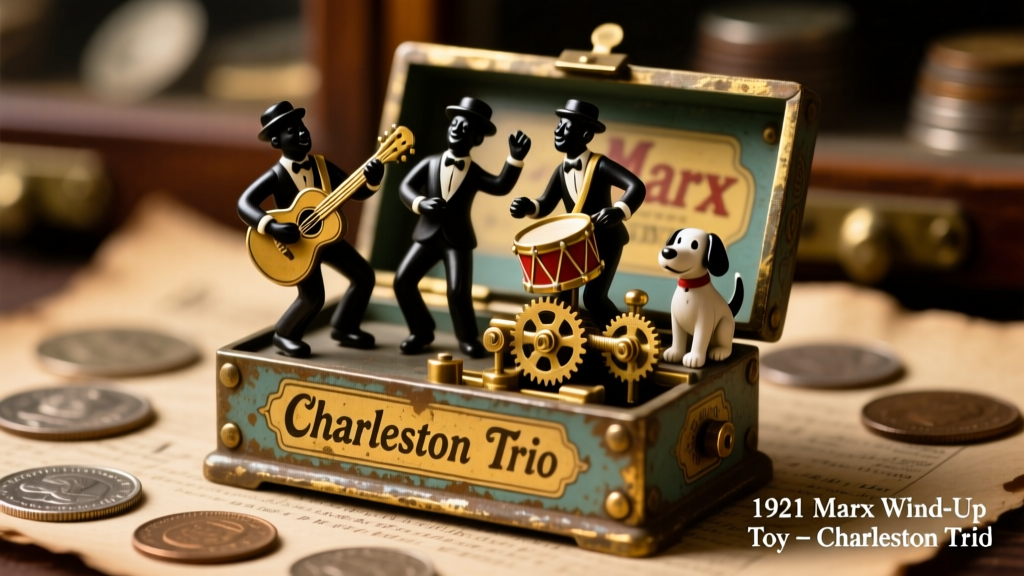
The 1921 Marx Toy Charleston Trio: A Windup Ensemble of Black Musicians and a Dog — Historical Context, Mechanics, Rarity, and Collectibility
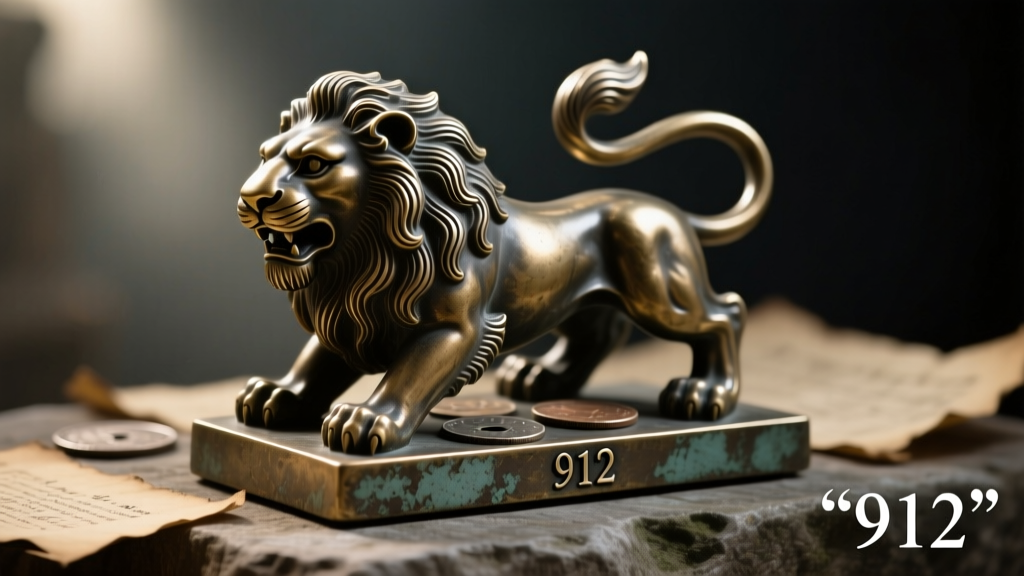
The Lion Flailing Tail Doorstop: A Detailed Appraisal of the 6¾ × 9½-Inch Embossed Mane Cast Iron Artifact
George F. Griffith: The Forgotten Architect of U.S. Coin Design and Die Engraving
Dresden Dish Sweetmeat Cover: A 19th-Century Porcelain Masterpiece with Four Open Wells and Handle (14½ × 6½ in)
The Purinton Pottery Company Apple Tea Toast Set: A Forgotten American Ceramic Treasure

McCoy Lamp Base: Green Onyx Ribbed Design with Looping Handles — Identification, Provenance, and Market Value Analysis

Kazak Rug Identification & Valuation: The Six-Row Medallion Wool Pile (4 × 7 Ft)
Toy Wagon Convertible Sleigh Runners: Iron Wheel Tread, Wooden Red Frame, 41-Inch Classic — Identification, Provenance, and Market Value Analysis
George III Mahogany Arched-Back Chair with Down-Swept Arms: A 37-Inch Masterpiece of Georgian Craftsmanship