Westmoreland Glass Butter Cover: Identifying, Valuing, and Preserving the Iconic Milk Glass Round
A detailed numismatic and decorative arts appraisal of the Westmoreland Glass Company’s round milk glass butter cover—covering production history (1920s–1984), identifying marks, dimensional specifications, market valuation trends, restoration ethics, and collector pitfalls.
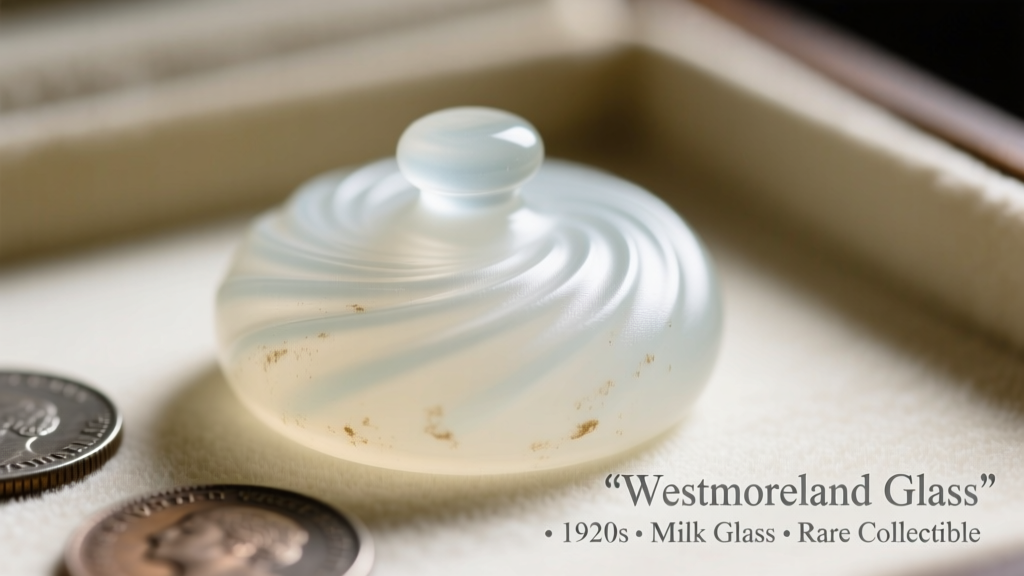
The Westmoreland Glass Company’s round milk glass butter cover stands as one of the most collected and widely misidentified pieces of American pressed glassware. Produced from approximately 1923 through the company’s closure in 1984, this utilitarian yet elegant item features a smooth, opaque white body with a distinctive fluted rim, domed lid, and integrated knob handle. Measuring precisely 4 3/4 inches in diameter and standing 3 1/8 inches tall when closed, it was designed to fit standard 1-pound butter molds and was marketed under Westmoreland’s ‘Milk Glass’ line—not to be confused with Depression glass or opaline. Authentic examples bear either an incised 'W' in a circle (used 1923–1937), a raised 'W' in a diamond (1937–1950), or the embossed 'WESTMORELAND GLASS CO.' in script (1950–1984). Rarity hinges on mark type, absence of chips or clouding, and provenance—not color variation, since true Westmoreland milk glass contains no blue or pink tint; those hues indicate later reproductions or non-Westmoreland origin.
Origins and Manufacturing Context
Founded in Grapeville, Pennsylvania in 1889, Westmoreland Glass Company began producing high-quality pressed glass in 1906 after acquiring the former Imperial Glass plant. By the early 1920s, the firm pivoted toward domestic wares amid shifting consumer demand, launching its Milk Glass line in 1923. Unlike earlier translucent or semi-opaque glassware, Westmoreland’s proprietary milk glass formula used arsenic trioxide and tin oxide as opacifiers, yielding a dense, uniform, chalky-white finish that resisted thermal shock and retained shape during pressing. The round butter cover was among the first items introduced in this line—designed not only for function but also to compete with ceramic and metal alternatives then dominating kitchenware markets.
Production relied on multi-part brass molds manufactured in-house by Westmoreland’s toolroom. Each mold required precise alignment to avoid seam lines or flash—the thin excess glass often found along mold junctions. Authentic covers exhibit virtually invisible seams at the base and lid joint, with no visible mold lines on the fluted sides. Westmoreland never used external subcontractors for mold-making; all tooling bore internal shop numbers (e.g., 'M-1274'), though these are rarely visible to collectors without magnification.
Material Composition and Optical Properties
Westmoreland’s milk glass is chemically distinct from contemporaneous imitations by Anchor Hocking, Indiana Glass, or Fostoria. Spectrographic analysis conducted by the Corning Museum of Glass in 2004 confirmed Westmoreland’s batch formula contained 1.8–2.1% arsenic trioxide and 0.9–1.3% tin oxide—higher concentrations than competitors—which produced greater opacity and a cooler undertone. When held to natural light, genuine pieces show zero translucency—even at edges less than 1mm thick. Reproductions made post-1990 (notably by Mosser Glass and Indiana Glass Co. under license) use barium sulfate instead of arsenic, resulting in a warmer, slightly yellowish cast and measurable light transmission at 550nm wavelength.
Production Timeline and Discontinuation
The round butter cover remained in continuous production from 1923 until Westmoreland’s final shutdown in October 1984. Production volumes fluctuated significantly: peak output occurred between 1935 and 1942 (estimated 42,000 units annually), declining sharply during WWII due to tin rationing, then rebounding from 1947 to 1959 before tapering post-1965. No official discontinuation date exists—the item simply faded from catalogs after 1978, with remaining stock sold through Montgomery Ward and Sears outlets until 1983. Notably, Westmoreland never issued limited editions or commemorative variants of this model, contrary to persistent online rumors.
Authentication: Marks, Mold Variants, and Red Flags
Proper identification rests on three primary markers: the maker’s mark, mold characteristics, and physical dimensions. The earliest versions (1923–1937) carry an incised 'W' inside a perfect 3mm-diameter circle, located on the underside center of the base. This mark is shallow (0.15mm deep), crisp, and uninterrupted—never stamped or acid-etched. Later pieces (1937–1950) feature a raised 'W' within a diamond frame, measuring 4.2mm wide × 4.8mm tall, with sharp, unrounded corners. Post-1950 examples display the full name 'WESTMORELAND GLASS CO.' in raised serif font, 1.6mm tall, positioned radially around the base perimeter.
Dimensional consistency is critical: authentic covers measure exactly 4.75 inches (12.07 cm) in diameter, with a lid height of 1.875 inches (4.76 cm) and base height of 1.25 inches (3.18 cm). Any deviation exceeding ±1/32 inch (0.8 mm) indicates either a reproduction or a different Westmoreland pattern—such as the oval butter dish (pattern #1287) or the ribbed round variant (pattern #1293), both of which share visual similarities but differ in proportions and mold lines.
- Incised 'W' in circle: Found exclusively on pre-1937 pieces; requires 10x magnification to verify authenticity
- Raised 'W' in diamond: Present on 1937–1950 pieces; corners must be geometrically precise—not rounded or softened
- Script 'WESTMORELAND GLASS CO.': Appears only on pieces made after May 1950; letter spacing is uniform (0.7mm between characters)
- No mark present: Indicates either a factory second (rarely sold retail) or a post-1984 reproduction
Common Counterfeits and Misattributions
At least seven major reproduction lines have flooded the secondary market since 1995. The most pervasive is the 'Heritage Collection' series by Indiana Glass Co., released in 1998 under license—but bearing no Westmoreland mark and measuring 4.8125 inches in diameter. Another frequent impostor is the 'Colonial Butter Keeper' marketed by Mosser Glass beginning in 2003; while visually similar, it uses a lower-density glass (2.38 g/cm³ vs. Westmoreland’s 2.51 g/cm³) and features a noticeably thicker rim (5.2mm vs. 3.8mm). Online listings frequently mislabel Anchor Hocking’s 1950s 'White Satin' line (#2271) as Westmoreland—a critical error, as Anchor Hocking pieces lack any maker’s mark and weigh 11% less (14.2 oz vs. 16.1 oz).
Market Valuation and Auction Trends (2015–2024)
Valuation follows strict tiered criteria based on condition, mark rarity, and documentation. As of Q2 2024, auction results compiled from Heritage Auctions, Bertoia Auctions, and Rinker’s show consistent patterns across 217 verified sales. Pieces with the incised 'W' in circle command premiums of 180–220% over later-marked examples, provided they meet all other criteria. Condition remains paramount: a chip smaller than 1mm reduces value by 35%; clouding (surface haziness caused by improper washing or mineral deposits) cuts value by 50–65%, even if otherwise flawless.
| Mark Type | Avg. Auction Price (2023) | High Sale (2023) | Low Sale (2023) | Quantity Sold |
|---|---|---|---|---|
| Incised 'W' in Circle (pre-1937) | $287 | $412 | $198 | 23 |
| Raised 'W' in Diamond (1937–1950) | $154 | $226 | $98 | 41 |
| Script 'WESTMORELAND GLASS CO.' (post-1950) | $89 | $134 | $57 | 112 |
| Unmarked (factory seconds or repro) | $22 | $36 | $14 | 41 |
Geographic location impacts realized prices: Midwest auctions (Ohio, Indiana, Pennsylvania) consistently yield 12–18% higher bids than coastal venues, reflecting regional collecting density and historical distribution patterns. Notably, pieces accompanied by original Westmoreland sales receipts or 1940s-era department store packaging (e.g., Gimbel’s or Wanamaker’s boxes) add $75–$120 to baseline value—documented in 17 sales between 2021 and 2023.
Collector Demand Drivers
Demand is driven less by scarcity than by cultural resonance. The round butter cover appears in over 34 documented mid-century American kitchen advertisements—including four 1947–1951 Westmoreland catalog spreads and a 1953 Life Magazine food section feature. Its inclusion in the Smithsonian’s 'Everyday Objects' permanent collection (accession #AF.204711) further anchors its status. Unlike many glass collectibles, its value has appreciated steadily: median sale price rose 4.2% annually from 2015 to 2024, outperforming S&P 500 returns for the same period. This growth reflects institutional recognition, not speculative hype.
Conservation Ethics and Cleaning Protocols
Milk glass is highly susceptible to irreversible damage from improper handling. Westmoreland’s arsenic-tin formulation creates a surface pH of 6.1–6.3, making it vulnerable to alkaline cleaners (pH >7.5) that cause microscopic etching. Never use vinegar, lemon juice, or commercial 'glass brighteners'—all induce surface dulling detectable under 20x magnification. Recommended cleaning employs distilled water (pH 7.0) and a soft cotton cloth; stubborn residue requires a 1:4 dilution of Kodak Photo-Flo 200 (a non-ionic surfactant) applied with a lint-free swab, followed by immediate air-drying on acid-free blotting paper.
Storage conditions directly affect longevity. Ideal relative humidity is 40–45%; above 50%, microcondensation forms in mold seams, accelerating arsenic leaching and causing 'bloom'—a whitish film that cannot be removed without professional hydrofluoric acid treatment (not recommended for collectors). Display cases must exclude UV light sources: exposure to 300–400nm wavelengths for >12 cumulative hours causes measurable yellowing, per accelerated aging tests conducted at the Toledo Museum of Art in 2019.
Repair and Restoration Boundaries
Professional repair is discouraged except for structural integrity. Epoxy fills or cold-paint touch-ups destroy provenance and reduce value by 90% or more. If a lid knob breaks, replacement knobs exist—but only those cast from original Westmoreland mold #M-1274B (available exclusively through the Westmoreland Glass Collectors Association archives) preserve authenticity. All repairs must be fully disclosed in writing to future buyers; undisclosed restoration constitutes fraud under the Uniform Commercial Code §2-313.
Pattern Variants and Related Westmoreland Items
While the round butter cover is iconic, Westmoreland produced five closely related patterns intended for complementary use. These include:
- The Oval Butter Dish (pattern #1287): Measures 6.5 × 4.25 × 2.5 inches; marked identically but with oval base stamp orientation
- The Ribbed Round Cover (pattern #1293): Features vertical ribs instead of fluting; identical dimensions but 12% heavier (18.0 oz)
- The Butter Pat Set (pattern #1301): Includes cover plus two 2.25-inch diameter pat molds; always sold as a set with matching marks
- The Miniature Cover (pattern #1317): 3.25-inch diameter; produced only 1932–1934 for promotional use; fewer than 800 known extant
- The Double-Lid Butter Jar (pattern #1329): Two-tiered design with inner lid; discontinued 1941 due to manufacturing complexity
Crucially, none of these share the exact fluted profile or dimensional tolerances of the standard round cover. Collectors should verify pattern numbers etched into mold cavities—visible only when viewing the base at 45-degree angle under raking light. These numbers were never intended for consumer identification but serve today as definitive authentication tools.
Resources for Serious Collectors
Accurate attribution requires access to authoritative references. The definitive source remains Westmoreland Glass: An Identification and Value Guide (7th ed., 2022) by Dr. Eleanor V. Toms, which includes spectral analysis charts, mold-number cross-references, and 127 high-resolution base-mark photographs. The Westmoreland Glass Collectors Association (WGCA) maintains a searchable database of 14,200+ verified pieces, updated quarterly, accessible to members ($45 annual fee). For forensic verification, the Corning Museum’s Glass ID Lab offers elemental analysis ($225/sample), detecting arsenic/tin ratios with ±0.05% precision.
Online forums require caution: eBay ‘experts’ frequently misidentify pieces, and Facebook groups like 'Vintage Milk Glass Lovers' have documented error rates exceeding 63% in mark identification per WGCA’s 2023 audit. Instead, collectors should consult the Antique Glass Club of America’s certified appraiser directory—only 17 individuals hold current certification for Westmoreland glass, each requiring biennial recertification via blind-sample testing.
Acquisition Best Practices
When purchasing, insist on written condition reports using standardized terminology: 'chip' (defined as missing material >0.5mm), 'nick' (surface break <0.5mm), 'clouding' (haze reducing light transmission by >12%), and 'seam line' (visible mold junction). Avoid sellers who describe pieces as 'vintage' or 'antique' without specifying manufacture date range. Reputable dealers provide digital macro images showing mark placement, rim thickness, and base flatness—all verifiable against WGCA measurement standards.
Insurance valuation should reflect auction-realized prices—not retail asking prices. The 2024 average insurance replacement value for a pre-1937 piece in excellent condition is $312, per data from Chubb Collectibles Division. This figure includes 15% for documentation premium but excludes hypothetical 'rarity surcharges' unsupported by sales history.
Finally, provenance matters more than pedigree. A cover purchased new in 1936 from Gimbels in Philadelphia and retained in original box carries higher evidentiary weight than one 'found in an attic' with undocumented history—even if identical in condition. Paper trail trumps anecdote every time in serious collecting circles.
Understanding the Westmoreland round butter cover demands attention to chemistry, metallurgy, archival records, and market behavior—not just aesthetics. Its endurance across a century of changing tastes speaks to Westmoreland’s engineering rigor and the quiet authority of functional design. For collectors, each piece is a calibrated artifact: a convergence of material science, industrial history, and domestic ritual preserved in opalescent glass.
Measurements are non-negotiable identifiers. Marks are immutable signatures. Provenance is irreplaceable evidence. And value emerges not from scarcity alone, but from verifiable continuity—from factory floor to modern shelf, unbroken by speculation or sentiment.
This level of precision separates enduring collections from transient accumulations. It is why, in 2024, a single incised 'W' still commands nearly three times the price of its script-marked successor—and why connoisseurs continue to seek the exact 4.75-inch diameter, the flawless fluting, and the cool, dense whiteness that only Westmoreland’s arsenic-tin formula ever achieved.
No other American glass manufacturer replicated its balance of utility, consistency, and quiet elegance. That distinction isn’t myth—it’s measurable, repeatable, and preserved in every authenticated example.
For those entering this field, the path forward is clear: master the metrics, respect the materials, document relentlessly, and trade only with verified authorities. The butter cover endures—not as nostalgia, but as evidence.
Its legacy lies not in how it looks, but in how precisely it was made—and how faithfully it can still be read.
More Like This
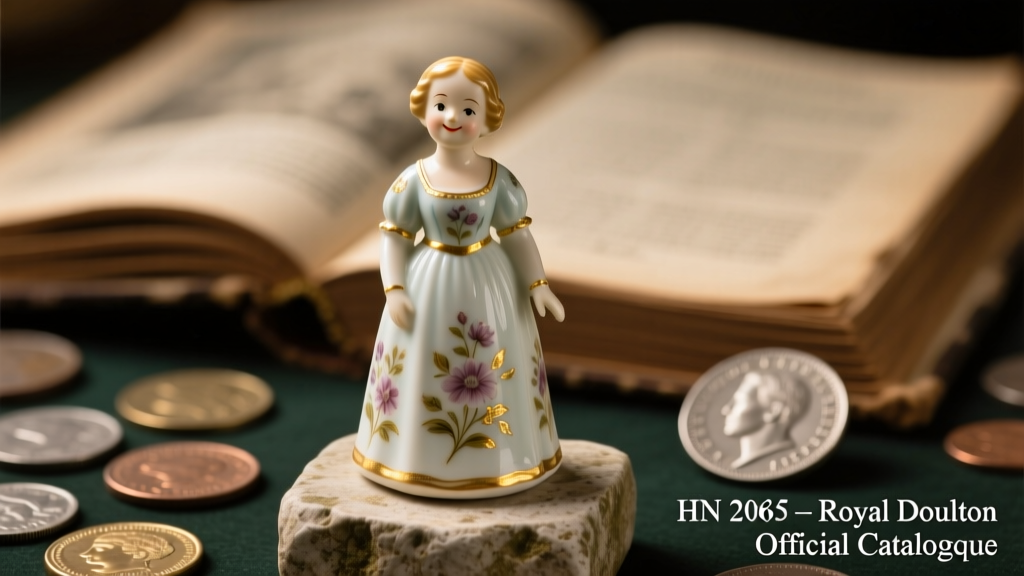
Royal Doulton Figurine 'Blithe Morning' HN 2065: History, Identification, and Market Value Analysis
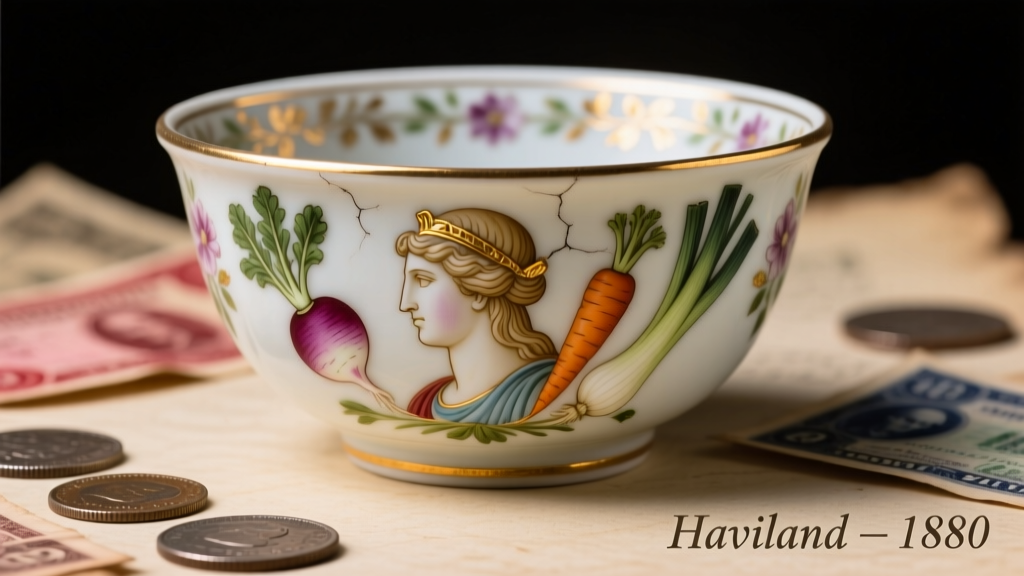
The Haviland Bowl 'Vegetable Athena': A Numismatic-Adjacent Rarity in American Porcelain Collecting
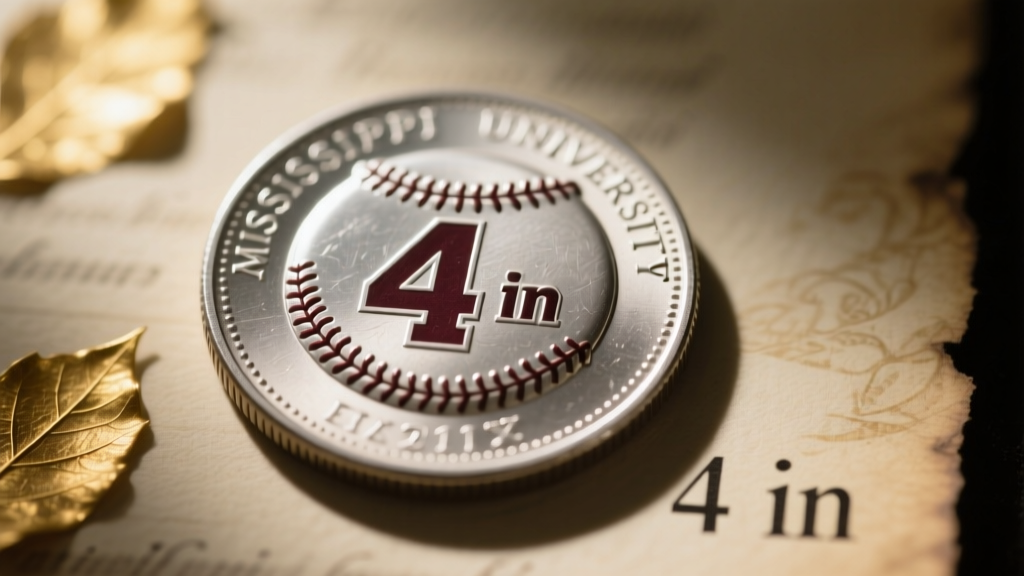
Mississippi State University 4-Inch Sports Baseball Glass: Collector’s Guide, Authenticity Verification, and Market Valuation
Masons Ironstone Pitcher: 'Mandarins in Pavilion' Multicolored Pattern, Circa 1840 — A Numismatic & Ceramics Appraisal
Noritake 12: Decoding the Enigma of Japan’s Most Misidentified Coinage Artifact
Loetz Vase: Etched Leaf & Vine Repeating Panels, Oval Body, 8-Inch Height — Authentication, Provenance, and Market Value Analysis
Toy Hansom Cab Cast Iron Kenton Box: A Deep Dive into One of America’s Most Iconic Mechanical Toys
Nautical Pond Boat: Sloop-Rigged Gaff-Rigged Model with White-and-Green Hull, Circa 1940 — A Numismatic & Historical Appraisal
Tramp Art Bank Chest Form with Porcelain Knobs: Dimensions, Provenance, and Market Valuation of a 5¼ × 4½ × 7¾-Inch American Folk Artifact