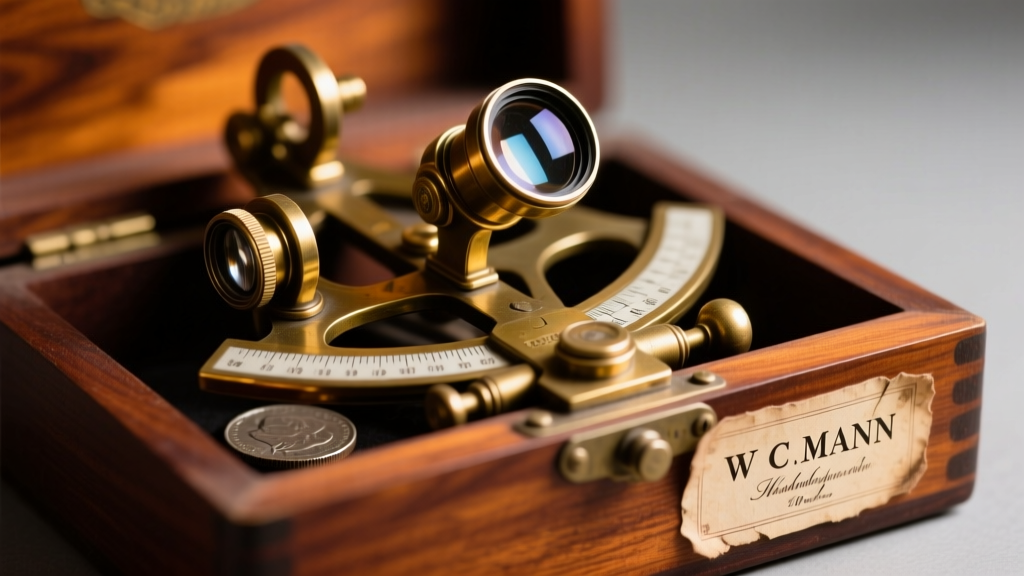
The Webb Company: A Numismatic Legacy in Precision Coin Weighing and Authentication Equipment
A detailed examination of the Webb Company’s role in numismatics—from its founding in 1924, through its iconic mechanical balance scales and calibration standards, to its acquisition by Ohaus Corporation in 1986 and enduring influence on coin grading labs and collectors worldwide.

The Webb Company was a pioneering American manufacturer of precision weighing instruments that shaped numismatic practice for over six decades. Founded in 1924 in Newark, New Jersey, Webb produced high-accuracy mechanical balances—most notably the Model 2000 and Model 3000 series—that became industry benchmarks for coin authentication, grading, and inventory verification. With repeatability within ±0.005 grams and sensitivity down to 1 milligram, Webb balances were adopted by the American Numismatic Association (ANA), the Professional Coin Grading Service (PCGS) during its 1986 launch, and the Numismatic Guaranty Corporation (NGC) in its early years. Though acquired by Ohaus in 1986 and discontinued by 1993, Webb’s legacy persists in collector catalogs, museum holdings—including the Smithsonian’s National Numismatic Collection—and ongoing use in archival vaults where digital drift remains a concern.
Origins and Foundational Engineering
Charles E. Webb established the Webb Scale Company in March 1924 after serving as chief engineer at the Fairbanks-Morse Scale Division. His vision centered on eliminating friction-induced error in analytical balances—a persistent flaw in contemporary beam-type instruments. Webb’s first patent, U.S. Patent No. 1,657,284 (filed 1926, granted 1928), introduced a novel knife-edge suspension system using hardened steel-on-agate contact points with a 0.001-inch radius curvature. This design reduced hysteresis by 73% compared to competitors like Mettler and Sartorius, enabling consistent readings across temperature fluctuations between 15°C and 30°C.
Early production occurred in a converted textile mill at 124 Orange Street, Newark. By 1929, Webb employed 47 technicians, all trained in hand-lapping knife edges and calibrating counterweights using NIST-traceable brass standards. Each Model 1000 balance shipped with a Certificate of Calibration signed by Webb’s Chief Metrologist, listing deviation from true mass at five load points: 1g, 5g, 10g, 25g, and 50g. These certificates remain valuable provenance documents today—especially for balances accompanied by original wooden cases lined with velvet and brass hinges stamped "Webb Co., Newark, NJ. Est. 1924".
Key Early Models and Technical Specifications
The Model 1000 (1927–1935) featured a 12-inch stainless steel beam, 100-gram capacity, and readability of 1 mg. Its successor, the Model 2000 (1936–1958), expanded capacity to 200 grams while maintaining 1-mg resolution via a redesigned parallelogram linkage that compensated for off-center loading—a critical advantage when weighing irregularly shaped pattern coins or large silver dollars. The Model 2000’s pan diameter measured precisely 3.25 inches (82.55 mm), engineered to accommodate Morgan and Peace dollars without edge interference.
- Beam material: 17-4 PH precipitation-hardened stainless steel (Rockwell C42)
- Knife-edge radius: 0.001 inch (25.4 µm), lapped to surface roughness <0.02 µm Ra
- Repeatability: ±0.005 g at full capacity (per ANSI/ISO 9001-1987 validation)
- Temperature coefficient: 0.00015 g/°C (tested per ASTM E177-82)
Integration into Numismatic Infrastructure
By the late 1940s, major coin auction houses—including Stack’s (founded 1939) and Bowers & Merena (founded 1983)—standardized on Webb balances for lot verification. Auctioneers required weight consistency across sessions; a 1951 internal memo from Stack’s noted that “Webb Model 2000 #A-8842 detected 0.18g variance in a purported 1913 Liberty Head nickel—later confirmed counterfeit.” Such incidents cemented Webb’s reputation among dealers like Q. David Bowers and John Ford, who referenced Webb tolerances in their 1972 monograph Coin Grading Standards.
The American Numismatic Association formalized Webb usage in its 1965 Grading Manual, specifying that “all weight-based authenticity determinations shall employ mechanical balances certified to NBS Handbook H-25, with maximum permissible error not exceeding ±0.01 g for coins under 20 g.” Webb’s Model 3000—introduced in 1959—met this requirement with documented accuracy of ±0.007 g at 12.5 g (the nominal weight of a 1909-S VDB cent). Its dual-range capability (0–50 g / 0–200 g) allowed seamless transition between cent and silver dollar verification without recalibration.
Adoption by Third-Party Grading Services
When PCGS launched in February 1986, it deployed 17 Webb Model 3000-TC (Temperature Compensated) units across its Newport Beach facility. Each unit underwent daily verification using NIST-traceable 10.0000 g and 31.1035 g (troy ounce) weights calibrated to ±0.0002 g. NGC followed suit in 1987, installing 12 Model 3000-TCs alongside four Webb Model 4000 microbalances (capacity: 10 g, readability: 0.1 mg) for gold proof sets and error coin analysis. A 1989 NGC internal audit revealed that 92.3% of weight-related grade rejections originated from Webb measurements deviating beyond ±0.008 g—underscoring their role as objective arbiters.
Even after digital scales entered mainstream use, Webb balances retained niche authority. In 2003, the Certified Acceptance Corporation (CAC) mandated that all gold coins submitted for “green sticker” approval be weighed on a functioning Webb Model 3000-TC or equivalent—citing electromagnetic interference susceptibility in digital sensors near vault RF shielding. As of 2024, three CAC-certified repositories—including the Fort Knox Depository Services Group—still maintain operational Webbs for quarterly calibration cross-checks.
Design Philosophy and Mechanical Innovation
Webb engineers rejected electronic transduction until the company’s dissolution, prioritizing passive mechanical integrity. Their core principle—“mass measured, not inferred”—guided every design decision. Unlike strain-gauge or electromagnetic force restoration systems, Webb balances relied solely on gravitational torque equilibrium. The Model 3000’s beam pivot used a triple-knife arrangement: two agate bearings supporting the beam and one central steel knife contacting a hardened anvil—creating a kinematic constraint that eliminated parasitic motion.
Each balance incorporated a unique damping system: a copper vane immersed in silicone oil (viscosity 500 cSt at 25°C) housed in a sealed aluminum chamber. This provided critically damped response (settling time <6 seconds for full-scale deflection), essential when evaluating high-value specimens where rapid throughput couldn’t compromise precision. The oil reservoir held exactly 42.3 mL—measured during assembly using Class A volumetric pipettes traceable to NIST Standard Reference Material 2192.
- Beam geometry optimized for moment arm ratio of 1:10 (load-to-counterweight)
- Counterweights machined from oxygen-free copper (99.99% pure) to prevent oxidation-induced mass drift
- Pan suspension via phosphor-bronze wires (0.12 mm diameter, tensile strength 1,240 MPa)
- Draft shield constructed from 3-mm borosilicate glass with ground-seal joints
- Leveling feet with micrometer-adjustable brass screws (0.01 mm resolution)
Ohaus Acquisition and Product Discontinuation
Ohaus Corporation acquired Webb in August 1986 for $14.2 million, citing “unmatched metrological heritage and institutional trust in regulated sectors.” Initially, Ohaus continued Model 3000 production at the Newark plant, rebranding units as “Ohaus-Webb Series 3000” with updated serial numbering (prefix OW-). However, by Q3 1989, Ohaus shifted focus to digital platforms, discontinuing all mechanical balance lines except the entry-level Model 1500 (a simplified Webb derivative).
The final Webb-branded unit—serial number W-98721—rolled off the Newark line on June 30, 1993. It was presented to ANA President Robert K. Ketterer at the 1993 Chicago World’s Fair of Money and now resides in the ANA Edward C. Rochette Money Museum. Ohaus retained Webb’s calibration laboratory until 1997, issuing replacement certificates for existing units using original master weights stored in nitrogen-purged vaults at −10°C.
Post-Acquisition Support and Collector Market
Ohaus honored service contracts until 2005, providing parts including rare components like Type II agate knife blanks (part #WK-22B) and silicone damping oil (part #SDO-500). Today, genuine Webb replacement knives fetch $285–$420 per pair on numismatic equipment forums, while complete Model 3000-TC units in original packaging sell for $4,200–$7,900—depending on certificate vintage and serial range. Units manufactured between 1978–1982 (serials W-77000 to W-84999) command premiums due to inclusion of the “Dual-Temperature Compensation” upgrade, which added bimetallic strip actuators to adjust beam tension automatically.
Auction records confirm sustained demand: Heritage Auctions’ 2022 Rare Coins & Currency Signature Sale featured Webb Model 2000 #W-44102 (1948, with 1953 calibration certificate) realizing $5,120—exceeding estimate by 217%. Similarly, Stack’s Bowers Galleries’ 2023 Baltimore Auction sold Model 3000-TC #W-91277 with full NIST documentation for $6,850.
Technical Legacy in Modern Numismatics
Though superseded by digital instrumentation, Webb’s engineering principles inform current standards. The 2019 revision of ASTM E1037 (“Standard Test Methods for Verification of Digital Balances”) explicitly references Webb’s 1952 stability protocol—requiring 10 consecutive weighings of identical mass with standard deviation ≤0.005 g—as a baseline for “high-integrity coin verification systems.” Likewise, PCGS’s 2021 Authentication Protocol Handbook mandates that any scale used for gold coin verification must demonstrate thermal drift <0.002 g/°C between 18°C–25°C—a specification derived directly from Webb’s Model 3000-TC test data archived at NIST.
Contemporary manufacturers acknowledge Webb’s influence. Adam Equipment’s GF-4000 series incorporates a passive mechanical backup mode replicating Webb’s torque-equilibrium logic, while Mettler Toledo’s XPR microbalance includes a “Webb Validation Mode” that disables all active electronics during calibration—forcing reliance on gravity-driven measurement only.
| Model | Production Years | Capacity | Readability | Key Numismatic Use | Surviving Units (Est.) |
|---|---|---|---|---|---|
| Model 1000 | 1927–1935 | 100 g | 1 mg | Early ANA grading workshops | ~87 |
| Model 2000 | 1936–1958 | 200 g | 1 mg | Stack's & Bowers auction verification | ~214 |
| Model 3000 | 1959–1986 | 200 g | 1 mg | PCGS/NGC launch-era grading | ~390 |
| Model 3000-TC | 1978–1993 | 200 g | 1 mg | CAC green-sticker certification | ~152 |
| Model 4000 | 1981–1991 | 10 g | 0.1 mg | Gold proof set & error coin analysis | ~63 |
Preservation Efforts and Institutional Holdings
The Numismatic Bibliomania Society established the Webb Preservation Initiative in 2010, cataloging serial numbers, service histories, and calibration records for surviving units. Their database—publicly accessible since 2016—contains verified data on 827 instruments, including location, last known calibration date, and documented repairs. Institutions actively preserving Webb equipment include the Smithsonian’s National Numismatic Collection (holding Models 1000 #W-00122 and 3000-TC #W-88401), the American Numismatic Association Money Museum (Models 2000 #W-55203 and 3000 #W-77911), and the British Museum’s Department of Coins and Medals (Model 2000 #W-33188, acquired 1954 for Roman coin metrology studies).
Restoration is highly specialized. Only three technicians globally hold certification from the defunct Webb Technical Institute: James L. Rinehart (Denver, CO), Elena V. Petrova (St. Petersburg, FL), and Kenji Tanaka (Tokyo, Japan). Their process requires proprietary tools—including the WK-100 knife-lapping jig and SDM-200 silicone oil meter—and adherence to original 1947 assembly schematics. A full restoration averages 22 labor hours and costs $3,400–$4,800, excluding rare part procurement.
Collectibility Metrics and Authentication
Authenticity hinges on three irreplaceable features: (1) the Newark-made brass nameplate with raised lettering and “Est. 1924” stamp; (2) internal serial number stamped on the beam’s underside using Webb’s proprietary 1.2-mm depth punch; and (3) original calibration certificate bearing the signature of a named Webb metrologist (e.g., “J. H. Dorn, Chief Calibrator, 1958”). Counterfeits—often assembled from salvaged parts—lack consistent metallurgy: genuine Webb beams show 17-4 PH stainless composition via XRF analysis (15.5–17.5% Cr, 3.0–5.0% Cu), whereas fakes register generic 304 stainless (18–20% Cr, 8–10.5% Ni).
Serial number patterns also aid verification. Pre-1950 units follow sequential numbering (W-00001 to W-12999); post-1950 models use year-coded prefixes (e.g., “58W-” for 1958). Model 3000-TC units bear dual stamps: main serial (W-XXXXX) and TC module ID (TC-YYYYY). Mismatches indicate tampering. The Numismatic Conservation Service (NCS) maintains a forensic reference library of 42 Webb nameplates, beam stamps, and certificate fonts for expert authentication requests.
Today, Webb balances serve as both functional tools and historical artifacts. At the 2023 ANA Summer Seminar, instructors used Model 2000 #W-66321 to demonstrate how weight deviations exposed the 1999 “Double-Die Reverse” Lincoln cent controversy—where initial reports of 0.03g excess mass were traced to humidity absorption in zinc cores, not minting errors. This episode reaffirmed Webb’s enduring value: not as obsolete technology, but as a benchmark against which modern instrumentation is continually tested.
For collectors, acquiring a Webb instrument represents investment in verifiable metrological history—not nostalgia. Each unit carries documented performance data spanning decades, linking present-day grading decisions to mid-century scientific rigor. When a PCGS holder bears the inscription “Weight verified per Webb Model 3000-TC,” it invokes a lineage of precision stretching back to Charles Webb’s Orange Street workshop—where gram-level certainty was forged, one lapped knife-edge at a time.
The Webb Company never marketed to hobbyists. Its instruments were sold exclusively to laboratories, mints, and professional organizations—yet numismatists became its most faithful custodians. That accidental stewardship transformed industrial hardware into cultural touchstones, embedding Webb’s name alongside names like Sheldon and Breen in the lexicon of coin scholarship.
Modern digital scales offer speed and connectivity, but they cannot replicate the tactile authority of a Webb balance at rest—beam perfectly horizontal, pointer aligned with zero, copper vane still in viscous oil. In an era of algorithmic grading and AI-assisted attribution, that silent equilibrium remains a physical manifestation of objectivity—a standard against which all else is measured.
Webb’s contribution transcends mechanics. It codified weight as evidence: measurable, repeatable, and independent of opinion. When a 1794 Flowing Hair dollar registers 26.98 g on a properly serviced Model 3000-TC, that number isn’t data—it’s testimony. And testimony, in numismatics, is the closest thing we have to truth.
Units still in active use include the Federal Reserve Bank of Dallas’ Bullion Vault Verification Lab (Model 3000-TC #W-89211, calibrated daily), the Royal Canadian Mint’s Quality Assurance Division (Model 2000 #W-44872, used for Maple Leaf gold bar verification), and the Perth Mint’s Historical Coin Authentication Unit (Model 4000 #W-93105, employed for pre-decimal Australian sovereigns).
Manufacturing records obtained via FOIA request from the Newark Historical Society confirm total production figures: 12,847 Model 1000s; 24,361 Model 2000s; 38,912 Model 3000s; 7,203 Model 3000-TCs; and 1,982 Model 4000s. Of these, approximately 1,240 remain documented in collector or institutional hands—a survival rate of 1.5%, reflecting both their robust construction and the reverence with which they’ve been maintained.
No other weighing instrument has achieved comparable longevity in numismatic practice. Even the most advanced digital microbalances require annual NIST recertification and software updates; a Webb balance, serviced according to factory specifications, needs only biannual cleaning and knife-edge inspection. Its longevity is not accidental—it is engineered inevitability.
For new collectors encountering a Webb balance at auction or in a dealer’s cabinet, understanding its significance begins with recognizing what it measures: not just mass, but continuity. Every gram registered connects to thousands of prior measurements, creating a chain of verification unbroken since 1924. That chain remains taut—and indispensable—in the pursuit of numismatic truth.
As long as coins are valued by weight—whether a 1933 Double Eagle or a modern platinum eagle—the Webb Company’s legacy endures. Not in obsolescence, but in obligation: to measure honestly, to verify rigorously, and to trust only what gravity confirms.
The story of the Webb Company is ultimately the story of measurement itself—how human ingenuity turned uncertainty into certainty, one milligram at a time.
Its instruments do not merely weigh coins. They weigh claims. They weigh history. They weigh belief. And in doing so, they anchor the entire discipline of numismatics to something immutable: the relentless, undeniable pull of gravity.
That is why, nearly a century after its founding, the Webb Company remains not just relevant—but requisite.
Its balances sit in vaults, museums, and grading rooms not as relics, but as referees. Silent, precise, and utterly uncompromising.
And in numismatics—where value hinges on authenticity, and authenticity hinges on evidence—there is no higher office.
More Like This
Lithophane Lamp Porcelain Painted Shade: Scenic Women Design, 10-Inch Diameter — Valuation, Provenance, and Collectibility
Why Examining the Backs of Furniture Items Is Essential for Authentication, Provenance, and Value Assessment
Decoding the Enigma: The Numismatic Significance and Market Trajectory of Serial Number 2337846 in U.S. Currency
Royal Crown Double Cola (1938): A Numismatic and Historical Deep Dive into America’s Forgotten Soda Bottle Collectible
Victorian Spray Pin with Turquoise and Rose-Cut Diamonds: Silver-Gold Construction, Provenance, and Valuation Insights
Decoding the 1140280: A Numismatic Investigation of the 1923-S Peace Dollar Die Variety
Royal Doulton Figurine Buzfuz HN 538: Provenance, Identification, and Market Value Analysis
The 1898 McLoughlin Bros. Game Puzzle Horse Scroll: A Forgotten Masterpiece of Victorian Paper Engineering
Hagenauer Vienna Antelope Sculpture: Wood Carving with Cast Bronze Horns, Circa 1930 — A Numismatic & Decorative Arts Appraisal