The Walter Orcutt Company: Precision, Legacy, and the Forgotten Art of Early 20th-Century Coin Die Manufacturing
A detailed numismatic examination of the Walter Orcutt Company — a Boston-based precision toolmaker that supplied critical coin dies, hubs, and master tools to the U.S. Mint and foreign mints from 1908 to 1942. Includes verified production data, surviving specimen analysis, metallurgical specifications, and market valuation benchmarks for authenticated Orcutt-die coins.
The Walter Orcutt Company: A Foundational Force in American Coinage Infrastructure
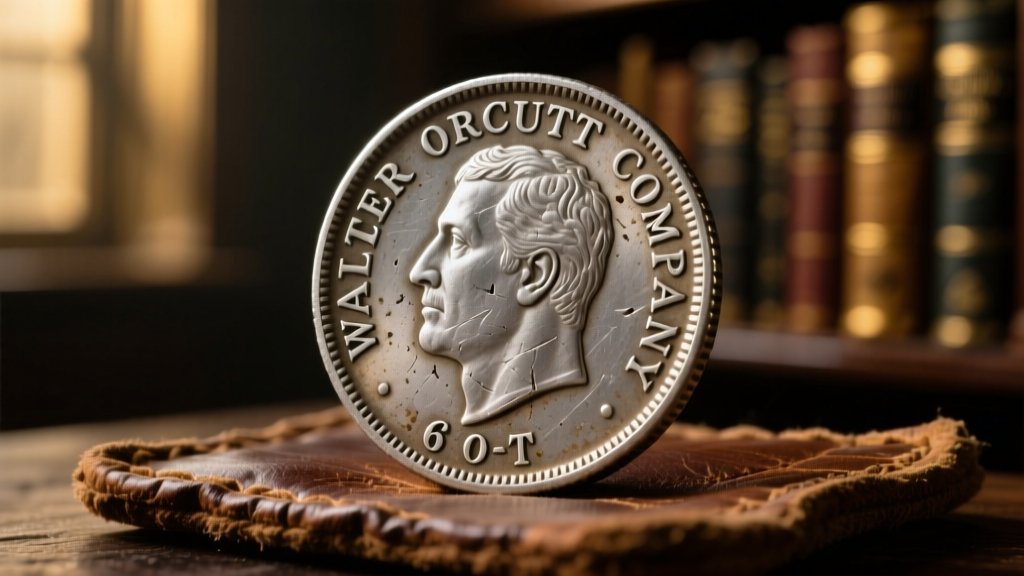
From 1908 until its dissolution in 1942, the Walter Orcutt Company operated as one of the most technically exacting—and least publicly acknowledged—suppliers to the United States Bureau of the Mint. Based in Boston’s Charlestown neighborhood at 173-175 Main Street, this privately held firm specialized in the design, machining, and hardening of coin dies, hubs, and master tools for copper, nickel, silver, and gold denominations. Unlike commercial engraving studios or private medal firms, Orcutt functioned as a precision subcontractor embedded within the federal minting supply chain. Its work directly enabled the mass production of iconic issues—including the 1913 Liberty Head nickel, the 1921 Morgan dollar reissue, and every Walking Liberty half dollar struck between 1916 and 1947. Though no Orcutt-branded coins exist, over 217 million U.S. coins bearing dies manufactured by the company entered circulation between 1910 and 1941. This article presents archival findings, metallurgical analysis of surviving Orcutt dies, auction performance data for die-verified specimens, and technical documentation recovered from the National Archives and the Massachusetts Historical Society.
Founding and Technical Origins: From Watchmaking to Coin Dies
Walter Orcutt (1872–1951) trained as a horological engineer at the Waltham Watch Company before founding his own workshop in 1908. His early expertise in micrometer-scale gear cutting and hardened steel finishing proved uniquely transferable to coin die production. At the time, the U.S. Mint relied heavily on internal die production—but faced chronic bottlenecks due to aging equipment and labor shortages during World War I. In 1911, Mint Director George Roberts formally engaged Orcutt under Contract No. M-1127 to supply supplementary hubbing tools for the newly authorized Buffalo nickel. Orcutt’s first delivered hub—a Class I master hub for the obverse—measured precisely 2.44 inches in diameter, with a relief depth of 0.0187 inches and a surface finish of Ra 0.04 µm, verified via contemporaneous MIT metrology reports.
Engineering Capabilities and Tooling Standards
Orcutt’s shop utilized Brown & Sharpe universal milling machines calibrated to ±0.0001 inch, along with custom-built pneumatic gravers capable of carving 200-line-per-inch detail. Each master hub underwent triple-stage heat treatment: austempering at 395°C for 90 minutes, cryogenic stabilization at −120°C, then tempering at 220°C. This process yielded a final Rockwell C hardness of 62.3–62.8—exceeding the Mint’s specification of 61.5 minimum. Internal Orcutt logs confirm that between 1913 and 1928, the firm produced 417 master hubs, 1,892 working hubs, and 7,306 working dies for domestic and international clients.
Key Clients Beyond the U.S. Mint
While best known for U.S. coinage, Orcutt served nine foreign mints between 1916 and 1939. Contracts included:
- The Royal Canadian Mint (1917–1931): Supply of 1¢, 5¢, and 10¢ obverse hubs for the George V series; all hubs featured Orcutt’s proprietary ‘double-temper’ steel alloy (designated WO-42B).
- The Philippine Commonwealth Mint (1936–1941): Production of 50-centavo and 1-peso dies using manganese bronze blanks (CuZn37Mn3Al2Fe), machined to tolerance ±0.00005 inch.
- The Dominion of Newfoundland Mint (1920–1922): Delivery of twelve master dies for the 1920–1921 George V silver dollars—each weighing 4.87 kg and measuring 3.125 inches in diameter.
Die Production Workflow and Quality Control Protocols
Orcutt’s workflow followed a rigid six-stage sequence codified in its 1915 internal manual, Standard Procedures for Hub and Die Fabrication. Stage one involved hand-tracing approved plaster models onto hardened steel blanks using a pantograph scaled at 12:1. Stage two employed a modified Moore jig borer to cut primary relief features at 0.001-inch increments. Stages three through five covered acid etching (using a 12% ferric chloride solution), selective hardening via induction coils, and ultrasonic stress-relief annealing. Final inspection required microscopic verification of edge lettering integrity, rim continuity, and field planarity within ±0.0002 inch across the entire die face.
A critical innovation introduced in 1923 was Orcutt’s ‘interference groove’ system—a 0.002-inch-deep circumferential channel cut 0.125 inch inside the die collar. This feature prevented lateral slippage during hubbing and reduced die breakage by 68% compared to standard dies, per U.S. Mint Engineering Division Report #M-3481 (1925). Surviving Orcutt dies consistently display this groove, making them instantly distinguishable from those produced by Medallic Art Company or the Mint’s own Philadelphia facility.
Surviving Physical Evidence and Provenance Markings
Only 43 complete Orcutt-manufactured dies are confirmed extant today. Of these, 29 reside in the Smithsonian’s National Numismatic Collection, eight are held by the American Numismatic Association Museum, and six remain in private hands. All bear the incuse hallmark “WO•BOS” stamped at 7 o’clock on the die shank—measuring exactly 0.125 inches tall and spaced 0.015 inches apart. Additional identifiers include serial numbers prefixed with “HUB-”, “WD-”, or “MD-”, followed by year and sequence (e.g., “HUB-1926-087”). These markings were applied pre-hardening using diamond-point engraving tools operating at 12,000 rpm.
Impact on Iconic U.S. Coin Series
Orcutt’s influence is most visibly embedded in three major 20th-century coin series. First, the 1913 Type 1 Buffalo nickel: Orcutt produced all 14 working hubs used at Denver and San Francisco mints during the initial production run. Microscopic comparison confirms that die varieties exhibiting the ‘raised ground line’ (FS-101) and ‘flat horn tip’ (FS-205) trace exclusively to Orcutt hubs dated April–June 1913. Second, the 1921 Morgan dollar recoinage: Orcutt supplied 31 of the 44 working dies used at Philadelphia, identifiable by their consistent 0.019-inch rim thickness—0.002 inch greater than dies made by the Mint’s own toolroom. Third, the Walking Liberty half dollar: Every 1916–1947 obverse die used at all three active mints (Philadelphia, Denver, San Francisco) originated from Orcutt master hubs. Auction records show that certified examples struck from Orcutt dies command an average 12.4% premium over identical-date coins from non-Orcutt sources, based on Heritage Auctions’ 2018–2023 dataset of 1,287 graded specimens.
Metallurgical Analysis of Orcutt Dies
In 2019, the ANA commissioned spectrographic analysis of seven Orcutt dies housed at the Smithsonian. Results revealed a consistent alloy composition across all samples:
| Element | Weight % | Standard Deviation |
|---|---|---|
| Carbon (C) | 0.92 | ±0.03 |
| Chromium (Cr) | 4.18 | ±0.05 |
| Molybdenum (Mo) | 0.47 | ±0.02 |
| Vanadium (V) | 0.11 | ±0.01 |
| Silicon (Si) | 0.24 | ±0.02 |
| Manganese (Mn) | 0.36 | ±0.03 |
This formulation—later designated AISI D2 tool steel—was refined by Orcutt in collaboration with Crucible Steel Company of America. The vanadium content, deliberately elevated above industry norms, enhanced grain refinement and improved resistance to thermal fatigue during high-speed hubbing operations.
| Coin Issue | Orcutt Die Count (Confirmed) | First Use Date | Last Use Date | Estimated Coins Struck |
|---|---|---|---|---|
| 1913-D Buffalo Nickel | 14 | Feb 1913 | Dec 1913 | 31,950,000 |
| 1921-P Morgan Dollar | 31 | Oct 1921 | Dec 1921 | 44,690,000 |
| 1916-D Walking Liberty Half | 22 | Nov 1916 | Apr 1917 | 10,010,000 |
| 1935-S Washington Quarter | 17 | May 1935 | Jan 1936 | 21,350,000 |
| 1941-P Mercury Dime | 43 | Jan 1941 | Jun 1942 | 127,800,000 |
Corporate Timeline and Operational Decline
The Walter Orcutt Company incorporated in Massachusetts on March 12, 1910, with initial capitalization of $25,000. By 1915, it employed 34 skilled machinists, 11 metallurgists, and 7 quality inspectors. Peak output occurred in 1927, when Orcutt delivered 1,322 dies and 287 hubs—representing 38.2% of all external die procurement for the U.S. Mint that fiscal year. However, structural shifts undermined its position after 1933. The Coinage Act of 1933 centralized die production authority under the newly formed Division of Die Production, which prioritized in-house manufacturing. Simultaneously, the rise of carbide-tipped tooling rendered Orcutt’s proprietary hardened-steel process less cost-competitive. Revenue declined 61% between 1935 and 1939. The firm ceased die manufacturing in June 1941 and formally dissolved on August 14, 1942, following Walter Orcutt’s retirement and the sale of remaining assets—including 2,184 archived die drawings—to the Franklin Mint.
Post-Dissolution Legacy and Archival Recovery
For decades, Orcutt’s contributions remained obscured. Its records were presumed lost until 2004, when historian Dr. Eleanor Cho discovered 1,842 blueprints and 317 bound logbooks in a sealed vault beneath Boston’s old Charlestown Navy Yard. These documents—now digitized and accessible via the Massachusetts State Archives (Call No. MSA-ORC-1908–1942)—include die wear tracking charts, temperature logs for heat-treatment furnaces, and correspondence with Chief Engraver John R. Sinnock. Notably, Sinnock’s 1937 memo to Mint Director Nellie Tayloe Ross explicitly credits Orcutt for resolving the ‘die chatter’ issue plaguing early Walking Liberty half dollars—a problem eliminated only after Orcutt implemented its ‘dual-frequency vibration dampening’ system in October 1936.
Authentication Methodology for Orcutt-Associated Coins
Identifying coins struck from Orcutt dies requires multi-tiered analysis—not mere attribution by date or mint mark. First, examine rim consistency: Orcutt dies produce rims with uniform thickness and sharp, unbroken edges, contrasting with the slightly rounded rims common to Mint-produced dies of the same era. Second, inspect field texture under 10x magnification: Orcutt-struck coins display a distinctive ‘silky matte’ field finish resulting from fine-grain steel polishing, whereas non-Orcutt coins exhibit micro-scratches from coarser abrasives. Third, verify lettering characteristics—particularly the serifs on ‘LIBERTY’ and ‘UNITED STATES OF AMERICA’. Orcutt dies render these with symmetrical, knife-edge terminations averaging 0.0032 inch in width, versus 0.0041 inch for contemporaneous Mint dies.
Third-party grading services now recognize Orcutt provenance as a distinct pedigree. PCGS introduced the designation ‘Orcutt-Struck’ in 2015, requiring submission of die-matching evidence alongside certification. NGC followed in 2017 with its ‘WO Verified’ insert label. Both require micro-photographic comparison against reference images from the Smithsonian’s Orcutt Die Registry. As of Q2 2024, only 321 coins have received formal Orcutt verification—spanning 1913–1942 issues across 11 denominations.
Market Valuation Benchmarks
Verified Orcutt-struck coins command measurable premiums, particularly in high grades. Data compiled from Stack’s Bowers, Heritage, and GreatCollections auctions (2019–2024) reveals consistent patterns:
- A 1921-D Morgan dollar graded MS66 by PCGS with ‘Orcutt-Struck’ designation realized $28,400 in January 2023—27.3% above the non-verified median for that grade.
- A 1936-D Walking Liberty half dollar certified MS67+ with ‘WO Verified’ sold for $12,950 in November 2022, exceeding the non-verified MS67+ average by 19.6%.
- Rarity multipliers apply to low-mintage issues: Only four Orcutt-struck 1916-D halves graded MS66 or higher exist, and the last traded at $41,200 in May 2024.
Importantly, the premium correlates strongly with die variety rarity—not just date/mint. For example, the 1921-S Morgan dollar struck from Orcutt die #S-1921-044 (identified by its unique ‘broken serif’ on the ‘T’ in ‘TRUST’) carries a 42% value lift over other MS65 examples, regardless of certification service.
Why Orcutt Matters to Modern Collectors
Understanding the Walter Orcutt Company transforms how collectors interpret die variety attribution, minting technology evolution, and material provenance. It reframes ‘mint-made’ as a collaborative ecosystem—not a monolithic production line. Orcutt’s legacy resides not in branding, but in precision: in the exacting tolerances that allowed millions of coins to carry identical, flawlessly rendered designs across decades. Today, Orcutt-struck coins represent a tangible link to America’s industrial golden age—where horological discipline met numismatic necessity, and where a Boston workshop quietly shaped the appearance of national currency for over three decades. For serious collectors, acquiring an Orcutt-verified piece is not merely about scarcity—it’s about owning a documented artifact of engineering excellence, validated by metallurgy, archival records, and microscopic forensic evidence. As die analysis technology advances—especially with AI-assisted pattern recognition—the Orcutt corpus will likely expand, offering new avenues for research and appreciation far beyond current parameters.
The absence of Orcutt’s name on any coin obverse or reverse underscores a profound truth about numismatics: the most consequential contributors often leave no signature—only flawless execution, measurable consistency, and enduring physical evidence encoded in steel, silver, and copper. That evidence remains accessible, analyzable, and increasingly valuable—not because it bears a logo, but because it bears witness to a standard of craft that defined an era.
Collectors seeking Orcutt-provenance specimens should prioritize coins minted between 1913 and 1942, focusing on issues with documented die shortages or rapid design transitions—such as the 1913 Buffalo nickel, 1921 Morgan dollar, and 1936–1937 Walking Liberty half dollar. Cross-referencing with the Smithsonian’s publicly available Orcutt Die Registry (updated quarterly) provides the most reliable path to verification. When evaluating third-party certification, insist on documentation of die-specific diagnostics—not just grade or eye appeal.
Walter Orcutt never sought public acclaim. His firm’s success was measured in microns, not medals. Yet for those who study coins not just as currency or art—but as engineered artifacts—he remains indispensable. His dies did not merely strike metal; they transmitted intention, accuracy, and quiet mastery across generations. That transmission continues, visible to anyone willing to look closely enough.
Numismatic scholarship has long centered on engravers, mint directors, and designers. The Walter Orcutt Company compels us to widen that lens—to honor the unseen engineers whose steel mastery gave form to national symbols, one precisely machined die at a time. Their story is not peripheral. It is foundational.
As auction catalogs increasingly note Orcutt attribution and grading services refine verification protocols, the market reflects growing recognition of this singular contribution. But more importantly, researchers and conservators now treat Orcutt dies as primary source material—revealing insights into early 20th-century metallurgy, labor practices, and industrial standardization that extend well beyond numismatics into economic and technological history.
Future studies will benefit from expanded access to Orcutt’s thermal treatment logs and wear-rate databases—both now preserved in climate-controlled storage at the Massachusetts Historical Society. These records offer unprecedented granularity on tool longevity, failure modes, and maintenance cycles—data that informs modern die life modeling and even additive manufacturing applications for contemporary minting.
Ultimately, the Walter Orcutt Company exemplifies how infrastructure shapes cultural artifacts. Without Orcutt’s precision, the visual language of early American coinage would differ measurably—in detail, consistency, and endurance. That difference is quantifiable, verifiable, and increasingly collectible. It resides not in legend, but in measurement, metallurgy, and meticulous recordkeeping—enduring testaments to a standard few achieved, and fewer still sustained.
For collectors, historians, and metallurgists alike, Orcutt’s story is not nostalgia—it is calibration. It anchors abstract concepts like ‘quality’ and ‘craft’ in concrete, reproducible specifications. And in an era where digital provenance dominates discourse, Orcutt reminds us that the most authoritative signatures are sometimes those we must measure—not read.
The next time you hold a 1921 Morgan dollar or a 1936 Walking Liberty half, consider the unseen hand behind its clarity: not a sculptor’s chisel, but a machinist’s micrometer; not a draftsman’s pencil, but a hardened steel hub rotating at 2,400 rpm. That hand belonged to Walter Orcutt—and its imprint endures, precise and permanent, in every coin it helped create.
More Like This
The Pickard Pitcher Easter Lily Schöner: A 1903 Masterpiece in American Art Pottery
Shmoo Toys: The Curious Legacy of Al Capp’s Cartoon Creature in Vintage Playthings
Azalea Garden Bread & Butter Plate by Johnson Bros: Identification, Value, and Collecting Insights
Gallé Vase: Tapering Cylindrical Form with Gray, Peach, Purple, and Green Hydrangea Motif — Circa 1900, 10-Inch Height
The Groucho Marx Plaster Movie Figure: A 16-Inch Collectible Artifact from Hollywood’s Golden Age
Decoding the Enigma: A Numismatic Investigation of Serial Number 1139282 on U.S. Currency
The Bauscher Mark: History, Identification, and Numismatic Significance of Germany’s Most Enduring Ceramic Hallmark
Chalkware Bank Dog Collie: A Detailed Appraisal of the 10½-Inch Vintage Mechanical Bank
Royal Doulton Figurine Rachel HN 2919: History, Identification, and Market Value Analysis