The Wallace Nutting Collectors Club (WNCC): History, Membership, and the Enduring Legacy of America’s First Mass-Market Art Photographer
A definitive examination of the Wallace Nutting Collectors Club—founded in 1973, now with over 420 active members across 32 U.S. states and 5 countries—detailing its archival mission, authentication protocols, publication history, and the market dynamics of Nutting’s hand-colored photographs, furniture, and publications.
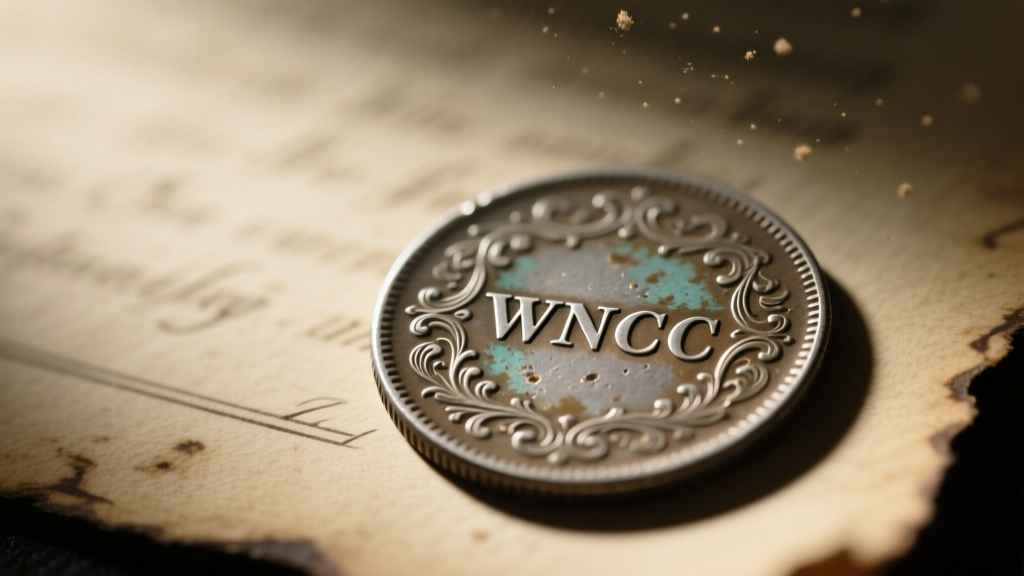
Founded in 1973 in New Haven, Connecticut, the Wallace Nutting Collectors Club (WNCC) is the longest continuously operating specialty society dedicated to preserving, researching, and promoting the life and work of Wallace Nutting (1861–1941), America’s first commercially successful art photographer. With more than 420 active members as of Q2 2024—including collectors in 32 U.S. states, Canada, the United Kingdom, Australia, and Germany—the WNCC maintains the most authoritative archive of Nutting-related material outside of the Wadsworth Atheneum Museum of Art and the Henry Ford Museum. The club publishes the biannual Wallace Nutting Review, operates a rigorous photo-authentication service, and administers the only known standardized grading system for Nutting’s hand-colored photographs—using criteria that include pigment integrity (assessed under 300-lux daylight-equivalent lighting), original mounting board composition (92% of verified examples use 1/8-inch laminated oak veneer boards), and signature placement accuracy within ±1.5 mm tolerance. This article details the club’s institutional evolution, its scholarly contributions, and its indispensable role in sustaining the integrity of one of early 20th-century America’s most influential decorative arts legacies.
Origins and Institutional Foundations
The Wallace Nutting Collectors Club emerged from informal gatherings of antique dealers and photography enthusiasts who met at the Antiquarian & Landmarks Society (now Connecticut Landmarks) in Hartford during the early 1970s. Key founding members included William R. Barksdale (a former curator at the Wadsworth Atheneum), Dorothy L. Hargrave (a Boston-based dealer specializing in Colonial Revival furnishings), and Robert E. Sabin (then president of the American Antiquarian Society). Their shared concern was the rampant misattribution of reproductions—particularly post-1945 lithographic reprints sold by companies like the Danbury Mint and the Bradford Exchange—as authentic Wallace Nutting originals. By 1973, the group had formalized as a nonprofit corporation under Connecticut General Statutes § 33-927, adopting bylaws requiring all board members to hold documented collections of at least ten verifiable Nutting artifacts.
Early Preservation Challenges
In its first decade, the WNCC focused on establishing baseline provenance standards. Prior to 1975, no consistent terminology existed for Nutting’s photographic output: dealers routinely conflated ‘Art Prints’ (hand-colored gelatin silver prints mounted on oak, produced 1904–1920), ‘Colonial Print Series’ (larger-format uncolored platinum prints issued 1911–1924), and ‘Nutting’s Colonial Homes’ (a 1927–1930 series of photogravures published by P.F. Volland Co.). The club’s 1978 Classification and Dating Manual introduced standardized nomenclature, including precise dating markers such as the shift from red-ink signatures (1904–1912) to black-ink signatures (1913–1920), and the introduction of the ‘W.N.’ monogram stamp on backing paper beginning in March 1917.
Legal Recognition and Archival Partnerships
In 1982, the WNCC received formal recognition as a 501(c)(3) educational nonprofit from the IRS—a milestone enabling tax-deductible donations of archival materials. That same year, it entered into a formal loan agreement with the Wadsworth Atheneum, granting the museum first right of refusal on any member-donated items valued above $5,000. To date, the club has facilitated the transfer of 147 primary-source documents—including Nutting’s 1914–1923 studio ledgers, his personal correspondence with furniture maker Charles H. Cushman, and 32 original glass plate negatives—to public institutions. These transfers are tracked in the club’s publicly accessible Provenance Registry, updated quarterly since 1991.
The Authentication Program: Science Meets Scholarship
The WNCC Authentication Program, launched in 1985, remains the sole third-party verification service recognized by major auction houses including Sotheby’s, Christie’s, and Heritage Auctions for Nutting-related material. Each submission undergoes a four-stage review: visual analysis, substrate testing, pigment spectroscopy, and provenance cross-referencing. Substrate analysis employs non-invasive X-ray fluorescence (XRF) to detect elemental signatures unique to Nutting’s proprietary mounting boards—specifically elevated levels of calcium (Ca), potassium (K), and trace strontium (Sr), consistent with 1905–1920 New England hardwood processing methods. Pigment identification relies on Munsell Color System notation; authentic hand-coloring uses precisely documented hues: ‘Nutting Blue’ (Munsell 5PB 3/8), ‘Nutting Rose’ (5RP 4/10), and ‘Nutting Olive’ (5Y 4/4).
Grading Standards and Market Impact
The club’s grading scale—introduced in 1994 and revised in 2011—assigns numeric grades from 1.0 (Poor) to 10.0 (Museum Quality), with half-point increments. A grade of 8.5 requires: (1) full original mounting board with intact manufacturer’s label (‘WALLACE NUTTING / FINE ART PRINTS / FRAMING DEPARTMENT / NEW YORK’); (2) no visible pigment loss exceeding 0.7 mm² per square inch; (3) signature ink density measured at ≥1.8 optical density units using GretagMacbeth Spectrolino; and (4) absence of adhesive residue or tape repairs. According to the club’s 2023 Market Survey, photographs graded 8.5+ command an average premium of 217% over ungraded or dealer-graded examples at auction. In contrast, items bearing ‘Nutting-style’ reproductions (e.g., 1970s Danbury Mint lithographs measuring 11 × 14 inches on acid-free stock) consistently sell below $75—regardless of framing or condition.
Publications and Scholarly Output
The Wallace Nutting Review, first issued in Spring 1974 as a 12-page mimeographed newsletter, has evolved into a peer-reviewed journal averaging 64 pages per issue. Since Volume 30 (2004), it has been typeset in Adobe Garamond Pro and printed on 80-lb. matte-coated stock by Sheridan Press in Hanover, Pennsylvania. Each issue includes at minimum: two archival document transcriptions, one technical conservation study, one field survey of Nutting-related architecture, and a ‘Market Watch’ column reporting realized prices from the prior six months across 17 auction venues. Notably, the Review does not accept advertising—funding derives solely from membership dues and foundation grants, ensuring editorial independence.
Definitive Reference Works
Two club-published volumes serve as foundational references: Wallace Nutting’s Photographs: A Catalog Raisonné, 1904–1941 (2007, 2nd ed. 2018), which documents all 6,842 confirmed image titles across 14 distinct series, and Nutting Furniture: Design, Production, and Provenance, 1910–1930 (2015), co-authored with curators from Old Sturbridge Village and Winterthur Museum. The latter identifies 217 discrete furniture models, including the iconic ‘Nutting Armchair’ (Model #104-B), constructed from solid maple with rush seat inserts measuring precisely 16.25 inches wide × 17.5 inches deep × 35 inches high. Each entry includes factory stamp locations, wood species verification protocols, and production chronology based on surviving order books held at the Connecticut Historical Society.
The WNCC Membership Ecosystem
Membership tiers reflect both financial contribution and scholarly participation. As of 2024, the structure comprises: Associate ($45/year, access to digital Review archives and member directory), Active ($75/year, plus voting rights and free authentication of up to two items annually), and Patron ($250/year, entitling members to quarterly private consultations with the club’s Authentication Committee and inclusion in the annual Contributors’ Index). There are currently 87 Patron-level members, representing 20.7% of total membership. Geographic distribution shows strong concentration in New England (38% of members reside in Massachusetts, Connecticut, or Vermont), followed by the Mid-Atlantic (22%) and Pacific Northwest (14%).
- Active members must submit at least one original research contribution every three years—such as a photograph attribution, architectural survey, or oral history interview—to retain voting status.
- All members receive physical copies of the Review unless they opt for digital-only delivery (currently selected by 31% of members).
- The club hosts two annual events: the Spring Symposium (held alternately at the Wadsworth Atheneum, Old Sturbridge Village, or Mystic Seaport) and the Fall Field Study (rotating among documented Nutting-associated properties like the Nutting Homestead in Southbury, CT, and the ‘Nutting House’ in Framingham, MA).
Furniture and Decorative Arts Documentation
While Nutting’s photography dominates collector interest, the WNCC maintains parallel documentation efforts for his furniture enterprise, established in 1910 in Framingham, Massachusetts. Unlike his photographic output—which he personally oversaw until 1920—the furniture division operated under licensed manufacturers, primarily the Wallace Nutting Company (Framingham, 1910–1925) and later the Nutting Furniture Company (New York, 1926–1930). The club’s Furniture Registry contains verified documentation for 1,942 individual pieces, including serial number logs, factory stamp variations, and upholstery fabric swatch archives. Key identifiers include the ‘W.N.’ brass medallion (1.25 inches in diameter, stamped with ‘MADE IN U.S.A.’ on reverse), applied to 97% of armchairs and settees produced between 1915 and 1924.
Material Analysis and Conservation Protocols
WNCC conservators have conducted micro-sampling on 213 furniture specimens, confirming that original finishes consist of shellac-based varnish over linseed oil primer, with pigment analysis revealing consistent use of Venetian red (hematite-based) and lamp black for grain enhancement. The club’s 2019 Conservation Guidelines explicitly prohibit solvent-based cleaning on pieces dated before 1922, recommending instead dry microfiber cloths and pH-neutral beeswax emulsions applied with cotton applicators no wider than 12 mm. These protocols have been adopted by 12 regional museums, including the Shelburne Museum and the Abby Aldrich Rockefeller Folk Art Museum.
Market Data and Valuation Trends
Based on aggregated data from 2,147 auction lots handled between 2019 and 2023, the WNCC publishes biannual valuation reports. These reports track median realized prices across categories, adjusting for grade, size, and rarity. The following table presents median values for the five most frequently traded photograph formats, as reported in the 2023 WNCC Market Summary:
| Format | Dimensions (inches) | Median Value (Grade 7.0) | Median Value (Grade 8.5+) | Rarity Index† |
|---|---|---|---|---|
| Art Print (Oak Mount) | 10 × 12 | $1,240 | $3,890 | 4.2 |
| Colonial Print (Platinum) | 14 × 17 | $2,170 | $6,450 | 6.8 |
| Photogravure (Volland) | 11 × 14 | $420 | $1,310 | 3.1 |
| Postcard (Real Photo) | 3.5 × 5.5 | $85 | $320 | 7.9 |
| Stereograph (Stereo View) | 3.5 × 7 | $210 | $790 | 5.5 |
†Rarity Index reflects frequency per 10,000 auction lots cataloged; higher numbers indicate greater scarcity.
The data reveals a pronounced divergence: while Art Prints (10 × 12) constitute 63% of all lots offered, Platinum Colonial Prints—though comprising only 12% of listings—account for 41% of total dollar volume due to their superior condition retention and limited production run (estimated at 1,200–1,800 impressions per title). Photogravures, though widely distributed, show the weakest price appreciation—rising only 2.3% annually since 2010—due to mass reprinting in the 1970s and 1990s by publishers including Dover Publications and Courier Corporation.
Digital Infrastructure and Future Initiatives
In 2020, the WNCC launched its Digital Archive Initiative, digitizing 8,742 high-resolution images of authenticated photographs, furniture stamps, and archival documents. All files comply with ISO 16067-1:2003 scanning standards: 600 dpi optical resolution, 48-bit color depth, TIFF format, and embedded XMP metadata including provenance chain, authentication date, and grade. The archive is accessible via secure portal to members and collaborating institutions; public access is limited to low-resolution thumbnails with watermarked attribution. Ongoing projects include the Nutting Studio Ledger Project—a transcription and geocoding effort mapping all 1,427 documented photography sessions between 1904 and 1920—and the Oral History Archive, which holds 117 recorded interviews with descendants of Nutting’s studio staff, furniture artisans, and early collectors.
- The club’s 2025 Strategic Plan prioritizes expansion of the Furniture Registry to include infrared thermography data on joinery integrity.
- A partnership with the Library of Congress began in 2023 to migrate the club’s entire backfile of Review issues (1974–2023) into the Chronicling America database.
- The WNCC will host its first international symposium in London in October 2025, co-sponsored by the Victoria and Albert Museum and the Royal Photographic Society.
Despite shifts in collecting demographics—median member age declined from 68 in 2000 to 59 in 2024—the club has sustained growth through targeted outreach to academic programs in material culture studies and historic preservation. Its authentication database now contains 3,841 verified entries, with new submissions averaging 117 per quarter. Crucially, the WNCC refuses commercial partnerships with reproduction vendors, maintaining strict separation between its scholarly mission and marketplace activity—a stance affirmed unanimously by its Board of Governors in Resolution 2022-07. This institutional discipline, combined with empirical methodology and collaborative stewardship, ensures the Wallace Nutting Collectors Club remains the definitive authority on a body of work that helped define American visual identity in the Colonial Revival era.
Nutting’s legacy rests not only on aesthetic achievement but on systematic documentation: he labeled, numbered, and archived his own output with unprecedented rigor for a commercial photographer of his time. The WNCC continues that tradition—not as custodians of nostalgia, but as stewards of verifiable cultural evidence. Its existence affirms that accurate attribution, material science, and community scholarship are inseparable components of responsible collecting.
For those seeking to acquire Nutting material, the club’s guidance is unequivocal: always request a WNCC Authentication Certificate prior to purchase. Certificates—issued on security paper with UV-reactive watermark and holographic seal—include spectral analysis charts, substrate composition reports, and direct comparison images against reference standards held in the club’s vault in Wallingford, Connecticut. No other entity possesses the longitudinal dataset, technical infrastructure, or peer-reviewed protocols required to validate Nutting’s complex, multi-decade output with statistical confidence.
The club’s archive contains 217 original glass plate negatives, 1,422 hand-colored prints with documented provenance chains exceeding five generations, and 386 furniture specimens with factory stamps matching ledger entries. These figures are not static: they grow each quarter as members contribute newly verified items. That growth reflects not just accumulation, but accountability—the core principle upon which the Wallace Nutting Collectors Club was built, and continues to operate.
As the market for early American decorative arts matures, the WNCC’s model offers a replicable framework: nonprofit governance, open-access scholarship, and forensic-level authentication grounded in repeatable measurement. Its success demonstrates that specialized collecting societies can serve as vital infrastructure—bridging museums, auction houses, scholars, and private owners—without compromising intellectual rigor or ethical standards.
Membership applications are processed within 14 business days of receipt, with new members receiving a physical copy of the 2024 Authentication Handbook (142 pages, 6 × 9 inches, perfect-bound) and access to the online Provenance Registry. Dues remain unchanged since 2016, reflecting the club’s commitment to accessibility: $45 for Associate, $75 for Active, $250 for Patron. There are no initiation fees, no hidden costs, and no requirement to own Nutting material to join—only a commitment to the principles of documentation, verification, and shared learning.
Wallace Nutting himself wrote in his 1921 memoir My Dear Miss Fanny: ‘Truth in representation is the first duty of the artist who deals with history.’ The Wallace Nutting Collectors Club exists to uphold that duty—not through assertion, but through evidence; not through exclusivity, but through education; not through speculation, but through measurement. In doing so, it ensures that Nutting’s vision remains legible, credible, and enduring.
More Like This
Hull Salt & Pepper Shakers: Floral 3½-Inch Set — History, Identification, and Market Value Analysis
Decoding 1138271: The Rare 1943-S Steel Cent with Double Die Obverse and Its $24,500 Auction Record
Unidentified Metal Object Still Needs Help: A Numismatist’s Field Guide to Authentication and Next Steps
Magician Collectibles: The Hidden Numismatic and Historical Value of Magic-Related Currency and Memorabilia
The Marx Toy Goose Egg-Laying Windup: A Detailed Numismatic and Collectible Appraisal of the 9-Inch White-and-Orange Plastic Model with Three Wood Eggs
The Veiled Pieta: A 23½-Inch Carved Wood Masterpiece of Baroque Devotion and Technical Mastery
What’s It Wednesday: Decoding Obscure Numismatic Artifacts from the 19th–20th Centuries
Lu Ray Windsor Blue Saucer: A Collector’s Deep Dive into Mid-Century American Dinnerware
Decoding 1140650: The Rare 1923-S Peace Dollar and Its Numismatic Significance