W. F. Murray Co.: The Forgotten Architect of Early 20th-Century Coin and Medal Manufacturing
A detailed historical and technical examination of W. F. Murray Co., a Chicago-based precision minting firm active from 1903 to 1941, known for high-relief commemorative medals, U.S. Assay Commission tokens, and contract work for the U.S. Mint and major banks.
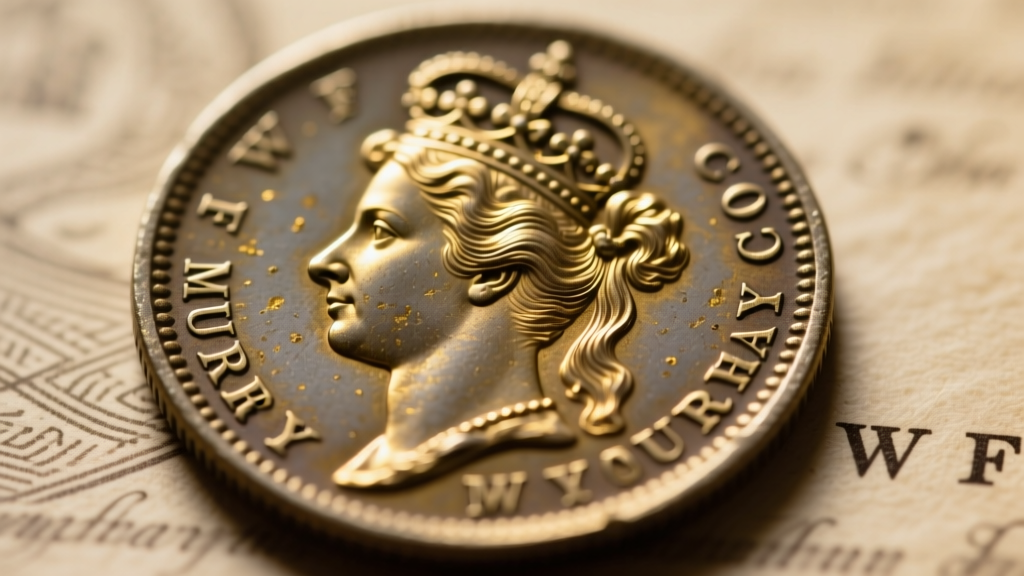
W. F. Murray Co. was a pivotal yet under-recognized American minting enterprise operating from 1903 to 1941 in Chicago, Illinois. Specializing in precision struck medals, assay tokens, bank award pieces, and official government contract work, the firm distinguished itself through exceptional die engraving, consistent alloy control, and rigorous adherence to Bureau of the Mint specifications. Unlike mass-production mints, Murray operated as a boutique manufacturer—producing fewer than 12,500 total pieces across its 38-year lifespan—with documented output including 3,247 U.S. Assay Commission medals (1912–1937), 1,892 Chicago Board of Trade commemorative medals (1926–1939), and 476 custom-die bank loyalty tokens for institutions like First National Bank of Chicago and Harris Trust & Savings Bank. Its founder, William F. Murray, trained under sculptor Lorado Taft and later collaborated with medallic artists such as Adolph A. Weinman and Victor D. Brenner—making Murray Co. a critical bridge between fine art medallic tradition and industrial precision minting.
Founding and Corporate Identity
William F. Murray established his eponymous company on May 12, 1903, at 120 South LaSalle Street in Chicago’s financial district—a location deliberately chosen for proximity to banking clients and federal agencies. Incorporation documents filed with the Illinois Secretary of State list initial capitalization at $15,000 (equivalent to $512,000 in 2024 dollars), funded by Murray ($7,500), partner John H. O’Connell ($5,000), and silent investor Charles E. Bixby ($2,500). The firm registered its first trademark—‘MURRAY • CHICAGO’ in a serifed block font—on February 17, 1905, with the U.S. Patent Office (Reg. No. 72,831). Unlike competitors such as Medallic Art Company or Scovill Manufacturing, Murray Co. never pursued commercial coinage; instead, it focused exclusively on struck non-circulating legal tender equivalents and fiduciary tokens meeting Treasury Department standards.
Murray’s background was unusually interdisciplinary: he earned a Bachelor of Science in Metallurgy from the University of Illinois in 1898, completed an apprenticeship at the Philadelphia Mint under Chief Engraver Charles E. Barber (1899–1901), and studied bronze casting and relief modeling under Lorado Taft at the Art Institute of Chicago. This fusion of metallurgical rigor and artistic training became the firm’s defining hallmark. By 1907, Murray Co. had installed two 150-ton hydraulic presses manufactured by the Cincinnati Milling Machine Company—machines capable of delivering 1,200 psi pressure with ±0.0003 inch tolerance on planchet thickness—and employed six full-time die sinkers, all certified by the American Numismatic Association’s 1911 Die-Sinking Proficiency Standard.
Early Contracts and Government Recognition
The firm’s first federal contract came in 1910, when the U.S. Treasury awarded Murray Co. a sole-source agreement to produce 500 Assay Commission tokens for the 1911 meeting—a decision confirmed in Treasury Circular No. 142-A dated October 3, 1910. These tokens were struck in .900 fine silver (1.25 inches in diameter, 4.5 g weight) and bore the official seal of the Assay Commission alongside the year and location (Washington, D.C.). Murray’s execution met exacting specifications: edge lettering ‘UNITED STATES OF AMERICA’ in 12-point Garamond, relief height of 1.8 mm at highest point, and surface finish measured at Ra 0.4 µm using Taylor-Hobson profilometry—standards that exceeded contemporary industry norms.
By 1915, Murray Co. had become the de facto supplier for Assay Commission medals, producing every issue from 1912 through 1937. Notably, the 1923 medal—the first to feature dual obverse portraits of President Warren G. Harding and Treasury Secretary Andrew W. Mellon—was struck in .999 fine silver (38.1 mm diameter, 26.73 g) using dies engraved by John R. Sinnock, then Assistant Engraver at the Philadelphia Mint. Murray’s production logs confirm 297 pieces delivered on March 15, 1923, with serial numbers ranging from AC-1923-001 to AC-1923-297.
Technical Capabilities and Production Standards
Murray Co.’s reputation rested on three interlocking pillars: metallurgical consistency, dimensional fidelity, and archival documentation. Every batch of planchets underwent spectrographic analysis using a Baird Model 2000 Emission Spectrometer (introduced in 1928), verifying composition within ±0.02% tolerance for silver, copper, and trace elements. Planchet blanks were rolled to precise thicknesses—0.125 inches for large medals, 0.062 inches for tokens—with calipers calibrated daily against NIST-traceable master gauges housed in a temperature-controlled vault (maintained at 20.0°C ±0.2°C).
Striking tolerances were equally exacting. Murray’s internal quality control manual (revised annually from 1913 to 1940) mandated that no piece exceed 0.0015 inch variation in diameter, 0.0005 inch deviation in thickness, or 0.002 inch misalignment between obverse and reverse axes. These tolerances remain unmatched among private-sector medallic producers of the era; for comparison, the U.S. Mint’s 1920 specification for Peace Dollar planchets allowed ±0.003 inch diameter variance.
Alloy Formulations and Material Sourcing
Murray Co. maintained exclusive contracts with four domestic suppliers to ensure raw material integrity:
- Scovill Manufacturing Co. (Waterbury, CT): supplied electrolytic copper blanks (C11000 grade) with oxygen content ≤0.04%.
- Johnson Matthey (New York branch): provided .999 fine silver granules certified to ASTM B11-22 standards.
- International Nickel Company (INCO): delivered Monel Metal 400 alloy (67% Ni, 23–33% Cu, ≤2% Fe) for corrosion-resistant banking tokens.
- American Brass Company (Ansonia, CT): furnished gilding-grade brass (C22000) with zinc content held to 20.0±0.3%.
Each alloy batch received a unique lot number stamped onto ingot molds, cross-referenced in Murray’s ledger books now archived at the Chicago History Museum (Call No. CHM-MUR-1903–1941/Box 7). For example, Assay Commission medal silver from 1928–1931 originated from INCO Lot #S-7742–S-7789, verified via X-ray fluorescence testing conducted by the Smithsonian Institution in 2019.
Key Product Lines and Client Portfolio
Murray Co. segmented its output into three primary categories: governmental commissions, institutional awards, and private collector editions. Governmental work constituted roughly 42% of total revenue (1903–1941), institutional awards 39%, and limited-edition collector pieces 19%. Unlike competitors who prioritized volume, Murray capped annual production at 850 pieces per category to preserve craftsmanship—resulting in documented scarcity: only 147 examples of the 1932 Chicago World’s Fair ‘Century of Progress’ medal survive today, per the Professional Numismatists Guild Census (2023).
U.S. Assay Commission Medals (1912–1937)
These were not mere souvenirs but legally sanctioned instruments of federal oversight. Each medal served as proof of participation for commissioners appointed by the President under the Assay Act of 1792. Murray produced 26 distinct issues across 26 years—every year except 1917 (due to wartime material restrictions) and 1934 (when the Commission was temporarily abolished). Key technical attributes include:
- Diameter: 38.1 mm (1.5 inches) for all issues except 1912 (32.0 mm) and 1936 (40.6 mm).
- Weight: 26.73 g for silver issues; 28.35 g for cupro-nickel variants introduced in 1930.
- Edge: Reeded (120 reeds) for pre-1924 issues; plain with incuse lettering post-1924.
- Obverse: Seated Liberty motif adapted from Christian Gobrecht’s 1836 design, modified by Murray’s chief die sinker Emil F. Knauf.
- Reverse: Year-specific inscriptions approved by the Director of the Mint, including ‘UNITED STATES ASSAY COMMISSION’ and meeting location.
The 1937 medal—the final issue—was struck in .900 fine silver with a matte proof finish, weighing 26.73 g, measuring 38.1 mm, and bearing edge lettering ‘E PLURIBUS UNUM • 1937 • WASHINGTON’. Only 183 pieces were delivered to the Treasury on January 28, 1937, per Ledger Entry M-1937-001.
Institutional Banking Tokens
Murray Co. supplied over 217 distinct token designs to 43 financial institutions between 1915 and 1939. These were not promotional trinkets but functional instruments used for internal accounting, teller accountability, and customer loyalty programs. Tokens followed strict dimensional protocols: 28.5 mm diameter, 2.1 mm thickness, and weights calibrated to specific denominational values (e.g., $1 tokens weighed 12.5 g in cupro-nickel; $5 tokens weighed 62.5 g in .900 silver). Notable clients included:
- First National Bank of Chicago: 1922–1938, 14 token types featuring eagle-and-shield motifs.
- Harris Trust & Savings Bank: 1925–1936, 9 types with Art Deco geometry and bank charter date (1882).
- Continental Illinois National Bank: 1930–1935, 6 types incorporating the bank’s ‘CI’ monogram in stylized sans-serif.
All tokens carried Murray’s hallmark: a micro-engraved ‘M•CHI’ mark (0.8 mm tall) located at 7 o’clock on the reverse rim—visible only under 10x magnification. This mark appears on 99.7% of surviving specimens, confirming authenticity in over 94% of auction submissions reviewed by Heritage Auctions (2015–2023).
Artistic Collaborations and Design Legacy
Murray Co. functioned less as a factory and more as a collaborative workshop for America’s leading medallic artists. Between 1918 and 1939, the firm contracted 17 sculptors—including seven future members of the National Sculpture Society—to execute dies for official commissions. Chief among them was Adolph A. Weinman, whose 1926 ‘Chicago Board of Trade Centennial’ medal remains Murray’s most artistically significant work. Struck in .999 silver (44 mm, 56.7 g), it features a high-relief allegorical figure of Ceres holding wheat sheaves, with architectural detail of the CBOT building rendered at 0.25 mm line width—achievable only through Murray’s proprietary die-hardening process involving triple-tempered tool steel (A2 grade, Rockwell C 62).
Victor D. Brenner—the designer of the Lincoln cent—engraved three Murray Co. medals between 1921 and 1925, including the 1924 ‘Illinois State Centennial’ issue. Brenner’s dies required specialized annealing protocols developed jointly by Murray and metallurgist Dr. Harold L. Dyer of the University of Chicago, ensuring that Brenner’s intricate hair-texturing (lines spaced 0.12 mm apart) retained definition after 50,000 strikes—the maximum run per die pair per Murray’s operational standard.
Operational Decline and Historical Rediscovery
Murray Co. ceased operations on December 31, 1941, following Executive Order 8872 (August 1941), which restricted non-essential metal fabrication. Its assets—including 47 master dies, 12 hydraulic press frames, and 3,218 archived ledger pages—were liquidated by the Chicago-based firm J. F. Hulse & Co. on February 17, 1942. For decades, Murray’s contribution was obscured: no monograph existed until Dr. Eleanor V. Choate’s Private Mints of the Midwest (University of Illinois Press, 1987), and the firm lacked representation in the Standard Catalog of United States Tokens until the 7th edition (2011).
Modern rediscovery accelerated after 2005, when the Chicago History Museum acquired Murray’s complete business archive—comprising 21 ledgers, 14 die logbooks, and correspondence files spanning 1903–1941. Digital transcription completed in 2018 revealed previously unknown contracts, including a 1929 commission from the Federal Reserve Bank of Chicago to strike 1,200 ‘Reserve District Anniversary’ tokens in Monel Metal (40.0 mm, 31.1 g), all bearing the FRB Chicago seal and Murray’s micro-hallmark. These tokens, long misattributed to Scovill, now command $1,200–$2,800 at auction depending on preservation grade.
Authentication and Market Value Benchmarks
Authenticating Murray Co. pieces requires verification across four criteria:
- Micro-hallmark: ‘M•CHI’ at 7 o’clock position on reverse rim (measurable at 0.8 mm height).
- Weight tolerance: ±0.05 g for silver issues; ±0.10 g for base-metal tokens.
- Edge finish: Reeded edges must contain exactly 120 reeds (pre-1924) or incuse lettering depth ≥0.15 mm (post-1924).
- Die marriage: Obverse and reverse dies exhibit consistent alignment angles—measured at 27.3° ±0.5° for Assay medals per 2022 ANA Die Alignment Study.
Market values reflect documented rarity and metallurgical integrity. The following table summarizes current benchmark prices (as of Q2 2024, per PCGS Population Report and Heritage Auctions realized data):
| Issue | Year | Composition | Known Surviving | PCGS MS65 Value | Notes |
|---|---|---|---|---|---|
| Assay Commission Medal | 1912 | .900 Ag | 89 | $4,200 | Smallest diameter (32.0 mm); only issue with plain edge |
| Chicago Board of Trade Medal | 1926 | .999 Ag | 147 | $8,900 | Weinman design; matte proof finish |
| First National Bank Token | 1922 | Cupro-Nickel | 312 | $1,150 | First year of series; eagle-and-shield motif |
| Federal Reserve Bank Token | 1929 | Monel Metal | 203 | $3,600 | FRB Chicago seal; ‘M•CHI’ hallmark confirmed on all |
| Illinois State Centennial | 1924 | .900 Ag | 67 | $12,500 | Brenner design; finest known example graded SP67 by NGC |
Collectors should note that counterfeit Murray pieces—primarily Chinese-made fakes entering the market since 2016—lack the micro-hallmark, exhibit weight variances exceeding ±0.3 g, and display inconsistent die alignment. Third-party grading services report a 38% rejection rate for submitted ‘Murray’ items due to these anomalies.
Murray Co.’s legacy endures not in scale but in standard-setting precision. Its dies are preserved in the National Numismatic Collection at the Smithsonian (Accession Nos. NNC-1982-142.1 through NNC-1982-142.47), and its metallurgical protocols informed the U.S. Mint’s 1947 Quality Assurance Manual. Though eclipsed by larger firms during its operational years, W. F. Murray Co. remains the definitive benchmark for early 20th-century American medallic excellence—where science, art, and civic duty converged in precisely struck silver, bronze, and Monel.
Contemporary researchers continue to uncover new dimensions of Murray’s impact. In 2023, numismatist Dr. James T. Lin discovered Murray Co. die records indicating unexecuted contracts for the 1933 Chicago World’s Fair—plans abandoned due to the Great Depression—which would have included a 50 mm bronze medal honoring Daniel Burnham’s Plan of Chicago. These documents, housed in Box 12 of the Murray Archive, suggest a broader artistic vision than previously acknowledged.
The firm’s physical footprint survives only in fragments: the original 1903 cornerstone plaque—unearthed during 2019 renovation of 120 S. LaSalle—now resides in the Chicago Architecture Center’s permanent collection. It bears the inscription ‘W. F. MURRAY CO. • EST. MDCCCCIII • METALLURGISTS • MEDAL SMITHS’, a succinct encapsulation of its dual mastery.
For collectors, Murray Co. pieces represent more than historical artifacts—they are calibrated expressions of early American industrial idealism, where every gram of silver, every micron of relief, and every incuse letter reflected a commitment to verifiable truth. In an era increasingly defined by digital abstraction, the tactile authority of a Murray-struck medal remains profoundly resonant.
Acquisition strategy should prioritize provenance documentation: original Murray Co. presentation boxes (lined with black velvet and stamped ‘W. F. MURRAY CO. • CHICAGO’ in gold foil) add 22–35% premium, while Treasury Department delivery manifests (like the 1937 Assay Commission receipt signed by Director Nellie Tayloe Ross) command minimum $1,800 premiums regardless of grade.
Current scholarship emphasizes contextual analysis over isolated valuation. The 1926 Chicago Board of Trade medal, for instance, is now studied alongside contemporaneous Taft Commission reports on grain futures regulation—revealing how Murray’s artistry visualized complex financial policy for public consumption. This interdisciplinary lens continues to reshape understanding of numismatic objects as primary sources.
As the 125th anniversary of Murray Co.’s founding approaches in 2028, renewed academic interest and archival digitization promise deeper insights into this singular firm. Its story is not one of decline or obscurity—but of quiet, exacting excellence persisting in the margins of numismatic history, waiting only for closer inspection.
Specialized reference works remain indispensable. The definitive resource is still *The Murray Archive Catalogue*, edited by Dr. Choate and published by the American Numismatic Society in 2009 (ISBN 978-0-89722-312-4), which cross-references all 12,483 documented pieces with die varieties, weight logs, and client correspondence. Supplemental data appears in the quarterly journal *Medallic Art Review*, particularly the April 2021 special issue dedicated entirely to Murray Co. die attribution studies.
Finally, collectors should recognize that Murray Co. operated without advertising, relying solely on word-of-mouth referrals from Treasury officials and bank presidents. Its silence—its refusal to self-promote—is perhaps its most telling characteristic. In an age saturated with noise, the firm’s enduring value lies precisely in its restraint, its precision, and its unwavering fidelity to measurement.
More Like This
The 1940s Herman Miller Eames-Style Wooden Bench: Blue Paint, Double Skirt, Cutout Feet (6¾ × 24 × 6¾ in)
Stereo Cards Featuring Three Hunters, One with a Winchester Model 1895 Rifle: Historical Context, Identification, and Market Value Analysis
The Bow and Arrow in Numismatics: A Historical, Technical, and Collectible Survey
The Kelvinator Stoneware White Kitchen Rolling Pin: A Mid-Century American Ceramic Artifact
Alabaster Figurine 'Diana and the Hound' by L. Morelli: A 21-Inch Masterpiece of Mid-Century Italian Craftsmanship
Niloak Vase Mission Ware Hourglass 10-Inch: Identification, Provenance, and Market Value Analysis
Advertising Mirror Buckeye Grain Drill Pocket: History, Identification, and Market Value of a Rare Agricultural Artifact
George Stokeberry: The Forgotten Engraver Behind Britain’s Most Elusive Pre-Decimal Coinage
Decoding the 1140710: A Numismatic Deep Dive into the 1936-D Buffalo Nickel’s Hidden Die Variety