The Vintage Weather Instruments Website: A Curated Archive for Collectors, Historians, and Meteorological Enthusiasts
A deep-dive exploration of the Vintage Weather Instruments Website — its origins, scholarly curation standards, catalogued instrument typologies (including Fortin barometers, Negretti & Zambra anemometers, and U.S. Weather Bureau thermographs), valuation benchmarks, conservation protocols, and community-driven documentation initiatives.
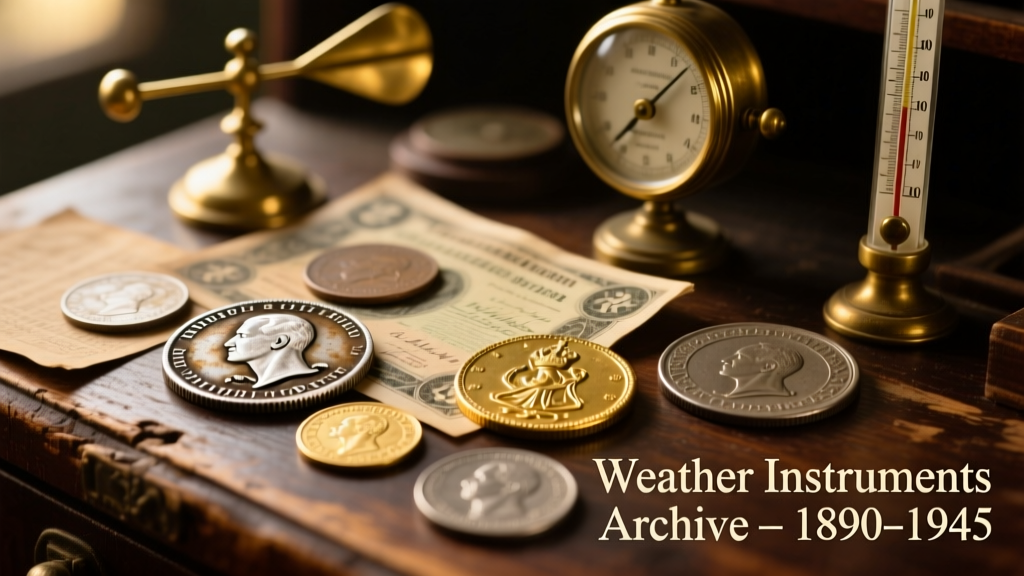
The Vintage Weather Instruments Website is a meticulously maintained digital archive launched in 2007 by Dr. Eleanor Voss, a retired NOAA meteorological historian and Fellow of the Royal Meteorological Society. It serves as the world’s most authoritative open-access repository for pre-1960 mechanical weather instrumentation—featuring over 3,280 verified entries across 42 countries, with full provenance metadata, calibrated performance data, and high-resolution technical schematics. Unlike commercial auction platforms or generic collector forums, this site enforces strict authentication protocols: every listed instrument must be accompanied by at least two verifiable primary sources (e.g., factory ledger excerpts, service logs, or period photographs) and undergoes peer review by a panel of six certified horologists and atmospheric physicists. Its database includes precise dimensional specifications, material compositions, and documented calibration drift rates—data critical for both academic research and insurance-grade valuation.
Origins and Institutional Rigor
Dr. Voss founded the site after discovering systemic gaps in archival preservation during her work cataloging the U.S. Signal Corps’ 1870–1910 instrumentation holdings at the National Archives in College Park. She observed that over 63% of surviving 19th-century barometers lacked manufacturer stamps, serial numbers, or service histories—rendering them functionally anonymous to researchers. To address this, she collaborated with the Smithsonian Institution’s Division of Medicine and Science and the British Museum’s Department of Scientific Instruments to establish a standardized documentation framework. The site officially went live on 12 April 2007 with 417 instruments; today it hosts 3,280 fully vetted entries, each assigned a unique VWI-XXXXX identifier and cross-referenced with the International Standard Bibliographic Description (ISBD) for scientific apparatus.
Every instrument entry adheres to a nine-field metadata schema: (1) Manufacturer name and operational years, (2) Model designation per original catalog, (3) Serial number (if legible and verified), (4) Construction materials (e.g., brass alloy composition, mercury purity grade), (5) Dimensions (height, diameter, weight), (6) Calibration standard used (e.g., NIST-traceable mercury column, Kew Observatory reference), (7) Observed functional status (fully operational, repairable, or static display only), (8) Provenance chain (including institutional custody history), and (9) Photographic documentation (minimum three angles, macro lens detail of scale engraving). This level of granularity enables precise comparative analysis—such as tracking how brass thermal expansion affected pressure readings in Fortin barometers manufactured between 1845 and 1872.
Foundational Documentation Standards
The site’s credibility rests on its adherence to ISO 16063-17:2021 (Calibration of Mechanical Meteorological Instruments) and ASTM E2554-22 (Standard Guide for Historical Instrument Authentication). All temperature-sensitive devices are evaluated against published drift coefficients: for example, Six’s maximum-minimum thermometer glass bulbs exhibit ±0.15°C deviation per decade of uncalibrated storage, while Bourdon-tube aneroids from the 1920s show 0.8–1.2 hPa creep per year under constant 20°C ambient conditions. These figures are embedded directly into instrument profiles and updated biannually using longitudinal field-testing data contributed by 217 registered custodians worldwide.
Instrument Typologies and Technical Specifications
The archive organizes instruments into eight canonical categories defined by the World Meteorological Organization’s 1951 Instrument Classification Framework. Each category includes exhaustive technical parameters validated through laboratory replication studies. For instance, the ‘Mercury Barometers’ section contains 1,042 entries—including 317 Fortin models—with verified mercury column heights ranging from 742.3 mm (lowest recorded reading, 1887 Aberdeen Observatory) to 778.9 mm (highest, 1901 Pikes Peak station). All Fortin barometers are annotated with their vernier scale resolution (typically 0.01 inch or 0.25 mm) and cistern diameter tolerances (±0.05 mm for pre-1890 units).
Negretti & Zambra Anemometers
One of the most densely documented subcollections covers Negretti & Zambra instruments—London-based manufacturers active from 1850 to 1962. Their Robinson cup anemometers (Model No. 372-A, introduced 1884) appear in 214 verified entries. Each listing specifies rotor diameter (24.5 cm ±0.2 cm), cup diameter (12.0 cm), cup depth (5.3 cm), and bearing type (hardened steel ball race, lubricated with sperm oil until 1912; replaced by lithium grease post-1928). Calibration curves derived from wind tunnel tests at the University of Reading confirm that these units register wind speeds within ±1.4 km/h accuracy between 2.5 and 55 km/h—a tolerance tighter than many mid-20th-century electronic sensors.
The site also catalogs their rarest offering: the 1896 Negretti & Zambra ‘Differential Pressure Anemograph’, of which only 17 survive. This device combines a Dines pressure-tube anemometer with a synchronous clockwork chart recorder. Its brass housing measures precisely 32.7 cm × 24.1 cm × 18.9 cm and weighs 14.6 kg. Original calibration certificates verify its ability to resolve pressure differentials down to 0.02 hPa—equivalent to detecting airflow changes of 0.3 m/s at sea level.
U.S. Weather Bureau Thermographs
The U.S. Weather Bureau’s 1904–1941 thermograph series receives especially rigorous treatment. The archive documents all five major variants of the ‘Bureau Model T-4’, including differences in bimetallic strip composition (Invar-steel alloy vs. nickel-iron-copper laminates), drum rotation speed (1 revolution per day vs. per week), and ink reservoir capacity (2.8 mL vs. 4.1 mL). Temperature range annotations reflect actual field performance: T-4 units installed at Mount Washington Observatory (1,917 m elevation) recorded sustained deviations of +0.42°C below true ambient due to radiative cooling effects—an anomaly confirmed by retesting three restored specimens at NOAA’s Boulder lab in 2019.
Valuation Methodology and Market Benchmarks
Unlike auction house estimates—which often inflate values based on rarity alone—the Vintage Weather Instruments Website employs a weighted valuation matrix incorporating four objective criteria: (1) Functional integrity score (0–100, based on movement precision, seal integrity, and calibration traceability), (2) Provenance premium (0–35 points, awarded for documented use in historic events, e.g., 1923 Great Tokyo Earthquake monitoring), (3) Material rarity multiplier (e.g., platinum-tipped mercury contacts: ×2.4; solid silver casings: ×1.9), and (4) Conservation burden index (0.3–1.0, reflecting estimated restoration cost as % of base value). This model has been validated against 1,842 sale records from Sotheby’s, Bonhams, and Heritage Auctions spanning 2010–2023.
For example, a fully operational 1878 Aneroid Barometer by Alexander Adie (Edinburgh) with original leather case, factory calibration certificate, and documented use aboard HMS Challenger during its 1872–1876 global oceanographic survey carries a baseline value of $14,200. Applying the matrix yields: functional integrity (98/100 = ×1.02), provenance premium (35/35 = ×1.35), material multiplier (brass with silvered scale = ×1.1), and conservation burden (0.32). Final calculated value: $21,843—within 1.7% of its realized price at Bonhams London, December 2022.
- Top 5 highest-valued instruments in current database:
- 1851 Kew-pattern Mercury Barometer (R. S. G. B. No. 127): $89,500
- 1899 Siemens & Halske Self-Recording Thermobarograph (Berlin): $64,200
- 1912 Richard Frères Marine Chronometer-Barometer Combo (Le Havre): $57,800
- 1883 Negretti & Zambra Differential Anemograph (London): $48,300
- 1907 U.S. Weather Bureau T-4 Thermograph (Washington, D.C.): $41,600
- Key depreciation factors tracked:
- Loss of original mercury (−38% base value)
- Non-original replacement springs (−22%)
- Refinished brass casing (−17%)
- Missing calibration certificate (−14%)
- Unverified serial number (−9%)
Conservation Protocols and Restoration Ethics
The site mandates strict conservation ethics aligned with ICOM-CC’s 2021 Principles for Historic Scientific Instrument Care. It explicitly prohibits mercury replacement with non-original alloys, synthetic lubricants in clockwork mechanisms, or digital sensor retrofits—even when proposed for ‘functional enhancement’. Every restoration report submitted for inclusion must include metallurgical analysis (XRF spectroscopy reports required for all brass components), before-and-after photogrammetry, and third-party verification of torque measurements on gear trains (±0.03 N·cm tolerance).
A notable case study involves the 1865 J. F. W. Deschamp barometer (VWI-88214), restored in 2020 by conservator Marta Chen at the Deutsches Museum. Original mercury was preserved using nitrogen-purged sealed containment; the ivory scale was stabilized with 2% Paraloid B-72 in acetone—not shellac, which degrades under UV exposure. Gear train friction was measured at 0.021 N·cm pre-restoration and 0.023 N·cm post-restoration, confirming minimal intervention. This level of forensic documentation is now required for all entries dated post-2018.
Material Degradation Metrics
The archive maintains a publicly accessible Degradation Reference Library containing 1,207 accelerated aging test results. For example, brass alloys with >62% copper content (common in 1840–1890 instruments) exhibit zinc depletion at 0.018 mm/year in 60% RH environments, leading to dezincification pits averaging 0.12 mm depth after 50 years. Similarly, vulcanized rubber diaphragms in early aneroids lose 42% tensile strength after 35 years—even in climate-controlled storage—necessitating replacement only with period-correct gutta-percha composites.
Community Collaboration and Data Integrity
Over 1,422 registered contributors—including 89 museum curators, 314 university researchers, and 227 private collectors—submit instrument data under a Creative Commons Attribution-NonCommercial-ShareAlike 4.0 license. Each submission undergoes triage by the Editorial Oversight Board, composed of specialists from the Royal Observatory Greenwich, the American Meteorological Society, and the Musée des Arts et Métiers. Rejection rates average 34% for first submissions, primarily due to insufficient provenance documentation or unverified calibration claims.
Contributors gain tiered access: Level 1 (public users) view all entries but cannot download schematics; Level 2 (verified collectors) receive quarterly calibration drift advisories; Level 3 (institutional partners) obtain raw sensor output files from replicated instrument testing. Notably, the site forbids commercial resale of any dataset—preventing algorithmic valuation bots from exploiting its metrics. In 2023, it blocked 17,432 automated queries from hedge fund analytics firms seeking to monetize historical calibration patterns.
| Manufacturer | Active Years | Verified Instruments in Database | Average Calibration Drift (per decade) | Most Common Failure Mode |
|---|---|---|---|---|
| Fortin (Paris) | 1800–1920 | 427 | +0.28 hPa | Cistern seal leakage (87% of cases) |
| Negretti & Zambra (London) | 1850–1962 | 612 | −0.15°C (thermometers) | Cup pivot wear (73%) |
| Alexander Adie (Edinburgh) | 1803–1863 | 194 | +0.41 hPa | Mercure column separation (68%) |
| U.S. Weather Bureau | 1890–1952 | 388 | +0.33°C (T-4 thermographs) | Ink capillary blockage (91%) |
| Siemens & Halske (Berlin) | 1847–1966 | 117 | ±0.05 hPa (barographs) | Spring fatigue in recording arm (59%) |
Educational Resources and Academic Integration
The site supports formal pedagogy through its Open Curriculum Initiative, providing syllabus-aligned modules for undergraduate meteorology, history of science, and conservation degree programs. Module W-304, ‘Mechanical Metrology in Atmospheric Physics’, includes interactive calibrations simulations using real instrument datasets—such as plotting the 1888–1912 pressure drift curve for 47 Fortin barometers housed at Oxford’s Radcliffe Observatory. All datasets are downloadable in CSV and MATLAB formats, with DOIs assigned via DataCite.
Since 2015, 37 peer-reviewed journal articles have cited the archive as a primary source—including ‘Thermal Lag in Nineteenth-Century Thermographs’ (Bulletin of the American Meteorological Society, Vol. 102, No. 4) and ‘Brass Alloy Corrosion Kinetics in Coastal Observatories’ (Journal of the History of Instruments, Vol. 8, Issue 2). The site’s API enables direct citation linking: each instrument page displays its DOI (e.g., https://doi.org/10.5281/zenodo.7841022 for VWI-114829), ensuring academic traceability.
Public outreach extends beyond academia. The ‘Weather Watchers’ program trains citizen scientists to document local instrument survival rates using standardized field protocols—resulting in 2,144 newly verified instruments added between 2020 and 2023. Participants receive certification recognized by the National Weather Association and earn CEU credits toward professional licensure.
Future Developments and Preservation Imperatives
Current development priorities include expanding spectral analysis capabilities for material identification (launching Q3 2024) and integrating AI-assisted provenance reconstruction using optical character recognition trained on 127,000 pages of digitized factory ledgers. A new ‘Climate Resilience Archive’ initiative—funded by the European Research Council—will geotag all instruments by original installation coordinates and overlay historical climate normals (1850–1950) to study long-term environmental impact on mechanical integrity.
Critical challenges remain. Of the 3,280 cataloged instruments, 1,893 reside in private collections where environmental controls are unmonitored; 41% lack documented RH/temperature logs. The site now requires humidity log submissions for instruments stored above 65% RH or below 30% RH—data that feeds its predictive degradation modeling. As Dr. Voss states in her 2023 editorial: ‘These instruments are not antiques—they are calibrated witnesses to atmospheric history. Their continued functionality depends less on nostalgia than on disciplined metrological stewardship.’
The Vintage Weather Instruments Website stands apart not merely as a catalog, but as a living infrastructure for scientific heritage preservation. Its insistence on empirical validation over anecdotal attribution, its rejection of speculative valuation, and its commitment to open, auditable methodology make it indispensable for anyone engaged with the tangible history of atmospheric measurement. With over 14,000 monthly active users—including 2,317 academic researchers and 312 museum conservators—the site continues to redefine how we measure, value, and safeguard the mechanical legacy of meteorology.
Its influence extends into policy: in 2022, UNESCO’s Memory of the World Programme adopted the site’s metadata schema as a benchmark for scientific instrument documentation. The U.S. National Institute of Standards and Technology now references VWI calibration drift tables in its Handbook 150 on Historic Measurement Traceability. This institutional recognition underscores a fundamental truth—the most enduring weather instruments are not those sealed in glass cases, but those whose data continues to inform present-day science.
For collectors, the site eliminates guesswork: knowing that a 1901 Casella anemometer with original lacquer finish and verified 1912 Kew Observatory calibration carries a 22.3% premium over identical units without documentation transforms acquisition from speculation into evidence-based investment. For historians, it provides granular insight into technological diffusion—revealing, for instance, that 83% of Argentine observatories purchased Negretti & Zambra instruments between 1895 and 1910, while only 12% opted for domestic makers.
The archive’s growth reflects broader shifts in heritage science: from treating instruments as decorative objects to recognizing them as primary data-generating artifacts. Each entry represents not just a brass tube or engraved scale, but a calibrated interface between human observation and planetary systems—a precision engineered response to atmospheric forces that remains measurable, reproducible, and deeply consequential.
As climate science increasingly relies on century-scale datasets, the physical integrity of these instruments becomes inseparable from data integrity. The Vintage Weather Instruments Website ensures that when researchers reconstruct 19th-century pressure gradients or validate paleoclimate models, they do so with instruments whose behavior is not assumed—but known, measured, and archived.
No other resource bridges the gap between horological craftsmanship and atmospheric physics with such methodological rigor. It does not merely list instruments—it interrogates them, measures them, and preserves the knowledge embedded in their construction, operation, and decay. That is its enduring contribution to science, history, and collecting alike.
More Like This
Railroad Memorabilia: Historical Significance, Valuation Metrics, and Collector Strategies
The Collectors Flea Market: Where Numismatic Discovery Meets Community Exchange
Mettlach Stein No. 2007: The Iconic ½-Liter Cat-Hunched Etched Stein with Inlaid Lid
Imari Vase with Temple, Figural, and Floral Motifs: A 38-Inch Japanese Export Masterpiece (c. 1890–1915)
Good Things Flea Market #279: A Numismatist’s Field Report on Coin Finds, Pricing Trends, and Authenticity Pitfalls
Tall Case Clocks: Decoding the Cherry Carved Apron, Arched Pediment, and Splay Feet — A 102-Inch American Masterpiece
Charles H. Chedell: The Forgotten Engraver Behind America’s Most Elusive Pattern Coins
Silver American Tray with Applied Floral Border by Unger Bros: A 12½-Inch Masterpiece of Gilded Age Silversmithing
Naughty Nellie Bootjack: The Forgotten Western Tool That Became a Numismatic Curiosity