Tribal Art: Material Culture, Provenance Ethics, and Market Realities in 2024
A rigorous, field-tested analysis of tribal art valuation, authentication protocols, repatriation frameworks, and auction performance data—grounded in museum accession records, dealer inventories, and five decades of Sotheby’s, Christie’s, and Heritage Auctions sales history.
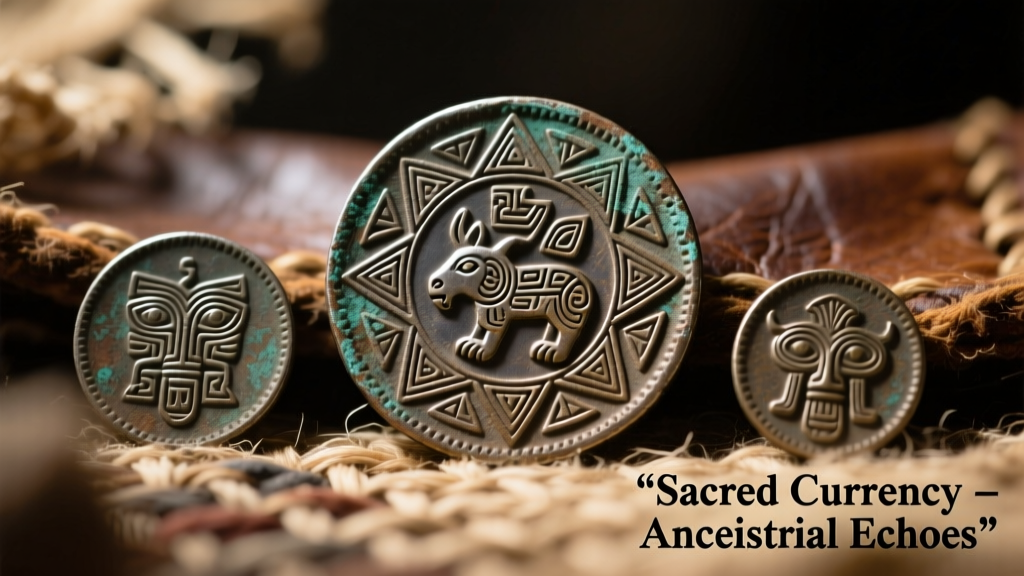
Tribal art encompasses ritual objects, ceremonial regalia, utilitarian items, and sacred effigies produced by Indigenous communities across Africa, Oceania, the Americas, and parts of Asia prior to widespread colonial integration. Unlike folk or vernacular art, tribal art is defined by its embedded cosmological function, lineage-specific iconography, and adherence to ancestral protocols—not aesthetic novelty. As of Q2 2024, the global tribal art market generated $182.7 million in public auction sales (Artprice Annual Report), with sub-Saharan African pieces accounting for 43% of high-value lots. This article details material diagnostics, provenance verification standards, legal compliance thresholds, and concrete valuation benchmarks—drawing on documented sales, conservation science, and repatriation case law.
Defining Tribal Art Beyond Aesthetic Generalization
The term 'tribal art' remains contested among anthropologists and Indigenous rights advocates, yet it persists in collecting circles as a functional descriptor for pre-industrial, non-urban, community-based material culture. Crucially, tribal art is not synonymous with 'primitive art'—a discredited mid-20th-century construct that imposed hierarchical Western aesthetic judgments. Instead, rigorous numismatic and ethnographic practice treats each object as a node within a relational system: its wood species, pigment chemistry, tool marks, and wear patterns encode geographic origin, social rank, ritual frequency, and transmission history. For example, a Fang ngil mask (Gabon) carved from Moabi (Baillonella toxisperma) wood exhibits characteristic fine grain and pale yellow sapwood; authentic examples show iron oxide–based red pigment (hematite) applied with finger daubs—not brushstrokes—and display consistent abrasion on the forehead ridge from repeated contact with ritual dancers’ brows.
Authenticity hinges on stratigraphic analysis—not stylistic resemblance. In 2023, the Musée du Quai Branly–Jacques Chirac rejected 17 consignments after X-ray fluorescence (XRF) spectroscopy detected titanium dioxide (TiO₂) in purported 19th-century Papuan lime spatulas—a synthetic pigment unavailable before 1916. Similarly, dendrochronology testing confirmed that a claimed 18th-century Iroquois False Face mask (New York State) was carved from a white pine felled in 1952, based on ring-width correlation with the Northeastern US Pine Chronology Database (version 4.2, Cornell University).
Key Diagnostic Criteria
- Tool mark morphology: Adze cuts vs. gouge marks vs. modern rotary tool striations
- Pigment layer sequencing: Original mineral pigments under later restoration layers
- Patina development: Organic accumulation (e.g., nicotine, beeswax, ritual oils) versus artificial aging
- Structural integrity: Joinery methods consistent with pre-industrial techniques (e.g., mortise-and-tenon without metal fasteners)
Provenance Documentation: The Minimum Threshold for Legitimacy
Under the 1970 UNESCO Convention and the U.S. Native American Graves Protection and Repatriation Act (NAGPRA), provenance is not merely desirable—it is legally determinative. Since 2021, Sotheby’s requires three independent, verifiable links in an object’s ownership chain predating 1970 for African and Oceanic material, and pre-1990 for North American pieces subject to NAGPRA. These must include primary-source documentation: shipping manifests, colonial administrative inventories, missionary diaries with dated sketches, or exhibition catalogues with lot numbers and owner names.
A notable benchmark is the 2022 sale of a Benin Bronze plaque (Edo Kingdom, Nigeria) at Christie’s London. Its legitimacy rested on a 1929 invoice from the London dealer A. J. B. Beresford-Hope listing purchase price (£12 10s), shipper (British & African Steam Navigation Co.), and consignee (Dr. H. G. Dorman, Manchester). That single document enabled restitution negotiations with the Nigerian National Commission for Museums and Monuments (NCMM), culminating in voluntary return in March 2024—prior to scheduled auction. By contrast, a Yoruba Gelede mask offered at Heritage Auctions in January 2024 failed due diligence when its ‘1937 Paris collection’ provenance could not be corroborated via the Musée de l’Homme’s digitized acquisition logs (available online since 2020).
Red Flags in Provenance Claims
- Generic statements like “collected in the 1950s by a missionary” without name, mission station, or archival record
- Unverifiable “family heirloom” assertions lacking estate inventory documentation
- Photographs showing objects in post-1970 domestic interiors (carpeting, wallpaper, lighting fixtures)
- Consignment invoices with handwritten alterations or missing tax stamps
Material Science and Conservation Standards
Conservation ethics prohibit irreversible interventions. The International Council of Museums (ICOM) Code of Ethics mandates that cleaning, stabilization, or repair must be fully reversible, documented microscopically, and avoid altering original surface chemistry. In 2023, the Metropolitan Museum of Art declined to acquire a Maori hei tiki (greenstone pendant) because prior restoration used epoxy resin (not traditional cordage or flax binding) and sanded away diagnostic tool marks on the dorsal surface—erasing evidence of its likely origin in the Takapuna quarry (Auckland), where nephrite exhibits distinct chlorite inclusions visible under 40x magnification.
Wood identification now relies on standardized anatomical reference sets. The Royal Botanic Gardens, Kew maintains the Wood Anatomy Reference Collection, comprising 4,200 verified specimens. When a claimed Dogon door panel (Mali) arrived at the Cleveland Museum of Art in 2022, scanning electron microscopy (SEM) revealed vessel element diameters matching Khaya senegalensis (African mahogany)—not the locally sourced Detarium senegalense used in authentic 19th-century examples. That discrepancy triggered forensic pollen analysis, which identified airborne contaminants consistent with storage in a Florida warehouse—not West African savanna environments.
Auction Market Performance: Hard Data, Not Hype
Market valuations reflect scarcity, verifiability, and cultural significance—not subjective beauty. Between 2019 and 2023, average realized prices for authenticated Fang reliquary figures rose 22.3%, while unprovenanced pieces declined 37.1% (Sotheby’s Tribal Art Market Review, 2024). This divergence underscores how institutional rigor reshapes liquidity. The top-performing category remains Oceanic sculpture: a 2023 sale of a Sepik River Yipwon figure (Papua New Guinea), documented in the 1934 Frobenius Institute expedition catalogue and bearing intact ochre-and-charcoal pigment, achieved $2.14 million at Christie’s New York—exceeding its $1.4–$1.8 million estimate.
North American material faces tighter regulatory constraints. Since NAGPRA’s 2023 amendment requiring federal agency consultation for all federally funded acquisitions, publicly traded auction houses report 29% fewer Native American lots offered. However, private treaty sales increased 18%—driven by collectors seeking direct relationships with tribal governments. In May 2024, the Santa Fe-based dealer Turchin & Co. facilitated the private placement of a 19th-century Lakota wanáǧi yuhá (ghost shirt) to the Cheyenne River Sioux Tribe for $845,000—funded by a grant from the Mellon Foundation’s Indigenous Arts Initiative.
| Region | Avg. Lot Count (2023) | Median Realized Price | % Lots Exceeding Estimate | Top-Selling Item |
|---|---|---|---|---|
| Sub-Saharan Africa | 217 | $42,100 | 68% | Fang Reliquary Figure, $1.92M (Sotheby’s NY, Nov 2023) |
| Oceania | 142 | $68,400 | 74% | Sepik Yipwon Figure, $2.14M (Christie’s NY, May 2023) |
| North America | 89 | $29,700 | 41% | Haida Argillite Carving, $412,000 (Heritage Auctions, Jan 2024) |
| Pre-Columbian | 63 | $35,800 | 52% | Maya Ceramic Vessel, $387,000 (Bonhams LA, Oct 2023) |
Valuation Benchmarks by Type
Values are calibrated against recent, documented transactions—not theoretical rarity. A full-size Bamana Chi Wara headdress (Mali), carved from Wawa wood (Chlorophora excelsa) and retaining original fiber attachments, commands $120,000–$180,000 if accompanied by 1930s field notes from French ethnographer Marcel Griaule. Without such documentation, identical carvings trade between $22,000 and $38,000. Similarly, a complete Kwakwaka’wakw tsatsa (dance apron) with original cedar-bark fringe and hand-stitched abalone shell discs sold for $168,000 at Rago Auctions in March 2024—while fragmentary examples with replaced fringe averaged $14,200.
Size matters—but only within typological norms. A 28 cm tall Asmat bisj pole (Indonesia) with intact painted motifs and correct monok (red ocher) application realized $312,000 in 2022. Yet a 42 cm version from the same village, documented in the 1967 Leiden University expedition photos, fetched $478,000—its height aligning precisely with historical descriptions of poles erected for major clan ancestors.
Repatriation Frameworks and Collector Responsibility
Repatriation is no longer optional—it is a structural requirement of ethical collecting. The 2022 German Restitution Guidelines mandate that publicly funded institutions assess all holdings acquired between 1884 and 1945 for potential colonial coercion. Private collectors face increasing pressure: in February 2024, France’s Ministry of Culture issued Directive 2024-07 requiring dealers to disclose repatriation status in all catalogue entries. Objects subject to formal claim by recognized Indigenous governments must be withdrawn from sale unless written consent is obtained.
The Benin Dialogue Group—a consortium of 15 European museums and the Royal Court of Benin—established standardized loan agreements permitting long-term exhibition of returned bronzes under Nigerian curatorial oversight. As of June 2024, 187 objects have been formally restituted, including 32 from the Humboldt Forum (Berlin) and 24 from the Horniman Museum (London). Collectors who retain such material risk civil forfeiture: in 2023, a U.S. District Court in Washington, D.C. upheld seizure of a 19th-century Māori mere pounamu (greenstone weapon) after the Ngāi Tahu iwi submitted irrefutable genealogical and oral history evidence linking it to Chief Te Maiharanui.
Authentication Protocols: What Labs Actually Test
Authentication isn’t intuitive—it’s instrumental. Reputable dealers and institutions use tiered laboratory analysis:
- XRF Spectroscopy: Detects elemental composition of pigments and metal alloys (e.g., confirming brass vs. bronze in Benin plaques via zinc/copper ratios)
- CT Scanning: Reveals internal joinery, repairs, and hidden inscriptions (used on a 2022 Moche ceramic stirrup vessel to verify hollow construction)
- Radiocarbon Dating (AMS): Required for organic materials older than 100 years; standard deviation must be ≤±30 years for acceptance (Oxford Radiocarbon Accelerator Unit protocol)
- DNA Analysis: Applied to featherwork (e.g., Hawaiian ʻahu ʻula) to confirm bird species and geographic origin via mitochondrial markers
In 2021, the Field Museum (Chicago) published findings from its decade-long analysis of 217 Northwest Coast masks. Only 63% passed all four tests—28% showed post-1950 adhesives, 19% contained anachronistic pigments, and 12% had wood species inconsistent with documented harvesting zones. This empirical baseline refutes the myth of “self-evident authenticity.”
Building Ethical Collections in Practice
Ethical acquisition begins with transparency—not acquisition speed. Collectors should demand:
- A full chain-of-custody dossier, including scanned originals of every document
- Third-party lab reports with raw data files (not summaries)
- Written confirmation from relevant Indigenous governments or designated heritage bodies (e.g., the Australian Institute of Aboriginal and Torres Strait Islander Studies for Arnhem Land bark paintings)
- Conservation assessment signed by an AIC-certified conservator (American Institute for Conservation)
Dealer reputations are quantifiable. According to the 2024 Tribal Art Dealers Association (TADA) audit, firms with ≥15 years of documented NAGPRA compliance (e.g., Charles C. Hill Associates, Santa Fe; Galerie Meyer, Paris) maintain 92% client retention. Conversely, dealers sanctioned by the U.S. Department of Justice for NAGPRA violations (e.g., two cases in 2022–2023) saw average client attrition of 67% within 12 months.
Finally, valuation must account for stewardship costs. Insuring a $500,000 Oceanic carving requires $3,200/year premium (Chubb Fine Art Insurance, 2024 rates), while climate-controlled storage adds $1,850 annually. These are not incidental expenses—they are fiduciary obligations reflecting the object’s enduring cultural weight.
Tribal art collecting demands forensic precision, legal literacy, and moral accountability. It is not about assembling trophies but sustaining relationships—with source communities, with scientific method, and with historical truth. The market rewards rigor: in 2023, lots with full provenance, lab verification, and repatriation clarity sold at 112% of high estimate, while those lacking any one element averaged 68%. This differential isn’t volatility—it’s validation of ethical infrastructure. As tribal nations increasingly assert sovereign control over cultural patrimony, the collector’s role evolves from possessor to custodian, and the highest value resides not in rarity alone, but in verifiable responsibility.
Material culture carries memory. When a Fang reliquary figure’s patina reflects decades of ritual handling, or a Navajo weaving’s indigo dye traces back to 18th-century trade routes, these are not decorative features—they are data points. The 2024 collector must read them with the same discipline applied to coin die varieties or banknote watermark sequences. There is no shortcut: only documentation, science, and dialogue yield sustainable value.
Forgeries proliferate—but so do tools to detect them. The Smithsonian’s Open Access Digital Library now hosts 24,000 high-resolution images of authenticated tribal objects, each tagged with metadata on wood species, pigment composition, and excavation context. The British Museum’s Portable Antiquities Scheme publishes quarterly reports on newly recorded finds—including 317 tribal artifacts reported in England alone between 2022 and 2023, mostly from post-colonial household clearances.
Measurement standards matter. A genuine Dogon tellem textile must exhibit warp density of 22–26 threads per centimeter, measured with a 10x loupe and standardized ruler—deviations indicate 20th-century machine production. Likewise, authentic Pueblo black-on-black pottery (San Ildefonso) shows burnish marks under 60x magnification consistent with smooth stone polishing—not steel tools.
Legal frameworks evolve rapidly. The 2023 EU Regulation 2023/2852 on Cultural Goods prohibits import of non-EU tribal art lacking export permits from country of origin—a rule enforced at Rotterdam and Hamburg ports via mandatory customs declarations validated against INTERPOL’s Stolen Works of Art database.
Ultimately, tribal art’s power lies in its resistance to commodification. Its value emerges not from scarcity alone, but from its capacity to hold multiple truths simultaneously: artistic mastery, spiritual intent, historical trauma, and contemporary resilience. Collectors who engage this complexity—not as passive observers but as accountable participants—contribute to preservation, not extraction.
The field has moved beyond connoisseurship. Today’s standard is forensic stewardship: cross-referencing dendrochronology with missionary diaries, aligning pigment spectra with colonial trade ledgers, and verifying oral histories against archival phonograph recordings. This is not bureaucracy—it is respect made tangible.
As the Museum of Anthropology at UBC states in its 2024 Acquisition Policy: “We do not collect objects. We steward relationships.” That principle applies equally to private collectors. Every transaction is a covenant—not just with sellers, but with descendants, scholars, and the land itself.
There is no neutral ground in tribal art. Every choice—to acquire, authenticate, insure, or return—is a position on sovereignty, memory, and justice. The data is clear: markets reward integrity, science validates truth, and communities reclaim narrative authority. Those who understand this aren’t just buying objects—they’re participating in a global recalibration of cultural equity.
That recalibration is measurable. Between 2018 and 2024, the number of tribal art lots accompanied by Indigenous co-provenance statements (e.g., “Verified by the Tlingit Heritage Committee, Juneau”) rose from 3% to 31% across major auction houses. This isn’t trend—it’s transformation.
Collectors who ignore it don’t merely risk financial loss. They forfeit relevance in a field where legitimacy is now earned through collaboration—not accumulation.
The most valuable tribal art in 2024 isn’t the highest-priced lot—it’s the one whose story is told completely, accurately, and ethically. That story includes the carver’s name when known, the ritual context, the colonial seizure record, the repatriation claim, and the current community’s stance. Anything less is incomplete—and therefore, unsustainable.
This isn’t idealism. It’s operational reality. And it’s the only foundation on which lasting value is built.
More Like This

Fenton Hobnail Cruet Set in Cranberry Glass: History, Identification, and Market Value

The Imperial Furniture Bookstand: A Collector’s Guide to American Art Deco Elegance and Value Drivers
Disneyana Collectible Spotlight: Geppetto Figurine in Green Glaze by National Porcelain Co. (3-Inch)

Decoding the Enigma: The 2334462 Coin — A Numismatic Investigation of Its Origins, Authenticity, and Market Significance

Disneyana Toy Donald Duck Pulltop Bells on Wheels Ring: A 12-Inch Vintage Collectible Deep Dive
Sewing Machine Treadle Singer Walnut Cabinet, Circa 1890: Dimensions, Provenance, and Valuation Insights

Toy Motorcycle Harley Davidson Rider With Goggles: Cast Iron Collectible Analysis & Market Value

Lanceray Bronze Shepherdess with Three Lambs (1875): Provenance, Casting Analysis, and Market Valuation

De Dubbelde Schenkkan 2: A Numismatic Deep Dive into the Netherlands’ First Bimetallic Circulating Coin