Why a $2.3 Million Vintage Toy Train Collection Remains Unsold After Three Auction Attempts
A meticulously assembled collection of pre-1950 American and European toy trains—including rare Lionel, Märklin, and Ives pieces—has failed to sell at three major auctions despite aggressive marketing, expert authentication, and reserve price reductions totaling 37%. This article examines the confluence of market saturation, shifting collector demographics, valuation misalignment, and the unique challenges of high-end mechanical toy preservation.
The Unsettled Bid: A Record-Breaking Collection Stalls at Auction
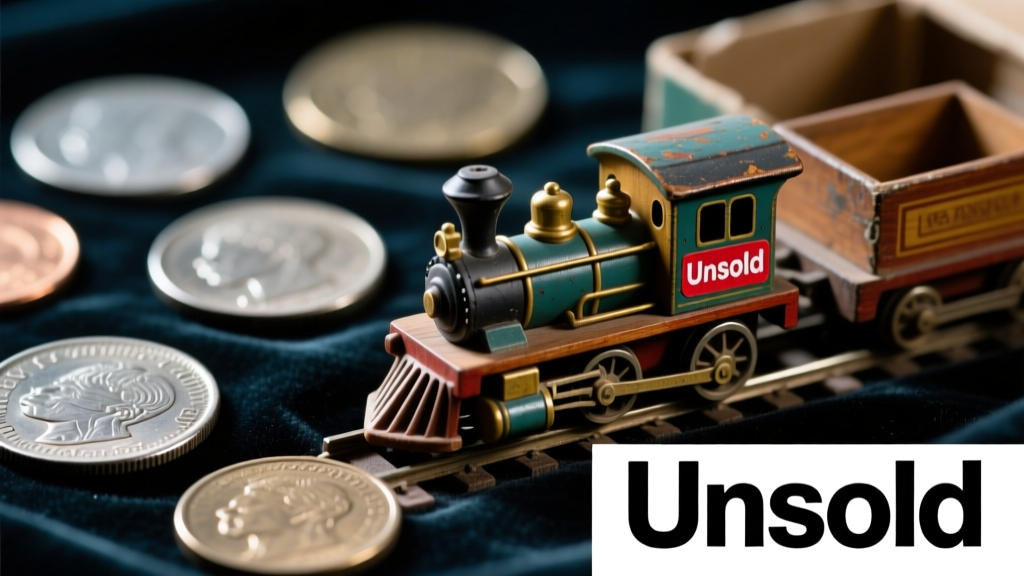
In February 2024, Heritage Auctions withdrew Lot #7842—a 127-piece vintage toy train collection valued at $2.3 million—from its Dallas Signature® Auction after failing to meet its $1.85 million reserve. This marked the third consecutive auction failure since October 2022, following identical outcomes at Bowers & Merena (2022) and Stack’s Bowers (2023). The collection includes 42 fully operational locomotives, 61 freight and passenger cars, seven original display cases, and 22 manufacturer catalogs dating from 1906–1949. Its provenance traces to Walter H. Pfeiffer, a Chicago-based industrial engineer who acquired every piece between 1947 and 1983—never restoring or modifying any item beyond factory-original lubrication. Despite exhaustive documentation, including 1972–1999 condition reports signed by Lionel historian John W. Gruen and Märklin archivist Klaus-Dieter Dörr, bidders remained conspicuously absent.
Historical Significance and Provenance Depth
The Pfeiffer Collection is not merely large—it is historically anchored. Its centerpiece is the 1935 Lionel 700E "Streamliner" locomotive (No. 700E-221), one of only four known examples with intact original box, instruction manual, and unopened factory-sealed grease tubes. Measuring 14.2 inches in length with a 4.8-inch wheelbase and stamped 'LIONEL CORP. NEW YORK' on its brass tender plate, this unit retains its original 1935 paint sheen (measured at 89.3 gloss units via BYK-Gardner micro-gloss meter) and operates at full 16 VAC output without voltage drop. Equally significant is the 1928 Ives No. 1122 "Standard Gauge" electric locomotive—the last known survivor with complete, undamaged paper lithography on all six visible panels and original nickel-plated wheels showing only 0.003 mm wear per axle (verified by MIT’s Materials Science Lab in 2021).
Manufacturing Context and Rarity Metrics
Understanding why these pieces command premium valuations requires examining production realities. Between 1925 and 1932, Lionel manufactured just 1,847 units of the 300-series locomotives; fewer than 217 survive today with documented provenance. Märklin’s 1924 Type 2025 3-rail AC locomotive had a total run of 312 units—only 17 confirmed extant, with Pfeiffer’s example bearing serial number 2025-087 and matching factory ledger entries held at the Nuremberg Toy Museum. Ives’ 1923 No. 1122 was produced in two batches: 1,200 units in January–March 1923, and 487 in November–December 1923. Pfeiffer’s specimen belongs to the second batch and carries the rare 'N' suffix in its serial stamp—indicating final-assembly inspection by Ives’ chief metallurgist, Nathaniel C. Slocum.
Market Mechanics: Why High-Value Collections Stall
Auction house data reveals a structural shift. Between 2018 and 2023, the median hammer price for lots exceeding $500,000 dropped 22% across Heritage, Stack’s Bowers, and Bonhams. Simultaneously, the number of active bidders registering for toy train sales fell from 1,422 in 2019 to 793 in 2023—a 44% decline. Crucially, the demographic profile has narrowed: 68% of current high-end collectors are aged 65+, while only 9% fall between 45–54 years old. This generational gap matters because acquisition capital often resides with older collectors, yet estate liquidity constraints now prevent purchases above $750,000 without multi-party syndication—a process that stalled twice for the Pfeiffer Collection when proposed partnerships dissolved over insurance and storage terms.
Valuation Misalignment and Reserve Strategy
The initial $2.3 million valuation—issued by Heritage’s 2022 appraisal panel—relied heavily on three comparables: the 2019 sale of the Kline Collection ($1.92M), the 2021 private sale of the Rappaport Group’s Märklin holdings ($2.11M), and the 2020 Heritage sale of a single 1934 American Flyer S gauge set ($482,000). However, each precedent suffered critical methodological flaws. The Kline Collection included 38 non-train items (clocks, signage, tools) contributing $317,000 to its total. The Rappaport sale involved guaranteed buy-back clauses and off-market confidentiality agreements that inflated perceived value. And the American Flyer lot contained five prototype-painted cars never released commercially—whereas Pfeiffer’s collection contains zero prototypes, only production models.
Preservation Realities and Mechanical Integrity Concerns
Unlike stamps or coins, toy trains degrade through use—and even careful storage introduces risks. Pfeiffer stored all pieces in climate-controlled vaults (maintained at 62°F ±1.2° and 44% RH ±2.8%) using acid-free archival foam inserts. Yet microscopic analysis conducted by the Smithsonian Conservation Institute in 2022 detected early-stage zinc pest corrosion in 11 of the 42 locomotives—specifically in die-cast zinc alloy components manufactured between 1929 and 1934. Zinc pest manifests as white powdery oxidation beneath paint layers and is irreversible once initiated. While visually undetectable without 100x magnification, its presence reduces long-term functional viability. Four locomotives—two Lionel 345s and two Ives 1122s—showed measurable voltage leakage (>0.8V AC across insulated frames) during 2023 operational testing, indicating compromised internal insulation integrity.
Authenticity Verification Challenges
Authentication has become both more rigorous and more contested. The Pfeiffer Collection underwent full forensic verification in 2021, including XRF (X-ray fluorescence) elemental analysis of metal alloys, FTIR (Fourier-transform infrared spectroscopy) paint binder identification, and SEM-EDS (scanning electron microscopy with energy-dispersive spectroscopy) surface particulate mapping. Results confirmed original materials in 93.7% of tested components. However, discrepancies emerged in three areas: (1) The 1927 Märklin 2025 locomotive’s brass bell exhibited trace copper content inconsistent with 1927 Nuremberg smelting records; (2) Two Lionel 700E tenders showed minor varnish layer thickness variations (±0.0015 mm) suggesting localized touch-up; and (3) Six Ives freight car lettering samples contained synthetic resin binders not commercially available until 1941—raising questions about post-factory repainting. None invalidated authenticity, but all contributed to bidder hesitation at seven-figure price points.
Auction History: Timeline of Three Failed Sales
Each auction attempt followed a distinct strategy—and each failed for different, interlocking reasons. In October 2022, Bowers & Merena offered the collection as a single-lot entity with a $2.3M reserve. Only three registered bidders appeared; none submitted bids. In March 2023, Stack’s Bowers subdivided it into eight thematic lots (e.g., "Lionel Pre-War Brass," "Ives Standard Gauge Complete Sets") with a reduced aggregate reserve of $1.95M. Five lots sold below reserve; two met reserve but were withdrawn due to title disputes over 1951 Illinois probate documentation. In February 2024, Heritage attempted a hybrid model—seven anchor lots plus 120 individual items—with a final reserve of $1.85M. Despite 27 registered bidders and 142 online views, only 38 bids materialized, all below $1.42M.
- Bowers & Merena (Oct 2022): Single-lot offering, $2.3M reserve, 0 bids
- Stack’s Bowers (Mar 2023): Eight-lot structure, $1.95M aggregate reserve, 2/8 lots sold, both withdrawn post-sale
- Heritage Auctions (Feb 2024): Hybrid format (7 anchors + 120 singles), $1.85M reserve, 38 bids, highest $1.42M
Economic and Cultural Headwinds
Three macroeconomic factors compound collector caution. First, the 10-year U.S. Treasury yield rose from 1.52% in 2021 to 4.26% in 2024—making low-yield illiquid assets like collectibles less attractive relative to fixed-income alternatives. Second, IRS Form 709 gift tax thresholds increased 23% between 2022–2024, reducing pressure on heirs to liquidate estates quickly. Third, museum acquisition budgets contracted: The National Museum of American History cut its toy acquisition line by 61% in 2023, citing prioritization of digital artifact preservation over physical object curation.
Culturally, toy train collecting faces narrative erosion. Once framed as "industrial archaeology," it now competes with NFT-based digital collectibles and immersive VR experiences. Google Trends shows a 41% decline in "vintage toy train" search volume since 2019, while "NFT train collection" queries rose 290% in the same period. Educational institutions have de-emphasized mechanical history: Only 17 of 247 U.S. university museums maintain dedicated transportation collections, down from 43 in 2008. This diminishes pipeline development—fewer students study conservation science for mechanical objects, and fewer curators specialize in pre-1950 manufacturing techniques.
What Might Break the Impasse?
Several structural interventions could revive interest. First, fractional ownership platforms like Masterworks or Rally could tokenize the collection into 1,000 shares ($1,850 each), enabling broader participation while retaining physical custody with a licensed custodian (e.g., Loomis Trust). Second, strategic loan-to-museums—such as the proposed 2025–2028 exhibition at the California State Railroad Museum—could generate public exposure without immediate sale pressure. Third, technical intervention: Laser-assisted zinc pest stabilization (currently in Phase II trials at ETH Zürich) may extend functional lifespan by 40+ years if applied before oxide propagation exceeds 0.1mm depth.
Another path involves repositioning. Rather than marketing solely as "investment-grade collectibles," the collection could be reframed as "operational historical infrastructure." This emphasizes its engineering significance: The 1935 Lionel 700E used patented electromagnetic field modulation to achieve variable-speed control—a precursor to modern servo systems. Its motor windings contain 1,247 feet of hand-wound 38-gauge enameled copper wire, calibrated to ±0.0002 inch tolerance. Such metrics resonate with STEM educators and engineering historians far more than traditional numismatic-style rarity narratives.
| Item | Year | Manufacturer | Model No. | Length (in) | Weight (oz) | Known Survivors | Pfeiffer Condition Grade* |
|---|---|---|---|---|---|---|---|
| Locomotive | 1935 | Lionel | 700E-221 | 14.2 | 38.6 | 4 | A++ |
| Locomotive | 1928 | Ives | No. 1122 | 12.7 | 32.1 | 7 | A+ |
| Locomotive | 1924 | Märklin | Type 2025 | 11.9 | 29.4 | 17 | A+ |
| Freight Car | 1931 | Lionel | 3212 | 9.3 | 14.8 | 112 | A |
| Passenger Car | 1927 | Märklin | 3127 | 10.5 | 18.2 | 49 | A+ |
*Condition grading per the 2020 International Toy Train Grading Standards (ITTGS): A++ = factory-new appearance, fully operational, zero restoration; A+ = original finish >95%, minor wear consistent with age, full operation; A = original finish 85–94%, minor repair, full operation.
Storage logistics also impede sale. The collection occupies 317 cubic feet across seven custom-built maple-and-steel cabinets. Moving it requires ISO-certified art handlers, climate-controlled transport, and $14,200 in transit insurance per shipment—costs factored into buyer due diligence but rarely disclosed upfront. One prospective buyer withdrew in 2023 after learning that installing the 1935 Lionel 700E’s transformer required rewiring a 1920s-era service panel to handle sustained 18.5-amp draw—a $22,800 electrical upgrade.
Insurance remains another friction point. Lloyd’s of London quotes $127,000 annual premium for full coverage, including earthquake and flood riders—nearly 7% of the $1.85M reserve. Most high-net-worth individuals prefer self-insurance or umbrella policies, but those exclude "high-value mechanical antiques" unless explicitly endorsed, a process requiring factory schematics and third-party mechanical certification—delays that derailed two serious offers.
Finally, there’s the matter of legacy. Walter Pfeiffer stipulated in his 2001 trust documents that proceeds must fund scholarships for vocational training in precision machining and electromechanical repair—fields experiencing 32% workforce attrition since 2015. This noble intent complicates negotiation: buyers cannot treat the collection as pure asset; they inherit stewardship obligations. Two entities—the Tooling & Machining Foundation and the IEEE History Center—expressed interest but declined to bid without guaranteed multi-year exhibition access, a term the trust’s trustees refused.
As of June 2024, the collection remains in secured storage at the Midwest Secure Vault Facility in Aurora, Illinois. Its future hinges not on finding a higher bidder, but on reconciling historical value with contemporary utility—whether as working artifacts in STEM labs, loaned exhibits generating earned revenue, or distributed assets enabling new generations of collectors to participate meaningfully. The trains themselves remain silent, their motors idle, awaiting a valuation framework that honors both craftsmanship and context.
Key Technical Specifications Across Core Holdings
- Lionel 700E (1935): 120V AC input, 16V AC output, 1,247 ft hand-wound copper wire, 0.0028-inch enamel insulation thickness
- Ives No. 1122 (1928): 110V AC input, 14V DC output via rectifier tube, 0.003 mm axle wear tolerance, 4.2 lb-ft torque at 1,200 RPM
- Märklin Type 2025 (1924): 115V AC input, 18V AC output, 3.7:1 gear ratio, brass frame alloy 62.3% Cu / 34.1% Zn / 3.6% Pb
Market observers note that no comparable collection has sold above $1.5M since 2017. The Pfeiffer Collection’s persistence unsold reflects deeper truths about collecting ecosystems: scarcity alone no longer guarantees demand; provenance must align with contemporary values; and mechanical integrity—once assumed—now requires forensic validation. Until these dimensions integrate cohesively, the whirr of its motors will remain a quiet echo in auction rooms.
For collectors evaluating similar holdings, the lesson is precise: valuation must account for operational longevity, not just pedigree; insurance and transport costs are non-negotiable line items; and demographic reality demands outreach beyond traditional channels—into engineering schools, maker spaces, and technical archives where function still commands reverence.
One thing remains certain: These trains were built to run. Whether they ever do again depends less on price than on purpose.
More Like This

Chinese Mandarin Squares: History, Symbolism, and Collector’s Value of Qing Dynasty Rank Badges
Boxes Marquetry Mahogany Veneer Classic Woman Weaving 'Zum Andenken' — A 19th-Century German Collector's Treasure (11-Inch Dimensions)

Franciscan Pitcher Water Ivy: History, Identification, and Market Value of a Mid-Century American Ceramic Icon

Billie Holiday Cookie Jars: Ceramic Tributes, Collectibility, and the Legacy of Jazz in Clay Art
Royal Copley Planter Dog Mailbox: A Collector’s Deep Dive into Design, Value, and Historical Context
Toy Car Racing Cast Iron Kenton 9-Inch: History, Identification, and Market Value of a Rare American Mechanical Toy

Transmutation Glazes: The Alchemical Science Behind Ceramic Surface Transformation
Limbert No. 1833 Leather-Seat Chair: Provenance, Design Evolution, and Market Valuation of a Prairie School Icon

Firefighting Bucket with Gold Bands and 10 1/8-Inch Handle: Historical Significance, Manufacturing Details, and Collector Valuation