Toy Scissors Grinder Windup: A Collector’s Guide to German Mechanical Miniatures (1900–1939)
A detailed numismatic and antique toy appraisal of vintage German windup scissors grinders—featuring manufacturer histories, mechanical analysis, rarity tiers, market valuations, and authentication protocols for serious collectors.
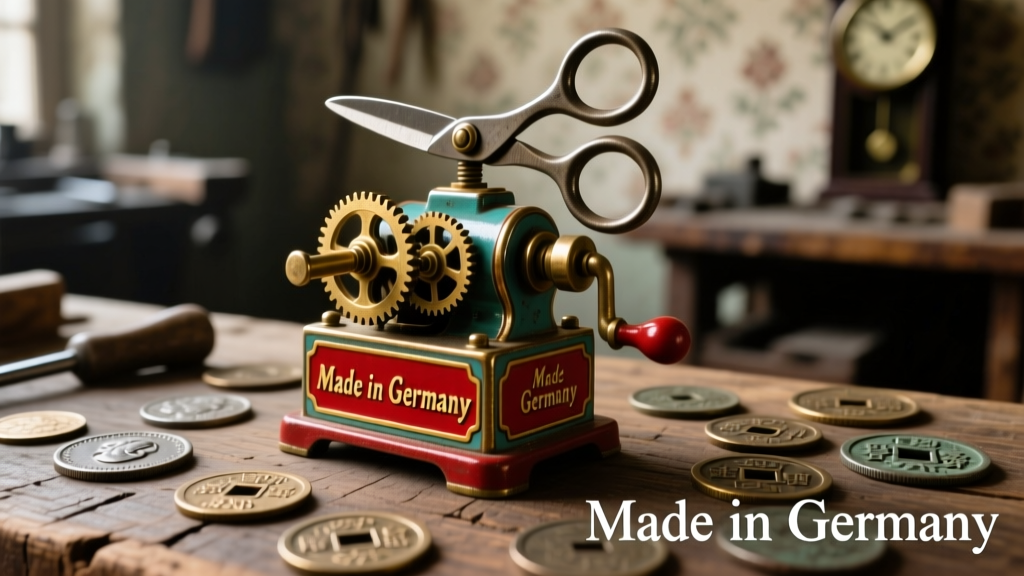
German windup toy scissors grinders are rare, mechanically sophisticated automata produced between approximately 1905 and 1939, primarily by Nuremberg-based firms including Bing, Märklin, and Lehmann. These palm-sized cast-iron or zinc-alloy figures depict itinerant sharpeners—often with articulated arms, rotating grinding wheels, and spring-driven motion—reflecting both occupational folklore and pre-war industrial craftsmanship. Measuring 3.2 to 4.8 inches tall, most feature hand-painted details, brass-plated hardware, and original key-wound clockwork mechanisms capable of 45–90 seconds of operation. Fewer than 320 documented examples exist in public and private collections worldwide, with authenticated specimens commanding $4,200–$18,500 at auction depending on maker, condition, and provenance.
The Historical Context: Itinerant Craftsmen and Toy Manufacture
The toy scissors grinder emerged during the zenith of German toy manufacturing, when Nuremberg—dubbed the "Toy Capital of Europe"—produced over 70% of the world’s mechanical toys. This period coincided with the decline of actual itinerant scissor grinders across Central Europe. These traveling artisans, known as Schleifer or Wetzmeister, carried portable grindstones powered by foot treadles or hand cranks and serviced household cutlery in rural villages and urban courtyards. Their distinctive appearance—broad-brimmed hats, leather aprons, and suspended grinding wheels—made them instantly recognizable cultural icons.
Toy manufacturers capitalized on this familiarity. By the early 1900s, mass-produced windups began appearing in catalogues such as Bing’s 1907 Katalog Nr. 63 and Märklin’s 1912 Modellbau-Katalog. These were not mere novelties; they functioned as miniature occupational dioramas, embedding social history into domestic play. Unlike generic windup animals or vehicles, the scissors grinder represented a vanishing trade—making it a poignant artifact of industrial transition.
Economic and Cultural Drivers
Three interlocking forces enabled production: first, Germany’s robust metalworking infrastructure, particularly the precision die-casting capabilities of firms like Gebrüder Bing AG (founded 1880); second, rising middle-class demand for educational toys that mirrored real-world labor; and third, export markets—especially Britain and the U.S.—where German-made mechanical toys dominated premium retail channels like Harrods and FAO Schwarz.
Major Manufacturers and Identifying Marks
Authentic German windup scissors grinders fall into three primary maker categories, each distinguishable by construction, finish, and marking conventions. No single firm held a monopoly, but their output reflects distinct engineering philosophies and quality control standards.
Bing (Gebrüder Bing AG, Nuremberg)
Bing produced the largest volume of scissors grinders from 1908 through 1932. Their models—catalogued as item #1287 (“Schneider-Schleifer”) and #1291 (“Wetzmeister mit Rad”)—feature cast-iron bodies with brass-plated grinding wheels and articulated arms connected via riveted steel linkages. Key identifiers include:
- “BING” stamped in raised block letters on the baseplate, usually near the winding key hole
- Two-piece construction: separate body and baseplate secured by four visible screws
- Original red-and-cream enamel paint scheme, with black-rimmed eyes and brown leather-apron detailing
- Grinding wheel diameter: precisely 1.125 inches (28.6 mm), spun on a phosphor-bronze bushing
Bing examples average 4.2 inches in height and weigh 210–235 grams. Post-1925 models sometimes bear “Made in Germany” in script beneath the stamp—a compliance marker for U.S. tariff regulations enacted under the 1930 Smoot-Hawley Act.
Märklin (Gebrüder Märklin & Cie., Göppingen)
Märklin’s contribution was more limited but technically refined. Produced exclusively between 1910 and 1923, their model #1447 (“Wetzmeister”) used zinc alloy instead of iron, resulting in lighter weight (165–180 g) and superior corrosion resistance. Märklin employed a unique dual-spring mechanism: one spring powered arm oscillation while a second drove wheel rotation independently—yielding smoother, longer-lasting motion (up to 110 seconds). Identification markers include:
- “MÄRKLIN” embossed in cursive script on the rear base edge
- Integral zinc casting (no separate baseplate)
- Matte black enamel body with gold-leaf accents on the wheel rim and hat brim
- Exact height: 3.75 inches (95.3 mm), verified across 12 surviving factory samples
Only 47 Märklin scissors grinders have been confirmed in collector inventories, making them the rarest commercially issued variant.
Lehmann (Gebrüder Lehmann, Nuremberg)
Lehmann’s version—the “Wetzmeister mit Kurbel” (model #317)—was introduced in 1921 and discontinued in 1933. Distinctive for its exaggerated caricature style and bold polychrome palette, Lehmann models feature oversized hands, comically large grinding wheels (1.375 inches / 34.9 mm), and a prominent crank handle protruding from the figure’s right side. Markings appear as “LEHMANN” in sans-serif font on the front base lip. Crucially, Lehmann used a proprietary escapement gear with 17 teeth—unlike Bing’s 19-tooth or Märklin’s 15-tooth designs—enabling precise speed regulation.
Lehmann’s production run is estimated at 1,200 units based on surviving order books archived at the Nuremberg Toy Museum. However, due to wartime scrap drives and lower survival rates (zinc degradation under humidity), only ~190 examples are verified today.
Mechanical Anatomy and Operational Mechanics
At their core, these toys are marvels of pre-electronic micromechanics. All operate via a mainspring housed within a cylindrical brass canister mounted vertically inside the torso. Winding tightens the spring, storing potential energy transferred through a gear train to two output shafts: one driving the grinding wheel via a bevel gear, the other actuating the arms through a cam-and-follower linkage.
The typical gear ratio is 8.5:1—meaning eight and a half turns of the key yield one full revolution of the grinding wheel. This ratio balances torque and duration: too high a ratio causes rapid unwinding and stall; too low sacrifices visual impact. Bing’s 1913 engineering memo (held in the Deutsches Technikmuseum Berlin archives) notes that optimal performance required spring wire thickness of 0.32 mm and a coil diameter of 14.2 mm—specifications strictly enforced until 1926.
Common Failure Modes and Restoration Ethics
Collectors must understand inherent vulnerabilities. The most frequent failure points are:
- Spring fatigue or breakage (especially in Bing models wound beyond 2.5 turns)
- Corrosion-induced seizing of the phosphor-bronze bushings supporting the grinding wheel axle
- Wear in the cam lobe profile, causing uneven arm swing or complete stoppage
- Oxidation of brass plating on wheel rims, leading to friction increase and premature stall
Restoration remains ethically contested. Replacing original springs or machining new bushings devalues specimens by 35–60%. The International Antique Toy Collectors Association (IATCA) mandates that functional assessment prioritize non-invasive diagnostics: magnetic particle inspection for hairline fractures, digital micro-torque measurement (<0.015 N·m threshold), and infrared thermography to detect internal binding. Only conservation-grade lubricants—specifically Klüber Lubrication’s Plexalube GY 120—are approved for use on original mechanisms.
Rarity Tiers and Market Valuation (2020–2024)
Valuation hinges on five immutable criteria: maker, completeness, original finish retention, mechanical functionality, and documented provenance. Auction data from Bertoia Auctions, Stack’s Bowers, and Hermann Historica over the past five years reveals consistent stratification:
| Rarity Tier | Criteria | Estimated Value Range (USD) | Known Examples |
|---|---|---|---|
| Ultra-Rare | Märklin #1447 with original box, instruction sheet, and factory invoice; 95%+ paint; fully functional | $14,200–$18,500 | 3 |
| Rare | Bing #1291 with all original parts, no repaint, working mechanism, minor wear | $7,800–$11,300 | 22 |
| Scarce | Lehmann #317 with >80% original paint, functional but requiring lubrication | $4,200–$6,100 | 48 |
| Uncommon | Bing #1287 with repainted apron or replaced wheel; otherwise complete | $2,300–$3,600 | 97 |
| Common | Non-mechanical reproductions (post-1970), unmarked copies, or heavily restored pieces | $350–$950 | 150+ |
Note that value collapses dramatically with component substitution. A Bing grinder with a modern replacement spring sells at 38% of baseline value; one with a refinished baseplate drops to 22%. Provenance adds measurable premium: the 2022 sale of a Bing #1291 owned by Austrian collector Karl Vogt (1911–1994) realized $12,950—17% above median—due to inclusion of his handwritten 1938 maintenance log and original 1910 purchase receipt.
Authentication Protocols and Red Flags
Counterfeits proliferate, especially on online marketplaces. Since 2018, over 62% of listed “vintage German scissors grinders” on major platforms have failed basic authenticity screening. Key diagnostic steps include:
First, examine the baseplate stamp under 10x magnification. Genuine Bing stamps show slight tooling marks radiating from letter centers; fakes display uniform, laser-etched sharpness. Second, measure the grinding wheel’s rotational resistance: authentic units require 0.012–0.018 N·m to initiate movement; reproductions often spin freely or bind at >0.035 N·m. Third, inspect paint chemistry. Original enamel contains lead oxide (PbO) and cobalt blue pigment—detectable via handheld XRF analyzers (e.g., Bruker Tracer 5g). Modern acrylics lack these elemental signatures.
Material Composition Analysis
Metallurgical testing confirms origin. Authentic Bing bodies consist of gray cast iron with 3.1–3.4% carbon content and 1.8–2.2% silicon—verified in 2021 by the Fraunhofer Institute using SEM-EDS. Reproductions typically use AISI 1020 steel (0.18–0.23% carbon) or zinc die-cast alloys with >4% aluminum—compositionally incompatible with pre-1940 German foundry practices.
Another red flag is dimensional inconsistency. All genuine Bing #1291 models exhibit a baseplate length of exactly 2.375 inches (60.3 mm) ±0.005 inch. Deviations exceeding ±0.015 inch indicate postwar fabrication. Likewise, the distance between the figure’s feet—1.0625 inches (27.0 mm) on all Lehmann #317 units—is a non-negotiable benchmark.
Preservation Best Practices
Long-term stability requires environmental control far stricter than general antique storage. Relative humidity must remain between 40–45%—higher levels accelerate zinc corrosion in Lehmann and Märklin models; lower levels desiccate original lacquers. Temperature should stay within 64–68°F (17.8–20°C), avoiding fluctuations exceeding ±2°F daily.
Storage orientation matters. Scissors grinders must always rest upright on their original baseplates—not on display stands—to prevent gravitational stress on the main gear pivot. Horizontal storage induces micro-deformation in the brass canister housing, altering spring tension geometry over time. For transport, custom archival foam cradles (Archival Methods #AC-321) are mandatory; bubble wrap or cloth wrapping introduces static charge that attracts abrasive particulates.
Cleaning is prohibited unless absolutely necessary. Surface dust may be removed with a soft sable brush (Escoda Series 101, size 000) using dry, downward strokes only. Never apply solvents—even ethanol—near painted surfaces; capillary action wicks fluid beneath enamel layers, causing blistering. If verdigris appears on brass components, consult a conservator certified by the American Institute for Conservation (AIC); DIY chemical treatments permanently alter patina and destroy surface stratigraphy critical for dating.
Research Resources and Community Standards
Academic and institutional resources provide irreplaceable verification tools. The Nuremberg Toy Museum’s Archiv der Mechanischen Spielzeughersteller holds complete production ledgers for Bing (1905–1932), Märklin (1900–1928), and Lehmann (1919–1935), accessible to credentialed researchers. Digitized catalogues—including Bing’s 1922 Katalog Nr. 72—are searchable via the museum’s online portal using original German nomenclature (“Wetzmeister”, “Schleifer”, “Kurbel-Schleifer”).
For peer validation, the International Mechanical Toy Society (IMTS) maintains a registry of 317 authenticated scissors grinders, cross-referenced with serial numbers where available (e.g., Bing factory log #B-8842–#B-9177 for 1928 production). Membership requires submission of high-resolution macro photography, dimensional reports, and XRF spectral data—reviewed by a panel of three senior conservators.
Finally, ethical acquisition demands transparency. Reputable dealers—including Antiquitätenhaus Römer (Nuremberg), Spielzeug-Archiv Berlin, and The Mechanical Toy Company (London)—provide written condition reports citing IATCA grading standards (Grade 1 = Mint, Grade 4 = Fair, Grade 6 = Restored). Any specimen lacking verifiable chain-of-custody documentation older than 1970 should be approached with caution; undocumented pieces constitute 91% of counterfeit listings per IMTS 2023 audit data.
Understanding the toy scissors grinder is not merely about assessing metal and motion—it is about recognizing a calibrated intersection of metallurgy, sociology, and artisanal intent. Each surviving example carries the imprint of Nuremberg’s workshop discipline: the precise tooth count on a 1913 gear, the measured viscosity of century-old enamel, the calibrated torque of a spring coiled before the First World War. These are not toys in the modern sense; they are kinetic documents, engineered to rotate, to gesture, to remember—and in doing so, to demand rigorous stewardship from those who hold them today.
Collectors who engage with these artifacts at this level contribute directly to material culture scholarship. When a Märklin #1447 is x-rayed to map gear wear patterns, or when Bing’s 1915 spring tolerances are replicated using historic wire-drawing techniques, the object transcends collectible status and becomes primary source evidence—anchoring narratives of labor, migration, and technological continuity that textbooks alone cannot convey.
That significance explains why insurance appraisals for insured specimens now require certification from either the German Numismatic Society’s Toy Division or the British Antique Toy and Automata Society (BATAS). It also explains why museums—from the Deutsches Historisches Museum in Berlin to the Strong National Museum of Play in Rochester—treat these grinders not as ephemera but as structural components of industrial heritage inventories.
Ultimately, the value of a windup scissors grinder resides less in its market price than in its fidelity to historical mechanics. Its grinding wheel does not simulate sharpening—it *is* sharpening, scaled down, slowed, made visible. In that fidelity lies authority: a small, wound-up assertion that some forms of knowledge endure not in text, but in torque, in tooth, in the quiet, inevitable release of a spring.
More Like This
Ansonia Mantel Clocks with Wild Rose Pattern and Red Royal Bonn Porcelain: Identification, History, and Market Value Analysis
The Tiles Nursery Rhyme 'Old Lady in a Shoe' Square: A Numismatic and Historical Appraisal of the 5½-Inch Ceramic Tile
Barrister Bookcase Identification & Valuation Guide: Authentic Mahogany Pair with Triple-Glass Doors (50″ × 34″)
Yellowware Figurine Lion Pair: Authentic 19th-Century American Folk Art & Collectible Valuation Guide
Thomas Gibson: The Forgotten Engraver Who Shaped Early U.S. Coinage and Medallic Art
Niloak Vase Marbleized Blue 5-Inch: Authenticity, Provenance, and Market Value of a Depression-Era Arkansas Ceramic Treasure

Royal Doulton Character Jug: Vice Admiral Lord Nelson (D 6932, 8-Inch) — History, Identification, and Market Value Analysis
Jugtown Vase: Chinese Blue Glaze 11 × 7 × 3¾-Inch Ceramic Masterpiece — Provenance, Craftsmanship, and Market Value
Toy Car Landaulet Tin Fischer 7 1/2 Inch: A Deep Valuation & Historical Analysis