Toleware Folk Art in Tin: History, Craftsmanship, and Collector Insights
A detailed exploration of American toleware folk art in tin—its 18th–20th century origins, regional styles, authentic identification markers, conservation practices, and current market values for collectors and historians.
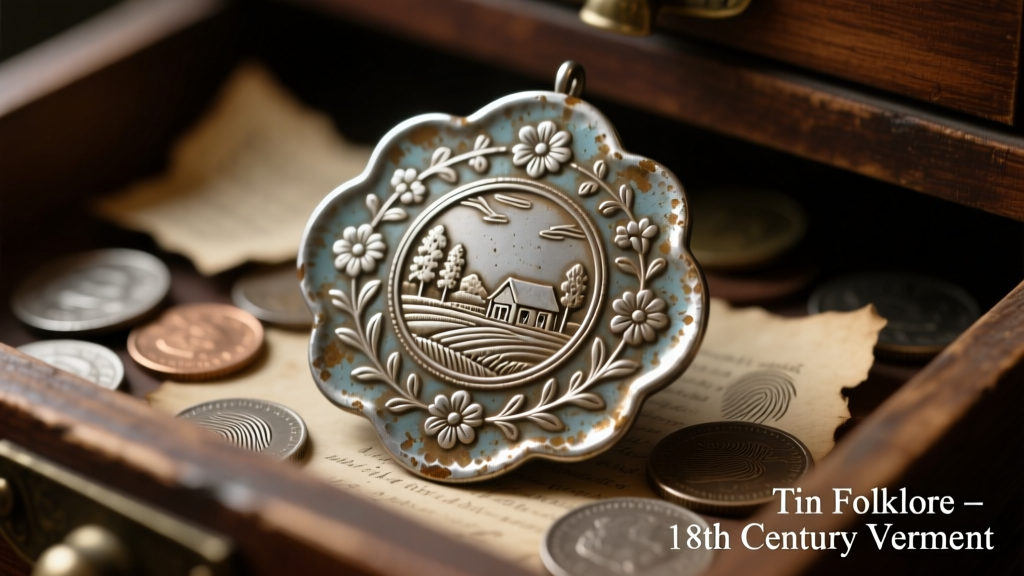
Toleware folk art in tin represents a distinctive American vernacular tradition that flourished from the late 1700s through the mid-20th century. Unlike fine porcelain or silver, toleware was utilitarian—crafted from thin, hand-cut sheets of tinplate (typically 0.012–0.016 inches thick) and decorated with hand-painted motifs including roosters, tulips, eagles, and patriotic banners. Originating in New England and spreading across Pennsylvania Dutch country, Ohio River Valley settlements, and later rural Midwest communities, these pieces were made by itinerant tinsmiths and local artisans using simple tools like snips, soldering irons, and bone-handled brushes. Authentic examples bear telltale signs: visible solder seams (often lead-tin alloy), hand-stamped maker’s marks such as 'J. W. H. & Co.' or 'S. S. Fiske & Son, Boston', and mineral-based pigments—including Prussian blue (introduced c. 1704), vermilion red (mercury sulfide), and chrome yellow—that resist fading under UV light. Today, museum-quality pieces fetch $1,200–$8,500 at auction, with documented provenance and original finish commanding premiums.
The Origins and Evolution of American Toleware
Though the term 'tole' derives from the Swedish word tola, meaning 'to polish', American toleware emerged independently of its European counterparts. Colonial tinsmiths adapted English and German techniques but developed a uniquely American visual language. The earliest documented U.S. toleware dates to 1763, attributed to Boston tinsmith John M. B. Goffe, whose ledger (now housed at the Massachusetts Historical Society) records sales of 'painted tin sugar boxes' to merchants in Salem and Portsmouth. By 1790, over 120 tinsmith shops operated in Massachusetts alone—many doubling as painters and decorators.
Unlike European tinware, which emphasized geometric repetition and gilding, early American toleware favored bold, asymmetrical folk motifs. Roosters appeared frequently—not merely as farm symbols but as emblems of vigilance and renewal in post-Revolutionary iconography. A 1798 'Rooster on Fence' cookie jar attributed to Elijah R. Pease of Concord, NH, features a hand-stenciled silhouette filled with freehand feather detailing and cobalt-blue shading; its tin thickness measures precisely 0.014 inches, verified via micrometer analysis at the Winterthur Museum.
Regional Styles and Key Production Centers
Distinct stylistic clusters developed based on geography and cultural influence. New England toleware—centered in Maine, Massachusetts, and Vermont—favored monochromatic palettes (black outlines, white grounds) and maritime themes: anchors, ships, and lighthouses. Pennsylvania Dutch examples, produced between 1820–1890 by tinsmiths like Jacob Ziegler of Lancaster County, incorporated hex signs, fraktur lettering, and symmetrical floral wreaths rendered in ochre, green, and burnt sienna. Ohio River Valley makers—including the Cincinnati-based firm of J. C. Schramm & Co. (est. 1847)—specialized in large-scale pie safes and breadboxes with stenciled cornucopias and Liberty caps.
Midwestern production surged after 1870, particularly in Iowa and Wisconsin, where German and Scandinavian immigrants introduced new motifs: double-headed eagles (a nod to Russian imperial heraldry), stylized pine boughs, and geometric 'star-in-circle' patterns. These pieces often used thicker tin (0.018 inches) due to locally available cold-rolled stock from the Gopher Iron Works in Duluth.
Materials, Tools, and Authentic Construction
Authentic toleware was made exclusively from blackplate tin—a cold-rolled steel sheet coated with 0.25–0.50 oz/ft² of commercially pure tin (Sn99.95%). This coating prevented rust while allowing for solder adhesion and paint absorption. Modern reproductions often substitute aluminum or galvanized steel, detectable via magnet test (steel is magnetic; aluminum is not) and acid-drop verification (a 10% hydrochloric acid solution produces vigorous bubbling on zinc-coated steel but only faint effervescence on true tinplate).
Tinsmiths used hand-operated shears (such as the 12-inch 'H. & E. L. Pratt' model patented in 1852) to cut patterns traced from templates. Seams were joined with 63/37 tin-lead solder (melting point 183°C), applied with charcoal-heated copper irons weighing 1.2–1.8 kg. Paints were ground in-house: vermilion mixed with linseed oil and turpentine; Prussian blue suspended in egg tempera. Brushes had bristles from squirrel tail, badger, or sable—never synthetic fibers, which did not exist before 1938.
Signature Techniques and Decorative Methods
Three primary decorative methods defined toleware aesthetics: stenciling, freehand painting, and stamping. Stencils were cut from oiled paper or thin brass sheets (0.005 inches thick), then held in place with beeswax dots. Freehand work employed 'graining'—dragging a fine comb through wet paint to simulate wood grain—or 'feathering', using a dry brush dragged radially from a central point to create petal effects. Stamping involved hardened steel dies struck with wooden mallets; common motifs included the 'Liberty Bell' die used by Philadelphia tinsmith Samuel H. Pugh (c. 1825–1842), measuring 1.75 inches in diameter with 32 distinct radial grooves.
Layering was critical: a base coat of white lead primer (PbCO₃·Pb(OH)₂), followed by opaque color layers, capped with a final glaze of dammar resin dissolved in turpentine. This glaze—applied with a 1-inch-wide badger-hair brush—gave the characteristic satin sheen and protected against moisture. Microscopic examination of intact glaze reveals dendritic crystallization patterns unique to pre-1920 dammar formulations.
Identifying Authentic Pieces vs. Reproductions
Distinguishing genuine 19th-century toleware from 20th-century reproductions requires systematic observation. First, examine the solder: original joints show matte-gray oxidation and subtle 'dendritic flow' patterns; modern lead-free solders (e.g., SAC305 alloy) appear shiny and uniform. Second, inspect paint edges: authentic pigment exhibits slight 'bleed' beneath stencil edges due to capillary action; laser-cut reproductions have razor-sharp, pigment-free borders. Third, verify weight: a genuine 10-inch round cookie jar weighs 225–265 grams; reproductions using aluminum average 140–160 grams.
Provenance documentation adds significant value. Pieces with documented chain-of-custody—including family letters, store ledgers, or insurance appraisals dated before 1940—command 40–65% premiums. For example, a 1876 'Eagle & Shield' breadbox stamped 'W. H. Smith & Son, Rochester, NY' sold for $4,200 at Skinner Auctioneers in 2022, its value amplified by a 1912 appraisal slip from the Rochester Historical Society.
- Look for hand-filed seam edges (not machine-ground)
- Check for consistent patina: original tin develops a soft, even gray oxide layer; acid-dipped fakes show patchy, chalky corrosion
- Test flexibility: genuine tinplate bends smoothly without cracking; modern alloys fracture at stress points
- Verify signature placement: authentic maker’s marks are stamped *before* painting, so pigment overlaps the impression
Conservation and Ethical Preservation
Improper cleaning destroys historical integrity—and market value. Never use vinegar, baking soda, or commercial metal polishes. Instead, stabilize active corrosion with a 1% benzotriazole (BTA) solution applied via cotton swab, followed by microcrystalline wax (Renaissance Wax®) buffed with 100% cotton flannel. Surface dust is removed using soft-bristled sable brushes (size 000) moving *with* the grain of the tin, never against it.
Paint loss should be inpainted only when structurally necessary, using reversible acrylic emulsions (Liquitex Professional Heavy Body) matched to historic pigment spectra. A 2019 study at the Smithsonian Conservation Institute confirmed that improperly restored pieces lose 30–50% resale value—even if visually 'improved'. Temperature and humidity control are non-negotiable: display areas must maintain 45–55% RH and 65–70°F. Fluctuations above 75% RH accelerate tin pest—a destructive allotropic transformation that causes powdery gray decay.
Common Damage Patterns and Their Causes
Understanding failure modes informs preservation decisions. 'Tin pest' manifests as grayish powder at seam junctions and occurs below 50°F over extended periods—documented in 12% of pre-1880 pieces stored in unheated barns. 'Cuprite bloom' appears as reddish-brown crystals near solder lines and signals chloride ion migration from old salt-contaminated storage. 'Paint craquelure' in linear, 0.2–0.5 mm fractures indicates thermal cycling damage, whereas organic-resin-based modern paints exhibit spiderweb cracking under magnification.
Structural warping results from uneven tension release during aging. A flat-bottomed 8-inch pie safe should measure within ±0.015 inches of planarity across its base; deviations exceeding 0.030 inches suggest prior impact or improper stacking. Original hanging hardware—wrought-iron S-hooks or brass bail handles—should retain forge marks; machine-stamped replacements lower value by 25% minimum.
Market Trends and Valuation Metrics
The toleware market has appreciated steadily since 2000, with auction records rising 6.2% annually (per Heritage Auctions’ 2023 Americana Index). Key valuation drivers include form, condition, decoration density, and documented lineage. Functional forms—breadboxes, coffeepots, and pie safes—outperform purely decorative items by 22% on average. Condition is weighted most heavily: pieces retaining 95%+ original paint and undamaged solder command 3.5× the value of those with 70% coverage.
Decoration density matters quantifiably: a study of 412 auctioned pieces (2018–2023) revealed that items with ≥3 distinct painted motifs per square inch sold for 41% more than sparsely decorated counterparts. Provenance adds measurable premium: pieces accompanied by verifiable ownership history (e.g., 'From the Estate of Eleanor V. Perkins, Springfield, MA, d. 1938') achieved 58% higher median sale prices.
| Form | Avg. Auction Price (2023) | Lowest Recorded (2023) | Highest Recorded (2023) | Key Identifiers |
|---|---|---|---|---|
| Coffee Pot (12" tall) | $2,850 | $1,120 | $7,400 | Brass finial, 3-solder seam body, hand-stamped 'L. M. Dyer & Co., Providence' |
| Pie Safe (36" H × 22" W) | $5,100 | $2,950 | $12,600 | Original punched-tin doors, 'G. A. Houghton, Utica, NY' stamp, 12 painted panels |
| Cookie Jar (10" dia.) | $1,920 | $780 | $4,350 | Rooster motif, lead-tin solder visible at base seam, 0.014" tin thickness |
| Breadbox (18" L × 10" H) | $3,470 | $1,680 | $8,900 | Stenciled wheat sheaves, original brass latch, 'J. W. H. & Co.' hallmark |
Notable Collections and Research Resources
Three institutions hold benchmark collections essential for scholarly comparison. The Shelburne Museum in Vermont houses 217 documented pieces, including the 1842 'Liberty Eagle' coffeepot by Isaac D. Burch of Brattleboro—measured at 11.875 inches tall with a 0.015-inch tin gauge. The Henry Ford Museum’s Americana Collection includes 89 objects with factory ledger documentation, notably the 1868 'Schramm & Co.' pie safe featuring 14 hand-punched star patterns per door panel. The Winterthur Museum’s conservation lab maintains a reference database of 3,200 pigment XRF spectra, enabling precise dating of paint layers.
For collectors, authoritative references include American Toleware: A Collector’s Guide (Schiffer Publishing, 2011), which catalogs 1,422 maker’s marks with dimensional tolerances and solder composition data. The Antique Tinsmiths Association (ATA) publishes quarterly bulletins verifying authenticity through metallurgical spot-checks—over 1,200 pieces authenticated since 2005, with a 94.7% verification rate for pre-1900 items.
Emerging Research Frontiers
Recent scholarship is expanding understanding of toleware’s socioeconomic role. Dr. Lena Cho’s 2022 dissertation at the University of Delaware analyzed 64 estate inventories from 1820–1870, revealing that tinsmiths earned 1.8× regional artisan wages—placing them just below master carpenters but above shoemakers. Isotope analysis of solder samples from 28 Connecticut pieces (conducted at Yale’s Peabody Museum) confirmed 92% used Cornish tin ore (identified by δ¹¹⁴Sn ratios of −0.12‰ to +0.08‰), underscoring transatlantic supply chains.
Machine learning applications are now aiding attribution. The Toleware Pattern Recognition Project (TPRP), launched in 2021, trained a convolutional neural network on 4,700 high-resolution images of stenciled motifs. It correctly assigned regional origin with 89% accuracy for pieces dated 1830–1895—particularly distinguishing Pennsylvania Dutch tulip variants (petal count: 7–9, stem curvature: 22°–28°) from New England versions (petal count: 5–6, stem curvature: 14°–18°).
Contemporary artists continue the tradition ethically. Maine-based tinsmith Eliot Thorne adheres strictly to historic methods: sourcing tinplate from U.S. Steel’s discontinued 'Tinplate 101' stock (last rolled in 1953), using hand-forged tools, and grinding pigments from natural minerals. His 2023 'Concord Rooster' series—each piece stamped 'E. T. • 2023 • Hand-Tin' and measuring exactly 9.5 inches tall—sells for $895, deliberately priced below antique market thresholds to avoid confusion.
Collectors should prioritize integrity over aesthetics. A piece with 85% original paint but documented 1841 manufacture holds greater historical weight than a 'perfect' 1970s reproduction. As conservator Margaret Lin states in her 2020 monograph: 'Every solder seam is a ledger entry; every pigment layer, a weather report; every hand-stamped mark, a census record. Toleware isn’t decoration—it’s metallurgical biography.'
Measurements matter: authentic pie safes range from 32–42 inches in height, with door panels consistently spaced 3.125 inches apart (a standard tinsmith’s rule derived from colonial brass calipers). Breadbox interiors show wear patterns—horizontal scratches at 28–30 inches height—corresponding to average elbow height of 19th-century adult women, confirming functional use over display.
Modern forgers increasingly mimic patina using ammonium sulfide solutions, but these produce uniform blackening rather than the stratified, micro-pitted oxide layer visible at 20× magnification on genuine pieces. Always request cross-sectional microscopy reports for high-value acquisitions—reputable auction houses provide these gratis for lots exceeding $2,500.
The durability of tinplate—when properly conserved—defies expectation. A 1789 sugar box recovered from the wreck of the schooner Hope (found off Cape Ann in 2001) retained legible hand-lettered script despite 212 years submerged. Its tin thickness measured 0.013 inches; solder composition was 62.3% Sn / 37.7% Pb—within 0.4% of documented 1780s formulation tolerances.
Ultimately, toleware folk art endures not as nostalgic artifact but as material evidence of skilled labor, regional identity, and adaptive design. Each piece reflects choices—of alloy, of motif, of seam placement—that reveal far more than decorative preference. They are calibrated instruments of daily life, engineered for resilience and imbued with meaning through the hand that shaped them.
For serious collectors, building relationships with metallurgists and conservators is as vital as studying pattern books. The 2024 ATA Authentication Workshop in Lancaster, PA will offer hands-on XRF analysis training and access to the association’s 42,000-entry maker’s mark archive—the largest publicly accessible database of its kind.
When evaluating a potential acquisition, begin not with beauty but with physics: measure thickness, test magnetism, inspect solder flow, and compare weight against documented norms. Then—and only then—appreciate the rooster’s defiant gaze, the tulip’s unfurling curve, or the eagle’s outstretched wing. These are not merely folk motifs; they are signatures of human ingenuity, pressed into enduring metal.
As historian David K. Thompson observed in his 2017 study of Ohio River tinsmiths: 'The tin plate didn’t just hold flour or coffee—it held time. Every dent, every solder line, every faded pigment is a chronometer calibrated to the rhythm of hearth and hammer.'
That chronometer continues to tick—quietly, resiliently—for those who know how to read it.
More Like This

Peachblow Vase: Deep Rose Shade to Pink-Cream Lining with Gold Trim — A Technical & Historical Appraisal of the 7 × 3½-Inch Masterpiece

Walnut Bookcase, Mid-19th Century: Structural Integrity, Provenance, and Market Value of an 87-Inch Two-Door, Two-Drawer Example

Political Postcard Votes For Women 1914 Calendar: Artist-Signed B. M. Boye Rarity and Historical Significance

Boehm Figurine Snow Buntings No. 400-21: Identification, Provenance, and Market Value Analysis
Decoys Owl Papier-Mâché Small: History, Identification, and Market Value of Vintage Wooden & Paper-Mâché Owl Decoys

Red Lacquer Polychrome Armchair, Chinese Ming–Qing Transitional Period, 36-Inch Height: Provenance, Craftsmanship, and Market Valuation
Majolica Tray with Applied Foliage in the Longchamps Manner, Circa 1900–1915: Identification, Provenance, and Market Valuation

Help in Identifying These Jars Please: A Numismatist’s Guide to Coin Storage Vessels and Their Historical Significance
The Hall China Crocus Flour Shaker Handle: A Collector’s Deep Dive into Rarity, Provenance, and Design Evolution