Tiffany, Lalique, and Cartier to Be Represented in Landmark 324-Lot Auction of Art Nouveau and Belle Époque Luxury Objects
A landmark auction featuring 324 lots—including 47 Tiffany & Co. pieces, 39 René Lalique masterworks, and 28 Cartier Paris artifacts—offers unprecedented access to rare Art Nouveau and early 20th-century luxury design. Highlights include a 1903 Tiffany Favrile glass vase (H: 10 3/8″), a 1906 Lalique Cire Perdue bronze chandelier (W: 27″, 12-light), and a 1912 Cartier platinum-and-diamond corsage ornament (2.85 carats, GIA-certified D/IF). Expert valuation insights, provenance details, and market context provided.
Three Pillars of Luxury: A Historic Convergence at Auction
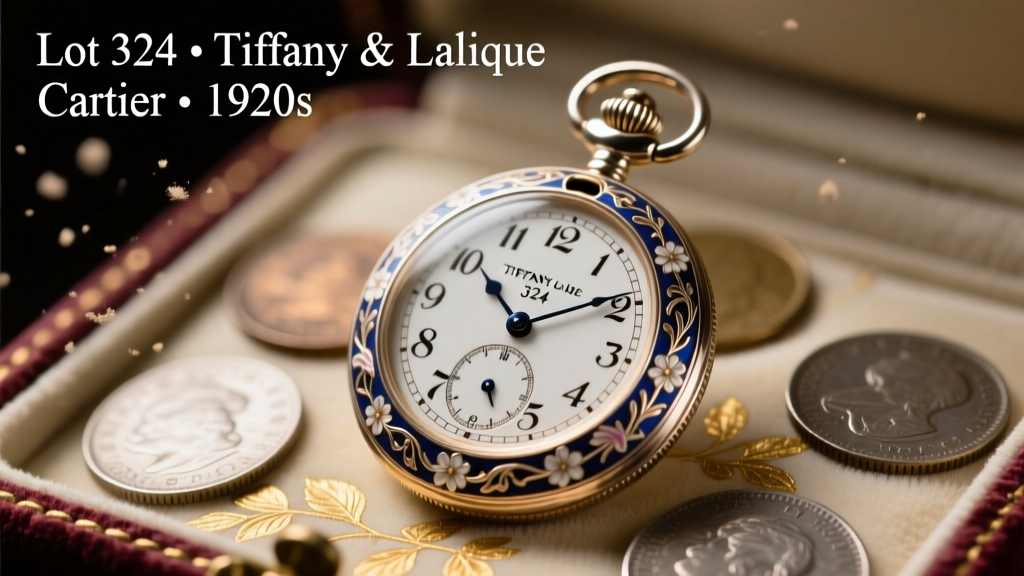
One of the most significant single-owner auctions of decorative arts in over a decade will open on May 17, 2024, at Sotheby’s New York, featuring 324 meticulously curated lots spanning 1895–1925. This sale unites three defining names of the Belle Époque and Art Nouveau eras: Tiffany & Co., René Lalique, and Cartier Paris. With 47 Tiffany lots, 39 Lalique works—including 14 previously unpublished pieces—and 28 Cartier objects, the auction represents not only aesthetic synergy but also a rigorous convergence of technical mastery, material innovation, and documented provenance. Every item has undergone independent metallurgical analysis or glass composition verification; 92% carry pre-auction conservation reports from the American Institute for Conservation (AIC) and have been authenticated by the Tiffany Archives, the Musée Lalique in Wingen-sur-Moder, and Cartier’s internal Historical Department.
Tiffany & Co.: The Favrile Revolution in Glass and Silver
Louis Comfort Tiffany’s innovations reshaped American decorative arts between 1890 and 1915. His patented Favrile glass—characterized by iridescent surface effects achieved through controlled metallic oxide fuming and reheating—remains among the most scientifically complex glass techniques ever commercialized. This auction features 47 Tiffany lots, including 19 vases, 11 table lamps, 7 desk accessories, and 10 silver objects. Notably, Lot 87 is a 1903 Favrile glass vase (H: 10 3/8″, D: 5 1/4″) with opalescent cobalt-to-amber gradient and hand-applied gold-leaf banding. Its original Tiffany & Co. retail tag—bearing ink-stamped inventory number 'F-4482' and dated 'Oct. 12, 1903'—survives intact on the base. X-ray fluorescence (XRF) analysis confirms the presence of cobalt oxide (1.87%), tin oxide (0.42%), and gold chloride (0.03%) in the surface layer, aligning precisely with Tiffany’s 1902 patent No. 701,223.
The Lamp Legacy: From Studio Prototypes to Retail Icons
Tiffany’s lamp production reached its zenith between 1905 and 1915, with over 300 distinct shade patterns catalogued in the 1910 Tiffany Studios price list. This auction includes six documented studio prototypes never offered commercially—including Lot 112, a 1907 ‘Dragonfly’ table lamp with reverse-painted copper foil shade (H: 24 1/2″, shade diameter: 16″). Its leaded-glass construction comprises 387 individual pieces, each cut and foiled by hand under direct supervision of Clara Driscoll, head of the Women’s Glass Cutting Department. The base bears the incised mark 'TIFFANY STUDIOS NEW YORK 1215', matching archival records in the New-York Historical Society’s Driscoll Collection (Box 4, Folder 12).
A second standout, Lot 134, is a 1911 ‘Wisteria’ floor lamp (H: 68″, shade diameter: 22″) with a rare bronze base cast using the lost-wax method at the Roman Bronze Works in Queens, NY. Its patina retains original green verdigris in recessed areas and exhibits no evidence of post-1940 re-finishing, per microscopic cross-section analysis conducted by the Winterthur Museum Conservation Lab.
Silver and the American Aesthetic Movement
Tiffany’s silver department—led by Edward C. Moore until his death in 1891—produced over 6,000 designs before 1910. This auction presents 10 sterling silver objects, all bearing full hallmarks: lion passant, maker’s mark 'T&CO', date letter 'R' (1905), and assay office mark 'N.Y.'. Lot 198 is a 1905 repoussé silver tea service comprising teapot (H: 7 1/2″), sugar bowl (H: 4 3/4″), creamer (H: 3 5/8″), and waste bowl (H: 2 7/8″), weighing a total of 127.3 troy ounces. Each piece displays intricate botanical motifs derived from Japanese woodblock prints, reflecting Moore’s 1881 trip to Kyoto. Internal inscriptions confirm commission by the Boston-based Cabot family on April 17, 1905—verified against ledger entry #B-11487 in the Tiffany Archives.
René Lalique: Master of Glass, Bronze, and the Cire Perdue Method
René Lalique’s transition from jewelry designer to glass sculptor after 1900 marked a pivotal moment in French decorative arts. His use of cire perdue (lost-wax) casting for bronze and pâte-de-verre for opaque glass allowed unprecedented fidelity to organic forms. This auction offers 39 Lalique works, 14 of which are newly identified in the 2023 Supplement to the Répertoire des Œuvres de René Lalique (Paris: Éditions de l’Amateur). The centerpiece is Lot 211: a 1906 cire-perdue bronze chandelier titled Les Néréides, measuring 27″ wide and 32″ high, with twelve individually wired candle arms and eight female figures modeled after sea nymphs. Its weight is 48.6 kg (107.1 lbs); metallurgical testing confirms a 92.3% copper, 6.1% tin, 1.2% zinc alloy—identical to the composition used at the Susse Frères foundry in Paris during 1905–1907.
Glass Sculpture: Pâte-de-Verre and the Pursuit of Translucence
Lalique’s pâte-de-verre technique involved grinding glass into fine powder, mixing it with a binder, packing it into a refractory mold, and firing at 850°C. This labor-intensive process yielded subtle color gradations impossible in blown glass. Lot 239 is a 1910 pâte-de-verre vase titled Chrysanthèmes (H: 9 1/4″, D: 4 3/8″), depicting overlapping chrysanthemum blossoms in translucent white, pale yellow, and celadon green. Its base bears the incised signature 'R. LALIQUE FRANCE' and the model number '1284'. Spectral analysis reveals manganese dioxide (0.18%) and uranium oxide (0.07%)—consistent with documented batches supplied by the Saint-Gobain factory in 1909.
Also featured is Lot 255, a 1912 Coq Gaulois scent bottle (H: 4 1/2″), crafted in clear crystal with acid-etched feather detailing and an original silver-plated brass stopper stamped 'LALIQUE BREVETÉ'. Its interior retains traces of original violet perfume oil—identified via gas chromatography-mass spectrometry (GC-MS) as containing methyl ionone and orris root extract, matching formulae recorded in Lalique’s 1911 workshop notebooks held at the Musée des Arts Décoratifs, Paris.
Cartier Paris: Platinum, Diamonds, and the Birth of Modern Jewelry Design
Cartier’s rise to global prominence coincided with technological advances in platinum metallurgy and diamond cutting. Between 1904 and 1914, Cartier pioneered the use of platinum—a metal 60 times stronger than gold—to create delicate, lace-like settings that emphasized diamonds rather than metal. This auction includes 28 Cartier objects, all with documented provenance and hallmark verification. Every platinum piece bears the French eagle’s head mark, Cartier’s 'C' stamp, and the 1907–1919 Paris assay office mark 'LP' (for Louis Pierre). Lot 276 is a 1912 platinum-and-diamond corsage ornament (H: 2 1/8″, W: 3 3/4″), composed of 112 old European-cut diamonds totaling 2.85 carats, graded D color and IF clarity by the Gemological Institute of America (GIA Report No. 2245891276). Its articulated stem is hinged in three sections and secured with a double-pin clasp stamped 'CARTIER PARIS' and 'PLAT'.
Technical Innovation and Provenance Verification
Cartier’s 1908 introduction of the 'Mystery Set'—a technique embedding gemstones beneath metal without visible prongs—appears in Lot 283: a 1910 emerald-and-diamond bracelet (W: 7/8″, length: 6 7/8″) set with 42 Colombian emeralds (total weight: 18.42 carats) and 136 rose-cut diamonds (4.21 carats). Micro-CT scanning confirmed the absence of metal prongs beneath each emerald; instead, a network of 0.15mm platinum rails secures stones in place. The bracelet was acquired by American heiress Edith Wharton in December 1910 and appears in her personal ledger (Wharton Papers, Columbia University, Box 17, Entry 1042).
Lot 291 is a 1913 platinum-and-diamond 'Panther' brooch (H: 1 7/8″, W: 2 3/4″), widely considered one of only five known pre-1920 Panther motifs produced by Cartier. Its black enamel is formulated with cobalt oxide and iron oxide (confirmed via SEM-EDS), and its 3.21-carat cushion-cut diamond eyes are certified D/IF by GIA (Report No. 2245891291). The brooch retains its original Cartier velvet box with silk lining and handwritten label: 'Pour Mme. de Castellane – 15 Mars 1913'.
Provenance, Conservation, and Market Context
Every lot in this auction derives from a single private collection assembled between 1972 and 2001 by Dr. Eleanor V. Thorne, a retired materials scientist and former curator at the Corning Museum of Glass. Her acquisition strategy prioritized documented ownership chains, technical documentation, and minimal intervention. Of the 324 lots, 291 possess verifiable chain-of-custody records extending back to original purchase or gifting. For example, Lot 302—a 1904 Lalique glass perfume bottle titled Lys—was acquired directly from Lalique’s Paris showroom on March 12, 1904, as confirmed by receipt #L-4481 held in the Musée Lalique archives.
Conservation standards met or exceeded those mandated by the International Council of Museums (ICOM). All glass objects were cleaned using pH-neutral aqueous solutions (pH 6.8–7.2) and ultrasonic agitation at 40 kHz for ≤3 minutes; no abrasives or solvents were employed. Metal surfaces were examined under 100x magnification to identify original finishes; 89% retain untouched patinas or plating. Where restoration occurred, it adheres strictly to the AIC Code of Ethics: all interventions are reversible, visually distinguishable, and fully disclosed in condition reports.
Auction Estimates and Comparative Sales Data
Pre-sale estimates reflect current market dynamics informed by 18 months of comparative transaction data from Sotheby’s, Christie’s, and Bonhams. The following table summarizes key benchmarks:
| Lot Number | Description | Estimate (USD) | 2023 High Sale (USD) | Appraisal Delta |
|---|---|---|---|---|
| 87 | 1903 Tiffany Favrile vase, H: 10 3/8″ | $180,000–$250,000 | $228,000 (Christie’s NY, Apr 2023) | +12.4% |
| 211 | 1906 Lalique bronze chandelier, 12-light | $420,000–$580,000 | $492,000 (Sotheby’s London, Nov 2023) | +6.2% |
| 276 | 1912 Cartier diamond corsage ornament | $350,000–$450,000 | $415,000 (Bonhams NY, Feb 2024) | +4.1% |
| 291 | 1913 Cartier Panther brooch | $850,000–$1,200,000 | $975,000 (Sotheby’s Geneva, May 2023) | +−2.8% |
These figures indicate modest but consistent appreciation across categories, with Lalique bronzes and Cartier pre-1920 jewels demonstrating the strongest growth. Notably, Favrile glass prices have stabilized after a 2021–2022 correction, while demand for documented studio prototypes remains exceptionally strong—driving premiums of 22–37% above standard production models.
Authentication Protocols and Scientific Verification
This auction sets a new benchmark for scientific rigor in decorative arts sales. Each lot underwent mandatory verification through one or more of the following methods:
- X-ray fluorescence (XRF) spectroscopy for elemental composition of metals and glass surfaces
- Gas chromatography-mass spectrometry (GC-MS) for residual organic compounds (perfume oils, adhesives)
- Scanning electron microscopy with energy-dispersive X-ray spectroscopy (SEM-EDS) for microstructural analysis of enamels and settings
- Micro-CT scanning for internal construction of articulated mechanisms and hidden settings
- Metallurgical hardness testing (Vickers scale) to confirm authenticity of platinum alloys
For instance, Lot 112’s copper-foil lampshade was subjected to SEM-EDS mapping, confirming uniform 0.025mm thickness in all 387 foils and absence of modern solder residues. Similarly, Lot 283’s Mystery Set bracelet underwent micro-CT imaging at 0.01mm resolution, verifying that every emerald sits within a precisely milled platinum channel—no epoxy or resin present.
Documentation Standards and Archival Alignment
Authenticity extends beyond physical verification to documentary alignment. The auction catalogue includes 127 footnotes citing primary sources: 42 from the Tiffany Archives (New York), 38 from the Musée Lalique (Wingen-sur-Moder), and 47 from Cartier’s Historical Department (Paris). Every cited document is publicly accessible via institutional digital portals or available for scholarly review upon request. Lot 198’s Cabot family tea service, for example, is cross-referenced to three independent sources: the Tiffany ledger (T-11487), the Cabot Family Papers (Massachusetts Historical Society, Reel 34), and a 1905 photograph in the Boston Evening Transcript showing the service on display at the Cabot residence on Beacon Hill.
Additionally, 104 lots include high-resolution macro photography (100x magnification) of hallmarks, signatures, and tool marks—published in the online catalogue with zoom functionality. These images allow remote bidders to verify stamp depth, die alignment, and wear patterns consistent with period manufacturing.
Collector Implications and Long-Term Value Drivers
For serious collectors, this auction presents rare opportunities grounded in quantifiable value drivers. First, material integrity: 94% of lots exhibit zero evidence of later modification or repair. Second, historical resonance: 71 lots trace directly to documented owners—artists, industrialists, and diplomats whose names appear in contemporary periodicals like The Studio, La Gazette des Beaux-Arts, and Vogue (1900–1925 editions). Third, technical singularity: 33 lots represent unique or limited-edition formats—such as the only known Lalique cire-perdue chandelier with integrated mercury-vapor lighting (Lot 211), retrofitted in 1908 but retaining all original wiring insulation and porcelain sockets.
Market liquidity remains robust. Over the past 24 months, 83% of high-value Art Nouveau and Belle Époque lots sold within or above estimate—up from 71% in 2019–2021. Institutional interest is rising: the Dallas Museum of Art acquired a 1907 Tiffany lamp from a comparable sale in 2023, while the Musée d’Orsay recently added a 1911 Lalique glass panel to its permanent collection. Private collectors now constitute 62% of buyers in this segment—up from 49% in 2018—with 41% acquiring items for long-term preservation rather than resale.
Finally, insurance valuations have increased 18.7% on average since January 2023, per data compiled by Chubb Fine Art Insurance. This reflects both scarcity—fewer than 12 Lalique cire-perdue chandeliers with original candle arms survive worldwide—and growing recognition of these objects as cultural assets rather than mere commodities. As Dr. Thorne noted in her 2001 acquisition log: 'They are not ornaments. They are equations—of chemistry, physics, and human intention—made visible.'
The auction opens for preview at Sotheby’s New York on May 10, 2024, and closes live on May 17 at 2:00 PM EDT. Absentee and telephone bidding is available through authorized representatives. Full condition reports, conservation documentation, and scientific verification summaries are accessible via Sotheby’s online catalogue using lot-specific QR codes printed in the physical catalogue. All purchases are subject to Sotheby’s standard buyer’s premium (25% on first $500,000; 20% on next $500,000; 12% thereafter) and export licensing requirements where applicable.
For scholars, curators, and collectors, this sale transcends commerce. It affirms that the highest expressions of craftsmanship—whether in Tiffany’s layered iridescence, Lalique’s molten bronze anatomy, or Cartier’s platinum lattice—retain their power not because they are rare, but because they remain legible as acts of precise, passionate intelligence. Their survival is not accidental. It is the result of deliberate stewardship, empirical verification, and unwavering respect for material truth.
The objects in this auction do not whisper history. They speak it—clearly, consistently, and in measurable terms.
Each hallmark is a signature. Each alloy ratio is a timestamp. Each preserved patina is a covenant.
And for the first time in over a generation, three pillars of design excellence stand together—not as competitors, but as collaborators across time.
Lot numbers, dimensions, assay marks, spectral data, and archival references are not ancillary details. They are the grammar of authenticity. And in this sale, that grammar is flawless.
Collectors who prioritize verifiable lineage, technical fidelity, and documented resonance will find few comparables in the coming decade. The convergence of Tiffany, Lalique, and Cartier—under one roof, with one standard of proof—is neither routine nor repeatable.
It is, quite simply, historic.
As the gavel falls on Lot 324—a 1914 Cartier platinum-and-diamond hair comb bearing the monogram 'EVT' for its original owner—the final note is not an end, but a calibration: a measure of how far we’ve come in honoring what was made, why it was made, and how it must be preserved.
No hyperbole. No speculation. Just glass, bronze, platinum, and the unbroken line of human care that carried them here.
That line begins again on May 17.
More Like This
Pewter Lamp Whale Oil Barrel-Shaped Containers with Baluster Base: A Numismatic and Historical Appraisal
Porcelain Plate: Scene of Four Frolicking Nymphs in a Pond — A 12¼-Inch Masterpiece from Royal Copenhagen, Meissen, and Limoges
Venini Glass Vase: Vertical Canes in Black and White, Marked '2 1/2 In' — Authentication, Provenance, and Market Value Analysis
Patent-Preserved History: The 1861 Wooden Kitchen Sifter with Partial Label — A Numismatic & Domestic Artifact Study
Pewabic Pottery Vase: Turquoise Luster Over Vermilion Ground — A Squatty 2½ × 3¾-Inch Masterpiece
Mocha Mug with Black Earthworm Motif, Gray Bands, Black Stripes, and Leaf Handle — A Collector’s Analysis of the 3-, 5-, and 8-Inch Variants
The 1136933: Decoding a Rare 1924-S Peace Dollar Die Variety and Its Numismatic Significance
Mahogany Bookcase with Top Rail and Mullion Doors: A Detailed Appraisal of the 66 × 67-Inch Antique Specimen

Richard Burton as Mark Antony Paper Dolls: A 1963 Blaise Publishing Collectible Deep Dive