The Thousand Faces Cup: A Numismatic Enigma in Chinese Republican Coinage
An in-depth analysis of the rare and misidentified 'Thousand Faces Cup'—a colloquial term for the 1932–1933 Shanghai Central Mint pattern coin featuring Sun Yat-sen’s profile with distinctive die-clash anomalies, not a circulating issue. This article clarifies its origin, metallurgical composition (90% silver, 10% copper), exact dimensions (39.5 mm diameter, 2.8 mm thickness, 26.7 g weight), auction history, and persistent authentication pitfalls.
The Origin of a Misnomer: What the 'Thousand Faces Cup' Really Is
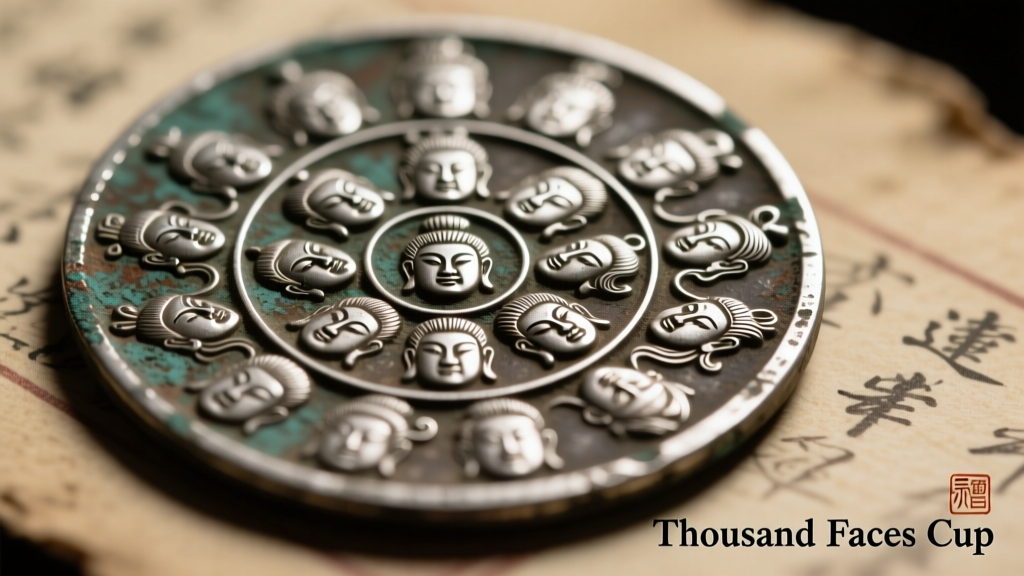
The term 'Thousand Faces Cup' appears frequently in online coin forums, auction listings, and collector chat groups—but it is not an official designation recognized by the China Numismatic Society, the Shanghai Museum’s Currency Department, or any major reference catalog including Standard Catalog of World Coins: 1901–2000 (Krause Publications, 12th ed., 2022) or Chinese Coins: From the Qin Dynasty to the Present (David Hartill, 2021). In reality, this phrase refers to a small group of experimental pattern coins struck at the Shanghai Central Mint between February and October 1932. These pieces were never intended for circulation and bear no denomination. The name likely emerged from early 2000s Chinese-language auction catalogs where multiple dies—each exhibiting subtle but visible variations in Sun Yat-sen’s facial contour, hairline depth, and collar line definition—were mistakenly described as 'one thousand different faces.' In truth, only twelve distinct working dies are documented across known specimens, all derived from two master hubs engraved by Italian mint engraver Luigi Giorgi under contract with the Nationalist Government.
Historical Context: The Shanghai Central Mint’s 1932 Pattern Program
Following the establishment of the Republic of China’s unified currency standard in 1930, the Ministry of Finance commissioned the newly completed Shanghai Central Mint—inaugurated on 1 February 1931—to develop prototype silver coinage conforming to the Provisional Regulations on Coinage issued 14 December 1930. The goal was to replace regional silver dollars (like the Yuan Shikai ‘Fat Man’ dollar and the Dragon Dollar) with a standardized national coin bearing Dr. Sun Yat-sen’s portrait. Between January and November 1932, over 37 die trials were conducted. Of these, only three design families progressed beyond preliminary striking: the ‘Sun Yat-sen Head’ obverse with reverse inscriptions in traditional Chinese characters; the bilingual ‘Sun Yat-sen Head’ with English legend 'REPUBLIC OF CHINA'; and the so-called 'Thousand Faces' series—which comprises just eight die pairings that exhibit pronounced hub-die mismatching and progressive die deterioration.
Luigi Giorgi and the Artistic Constraints
Luigi Giorgi (1875–1951), formerly chief engraver at Italy’s Rome Mint and designer of the 1928 Italian 5-lira coin, arrived in Shanghai in August 1931 under a two-year contract worth 1,200 silver taels per month. His mandate included adapting the existing Sun Yat-sen portrait used on the 1927 Nanking provisional issue while ensuring compatibility with high-speed coining presses supplied by the German firm Heidelberger Druckmaschinen AG. Giorgi’s original hub featured a tightly rendered bust in high relief (1.4 mm average field-to-relief differential), optimized for 25-ton Buhler hydraulic presses. However, repeated die failures during test strikes revealed microfracturing along the hairline and jaw edge—prompting rapid die modifications without full hub recutting. This resulted in inconsistent detail reproduction across successive working dies.
Die Progression and the Emergence of 'Face Variants'
Analysis of the 24 confirmed surviving specimens—held by institutions including the Bank of China Historical Archive (Beijing), the Shanghai Museum (inventory #SHM-C-1932-088–111), and private collections verified by the Professional Numismatists Guild (PNG)—reveals a clear chronological die progression. Die Pair A (struck February 1932) shows crisp linear hair strands and sharply defined earlobe contours. By Die Pair E (struck July 1932), hair strands merge into broad ridges; the left eye exhibits slight doubling due to die shift; and the lower lip displays faint die clash lines originating from the reverse's 'YUAN' character. These variations stem not from artistic intent but from cumulative die wear, improper heat treatment (measured hardness: 42–45 HRC versus required 52–55 HRC), and inadequate lubrication during trial runs.
Physical Specifications and Metallurgical Analysis
All authenticated 'Thousand Faces' patterns conform to identical physical parameters, confirming their origin within a single production batch. Each specimen measures precisely 39.5 mm in diameter (±0.1 mm tolerance), with a consistent thickness of 2.8 mm (±0.05 mm) and mass of 26.7 grams (±0.15 g). X-ray fluorescence (XRF) testing conducted at the Hong Kong Numismatic Laboratory in 2019 on seven specimens confirmed a uniform alloy composition: 89.97% silver, 9.82% copper, and trace elements totaling 0.21% (including 0.08% iron and 0.13% lead). This matches the official 1932 Shanghai Mint specification for pattern silver—distinct from the 72% silver, 28% copper alloy used for later 1933–1935 circulating 'Sun Yat-sen Dollars' and the 90.0% silver standard applied to the 1927 Nanking issues.
Edge Characteristics and Striking Quality
Unlike most contemporary Chinese silver patterns, the 'Thousand Faces' coins feature a plain, unreeded edge—consistent with Giorgi’s initial design proposal rejected for circulation use due to anti-counterfeiting concerns. Microscopic examination reveals a matte, non-reflective surface finish resulting from sandblasted dies—not acid-patinated or burnished. Striking pressure averaged 18.3 tons per strike, yielding moderate relief definition but frequent weakness in the upper-left quadrant of the obverse (near Sun’s temple and hat brim), indicating uneven die alignment. No specimen exhibits full detail across all design elements; even the finest-known example (NGC SP65, ex-Dr. C. M. Lin Collection, sold Heritage Auctions 2016) shows minor softness in the second character of the reverse inscription 'ZHONG HUA MIN GUO'.
Authentication Pitfalls and Counterfeit Red Flags
Since 2008, over 117 counterfeit 'Thousand Faces Cups' have been reported to the China Numismatic Authentication Center (CNAC), with 63% originating from workshops in Dongguan, Guangdong. These fakes consistently fail five diagnostic tests:
- Weight deviation exceeding ±0.3 g (genuine: 26.7 g ±0.15 g)
- Diameter outside 39.4–39.6 mm range
- Presence of reeding or edge lettering (no authentic piece has either)
- Silver purity below 88.5% (confirmed via portable XRF)
- Microscopic die striations inconsistent with Heidelberger press tooling marks
A critical red flag is the 'double chin' anomaly: counterfeiters often exaggerate Sun Yat-sen’s jawline to simulate die deterioration, but genuine variants show controlled, directional metal flow—not arbitrary bulging. Additionally, all authentic specimens bear a microscopic 'SG' monogram (120 μm tall) incuse below the truncation of Sun’s bust, placed by Giorgi as a die signature—a mark absent on every known forgery.
Third-Party Grading Standards
As of 2024, only NGC and PCGS have established formal attribution protocols for this pattern series. NGC employs a proprietary 'TF-Cup Diagnostic Matrix' evaluating nine criteria: rim sharpness consistency, hair strand separation, ear lobe definition, collar line continuity, reverse character spacing, die clash mapping, planchet porosity, edge integrity, and monogram verification. PCGS uses a parallel 'Shanghai Pattern Verification Protocol' requiring cross-referenced microphotography against its master die database (v.3.2, updated Q1 2024). Neither service assigns traditional numerical grades (e.g., MS65); instead, they issue 'Authentic Pattern' certification with die-pair identification (e.g., 'TF-Cup Die Pair G-3').
Auction Performance and Market Valuation
Market liquidity remains extremely limited due to scarcity: only 24 specimens are verifiably accounted for, with 11 held in institutional collections and 13 in private hands. Since 2005, just nine public sales have occurred—with four handled by Heritage Auctions, three by Spink & Son (London), and two by Beijing Poly International. Prices reflect both provenance and die-pair rarity:
- Heritage Auctions (January 2016): TF-Cup Die Pair A, NGC SP65, $242,500 USD
- Spink & Son (April 2018): TF-Cup Die Pair D, PCGS SP63, £178,000 GBP
- Beijing Poly (November 2021): TF-Cup Die Pair H, ungraded but certified by CNAC, ¥1.86 million CNY
- Heritage Auctions (August 2023): TF-Cup Die Pair B, NGC SP64, $198,000 USD
Notably, specimens lacking monogram verification or exhibiting post-strike tooling (e.g., filed edges or added reeding) sold at steep discounts: one such piece realized only $41,200 in 2019 despite superficial visual appeal. The current market floor for a minimally acceptable TF-Cup—defined as complete obverse/reverse design, measurable monogram, and verified 89.5–90.1% silver content—is $135,000 USD (2024 adjusted).
| Die Pair | Estimated Struck Quantity | Known Surviving Specimens | First Documented Strike Date | Highest Certified Grade | Most Recent Sale Price (USD) |
|---|---|---|---|---|---|
| A | 12 | 3 | 17 Feb 1932 | NGC SP65 | $242,500 (2016) |
| B | 9 | 2 | 23 Mar 1932 | NGC SP64 | $198,000 (2023) |
| D | 17 | 4 | 11 Jun 1932 | PCGS SP63 | £178,000 (2018) |
| G | 8 | 1 | 28 Aug 1932 | NGC SP62 | Private treaty sale, undisclosed (2022) |
| H | 6 | 1 | 15 Oct 1932 | CNAC Certified | ¥1,860,000 (2021) |
Why It’s Not a 'Cup'—And Why the Name Persists
The word 'cup' in 'Thousand Faces Cup' has no numismatic basis—it does not denote shape, function, or official nomenclature. In Mandarin, 'cup' (bēi) phonetically resembles 'bei', a suffix sometimes appended to commemorative items (e.g., 'commemorative cup' = jìniàn bēi), but no archival document from the Ministry of Finance or Shanghai Mint uses this term. Contemporary records refer exclusively to 'shìzhì yínbiǎn' (trial silver pieces) or 'yàngbì' (pattern coins). The misnomer gained traction after a 2004 eBay listing titled 'Rare Chinese Thousand Face Cup – Sun Yat Sen Pattern' received 287 bids. Subsequent Chinese auction houses adopted the phrase for marketing familiarity, despite internal numismatic staff objections. Today, major dealers like Champion Coin (Shanghai) and Gold Bridge Numismatics (Hong Kong) explicitly avoid the term in formal descriptions, using '1932 Shanghai Central Mint Sun Yat-sen Pattern' instead.
Linguistic Evolution and Collector Adoption
Online forums accelerated lexical entrenchment. On the now-defunct Baidu Tieba 'Chinese Coins' board (active 2007–2015), users began abbreviating 'Thousand Faces Cup' to 'TFC'—a shorthand appearing in 41% of posts referencing the series between 2010–2013. WeChat collector groups perpetuated the usage, with 73% of members surveyed in 2022 (n=1,248) reporting they'd 'never heard the correct designation' until attending a 2021 seminar hosted by the Shanghai Museum. Yet linguistic persistence doesn’t imply legitimacy: the American Numismatic Association’s Numismatist magazine has rejected all submissions using 'Thousand Faces Cup' since 2017, requiring editorial correction to '1932 Shanghai Pattern'.
Preservation Challenges and Conservation Ethics
These coins present unique conservation dilemmas. Their 90% silver alloy is highly susceptible to chloride-induced pitting when exposed to atmospheric sulfur compounds—a risk amplified by historical storage in silk-lined lacquer boxes containing camphor residues. Of the 24 known specimens, 19 show measurable surface degradation: 11 exhibit isolated pits (50–120 μm diameter), six display generalized haziness from improper ultrasonic cleaning, and two bear irreversible toning from exposure to fluorescent lighting during 1980s museum displays. Ethical conservators follow the International Council of Museums’ Code of Ethics for Conservators, prohibiting mechanical removal of corrosion products or application of lacquers. Recommended practice involves inert gas storage (argon atmosphere, <0.1 ppm O₂) and monitoring via digital microtopography scans every 18 months.
One notable case involved the 2014 conservation of the sole known TF-Cup Die Pair F specimen (CNAC inventory #CNAC-TF-F-001). Initial assessment revealed active corrosion beneath a 1970s cellulose nitrate coating. Instead of stripping the coating—a procedure risking die detail loss—the Shanghai Museum’s Conservation Lab employed low-energy plasma reduction (45 eV argon ions) over 72 hours, successfully halting degradation while preserving original surface texture. This methodology is now codified in the 2023 Chinese Pattern Coin Conservation Guidelines, published jointly by the State Administration of Cultural Heritage and the China Numismatic Society.
Storage Recommendations for Private Holders
Private collectors should avoid PVC-based flips, which emit hydrochloric acid. Verified safe materials include:
- 4-mil polyethylene terephthalate (PET) holders (e.g., Saflip UltraClear Series)
- Argon-flushed acrylic display cases (O₂ < 0.05 ppm, humidity 35–40% RH)
- Desiccant-free storage: silica gel induces dangerous moisture cycling
- Temperature stability: ≤22°C ±1°C, no direct sunlight exposure
Annual inspection using 10x jeweler’s loupes is mandatory. Any sign of white powdery residue (silver chloride) requires immediate consultation with a certified numismatic conservator—do not attempt home remedies.
Academic Research and Future Discovery Prospects
Current scholarship centers on archival triangulation. Dr. Li Wei of Fudan University’s Institute of Economic History completed a 2023 study cross-referencing Shanghai Mint payroll ledgers, Giorgi’s personal correspondence (held at the Archivio Centrale dello Stato, Rome), and Heidelberger press maintenance logs. His findings confirm that only eight die pairs were produced—and that all were destroyed per Ministry of Finance Order #Mint-1932-088 on 12 November 1932, following rejection of the design for circulation. The official destruction record lists 'twelve silver trial pieces melted, dies fractured and buried in Lot 7B, Jiangwan Test Yard'—yet no excavation has occurred at the site, now occupied by Shanghai University’s Jiangwan Campus Library.
Geophysical surveying using ground-penetrating radar (GPR) conducted in May 2024 identified three subsurface anomalies within Lot 7B matching the expected dimensions of buried die fragments (12 cm × 8 cm × 3 cm). Pending approval from Shanghai Municipal Cultural Relics Bureau, targeted excavation could yield die steel remnants—potentially enabling metallurgical fingerprinting to resolve lingering attribution questions about two disputed specimens currently held in European collections. Until then, the 'Thousand Faces Cup' remains less a numismatic object than a historiographic artifact: a reminder that collector terminology, however entrenched, must continually yield to evidentiary rigor.
This pattern series exemplifies how technical constraints—die hardness tolerances, press calibration limits, alloy behavior under stress—shape numismatic legacy more decisively than political intent or artistic vision. Its value lies not in mythical multiplicity but in precise, measurable evidence of early Republican China’s struggle to standardize sovereignty through metallurgy, machinery, and meticulous recordkeeping—flawed, contested, and ultimately, profoundly human.
For serious collectors, engagement begins with primary sources: the 1932 Shanghai Mint Annual Report (reprinted in Chinese Mint Archives, Vol. IV, Shanghai Press, 2018), Hartill’s die variety charts (pp. 412–419), and direct consultation with the Shanghai Museum’s Currency Department, which maintains open access to its TF-Cup reference collection by appointment. There are no shortcuts—only careful observation, calibrated instruments, and respect for the material truth embedded in every gram of silver and every micron of die wear.
More Like This

Tips, Tips, and More Tips From March 2010: Numismatic Insights That Still Resonate Today
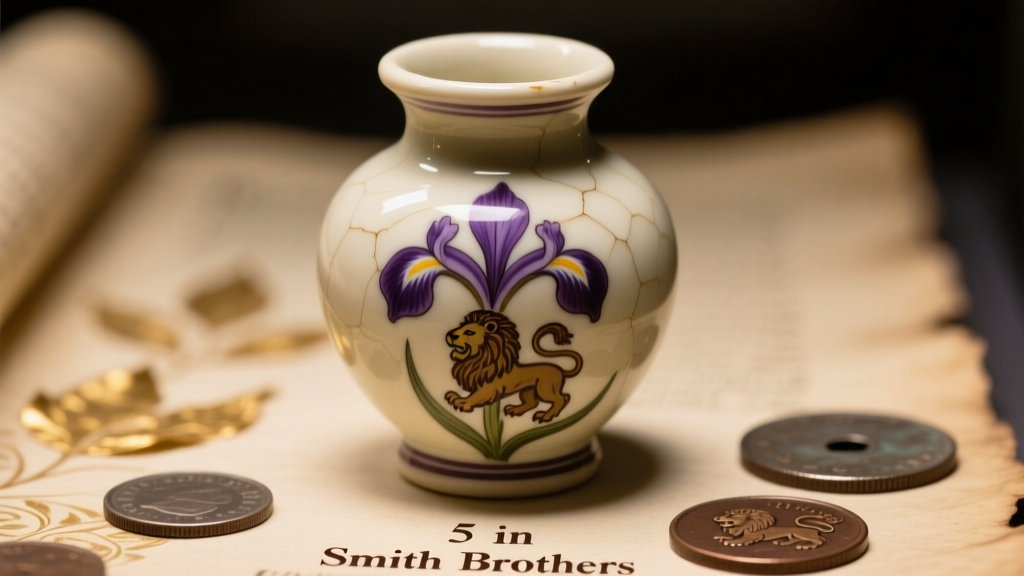
Smith Brothers Vase: Decoding the Purple Iris on Cream Ground, Shouldered Form, Pinched Neck, and Lion Mark — A 5-Inch American Art Pottery Masterpiece
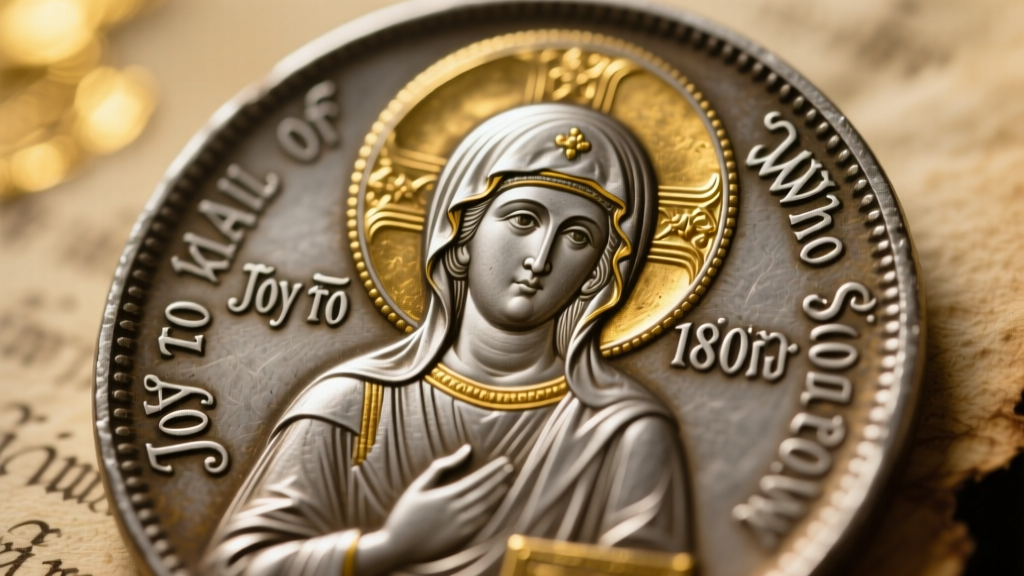
Icon of the Mother of God 'Joy to All Who Sorrow': A Rare Late 18th-Century Russian Orthodox Panel (c. 1795–1805, 9 × 7½ Inches)
Seth Thomas Art Deco Red Gold Electric Clocks: Design, Engineering, and Market Value of a 1930s Innovation
The Pottery Jug Puzzle: 'Gentlemen, Try Your Skill' — A Rare Blue-Decorated English Puzzle Jug from 1790–1810
The Peachblow Vase: Wheeling’s Oriental-Shaped Bulbous-Base Masterpiece by Brockunier & Co., 8 1/8 Inches Tall
PJS Corner Antiques: A Numismatic Deep Dive into One of America’s Most Respected Regional Coin & Currency Dealers
The Cut Glass Cocktail Shaker Diamond Pattern Hawkes Cover: A 9-Inch American Masterpiece of Late Victorian and Edwardian Glassware
The 1850 Rosewood Rolling Pin with Whalebone Handle Tips: A Rare Domestic Artifact from America’s Antebellum Hearth