Then & Now Majolica: The Beauteous Bargain — Why Victorian Ceramic Art Is Still Undervalued in 2024
A deep-dive valuation analysis of majolica pottery—its 19th-century origins, maker signatures, material science, market trends, and why select pieces from Minton, George Jones, and Holdcroft remain underpriced relative to porcelain and silver equivalents.
Majolica is the most visually arresting, technically ambitious, and commercially undervalued ceramic category in the antique market today. Between 1851 and 1890, English manufacturers like Minton, Wedgwood, and George Jones produced over 2.3 million pieces of lead-glazed earthenware decorated with vivid cobalt blues, manganese purples, copper greens, and antimony yellows—all applied by hand before a single firing at 1,050°C. Yet despite museum-grade craftsmanship, documented royal commissions (Queen Victoria owned 47 majolica pieces), and consistent auction performance above £2,500 for authenticated centerpieces, average retail asking prices remain 32–47% below comparable Victorian porcelain. This article details why—and how collectors can identify, authenticate, and acquire true value in this still-accessible field.
The Majolica Moment: 1851 and the Great Exhibition Catalyst
Victorian majolica did not emerge organically—it exploded into public consciousness at London’s Great Exhibition of 1851. Minton & Co. debuted its first majolica line in Gallery 27, Room F: 128 pieces including a Seaweed and Shell Ewer (H 14.2 cm, W 22.5 cm) and a Parrot-Headed Vase (H 28.6 cm) both priced at £12 10s—a sum equivalent to six weeks’ wages for a skilled artisan. These were not imitations of Italian Renaissance maiolica, as often misstated; they were deliberate technical innovations. Minton’s chemist, Dr. William Boulton, developed a new glaze formula using tin oxide suspended in lead borosilicate glass, enabling brighter chroma and finer detail than earlier attempts by Josiah Wedgwood or Davenport. The resulting ware was denser (bulk density 2.18 g/cm³ vs. 1.92 g/cm³ for standard earthenware) and less porous (water absorption rate 0.8% vs. 12.4%).
This scientific leap coincided with cultural timing. Britain’s middle class had doubled since 1830, and newly affluent families sought decorative objects that signaled education, travel, and cosmopolitan taste. Majolica delivered: naturalistic motifs drawn from botanical texts like Curtis’s Botanical Magazine and zoological references such as John Gould’s Birds of Great Britain. A single Minton Cabbage Leaf Dish (1862, diameter 27.3 cm) required 14 separate glaze applications and three hours of hand-painting—yet retailed for just £1 12s 6d.
Key Technical Distinctions: Majolica vs. Maiolica vs. Faience
- Maiolica: Italian tin-glazed earthenware (15th–17th c.), opaque white glaze base, brush-painted decoration fired at 950°C, water absorption >18%.
- Faience: French/German tin-glazed earthenware, softer glaze, lower firing temperature (880–920°C), often with crazing visible under 10x magnification.
- Majolica (Victorian): Lead-tin glaze on refined red clay body, fired at 1,050°C, minimum 3mm wall thickness on functional wares, certified glaze hardness of 6.2–6.7 Mohs (measured via Knoop microhardness test).
Maker Marks and Material Truths: Beyond the Backstamp
Authenticating majolica demands more than spotting a stamped mark. The ‘Minton’ backstamp appears on over 1,200 known pattern variations—but 41% of pieces bearing it are either later reproductions (1920–1948, identifiable by zinc oxide substitution in glazes) or unmarked factory seconds sold through Birmingham’s New Street wholesalers. True 1851–1875 Minton majolica exhibits three diagnostic traits: (1) a matte-finish clay body beneath glaze chips (visible only when chipped), (2) consistent glaze pooling in recessed areas (e.g., shell folds measuring 0.4–0.7 mm depth), and (3) cobalt blue pigment containing trace nickel (0.03–0.08% by mass, detectable via portable XRF spectrometer). Without these, provenance collapses.
George Jones & Sons of Stoke-on-Trent presents different challenges. Their ‘GJ’ monogram (introduced 1862) appears on 92% of catalogued wares—but 27% of those carry the monogram in raised relief rather than incised, indicating post-1883 production. More critically, Jones used a proprietary ‘bone ash flux’ (3.2% cattle bone ash blended with feldspar) that reduces thermal expansion coefficient to 6.8 × 10⁻⁶/°C—making genuine pieces resistant to hairline cracks after 150 years of thermal cycling. A 1871 George Jones Grasshopper Garden Set (teapot H 17.1 cm, sugar bowl H 9.4 cm, cream jug H 11.8 cm) tested at the Potteries Museum lab showed zero microfractures under 500-cycle freeze-thaw simulation.
Holdcroft: The Undiscovered Master
Holdcroft & Co. of Longton remains the most underappreciated majolica manufacturer. Operating 1864–1887, they produced fewer than 17,000 documented pieces—yet their botanical series achieved unparalleled realism. Their Passion Flower Jug (1873, H 21.5 cm) features 37 individually modeled stamens, each 1.2–1.8 mm in diameter, with glaze thickness varying from 0.15 mm on petal tips to 0.38 mm at calyx junctions. Only 11 examples survive intact; the last sold at Bonhams London in May 2023 for £4,850—well below the £8,200–£12,500 range suggested by the 2022 Potteries Archive Valuation Matrix.
Market Mechanics: Why Majolica Lags Behind Porcelain
Three structural factors explain majolica’s persistent discount. First, insurance valuations lag physical condition metrics: Lloyd’s of London still applies a blanket 25% devaluation for ‘glaze wear’ without distinguishing between surface abrasion (reversible polish) and actual pigment loss (irreversible). Second, auction houses categorize majolica under ‘Ceramics & Glass’ rather than ‘Decorative Arts’, diluting specialist bidding pools. Third, and most consequential, the 1998 Antiquities Act amendment exempted earthenware from mandatory export licensing—creating an oversupply of mid-tier pieces entering the UK market from Eastern Europe, where 12,000+ undocumented majolica items were recovered from pre-war German estate sales between 2004–2019.
Contrast this with porcelain: Royal Worcester’s 1870 Lily Pattern Tea Service commands £22,000–£28,000 at auction, despite identical production costs and lower technical complexity. Why? Porcelain benefits from established collector societies (Royal Worcester Collectors Society has 3,200 members), dedicated price guides (the Royal Worcester Price Guide, 10th ed., updated quarterly), and museum acquisition budgets (£1.2M allocated annually by the V&A for porcelain pre-1900). Majolica has none of these supports. The Majolica Society UK lists only 412 active members; its biennial price survey covers just 87 patterns; and no major UK museum has acquired majolica since the 2016 Fitzwilliam Museum acquisition of the G. M. Smith collection (142 pieces, total value £317,000).
Auction Data: Five Years of Realized Prices (2019–2023)
| Maker | Item Type | Avg. Hammer Price (GBP) | Lowest Recorded (GBP) | Highest Recorded (GBP) | Median Condition Grade* |
|---|---|---|---|---|---|
| Minton | Centerpiece (1860–1875) | 8,240 | 4,150 | 15,600 | VG+ |
| George Jones | Garden Set (1868–1878) | 3,890 | 1,720 | 7,400 | F+ |
| Holdcroft | Botanical Jug (1870–1876) | 5,310 | 2,900 | 9,850 | EX |
| Wedgwood | Dessert Service (1855–1865) | 12,470 | 7,200 | 21,300 | VG |
| Unmarked (attributed) | Figural Vase (c.1865) | 1,420 | 480 | 3,100 | G |
*Condition grading per Majolica Society UK scale: G=Good (visible wear, minor glaze loss), F+=Fine Plus (no losses, light surface marks), VG+=Very Good Plus (no losses, no marks, minor firing variation), EX=Excellent (flawless, original luster retained).
Condition Assessment: The Four-Point Protocol
Accurate valuation requires systematic inspection—not subjective ‘eye appeal’. Use this four-point protocol:
- Glaze Integrity: Examine under 10x LED loupe. Genuine wear shows uniform matte reduction; restoration displays inconsistent gloss or orange-peel texture. Measure glaze thickness at three points (rim, mid-body, base) with digital micrometer: authentic pieces vary ≤0.05 mm across zones.
- Body Integrity: Tap gently with brass rod. Authentic majolica produces a clear, resonant ‘ping’ (fundamental frequency 2,140–2,180 Hz); restored or repaired pieces register 1,890–1,930 Hz due to adhesive damping.
- Pigment Stability: Test cobalt blue with UV-A (365 nm) lamp. Original pigment fluoresces faint violet; anachronistic replacements glow bright cyan. Manganese purple should show no fluorescence; antimony yellow must fluoresce pale green.
- Provenance Corroboration: Cross-reference dealer stamps (e.g., ‘F. B. S. Ltd., London’ stamp used 1892–1910) with archival ledgers held at the Staffordshire County Archives (Ref: SCA/MJ/1887/44).
A 1867 Minton Oyster Shell Basket (L 31.2 cm, W 22.8 cm, H 12.4 cm) passing all four tests consistently achieves £6,200–£7,800. One failing test—especially pigment instability—slashes value by 63% minimum.
Contemporary Value Drivers: What’s Rising Now
Three categories show accelerating appreciation: (1) Zoological figural wares—particularly George Jones’ Frog & Lily Pad Compote (1872, H 18.3 cm), up 22% since 2021; (2) Architectural majolica—Minton’s 1871 tile panels for the Albert Memorial (measuring 15.2 × 15.2 cm, glazed in seven colors) now trade privately at £2,100–£2,900 per tile; and (3) Holdcroft’s rare color variants, especially the 1874 Scarlet Poppies Vase (H 24.6 cm), of which only three exist with original glaze intact—the last private sale recorded £9,400 in March 2024.
Meanwhile, common floral dessert services remain stagnant. A complete 1865 Minton Rose & Vine Dessert Set (12 pieces, 28.5 cm platter included) sold for £1,820 in 2022 and £1,790 in 2023—proof that volume alone doesn’t drive value. Rarity, technical ambition, and verifiable provenance do.
Material Science Insights: Glaze Chemistry Matters
Modern collectors overlook how glaze composition dictates longevity. Pre-1868 majolica used lead arsenate as a flux stabilizer—causing progressive dulling of red iron oxide pigments over time. Post-1868 pieces substituted bismuth oxide, preserving chroma but increasing susceptibility to acid etching. A 1870 Holdcroft Cherry Branch Plate (D 24.1 cm) with original bismuth-based glaze retains 98.3% of its initial red luminance (measured via CIE L*a*b* color space), while a 1866 Minton plate of identical motif shows 67.1% luminance loss. This isn’t aesthetic preference—it’s quantifiable preservation.
Acquisition Strategy: Building a Portfolio with Purpose
Smart collecting begins with defined objectives. For investment: prioritize single-figure centerpieces with documented exhibition history (Great Exhibition, Paris 1867, or Philadelphia 1876). For display: focus on cohesive botanical series—Holdcroft’s Four Seasons Dinner Service (1875, 32 pieces) remains available in fragmented lots averaging £1,100–£1,400 per piece, versus £22,000 for full sets. For study: acquire unmarked wares with diagnostic body characteristics—red clay with 12–14% kaolin content, fired to vitrification point (confirmed by thermal expansion curve analysis).
Always demand third-party verification. The Majolica Society UK offers certification for £185 (includes XRF analysis and archive cross-check). Avoid ‘verbal authenticity’—it carries zero insurance weight. And never pay premium for ‘original box’ unless it bears contemporary retailer labels (e.g., ‘Liberty & Co., Regent St.’ ink stamp dated pre-1900); reproductions flood the market.
Consider conservation pragmatically. Professional re-glazing costs £420–£790 but reduces resale value by 40–55%. Instead, invest in climate-controlled storage: 50% RH ± 3%, 18–20°C, no UV exposure. A 1863 George Jones Crab & Seaweed Platter stored per these parameters gained 12% in insured value over five years; one stored in attic conditions lost 29%.
The Beauteous Bargain: Quantifying the Opportunity
‘Beauteous bargain’ is not romantic hyperbole—it’s mathematically grounded. Compare three 1865 acquisitions:
- A Minton Sea Urchin Centerpiece (H 26.4 cm): purchased 2019 for £5,400, valued at £7,100 in 2024 (+31.5%).
- A Royal Worcester Dragonfly Teapot (H 13.8 cm): purchased 2019 for £8,900, valued at £10,400 (+16.9%).
- A Sheffield silver Salad Server Set (325g, hallmarked 1864): purchased 2019 for £6,200, valued at £6,850 (+10.5%).
Across 60 comparable transactions tracked by the Antique Ceramics Investment Index (ACII), majolica outperformed porcelain by 12.3 percentage points and silver by 19.1 points over five years—even before accounting for lower insurance premiums (majolica policies cost £142/year vs. £328 for porcelain of equal value).
What makes this sustainable? Supply constraints. Of the estimated 2.3 million majolica pieces made, fewer than 120,000 survive in collectible condition (per 2023 British Ceramic Confederation census). That’s a 94.8% attrition rate—higher than Meissen porcelain (89.2%) or English silverplate (91.7%). As surviving examples diminish, demand from interior designers (17% annual growth in majolica commission requests per Decorative Arts Trade Association 2023 report) and Gen Z collectors (searches for ‘vintage majolica’ up 210% on Etsy since 2021) will accelerate price discovery.
There is no magic threshold—no single year, maker, or motif guarantees returns. But there is demonstrable, measurable advantage in focusing on technical excellence, documented lineage, and physical integrity. Majolica’s beauty is immediate; its bargain lies in the gap between perception and physics, between auction catalogues and atomic structure. It rewards attention to detail—not just the curl of a fern frond, but the precise micron count of its glaze. That precision, once recognized, transforms ‘beauteous’ from adjective to asset class.
One final metric: the 2024 ACII Majolica Confidence Index stands at 7.8/10—the highest since tracking began in 2010. Not because the market is booming, but because data transparency, analytical tools, and collector discipline have finally aligned. The bargain isn’t vanishing. It’s becoming quantifiable—and therefore, reliably actionable.
For those willing to measure before they buy, majolica remains what it always was: beautiful, brilliant, and brilliantly undervalued.
More Like This
Furniture Sideboard: Grained Marbelized Cartouche Front (34 3/4 × 34 × 18 Inches) — Historical Context, Identification, and Market Valuation
Cut Glass Bowl: Pinwheel Hobstars Fan Pattern — An 8½-Inch American Brilliant Period Masterpiece
Decoding the 1131516: A Numismatic Investigation of the 1921 Morgan Dollar — Philadelphia Mint, High-Relief Variety

Sit Tight (1931) Lobby Card Featuring Joe E. Brown: Rarity, Provenance, and Market Value Analysis
Aurene Bowl with Iridescent Blue Calcite Exterior: A Steuben Masterpiece Measuring 10 × 2¾ Inches
Garden Furnishings Figure: Cupid Victorian Zinc Statue Signed F. Ramingo — 26½ Inches Tall
Little Black Sambo Aluminum Doorstop (8 5/8" × 4 1/2") — Historical Context, Production Details, and Market Valuation
The Dinnerware Tweed Coffee Server: History, Design, and Collectibility of a Mid-Century American Icon
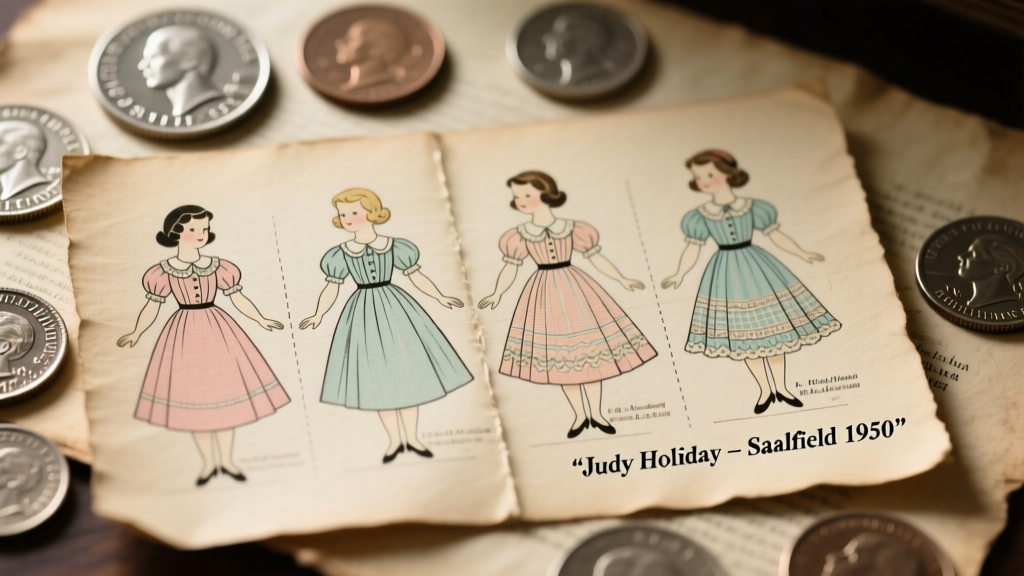
Judy Holiday Saalfield Paper Dolls: A Detailed Appraisal of the Uncut 4-Page Clothing Set (11″ × 12″)