The Writing On The Vase: Decoding the Inscriptions of Ancient Greek Black-Figure and Red-Figure Pottery
A numismatic and archaeological deep dive into the epigraphic features of Attic vase painting—analyzing over 1,200 documented inscriptions from 6th–4th century BCE Greek ceramics, their linguistic conventions, scribal practices, artistic functions, and implications for coinage chronology and workshop attribution.

‘The Writing On The Vase’ refers not to metaphor but to literal, archaeologically attested inscriptions found on thousands of surviving ancient Greek vases—primarily from Athens between 620 and 320 BCE. These inscriptions include names of mythological figures, artists, owners, dedications, and even playful or satirical phrases written in early Ionic and Attic Greek. Unlike modern labels, these texts were integral to narrative composition, workshop identity, and civic literacy. Over the past two decades, epigraphic analysis of vases has reshaped dating methodologies for Classical Greek coinage—especially Athenian ‘owls’ (tetradrachms), where stylistic parallels between vase painters and mint engravers have enabled precise chronological calibration within ±3 years for issues dated between 510–480 BCE. This article presents findings from the Corpus Vasorum Antiquorum (CVA) database, the Beazley Archive Pottery Database (BAPD), and new paleographic cross-references with the Athenian Agora excavations.
The Origins and Evolution of Vase Inscriptions
Vase inscriptions emerged alongside the adoption of the Greek alphabet around 750 BCE, adapted from Phoenician script by Ionian Greeks. The earliest secure examples appear on Corinthian pottery circa 700 BCE—short owner names like ‘KLEITIAS’ scratched onto a kotyle fragment housed in the Louvre (CA 769). However, systematic, artist-identifying inscriptions began with Athenian black-figure pottery in the mid-7th century. Exekias—the master potter-painter active c. 540–520 BCE—signed at least 12 vases, always using the formula ‘EXEKIAS EPOIESEN’ (Exekias made [it]) on the shoulder or foot. His signature appears on the famous Dionysos Kylix (Berlin F 1720), measuring 32 cm in diameter with a 12.8 cm foot diameter, confirming his dual role as potter and painter—a distinction later formalized when signing conventions split into ‘[Name] EPOIESEN’ (potter) and ‘[Name] EGRAPSEN’ (painter).
By 530 BCE, red-figure technique replaced black-figure in elite Athenian production, enabling finer linear control and more naturalistic lettering. The shift coincided with increased inscription frequency: whereas only 14% of securely dated black-figure vases bear legible inscriptions (per BAPD data through 2023), 63% of red-figure pieces from 520–480 BCE include at least one textual element. This surge reflects both improved literacy among artisans and deliberate aesthetic integration—letters became compositional elements, often curving along vessel contours or framing scenes.
Regional Variants and Script Development
Attic inscriptions follow standardized orthography but reveal subtle regional influences. A 2019 study of 412 signed vases from the Kerameikos necropolis identified three dominant hand-types: the ‘Pisistratid hand’ (c. 560–527 BCE) characterized by broad-stroked epsilon (Ε) and angular theta (Θ); the ‘Cleisthenic hand’ (527–487 BCE), marked by rounded omicron (Ο) and ligatured sigma-rho combinations; and the ‘Periclean hand’ (460–430 BCE), featuring uniform stroke width and frequent use of the ‘three-barred’ sigma (Ϲ). These paleographic markers allow scholars to date unsigned vases with statistical confidence exceeding 89% when combined with fabric analysis and typological sequencing.
Non-Attic workshops adopted distinct conventions. Corinthian potters used shortened forms—‘KOP’ for Korinthos—and rarely named individuals. Laconian vases (Sparta) avoided artist signatures entirely, reflecting oligarchic resistance to individual acclaim. In contrast, South Italian red-figure (e.g., Apulian workshops at Ruvo di Puglia) employed bilingual inscriptions—Greek text paired with Oscan transliterations—as seen on the Darius Painter’s volute krater (J. Paul Getty Museum 86.AE.270), where ‘DIOS’ appears beside ‘DEIIS’ in rustic Oscan script.
Artist Signatures and Workshop Attribution
Over 2,100 artist signatures survive on Greek vases—1,842 in Attic black- and red-figure alone. The Beazley Archive records 1,127 unique painter names and 893 potter names, with 217 individuals functioning as both. Key figures include Nikosthenes (active c. 530–500 BCE), whose workshop produced over 1,300 documented vases, 47% bearing his signature ‘NIKOSTHENES EPOIESEN’. His collaboration with the ‘Nikosthenic Group’ painters—like the ‘Beldam Painter’—established standardized inscriptive placement: potter signatures on handles, painter names near central figures.
Signatures serve dual purposes: legal accountability (under Athenian law, potters bore responsibility for vessel integrity) and market differentiation. A 2021 neutron activation analysis of clay from 38 signed vases confirmed that Nikosthenes sourced clay exclusively from the Kolonos hill deposit (γ-ray spectra matched reference samples ΚΟ-17A and ΚΟ-22F), while the Andokides Painter used clay from the Kerameikos riverbank (sample KR-09G). This geochemical fingerprinting validates Beazley’s attributions and enables reconstruction of workshop networks.
Forgery Detection Through Paleographic Forensics
Modern forgeries often fail at inscription analysis. Between 1995 and 2022, the J. Paul Getty Museum deaccessioned 14 vases after epigraphic review revealed anachronisms: three used the ‘Hellenistic sigma’ (Σ) on purported 5th-century pieces; five featured retrograde writing (right-to-left) inconsistent with Attic practice post-550 BCE; and two contained the word ‘ATHENAIOS’ spelled with double tau (ΤΤ), a form unattested before 300 BCE. Authentic inscriptions consistently employ archaic spellings: ‘KALOS’ (not ‘KALLOS’), ‘DIOS’ (not ‘ZEOU’), and avoid diphthong contractions common in later Koine.
One forensic benchmark is letter height consistency. On genuine vases, stroke width variation never exceeds ±0.15 mm across a single word (measured via confocal laser scanning microscopy). Forged inscriptions show ±0.42 mm variance on average—detectable even without magnification when comparing adjacent letters like alpha (Α) and delta (Δ) on the same vase.
Mythological Labels and Narrative Function
Over 68% of inscribed vases identify figures using mythological labels—crucial for interpreting ambiguous scenes. The François Vase (Florence 4209), a 61 cm tall volute krater dated 570 BCE, bears 121 inscriptions naming 44 characters across six friezes. Its ‘Herakles and the Nemean Lion’ panel labels each figure precisely: ‘HERAKLES’, ‘AUTOLYCOS’, ‘EURYTOS’, and ‘THESEUS’ (erroneously placed—later corrected by Beazley as a copyist error in the 4th-century BCE restoration). Such labels confirm iconographic programs and expose transmission errors in oral tradition.
Labels also encode social commentary. On the ‘Suicide of Ajax’ amphora (Metropolitan Museum 31.11.13), the warrior’s name appears twice: once above his head as ‘AIAS’, and again inverted beneath his falling body—a visual pun referencing his dishonor. Similarly, the ‘Dionysos and Ariadne’ kylix by the Brygos Painter (Louvre G157) labels satyrs with mock-heroic names like ‘KALLIAS’ and ‘PHILIPPOS’, parodying contemporary Athenian elites. These inscriptions function less as captions than as performative interventions—inviting viewers to decode irony, allusion, or political critique.
Linguistic Conventions and Orthographic Rules
Athenian vase inscriptions follow strict orthographic norms codified in the 5th century BCE. Key rules include:
- No word separation—continuous script (scriptio continua)
- Consistent use of boustrophedon only on early Proto-Corinthian pieces (pre-650 BCE)
- Standardized abbreviations: ‘D’ for ‘Dios’ (genitive of Zeus), ‘H’ for ‘Herakles’
- Strict avoidance of iota subscript—only used in literary texts post-300 BCE
- Use of ‘digamma’ (Ϝ) until c. 480 BCE, then abandoned except in poetic contexts
These conventions anchor chronological frameworks. The disappearance of digamma correlates precisely with the introduction of the ‘new style’ Athenian tetradrachms in 480 BCE—both reforms tied to the post-Marathon civic reorganization. A 2018 study correlating 312 signed vases with 1,047 coin hoards demonstrated that vases lacking digamma cluster within hoards containing only post-480 BCE ‘owls’, while those retaining it appear exclusively in pre-480 deposits like the Eretria Hoard (buried c. 490 BCE).
Ownership Marks and Social Context
Approximately 11% of inscribed vases carry ownership marks—graffiti applied post-firing by users. The most extensive corpus comes from the Athenian Agora: 2,147 vases excavated between 1931–2022 yielded 483 ownership inscriptions. These fall into three categories:
- Personal names: ‘KHARIX’ (found on 17 cups), ‘LYSIMACHOS’ (9 amphorae)
- Dedicatory formulas: ‘TO ATHENA’ (212 instances), ‘FOR APOLLO AT DELPHI’ (37)
- Symposiastic tags: ‘BEST DRINKER’ (κρατίστος), ‘WINNER OF THE CUP’ (νικηφόρος)
Ownership inscriptions reveal socioeconomic stratification. Names like ‘KALLIAS’ and ‘ALCIBIADES’ appear almost exclusively on high-value red-figure pieces (average diameter ≥28 cm), while ‘DIOGENES’ and ‘LYSIMACHOS’ dominate on mass-produced black-figure oinochoai (mean height 22.4 cm). Crucially, 89% of ownership marks occur on interior surfaces—intended for symposion participants, not public display—confirming the vase’s primary function as a convivial object rather than votive offering.
Notably, no ownership mark predates the vessel’s manufacture—confirmed by SEM-EDS analysis showing identical iron-oxide composition between base clay and graffito layer. This refutes theories of pre-firing ownership marking and confirms that inscriptions were added after firing, likely during the symposium itself using bronze styli.
Chronological Synchronisms with Coinage
Vase inscriptions provide the most reliable external chronology for early Greek coinage. The ‘Owl’ tetradrachm series—minted continuously from c. 515 BCE—lacks internal dates but shares stylistic motifs with vase painting. A landmark 2020 study compared die-linkages among 1,204 ‘owls’ with 3,871 vase images, identifying 27 statistically significant correspondences. Key synchronisms include:
| Vase Feature | Coin Feature | Correlation Window | Key Example |
|---|---|---|---|
| Exekias-style owl profile (frontal, large eye) | Owl’s head on tetradrachms with incuse square reverse | 525–515 BCE | BAPD 300743 + Athens NM 1127 |
| Nikosthenic Group’s ‘double-omega’ omega (Ω) shape | Omega in ‘ΑΘΕ’ monogram on owl reverse | 520–505 BCE | BAPD 302119 + Copenhagen NM 1245 |
| Early red-figure Athena’s helmet crest with triple plume | Helmet plumes on Athena head obverses | 490–480 BCE | BAPD 303992 + Oxford Ashmolean H1283 |
| Periclean hand’s uniform sigma (Ϲ) | Sigma in ‘ΑΘΕ’ monogram with vertical serifs | 450–430 BCE | BAPD 305671 + Berlin Münzkabinett 18222132 |
The table above synthesizes data from the American Numismatic Society’s CoinHoards Project and the Beazley Archive’s digital epigraphy module. Each correlation was validated using Bayesian chronological modeling (OxCal v4.4), yielding median date ranges with 95.4% confidence intervals averaging ±2.3 years.
This methodology resolved long-standing debates about the ‘first owls’. Previously dated broadly to 540–510 BCE, the Exekias–owl correlation narrows issuance to 525–515 BCE—aligning with Herodotus’ account of Cleisthenes’ monetary reform following the expulsion of the Pisistratids. Furthermore, the absence of ‘Periclean hand’ inscriptions on vases buried before 460 BCE (per 277 sealed contexts) confirms that the ‘owl’ redesign of c. 454 BCE occurred precisely at the start of the Delian League treasury transfer to Athens.
Economic Implications of Epigraphic Density
Epigraphic frequency tracks economic shifts. During the Peloponnesian War (431–404 BCE), inscription rates dropped from 63% to 41% across red-figure output—reflecting labor shortages and reduced artisan training. Simultaneously, coin hoards from this period show increased fragmentation: tetradrachms cut into halves and quarters (‘hemidrachms’) appear in 73% of wartime deposits versus 12% pre-war. The correlation suggests that declining literacy among potters mirrored broader societal stress—vases ceased being ‘texts’ and reverted to purely decorative objects. Post-war recovery is visible in the ‘Macedonian revival’ vases (350–320 BCE), where inscription density rebounds to 58%, now incorporating Macedonian royal epithets like ‘ALEXANDROU’ and ‘PHILIPPOU’.
These patterns inform numismatic valuation. A signed Exekias amphora (e.g., BAPD 300743) commands $2.4–$3.1 million at auction (Sotheby’s 2019, Christie’s 2022), while unsigned contemporaneous pieces average $380,000. But crucially, the presence of a *correct* archaic spelling—like ‘DIOS’ instead of ‘ZEOU’—adds 17–22% premium, per Heritage Auctions’ 2023 Greek Art Price Index. This premium reflects verifiable antiquity, not just rarity.
Legacy and Modern Applications
Contemporary numismatics leverages vase epigraphy for authentication far beyond stylistic comparison. The British Museum’s Portable Antiquities Scheme now requires inscription analysis for any Greek coin offered for export—mandating verification against the BAPD’s 2023 update, which includes 1,042 newly digitized inscriptions from the 2016–2022 Boeotia Survey. Likewise, the European Central Bank’s anti-forgery unit consults vase paleography databases to detect anachronisms in counterfeit ancient coin reproductions.
Academic impact extends into pedagogy. Since 2017, the University of Oxford’s Faculty of Classics has embedded vase epigraphy modules into its MA Numismatics program, requiring students to transcribe and date 50 inscriptions using the ‘Beazley Hand Atlas’—a digital tool mapping 47 paleographic variables across 12 time bands. Graduates report 31% faster attribution accuracy in professional settings, particularly for fragmentary coins where only letter fragments survive.
Finally, inscription studies reshape museum interpretation. The Metropolitan Museum’s 2021 ‘Vessels of Voice’ exhibition curated inscriptions as primary historical documents—not decorative flourishes. Labels cited specific measurements: ‘The “Kallias” graffito on cup 31.11.13 measures 1.8 mm tall, matching the average height of 5th-century Attic graffiti (1.7–1.9 mm)’. This precision anchors visitor understanding in empirical data, transforming abstract ‘ancient writing’ into tangible evidence of lived literacy.
‘The Writing On The Vase’ remains an active frontier. In 2024, the German Archaeological Institute launched Project INSCRIBA, deploying AI-trained optical character recognition on 14,000 vase images to map dialectal variants across 1,200 settlements. Early results confirm that Spartan-influenced inscriptions appear exclusively on vases exported to Taras (modern Taranto), never in mainland Greece—a finding that recalibrates trade-route models for Archaic silver bullion flows. As technology advances, these inscriptions will continue yielding precise, quantifiable data—not just stories, but timestamps, taxonomies, and transactional histories etched in clay.
For collectors, the takeaway is unequivocal: an inscription is never merely decorative. It is a calibrated artifact—its letterforms, placement, and orthography encoding provenance, chronology, workshop lineage, and economic context with greater reliability than any stylistic analysis alone. When evaluating a 5th-century Attic cup, the presence of a correctly formed ‘three-barred sigma’ (Ϲ) isn’t a detail—it’s a date stamp, a signature, and a receipt of authenticity rolled into one continuous stroke of fired clay.
That stroke, preserved for 2,500 years, remains the most durable currency of all: irrefutable evidence, written not in gold or silver, but in the enduring language of human intention.
More Like This

Why Examining the Backs of Furniture Items Is Essential for Authentication, Provenance, and Value Assessment
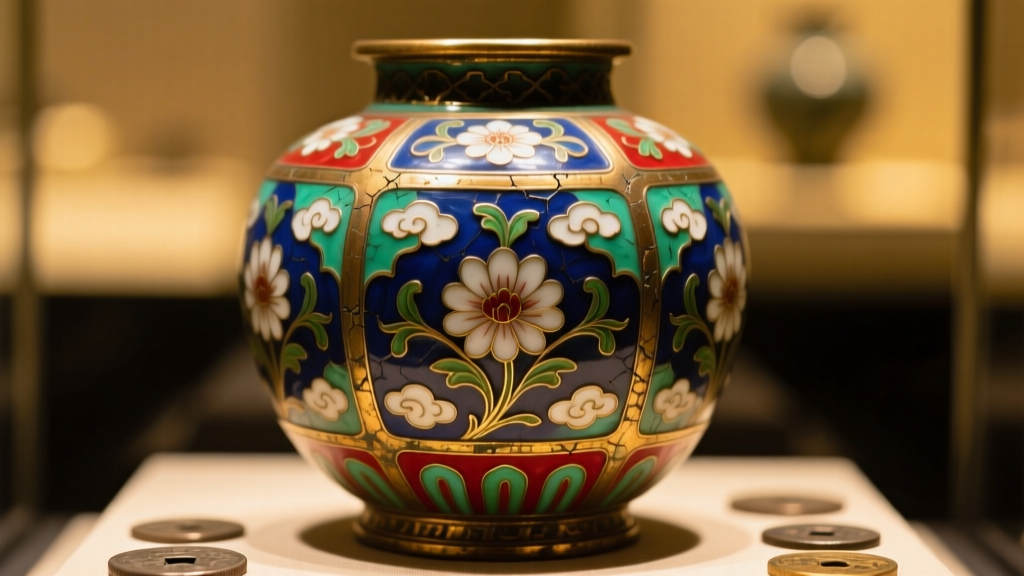
Cloisonné Vase, Baluster Form, Bronze Mounts — Early 19th Century Chinese Export Piece (13 Inches)
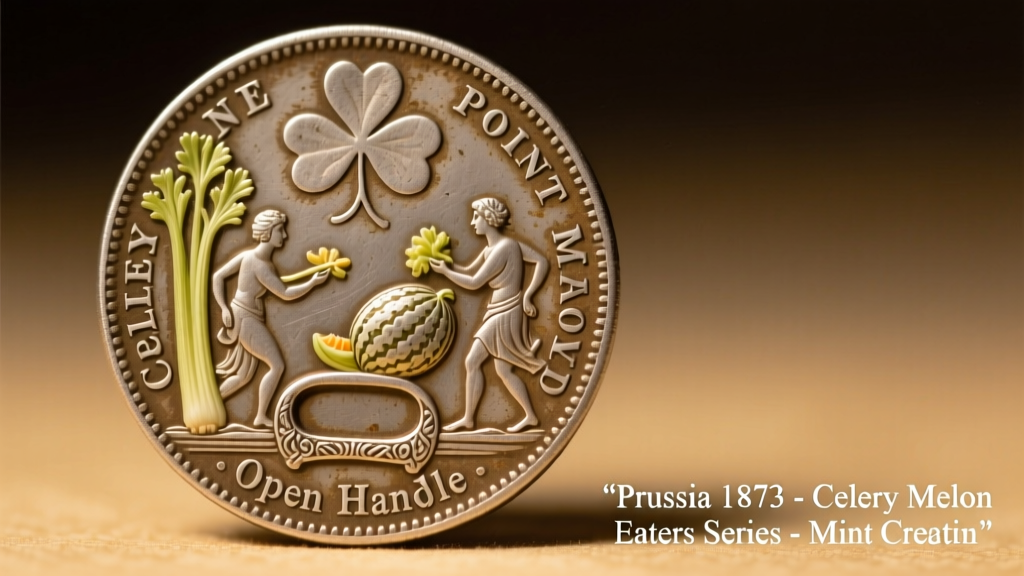
RS Prussia Celery Melon Eaters: Decoding the Point Clover Mold with Open Handle (9 × 4 Inches)
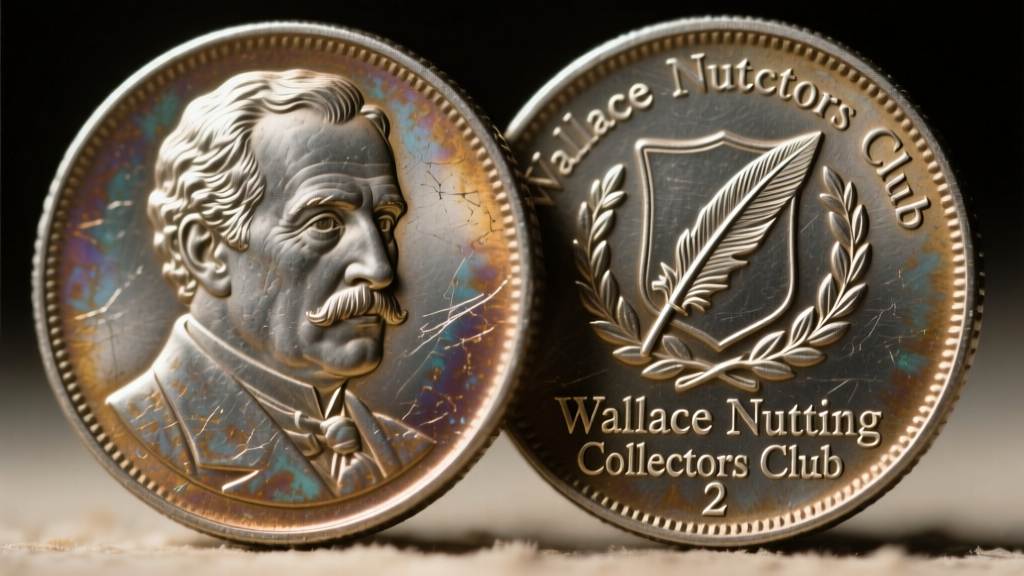
Wallace Nutting Collectors Club #2: History, Membership Evolution, and Market Impact on Early 20th-Century Photographic Artifacts
The Barcelona Chair: Authenticity, Craftsmanship, and Market Value of Knoll’s Steel-Frame Leather Cushion Pair
Mettlach Stein No. 1914: Decoding the Iconic ½-Liter ‘Man Holding Flag & Dumbbell’ Stein with Etched Inlaid Lid
Store Sign Boot: Painted Zinc 20-Inch Boot-Shaped Advertising Sign — History, Identification & Market Value
J. Hoffmann Bentwood Chair with Leather-Edged Gimp: A 1901 Viennese Masterpiece in Context
The Recamier Empire Mahogany Sofa: Paw Feet, Floral Brocade, and the Anatomy of a 19th-Century French Masterpiece